Black mold: what the color does and doesn't tell you
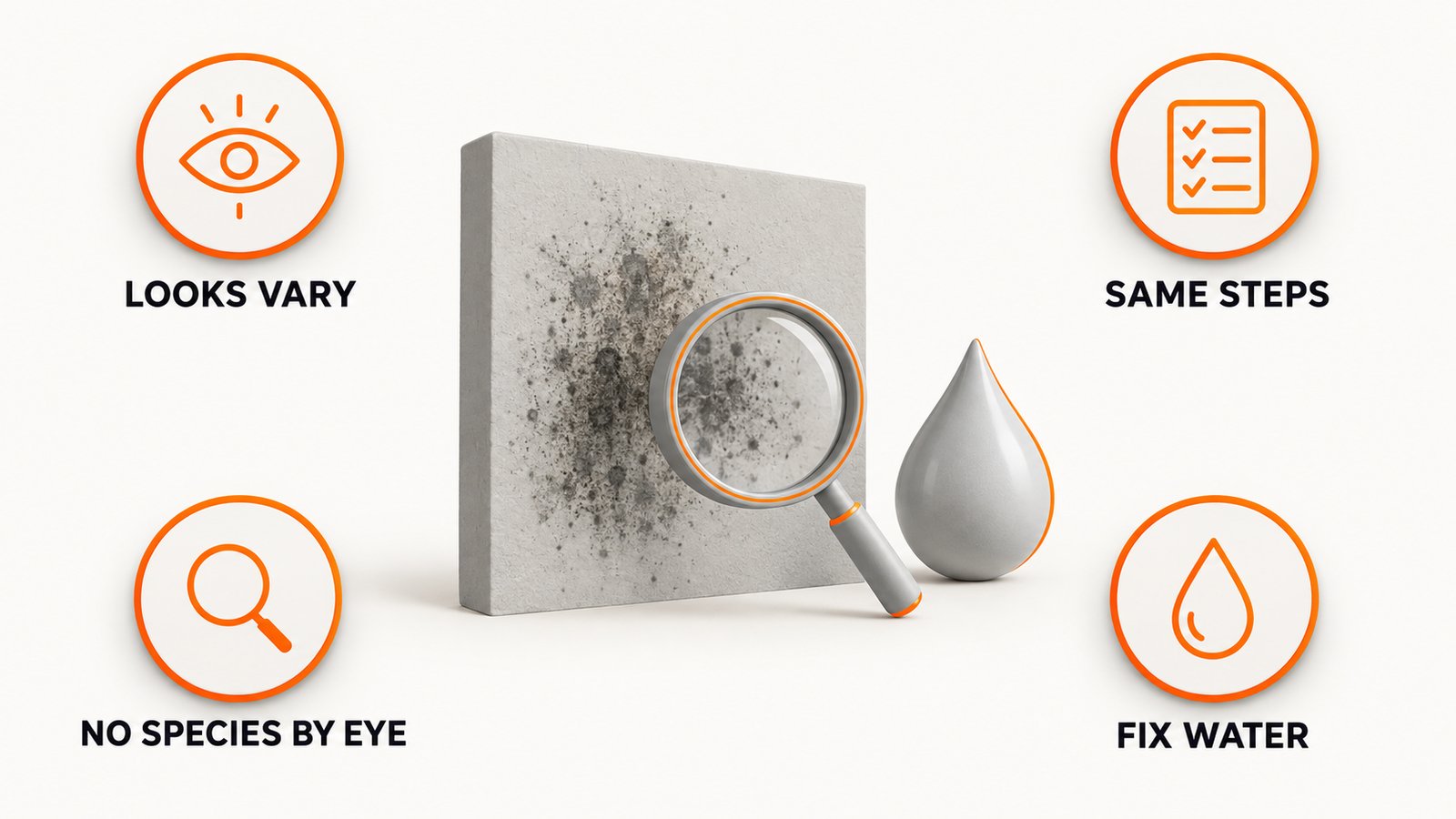
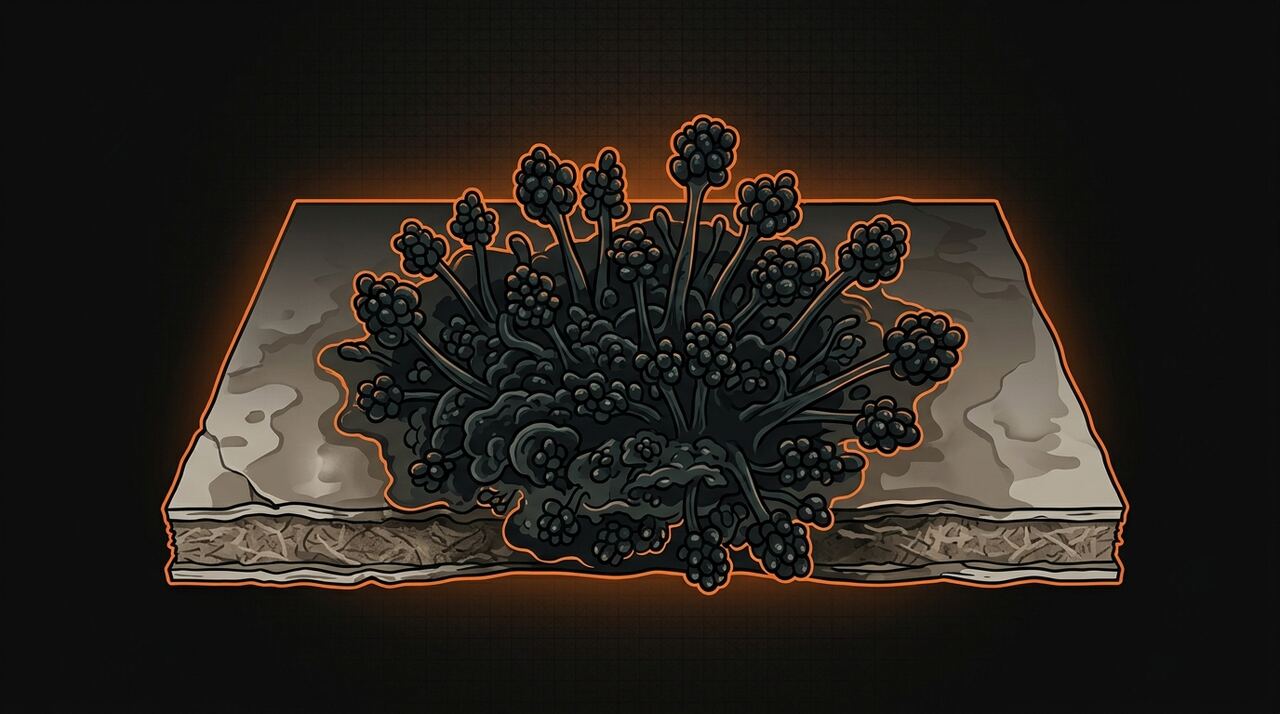
People say "black mold" for any dark, speckled or slimy growth on a wall, grout line or window frame. That is a color, not a species. The EPA notes that molds come in many colors and shows both white and black molds in its own photos. The CDC says mold can look like spots of many different colors, and it can smell musty.
That matters for cleanup because you do not need a lab result to start. The CDC states that you do not need to know the type of mold, and that no matter what type is present, you need to remove it. New York State's health department says the same thing in its own words: knowing the kinds of mold present does not change the advice. The EPA adds that in most cases, if visible mold growth is present, sampling is unnecessary.
Our black mold guide covers what dark growth can tell you, and black mold vs mildew explains why plain mildew and mold get mixed up.
Protect yourself before you touch it
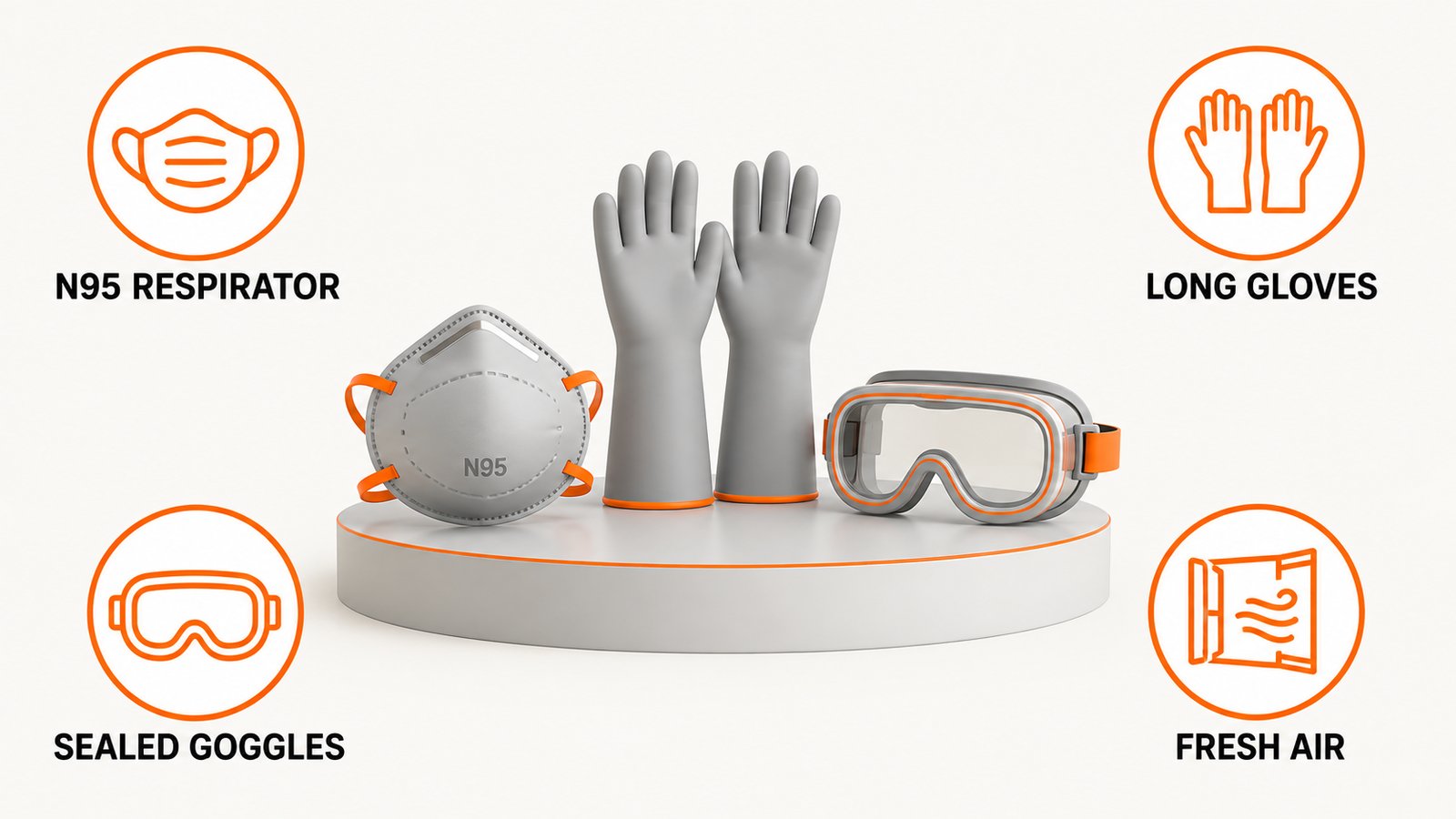
Scrubbing and tearing out material puts spores in the air. Its guidance calls for the following.
- N-95 respirator. The EPA says you may want to wear one to avoid breathing in mold or spores. It has to fit properly, so follow the instructions that come with it. New York State recommends an N95 mask and rubber gloves for jobs other than routine cleaning.
- Long gloves. The EPA recommends gloves that extend to the middle of the forearm. Ordinary household rubber gloves are fine with water and mild detergent. If you use a disinfectant, a biocide such as chlorine bleach, or a strong cleaning solution, pick natural rubber, neoprene, nitrile, polyurethane or PVC.
- Goggles without vent holes. The EPA recommends goggles that do not have ventilation holes, so mold and spores stay out of your eyes.
- Fresh air. The CDC says to open windows and doors to provide fresh air while you work. If you use disinfectants or biocides, the EPA says to always ventilate the area and exhaust the air to the outdoors.
If you have health concerns, the EPA says to consult a health professional before starting cleanup. This page covers cleaning and protective gear only, not medical advice.
Fix the water problem first
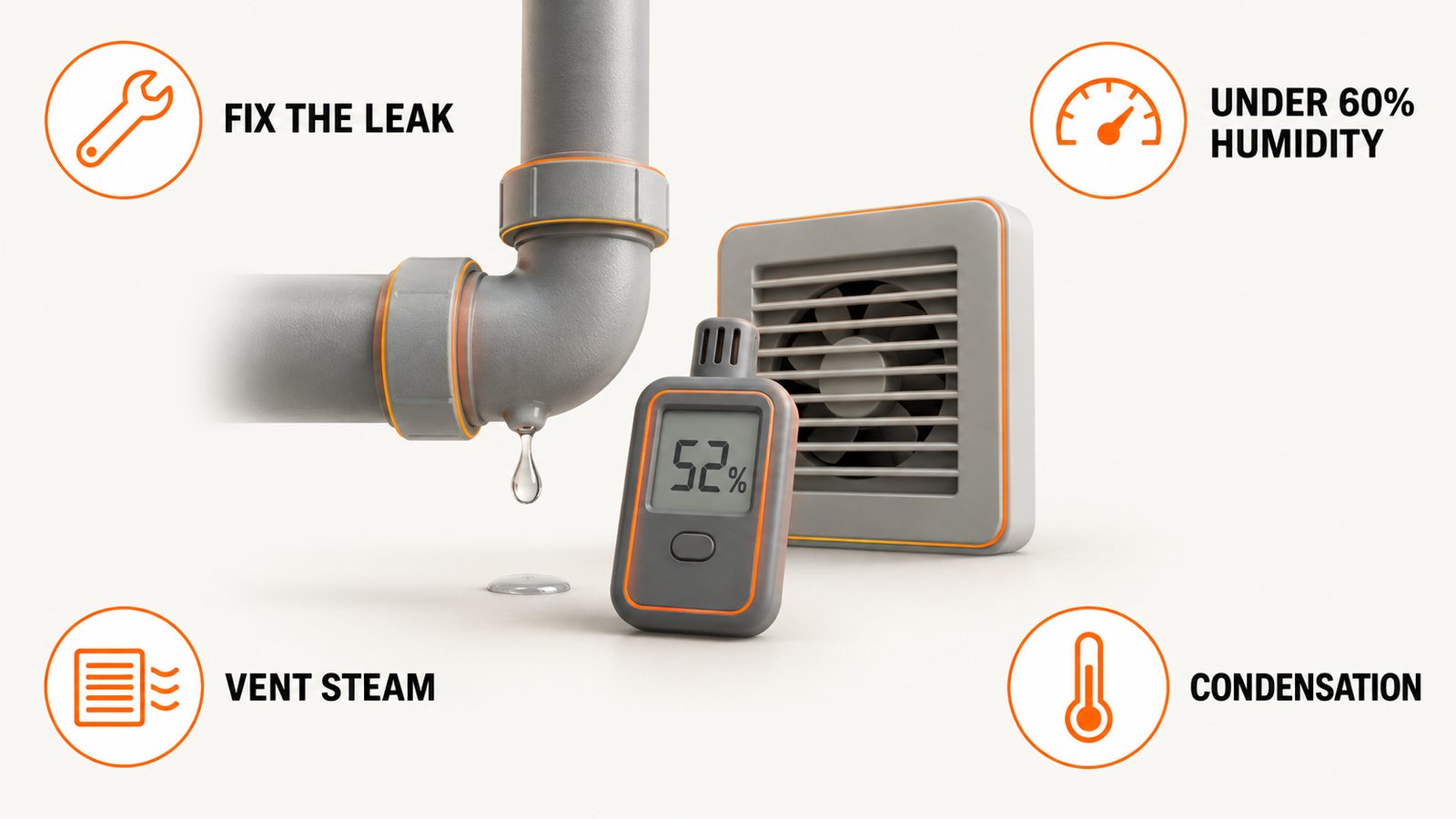
Scrubbing without fixing the water is a rerun waiting to happen. The EPA puts it plainly: the key to mold control is moisture control, and if mold is a problem you should clean it up promptly and fix the water problem. New York State's first step is the same: the source of the water or dampness must be identified and corrected.
Check these in order:
- Leaks. Check under sinks, around the tub and toilet, behind the fridge water line, along the roof line and around window frames. The EPA says to fix plumbing leaks and other water problems as soon as possible.
- Condensation. Cold windows, exterior walls and metal pipes sweat in humid rooms.
- Steam. Showers, cooking and clothes dryers add water to the air. The EPA advises venting appliances that produce moisture, such as clothes dryers and stoves, to the outside where possible. For bathrooms, it says running a fan or opening a window and cleaning more frequently will usually keep mold from coming back.
- High humidity overall. The EPA says to keep indoor humidity below 60 percent if possible, ideally between 30 and 50 percent. A moisture or humidity meter, which the EPA prices at $10 to $50, tells you where you stand. See our picks in best moisture meters for mold and dehumidifiers for mold.
If the growth keeps returning, water may be getting in somewhere you cannot see. See mold behind walls.
How to remove black mold from hard surfaces
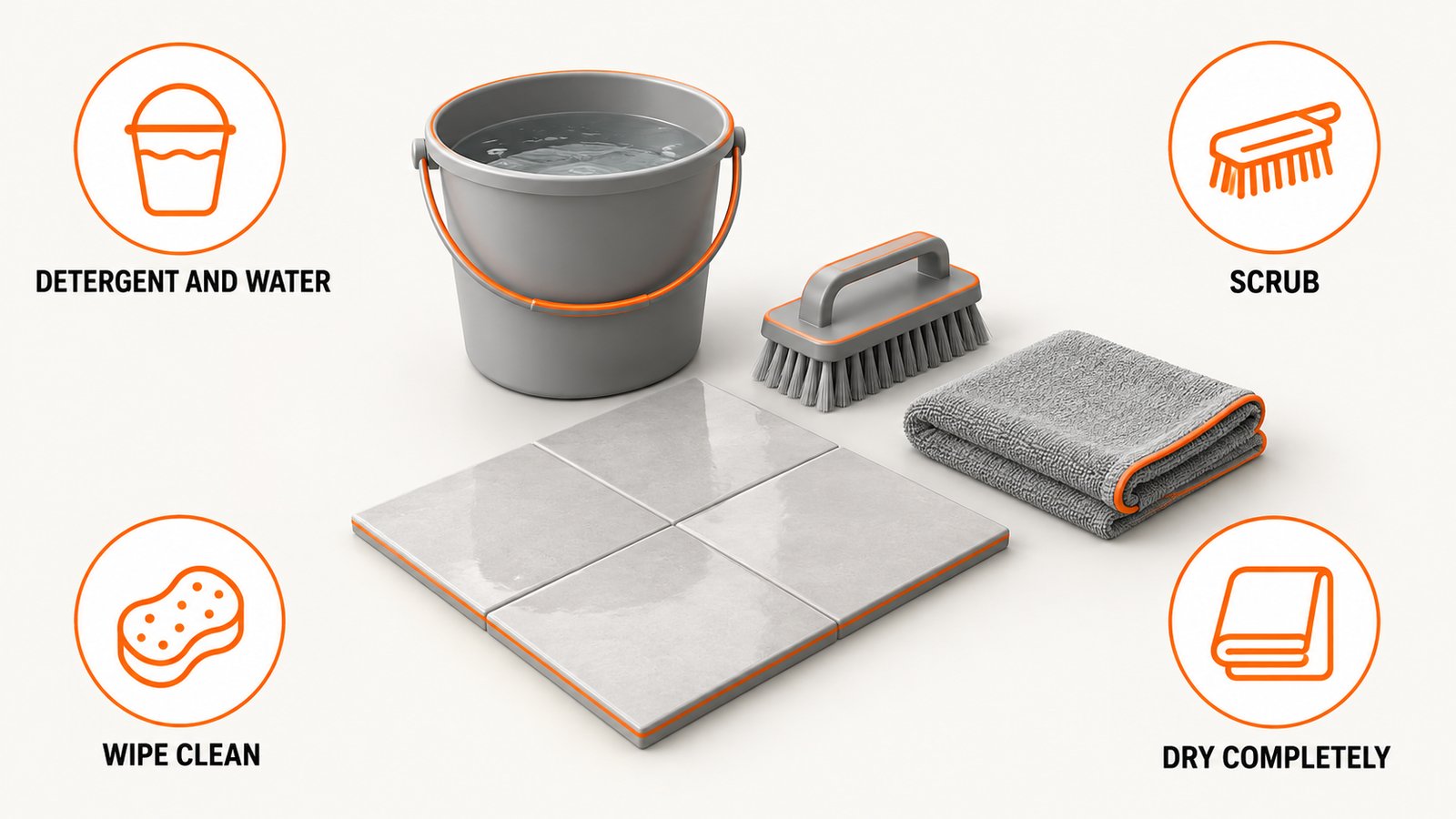
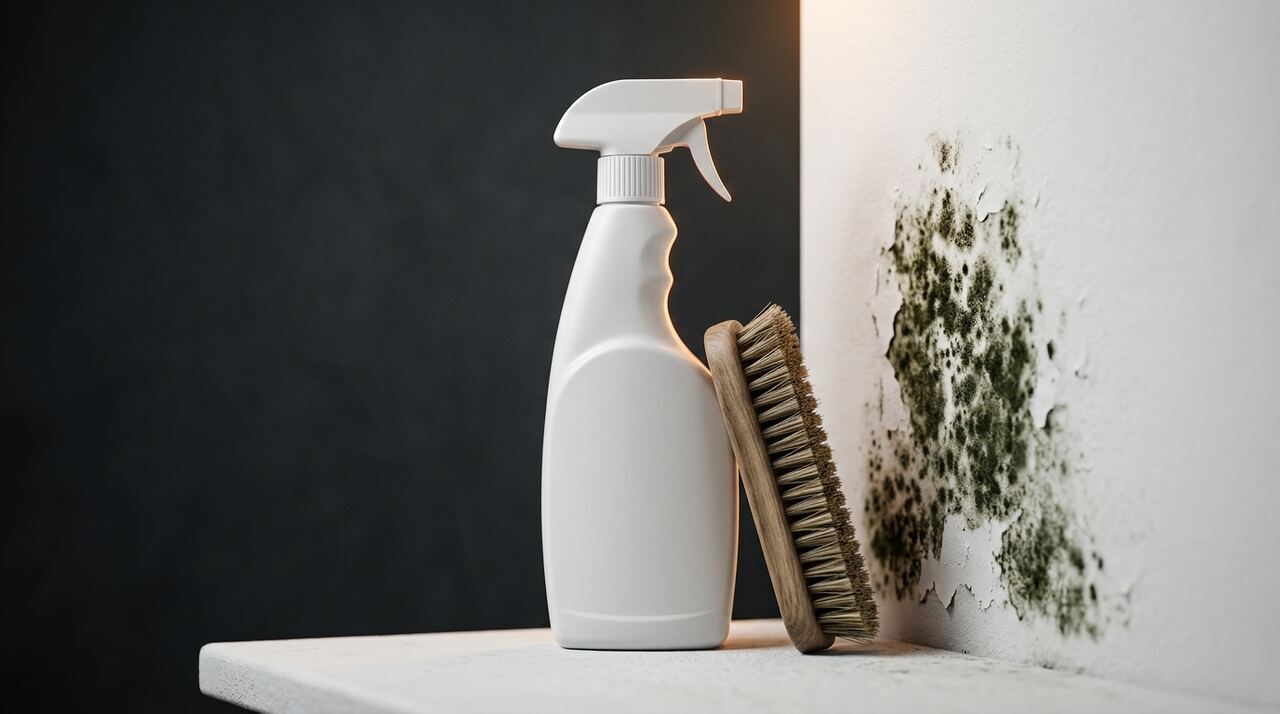
Hard, non-porous surfaces are the easy case: tile, glass, a bathtub and sealed countertops. The EPA's instruction is short: scrub mold off hard surfaces with detergent and water, and dry completely. The CDC and New York State both say soap and water work on small areas of hard surfaces that are not decayed (rotten).
Step by step
- Gear up and ventilate. Put on your N95, long gloves and sealed goggles. Open a window or run a fan that exhausts outdoors.
- Mix detergent and water. Plain dish soap in a bucket of water is enough. Do not add other cleaners to the same bucket.
- Scrub, do not spray and walk away. Use a stiff brush or non-scratch pad. The EPA says dead mold may still cause allergic reactions in some people, so it is not enough to simply kill the mold, it must also be removed.
- Wipe clean. Go over the surface with clean water and a rag.
- Dry completely. Use towels first, then fans or a dehumidifier. Moisture left on the surface is how mold restarts.
The EPA warns that mold may cause staining and cosmetic damage, so a faint shadow can remain after a good scrub. See our guides to mold on grout, mold on caulk and mold on walls for surface-specific tips.
One more rule from the EPA: do not paint or caulk moldy surfaces. Clean up the mold and dry the surface before painting, because paint applied over moldy surfaces is likely to peel.
Black mold in the bathroom
Showers and tubs are where most people meet this problem, so the same steps apply: fix the ventilation, scrub with detergent and water, rinse and dry. The EPA says increasing ventilation and cleaning more frequently will usually prevent mold from recurring, or at least keep it to a minimum. More detail is in our mold in shower and bathroom ceiling mold pages.
What kills black mold? Read the label first
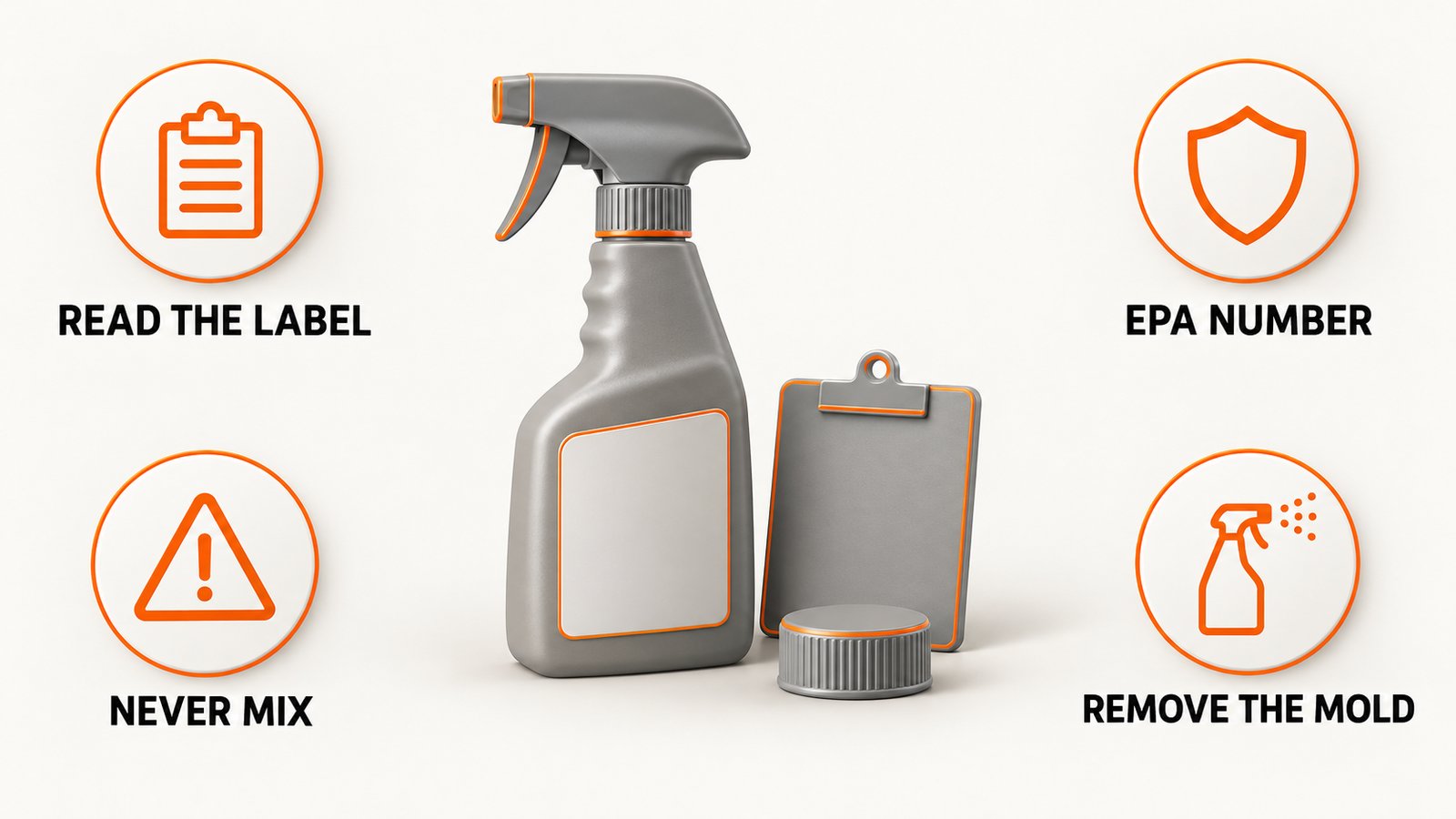
The honest answer has two parts. The EPA says to scrub mold off hard surfaces with detergent and water, which handles most small jobs. And whether a specific product kills mold depends on what its own label claims.
Bleach
The EPA says the use of a chemical or biocide that kills organisms such as mold, chlorine bleach for example, is not recommended as a routine practice during mold cleanup. It adds that professional judgment may call for it in some cases, for example when immune-compromised individuals are present.
The CDC does describe a bleach option for hard surfaces: no more than 1 cup of household laundry bleach in 1 gallon of water. New York State says that where it is impractical to eliminate the moisture source, diluted chlorine bleach (one cup of bleach in five gallons of water) can be used to keep mold growth under control. The two agencies do not use the same ratio, so follow your bottle's label and never go stronger. The EPA and CDC both say never to mix bleach with ammonia or other cleaners, because toxic fumes could be produced. Our does bleach kill mold page has the longer version.
Vinegar, peroxide and other household options
The agencies we cite do not name vinegar or hydrogen peroxide as cleanup steps. We cover each in does vinegar kill mold, hydrogen peroxide for mold and bleach vs vinegar.
Store-bought mold cleaners
Here is how to read a bottle before you buy it:
- Find the claim on the label itself. Killing mold and removing stains are different claims.
- Look for an EPA registration number. The EPA says each registered product label has a registration number, and that it is the only way to accurately identify a product. If a bottle makes a kill claim for mold and shows no number, ask the maker what the claim rests on.
- Do not assume a product kills "black mold." Unless the label names it, the claim is about mold in general.
- Follow the instructions. The CDC says to follow manufacturers' instructions when you use bleach or any other cleaning product.
If you want to compare specific bottles and sprays, start with best mold removal products.
What to do with porous materials
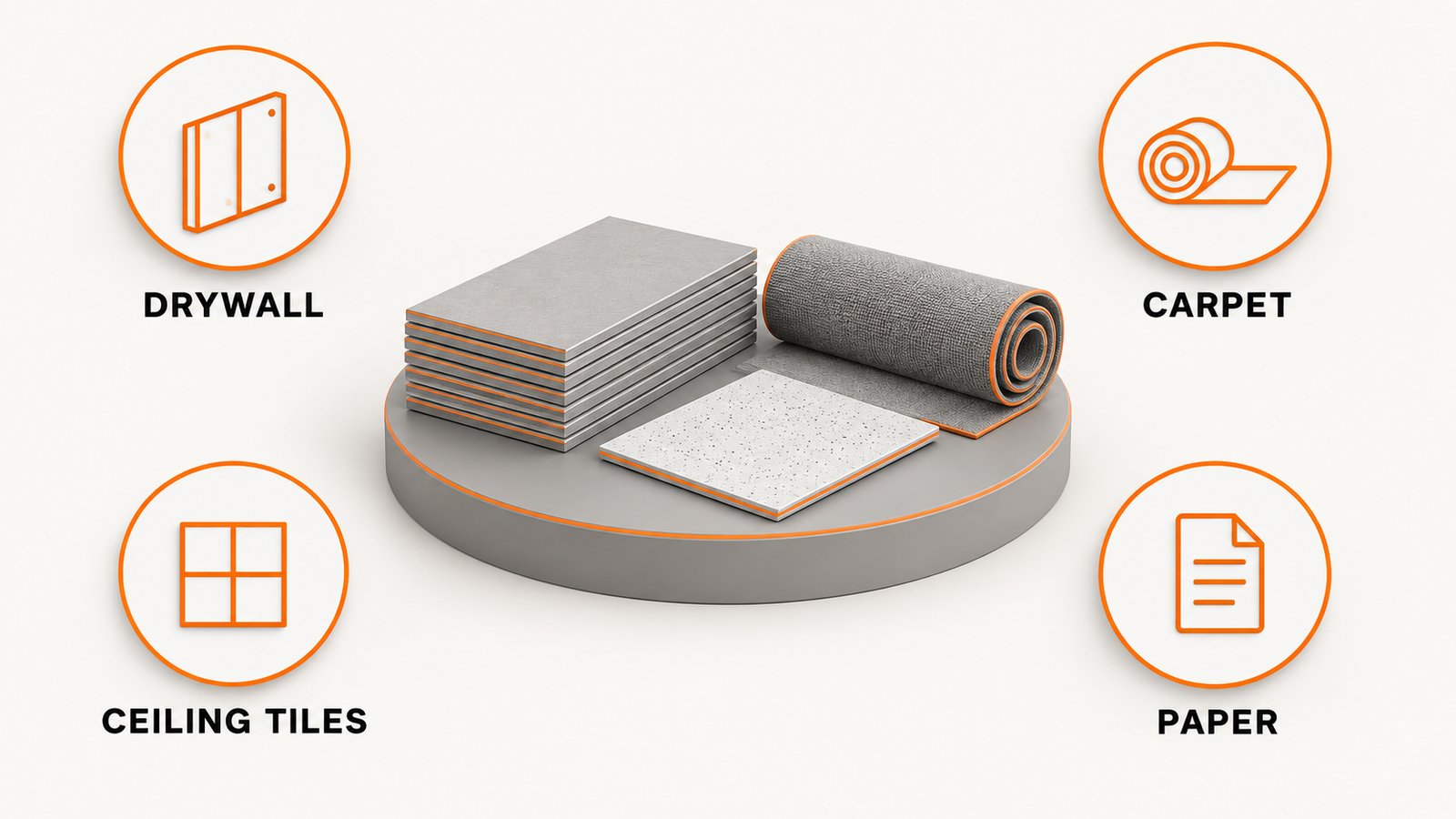
Porous means absorbent: drywall, carpet, ceiling tiles, insulation, paper and unfinished wood. The EPA says absorbent or porous materials, such as ceiling tiles and carpet, may have to be thrown away if they become moldy, because mold can grow on or fill in the empty spaces and crevices of porous materials, so it may be difficult or impossible to remove completely.
New York State is more specific. Porous materials with extensive mold growth should be discarded, and it names drywall and carpeting, plus paper and ceiling tiles, as examples. It also says all wet materials that cannot be cleaned and dried thoroughly should be discarded.
| Material | What the guidance points to | Practical move |
|---|---|---|
| Tile, glass, tub, sealed surfaces | Hard surfaces that are not decayed can be cleaned (New York State) | Detergent and water, scrub, dry |
| Drywall with extensive growth | Discard porous materials with extensive growth (New York State) | Cut out and replace; call a pro if large |
| Carpet and padding | May have to be thrown away if moldy (EPA) | Remove and bag; dry the floor underneath |
| Ceiling tiles | May have to be thrown away if moldy (EPA) | Replace after fixing the leak above |
| Paper, cardboard, books | Discard paper with extensive growth (New York State) | Bag and remove; check what was stored nearby |
| Sentimental or costly items | Consult a specialist if unsure (EPA) | Photograph, isolate, ask a restoration specialist |
The EPA warns that removing wallpaper can lead to a massive release of spores if mold is growing on the underside of the paper, so do not rip it off dry. Our pages on mold on drywall, mold on wood and mold in carpet go through each case.
If opening a wall reveals wet insulation, rot or growth across a large section, stop and call someone, as covered below.
Dry the area within 24 to 48 hours
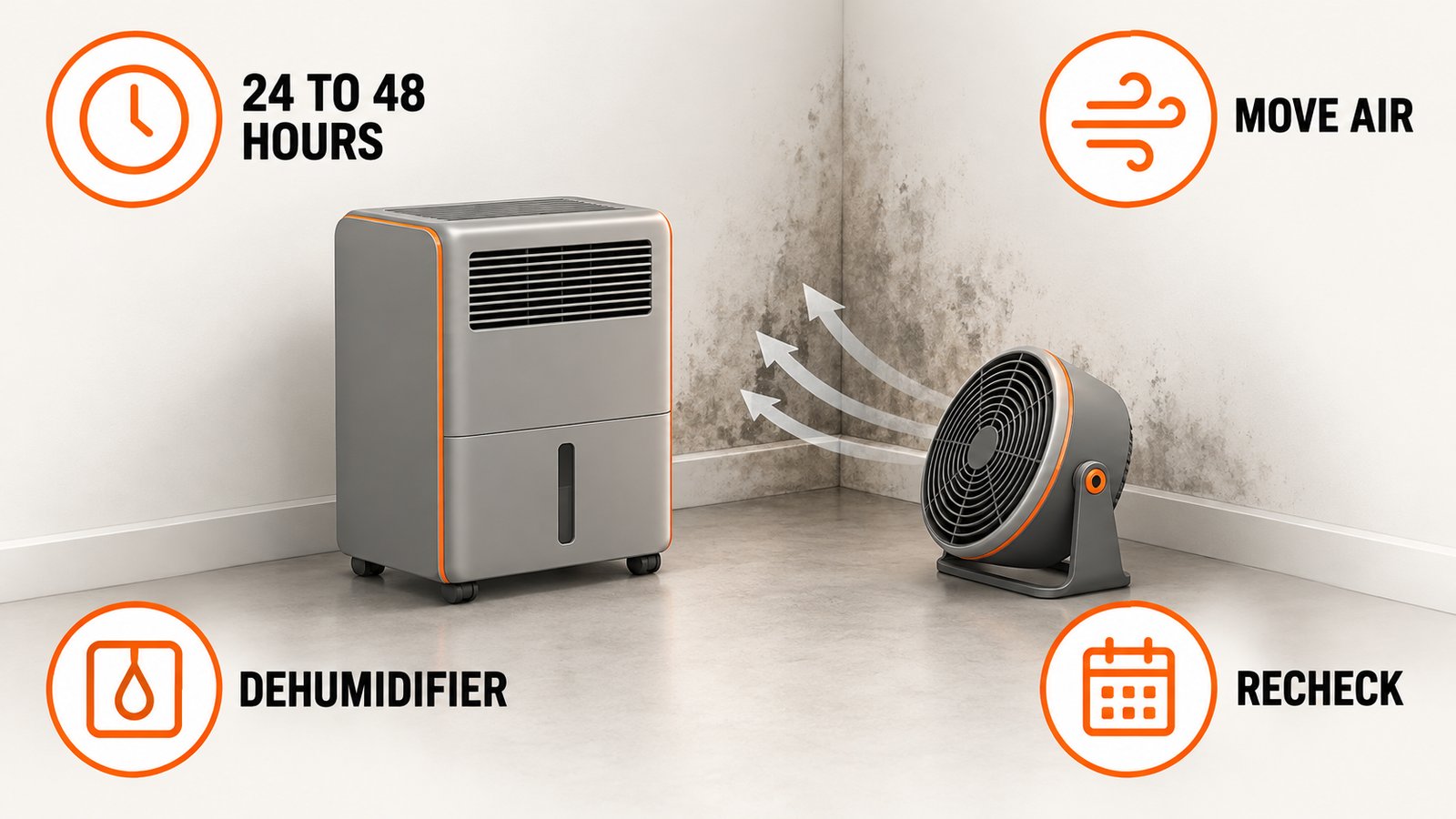
Drying is the step people skip. The EPA says it is important to dry water-damaged areas and items within 24 to 48 hours to prevent mold growth, and that if wet or damp materials are dried within 24 to 48 hours after a leak or spill, in most cases mold will not grow. The same clock applies after you clean.
- Move air. The EPA suggests opening doors or windows when practical and using fans as needed.
- Pull humidity down. A dehumidifier helps in a closed room. See how to prevent mold for the daily habits.
How to know it worked
The EPA lists what a finished cleanup looks like: you have completely fixed the water or moisture problem, visible mold and moldy odors should not be present, and when you revisit the site shortly after cleanup there should be no signs of water damage or mold growth. If dark spots return in the same place, water is still reaching it.
Testing is not required to confirm the result. New York State says mold testing is not recommended, nor is it required by any regulatory agency. If you want options and limits, see how to test for mold.
For a first look at a spot, the Mold Scanner app provides AI-assisted visual screening for the visible surface. Processing time varies. It screens what shows in the photo and does not replace fixing the water. See what a photo can show.
When to call a pro
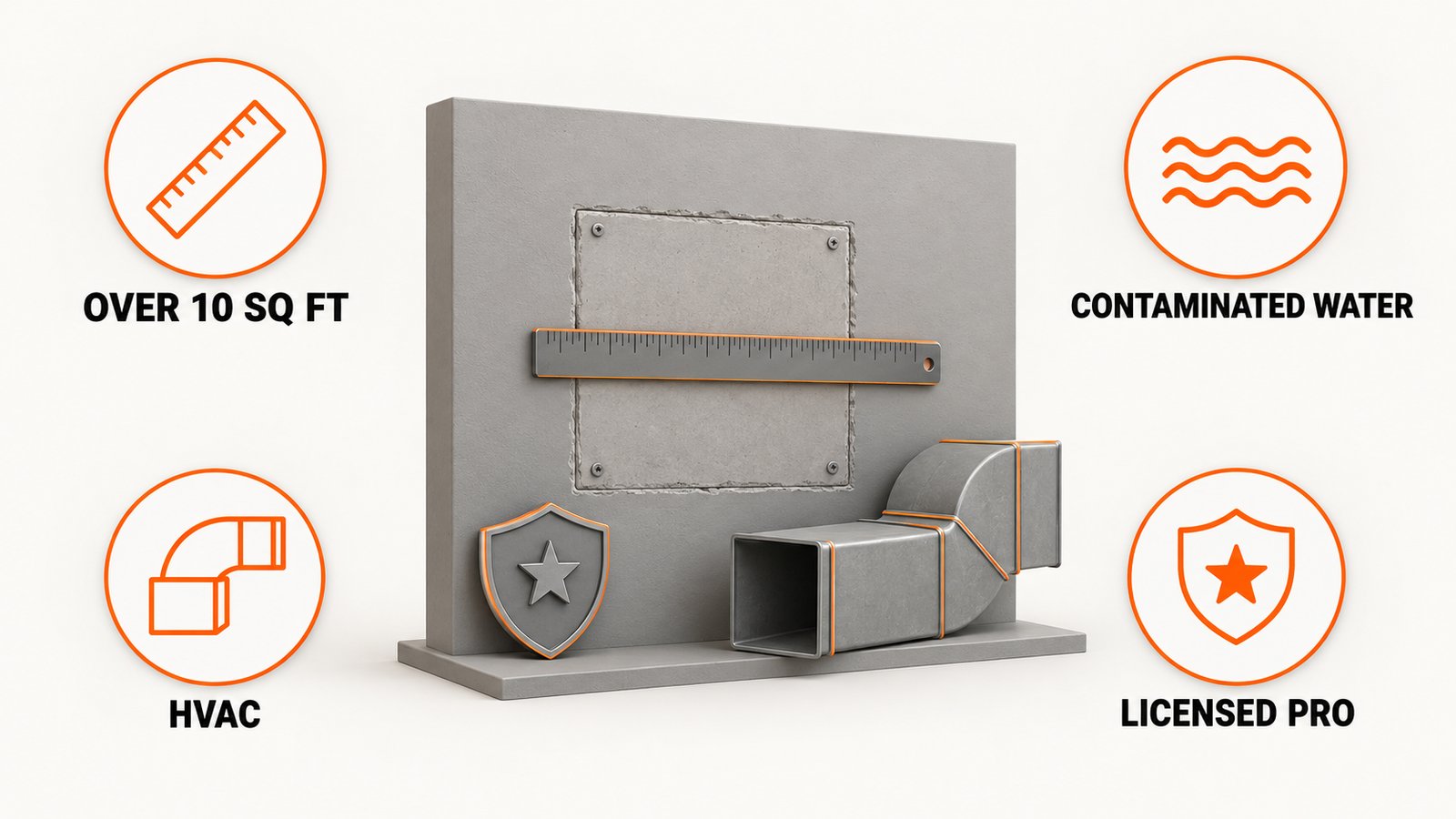
The EPA says that if the moldy area is less than about 10 square feet (less than roughly a 3 ft. by 3 ft. patch), in most cases you can handle the job yourself. Call a professional when any of these is true:
- The growth covers more than 10 square feet or there has been a lot of water damage. The EPA points to its guide for schools and commercial buildings, which it says is applicable to other building types. New York State says a licensed contractor should do the work on a large (greater than 10 square feet) mold problem.
- Sewage or other contaminated water caused it. The EPA says to call in a professional who has experience cleaning and fixing buildings damaged by contaminated water.
- You suspect the HVAC system. The EPA says not to run the HVAC system if you know or suspect it is contaminated with mold, because it could spread mold throughout the building. Read mold in air ducts before acting.
- You are highly sensitive to mold or have health concerns. New York State lists being highly sensitive to mold as its own reason to hire a licensed contractor, and the EPA says to consult a health professional before starting cleanup if you have health concerns.
If you hire someone, the EPA says to make sure the contractor has experience cleaning up mold, check references, and ask the contractor to follow recommendations from the EPA, the ACGIH, the IICRC or other professional or government guidelines. Some states license this work; New York State says to check that a company is licensed by the NYS Department of Labor to perform mold remediation. Our mold remediation process, mold remediation cost and remediation certification pages explain what to ask and what to expect.
Renters: see mold in apartment rights.
Frequently asked questions
How do you get rid of black mold on a wall?
Wear an N95 respirator, gloves and goggles, fix the leak or humidity source, then scrub the wall with detergent and water and dry it completely. The EPA says to scrub mold off hard surfaces this way. New York State says porous materials with extensive mold growth should be discarded. Over about 10 square feet, call a professional.
What kills black mold?
That depends on the product's own label. The EPA says to scrub it off hard surfaces with detergent and water, and that killing mold is not enough because dead mold can still cause allergic reactions in some people, so it must be removed. Check the label for what a product claims and follow its directions.
Is bleach the best way to kill black mold?
The EPA says using bleach or another biocide is not recommended as a routine practice during mold cleanup, though professional judgment may call for it in some cases, such as when immune-compromised people are present. The CDC describes a solution of no more than 1 cup of household laundry bleach in 1 gallon of water for hard surfaces. Never mix bleach with ammonia or other cleaners.
Do I need to know if it's really black mold before I clean it?
No. The CDC states that you do not need to know the type of mold, and that no matter what type is present, you need to remove it. Treat visible growth the same way: fix the moisture, clean or discard the material, and dry the area.
How long does it take to dry the area after cleaning black mold?
The EPA says to dry water-damaged areas and items within 24 to 48 hours to prevent mold growth. Use towels, fans and a dehumidifier.
How big is too big to clean black mold myself?
The EPA says if the moldy area is less than about 10 square feet, roughly a 3 ft. by 3 ft. patch, in most cases you can handle the job yourself. Above that, or after a lot of water damage, sewage, or a suspected HVAC problem, hire an experienced professional.
Do I need a mold test before or after cleanup?
Usually not. The EPA says that in most cases, if visible mold growth is present, sampling is unnecessary. New York State says mold testing is not recommended and is not required by any regulatory agency.
Sources
Every claim on this page traces to one of these. Links open the primary document.