Why humidity control is the #1 mold prevention tool
Mold needs two things to grow: a food source (wood, drywall, paper) and moisture. You cannot remove the food sources from your home. But you can remove the moisture. According to the EPA and every mold remediation expert we studied, keeping indoor humidity below 50% is the single most effective way to prevent mold growth. The IICRC S520 standard identifies moisture control as the first pillar of its three-pillar remediation framework: fix the source, remediate, maintain. A dehumidifier is your maintenance tool.
The EPA reports that indoor air is typically 5x worse than outdoor air. When humidity rises above 60%, mold can begin growing within 24 to 48 hours. That is why a dehumidifier is not optional in basements, crawl spaces, bathrooms, and any room where you have had water damage. This guide is part of our best mold products hub, which covers every category.
What size dehumidifier do you need?
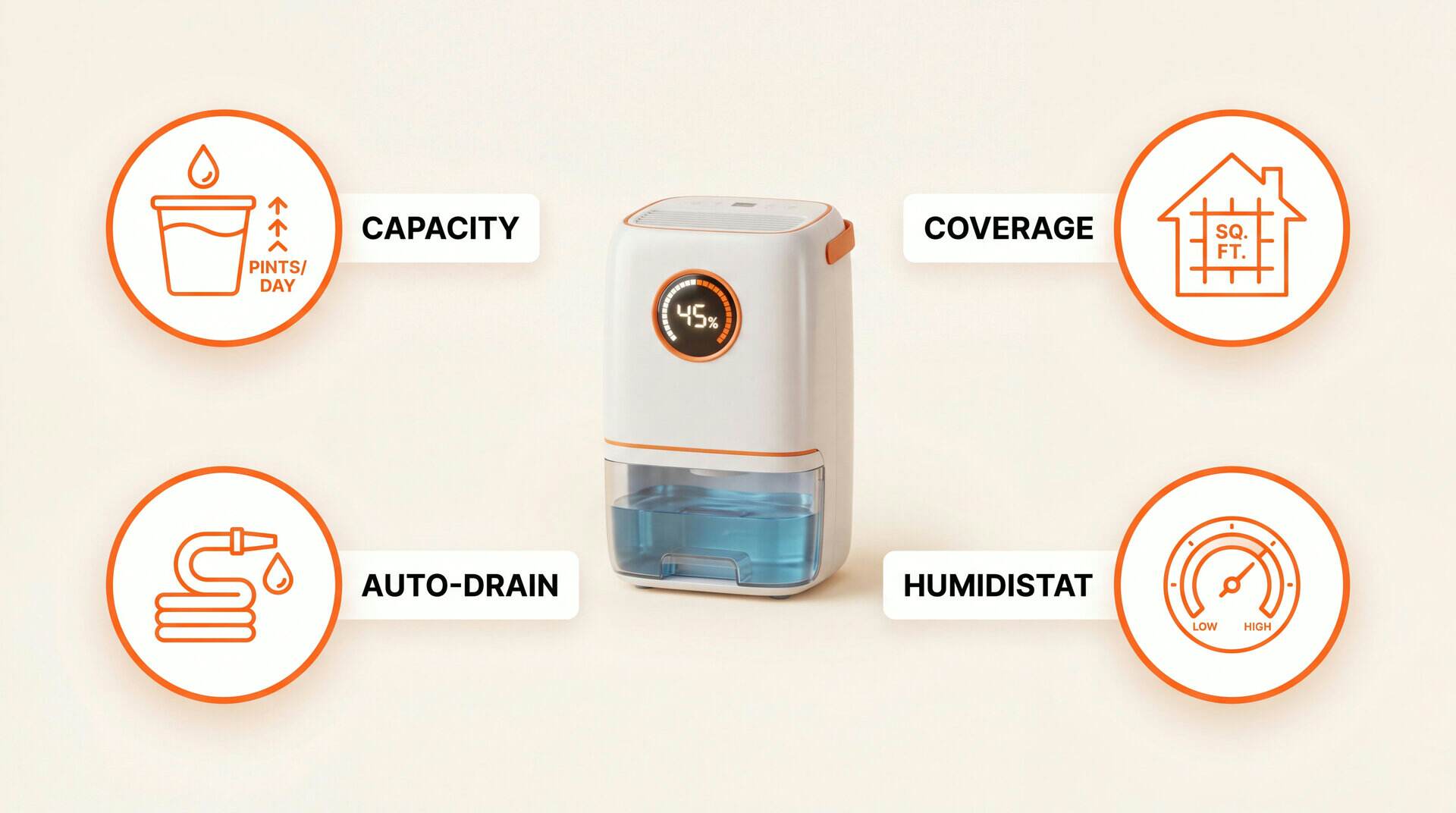
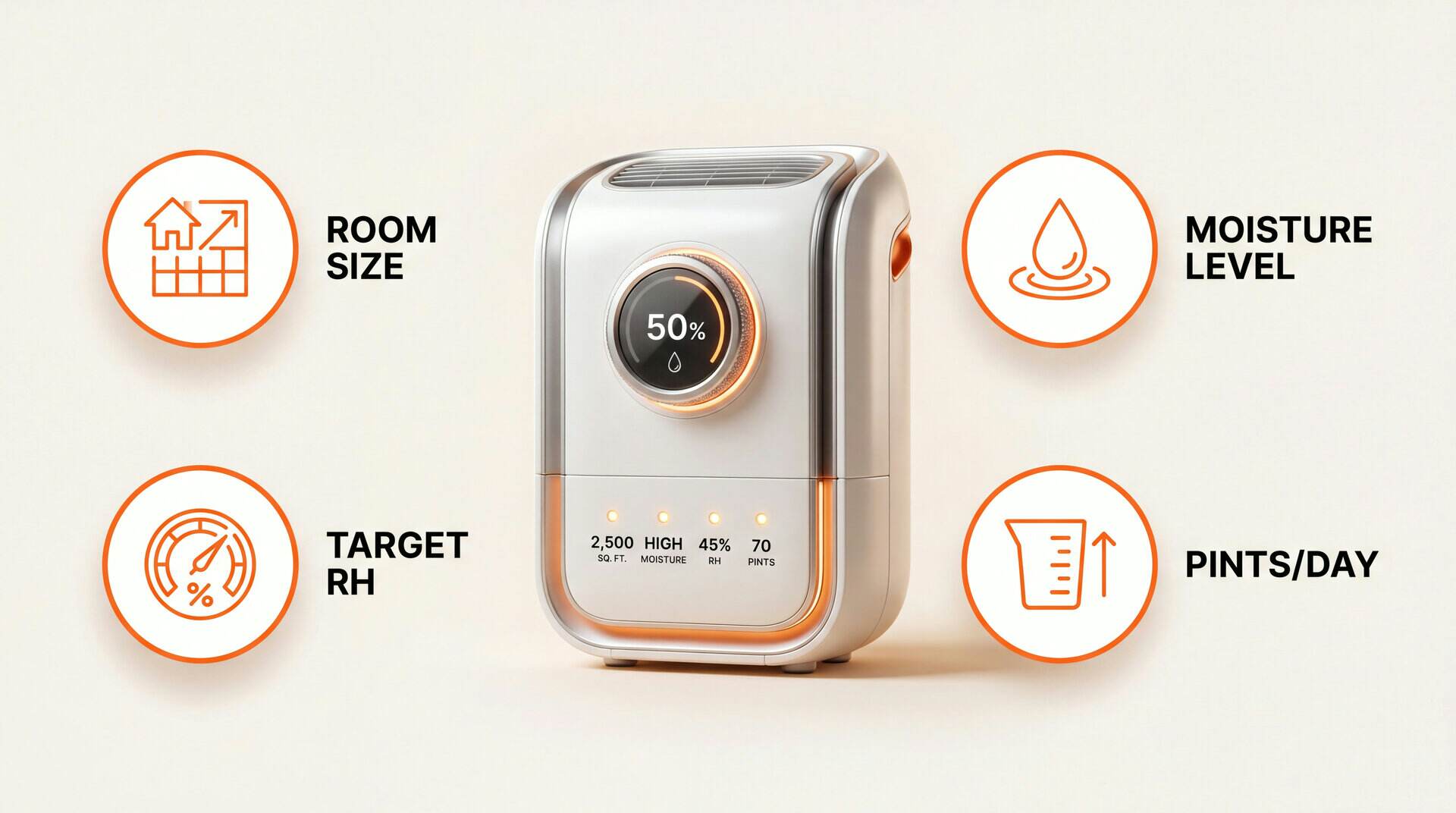
Dehumidifier capacity is measured in pints of water removed per day. The right size depends on two things: how big the room is and how wet it is.
Moderately damp rooms (musty smell, damp feeling): 30 pint unit for up to 1,000 sq ft. This covers most bedrooms, living rooms, and small basements.
Very damp rooms (condensation on walls, visible dampness): 50 pint unit for up to 1,500 sq ft. This is the sweet spot for most basements.
Wet rooms (standing water, seepage, active leaks): 70 pint unit for up to 2,500 sq ft. If you have had flooding or active water intrusion, start here.
Crawl spaces: Need a unit rated for low temperatures. Standard dehumidifiers frost up below 65F. Look for models with hot gas defrost or low temperature ratings down to 40F.
Whole house systems: If your entire home runs above 55% humidity, a whole house dehumidifier connects to your HVAC ductwork and handles 90 to 130 pints per day. These cost $1,500 to $2,500 installed but eliminate the need for portable units in every room.
The best dehumidifiers for mold control, ranked
- Best overall: Midea Cube 50 pint with pump · 4,500 sq ft (manufacturer rating, ideal conditions), pumps water uphill on its own
- Best smart unit: Frigidaire Gallery 50 pint · WiFi humidistat, set 45% from your phone
- Best value for a big basement: hOmeLabs 50 pint with pump · 4,500 sq ft, auto restart
- Best for crawl spaces: AlorAir Sentinel HD55 · runs down to 36F, built-in pump
- Best for a bedroom or bathroom: Frigidaire 35 pint · quiet, low-temp, fits small rooms
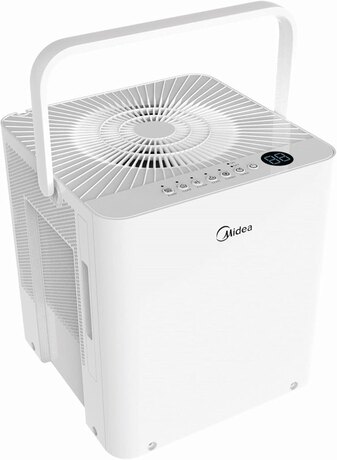
Midea Cube 50 Pint with Built-in Pump
Covers up to 4,500 sq ft and pulls 50 pints a day. The built-in pump pushes water up and out to a sink or window, so you never empty a bucket. A WiFi humidistat lets you set 45% and walk away. The best set-and-forget pick for a damp basement.
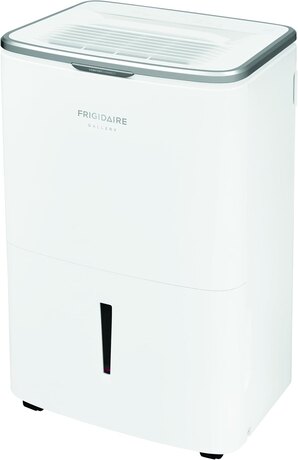
Frigidaire Gallery 50 Pint WiFi
A 50 pint unit with WiFi, app control, and Alexa support, so you can check the humidity and change the target from anywhere. The continuous drain hose runs it hands-free. It collected the most water of any unit in several 2026 test rounds.
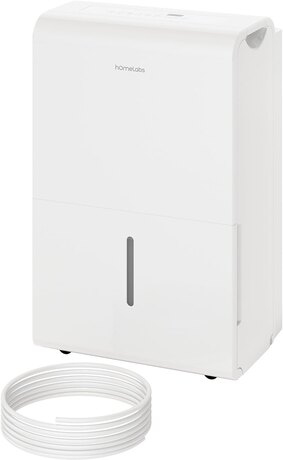
hOmeLabs 4,500 Sq Ft 50 Pint with Pump
A reliable workhorse for a large basement at a lower price than the smart units. Built-in pump, 16.4 ft drain hose, auto defrost for cool rooms, and auto restart after a power outage so a storm never leaves it off. Energy Star Most Efficient.
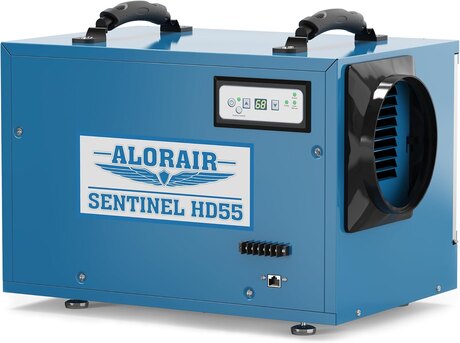
AlorAir Sentinel HD55
A commercial-grade crawl space unit that keeps working where standard models frost up. It runs down to 36F with auto defrost, covers up to 1,300 sq ft, and includes a drain hose plus a MERV-8 filter that traps particles near mold-spore size. Built to sit unattended for years.
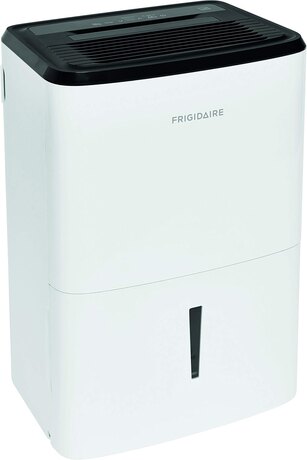
Frigidaire 35 Pint
Right-sized for a single damp room without the bulk or noise of a 50 pint unit. Custom humidity control, low-temperature operation, a washable filter, and a continuous drain option. The pick for a bathroom with poor ventilation or a closet that keeps growing mold.
One rule above the brand: the right unit is the one that gets your room under 50% humidity and keeps it there without you babysitting a bucket. Match the pints to how wet the space is, pick a model with a built-in humidistat, and choose pump or gravity drain so it can run unattended.
Affiliate disclosure: some links above are affiliate links. If you buy through them, Mold Scanner AI may earn a small commission at no extra cost to you. We only list products our editorial review stands behind. Product photos: manufacturers and retailers.
Features that matter for mold prevention
Built in humidistat: This is the most important feature. A humidistat measures the room's humidity and turns the dehumidifier on and off automatically. Set it to 45% and forget it. Without a humidistat, you are guessing.
Auto drain (gravity or pump): A dehumidifier that shuts off when the bucket is full is useless when you are on vacation. Gravity drain connects a hose to a floor drain. A built in pump pushes water up and out to a sink or window. Always choose a unit with at least gravity drain.
Auto restart after power outage: Basements lose power during storms. The same storms create the most humidity. Your dehumidifier must turn itself back on when power returns. Without this feature, your basement can sit at 80% humidity for days after a storm while you think the unit is running.
HEPA filter combo: A dehumidifier removes moisture. A HEPA filter removes mold spores. Some units combine both. This is ideal for rooms with active mold problems because you are addressing both moisture and airborne spores at the same time. Remediation science experts recommend the Intellipure Compact, which filters down to 0.007 microns, far smaller than HEPA's 0.3 micron standard.
Energy Star rating: A dehumidifier running 24/7 in your basement adds $30 to $50 per month to your electric bill. Energy Star units use 15% less energy on average.
Where to place your dehumidifier room by room
Basement: Place it in the center of the room, at least 6 inches from walls. Point the air intake toward the dampest corner. If your basement is L shaped or has divided rooms, you may need two units or a ducted system.
Crawl space: Use a crawl space rated unit (low temp, compact). Place it on a raised platform to avoid standing water. Run a drain hose to a sump pump or exterior drain.
Bathroom: A dehumidifier is a backup, not a replacement for an exhaust fan. Run the fan during and 30 minutes after every shower. A small 20 pint unit helps in bathrooms without windows or with poor ventilation.
Bedroom: Place it away from the bed for noise. Closet corners against exterior walls are the most common hidden mold spots in bedrooms. Aim the dehumidifier toward those corners.
After water damage: Place dehumidifiers in every affected room immediately. Run fans to circulate air across wet surfaces. You have a 24 to 48 hour window before mold starts growing. Every hour counts.
Whole house vs portable: which is right for you?
Choose portable if: Only one or two rooms have humidity problems. You rent and cannot modify HVAC. You need a solution today (whole house units take days to install). Your budget is under $400.
Choose whole house if: Your entire home tests above 55% humidity consistently. You have a crawl space or basement plus upper floor issues. You are tired of emptying buckets or running multiple portables. You live in a humid climate (Southeast, Gulf Coast, Pacific Northwest). Your HVAC is older than 10 years. Remediation experts note that the HVAC coil is always wet, making it a primary mold colony site. A whole house dehumidifier reduces that moisture load across the entire system.
For most homeowners with a damp basement, a single 50 pint portable with auto drain is the best starting point. Add a whole house unit later if problems persist upstairs.
Frequently asked questions
What size dehumidifier do I need to prevent mold?
For a damp 500 sq ft room, you need a 30 pint dehumidifier. For a wet basement of the same size, go with 50 pints. The rule is simple: the wetter the space, the more pints you need. A 70 pint unit handles most basements up to 2,500 sq ft.
What humidity level stops mold growth?
Keep indoor humidity below 50% to stop mold growth. Every mold expert agrees on this number. Mold needs moisture above 60% to grow. A good dehumidifier with a built in humidistat will maintain the right level automatically.
Should I run a dehumidifier all the time for mold?
Yes, run your dehumidifier continuously in problem areas like basements and crawl spaces. Mold can start growing within 24 to 48 hours when humidity rises above 60%. A unit with auto restart after power outages ensures it keeps running even if the power blips.
Do dehumidifiers remove mold spores from the air?
Standard dehumidifiers only remove moisture. They do not filter mold spores. For active mold problems, pair your dehumidifier with a HEPA air purifier that captures particles down to 0.3 microns. Some combo units include both HEPA filtration and dehumidification.
Sources
Every claim on this page traces to one of these. Links open the primary document.