
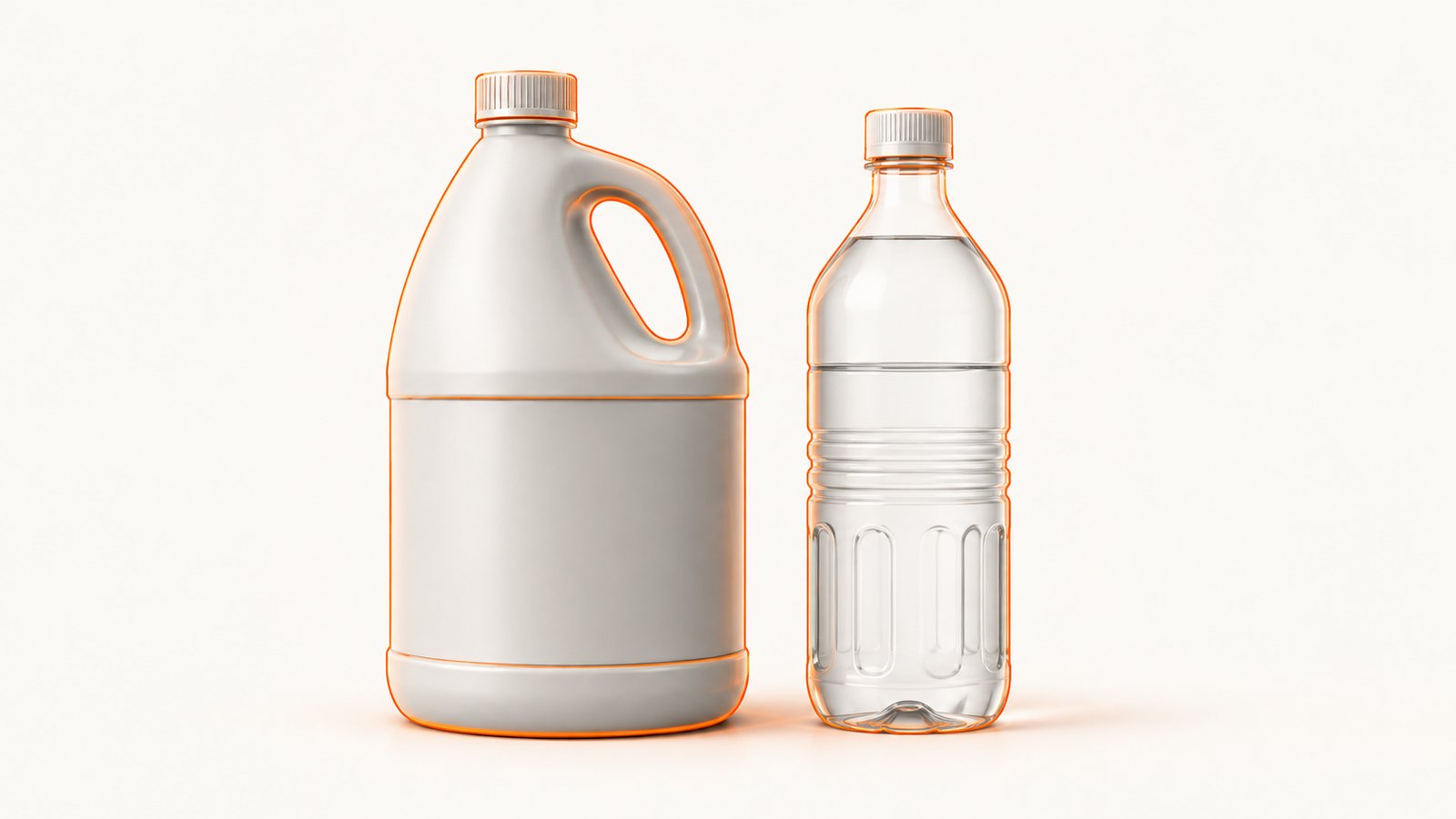
The short verdict, surface by surface
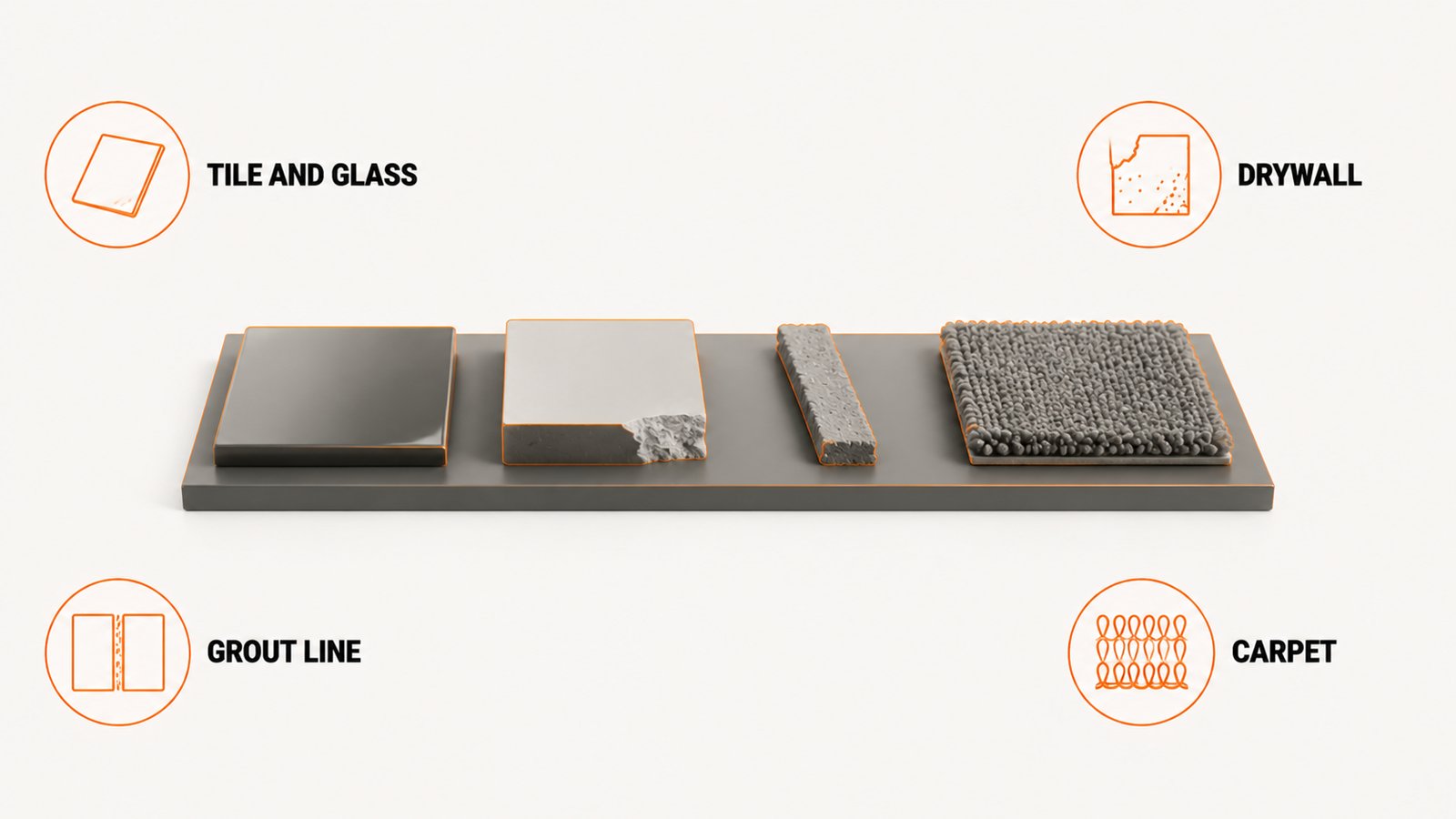
Both products have loud advocates. Neither one is a general-purpose mold solution, and the table below is the honest version of the argument.
| Situation | Chlorine bleach | White vinegar | Better answer |
|---|---|---|---|
| Hard non-porous surface, tile, glass, sealed counter | Removes the stain, strong fumes, EPA does not recommend it as routine practice. | Works on some fungi and not others, mild odor, no fume risk. | Detergent and water with a brush, then dry completely. |
| Porous material, drywall, ceiling tile, carpet | Bleaches the visible stain and adds water to the material. | Soaks in, and still cannot restore a material that is colonized through. | Neither. EPA says porous materials may have to be thrown away. |
| Grout and silicone caulk | Lifts the dark staining, which is why it looks like it worked. | Cleans the surface, leaves the stain in the pores. | Scrub first. Replace failed caulk rather than treating it. |
| Natural stone, aluminum, waxed wood | Can damage finishes and corrode metal. | Acid etches stone and pits aluminum. Do not use it here. | A cleaner rated for that specific material. |
| Safety | Never mix with ammonia cleaners or with acids. Ventilate and exhaust to the outdoors. | Never mix with chlorine bleach. Otherwise low risk. | One product at a time, always. |
| After the growth is dead | Identical for both: EPA says dead mold may still cause allergic reactions, so killing it is not enough and it must be physically removed. | ||
Notice what the right-hand column keeps saying. On the surfaces where a cleaner can work, the recommended method is mechanical: scrub with detergent and water, then dry. On the surfaces where it cannot, the answer is replacement. That is EPA's position, and it is the reason this comparison ends in a draw more often than either camp likes.
What EPA actually says about bleach
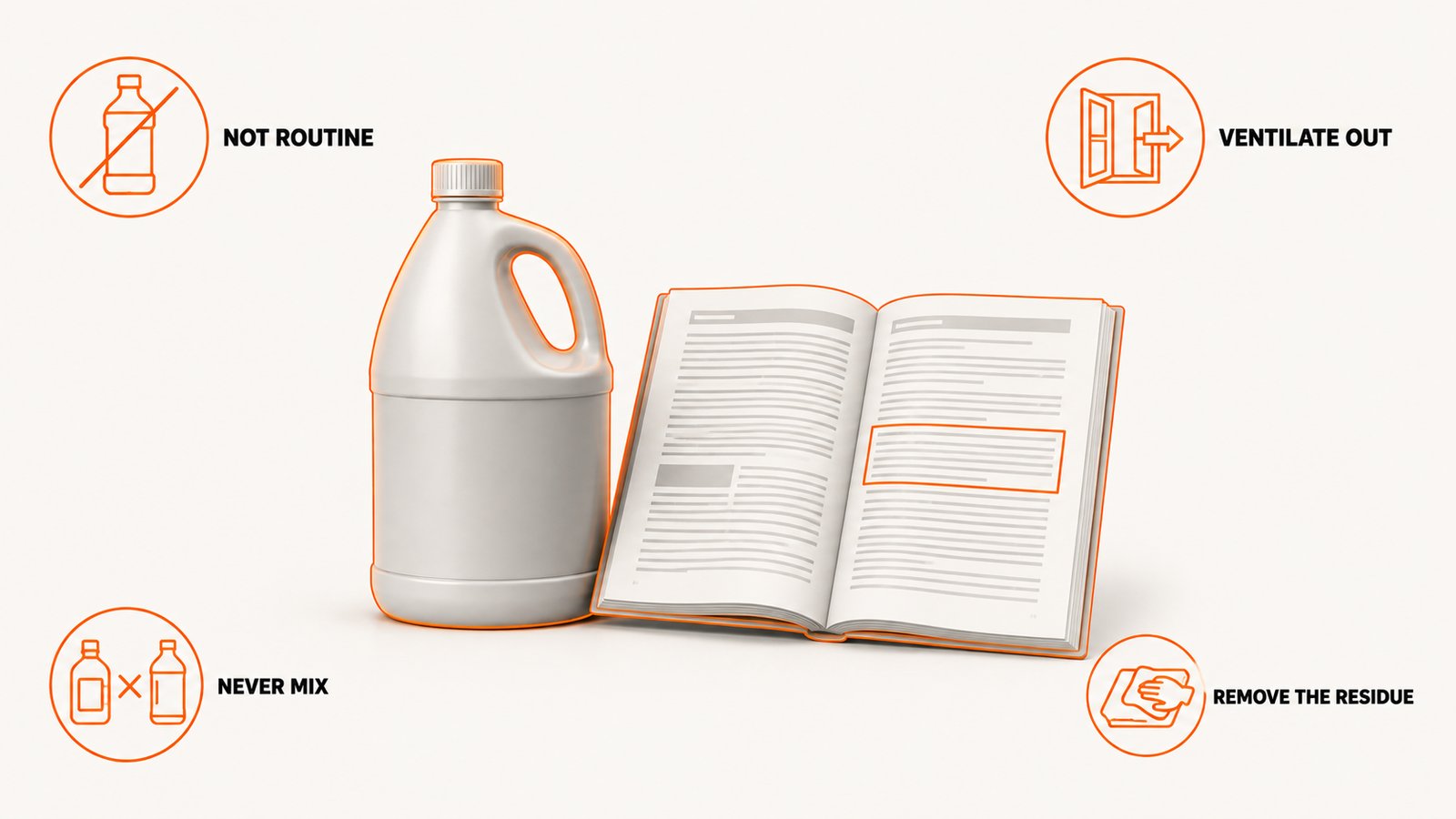
EPA publishes a page with the exact title people search for, and its answer is not the one either side quotes.
Not a routine practice. In EPA's words, the use of a chemical or biocide that kills organisms such as mold, chlorine bleach for example, is not recommended as a routine practice during mold cleanup. It adds that there may be instances when professional judgment indicates its use, giving the example of immune-compromised occupants being present.
Sterilizing is not the goal. EPA states that in most cases it is not possible or desirable to sterilize an area, that a background level of spores will remain, and that those spores will not grow if the moisture problem has been resolved. That single sentence reframes the whole debate: the target is the water, not a sterile surface.
If you use it, ventilate. Always ventilate the area and exhaust the air to the outdoors when using disinfectants or biocides.
Killing is not finishing. Dead mold may still cause allergic reactions in some people, so it is not enough to kill it, it must also be removed. That applies equally to bleach, vinegar and everything else.
Our page on does bleach kill mold covers the chemistry in more depth, including why a bleached stain can read as a finished job when the material underneath has not changed.
What testing shows about vinegar
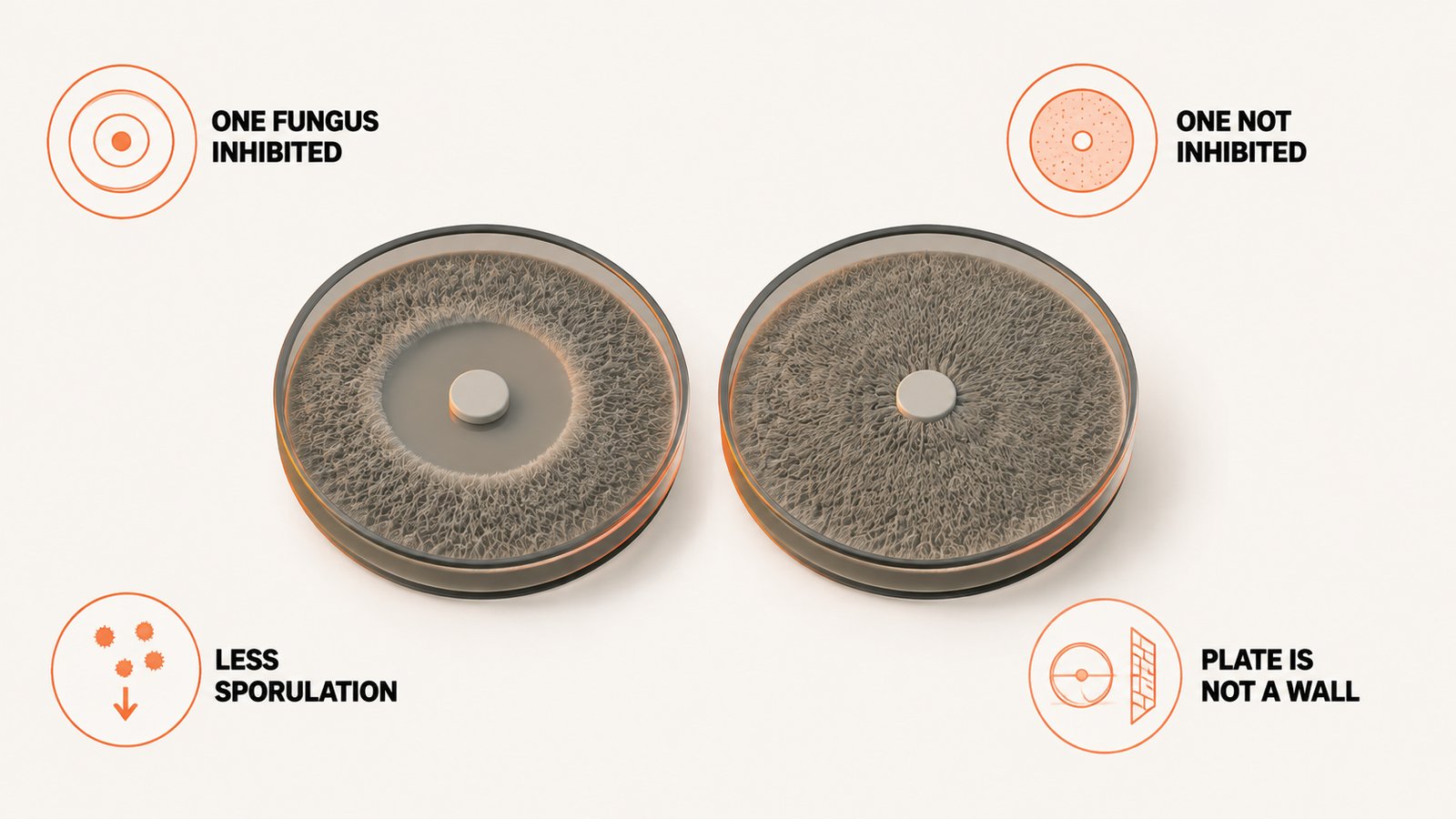
Vinegar has better evidence than bleach advocates admit and weaker evidence than vinegar advocates claim.
A study in the International Journal of Environmental Research and Public Health tested five commercially available cleaning agents against two fungi isolated from indoor air, Aspergillus fumigatus and Penicillium chrysogenum, using a disc diffusion method. Vinegar at 4.0 to 4.2 percent acetic acid inhibited the growth of P. chrysogenum only, and did not inhibit A. fumigatus. Seventy percent ethanol had no inhibitory effect on either. Tea tree oil showed the greatest inhibitory effect on both, in liquid and vapor form, and the researchers noted a distinct reduction in sporulation after exposure to tea tree oil, vinegar and the two industrial disinfectants tested.
Three honest conclusions come out of that:
- Vinegar is not a universal fungicide. It worked on one of the two common indoor genera tested and not the other, and you cannot tell which one is on your wall by looking at it.
- A laboratory dish is not a bathroom wall. Disc diffusion measures growth inhibition on a plate, not removal of an established colony from a porous building material.
- The surprise result was tea tree oil, which is worth knowing rather than acting on blindly. It is covered separately in tea tree oil for mold.
Vinegar is also not an EPA-registered disinfectant, so it makes no sanitizing claim, and its full household use and its limits are covered in does vinegar kill mold.
Porous or non-porous is the real decision
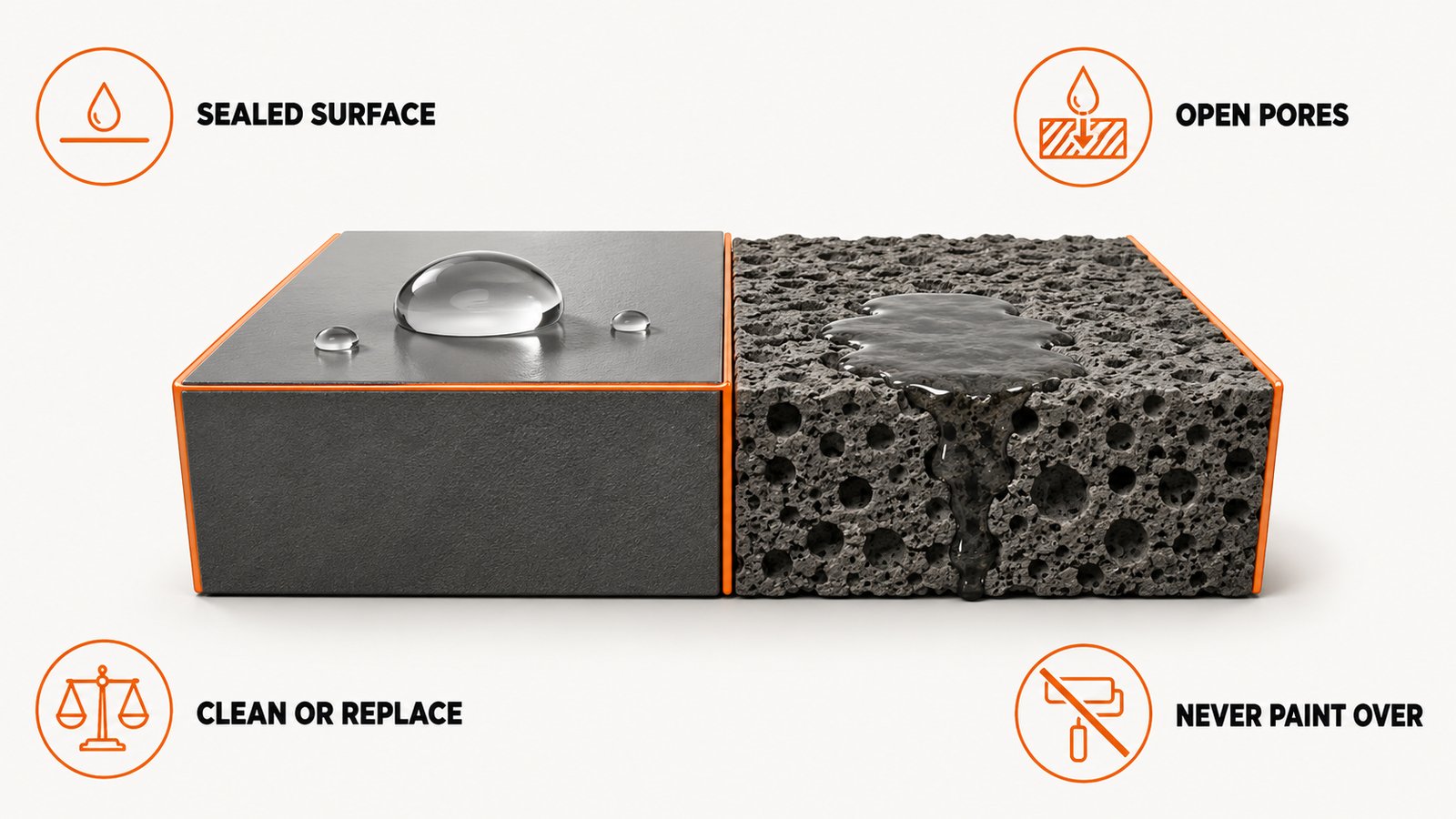
The bottle argument is a distraction from the only question that changes the outcome: can the material be cleaned, or does it have to go?
Non-porous surfaces can be cleaned. Tile, glass, metal, sealed counters and finished trim hold growth on the surface, so mechanical removal works. EPA's method is to scrub mold off hard surfaces with detergent and water and dry completely.
Porous materials often cannot. EPA is explicit that absorbent or porous materials such as ceiling tiles and carpet may have to be thrown away if they become moldy, because mold can grow on or fill in the empty spaces and crevices of porous materials, so it may be difficult or impossible to remove completely. Pouring a stronger liquid onto that material adds water to a problem made of water.
Semi-porous is the judgment call. Painted drywall, sealed wood and grout sit in between. Light surface growth on a sound painted wall usually cleans. Material that is soft, stained through or swollen does not, and our guides to mold on drywall and mold on wood cover how to tell.
And never paint over it. EPA says not to paint or caulk moldy surfaces, and that paint applied over a moldy surface is likely to peel. Clean and dry first.
The mixes that send people to the hospital
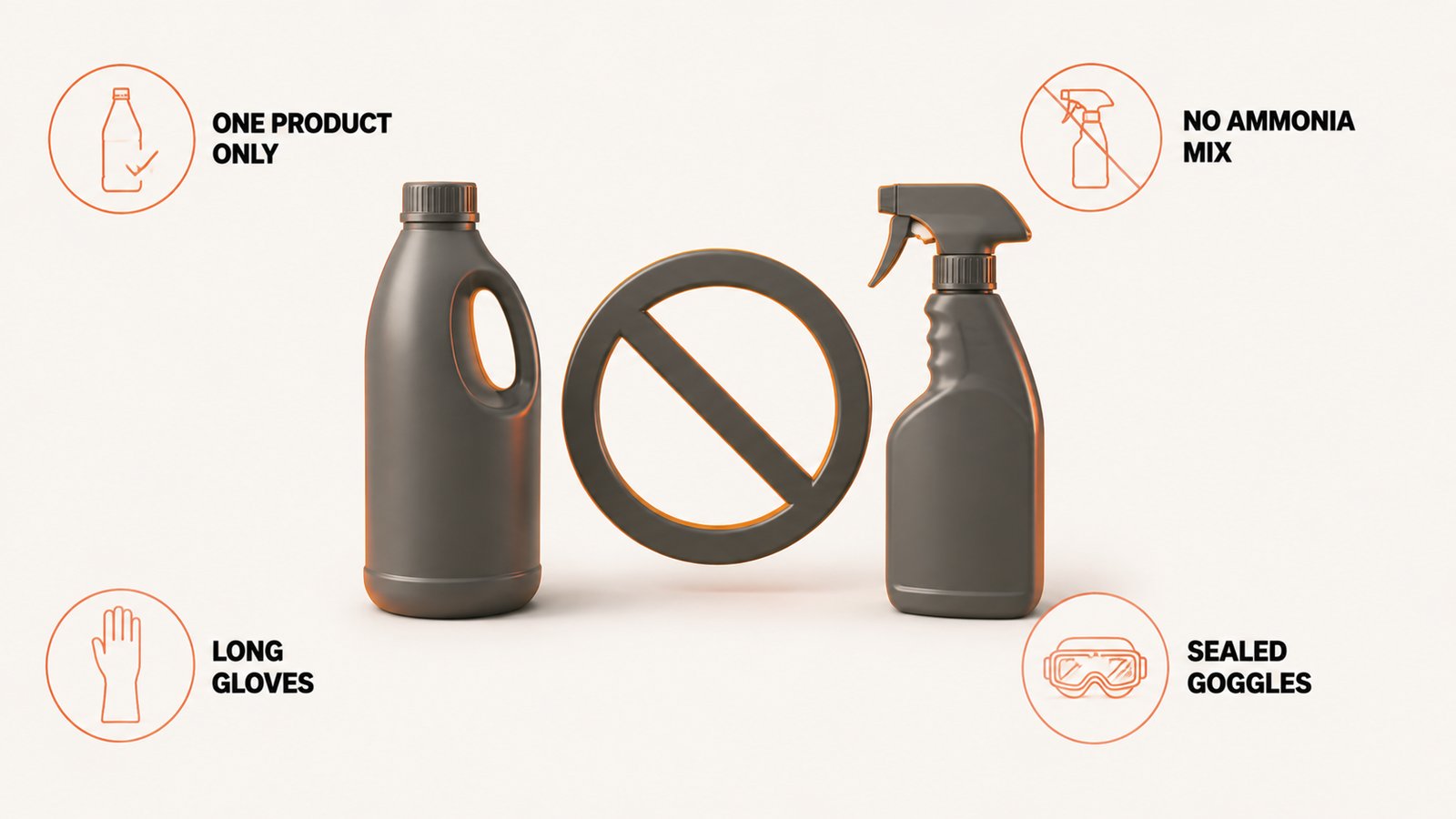
This is the part of the comparison that actually hurts people.
Never mix chlorine bleach with an ammonia cleaner. EPA states it directly: never mix chlorine bleach solution with other cleaning solutions or detergents that contain ammonia, because toxic fumes could be produced. Many glass and multi-surface cleaners contain ammonia.
Never mix bleach with vinegar or any acid. Combining a chlorine bleach solution with an acid releases chlorine gas. If you use one and then decide to try the other, rinse the surface thoroughly with water first and ventilate the room.
Ventilate and exhaust outward. EPA's instruction when using disinfectants or biocides is to always ventilate the area and exhaust the air to the outdoors, not into another room.
Wear the right gloves for the product. EPA's guidance is specific: ordinary household rubber gloves are fine for water and mild detergent, but for a disinfectant, a biocide such as chlorine bleach, or a strong cleaning solution, select gloves made from natural rubber, neoprene, nitrile, polyurethane or PVC. Long gloves that extend to the middle of the forearm are recommended.
Goggles and a respirator. EPA recommends goggles without ventilation holes and an N-95 respirator, and advises against touching mold or moldy items with bare hands.
What to use instead, most of the time
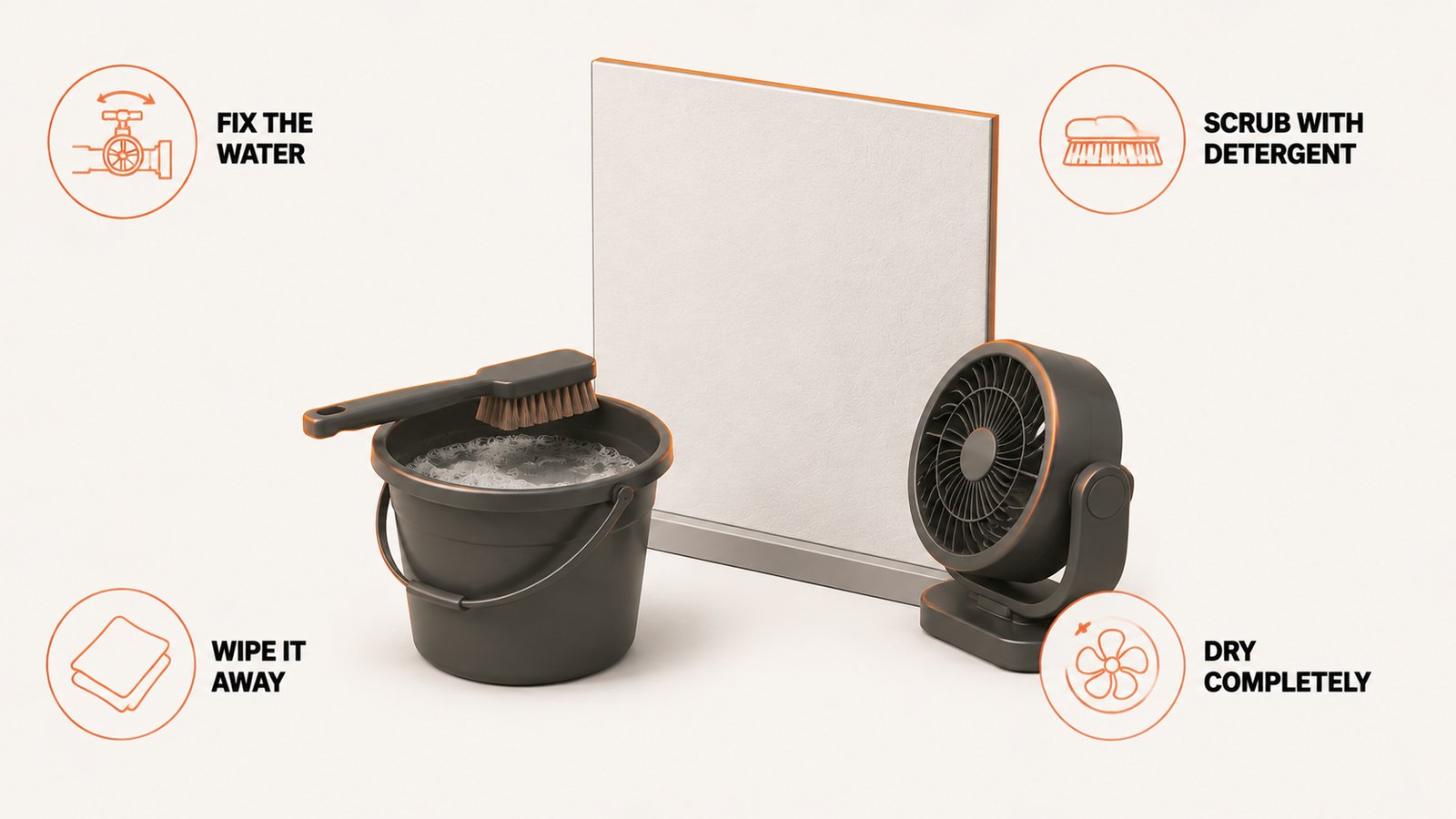
The method EPA actually recommends is unglamorous and it is the one that holds.
- Fix the water first. EPA's completion standard begins with the moisture problem being completely fixed, and its prevention guidance is that materials dried within 24 to 48 hours will in most cases not grow mold.
- Scrub hard surfaces with detergent and water. Mechanical removal does the work. A stiff brush and a cloth beat a stronger chemical on a surface that can be scrubbed.
- Remove the residue. Dead growth still has to come off, so wipe and rinse rather than spraying and walking away.
- Dry completely. Fans, a dehumidifier, open windows if the outdoor air is drier. EPA asks for indoor humidity below 60 percent and ideally between 30 and 50 percent.
- Replace what cannot be cleaned. Saturated drywall, carpet padding, ceiling tiles and failed caulk come out.
If you would rather use a purpose-built product than plain detergent, our roundup of mold cleaning products covers what each type does, and hydrogen peroxide and baking soda both have narrower, honest uses. The full sequence for a room is in how to get rid of mold.
When to call a pro
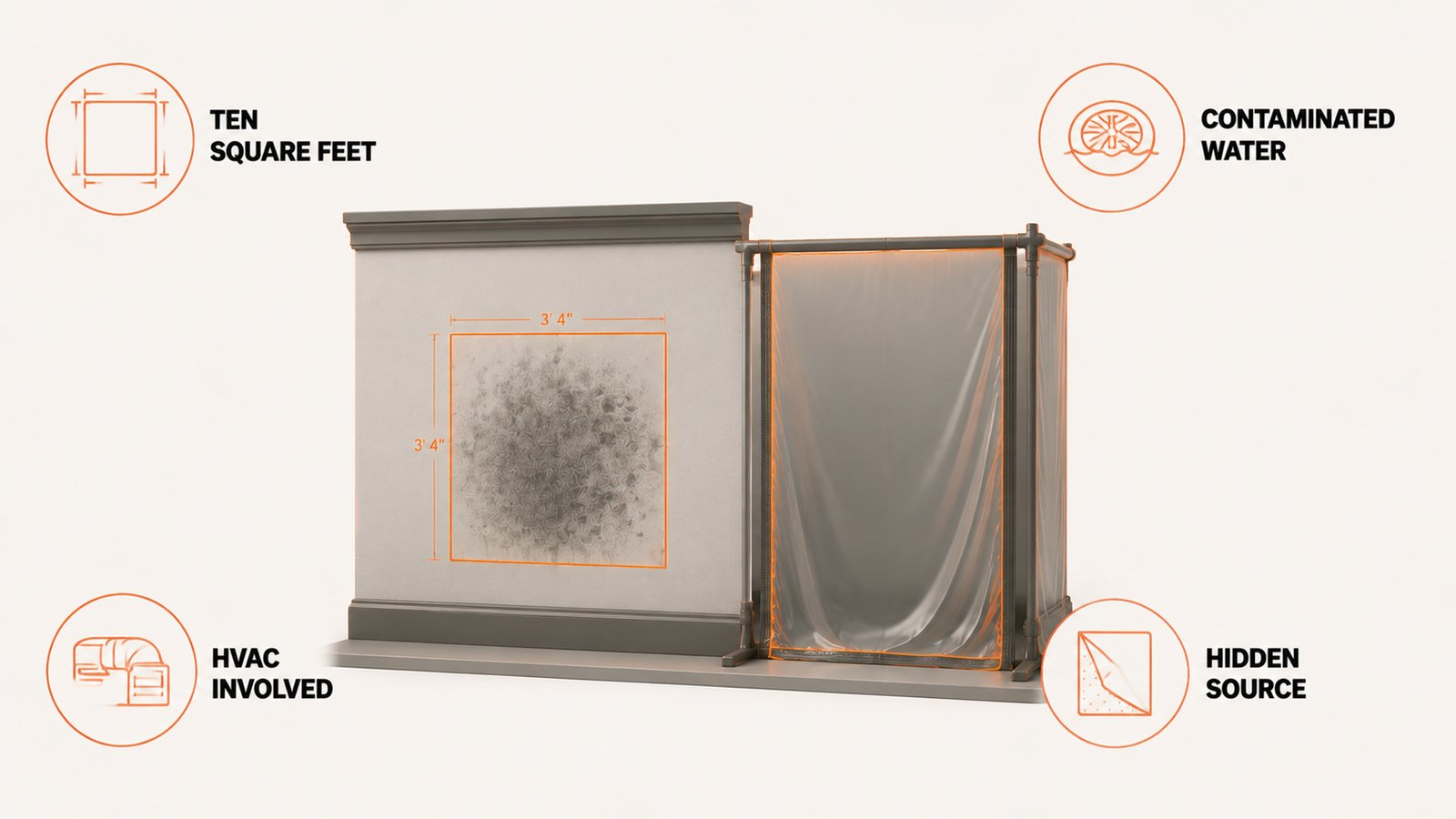
Growth beyond about 10 square feet. EPA's line is less than roughly a 3 foot by 3 foot patch for do-it-yourself work. Past that, or after significant water damage, it recommends a contractor with mold experience working to its remediation guide, the ACGIH guidelines or the IICRC standard.
Sewage or contaminated water. EPA says that damage caused by sewage or other contaminated water calls for a professional experienced in that work. No consumer product changes that.
Anything in an air-handling system. EPA advises against running an HVAC system you know or suspect is contaminated, because it could spread growth throughout the building, and points to its duct-cleaning guidance before further action.
Concealed growth. If the smell says it is there but you cannot see it, opening an assembly to spray it is the wrong first move. EPA notes you may suspect hidden mold when a building smells moldy but the source is not visible.
Health questions. CDC states that exposure to damp and moldy environments may cause a variety of health effects or none at all, and that people with asthma or a mold allergy may have severe reactions. EPA advises consulting a health professional before starting cleanup if you have health concerns.
Frequently asked questions
Is bleach or vinegar better for mold?
Neither is the default. EPA does not recommend a biocide such as chlorine bleach as a routine practice during mold cleanup, and its recommended method for hard surfaces is detergent and water followed by complete drying. Published testing found vinegar at about 4 percent acetic acid inhibited one common indoor fungus and not another. The surface decides more than the bottle does: non-porous material can be cleaned, porous material often has to be replaced.
Does EPA recommend bleach for mold?
No. EPA's own page on the question states that the use of a chemical or biocide that kills organisms such as mold, chlorine bleach for example, is not recommended as a routine practice during mold cleanup, while allowing that professional judgment may indicate its use in specific circumstances such as when immune-compromised individuals are present.
Can I mix bleach and vinegar to clean mold?
No. Mixing a chlorine bleach solution with an acid releases chlorine gas. EPA also warns never to mix chlorine bleach with cleaning solutions or detergents that contain ammonia because toxic fumes could be produced. Use one product, rinse the surface thoroughly with water, ventilate the room, and only then consider a different product.
Does vinegar kill all types of mold?
No. In a study testing five cleaning agents against two fungi commonly found in indoor air, vinegar at 4.0 to 4.2 percent acetic acid inhibited the growth of Penicillium chrysogenum but not Aspergillus fumigatus. Since you cannot identify the organism on a wall by looking at it, treat vinegar as a useful household cleaner rather than a guaranteed fungicide.
Why does mold come back after I bleach it?
Because the moisture is still there and, on porous material, so is the colony. EPA notes that a background level of spores always remains and that those spores will not grow once the moisture problem is resolved. It also says dead mold can still cause allergic reactions, so it has to be physically removed rather than only killed. Bleached staining that fades reads as success while nothing structural has changed.
What should I use on drywall or carpet?
Usually neither product. EPA states that absorbent or porous materials such as ceiling tiles and carpet may have to be thrown away if they become moldy, because growth fills the spaces and crevices in porous material and can be impossible to remove completely. Light surface growth on sound painted drywall may clean with detergent and water, and saturated or stained-through material comes out.
Is there a safer product that works better than both?
For most household jobs the recommended method is detergent, water, a brush and thorough drying, which is EPA's own guidance for hard surfaces. Where a product helps, choose one rated for the surface and follow the label. In one published comparison, tea tree oil showed the greatest growth inhibition of the agents tested, which is interesting rather than a general recommendation.
Sources
Every claim on this page traces to one of these. Links open the primary document.