Does Hydrogen Peroxide Kill Mold?
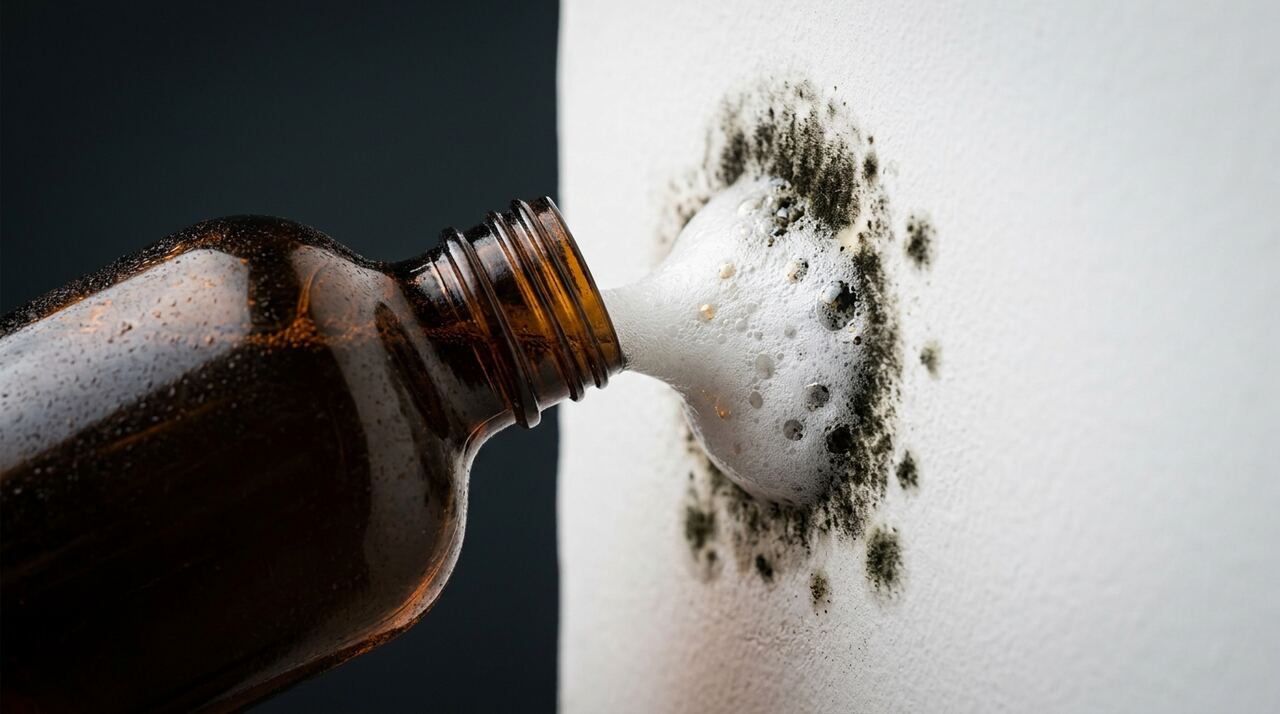
Yes. Hydrogen peroxide kills mold on contact. You don't need a special concentration or a hardware-store chemical. The same brown bottle of 3% hydrogen peroxide that sits in most medicine cabinets does the work.
Here's how it works. Hydrogen peroxide is water with one extra oxygen atom, written H2O2 instead of H2O. That extra atom makes it unstable. When it touches mold, it releases that oxygen in a burst. The burst oxidizes the mold: it tears apart the cell walls, the spores, and the pigments that give mold its color. The structure breaks down at a chemical level, which is why the stain fades while you watch.
The 3% strength is the sweet spot for home use. It's strong enough to oxidize mold but mild enough to handle without industrial gear. Stronger concentrations like the 35% food-grade version are harder to find, riskier to store, and not needed for the spots most people face. For a patch of mold on tile, grout, or a painted wall, the drugstore bottle is all it takes.
One thing to set straight up front. Peroxide kills what it touches. It's a surface treatment. If mold has soaked deep into drywall or grown behind a wall, spraying the top won't reach the part you can't see. We'll cover those limits below. For visible growth on a hard or lightly porous surface, 3% peroxide gets the job done.
Why Peroxide Beats Bleach on Pores
Bleach has a reputation for killing mold. On a glass shower door or a ceramic tile, it does fine. The problem starts the moment the surface has pores: wood, grout, drywall, painted plaster. That covers most of the places mold grows.
Bleach is mostly water with a small amount of chlorine. On a porous surface, the chlorine stays on top while the water soaks in. You've fed the mold. The visible stain fades, so the surface looks clean, but the roots underneath get a fresh drink and grow back within days. The EPA does not recommend bleach as a routine mold cleaner, and most mold pros skip it on porous materials for that reason. Our guide on whether bleach kills mold breaks down the full picture.
Hydrogen peroxide works the other way. When it hits mold, it foams. You can see the bubbles. That foaming action isn't only for show: it carries the peroxide down into the pores, into the cracks and grain where mold hides. It reaches more of the colony than a flat liquid resting on the surface.
Then it disappears. Hydrogen peroxide breaks down into two harmless things: water and oxygen. There's no chlorine cloud to breathe. There's no toxic film left on a surface your kids or pets might touch. You skip the harsh fumes that make a small bathroom feel like a pool deck.
How to Use Hydrogen Peroxide on Mold, Step by Step
This method works for a small area, meaning under 10 square feet, about the size of a bath towel laid flat. Anything bigger belongs to a pro, which the limits section explains. For the full room-by-room playbook, our guide on how to get rid of mold walks through every surface.
Step 1: Fix the water first. Mold is a moisture problem wearing a costume. If a leak, drip, or humid room is feeding the spot, peroxide will clean it and the mold will come right back. Find the water source and stop it before you clean. Mold can return in 24 to 48 hours if the surface stays wet.
Step 2: Gear up. Put on an N95 mask, rubber gloves, and eye protection. Cleaning mold kicks spores into the air. Open a window or run a fan for fresh air. The CDC recommends protecting your eyes, skin, and lungs whenever you disturb mold.
Step 3: Spray it on undiluted. Pour 3% hydrogen peroxide straight into a dark spray bottle. Light breaks peroxide down, so keep it out of clear bottles and sunlight. Don't water it down. Soak the moldy surface until it's wet and starts to foam.
Step 4: Let it sit for 10 to 15 minutes. This dwell time is the part people skip, and it's the part that matters. The peroxide needs those minutes to oxidize the mold and foam into the pores. Walk away. Come back once the foaming settles.
Step 5: Scrub. Use a stiff brush on grout and rough surfaces, or a sponge on softer ones. Work the loosened mold off the surface. For tight grout lines, an old toothbrush gets into the seams.
Step 6: Wipe and dry. Wipe away the residue with a clean cloth, then dry the surface completely. A damp surface invites the next round of mold, so finish with a fan or a towel-dry.
Test first on anything that can stain. Peroxide is a mild bleaching agent. It can lighten fabric, colored grout, and some painted or stained surfaces. Dab a hidden corner, wait a few minutes, and check before you treat the whole area.
Where to buy
Check Price on Amazon →Affiliate disclosure: the link above is an affiliate link. If you buy through it, Mold Scanner AI may earn a small commission at no extra cost to you.
Surfaces It Works On (and the One Mix to Avoid)
Hydrogen peroxide handles a wide range of household surfaces. Here's where it does well:
- Tile and grout. Bathroom and kitchen tile clean up well, and the foaming action reaches grout lines that a flat wipe misses. Our mold on grout guide covers the deep-clean method.
- Tubs, sinks, and toilets. Hard, glazed surfaces wipe clean with no residue.
- Painted walls. Works on most painted drywall, as long as the mold is on the surface and hasn't soaked through. Spot test first, since peroxide can lighten some paint.
- Raw and finished wood. Peroxide is gentler on wood than bleach and won't leave the harsh white streaks bleach does. Test a hidden spot for color change first. For tougher cases, read our mold on wood guide.
- Fabric and caulk, with a spot test. Light-colored fabric can take peroxide, but always test, because it can lift dye. For the black line along a tub, see our mold on caulk notes.
Now the warning that keeps people safe.
Never mix hydrogen peroxide and vinegar in the same bottle. Combined in one container, they form peracetic acid. In strong amounts, peracetic acid can irritate your skin, eyes, and lungs, and it corrodes some surfaces. The fix is easy: use them in separate passes. Spray peroxide, let it work, wipe, and dry. If you also want vinegar, do it as a second step with the surface dry in between. One at a time is safe. One bottle is not.
The same one-at-a-time rule applies to every cleaner. Don't combine peroxide with bleach either. And memorize the classic deadly mix: bleach plus ammonia makes toxic chloramine gas, and bleach plus vinegar releases chlorine gas. When in doubt, rinse with plain water between products and keep one chemical on the surface at a time. Our guide compares the safe options side by side.
Peroxide vs Vinegar vs a mold-control product: When Each Wins
Three home-friendly mold cleaners come up again and again: hydrogen peroxide, white vinegar, and a no-bleach mold-control product. None wins everywhere. Here's when to reach for each.
| Cleaner | Best for | How it works | Watch out for |
|---|---|---|---|
| 3% hydrogen peroxide | Tile, grout, tubs, quick cleanups | Oxidizes mold on contact, foams into pores, breaks down to water and oxygen | Can lighten color, works best fresh |
| White vinegar (undiluted) | Porous surfaces, budget cleanups | The acetic acid kills many common mold species and soaks in | Slower, strong smell, skip natural stone |
| a no-bleach mold-control product | Stopping regrowth after cleaning | Dries into a thin film that crushes spores and blocks new ones | Not an instant oxidizer, needs dry time |
Hydrogen peroxide wins when you want fast oxidizing power with no residue. It kills on contact, foams into pores, and breaks down into water and oxygen. Reach for it on tile, grout, tubs, and quick cleanups where you don't want a lingering smell or film. The trade-off: it can lighten color, and it loses strength once the foaming stops, so it's a treat-it-now product.
White vinegar wins on porous surfaces where you want something cheap and mild. Its acid kills many common mold species and soaks in rather than sitting on top. It's slower than peroxide and the smell is strong, though it fades as it dries. Good for a budget cleanup on grout, wood, or walls. Our guide on whether vinegar kills mold lays out the method.
a mold-control product wins when you want to stop mold coming back. a no-bleach mold-control product isn't a quick oxidizer. As it dries, it leaves a thin film that crushes mold spores and blocks new ones from settling. It has no bleach and no ammonia, and it's safe on most surfaces. It's the pick after you've cleaned a spot and want a barrier against the next round. Our full covers how to apply it.
A simple way to choose: peroxide to kill it fast, vinegar for a cheap soak-in clean, a mold-control product to keep it from returning. Many people clean with peroxide or vinegar, dry the surface, then finish with a mold-control product as a preventive coat. Remember the one-at-a-time rule when you switch products.
Where Peroxide Falls Short
Hydrogen peroxide is a strong tool for small, visible, surface mold. It has real limits, and knowing them saves you from a cleanup that doesn't hold.
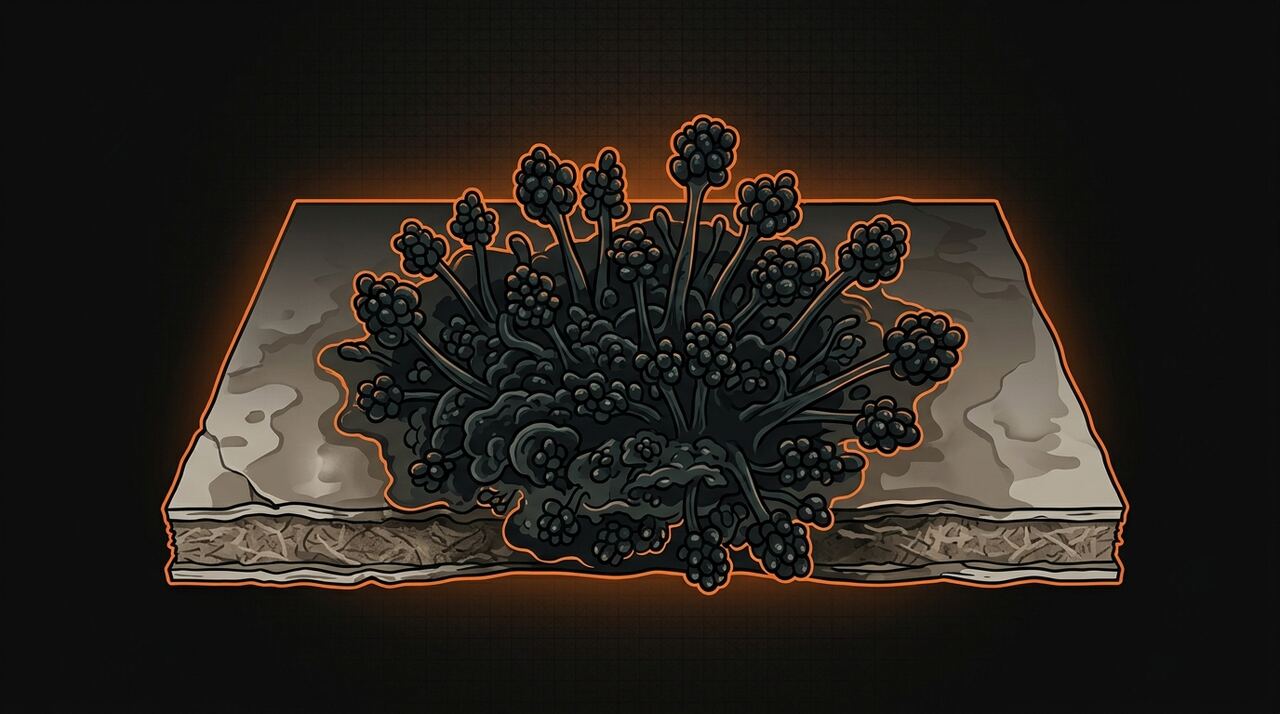
It only treats what it touches. Peroxide is a surface oxidizer. If mold has grown deep inside drywall, soaked into insulation, or spread under flooring, spraying the top won't reach the colony inside. Porous material that's soaked through usually has to be cut out and replaced, not wiped. Deep, dark staining that looks like black mold on a wall is often this kind of hidden growth.
It doesn't fix the cause. Peroxide cleans mold. It does nothing about the leak, the humidity, or the condensation that grew it. Skip the moisture fix and the mold returns every time. Keep indoor humidity between 30 and 50 percent, run exhaust fans, and repair leaks fast. That part is what keeps mold gone for good.
Big jobs need a pro. If the moldy area is larger than 10 square feet, stop and hire a qualified mold remediation professional. Look for firms that follow the IICRC S520 standard. ACAC or RIA credentials and state licenses count too. The EPA uses that 10 square foot line as the point where a job moves from DIY to professional.
Hidden and HVAC mold need a pro too. If you smell a musty odor but can't find the source, or you see mold around air vents and inside ductwork, don't try to peroxide your way through it. Mold in an HVAC system spreads spores to every room when the air runs. That belongs to a qualified mold remediation professional, not a spray bottle.
If mold keeps coming back after you clean it, the surface is telling you the water problem is still there. Find the moisture, fix it, then clean. Our full guide on how to get rid of mold walks through both halves of the job.
Frequently asked questions
Does hydrogen peroxide kill mold?
Yes. Hydrogen peroxide kills mold on contact by oxidizing its cell walls and spores. The common 3% strength from any drugstore works on tile, grout, tubs, and painted walls. Spray it undiluted, let it foam for 10 to 15 minutes, then scrub and wipe dry. It only treats surface mold, so deep or hidden growth still needs a pro.
What percentage of hydrogen peroxide kills mold?
The 3% hydrogen peroxide sold in brown bottles at any drugstore is strong enough to kill household mold. You do not need higher concentrations for normal cleanup. Stronger versions like 35% food-grade peroxide are harder to store safely and are not needed for surface mold on tile, grout, or walls. Use 3% undiluted and give it 10 to 15 minutes to work.
Is hydrogen peroxide or vinegar better for mold?
Both work, but they win in different spots. Hydrogen peroxide kills fast, foams into pores, and leaves no residue, so it is great for tile and grout. White vinegar is cheaper and soaks into porous surfaces like wood, but it is slower and smells strong. Many people use one to clean, dry the surface, then finish with a mold-control product to stop regrowth. Never mix the two in one bottle.
Can you mix hydrogen peroxide and vinegar to clean mold?
No. Do not combine hydrogen peroxide and vinegar in the same bottle. Mixed together they form peracetic acid, which can irritate your skin, eyes, and lungs and corrode some surfaces. Using them in separate passes is safe: spray peroxide, let it work, wipe and dry, then use vinegar later if you want. The rule applies to all cleaners. Only one chemical on a surface at a time.
Does hydrogen peroxide leave a residue or stain?
Hydrogen peroxide leaves no toxic residue. It breaks down into water and oxygen, so there is no chlorine film or harsh fume cloud like bleach. It can lighten color, though. Peroxide is a mild bleaching agent that may fade fabric, colored grout, and some paint or stained wood. Always spot test a hidden corner first, then treat the full area if the color holds.
Does hydrogen peroxide kill black mold?
Hydrogen peroxide removes surface mold, including the dark staining many people call black mold, on hard, non-porous surfaces like tile, grout, glass, and tubs. Pour 3% hydrogen peroxide into a dark spray bottle, apply it undiluted, let it foam for 10 to 15 minutes, then scrub and wipe the surface dry. It oxidizes mold on contact and breaks down into water and oxygen, so it leaves no chlorine film or harsh fumes. When dark growth has soaked deep into porous drywall or wood, a surface spray cannot reach it, and that material usually has to be cut out and replaced. Peroxide is a mild bleaching agent, so spot test a hidden area first.
Sources
Every claim on this page traces to one of these. Links open the primary document.