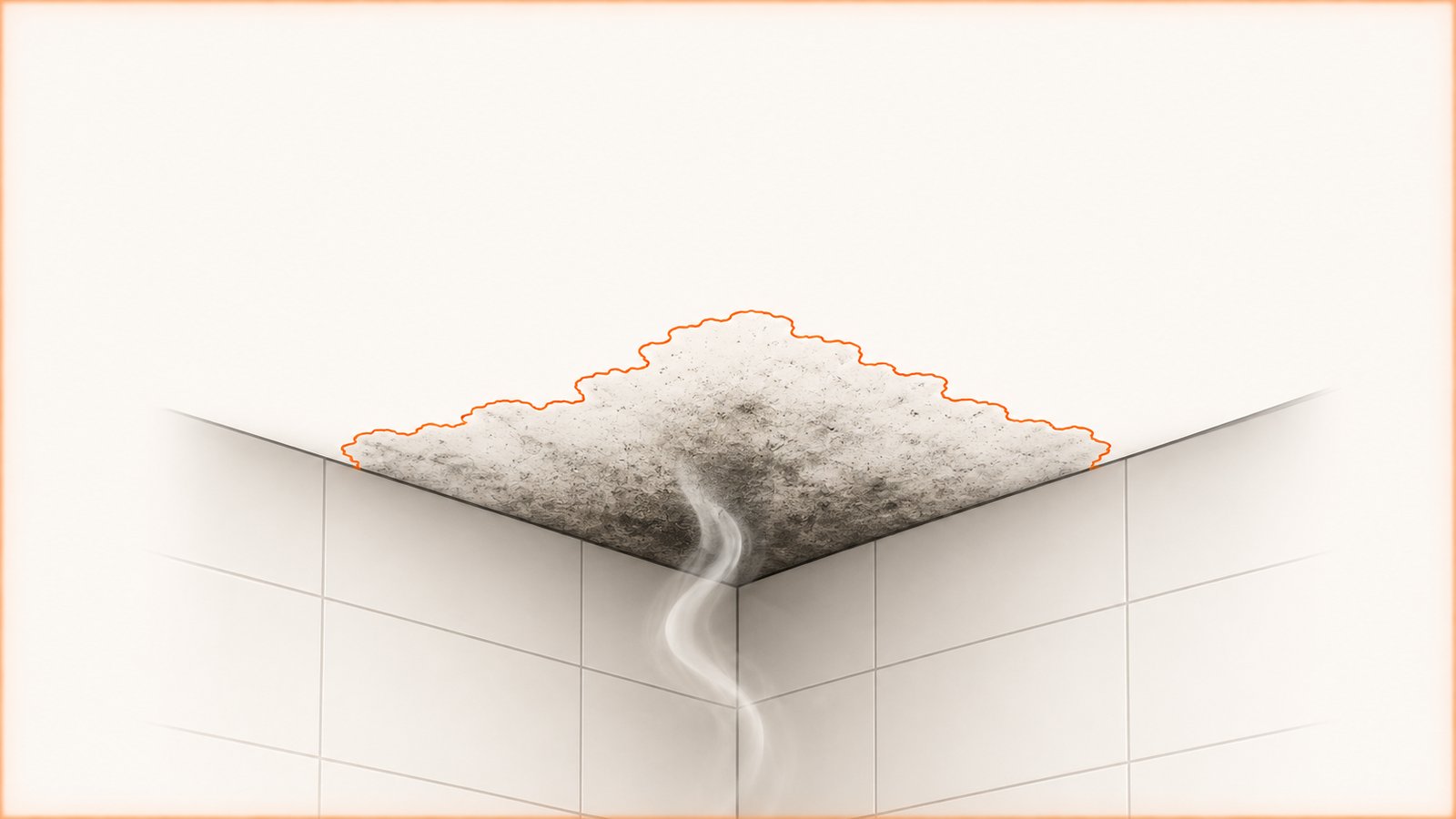
Why mold grows on a bathroom ceiling
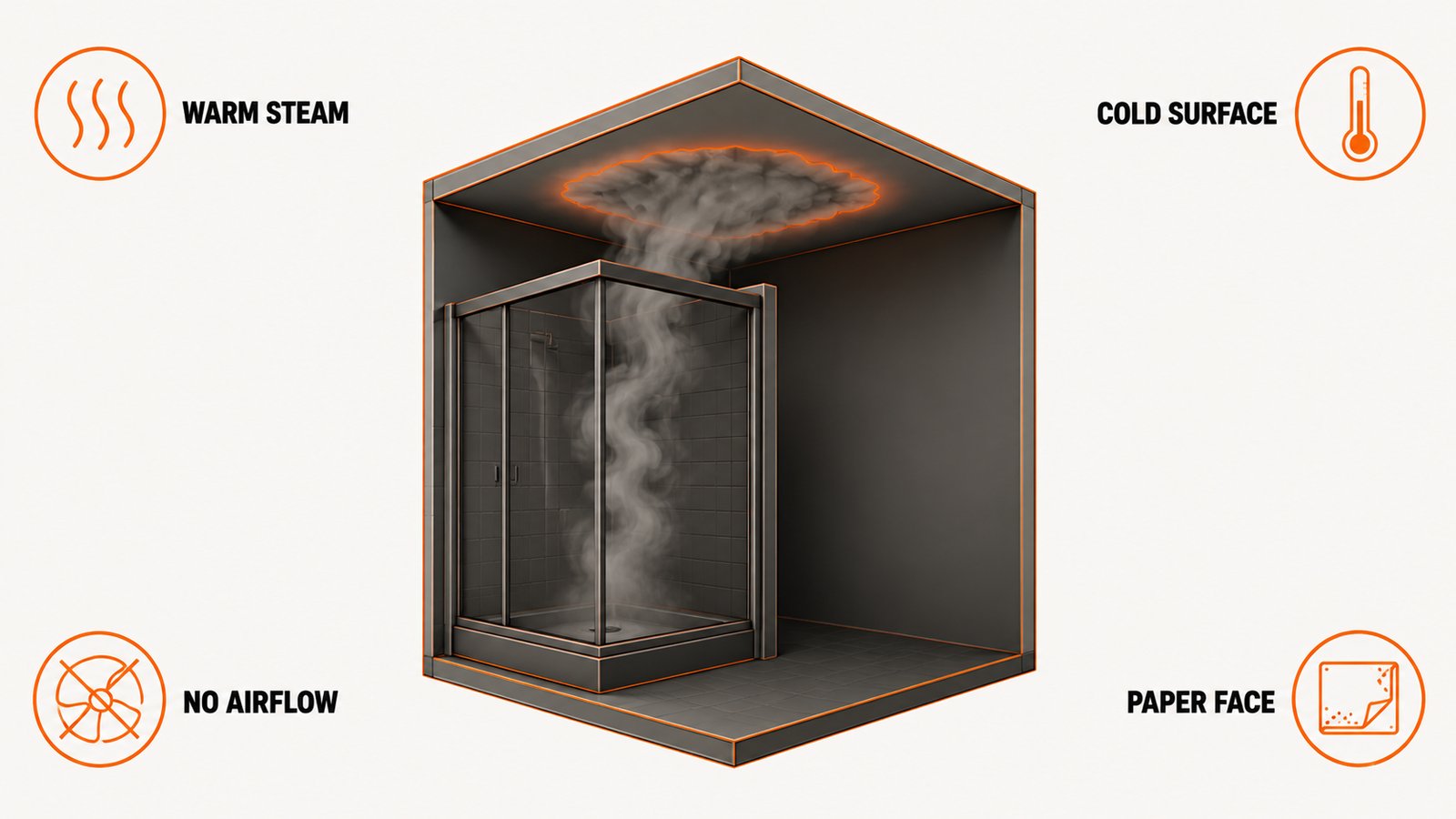
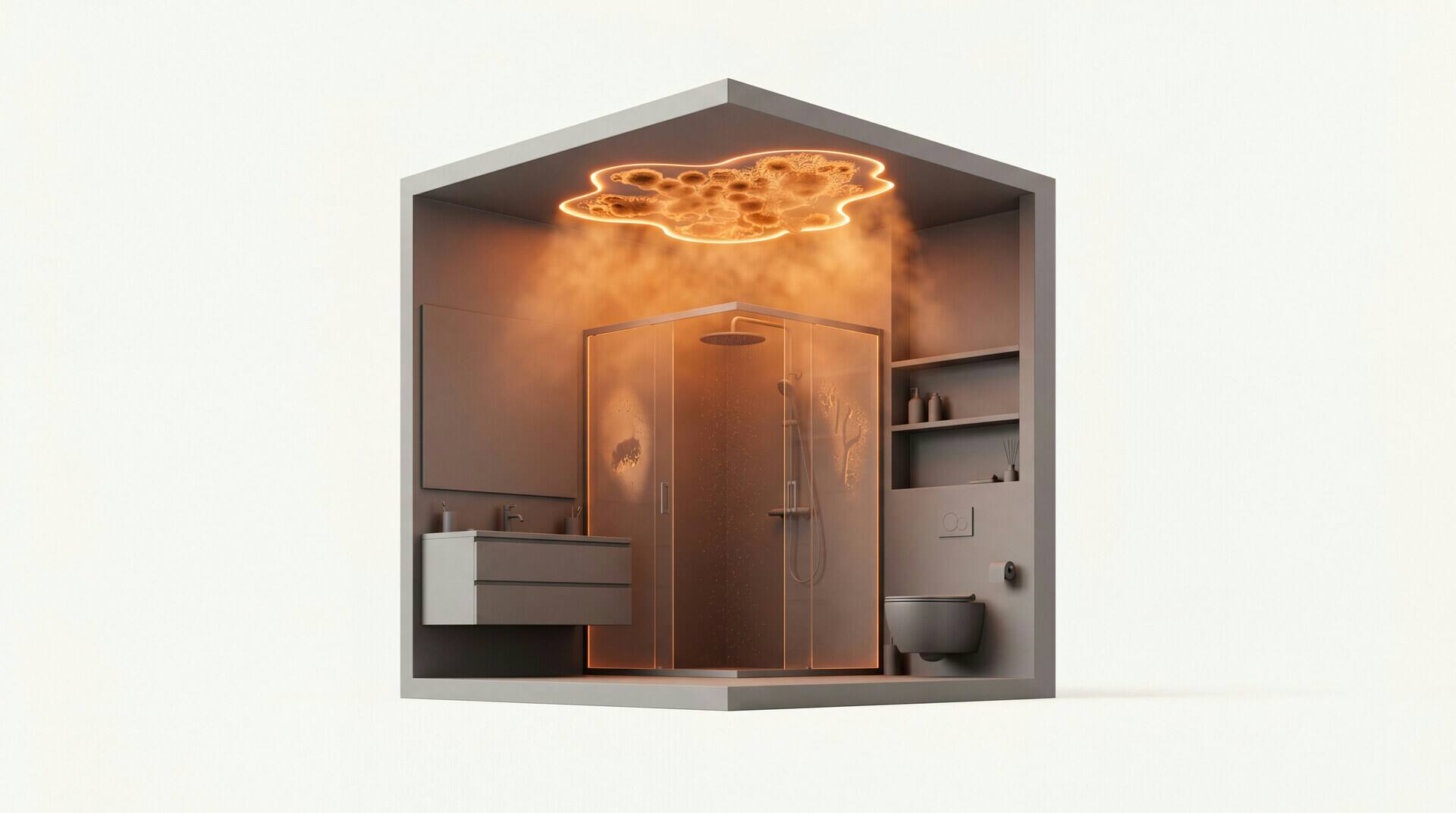
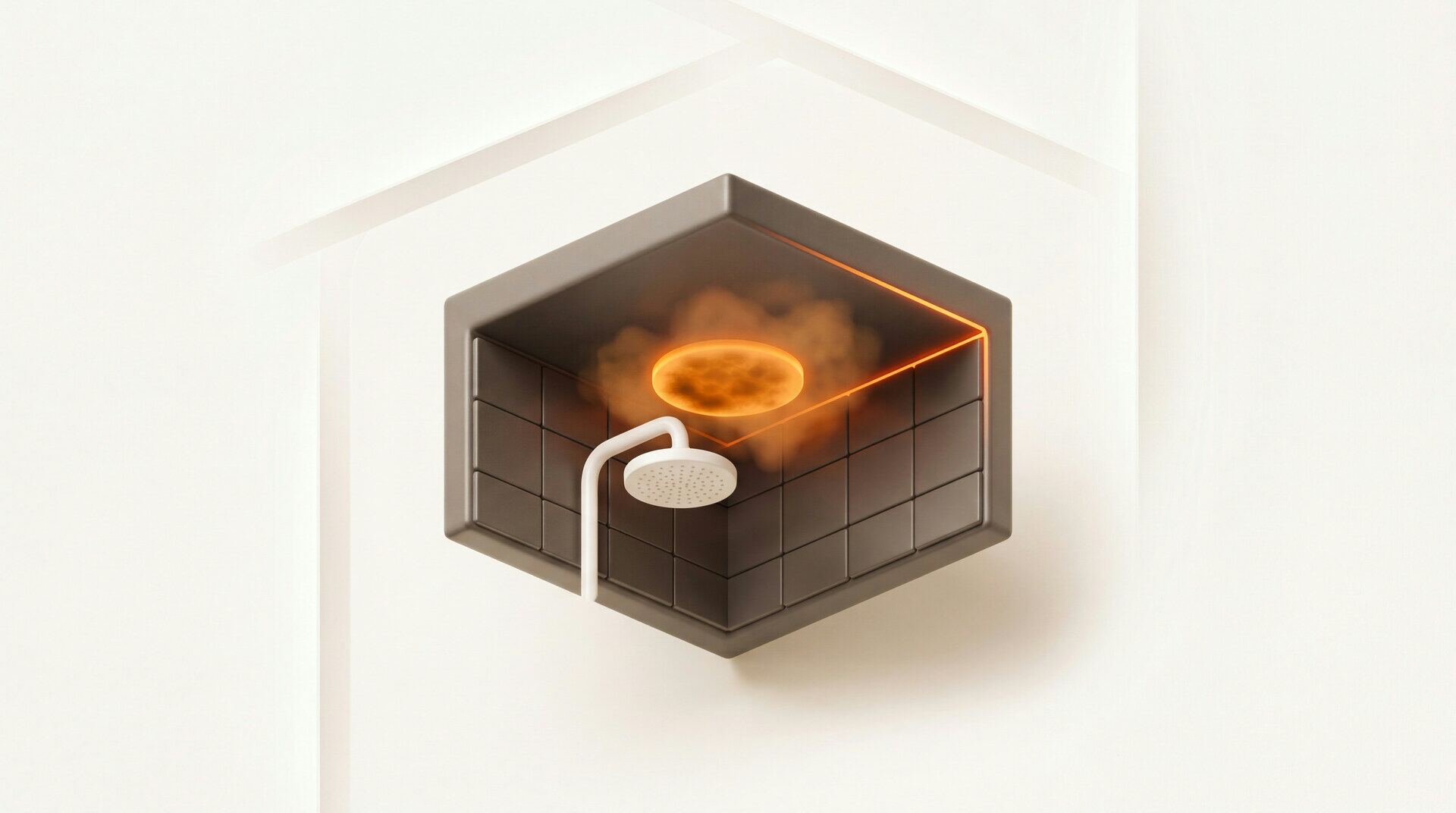
A bathroom ceiling is the coldest large surface in the room and the one that steam reaches first. Hot shower air holds a lot of water vapor, it rises, and when it touches a surface below its dew point the vapor turns back into liquid on that surface. In a bathroom with an unheated attic or an uninsulated roof above it, the ceiling is exactly that surface.
Four conditions have to line up for growth, and a bathroom ceiling supplies all four without any help. There is water, delivered twice a day as condensation. There is a food source, because standard ceiling board is gypsum with a paper facing and paint binders on top of it. There is a comfortable temperature. And there is still air in the corners and along the edges, where the fan draws least.
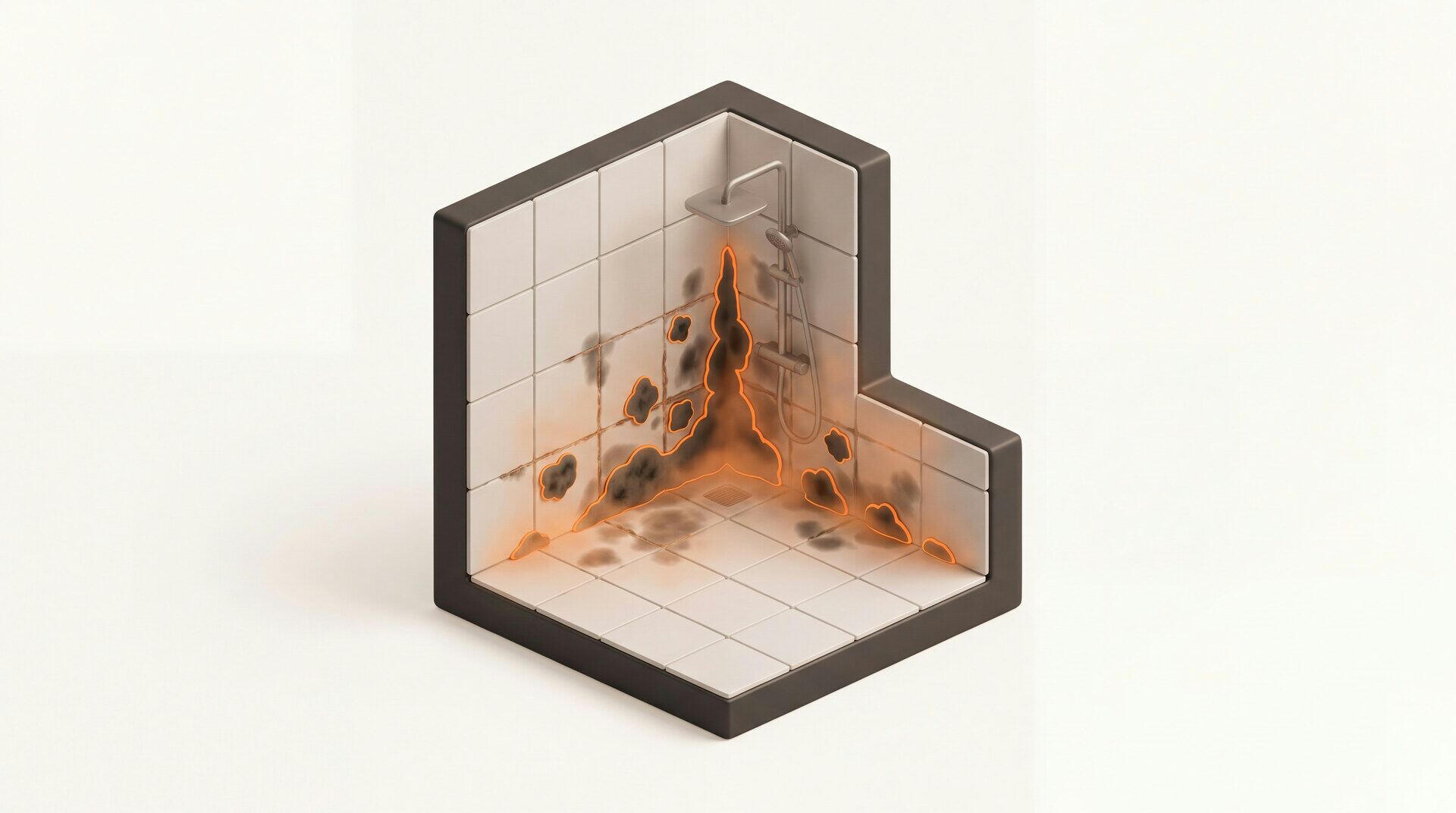
That is why growth shows up in a pattern rather than randomly. It starts in the corner farthest from the door, along the perimeter where the ceiling meets the wall, and directly over the shower. Those are the coldest and stillest parts of the plane. The same physics is behind growth on a window sill and inside a closet on an exterior wall.
The practical takeaway is that the ceiling is a symptom, not the problem. Cleaning it is a 30-minute job. Keeping it clean means changing how fast the room dries out after a shower, which is a ventilation question and a surface-temperature question. Everything below follows from that.
Is black mold on a bathroom ceiling dangerous?
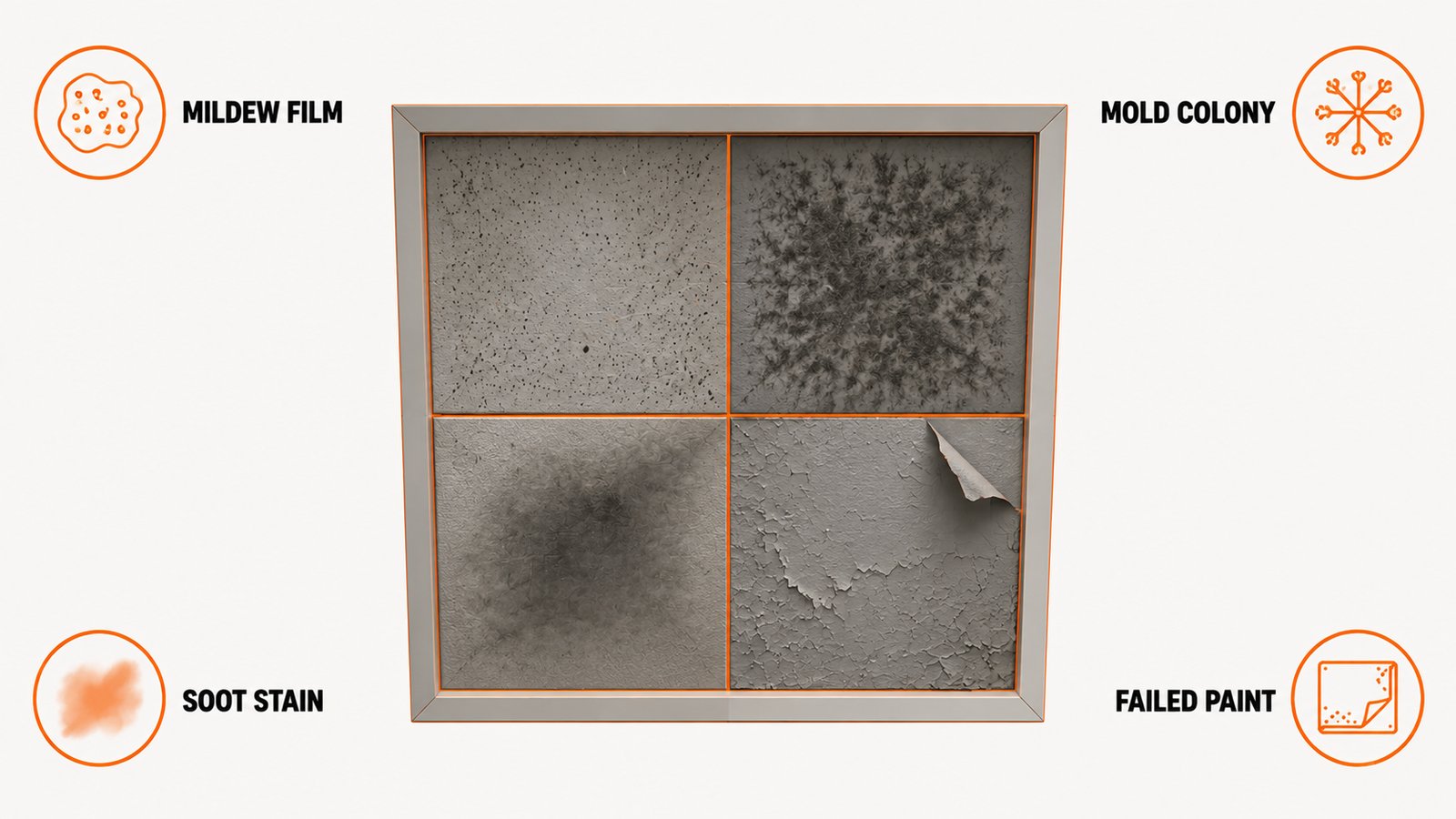
Dark growth on a bathroom ceiling is usually assumed to be black mold, meaning Stachybotrys chartarum. On a painted ceiling that is unlikely, because that species prefers material that stays wet for a long time, and a ceiling that dries between showers is a cycling surface rather than a soaked one. What is usually up there is a mixed community that includes Cladosporium and mildew growing on the paint film.
None of that changes what you do about it. CDC states that you do not need to know the type of mold and that all molds should be treated the same with respect to potential health risks and removal. Color is not a hazard grade. The reasoning is set out in full on the black mold guide and the species page for Stachybotrys chartarum.
It is also worth ruling out the look-alikes before you buy anything. Soot from candles, cooking residue drawn in through a door, and dust settling on a rough paint texture all read as dark speckle from six feet below. A flat gray film that wipes off cleanly and does not come back for months was probably not mold. The differences are in mold vs mildew and black mold vs mildew.
For cleanup planning, treat any dark growth on a bathroom ceiling the same way: correct the moisture, clean the surface, dry it, and watch whether it returns. If someone in the household has asthma, a mold allergy, a suppressed immune system, or chronic lung disease, keep them out of the room during the work and afterward until it is dry.
How to remove mold from a bathroom ceiling
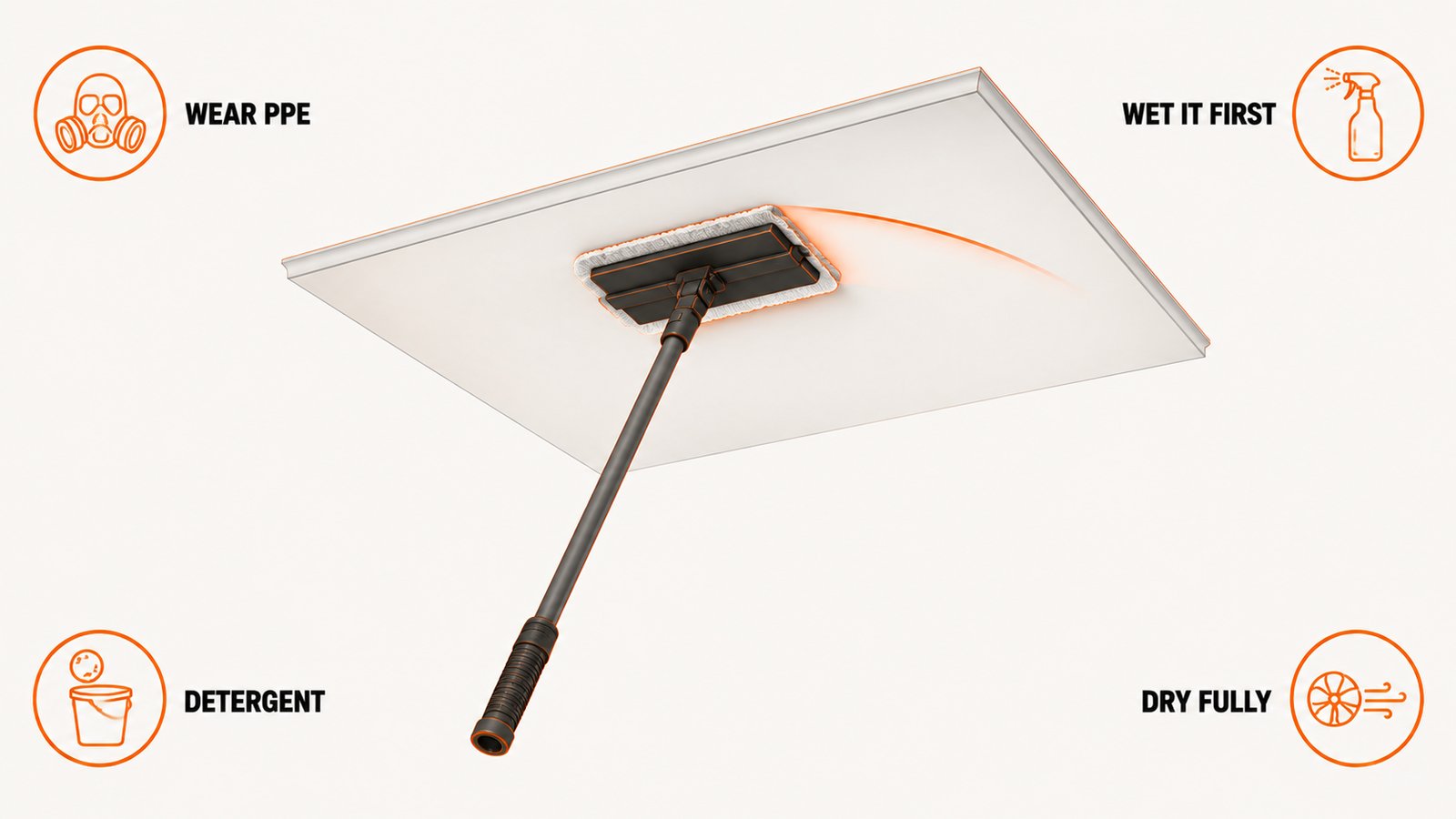
Cleaning overhead is different from cleaning a wall, because everything you dislodge falls toward you. Work in this order.
Ventilate and protect yourself. EPA lists gloves, goggles, and an N-95 respirator for mold cleanup. Goggles matter more than usual here because you are looking straight up at the work. Open a window, run the fan, and close the door to the rest of the house.
Wet the surface before you touch it. A dry scrub sends dust and spores into the air. Mist the area first with your cleaning solution and give it a few minutes. Damp material stays where it is.
Clean with detergent and water. That is EPA's instruction for hard surfaces: scrub mold off with detergent and water, then dry completely. A painted ceiling behaves as a hard surface as long as the paint film is intact. Use a flat-pad pole or a sponge, work in overlapping passes, and change your water when it turns gray.
Dry it completely and check the substrate. Run the fan for an hour afterward. Then press the cleaned area gently. If the board feels soft, spongy, or bulges, water has gotten into the gypsum and cleaning will not fix it. That board has to come out. EPA notes that absorbent or porous materials may have to be thrown away if they become moldy, because mold fills the empty spaces in porous material.
Do not paint over it wet or dirty. Painting a ceiling that is still damp or still carries growth traps the problem under a new film that will blister. The full order for other surfaces is on how to get rid of mold, and the specific case is covered on can you paint over mold.
What to clean a bathroom ceiling with
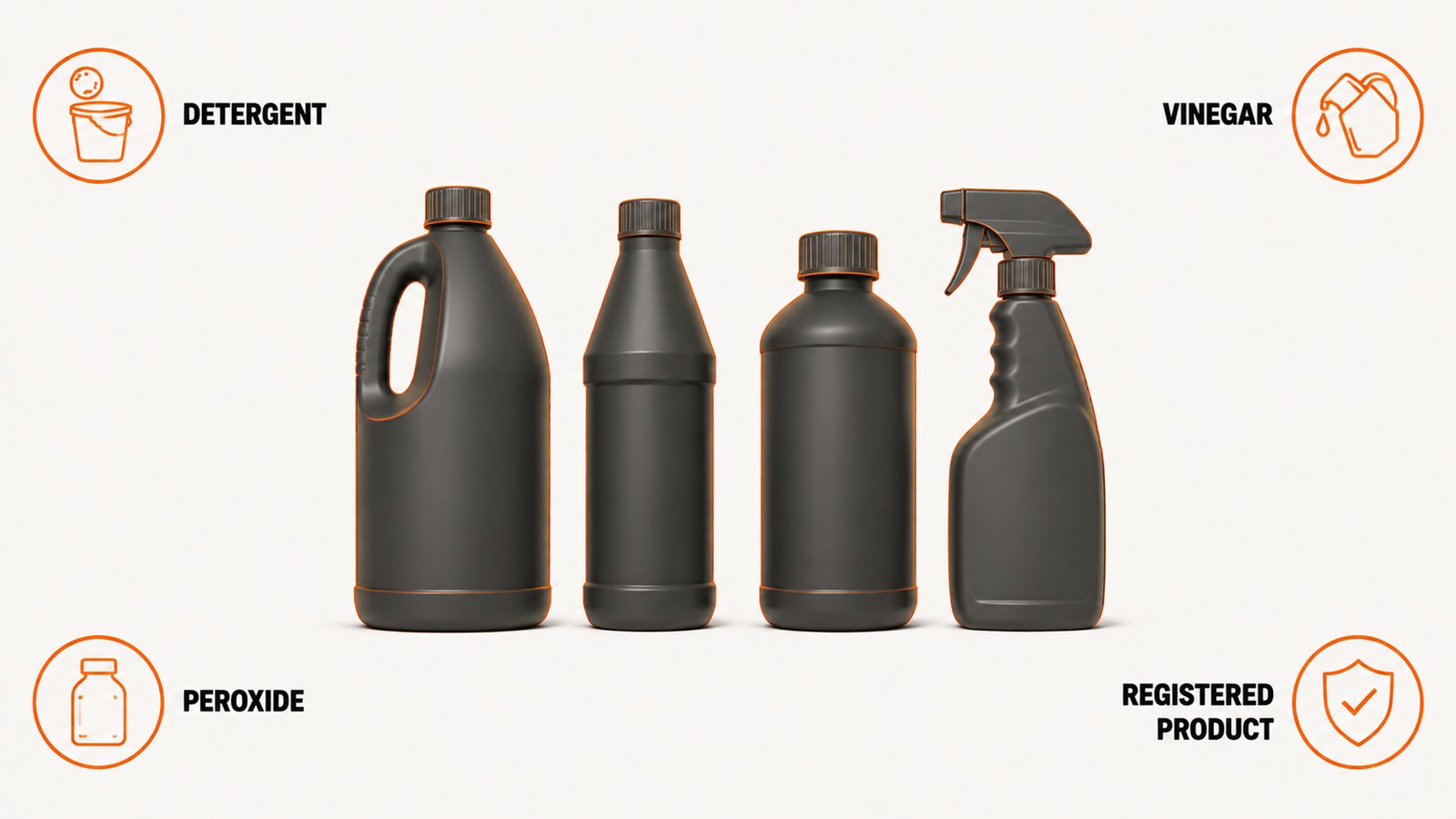
Four things get used on bathroom ceilings and they are not interchangeable.
| Option | What it does | Watch out for |
|---|---|---|
| Detergent and water | The method EPA names for hard surfaces. Physically removes growth. | Needs mechanical scrubbing. Does not lift a deep stain. |
| White vinegar | Mild acid, soaks into lightly porous paint film, cheap. | Sour smell in a closed room. Not a registered disinfectant. |
| 3 percent hydrogen peroxide | Foams into the surface and lifts the dark stain as well as the growth. | Can lighten a tinted ceiling. Test a hidden patch first. |
| Registered mold product | Formulated for the job, some leave a residual film. | Follow the label exactly. Ventilate. Costs more. |
Chlorine bleach is the one most people reach for and the one that disappoints most. It strips the dark pigment so the ceiling looks clean while the growth in the paint film is untouched, and the water it carries stays in the board. The detail is on does bleach kill mold. Whatever you use, never mix it with another cleaner. EPA warns never to mix chlorine bleach with cleaning solutions or detergents that contain ammonia, because toxic fumes could be produced.
For the two household options, the vinegar method and the hydrogen peroxide method both work on a sound paint film. Product picks are compared on best mold removal products.
How to stop bathroom ceiling mold coming back
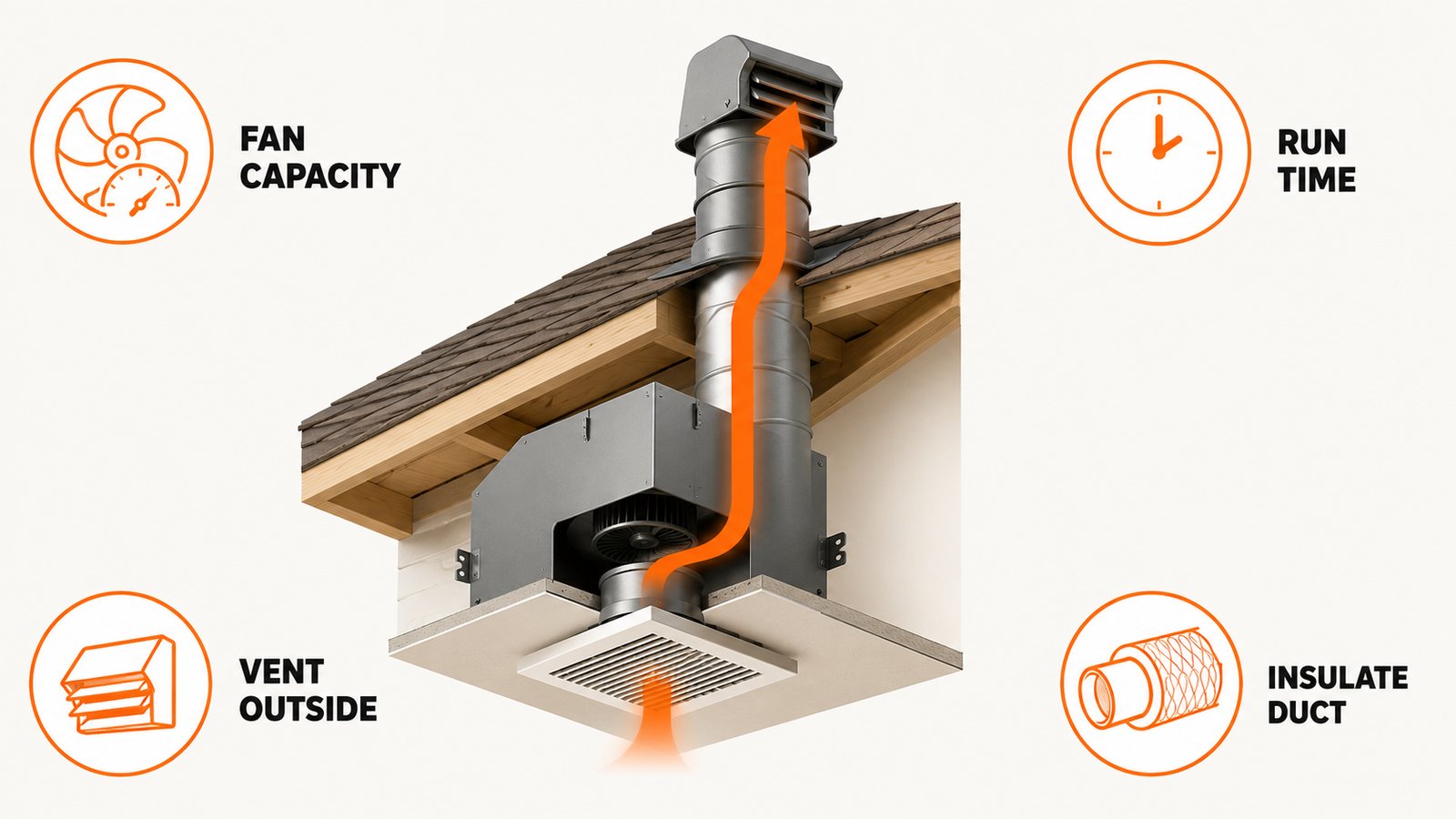
This is the part that decides whether you do this once or every spring. Four things matter.
Fan capacity. To meet ASHRAE 62.2 and the 2021 International Residential Code, a bathroom fan needs a mechanical exhaust capacity of at least 50 cfm running intermittently, or at least 20 cfm running continuously. Because rated capacity drops once a fan is connected to real ductwork, ENERGY STAR recommends choosing a fan rated at least 70 cfm to actually deliver the intermittent requirement, and more than 50 cfm to deliver the continuous one.
Run time. Turning the fan off with the light is the single most common mistake. The recommendation is to leave the fan running for one hour after a shower for effective humidity control, which in practice means a timer switch rather than a plain wall switch.
Where the duct ends. The exhaust duct has to terminate outdoors, through a wall or roof cap. A fan that dumps into the attic moves the condensation problem from a ceiling you can see to sheathing you cannot, which is how attic mold usually starts. Go up and look at where the duct actually goes.
Duct insulation and slope. Warm wet air moving through a cold duct condenses inside the duct and runs back down into the fan housing, which drips onto the ceiling. Insulating the duct and sloping it away from the housing prevents that.
Two extras help. Keep a hygrometer in the bathroom and check that it falls back under 60 percent within an hour of a shower, because EPA advises keeping indoor relative humidity below 60 percent and ideally between 30 and 50 percent. The free humidity tool turns that reading into a straight answer. If the room has no exterior wall for a vent, a dehumidifier is the fallback.
Painting a bathroom ceiling after cleanup
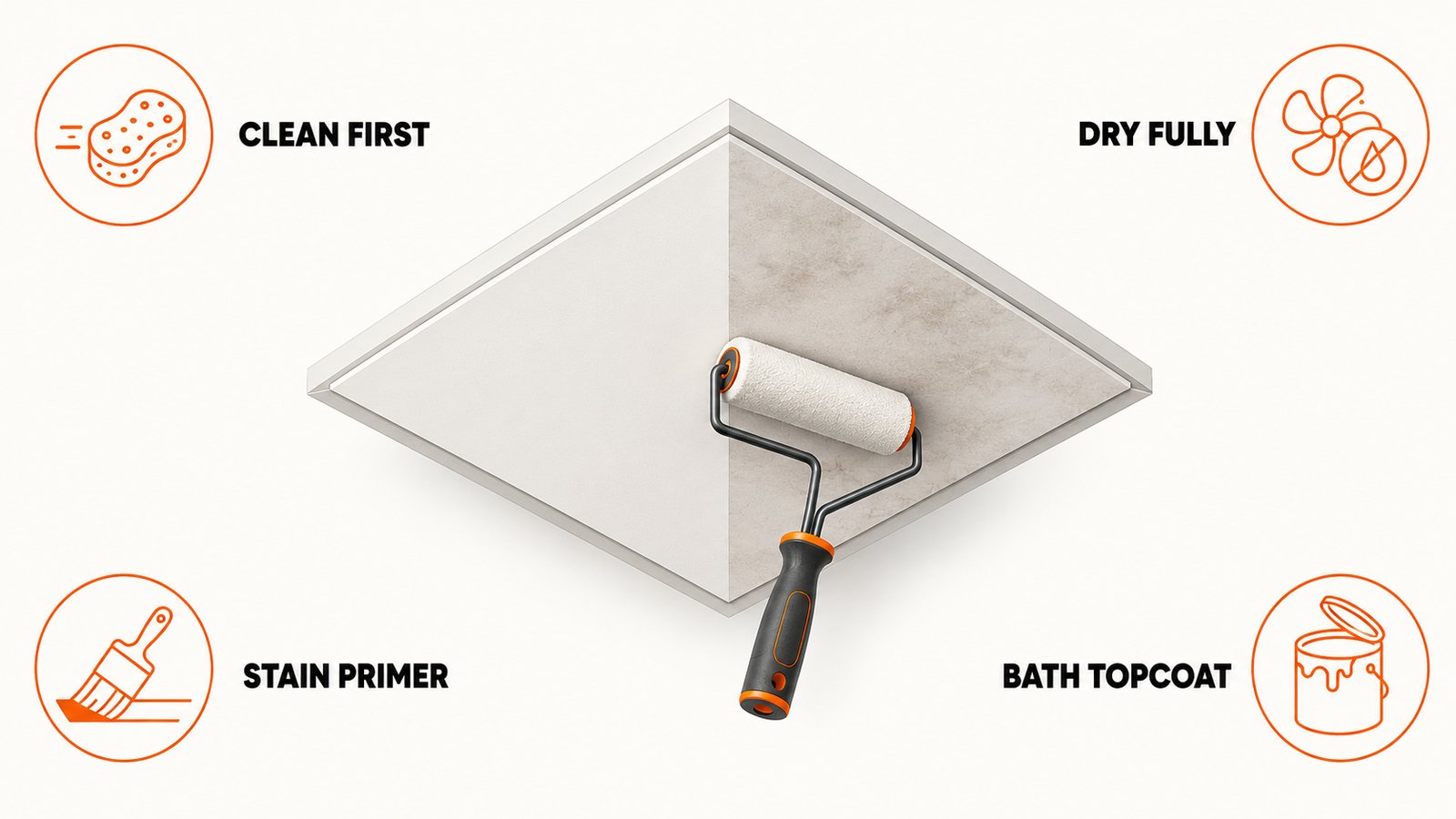
Repainting is a finishing step, and it only works in the right order. Clean, dry the substrate all the way through, fix the ventilation, then paint. Paint applied over live growth or damp board fails within a season and takes the new film with it.
Even after a good clean, a dark shadow often stays in the paint film. That is pigment, not living growth, and a stain-blocking primer is the tool for it. A shellac-based or purpose-built stain-blocking primer stops the discoloration bleeding through your topcoat. Some primers are also registered to treat light residual surface growth, and their labels say so explicitly. Read the label rather than assuming, because a stain blocker and a mold-treating primer are two different products.
For the topcoat, a bathroom-rated or mold-resistant interior paint is formulated so the cured film resists new mildew growth. It is not a substitute for the fan, and no coating stops growth on a surface that is wet twice a day. Treat it as the last five percent. The options are compared on best mold-resistant paints.
Where the ceiling meets the wall, and around a light or fan trim, check the sealant. Failed caulk in a wet room is a wick. Refreshing it while everything is open costs almost nothing. The product choice is covered on best mold resistant caulk, and the same reasoning applies to the joints on mold on caulk and mold on grout.
When to call a professional
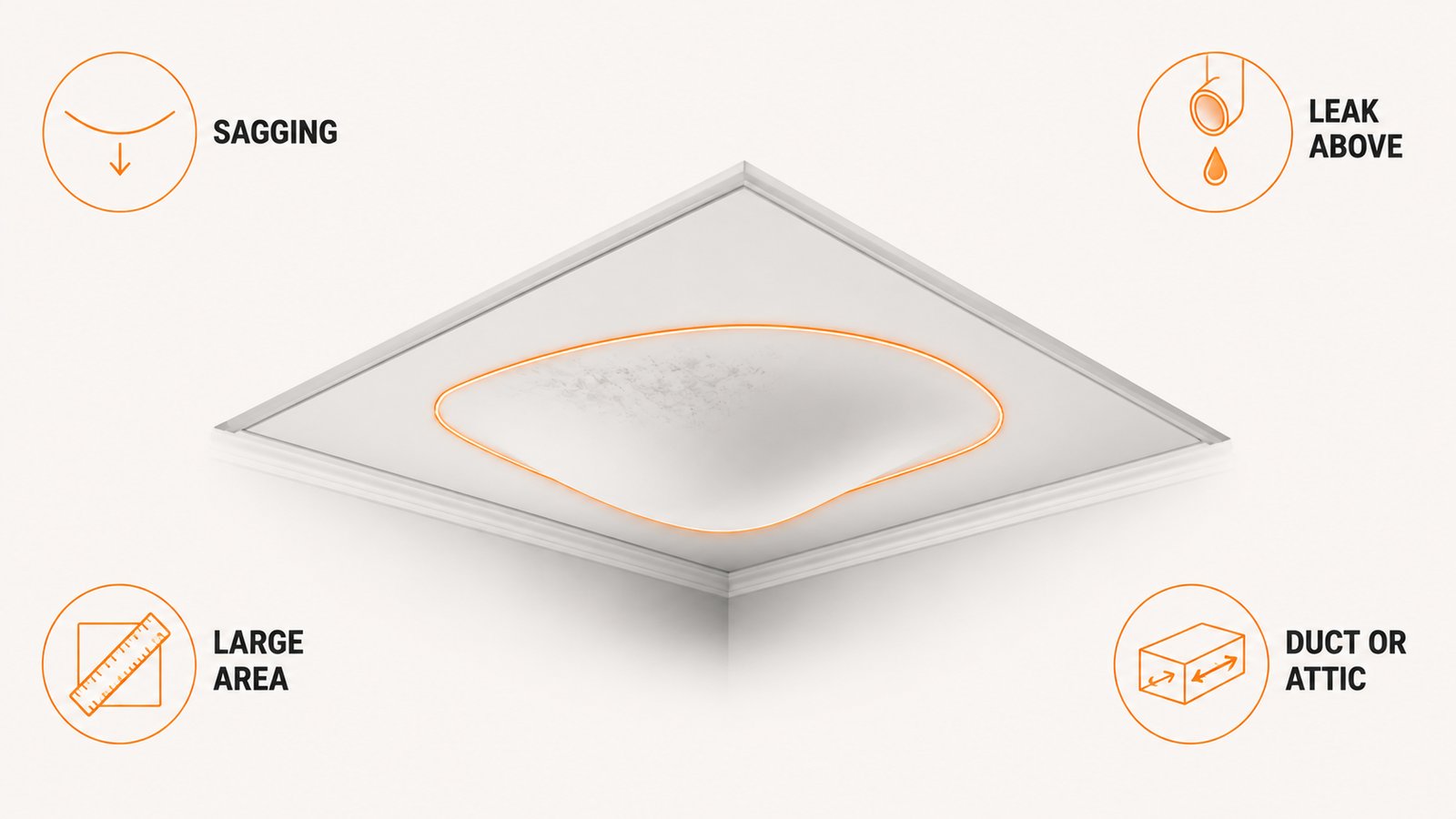
Most bathroom ceilings are a do-it-yourself job. EPA gives the size guide: if the moldy area is less than about 10 square feet, roughly a three-foot by three-foot patch, in most cases you can handle it yourself. Above that, EPA points to its remediation guidance written for professional scope and containment.
Call a qualified professional when any of these is true:
- The board is soft, sagging, or crumbling. That is saturated gypsum, not a surface problem, and it needs cutting out and replacing.
- The water is coming from above. A ceiling stain that grows after rain or reappears without a shower is a roof, flashing, or supply-line leak. Fix the source before anything else.
- The affected area is bigger than about 10 square feet, or it keeps spreading past where you cleaned.
- The fan duct or the attic is involved. Do not open ducts or disturb duct lining yourself. See mold in air ducts.
- The room is a rental and the landlord is responsible for the repair. Put the request in writing. Your options are on mold in an apartment.
For professional work, look for firms that follow the ANSI and IICRC S520 standard for professional mold remediation, and get a written scope covering the moisture repair, removal, drying, and verification before anyone starts. Pricing is on mold remediation cost.
Frequently asked questions
How do you remove mold from a bathroom ceiling?
Ventilate the room, put on gloves, goggles, and an N-95 respirator, then mist the area so nothing goes airborne when you scrub. EPA's instruction for hard surfaces is to scrub mold off with detergent and water and dry completely, which works on a ceiling with an intact paint film. Run the fan for an hour afterward and press the cleaned area: if the board is soft or bulging, it is saturated and has to be replaced rather than cleaned.
Why does my bathroom ceiling get moldy?
The ceiling is the coldest large surface in the room and the first thing shower steam reaches. Vapor condenses there twice a day, paper-faced gypsum board and paint binders give it something to grow on, and the air in the corners barely moves. That is why growth starts in the corner farthest from the door and directly above the shower rather than spread evenly.
What kills mold on a bathroom ceiling?
Detergent and water is what EPA names for hard surfaces, and physical removal matters more than the chemical. White vinegar and 3 percent hydrogen peroxide both work on a sound paint film, with peroxide doing more for the dark stain. Registered mold products work if you follow the label. Never mix any of them, and never mix chlorine bleach with a cleaner containing ammonia.
How do I stop bathroom ceiling mold from coming back?
Make the room dry faster. ASHRAE 62.2 and the 2021 International Residential Code call for a bathroom fan with at least 50 cfm of exhaust capacity running intermittently or 20 cfm running continuously, and ENERGY STAR suggests buying a fan rated at least 70 cfm to actually deliver that once it is ducted. Leave the fan running for a full hour after a shower, and confirm the duct terminates outdoors rather than in the attic.
Does bleach work on a bathroom ceiling?
It removes the dark color, which looks like success. What it does not do reliably is remove growth from a paint film or a porous substrate, and the water it carries stays in the material. EPA also notes that dead mold may still cause allergic reactions in some people, so killing it is not enough on its own, it has to be physically removed.
Can I just paint over mold on a bathroom ceiling?
No. Paint over live growth or damp board traps the problem and the new film blisters within a season. Clean first, dry the substrate completely, fix the ventilation, then use a stain-blocking primer for any remaining shadow and a bathroom-rated topcoat. Read the primer label, because a stain blocker and a primer registered to treat surface growth are two different products.
How large a ceiling patch can I handle myself?
EPA gives a size guide rather than a health threshold: less than about 10 square feet, roughly a three-foot by three-foot patch, is a job most people can handle. Above that, or when the board is sagging, the water is coming from a roof or plumbing leak, or the fan duct and attic are involved, it is a professional job.
Sources
Every claim on this page traces to one of these. Links open the primary document.