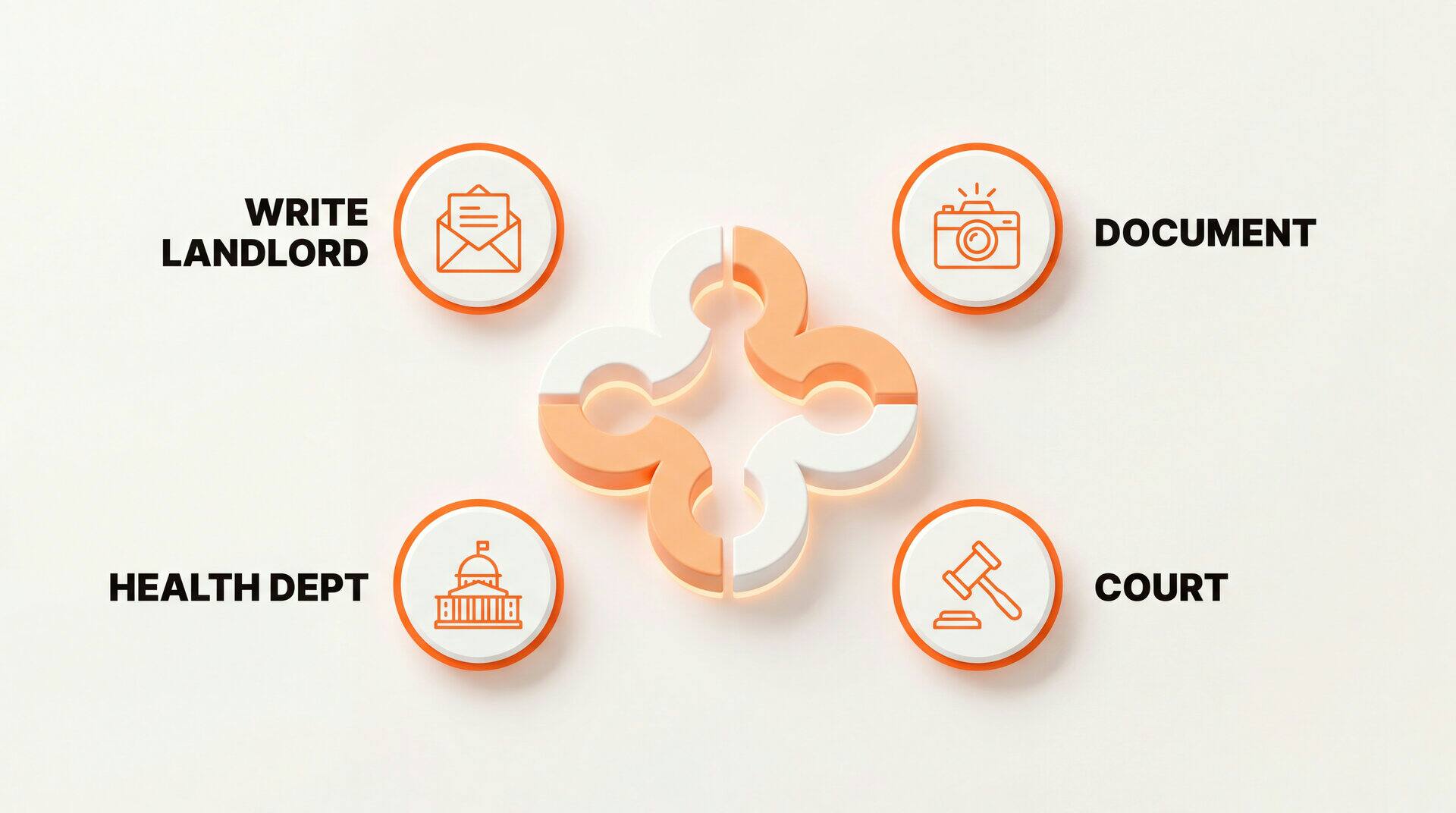
Step 1: Document everything immediately
Before cleaning or moving items, preserve your own original photographs and notes if it is safe to do so.
Take clear overview and detail photos. Photograph the visible area, nearby accessible surfaces, and any visible water damage. Keep the original files and do not rely on an AI output as a substitute for them.
Mold Scanner AI is not an evidence tool. Its local visual-screening summary can show the submitted photo, visible cues, camera limitations, and conservative next steps. It does not provide a severity score and is not a professional, legal, insurance, health-department, or liability assessment.
Write down what you directly observe. Note dates, locations, visible size, odor, and communications. Ask a physician about symptoms and a qualified inspector or laboratory about the building.
Preserve records independently. Keep copies of original photos, notices, receipts, and replies using storage you control. Ask local legal aid or an attorney what documentation your jurisdiction requires.
Step 2: Send written notice to your landlord
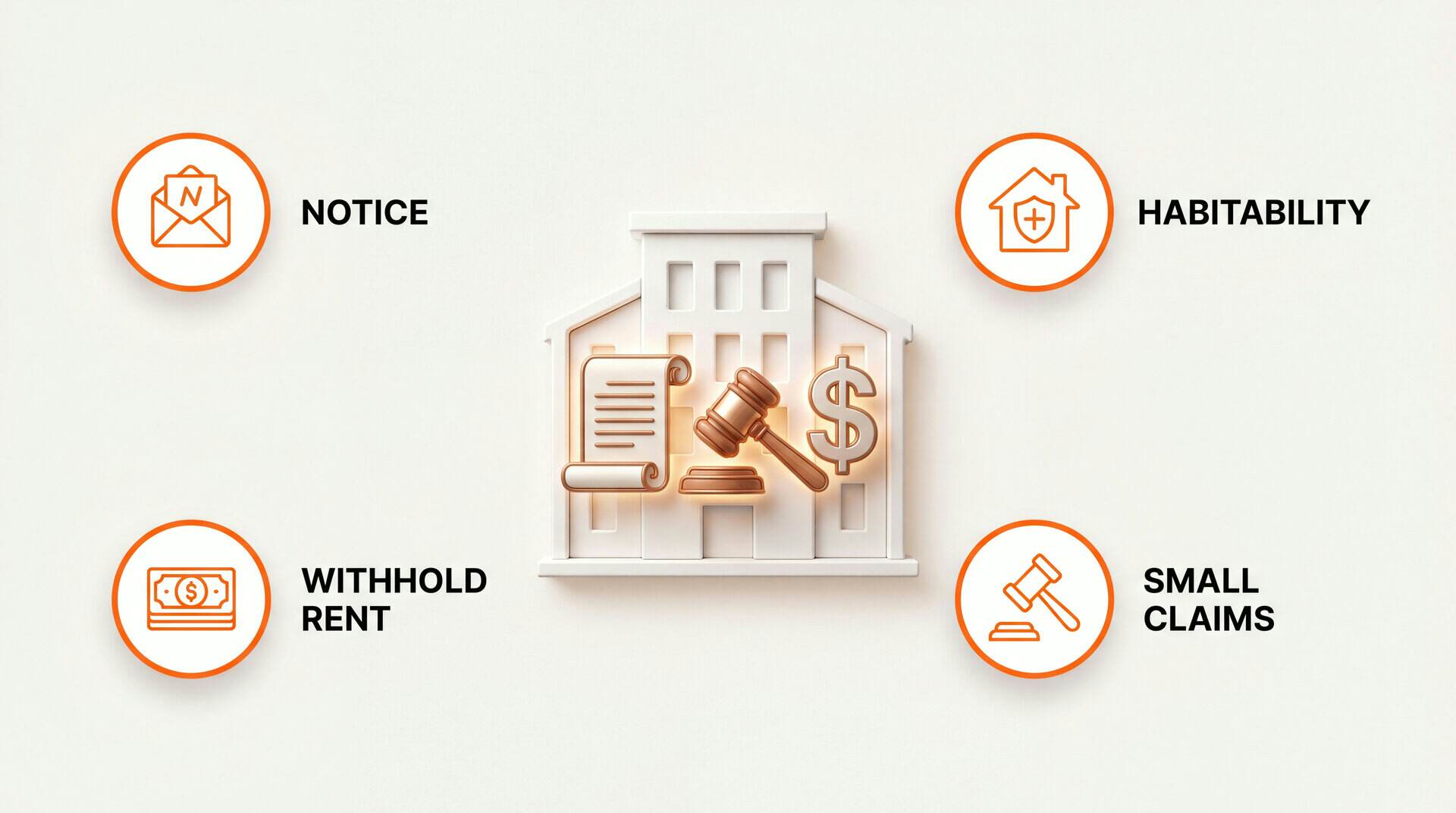
A verbal complaint is not enough. You need a paper trail. Written notice is the legal starting point in almost every state. Without it, you have limited legal options later.
How to send it: Email is acceptable in most cases and creates an automatic timestamp. For stronger legal protection, send a certified letter with return receipt requested. This proves the landlord received it. Some states require certified mail for certain remedies like repair and deduct.
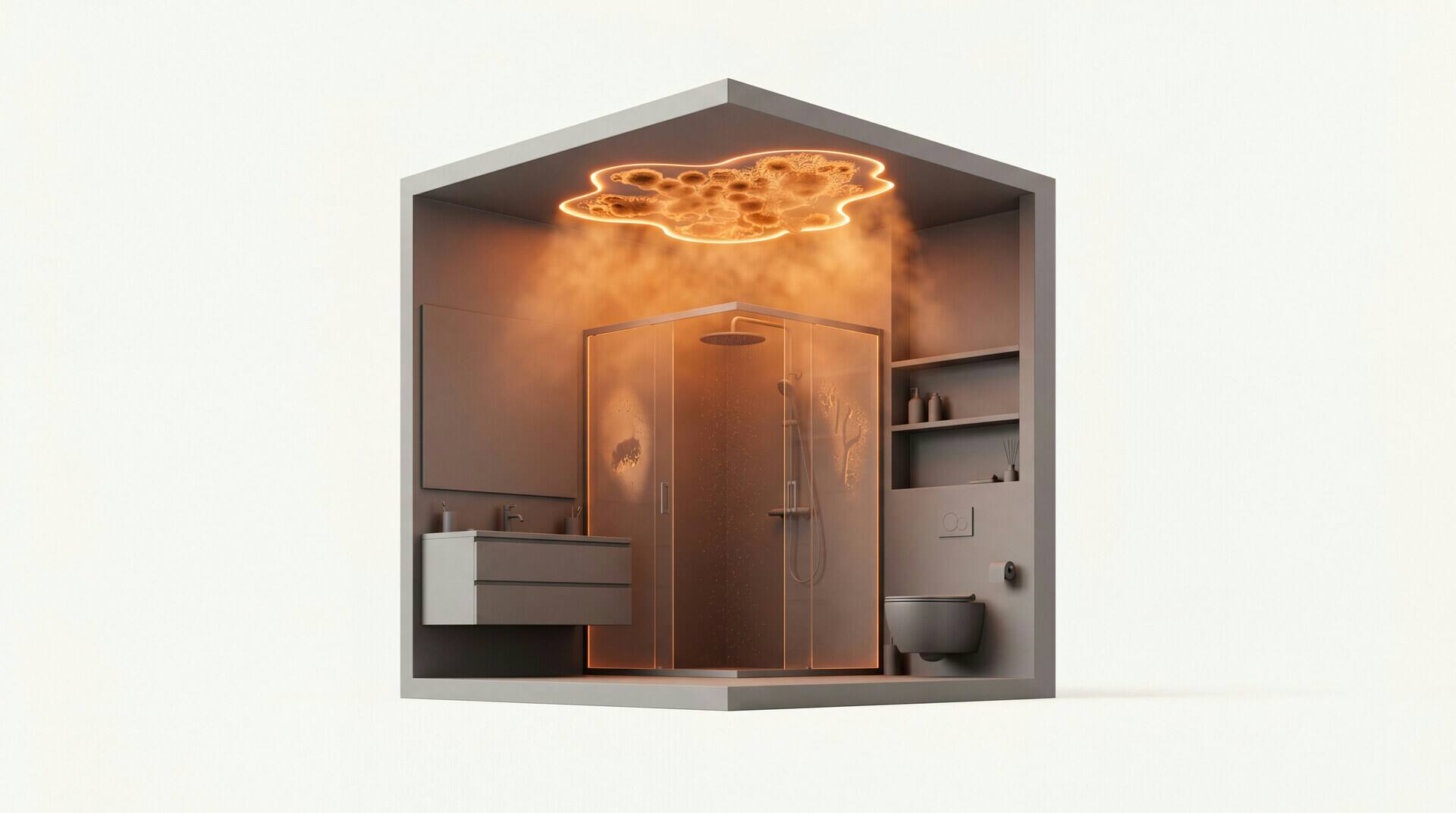
What to include: The date you discovered the mold. The exact location (be specific: "black mold on the bathroom ceiling above the shower" not just "mold in bathroom"). A description of any related water damage or moisture problems you have observed. Any health symptoms you or household members are experiencing. A clear request for repair within a specific timeframe (14 to 30 days depending on your state). Photos attached or referenced.
Keep copies of everything. Save the email and any response. Keep the certified mail receipt. Screenshot text messages. Every communication with the landlord about the mold should be documented. If this goes to a housing court or a health department complaint, you will need this paper trail.
Step 3: What to do if the landlord does not respond
You sent written notice. The landlord ignored it, delayed, or denied responsibility. Here are your options, roughly in order of escalation:
Health department complaint: Contact your local or county health department. They have the authority to inspect the apartment, document health hazards, and issue code violation notices to the landlord. A health department violation on record is powerful leverage. The inspector's report is independent evidence that supports your case. This is free and available in most jurisdictions.
Building or housing code complaint: If your city or county has a separate housing code enforcement office, file a complaint there as well. They inspect for building code violations related to moisture, ventilation, plumbing, and structural issues that cause mold. Fines and mandatory repair orders are common outcomes.
Repair and deduct: Many states allow tenants to hire a professional to fix a habitability issue and deduct the cost from rent. The rules vary by state: some cap the deduction at one month's rent, some require prior written notice with a specific waiting period, and some require a professional estimate before the work is done. This is a legal remedy, so follow your state's specific procedures exactly. Document every step.
Rent withholding or escrow: Some states allow tenants to withhold rent or place rent in an escrow account until the landlord fixes the habitability issue. This is a powerful remedy but has strict rules. In many states, you must deposit the rent in an escrow account with the court, not just stop paying. Check your state's rules before withholding any rent.
Lease breaking (constructive eviction): If the mold makes the apartment uninhabitable and the landlord refuses to fix it after proper notice, you may be able to break the lease without penalty. This is called constructive eviction. Requirements vary by state but generally include: documented mold problem, written notice to landlord, reasonable time for repair (14 to 30 days), landlord's failure to act. Consult a tenant rights attorney before taking this step.
State by state basics
Mold law varies significantly by state. Here are the basics for the most relevant states:
California: Strong tenant protections. Landlords must maintain habitable conditions. Tenants can repair and deduct up to one month's rent. Rent withholding is allowed. Cal. Civ. Code Sections 1941 and 1942.
New York: NYC has specific mold laws. Local Law 55 requires landlords to remediate mold conditions. The NYC Dept. of Health can issue violation orders. Tenants can file complaints with 311. Warranty of habitability is enshrined in Real Property Law Section 235-b.
Texas: Tenants must give written notice and allow reasonable time for repair. Repair and deduct is available under Texas Property Code Section 92.0561. Tenant must be current on rent and follow specific notice requirements.
Florida: Landlords must maintain premises in compliance with building codes. Tenants must give 7 day written notice for health and safety issues. Florida Statute 83.51 and 83.56.
Puerto Rico (DACO): The Department of Consumer Affairs (DACO) handles tenant complaints. Landlords must maintain habitable conditions under Puerto Rico Civil Code. Tenants can file a complaint with DACO for free. DACO can order repairs and impose fines. The process is conducted in Spanish. Phone: 787-722-7555.
For all states: Contact your local legal aid society or tenant rights organization for free guidance specific to your situation. Many offer free consultations and can review your documentation before you take action.
What landlords are NOT responsible for
To be fair, not all mold is the landlord's fault. Understanding the line helps you build a stronger case for the mold that IS their responsibility.
Tenant caused moisture problems: If you never run the exhaust fan, keep all windows sealed shut year round, dry laundry inside the apartment without ventilation, or leave standing water in the bathroom, mold from those habits may be your responsibility.
Normal surface mold maintenance: Light surface mold in a shower that can be cleaned with regular bathroom cleaning is considered normal maintenance, like dusting or vacuuming.
The landlord IS responsible for: Roof leaks, plumbing leaks, inadequate ventilation systems (no exhaust fan or a broken one), poor weatherproofing that allows moisture intrusion, water damage from the building's plumbing, HVAC problems that cause condensation, and any structural issue that creates moisture. These are all building condition issues, not tenant behavior issues.
Frequently asked questions
Is my landlord responsible for mold in my apartment?
In most states, yes. Landlords are required to maintain habitable living conditions under the implied warranty of habitability. Mold caused by structural problems like roof leaks, plumbing leaks, poor ventilation, or inadequate weatherproofing is the landlord's responsibility. However, mold caused by tenant behavior like never running the exhaust fan or keeping windows sealed shut with high humidity may be the tenant's responsibility.
What should I do first when I find mold in my apartment?
Document everything immediately. Take clear photos and videos with timestamps. Note the date you discovered it. Write down the location, size, and any related symptoms. Then send a written notice to your landlord via email or certified mail requesting repair. Keep copies of everything. A paper trail is your most important protection if the landlord does not act.
Can I break my lease because of mold?
Yes, in most states, if the mold makes the apartment uninhabitable and the landlord fails to fix it after proper written notice. This is called constructive eviction. The key requirements are documented mold, written notice to the landlord, a reasonable time for repair (usually 14 to 30 days depending on the state), and the landlord's failure to act. Consult a local tenant rights attorney before breaking the lease.
Can I withhold rent because of mold?
Some states allow rent withholding or repair and deduct remedies. In a repair and deduct state, you can hire a professional to fix the mold problem and deduct the cost from your rent, usually up to one month's rent. In rent withholding states, you can place rent in an escrow account until the problem is fixed. Not all states allow this. Check your state's specific laws before withholding any rent.
Sources
Every claim on this page traces to one of these. Links open the primary document.