What actually decides the timeline
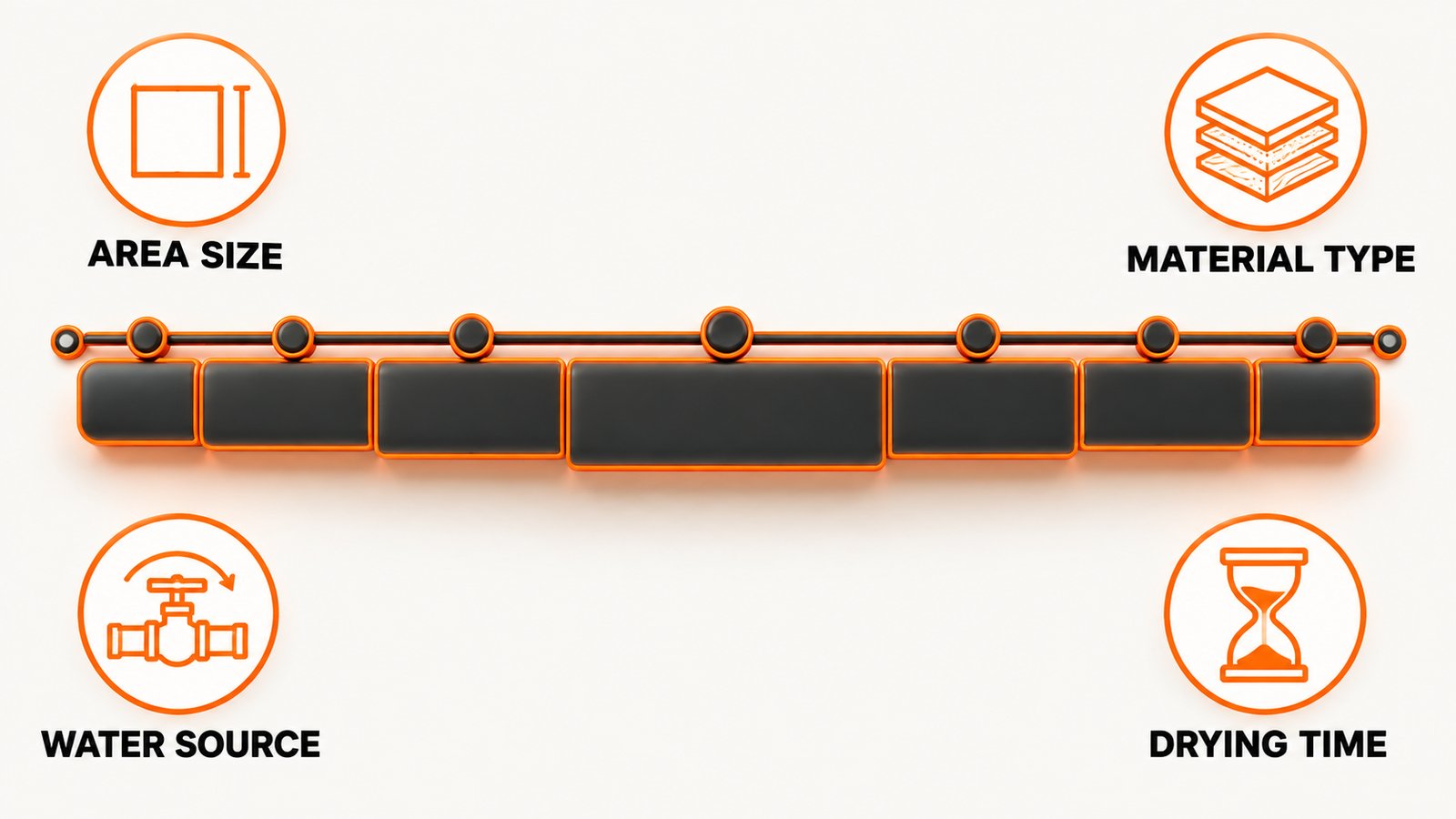
There is no published standard duration, because the work is scoped to the building rather than to a clock. What there is, is a sequence, and each stage has a known reason it runs long.
| Stage | What happens | What stretches it |
|---|---|---|
| Assessment and plan | Find the water source, measure the affected area, identify the materials, write the plan and choose the team. | A source nobody can find, an insurance approval, or waiting on an independent assessor's report. |
| Fixing the water | Plumbing repair, roof or flashing work, drainage, or a ventilation change. | Another trade's schedule. Nothing downstream is worth starting until this is done. |
| Containment setup | Sheeting, sealed vents and doors, negative pressure with a HEPA-filtered fan exhausted outdoors. | Area size. EPA describes limited containment between 10 and 100 square feet and full containment above that. |
| Removal and cleaning | Discard porous material that cannot be cleaned, damp wipe or HEPA vacuum what can be. | Opening an assembly and finding more than the plan covered. EPA says to reevaluate the plan when hidden growth appears. |
| Drying | Air movers and dehumidifiers until materials read dry, not until they feel dry. | Usually the longest single stage. Dense material, humid weather and enclosed cavities all slow it down. |
| Verification | A check against agreed criteria, and a revisit after the work. | Waiting on an independent assessor, or a laboratory turnaround if anything was sampled. |
| Rebuild | Drywall, paint, trim, flooring and cabinetry going back in. | A separate job with a separate schedule, and frequently the longest part of the whole calendar. |
Two of those rows do most of the damage to a schedule. Drying cannot be rushed without failing, and the rebuild is a separate construction job that people forget to count when they ask how long the whole thing takes. Costs track the same drivers, which we break down in mold remediation cost.
The remediation process, step by step
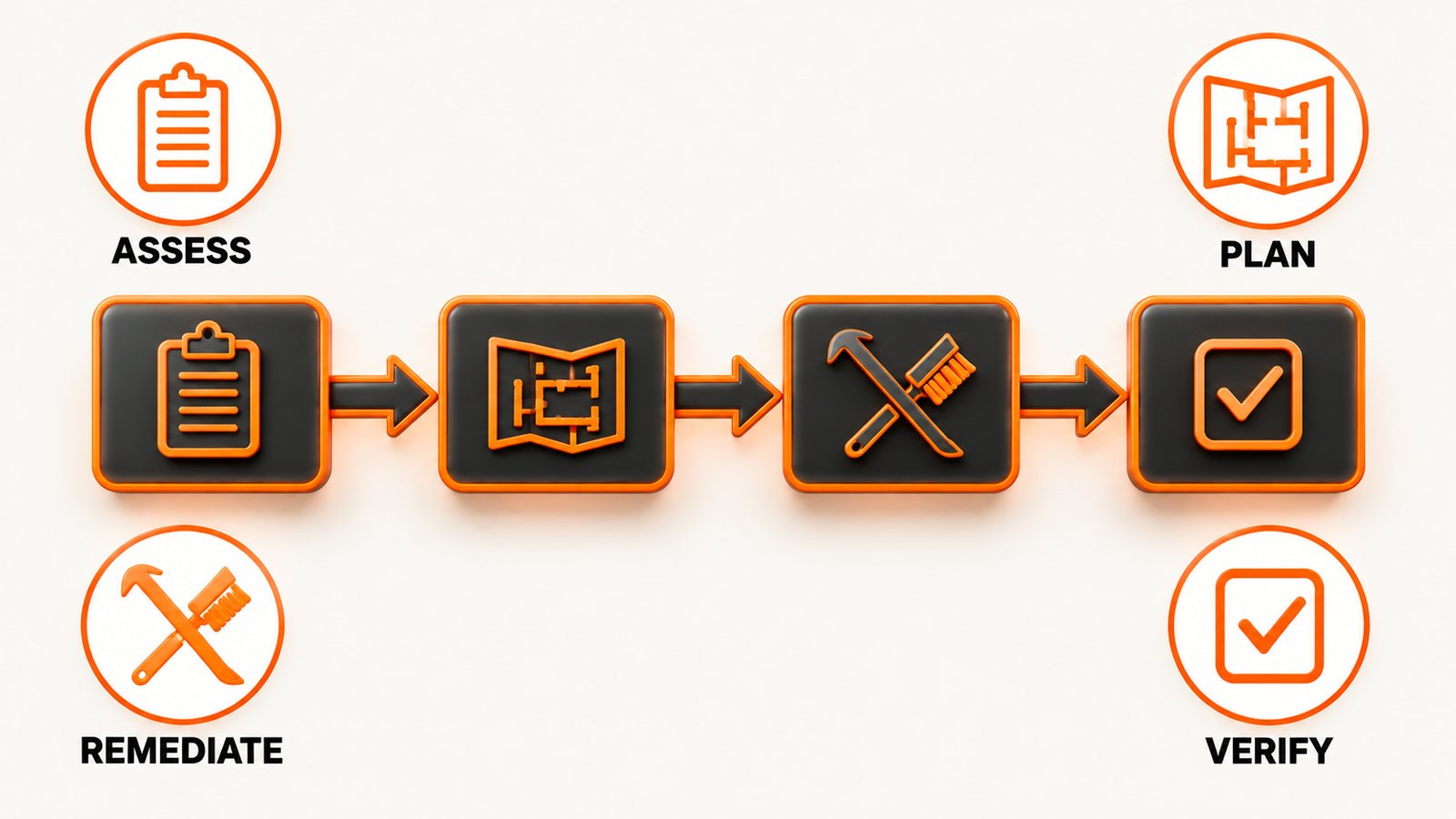
EPA publishes the sequence as a key steps flowchart in its remediation guide, which is written for schools and commercial buildings and which the agency says applies to other building types. Condensed, it runs like this.
- Select a remediation manager for medium or large jobs, or for small jobs needing more than one person.
- Assess the size of the problem and note the type of mold-damaged materials.
- Identify the source or cause of the water or moisture problem. This is the step that decides whether the work holds.
- Communicate with the occupants throughout, in a way that fits the situation.
- Plan the remediation and adapt the published guidelines to the job, selecting protective equipment, containment equipment and the team, and deciding between in-house and outside expertise.
- Remediate: fix the water or moisture problem, clean and dry the moldy materials, discard moldy items that cannot be cleaned, and dry the non-moldy items within 48 hours.
- Check for the return of the moisture and mold problem, and reevaluate the plan if hidden growth is discovered.
EPA also lists the questions to answer before starting: whether materials have been wet more than 48 hours, whether there are hidden water sources or humidity high enough to cause condensation, whether occupants report musty odors or health problems, whether maintenance has been delayed, and whether consultation with a medical or health professional is indicated. On the HVAC system the instruction is blunt: do not run it if you know or suspect it is contaminated, and read the duct-cleaning guidance first. Ducted systems are covered in mold in air ducts.
Containment: limited versus full
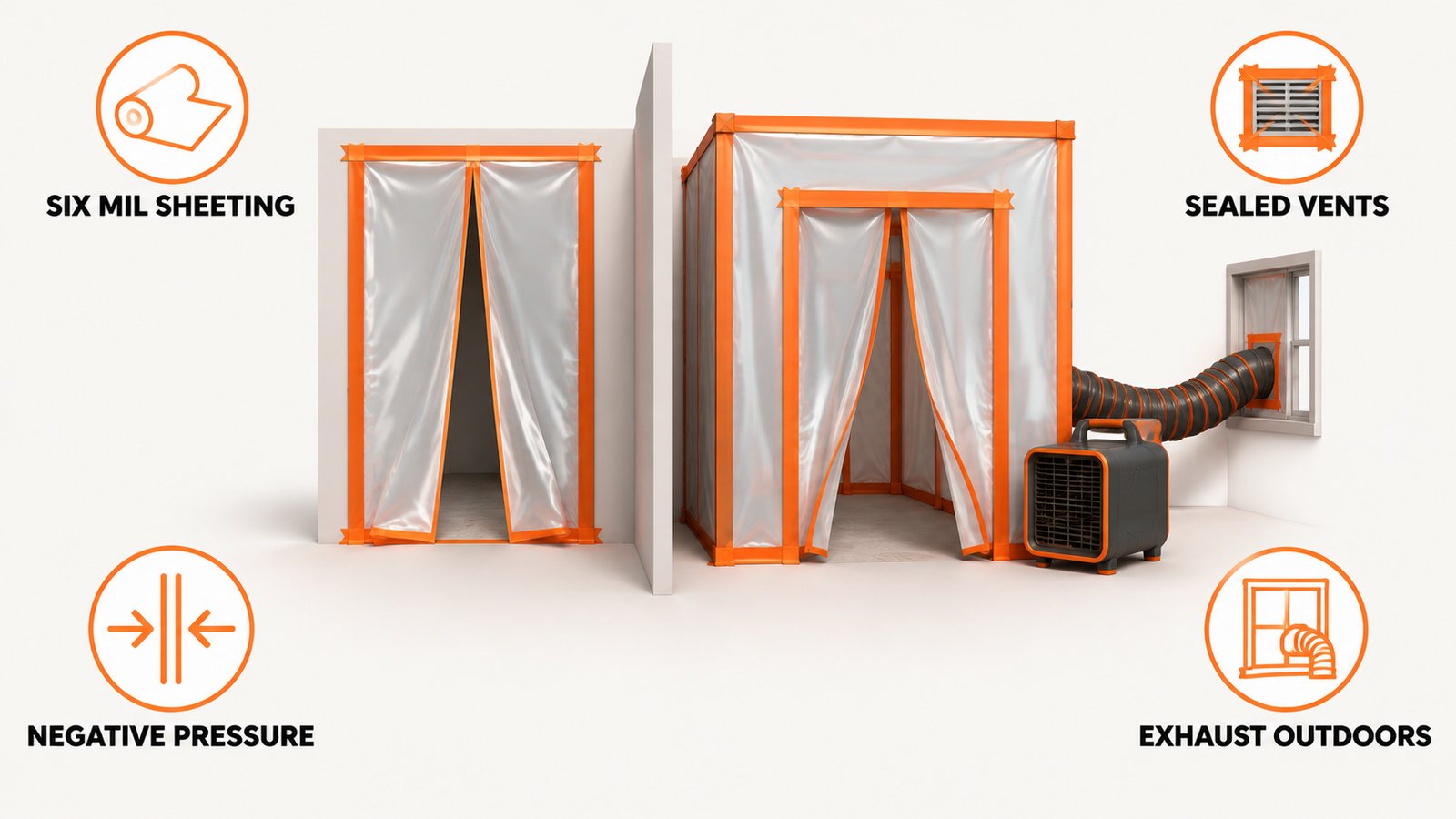
Containment exists to stop the work from spreading the problem into rooms that were fine. EPA describes two levels, chosen by area with professional judgment on top.
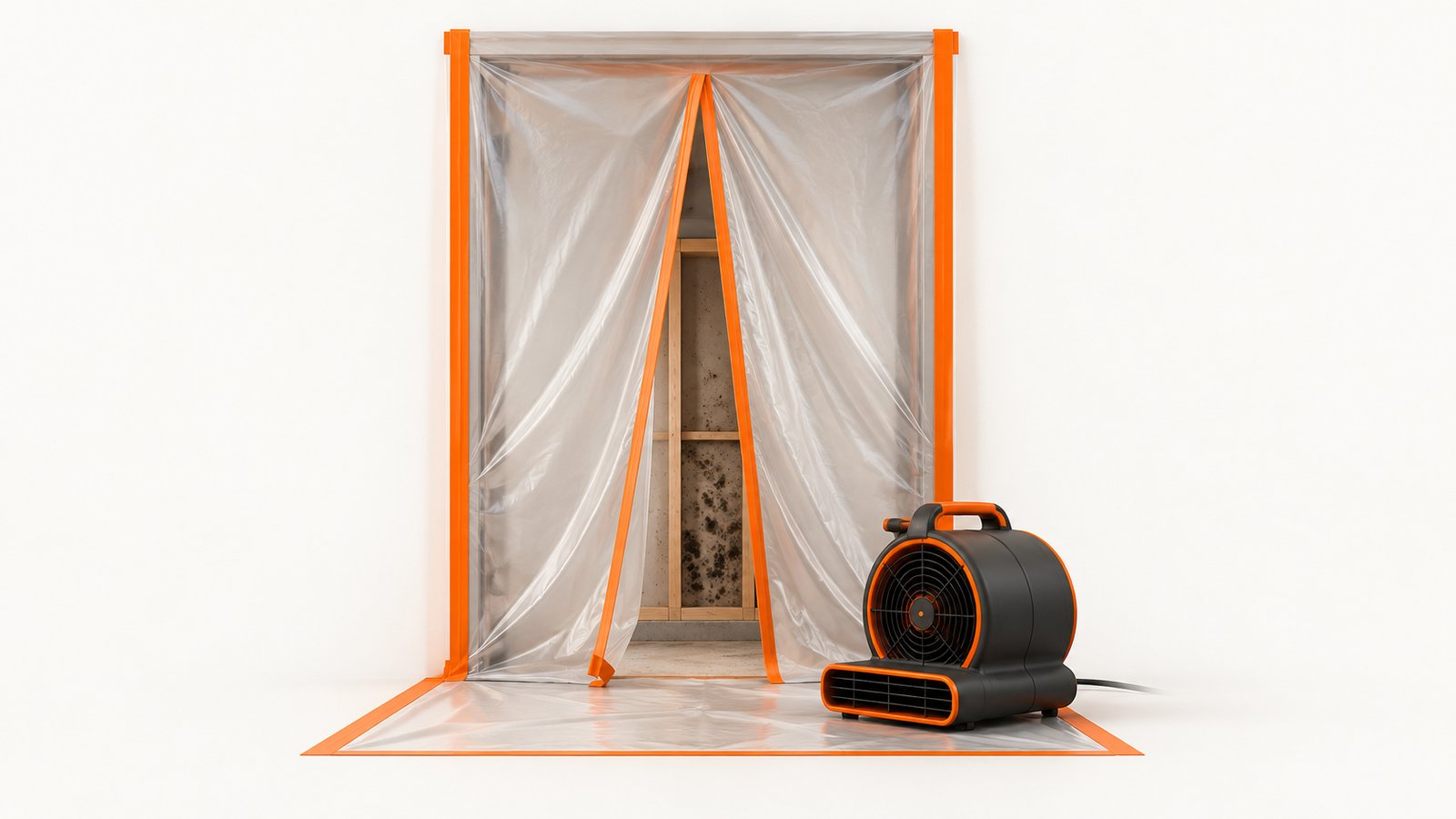
Limited containment is generally recommended for areas involving between 10 and 100 square feet of contamination. The enclosure is a single layer of 6-mil fire-retardant polyethylene sheeting with a slit entry and a covering flap outside it. Supply and air vents, doors, chases and risers inside the area get sealed with sheeting.
Full containment is recommended above 100 square feet, or in any situation where it appears likely the occupied space would otherwise be affected.
Negative pressure is the part that matters. The containment area must be kept under negative pressure relative to the surrounding areas so contaminated air does not flow into them, using a HEPA-filtered fan unit exhausted outside the building. EPA gives a field test any homeowner can run: if the containment is working, the polyethylene sheeting billows inward on all surfaces, and if it flutters or billows outward, containment has been lost and the problem should be found and corrected before work continues.
Objects leaving the area get cleaned first. EPA's instruction is that the surfaces of all objects removed from containment should be remediated or cleaned before removal.
If a contractor proposes tearing out a large moldy area with no sheeting, no sealed vents and no negative pressure, that is not a small shortcut. It is the mechanism by which one room becomes three.
The cleanup methods, by material
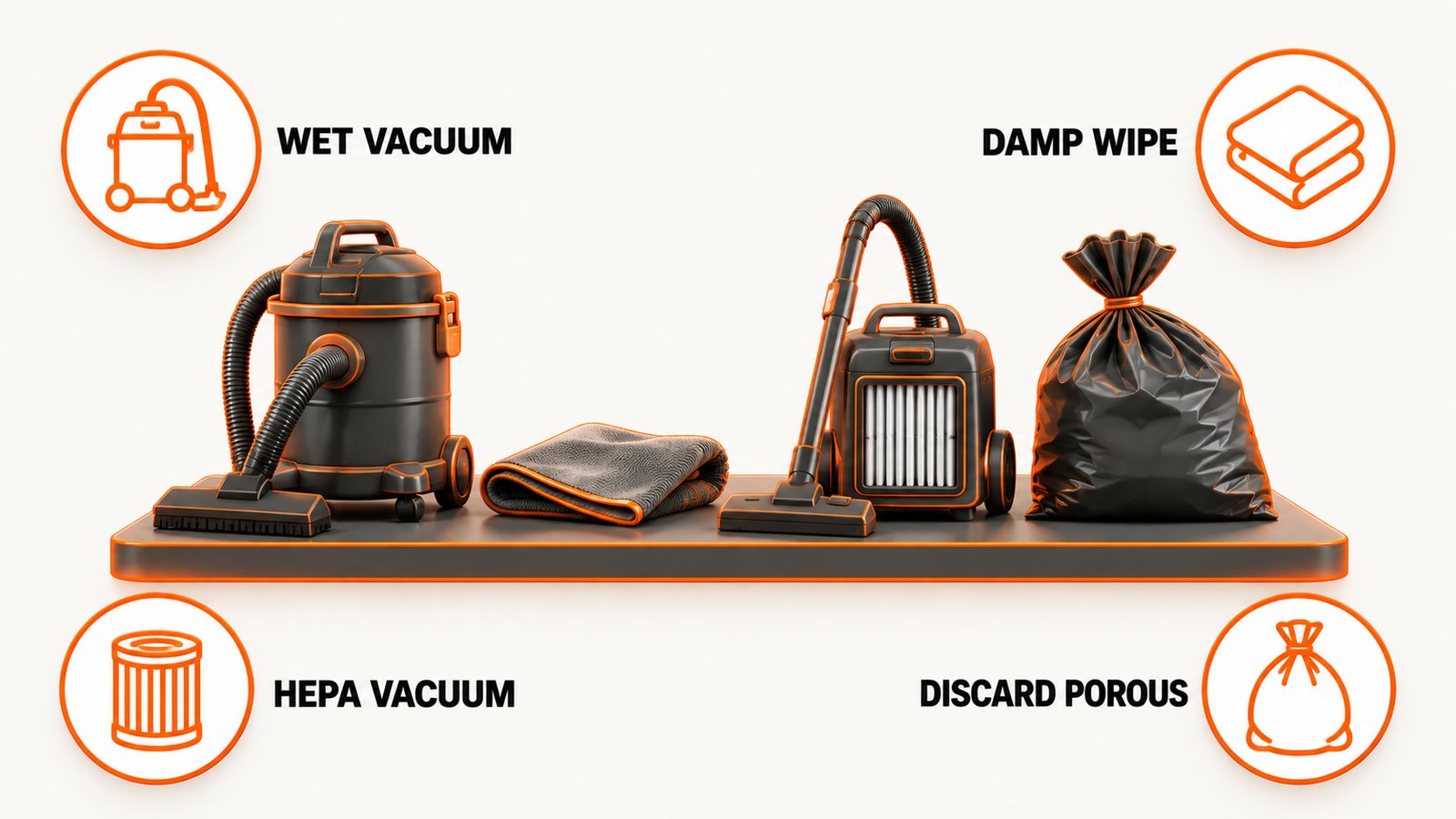
EPA notes that the method depends on the material affected, and that professional remediators may use methods beyond the published guidelines.
- Wet vacuum. For removing water from floors, carpets and hard surfaces where it has accumulated. Not for porous materials such as gypsum board, and only while material is still wet, because a wet vacuum may spread spores if enough liquid is not present. Tanks, hoses and attachments get cleaned and dried after use.
- Damp wipe. Growth can generally be removed from non-porous hard surfaces by wiping or scrubbing with water, or water and detergent, then drying quickly and thoroughly. Product label instructions get read and followed.
- HEPA vacuum after material has dried, for the fine debris left behind.
- Discard. Porous materials that are wet and have growth on them may have to be thrown away, because molds infiltrate porous substances and fill empty spaces and crevices, making removal difficult or impossible.
EPA also makes a point people miss: whether dead or alive, mold is allergenic, which is why removal rather than killing is the objective. And it warns that long-standing moisture problems can cause structural damage, advising consultation with a structural engineer if you suspect building integrity has been affected. The household-scale version of this work is in how to get rid of mold.
Why drying takes longer than people expect
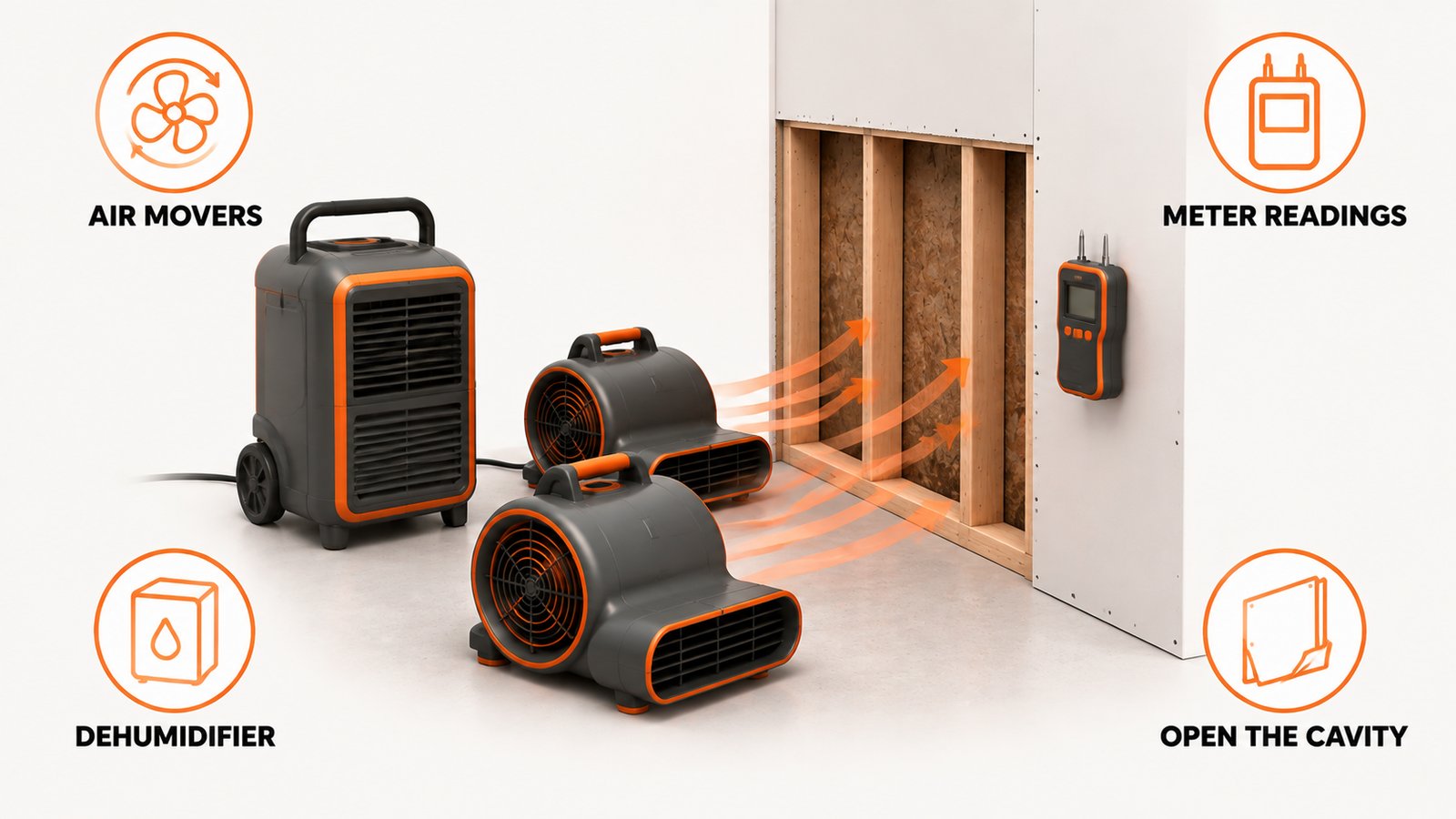
The drying stage is where schedules slip, because it is the one stage that cannot be shortened by adding people.
The clock EPA gives is 24 to 48 hours. Table 1 in the remediation guide presents strategies for responding to water damage within 24 to 48 hours, designed to avoid the need for remediation by acting before growth starts, and the key steps list says to dry non-moldy items within 48 hours. That window is about preventing growth in undamaged material, and it is why a competent crew starts drying equipment on day one rather than at the end.
Surface dry is not dry. Framing lumber, subfloor and plaster hold water long after the face feels dry to the hand. Drying is judged by moisture meter readings against unaffected reference areas in the same building, not by touch.
Cavities are the slow part. Water inside a wall or under a floor has almost no airflow. That is why crews drill, remove baseboards or open sections rather than pointing a fan at a wall and hoping. Concealed damage is covered in mold behind walls.
Weather counts. Air movers only work if the air can accept more moisture, which is why dehumidification runs alongside them and why a humid week slows everything down. EPA's general target for indoor air is below 60 percent relative humidity, ideally 30 to 50 percent.
Do not close the wall early. Rebuilding over material that still reads wet is the single most expensive mistake in this sequence, because the next symptom appears behind new drywall.
How anyone knows it is finished
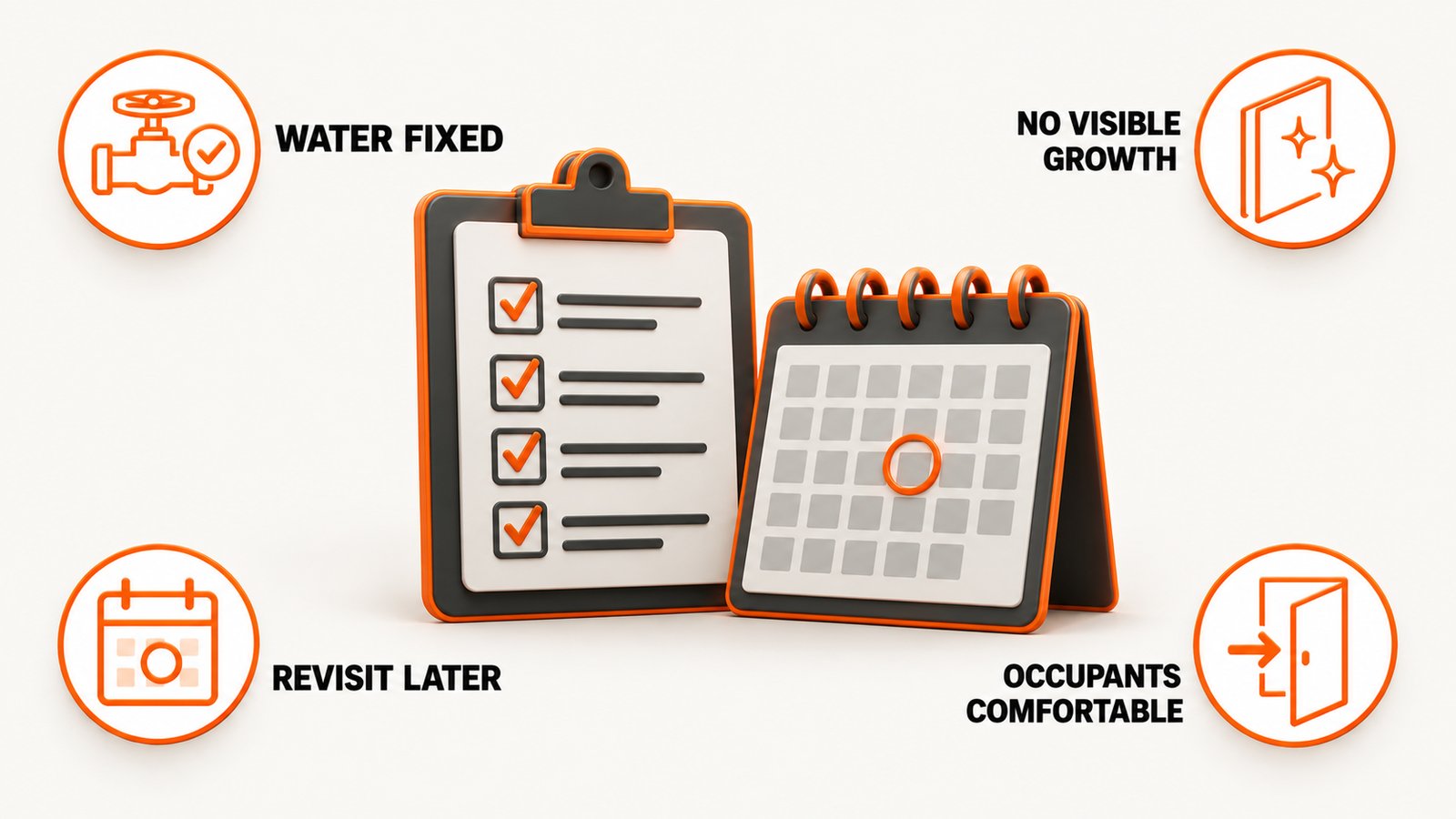
EPA publishes completion criteria, and they are refreshingly non-technical.
- The water or moisture problem is completely fixed. This is listed first, and it is the one that decides whether anything else matters.
- Mold removal is complete. Visible growth, mold-damaged materials and moldy odors should not be present, using professional judgment to decide whether the cleanup is sufficient.
- If sampling was done, the kinds and concentrations of mold and spores in the building should be similar to those found outside once cleanup is finished.
- A revisit shortly after the work shows no signs of water damage or growth.
- People can occupy or re-occupy the space without health complaints or physical symptoms.
EPA is also honest that this is ultimately a judgment call with no easy answer. That is exactly why the acceptance criteria belong in the contract before the work starts, and why the person verifying should ideally not be the person who did the removal. Sampling has its own limits, covered in professional mold testing.
When to call a pro
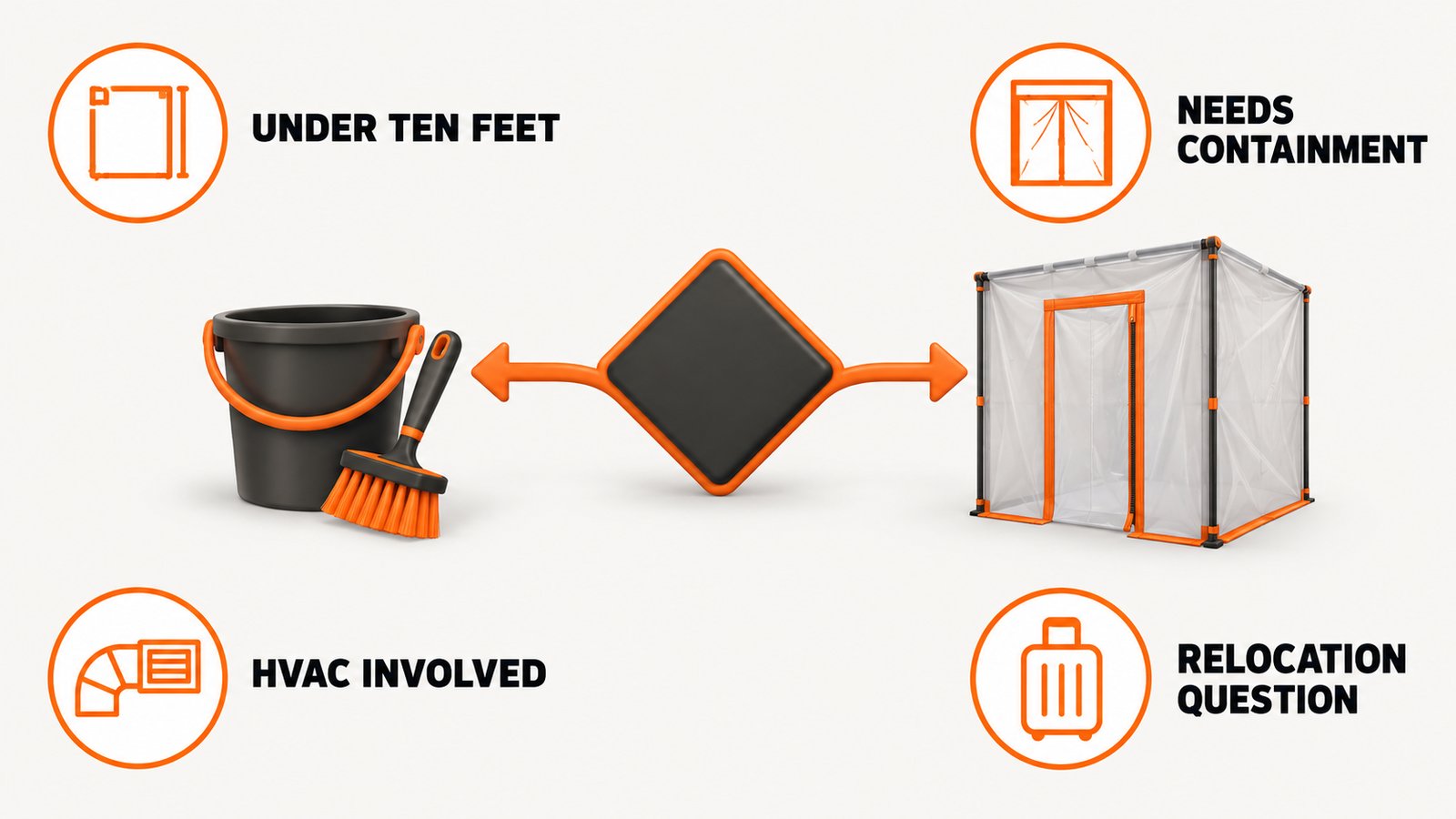
EPA's own guidance for a home splits at about 10 square feet, less than roughly a 3 foot by 3 foot patch, which in most cases you can handle yourself. Above that, or after a lot of water damage, it points to the remediation guide for schools and commercial buildings and to hiring a contractor with mold experience.
Bring in outside expertise when the area needs containment, an air-handling system is involved, the water was sewage or otherwise contaminated, the growth is concealed inside an assembly, occupants may need temporary relocation, or building integrity looks affected. EPA names each of those cases, and the relocation decision it says should weigh the size and type of affected area, the health effects occupants report, the potential risk from debris and how disruptive the work will be.
Ask what standard the crew works to. EPA recommends that a hired contractor follow its remediation guide, the ACGIH guidelines or the IICRC standard. Which professional does which job, and the conflict of interest to avoid, is covered in mold specialist.
Health questions go to a clinician. EPA advises consulting a health professional before starting cleanup if you have health concerns, and notes that remediators with health concerns of their own may want to check with a doctor before working on a job. CDC states that exposure to damp and moldy environments may cause a variety of health effects or none at all, and that some groups are more susceptible.
Frequently asked questions
How long does mold remediation take?
It depends on the affected area, the materials, whether the water source is fixed and how long drying takes. A small non-porous surface clean can be done in a day. Anything needing containment, material removal and structural drying runs across several days, and the rebuild afterwards is a separate schedule. There is no published standard duration, so treat any figure quoted before someone has seen the job as a guess.
What are the steps of the mold remediation process?
EPA's sequence is: select a remediation manager, assess the size of the problem and the damaged materials, identify the water source, plan the work and select protective and containment equipment, fix the moisture problem, clean and dry what can be saved, discard what cannot, dry non-moldy items within 48 hours, then check for the return of the problem and reevaluate if hidden growth appears.
Do I have to move out during remediation?
Sometimes, and it is a judgment made per job. EPA notes that a remediation plan may include temporary relocation of some or all occupants, especially with large contaminated areas, and says the decision should consider the size and type of affected area, the health effects occupants report, potential risks associated with debris and how disruptive the work will be. It also suggests scheduling work during off hours where possible.
What is containment and when is it required?
Containment limits the release of mold into the rest of the building. EPA describes limited containment, generally for areas between 10 and 100 square feet, using a single layer of 6-mil fire-retardant polyethylene sheeting with a slit entry, and full containment above 100 square feet. The area is kept under negative pressure with a HEPA-filtered fan exhausted outdoors, and the sheeting should billow inward if it is working.
Why is the drying stage so long?
Because water inside materials leaves slowly and cannot be rushed by adding labor. Framing, subfloor and plaster hold moisture long after surfaces feel dry, wall cavities have almost no airflow, and humid weather reduces how much moisture the air can take. Drying is judged with moisture meter readings against unaffected reference areas, not by touch.
How do I know the remediation actually worked?
Use EPA's completion criteria: the water problem is completely fixed, mold removal is complete with no visible growth, mold-damaged materials or moldy odors, any sampling shows kinds and concentrations similar to outdoors, a revisit shortly afterward shows no water damage or growth, and people can occupy the space without complaints. Agree those criteria in writing before the work starts.
Does the price include putting the wall back?
Often not. Remediation and reconstruction are usually separate scopes, and the rebuild is frequently the larger half of the calendar and the invoice. Ask explicitly what is included, what is excluded and who is responsible for drywall, paint, trim, flooring and cabinetry before you sign.
Sources
Every claim on this page traces to one of these. Links open the primary document.