Three building priorities: moisture, materials, prevention
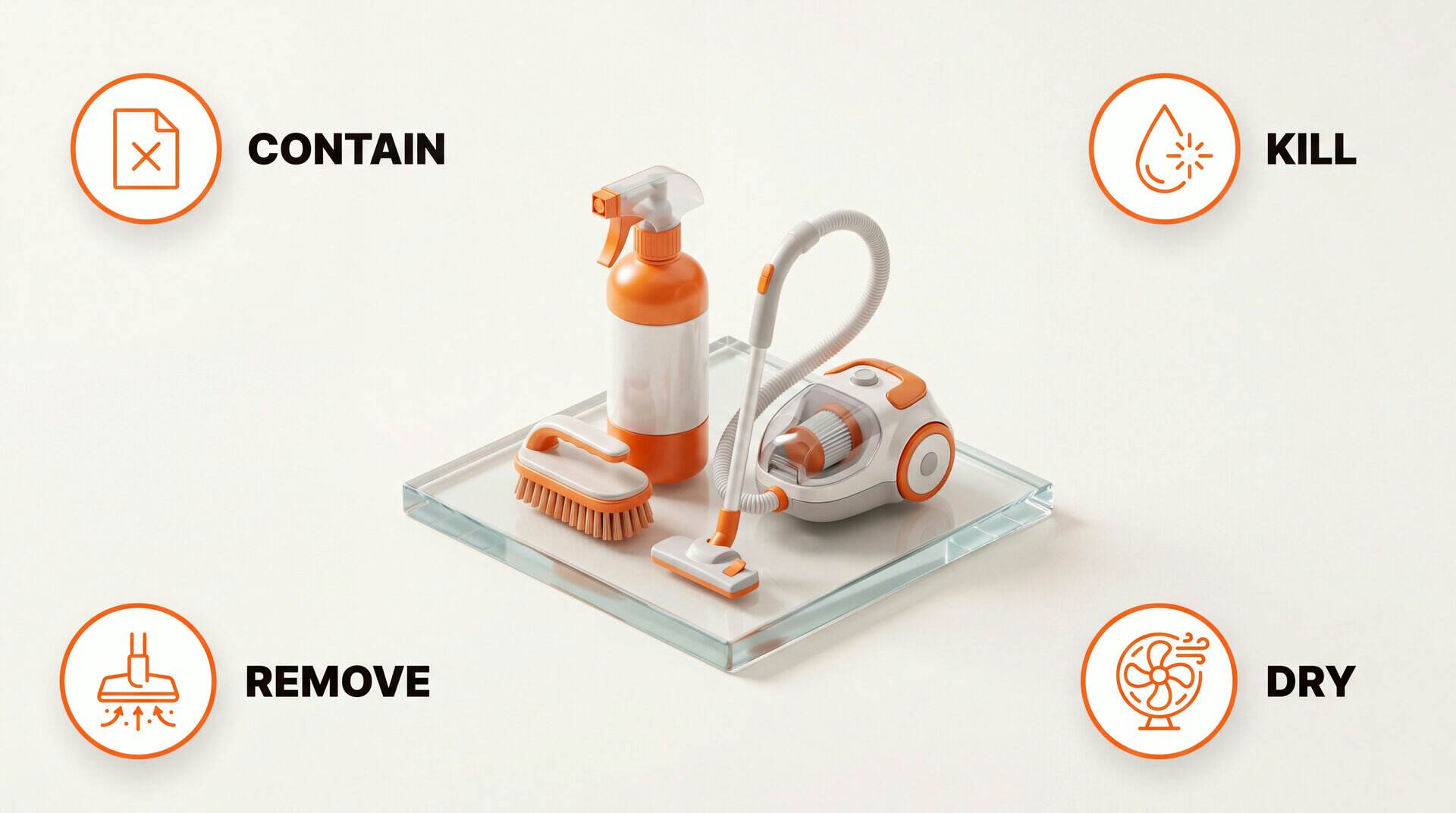
1. Correct moisture. Investigate and repair leaks, condensation, drainage, or ventilation problems. An odor, thermal image, symptom pattern, or phone photo cannot locate a hidden source by itself.
2. Address affected materials. EPA recommends detergent and water for hard surfaces followed by complete drying. Absorbent materials may need removal when they cannot be cleaned and dried. The project scope should account for the area, water source, access, and other hazards.
3. Reduce recurrence. Track indoor humidity, maintain ventilation and condensate drainage, and recheck repaired areas for moisture. A dehumidifier or air cleaner does not substitute for fixing water entry.
Before a small-area cleanup
EPA's roughly 10-square-foot guidance is a starting point, not a health threshold or universal DIY approval. Before disturbing material:
Define the area and material. Stop if the affected area is larger than expected, concealed, or on material that cannot be cleaned and dried.
Identify additional hazards. Sewage, major water damage, electrical or structural hazards, unsafe access, asbestos, or lead paint require specialized judgment.
Follow authoritative instructions. Review EPA cleanup guidance and every product label. Never mix cleaners. For hard surfaces, EPA recommends detergent and water followed by complete drying. If a stain remains on a hard, non-porous surface after it is clean and dry, a dedicated remover such as the one in our RMR-86 review can lift the leftover discoloration.
Do not improvise a verification certificate. An ERMI, HERTSMI-2, air sample, dust sample, photo, or app result cannot prove safe occupancy or rule out hidden growth. Define any professional verification scope before work begins.
When to hire a professional (and how to pick the right one)
Consider qualified help when: The affected area is extensive, the HVAC system may be involved, water came from sewage or flooding, materials are unstable, the moisture source is concealed, growth keeps returning, or access could disturb wiring, plumbing, asbestos-containing material, lead paint, insulation, or contamination. Health symptoms require clinical evaluation and do not diagnose a building. Color cannot identify a dangerous species.
How to choose a company: Check applicable state licensing, relevant training, insurance, references, the written scope, and the limits of any credential. Ask how the contractor will correct the moisture source, protect occupants, define removal boundaries, and verify completion.
Manage conflicts of interest: Independent assessment or post-remediation verification can reduce conflicts in high-stakes work. If one company performs multiple roles, require transparent methods, itemized findings, and acceptance criteria that are not based solely on its own sales recommendation.
Room by room mold removal tips
Bathroom and kitchen: Check accessible plumbing, caulk, grout, appliance connections, exhaust, and recurring condensation. A surface photo or odor cannot establish what is behind a wall.
Basement: Look for seepage, drainage problems, condensation, and wet stored materials. After flooding, follow water-damage guidance and consider whether the water was contaminated before using fans or entering the area.
Bedroom and closets: Check for window condensation, damp exterior walls, and restricted airflow without moving heavy furniture unsafely.
Attic and crawl space: Do not enter an unsafe or unconditioned space just to inspect it. Dark staining does not confirm mold, and ventilation changes require building-specific evaluation.
HVAC: Do not open equipment or disturb duct material yourself. A stain, odor, symptom pattern, or spot near a register does not prove HVAC contamination or whole-home exposure. Use a qualified HVAC technician or building professional when the system may be involved.
Larger accessible rooms: After surfaces are physically cleaned and dried, some homeowners use a fogger to carry a mold-control solution across a whole room. Our guide to the best mold foggers covers when that helps and when it does not.
Post-remediation verification and its limits

Define the completion and verification scope before remediation begins. The scope may include a visual review, moisture checks, documentation that affected materials were handled as specified, and sampling only when a qualified professional has a defined reason for it.
Use independent judgment when the stakes are high. Consider separating verification from the company that performed the work.
Do not use a single score as a safety certificate. No ERMI, HERTSMI-2, air, dust, photograph, or Mold Scanner result proves that a building is safe for every occupant or that hidden growth is absent.
Investigate unresolved moisture directly. A thermal image or elevated sample result can guide questions, but neither identifies a hidden source by itself.
Frequently asked questions
Can I remove mold myself or do I need a professional?
You can remove mold yourself if the affected area is smaller than 10 square feet (about a 3x3 foot patch). For anything larger, the EPA recommends hiring a qualified mold remediation professional (one who follows the IICRC S520 standard; ACAC or RIA credentials and state licenses count too). Also hire a pro if the mold is in your HVAC system, if anyone in the home has health symptoms, or if the mold keeps coming back after cleaning.
What is the first step in mold removal?
Fix the water source. This is step one in the expert 3 pillar framework: source, remediate, maintain. If you clean mold without fixing the moisture problem, it will grow back within days. Find the leak, condensation source, or humidity issue and fix it before touching the mold.
Should I use bleach to kill mold?
No. Never use bleach for mold. Bleach only kills surface mold on non-porous materials. On drywall, wood, and grout, it cannot reach the roots. It also adds moisture that feeds regrowth. Use a no-bleach mold-control product, hydrogen peroxide, or a botanical disinfectant instead. Every mold expert agrees on this.
How is post-remediation verification handled?
Define the verification scope before work begins and use an independent qualified professional when clearance matters. No single visual check, consumer test, ERMI score, or HERTSMI-2 score proves that a building is safe for every occupant.
Sources
Every claim on this page traces to one of these. Links open the primary document.