First, Figure Out How Deep It Goes
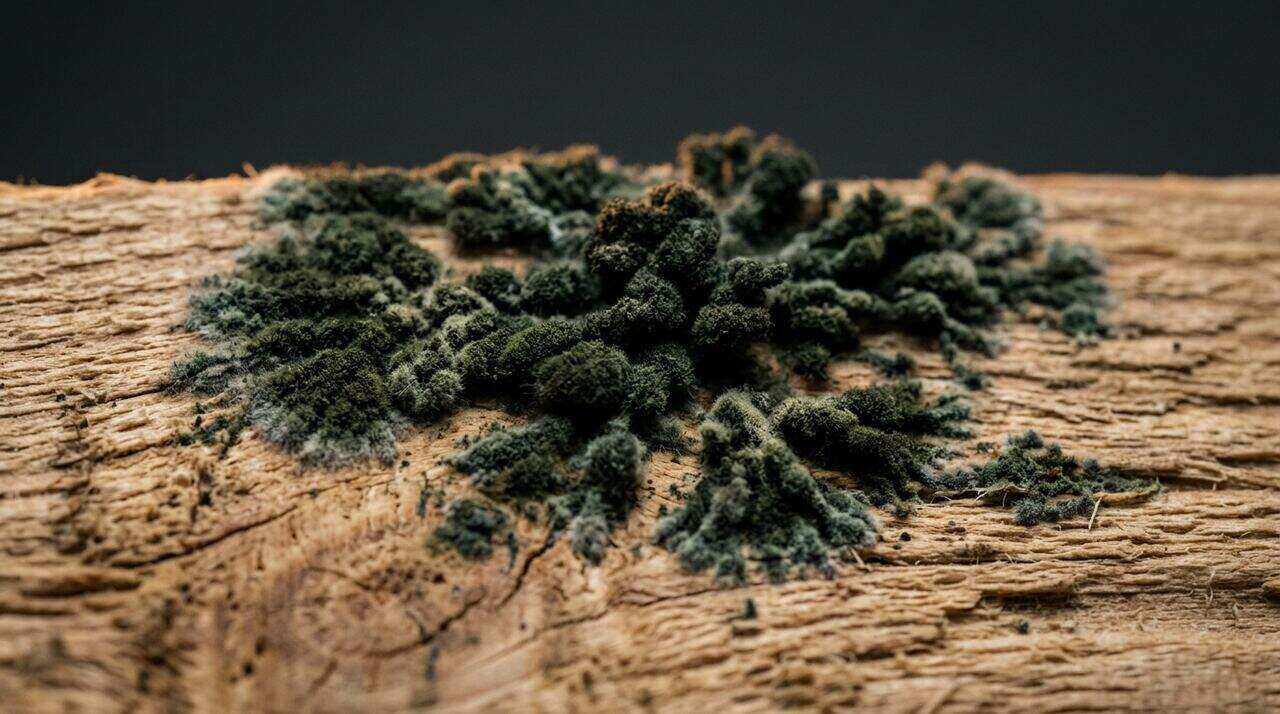
Mold on wood is two different problems wearing the same fuzzy coat. Sometimes it's a surface bloom: spores landed on the film of dust and grime that coats the wood, fed on that film, and never touched the grain. Other times the fungus has pushed root-like threads called hyphae down into the wood itself. The first problem cleans up in twenty minutes. The second takes scrubbing, sanding, and sometimes a saw.
So before you grab a cleaner, run a quick test. Put on gloves and an N95 mask. Dampen a rag with white vinegar and wipe one small patch. Then read the wood:
- The wood underneath looks normal. The color came off on the rag and the surface is smooth and bright. That's a surface bloom, and the light cleaning steps below will handle it.
- Gray or black staining stays put. The fungus has worked into the top layer of the grain. Plan on a deeper clean, and probably some sanding.
- The wood feels soft or spongy. Press the spot with a screwdriver. If the tip sinks in or the fibers crumble, you're past mold and into rot. That piece needs replacement, not cleaning.
Check the size too. The EPA draws the line at about 10 square feet, roughly a 3 foot by 3 foot patch. Smaller than that, careful DIY is reasonable. Bigger, and the job belongs to a pro (more on that in the structural section). This page covers wood from floors to framing. For every other surface in the house, start with our full guide to getting rid of mold.
Why Wood Is Mold's Favorite Meal
Wood is mostly cellulose, and cellulose is a long chain of sugar molecules. Mold digests it the way you digest bread. To a mold colony, a damp pine stud isn't a building material. It's dinner.
Moisture sets the table. Spores float through every home, and they can rest on dry wood for years without doing a thing. Then the wood gets wet. A roof drip, a slow plumbing leak, muggy summer air trapped in a closed room. Once the surface stays damp, mold can start growing within 24 to 48 hours.
Wood holds on to water too. Its open pores pull moisture deep and release it slowly. Add still air and the surface never dries out. That's why mold loves the wood nobody looks at: the back of a dresser pushed against a cool wall, attic sheathing above a bathroom fan that vents indoors, floor joists hanging over bare dirt.
One health note before you scrub. The CDC links damp, moldy homes to stuffy noses, wheezing, and itchy eyes, with stronger reactions in people who have asthma or mold allergies. If anyone in the house is reacting, keep them out of the room while you work, and talk to a licensed physician about the symptoms.
Removing Mold From Sealed or Painted Wood
Start with the easy case. Polyurethane, varnish, lacquer, and paint work like a raincoat for the grain. On finished wood, mold usually sits on top of that film, feeding on dust and skin oils. Your job is to lift it off without cutting through the coat.
- Vacuum first. Use a HEPA vacuum with a brush attachment to capture loose spores. A regular vacuum blows them back into the room.
- Wash gently. Mix a few drops of dish soap into warm water. Dip a soft cloth, wring it out hard, and wipe with the grain. The cloth should be damp, never dripping. Water that pools in seams finds its way under the finish.
- Treat the stubborn spots. Dampen a clean cloth with undiluted white vinegar, press it on the spot for a few minutes, then wipe. Vinegar is safe for most cured finishes, but test a hidden corner first.
- Dry it right away. Buff with a dry towel, then aim a fan at the surface for a few hours. Never let cleaned wood air-dry on its own.
Skip abrasive pads and steel wool. They scratch through the finish, and every scratch is a doorway to the grain. If the finish is already cracked or peeling, with mold tracing the cracks, treat it as bare wood and use the next section instead. Dressers, tables, and other movable pieces come with extra traps (veneer, upholstery, particleboard backs), so read our guide to mold on furniture before you start on those.
Removing Mold From Raw or Unfinished Wood
Bare wood plays by different rules. Stud framing, deck boards, and drawer interiors all have open pores, so the mold may have roots below the surface. Your cleaner has to reach them.
Two cheap options do the job:
- Undiluted white vinegar. Its mild acid kills most common household molds and wicks a short way into the grain, right where shallow roots hide. Spray it on, let it sit for about an hour, then scrub. The full case is in our breakdown of whether vinegar kills mold.
- 3% hydrogen peroxide. The brown drugstore bottle. Spray until the surface is damp, let it bubble for 10 to 15 minutes, then scrub. It kills mold on contact and lightens some of the staining as it works. We cover strengths and dwell times in our guide to hydrogen peroxide for mold.
Use one or the other, never both in the same bottle. Mixed together they form a harsher acid that can sting your skin and lungs.
Technique matters as much as the cleaner. Use a soft nylon brush and scrub with the grain, not across it. Light pressure, more passes. A wire brush tears up the soft wood between the grain lines, and fuzzy wood holds moisture even better. Wipe off the residue with a damp cloth, then dry the wood hard: fans on the surface, a dehumidifier in the room, both running until the wood is bone dry. Wear an N95, gloves, and goggles the whole time, and open a window if you can.
Why Bleach Is the Wrong Tool on Wood
Bleach feels like the obvious answer, and on wood it backfires. Household bleach is mostly water carrying chlorine. The chlorine can't soak into wood, so it kills the surface growth and stops there. The water does soak in, straight down to the roots you were trying to kill, and gives them a drink. The stain fades, the colony survives, and a few weeks later the fuzz is back.
Bleach also raises the grain, leaves blotchy light patches, and fills a closed room with harsh fumes. If a neighbor swears by it anyway, send them our full answer on whether bleach kills mold. Two safety lines are non-negotiable: never mix bleach with ammonia or any other cleaner (the combination releases toxic gas), and never apply bleach and vinegar to the same surface back to back. If you'd rather buy one purpose-made product, a no-bleach mold-control product is made for porous surfaces and crushes mold as it dries.
When You Need to Sand
Cleaning kills the colony. It doesn't always erase the evidence. Hyphae leave gray and black pigment behind in the top layer of wood, the way a tea bag stains a cup, and no amount of scrubbing pulls pigment out of the grain. If the wood is clean, dry, and still discolored, sanding is the fix.
Wait until the wood is completely dry first. Sanding damp wood clogs the paper and smears the surface. Then:
- Sand with the grain using 100 or 120 grit paper until the stained layer is gone.
- Smooth it out with a finer grit so the patch matches the wood around it.
- Capture the dust. Wear an N95 while you sand, and clean up with a HEPA vacuum instead of a broom. Sanding dust can carry leftover spores, and sweeping launches them into the air.
- Re-seal the wood. Once it's smooth and dust-free, apply a stain-blocking primer and paint, or a clear sealer like polyurethane. In damp-prone spots, use a mold-resistant primer. The seal closes the pores so the next humid week has nothing to grab.
One warning. Seal only wood that's clean and fully dry. Sealing damp wood traps moisture under the film and invites regrowth.
Structural Wood: Studs, Joists, and Sheathing
Studs, joists, subfloor, and roof sheathing raise the stakes. This is the wood that holds your house up, and mold here usually means a bigger moisture problem is hiding nearby.
Size decides who does the work. For patches under 10 square feet, the EPA says careful DIY is reasonable: wear an N95 or better, goggles, and gloves, clean with the bare-wood steps above, and dry the area aggressively. For anything larger, hire a qualified mold remediation professional. Look for firms that follow the IICRC S520 standard; ACAC or RIA credentials and state licenses count too.
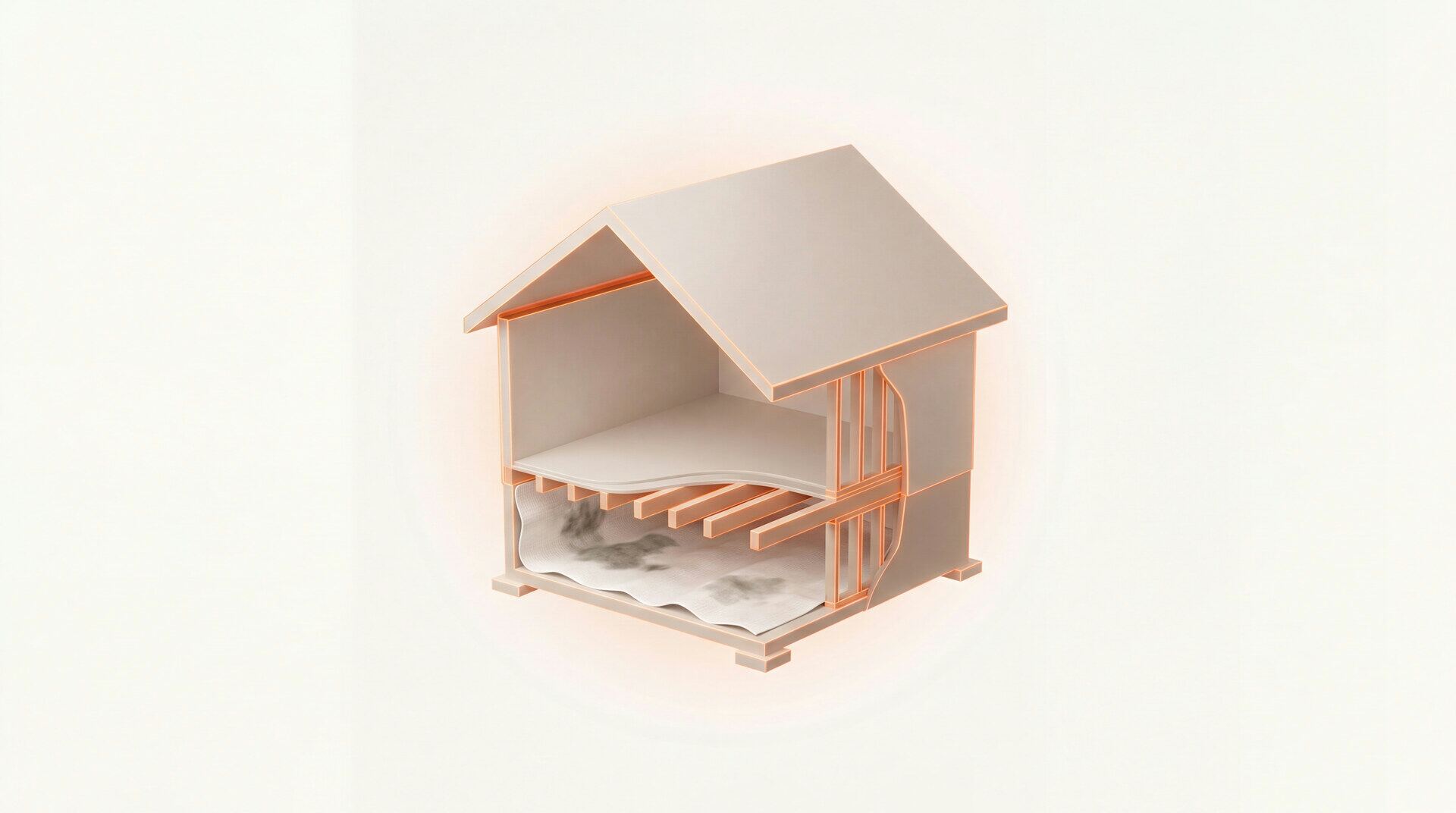
Where it shows up tells you why it's there. Mold across the underside of roof sheathing usually means the attic can't breathe: blocked soffit vents, or a bathroom fan dumping steam straight into the rafters. Fuzzy joists under the floor usually mean ground moisture is rising through a crawl space with no vapor barrier. Clean the wood all you want. Until the moisture source is fixed, it comes back.
Framing has one advantage over drywall: it's solid all the way through, so most surface growth can be cleaned and the lumber saved. Drywall is paper-faced gypsum, and once mold eats into the paper the panel gets cut out and replaced. We cover that line in our mold on drywall guide.
Two hard rules for structural wood. First, never paint over active mold. Paint doesn't kill anything. The colony keeps feeding underneath while the film peels. Primers and encapsulants come after cleaning and drying, never instead of them. Second, probe before you trust. If a screwdriver sinks into a joist or a stud dents under your thumbnail, that member has rot, and rot is a contractor's job, not a cleaning job.
Keeping Wood Mold-Free
Every mold problem on wood is a moisture problem wearing a costume. Keep the wood dry and it stays clean, no matter how many spores land on it.
- Hold indoor humidity below 50 percent. The EPA's target range is 30 to 50 percent. A cheap hygrometer tells you where you stand, and a properly sized dehumidifier handles basements, crawl spaces, and any room that reads high all summer.
- Fix leaks fast. Mold can start on wet wood within 24 to 48 hours, so a drip you'll get to next month is a colony you'll be scrubbing next month. Dry soaked wood immediately with fans.
- Keep air moving. Pull furniture a few inches off exterior walls. Run bathroom and kitchen fans, and make sure they vent outside, never into the attic. Leave closet doors cracked in humid months.
- Mind the outdoor wood. Sweep leaves and soil off decks so the boards dry between rains, trim plants back from fences and siding, and re-seal decks on schedule.
- Glance at the usual suspects monthly. Window sills, under-sink cabinet floors, the basement sill plate, and any wood that has been wet before. Thirty seconds of looking beats a weekend of sanding.
Frequently asked questions
Does vinegar kill mold on wood?
Yes. Undiluted white vinegar kills most common household molds on wood. Its mild acid soaks a short way into the grain, which lets it reach the shallow roots that surface sprays miss. Spray it on, let it sit for about an hour, scrub gently with the grain, and wipe the wood clean. Run a fan on the spot until it's fully dry. Don't rinse right away. The leftover acidity slows regrowth.
Why is bleach bad for mold on wood?
Bleach works on hard, non-porous surfaces like tile and glass. Wood is porous. The chlorine in bleach stays on the surface while the water in it soaks into the grain, where it feeds the roots you were trying to kill. The mold often comes back worse. Bleach also raises the grain and can leave blotchy light patches. Use white vinegar, 3% hydrogen peroxide, or a dedicated mold cleaner instead. Never mix bleach with ammonia. The fumes are dangerous.
Can moldy wood be saved, or does it have to be replaced?
Most moldy wood can be saved. If the mold wipes off and the wood underneath is firm, clean it, dry it, and keep it. If dark stains remain after cleaning, sand them out and re-seal. Replace the wood when it feels soft or spongy, crumbles under a screwdriver, or shows rot. That damage means fungi have broken down the wood fibers, and no cleaner brings back lost strength.
Is the dark staining left after cleaning still mold?
Usually not. Mold leaves pigment behind in the top layer of wood, the way a tea bag stains a cup. If the surface is clean, dry, and firm, the stain is cosmetic. Sand it out if looks matter, or seal over it once the wood is fully dry. Watch the spot for a few weeks. If fuzzy growth returns, moisture is still reaching the wood, and the moisture is the problem to fix.
How do I keep mold from growing back on wood?
Control moisture. Keep indoor humidity below 50 percent with a dehumidifier, and check it with a cheap hygrometer. Fix leaks fast, since mold can start growing on wet wood within 24 to 48 hours. Keep air moving: pull furniture a few inches off walls, vent attics and crawl spaces, and run bathroom fans. Outside, sweep decks clear of wet leaves and soil so the boards can dry between rains.
Sources
Every claim on this page traces to one of these. Links open the primary document.