
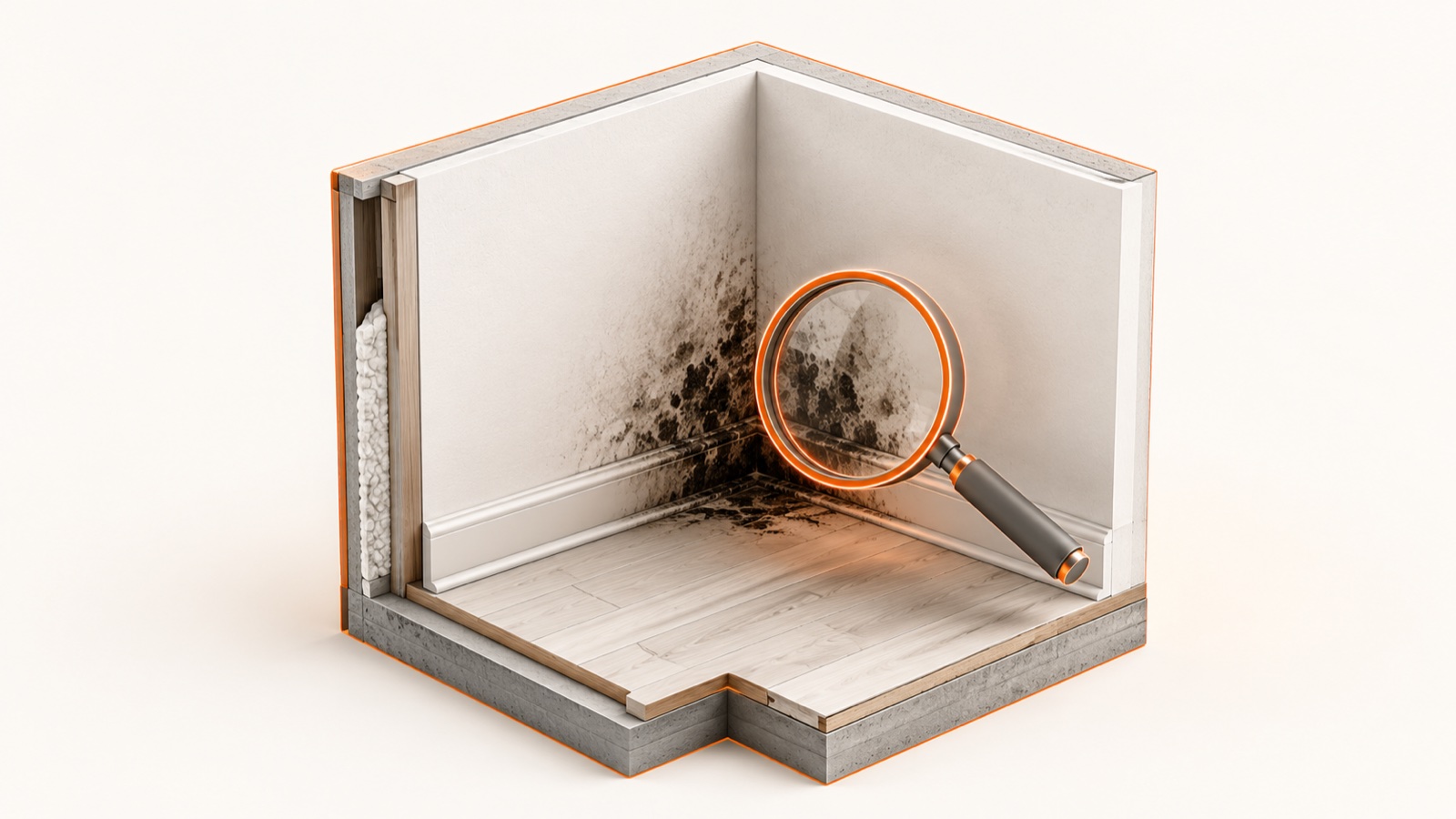
What Mildew Looks Like
Mildew shows up as a flat, thin growth that sits on top of a surface, usually powdery or slightly downy. The CDC notes color cannot confirm the species, so a lab test is the only way to name it. It often starts gray or white and turns brown or black as it ages. You see it most on damp bathroom tile, painted walls, fabric, and around windows. Because it stays on the surface, a wipe usually lifts it off and the material underneath looks fine.
The word mildew is a casual term. Scientists reserve it for certain plant diseases, but at home it just means flat, surface-level mold. Treat it as an early warning that a spot is staying too damp.
What Black Mold Looks Like
Black mold reads dark green to black, can look slimy while growing and powdery once dry, and spreads in irregular blotches or dots. Unlike mildew, it grows into porous material like drywall, wood, and ceiling tile, so it leaves a stain and comes back after a surface wipe. It often carries a stronger musty smell. The CDC notes color cannot confirm the species, so a lab test is the only way to name it.
The Wipe Test That Separates Them
Put on a glove and wipe a small edge with a damp paper towel. Mildew lifts off and the surface underneath looks clean. Mold clings, leaves a stain, and the patch tends to return because it has roots below the surface. If the material feels soft or spongy, mold has grown inside it, and that is past the mildew stage.
On masonry, spray with plain water instead. A mineral crust called efflorescence dissolves and rinses away, while neither mildew nor mold dissolves. A side-by-side walk through those look-alikes, with the specific check that rules each one out, is on is this mold.
What to Do About Either One
The response is the same for both: remove the growth and fix the moisture feeding it. For a small patch, the EPA says most people can clean it with detergent and water while wearing an N95 mask, gloves, and goggles, then dry the area fully. If you would rather use a labeled cleaner than plain detergent, our reviews of the best mold removal products and Concrobium Mold Control cover which ones suit each surface. Keep indoor humidity below about 50 percent so it cannot return.
Call a licensed remediation pro for large areas, soft or stained drywall, or mold from flooding or sewage. If the wipe test points to a deeper colony rather than surface mildew, our full guide to black mold covers what it looks like, where it hides, and how to clean it. To gauge a spot quickly before you decide, the Mold Scanner app provides AI-assisted visual screening for the visible surface. Processing time varies.
Frequently asked questions
What is the difference between black mold and mildew?
Mildew is a flat, powdery or downy growth that sits on the surface and wipes off, often gray or white turning brown. Black mold grows deeper into porous materials, looks dark green to black, can feel slimy or fuzzy, stains the surface, and grows back after a surface wipe. Mildew is essentially an early or surface-level mold.
Is mildew less dangerous than black mold?
Both are mold, and the CDC says you cannot judge how hazardous a mold is by its look or color. Mildew on a surface is usually easier to clean, but the health response is the same: remove the growth and fix the moisture. Sensitive people, like those with asthma or allergies, can react to either.
How do I know if it is mildew or mold growing deeper?
Wipe a small spot. If it lifts off cleanly and the surface underneath looks normal, it is likely surface mildew. If it stains, comes back, or the material feels soft, mold has likely grown into the surface and that section may need replacing.
How do I clean mildew?
For a small mildew patch on a hard surface, scrub with detergent and water while wearing an N95 mask, gloves, and goggles, then dry the area fully and fix the moisture source. Keep humidity below about 50 percent so it does not return. Skip bleach on porous surfaces, since the water can feed regrowth.
Does mildew turn into black mold?
Mildew is already a mold. What people call mildew is often an early, surface-stage growth that can develop into a deeper, darker colony if the moisture continues. Catching it at the mildew stage and drying the area is the easiest time to stop it.