The Clean-or-Cut Decision
Every moldy drywall job comes down to one question: did the mold stay on the surface, or did it get into the board? Answer that and the rest of the job plans itself.
Clean it when the mold sits on painted drywall as a thin surface bloom. Paint works like a shield. It seals the paper face behind a thin film, so light mold often grows on the paint and the dust stuck to it, not in the drywall itself. Spots like this wipe away and stay away once you fix the moisture.
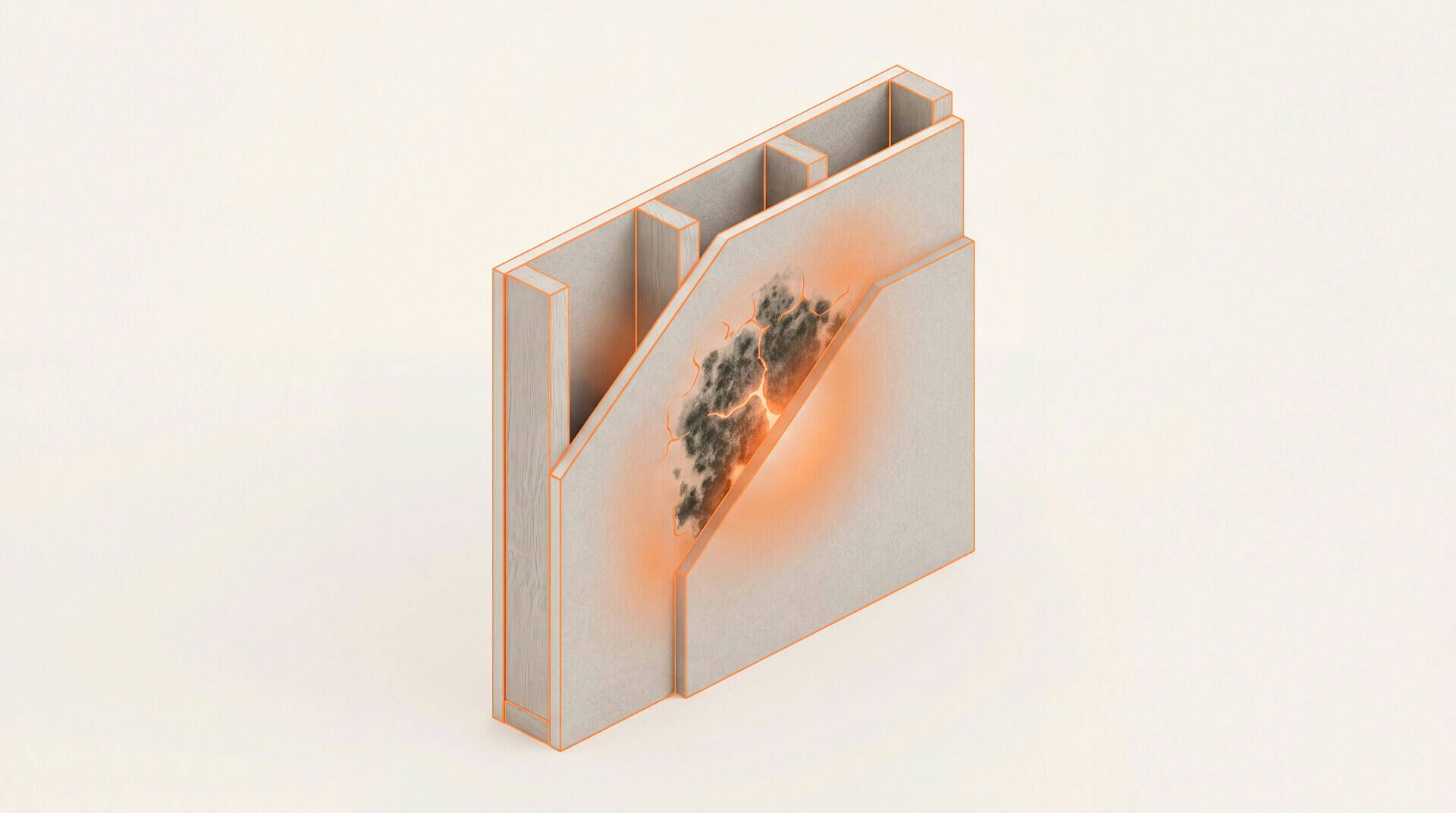
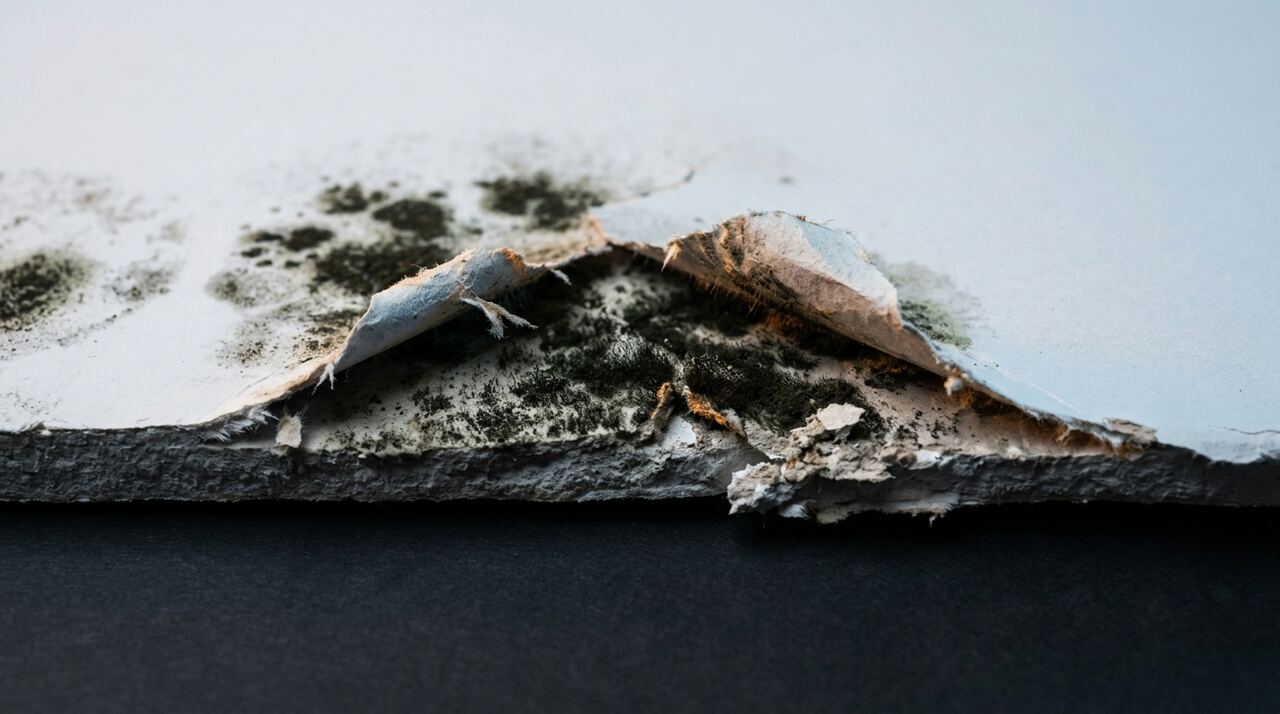
Cut it out when the mold has reached the paper face. Drywall is a gypsum core wrapped in paper, and once mold roots into that paper, no spray reaches all of it. Surface cleaning leaves live growth inside the material, and it comes back.
Signs the mold went deeper than the paint:
- The stain won't wipe off, or it returns within days of cleaning.
- Fuzzy growth along seams, corners, screw lines, or the baseboard edge.
- Bubbling paint, lifting tape joints, or water stains around the mold.
- Growth visible on both sides of the board. Check from the closet, basement, or attic behind that wall if you can.
The Press Test
Push on the moldy area with your thumb. Solid board that resists like the clean wall around it still has a shot at being cleaned. Soft, spongy, or crumbly board is finished. Wet gypsum loses its structure and never gets it back. Soft drywall is done, no matter how small the visible mold looks. Cut it out.
One more gate before you grab a cloth: size. The EPA draws the DIY line at 10 square feet, about a 3 by 3 foot patch. Anything bigger belongs to a pro, and the stop rule below explains what to look for. The steps that follow cover both paths.
Why Drywall Molds So Easily
Mold needs three things to grow: moisture, food, and mild temperatures. Your house already supplies the temperature. Drywall supplies the food.
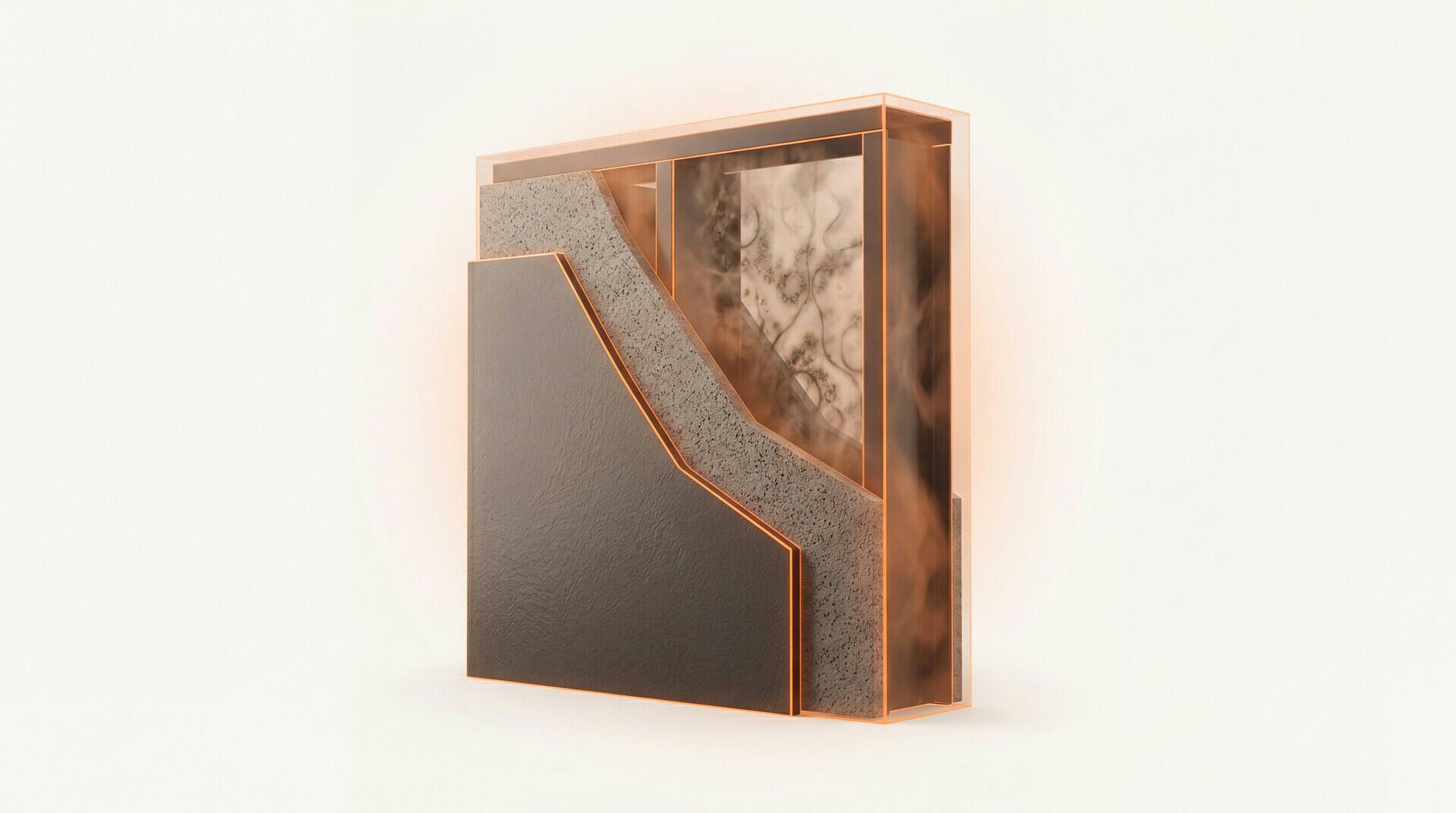
Drywall is a slab of gypsum wrapped in paper, and paper is cellulose. Cellulose is one of mold's favorite meals. To a drifting spore, the paper face of your wall is a food source that runs the full height of every room in the house.
The gypsum core makes things worse. It soaks up water and holds it. One plumbing leak, one roof drip, one overflowing tub, and the board stays damp long after the surface looks dry. Mold can start growing on wet material in 24 to 48 hours. The paper feeds it. The core keeps it wet. That's why a small leak so often becomes a wall problem.
Location matters too. Bathroom walls catch shower steam. Basement walls wick moisture from the concrete they touch. Exterior walls collect condensation behind furniture where air can't move. The same pattern shows up on other painted surfaces, which is why we keep separate guides for mold on walls in general and mold on the ceiling, where roof leaks and steam do the damage.
Paint buys you time. It slows water down and gives you a surface you can wipe. But paint is a speed bump, not a dam. Give moisture enough days and it reaches the paper.
Cleaning Surface Mold on Painted Drywall
This method is for surface bloom on painted drywall covering less than 10 square feet, where the board is still solid. If that's not what you have, skip ahead to the cut-out steps. For surface growth on painted drywall, see our ranked before reaching for bleach.
Gear up first. N95 mask, rubber gloves, and goggles. Wiping mold flicks spores into the air, even on a small patch. Open a window if you can and close the door to the rest of the house.
Then follow the one rule that matters: never soak drywall. Water caused this problem. Drenching the wall with cleaner drives moisture into the paper and core, and that feeds the next colony. Every step below uses a lightly damp touch, never a wet one.
- Pick your cleaner. 3% hydrogen peroxide (the plain brown bottle from any pharmacy) or a no-bleach mold-control product. Both handle surface mold on painted drywall without soaking it.
- Spray the cloth, not the wall. Dampen a microfiber cloth until it's moist, not dripping.
- Wipe from the outside of the stain toward the center. That keeps you from spreading spores onto clean paint.
- Give it 10 minutes. Peroxide needs contact time to work on the growth.
- Wipe clean and dry immediately. One pass with a barely damp clean cloth, then a dry towel right behind it.
- Run a fan on the wall for a few hours. The wall must end the day drier than it started.
Bag the used cloths and throw them out. Once the spot has stayed clean and dry for a few days, you can touch it up with a stain-blocking primer and paint.
Why not bleach? On drywall, bleach backfires. The chlorine stays on the surface while the water in it soaks deeper into the board, where it feeds regrowth. The patch looks clean for a week, then the shadow returns. We break down the chemistry in does bleach kill mold. And never mix bleach with ammonia or any other cleaner. The fumes are dangerous.
If the stain survives two cleanings, stop scrubbing. That's penetration, not surface bloom. The section needs to come out, and the moisture behind it needs fixing. Our pillar guide to how to get rid of mold covers the full find-it, fix-it, clean-it sequence for every room.
Cutting Out Moldy Drywall, Step by Step
When mold went through the paper, the press test failed, or cleaning didn't hold, replacement is the only fix that lasts. The good news: drywall is cheap, and a patch is a beginner-level repair. Take your time and work clean.
First, fix the water. None of this matters if the leak is still running. Find the source, stop it, then start cutting.
- Kill the power. Flip the breaker for any outlets or switches on that wall. You're about to cut into a space you can't see.
- Suit up and seal off. N95 or better, gloves, goggles. Close the room's door, lay plastic sheeting or old towels under the work zone, and turn off the HVAC so spores don't ride the ducts to the rest of the house.
- Mark the cut 12 inches past the mold. Measure 12 inches beyond the visible growth on every side and draw the box. Mold spreads through the paper past what you can see. Extending the cut to the nearest studs makes the patch easier to fasten later.
- Cut shallow. Score deep with a utility knife or use a drywall saw at a shallow angle. Wires and pipes live in walls, and they're always closer than you think.
- Bag the board immediately. The cut-out piece goes straight into a heavy trash bag. Seal it before it leaves the room. Household amounts of moldy drywall can go out with the regular trash.
- Check the insulation. Wet, stained, or moldy insulation can't be cleaned. Bag it and plan on new batts.
- Inspect the stud faces. Surface mold on framing usually cleans up and dries in place. Our mold on wood guide covers the method. Lumber that's gone soft is a structural question, not a cleaning one.
- Dry the cavity completely. Fans and a dehumidifier aimed at the opening for days, not hours. The cavity must be bone dry before anything covers it. Sealing dampness inside a wall is how this story started.
- Patch it. New drywall, tape, joint compound, a stain-blocking primer, then paint.
What You'll Find Behind the Wall
The hole you cut is a window into the part of your house you never see. Look around with a flashlight before you close it. The cavity tells you whether this was a one-board problem or the visible corner of something bigger.
What you might find back there:
- A dry, clean cavity. Best case. The mold was local. Dry it out and patch.
- Mold on the back of the neighboring boards. The back face of drywall is bare, unpainted paper, so mold often grows there before it ever shows in the room. If the boards around your opening are moldy from behind, widen the cut.
- Wet or stained insulation. Replace it. It holds moisture against everything it touches.
- An active leak. Trace it to the source and fix it before any patching happens.
Hidden growth is common enough that it has its own warning signs: a musty smell with no visible mold, paint that stains again in the same spot, a wall that feels cool and damp. Our guide to mold behind walls covers those signals in depth, and signs of mold in your house walks the whole-home checklist.
The stop rule. If you open the wall and find heavy growth spreading across the cavity, more than 10 square feet of it, stop work. Don't keep cutting. Tape plastic loosely over the opening and hire a qualified mold remediation professional. Look for firms that follow the IICRC S520 standard; ACAC or RIA credentials and state licenses count too. Jobs that size need containment and negative-air equipment a homeowner can't rig from a hardware store run.
What It Costs
A small DIY patch is one of the cheapest repairs in the house. You need part of a drywall sheet, joint tape, a small tub of compound, stain-blocking primer, your cleaner, and PPE. Hardware stores sell most of it in patch-sized quantities. The real cost is your weekend.
Professional remediation is a different bill, and the range is wide. The price moves with the size of the affected area, how much wall and insulation come out, what the water source was, and how long the cavity needs to dry. A contained bedroom patch sits at the low end. A basement with wet walls on three sides does not.
Before you call anyone, run your situation through our free mold remediation cost estimator. It weighs square footage, severity, your state, and the cause, then gives you a realistic range. Walking into the first contractor quote with a number in hand changes that conversation.
Preventing Mold on Drywall
New drywall in a damp room is a fresh meal. Prevention is moisture control, nothing fancier.
- Keep indoor humidity between 30 and 50 percent. A cheap hygrometer tells you where each room stands. Run a dehumidifier where readings stay high.
- Fix leaks the day you find them. Mold can establish on wet material in 24 to 48 hours. Speed beats every cleaning product ever made.
- Vent steam at the source. Run the bathroom exhaust fan during every shower and for 30 minutes after. Use the kitchen hood when pots are boiling.
- Pull furniture a few inches off exterior walls. Trapped air condenses against the cool wall and feeds slow colonies behind couches and headboards.
- Dry water events hard. After a flood or overflow, get fans and a dehumidifier on the wall the same day. Pull the baseboard if water wicked up behind it.
- Upgrade when you renovate. Mold-resistant drywall swaps the paper face for fiberglass in wet rooms like bathrooms, laundry, and basements. No paper, no food.
- Re-check old trouble spots monthly. The wall that molded once is the wall that molds twice, unless the moisture story changed.
Frequently asked questions
Can you clean mold off drywall, or does it have to be cut out?
It depends on how deep the mold goes. If the drywall is painted and the mold sits on top of the paint, you can usually clean it with 3% hydrogen peroxide or a no-bleach mold-control product. If the mold grew through the paper face, or the board feels soft when you press it, cleaning won't fix it. Cut out the damaged section and replace it.
How do I know if mold has gone through the drywall?
Press the moldy area with your thumb. Solid board with a light surface bloom can usually be cleaned. Soft, spongy, or crumbly board is damaged and needs to come out. Other signs of deep growth: stains that come back after cleaning, fuzzy growth along seams and edges, water stains or bubbling paint, and a musty smell coming from the wall.
Why shouldn't I use bleach on moldy drywall?
Bleach fails on porous surfaces like drywall. The chlorine stays on the surface while the water in the bleach soaks into the board and feeds regrowth. The patch looks clean for a week, then the mold returns. Use 3% hydrogen peroxide or a no-bleach mold-control product instead. And never mix bleach with ammonia or other cleaners. The fumes are dangerous.
How much drywall should I cut out around the mold?
Mark your cut line at least 12 inches past the visible growth on every side. Mold spreads through the paper face beyond what you can see, so cutting tight to the stain usually leaves live growth behind. Extending the cut to the nearest stud centers on each side also makes the patch easier to fasten and finish.
When should I call a professional for mold on drywall?
Use the EPA's threshold. If the moldy area is larger than 10 square feet, about a 3 by 3 foot patch, hire a qualified mold remediation professional. Look for firms that follow the IICRC S520 standard; ACAC or RIA credentials and state licenses count too. Also call a pro if the water came from sewage or you find heavy growth inside the wall cavity.
Sources
Every claim on this page traces to one of these. Links open the primary document.