There Is No Federal Mold Certification
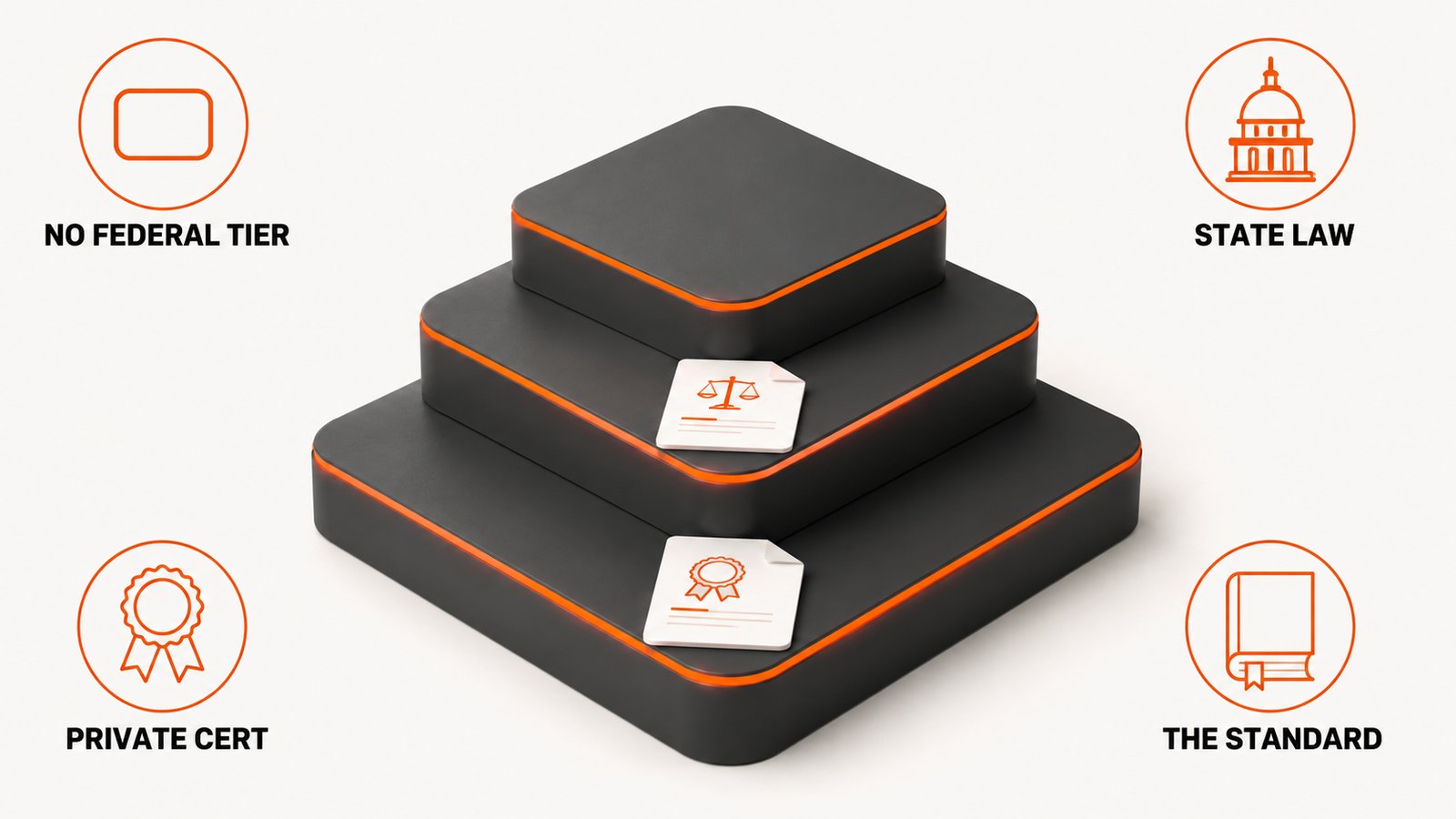
The first thing to understand about mold remediation certification is what does not exist. There is no federal license, no federal certification, and no federal competency standard for this trade.
The EPA says it directly in its own guidance: the document presents recommendations, and EPA does not regulate mold or mold spores in indoor air. Its sampling page repeats the point from the other direction, stating that there are currently no EPA regulations or standards for airborne mold contaminants and that no EPA or other federal limits have been set for mold or mold spores.
What the EPA does instead is point at other people's work. Its guidance advises that if you hire a contractor to do a cleanup, make sure the contractor has experience cleaning up mold, check references, and ask the contractor to follow the recommendations in EPA's Mold Remediation in Schools and Commercial Buildings, the guidelines of the American Conference of Governmental Industrial Hygienists, or other guidelines from professional or government organizations.
So the field is built from three layers, and they are frequently confused with each other:
- A consensus standard. ANSI/IICRC S520, which describes how the work should be done. It is a standard of care, not a law.
- Private certifications. Issued by bodies such as the IICRC and the ACAC. Voluntary, portable across state lines, and only as meaningful as the requirements behind them.
- State licenses. Legally binding where they exist, worthless elsewhere, and completely different from a certification.
A contractor can be certified and unlicensed, licensed and uncertified, or neither, and in most states nothing stops any of those from advertising. That is why the verification section further down matters more than the acronym on the van.
The Standard Everyone Works To: S520
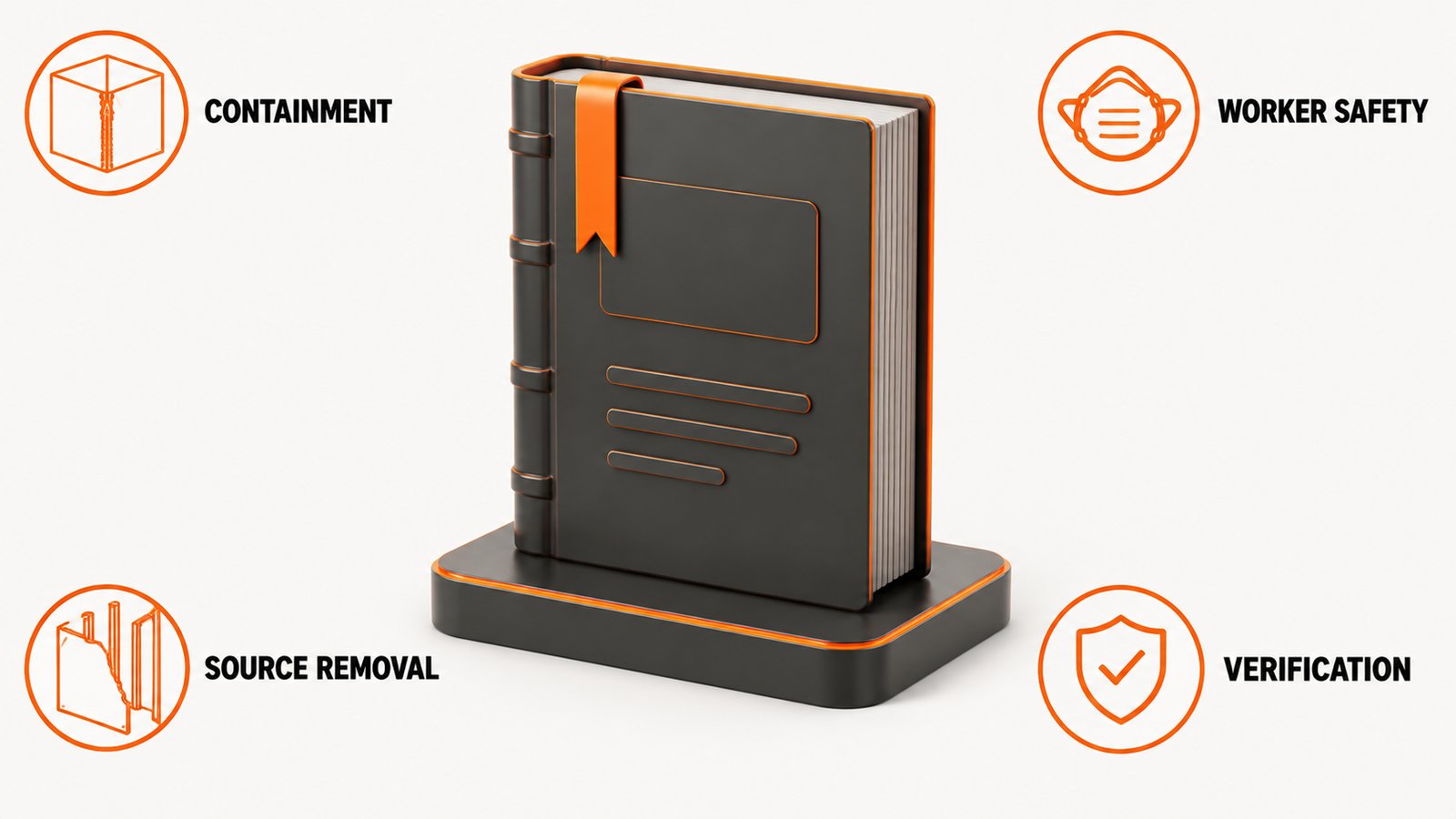
ANSI/IICRC S520 is the Standard for Professional Mold Remediation, published by the Institute of Inspection, Cleaning and Restoration Certification and approved through the American National Standards Institute consensus process. It is the document contractors, insurers, assessors and attorneys reference when they argue about whether a job was done properly.
Two points about what a standard is and is not:
It describes the work, not the worker. S520 covers principles of remediation, containment, worker protection, source removal and verification. Holding a certification is how a technician demonstrates familiarity with it. Neither the standard nor a certificate proves that any particular job followed it.
It is voluntary unless a contract or a state makes it binding. There is no federal requirement to follow S520. It becomes enforceable when your contract says the work will conform to it, which is a good reason to put that sentence in your contract.
New York's Mold Program is a useful example of a state converting parts of a standard into law. Under Article 32 it sets minimum work standards including protection against fraud by prohibiting the performance of both the assessment and remediation on the same property by the same individual, requiring an independent mold assessment to define the scope of the remediation work, identification of disinfectant products consistent with US Environmental Protection Agency standards, provision of personal protection equipment to employees as necessary, posted notice of the project and the contractor's licenses, and completion of a post-remediation assessment.
Read that list as a template for what a good job looks like anywhere, licensed state or not. Our remediation guide walks through the same stages from the homeowner's side.
IICRC Certifications
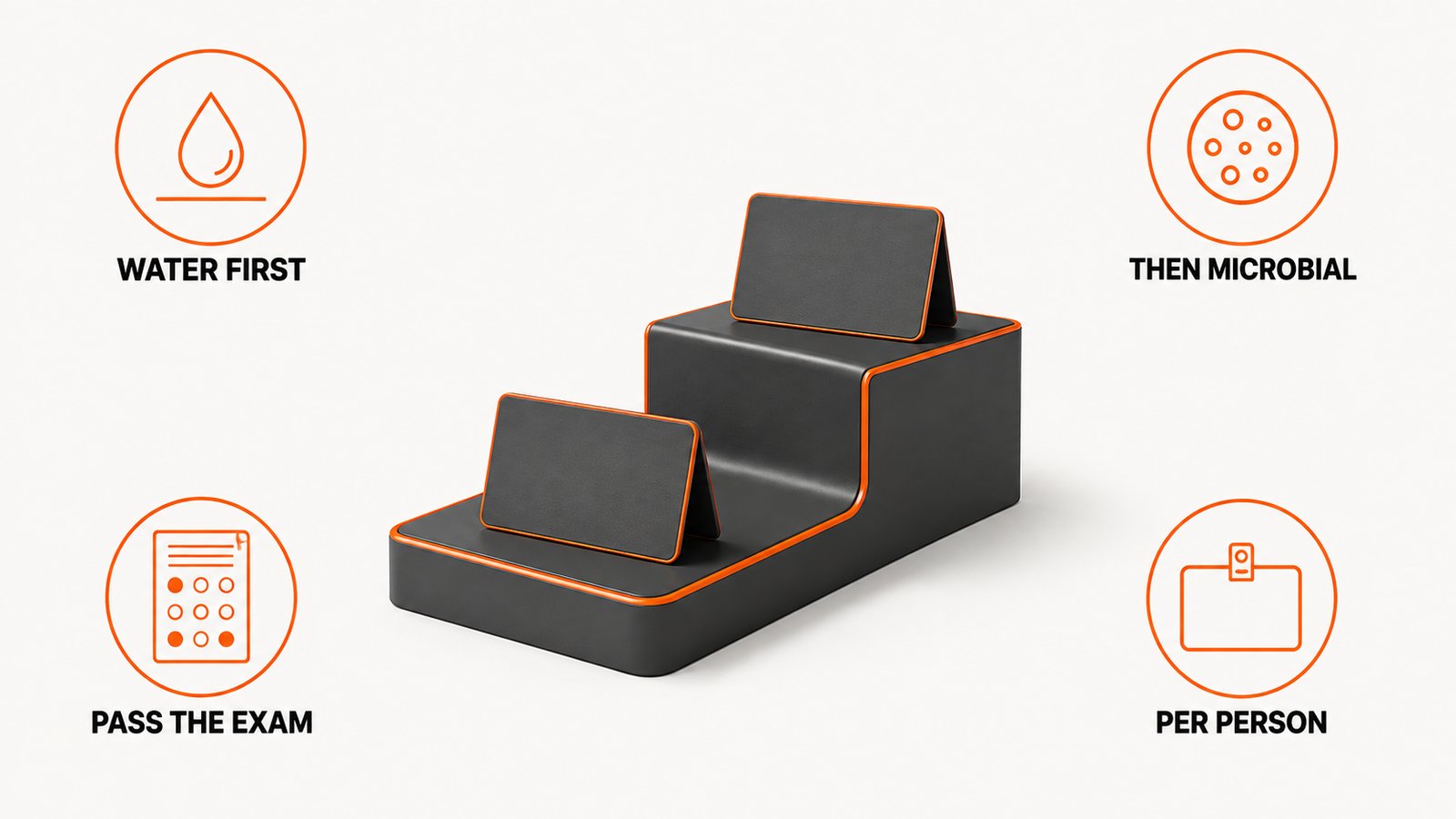
The IICRC credential most relevant to mold work is the Applied Microbial Remediation Technician, usually written as AMRT. Its own certification page describes it as addressing mold and sewage remediation techniques for people working in property management, property restoration, indoor environmental quality investigations, and related professions.
The prerequisite is the detail most homeowners miss and most contractors respect. The IICRC states that you must obtain the Water Restoration Technician credential, WRT, before taking the AMRT certification. That ordering is not administrative. Nearly every mold job is a water job that was left too long, and a technician who cannot read a drying problem cannot solve a mold problem. The IICRC also offers a Master Designation as an advanced step beyond individual certifications.
What an IICRC certification tells you:
- The technician sat a course and passed an exam covering the body of knowledge behind the standard.
- They came through the water side first, which is the correct order for this trade.
- The certification attaches to a person, not to a company. Ask specifically whether the technician on your job is certified, not whether the company employs someone who is.
What it does not tell you: whether that person will run containment on your job, whether the firm carries the right insurance, or whether they hold the state license your state requires. Those are separate checks and they are covered below.
ACAC Certifications and Experience Tiers
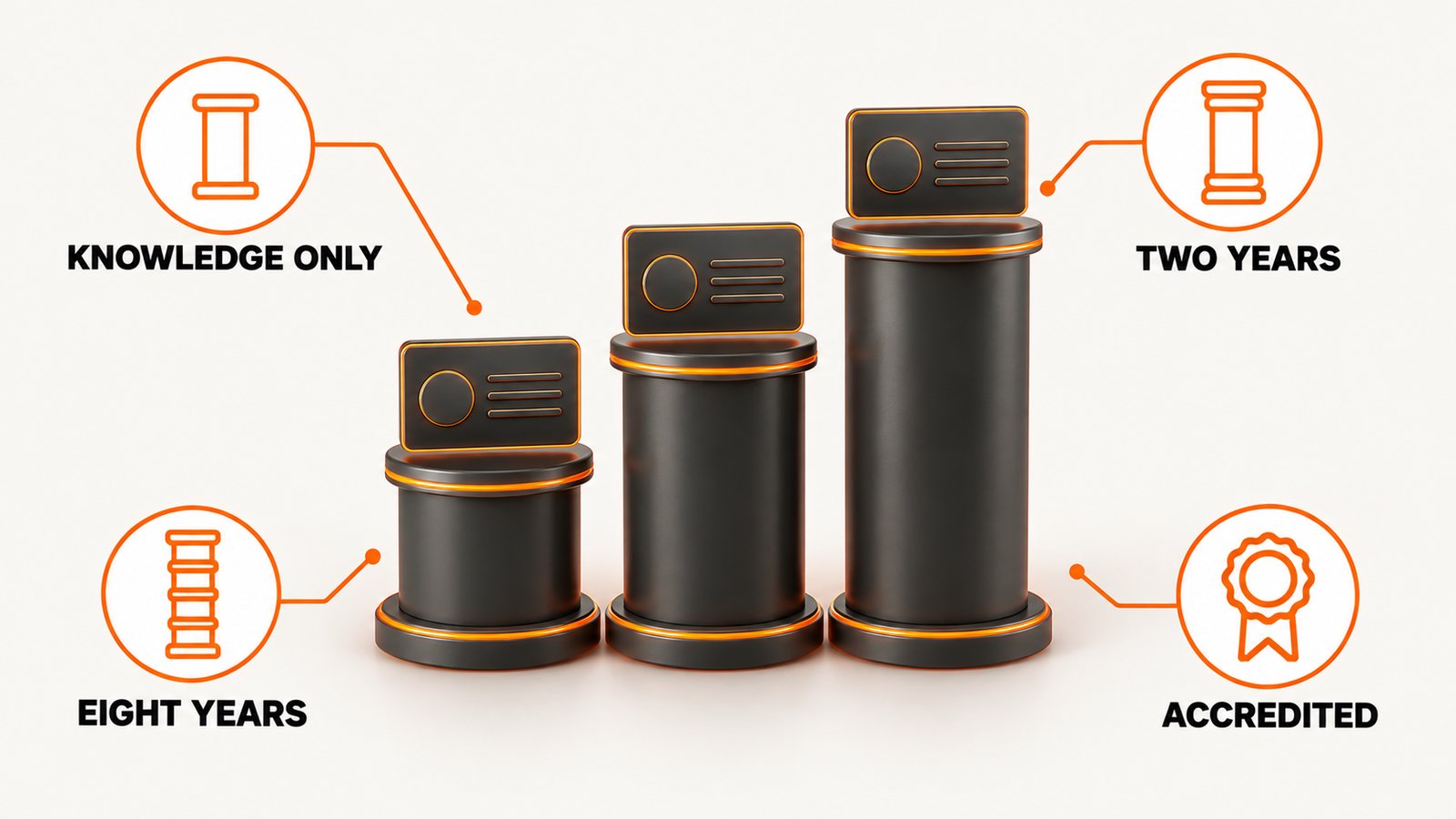
The American Council for Accredited Certification is the other credentialing body you will meet, and its structure is more informative than the IICRC's because it separates credentials by how much field experience the holder has. ACAC states that its programs are third-party accredited by CESB.
Its mold-related credentials split into two families, each with three tiers.
| Credential | Family | Tier | Experience required |
|---|---|---|---|
| CIMC | Microbial investigation and consulting | Professional | 8 or more years |
| CIMI | Microbial investigation and consulting | Vocational | 2 or more years |
| CSMI | Microbial investigation and consulting | Knowledge only | None |
| CMRS | Microbial remediation | Professional | 8 or more years |
| CMR | Microbial remediation | Vocational | 2 or more years |
| CRMR | Microbial remediation | Knowledge only | None |
| CRMI | Residential mold inspection | Vocational | Field experience required |
The practical use of that table is telling apart two credentials that look similar on a business card. CMRS and CRMR both signal microbial remediation. One requires eight or more years in the field and one requires none. A homeowner comparing two quotes and seeing two acronyms has no way to know that unless someone tells them, which is the reason this table is on the page.
The investigation family matters separately, because the person who assesses a property should not be the person who remediates it. New York writes that separation into law. Even where it is not the law, hiring an assessor with an investigation credential and a remediator with a remediation credential removes the conflict of interest built into one company writing and then fulfilling its own scope. Our page on what a mold inspection covers explains what the assessment side should produce.
States That License the Work
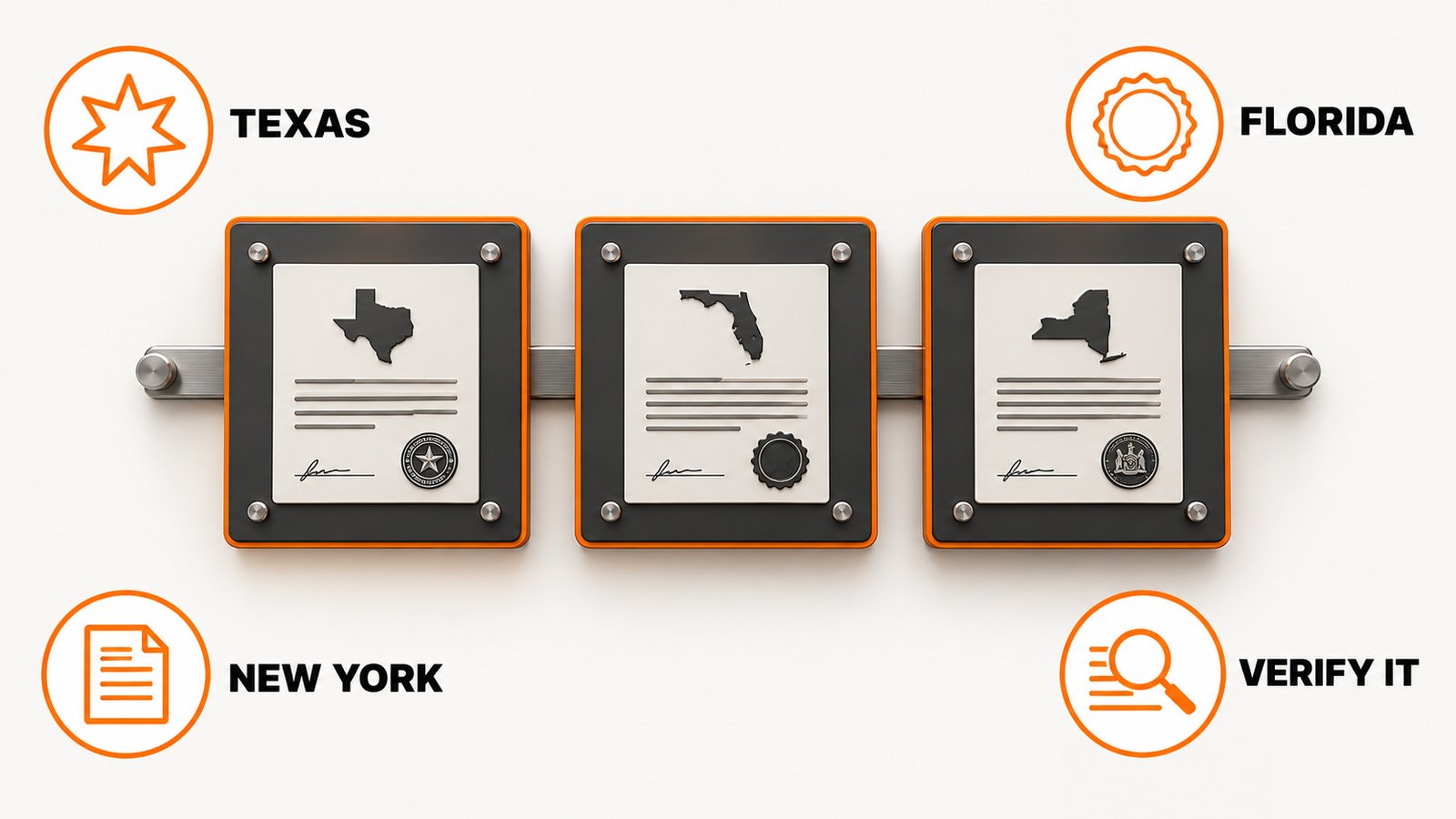
Licensing is state by state. Where a state licenses this work, the license is a legal requirement and it outranks every voluntary credential. Three of the biggest regimes look like this.
| State | Regulator | License types | Threshold |
|---|---|---|---|
| Texas | Department of Licensing and Regulation | Seven: Mold Remediation Worker Registration, Mold Assessment Technician, Mold Remediation Contractor, Mold Assessment Consultant, Mold Assessment Company, Mold Remediation Company, Mold Analysis Laboratory | Areas of visible mold under 25 contiguous square feet can generally be cleaned by unlicensed people |
| Florida | Department of Business and Professional Regulation | Two: mold assessor and mold remediator | The statute defines both around mold growth or contaminated matter greater than 10 square feet |
| New York | Department of Labor, Article 32 | Three: mold assessor, mold remediation contractor, mold abatement worker | Unlawful to engage in, advertise, or hold out as licensed work without the license, with limited exceptions such as owners working on their own property |
Texas. The program moved from the Department of State Health Services to the Department of Licensing and Regulation on November 1, 2017. Applicants for mold assessment technician, mold assessment consultant and mold remediation contractor apply first, submit proof of training, insurance, education and experience, and only then become eligible to sit the exam through the state's exam vendor. A licensee cannot conduct both mold assessment and mold remediation activities on the same project, with a narrow school-district exception. Licensed assessors and remediators must give a Consumer Mold Information Sheet to each client and to the property owner before any mold-related activity begins. Remediation of 25 contiguous square feet or more of visible mold in residential properties with 10 or more units must be conducted by a licensed remediator, and separate exemptions apply for homeowners and building owners, for homebuilder warranty work, and for a minimum area.
Florida. Section 468.8413 of the Florida Statutes sets two routes to eligibility. Either a two-year associate of arts degree or equivalent with at least 30 semester hours in microbiology, engineering, architecture, industrial hygiene, occupational safety or a related field of science from an accredited institution plus a minimum of one year of documented field experience, or a high school diploma or equivalent plus a minimum of four years of documented field experience. Applicants sit a licensing examination, submit a complete set of electronic fingerprints for state and federal criminal history processing, and must document training in water, mold and respiratory protection. Licensure by endorsement is available for holders of a substantially equivalent out-of-state license.
New York. Article 32 covers training, licensing and minimum work standards. A mold assessor license is valid for two years. The definition of mold assessment is broad enough that home inspectors need an assessor license if their inspections or reports include an assessment of mold conditions, which catches a lot of people by surprise. The Department of Labor publishes a licensed mold contractor search tool.
If your state is not on this list, check anyway before you hire, because these regimes change. Our state pages, including Texas, Florida and New York, cover local conditions alongside the rules.
License, Certification and Insurance
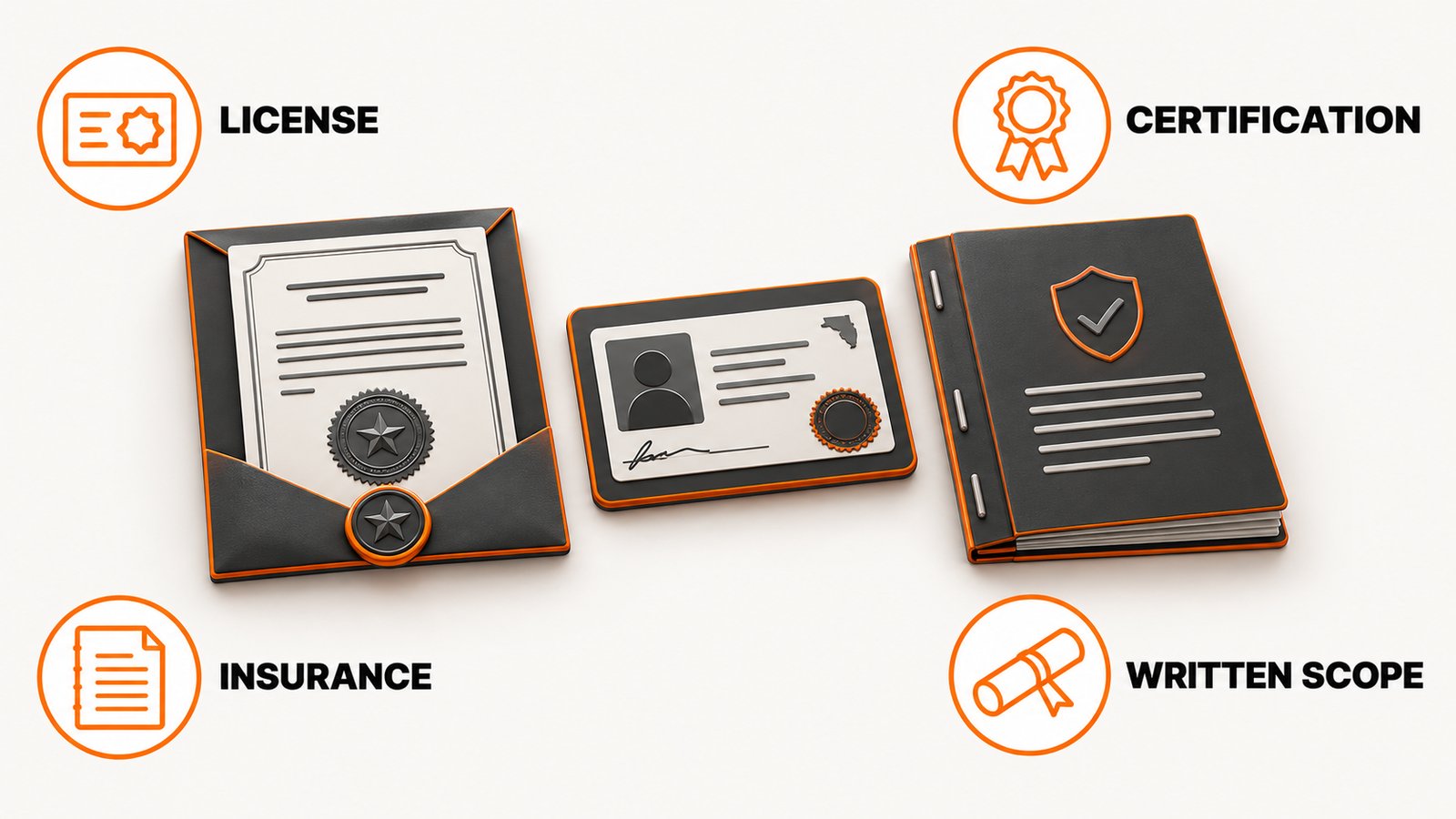
These three get used interchangeably in sales conversations and they are not interchangeable at all.
A state license is permission from a government to perform the work. It is verifiable in a public register, it can be suspended, and in a licensed state, work performed without one is unlawful. New York states that it is unlawful for any person to engage, advertise or hold themselves out as a mold assessor, remediation contractor, or abatement worker without a valid mold license, and that individuals who do so may be subject to a civil penalty.
A certification is a private body's statement that a person passed its requirements. It travels across state lines, it says something real about training, and it carries no legal authority. The ACAC tiers above show why the specific acronym matters: two remediation credentials from the same body can mean eight years of field experience or none.
Insurance is neither of the above, and it is the one that protects you financially if the job goes wrong. Florida's statute ties licensure to insurance coverage requirements under section 468.8421, and Texas requires proof of insurance as part of its application process. In an unlicensed state nobody is checking, so you are the one who has to.
There is a fourth document worth asking for that is not a credential at all: the written scope. New York requires an independent mold assessment to define the scope of the remediation work, and a post-remediation assessment to close it out. That structure protects you whether or not your state mandates it, because a scope written by an independent party is the only thing three bids can be compared against fairly.
Texas adds one more artifact worth knowing about. A licensed mold assessment consultant or mold remediation contractor signs a Certificate of Mold Damage Remediation, the Texas Department of Insurance form MDR-1, and a licensed consultant who had no role in preparing a pre-remediation protocol may conduct the post-remediation inspection and certify that the property does not contain evidence of mold damage. Documents like that follow a property, which matters at resale.
What to Verify Before You Hire
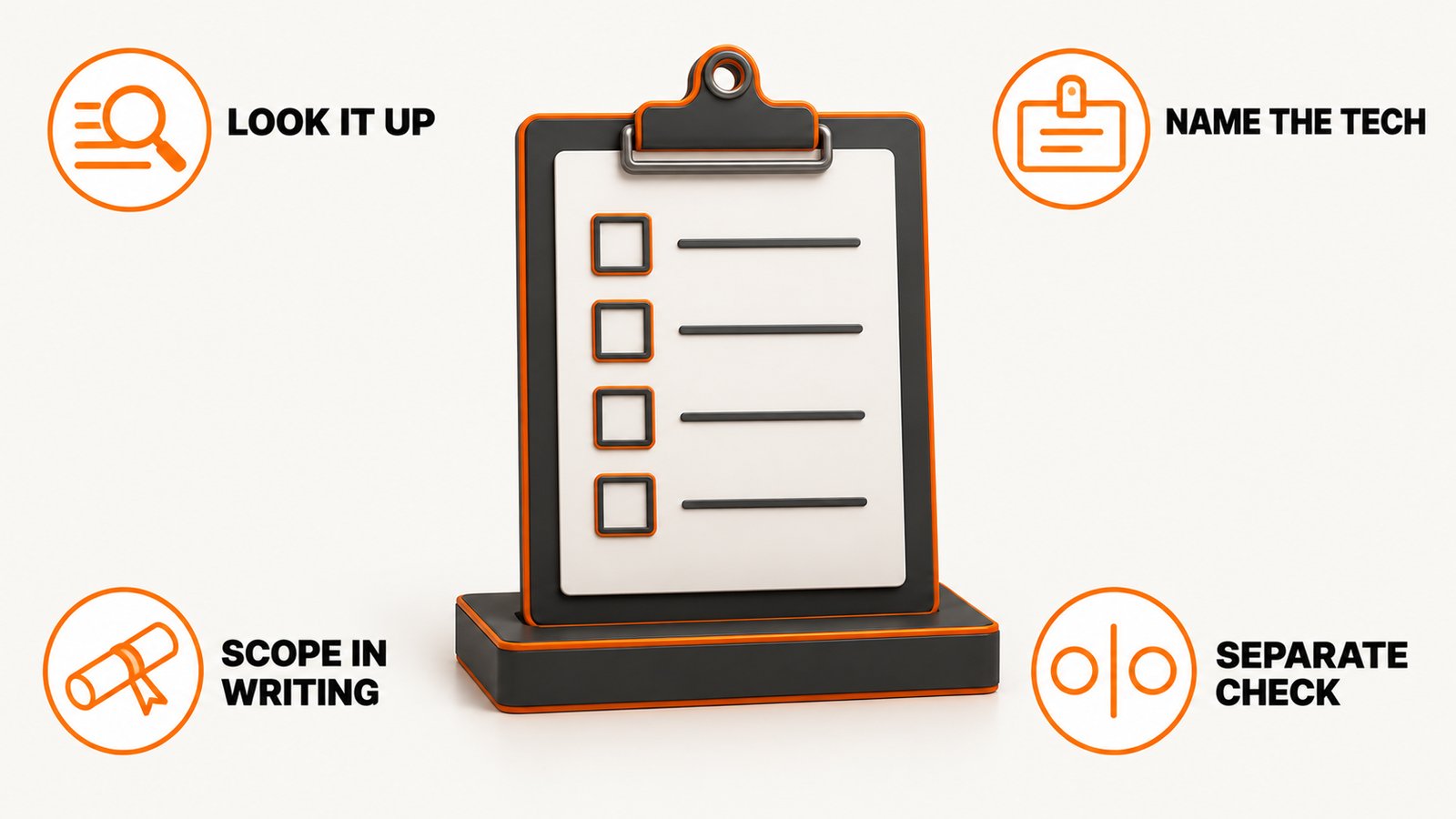
Four checks, in this order. Each one takes minutes and each one eliminates a category of bad outcome.
1. Look up the license, if your state has one. New York's Department of Labor publishes a licensed mold contractor search tool. Texas publishes a license search. Do not accept a photograph of a certificate; check the register yourself, and confirm the license type matches the work. A Mold Assessment Technician license does not authorize remediation.
2. Ask which certified technician will be on your job. Certifications attach to people. A company employing one AMRT-certified technician can still send an untrained crew. Get the name.
3. Get the scope in writing before you get a price. It should say what is being removed, how the area will be contained, how the air will be handled, how the material will be dried, and how completion will be verified. The EPA advises asking the contractor to follow the recommendations in its remediation guidance, the ACGIH guidelines, or other guidelines from professional or government organizations. Put that sentence in the contract.
4. Confirm who checks the work, and that it is not the same party. This is the check with the biggest payoff. New York prohibits the same individual from performing both assessment and remediation on the same property, and requires a post-remediation assessment. Texas prohibits conducting both assessment and remediation on the same project. Adopt the same rule even where nobody makes you.
Two more that cost nothing. Check references, which the EPA explicitly advises. And ask what happens if the post-remediation check does not pass, before you sign, because that answer is very different from a firm that expects to be graded by someone else.
If you are still deciding whether you need a contractor at all, the EPA's threshold is about 10 square feet, roughly a 3-foot by 3-foot patch. New York State uses the same figure. Below that, most homeowners can handle it, and our removal guide covers the method.
Getting Certified as a Contractor
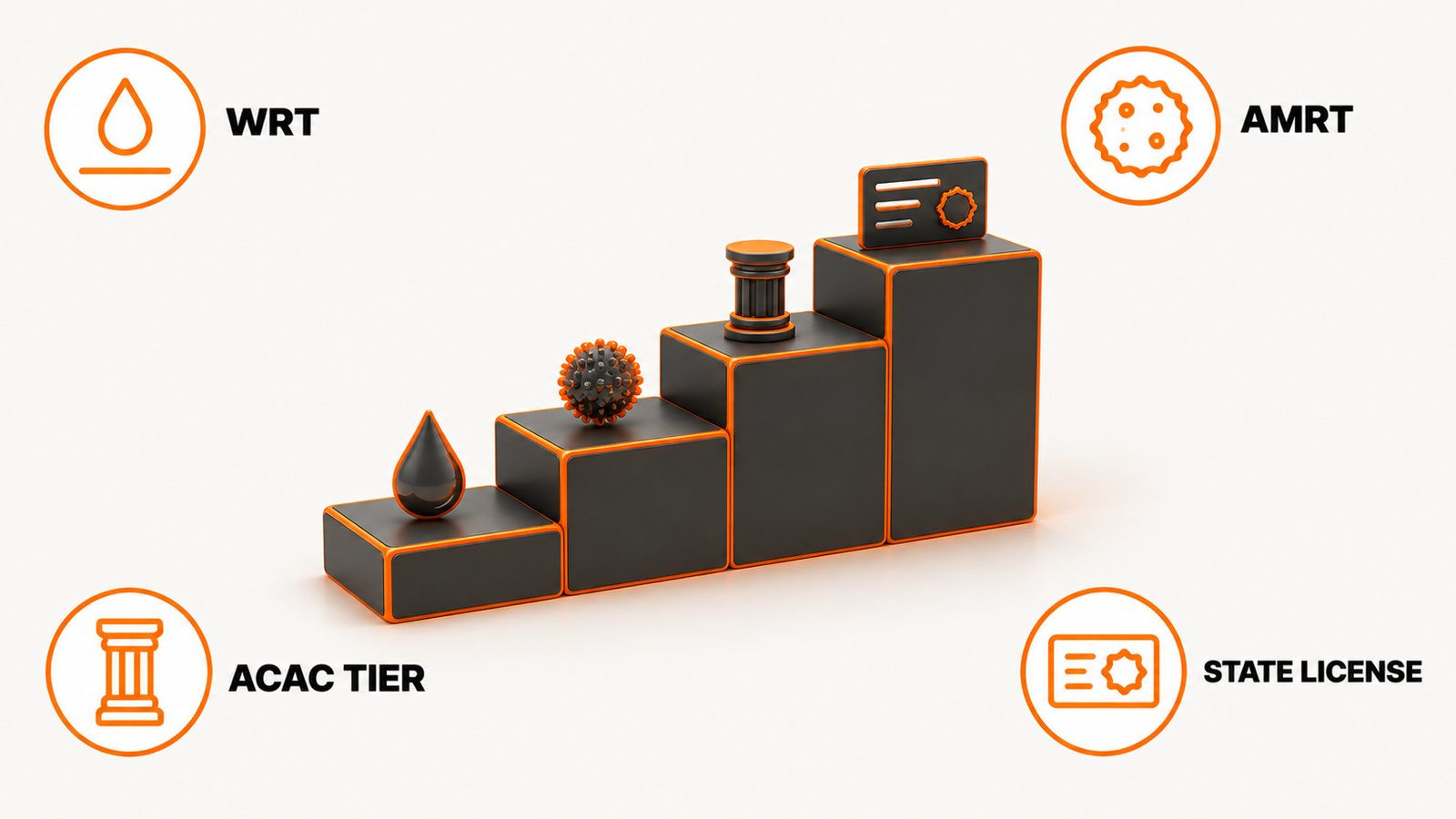
If you are the contractor rather than the homeowner, the sequence is straightforward and the order matters.
Start on the water side. The IICRC requires the Water Restoration Technician credential before the Applied Microbial Remediation Technician certification. Beyond the requirement, it is the right foundation, because drying science is what prevents the callback.
Add the microbial credential. AMRT covers mold and sewage remediation techniques. The IICRC offers a Master Designation for those going further.
Decide which ACAC tier you qualify for. If you already have eight or more years in the field, the professional-tier credentials, CMRS on the remediation side and CIMC on the investigation side, communicate that in a way a two-year credential cannot. If you are early, the vocational tier at two or more years is the honest place to be.
Then handle the state. This is where the real gating is. In Texas you apply first with proof of training, insurance, education and experience, get approved, and only then become eligible to schedule the state exam through the exam vendor. Florida requires either an associate degree with 30 semester hours in a named field plus one year of documented field experience, or a high school diploma plus four years, then an exam, electronic fingerprints for state and federal criminal history processing, documented training in water, mold and respiratory protection, and insurance. New York requires attending a Department of Labor approved course, passing it with full attendance, receiving a certificate of completion, and submitting it with the application and fee, after which the license runs for two years.
Then pick a lane. Texas allows an individual or company to hold both assessment and remediation licenses if they meet the requirements for each, but forbids conducting both activities on the same project. New York goes further and prohibits the same individual from performing both on the same property. Structuring your business around assessment or around remediation, rather than trying to sell both to the same customer, is both compliant and easier to sell honestly.
One operational note from Texas worth copying anywhere: licensed assessors and remediators must provide a Consumer Mold Information Sheet to the client and to the property owner before any mold-related activity begins. Handing a customer a plain-language explanation before work starts prevents most disputes that arise later.
When to Call a Pro
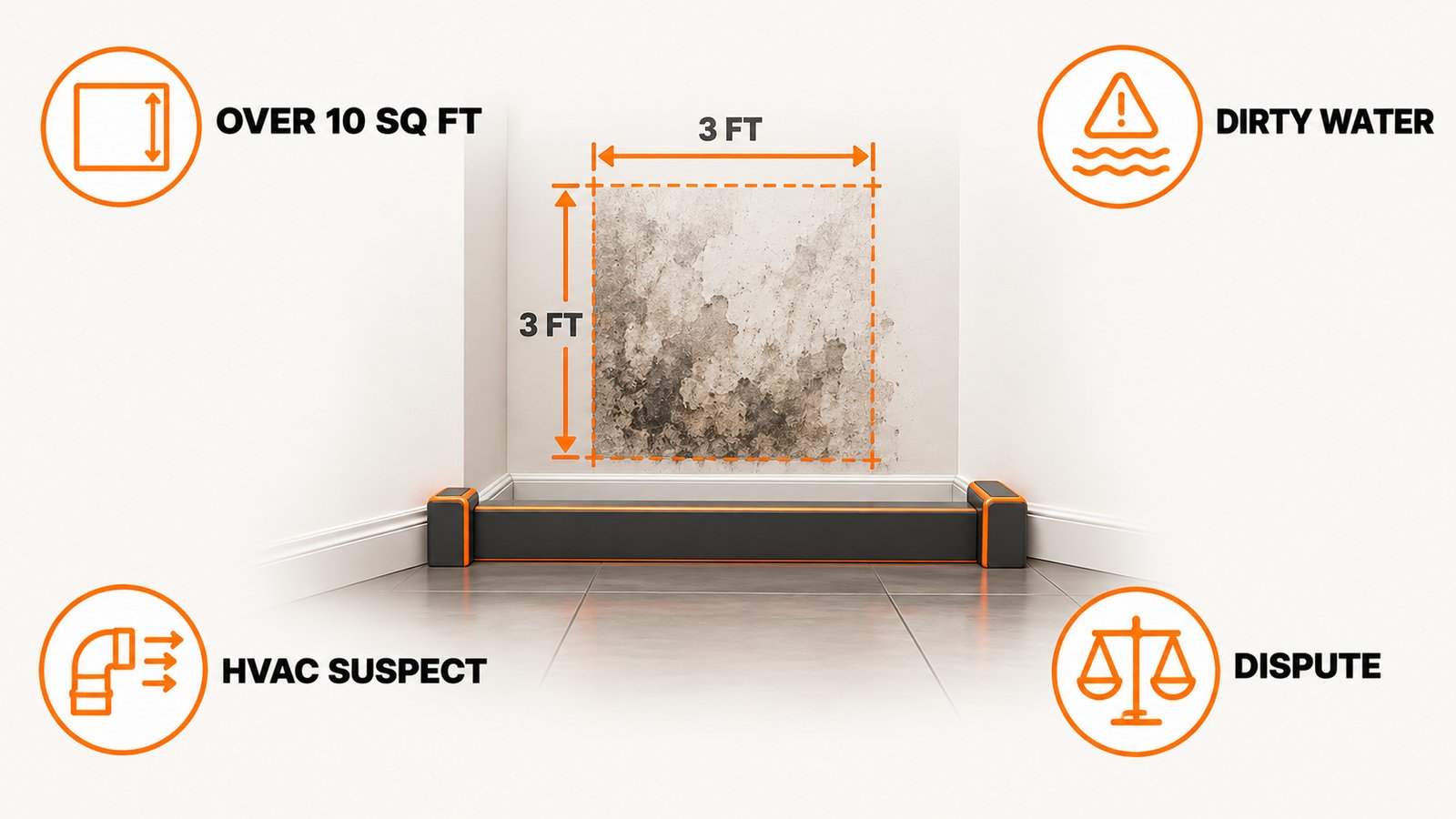
Certification questions only matter once you have decided to hire. These are the conditions where that decision is already made.
- Growth covers more than about 10 square feet, roughly a 3-foot by 3-foot patch. The EPA's threshold, and the same figure New York State uses for calling a licensed contractor. In Texas the regulated threshold is 25 contiguous square feet in residential properties with 10 or more units.
- Sewage or other contaminated water was involved. The EPA says to call in a professional who has experience cleaning and fixing buildings damaged by contaminated water.
- You suspect the HVAC system. The EPA advises consulting its duct guidance before taking further action, and warns not to run a system you know or suspect is contaminated because it could spread mold throughout the building. Our air ducts guide covers the specifics.
- Anyone in the home is at higher risk. The CDC notes that people with asthma or who are allergic to mold may have severe reactions, and that immune-compromised people and people with chronic lung disease may get infections in their lungs from mold. New York State names high sensitivity to mold as its own reason to hire a licensed contractor.
- There is a dispute or a transaction attached. Insurance, a landlord, or a sale. An independent assessment and a documented scope carry weight that a homeowner's account does not. Our page on homeowners insurance and mold covers what carriers typically look for.
Whatever your state requires, hire against ANSI/IICRC S520, insist on a written scope from a party that is not doing the removal, and confirm the post-remediation check before work starts. Those three moves matter more than any acronym on the business card.
Frequently asked questions
Is there a federal mold remediation license?
No. No federal agency licenses or certifies mold remediation. The EPA states in its own guidance that it does not regulate mold or mold spores in indoor air, and separately that there are no EPA regulations or standards for airborne mold contaminants. What exists is a consensus standard, ANSI/IICRC S520, private certifications from bodies such as the IICRC and the ACAC, and state licensing in some states.
What is the difference between a mold license and a mold certification?
A license is government permission to perform the work and is verifiable in a public register. A certification is a private body's statement that someone passed its requirements, and it carries no legal authority. In New York it is unlawful to engage in, advertise, or hold yourself out as licensed mold work without a valid license, and individuals who do may be subject to a civil penalty. A certification does not substitute for that.
What is the AMRT certification?
The Applied Microbial Remediation Technician certification from the IICRC. Its certification page describes it as addressing mold and sewage remediation techniques for people in property management, property restoration, indoor environmental quality investigations and related professions. The IICRC states you must obtain the Water Restoration Technician credential before taking it, and offers a Master Designation as an advanced step.
What do the ACAC mold acronyms mean?
They separate credentials by field experience. On the remediation side, CMRS is the professional tier requiring 8 or more years, CMR is the vocational tier requiring 2 or more years, and CRMR is knowledge only with no experience requirement. On the investigation side the same tiers are CIMC, CIMI and CSMI. CRMI covers residential mold inspection. ACAC states its programs are third-party accredited by CESB.
Which states license mold remediation?
Texas, Florida and New York run three of the largest regimes. Texas licenses seven categories through its Department of Licensing and Regulation. Florida licenses mold assessors and mold remediators through its Department of Business and Professional Regulation under Chapter 468, Part XVI. New York licenses mold assessors, remediation contractors and abatement workers under Article 32 of the Labor Law. Check your own state before hiring, because these regimes change.
Can the same company inspect and remediate my mold?
In some states, no. New York prohibits the performance of both the assessment and the remediation on the same property by the same individual, and requires an independent mold assessment to define the scope of the remediation work. Texas allows a person to hold both license types but prohibits conducting both activities on the same project, with a narrow school-district exception. Even where it is allowed, separating the two removes an obvious conflict of interest.
What should I verify before signing a remediation contract?
Look up the state license yourself in the public register rather than accepting a photo of a certificate, and confirm the license type matches the work. Ask which certified technician will be on the job, because certifications attach to people rather than companies. Get the scope in writing before the price. Confirm who performs the post-remediation check and that it is a different party. The EPA also advises checking references.
How do I become certified for mold remediation work?
Take the IICRC's Water Restoration Technician credential first, since it is a stated prerequisite for the Applied Microbial Remediation Technician certification. Add an ACAC credential at the tier your field experience supports. Then handle your state: Texas requires application, proof of training, insurance, education and experience before exam eligibility; Florida requires either an associate degree with 30 semester hours plus one year of field experience or a high school diploma plus four years, an exam, and fingerprinting; New York requires an approved course with full attendance before a two-year license is issued.
Sources
Every claim on this page traces to one of these. Links open the primary document.