
The best mold removal products at a glance
| Product | Best for | Type | Our take |
|---|---|---|---|
| Concrobium Mold Control | Best overall | Mineral film spray | Kills at the root as it dries, leaves a barrier, no bleach. The safe default. |
| Benefect Botanical Disinfectant | Best natural / botanical | Thyme-oil disinfectant | Plant-based, hospital-grade, what many remediators use. Works on porous surfaces too. |
| EC3 Mold Solution Concentrate | Best value for big jobs | Dilutable concentrate | Dilutes into gallons, so cost per square foot drops. Good for fogging and large areas. |
| RMR-86 Instant Stain Remover | Best budget remover | Fast surface spray | Quick stain lift on tile, grout, and fiberglass. Surface cleanup only, not porous wood. |
| Zinsser Mold-Resistant Paint | Best for prevention | Mold-proof finish | Not a remover. The last step. Keeps new growth off cleaned, damp-prone surfaces. |
Prices change often, so we do not list dollar figures here. Tap any product to check the current price on Amazon.
How to pick the right mold remover
Three things decide which product you actually need: the surface, the size of the job, and whether anyone in the home is sensitive to chemicals.
Surface first. Hard, non-porous surfaces (tile, glass, sealed concrete, fiberglass) clean up with almost anything, even a fast spray remover. Porous surfaces (bare wood, grout, unsealed masonry) need a product that reaches into the material, which is where Concrobium and Benefect earn their place. If mold has gone all the way through drywall paper, no spray saves it. You cut it out. See our full mold removal guide for that decision tree. In short, the best product for mold removal on hard surfaces is Concrobium, and the best product to kill mold in bare wood or other porous material is Benefect.
Size next. A patch under 10 square feet is a DIY job. A ready-to-use trigger bottle is fine. For a whole basement wall or an attic, a dilutable concentrate plus a pump sprayer is cheaper and faster. Anything over about 10 square feet, or any growth you suspect is toxic black mold, belongs to a pro who follows the IICRC S520 standard. Our mold remediation guide explains where that line sits.
People last. If someone in the house reacts to strong cleaners, skip the synthetics and go botanical. Benefect and the EC3 concentrate are built for that.
Not sure you even have mold yet? Use our free water-damage documentation helper to record accessible water-event conditions. And if you want to confirm with a sample, compare your options on our mold testing kit guide. This guide is part of our best mold products hub, which covers every category.
Heads up: product links below are affiliate links. Buying through them may earn Mold Scanner AI a small commission at no extra cost to you. Product photos: manufacturers.
1. Concrobium Mold Control: best overall
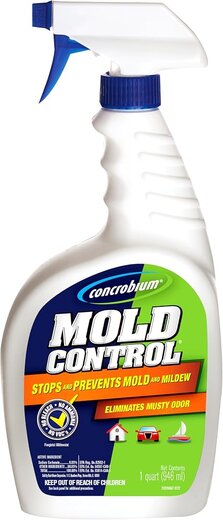
Concrobium Mold Control
No bleach. No ammonia. EPA-registered. It forms a thin mineral film that crushes mold at the root as it dries, then leaves a barrier that slows regrowth. The 32 oz spray handles most homeowner jobs, and there is a fogger for attics and crawl spaces.
EPA-registered No bleach Leaves a barrier
Who it is for: almost everyone. If you want one product that works on the widest range of hard surfaces and you do not want to think hard about chemistry, this is it.
Pros: kills at the root instead of just the surface; no bleach, ammonia, or VOCs; safe around kids and pets once dry; leaves a residual barrier; affordable; sold nearly everywhere; fogger option for hard-to-reach spaces.
Cons: it must dry fully to work, which takes 4 to 24 hours, so it is slower than people expect; it can leave a faint white residue on dark surfaces; and it will not rescue drywall where mold has gone through the paper. We give it a 4.5 out of 5 in our full Concrobium review.
2. Benefect Botanical Disinfectant: best natural / botanical
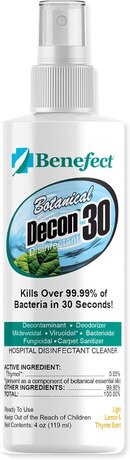
Benefect Botanical Disinfectant
A plant-based disinfectant built on thymol from thyme oil. It is what a lot of professional remediators reach for when they want a natural product that still performs. Works on porous and non-porous surfaces, with no synthetic-chemical smell.
Plant-based Pro favorite Works on porous
Who it is for: homes where someone reacts to harsh cleaners, and anyone who wants a botanical product that still pulls its weight on real mold. Read each bottle's own label, since the Benefect line includes a few formulations and directions vary.
Pros: botanical active ingredient instead of synthetics; no harsh fumes; trusted in the trade; handles porous surfaces that fast spray removers cannot.
Cons: costs more than a discount-aisle remover; you may need to order it rather than grab it at a corner store; and like every product here, it does not replace fixing the moisture that caused the mold.
Want the deep dive? Read our full Benefect Decon 30 review.
3. EC3 Mold Solution Concentrate: best value for big jobs
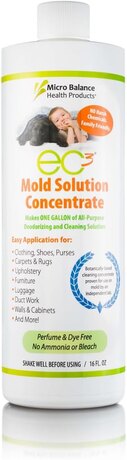
EC3 Mold Solution Concentrate
A dilutable concentrate. One bottle mixes into several gallons of working solution, so the cost per square foot drops hard on big jobs. Good for spraying large surfaces, fogging, and maintenance cleaning. Follow the dilution ratio on the label.
Dilutable Covers more area Fogger-friendly
Who it is for: anyone treating a large area, a whole basement, or a home after a damp season, where a single trigger bottle would run out fast and cost too much.
Pros: lowest cost per square foot of anything here once you dilute it; flexible across spraying, fogging, and wipe-downs; one purchase lasts a long time.
Cons: you have to mix it correctly, so it is a half step less convenient than a ready-to-use bottle; and concentrates reward reading the directions. Check the label for the exact ratio and contact time.
4. RMR-86 Instant Mold & Mildew Stain Remover: best budget stain remover
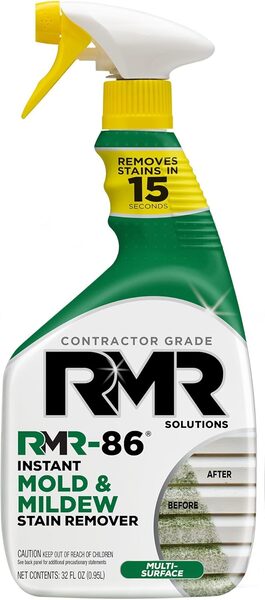
RMR-86 Instant Mold & Mildew Stain Remover
A fast bleach-based spray for hard, non-porous surfaces. It lifts mold and mildew stains off tile, grout, and fiberglass in seconds with little scrubbing. Cheap and quick. The trade-off is that it is stain removal, not a deep-root treatment for wood or drywall.
Fast acting Low cost Little scrubbing
Who it is for: shower tile, grout lines, and fiberglass where you want stains gone fast without spending much. A bathroom workhorse.
Pros: quick visible results on hard surfaces; very affordable; minimal scrubbing.
Cons: it is a surface remover, so it does not reach roots in porous wood or drywall; ventilate while you use it; and follow the label, since its bleach chemistry is far harsher than the botanical picks above. Full breakdown in our RMR-86 review. For routine shower and grout upkeep, the cheaper grocery-store cousin in the same bleach family is Clorox Plus Tilex, covered in our Tilex Mold and Mildew Remover review. Fighting green or black staining on exterior siding, a roof, or a deck instead? See our Wet & Forget Outdoor review, the no-scrub pick for large outdoor surfaces.
5. Zinsser Mold-Resistant Paint: best for prevention
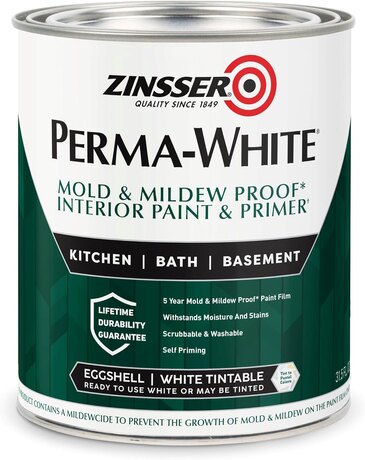
Zinsser Mold-Resistant Paint
This one is not a remover. It is the last step. After you clean and dry a damp-prone surface, roll on a mold and mildew proof finish so new growth cannot take hold on the paint. Built for bathroom ceilings, basement drywall, and laundry rooms.
Mold-proof film For damp rooms Finishes the job
Who it is for: anyone who has cleaned mold once and never wants it back on that wall or ceiling. Prevention is the half of the job most people skip.
Pros: keeps new mold off the painted film; clean finish on ceilings and walls; pairs perfectly with the removers above as the final coat.
Cons: it does nothing to existing growth, so clean and dry first; it protects the paint surface, not the moisture problem behind the wall. Fix the water, then paint.
The one thing every product on this list cannot do
None of these products fix the reason mold showed up. Mold needs water. A leaky pipe, a damp basement, a bathroom with no exhaust fan, condensation on a cold wall: that is the actual cause. Spray the best remover in the world over active moisture and the mold comes back, often within days.
So treat the product as one step in a three-step job. First, fix the moisture source. Second, kill and remove the growth with the right product for the surface. Third, dry the area, run a dehumidifier to hold humidity below 50 percent, and seal damp-prone surfaces with the mold-resistant paint above. Skip step one and you are buying these products on repeat.
And one safety rule that is not optional: wear an N95 mask, gloves, and goggles. Disturbing mold throws a burst of spores into the air. If the patch is bigger than about 10 square feet, or you suspect toxic black mold, stop and call a remediation pro who follows the IICRC S520 standard. For the full step-by-step, see our mold removal and mold cleaning products guides.
Our #1 overall pick · EPA-registered · no bleach. Affiliate link.
Affiliate disclosure: some links above are affiliate links. If you buy through them, Mold Scanner AI may earn a small commission at no extra cost to you. We only list products our editorial review stands behind, and prices and availability are set by Amazon, not by us. Product photos: manufacturers.
What about Alien Power stain remover?
Alien Power shows up in searches alongside every product on this page, so here is a straight answer on it. It is an As Seen on TV super-concentrated stain remover, sold in stores such as Home Depot and Walmart and heavily promoted on social video. You dilute it, spray it, let it sit on the stain, and rinse. Almost every demonstration you have seen is exterior work: patio furniture, decking, siding, fences, and masonry. That is the job a concentrated stain remover is genuinely good at.
It belongs in the stain-remover column, not the mold-killer column, which is the same line RMR-86 sits on. Outdoors on a non-porous surface the distinction rarely matters, because there is nothing for the growth to root into and the rinse carries it off. Indoors on drywall, wood, grout, or caulk it matters a lot: lifting the mark is not ending the growth, and a surface that looks clean can come back from underneath within weeks.
Handle it like the concentrate it is. Gloves, eye protection, ventilation, and never mixed with another cleaner. That goes for any concentrated product, and it goes double in a small bathroom with the door shut.
The buying rule is simple. Outdoor stain on a hard surface, it is a reasonable pick. Mold on an interior porous surface, pair it with something from the ranked list above that deals with the growth, or skip it and buy that instead.
Best cleaner for mold and mildew on walls
The best cleaner for mold on walls is Concrobium Mold Control, an EPA-registered spray with no bleach that kills mold as it dries and leaves a barrier against regrowth. On hard bathroom surfaces, the best cleaner for mold and mildew is RMR-86, which lifts stains fast.
Which one you pick depends on what the wall is made of. Bare wood, grout, and drywall are porous enough that a surface cleaner can leave roots behind, so they need a product that reaches into the material. Tile, glass, and fiberglass are hard and sealed, so almost any cleaner works. Match the cleaner to the surface:
- Painted walls and ceilings: Concrobium Mold Control. Let it dry fully, which takes 4 to 24 hours.
- Bare wood and unsealed masonry: Benefect Botanical Disinfectant, the botanical pick that works on porous surfaces.
- Shower tile, grout lines, and fiberglass: RMR-86 Instant Mold & Mildew Stain Remover, a fast surface spray.
- A whole basement wall: EC3 Mold Solution Concentrate in a pump sprayer, because a concentrate costs less per square foot.
Best mildew remover for bathrooms and tile
The best mildew remover for shower tile and fiberglass is RMR-86. The best mildew and mold remover for anything porous is Concrobium or Benefect, because a stain remover only lifts the mark and does not end the growth underneath.
RMR-86 is bleach-based, so open a window or run the fan, wear gloves, and never mix it with another cleaner. If mildew keeps coming back in the same spot, the cleaner is not the problem. Look for a leak, a missing exhaust fan, or a cold wall with condensation. Our mold cleaning products guide has the surface-by-surface list.
Best spray to kill mold
The best spray to kill mold is Concrobium Mold Control in the 32 oz bottle, a ready-to-use, EPA-registered spray with no bleach that works as it dries. It handles most homeowner jobs.
Two sprays cover nearly every case. Concrobium is the best spray for mold on walls, wood, and other surfaces you cannot rinse. RMR-86 is the best spray for mold stains on tile, grout, and fiberglass, and the trade-off is that its bleach chemistry is much harsher, so ventilate while you use it.
How to get the most out of a mold spray:
- Fix the moisture source first. A spray over active dampness lets the mold return, often within days.
- Put on an N95 mask, gloves, and goggles before you spray, since disturbing mold sends spores into the air.
- Follow the label for coverage and contact time. Concrobium needs to dry fully, which takes 4 to 24 hours.
- Dry the area afterward and keep humidity below 50 percent with a dehumidifier.
For a big area, a trigger bottle runs out fast. Mix EC3 Mold Solution Concentrate into a pump sprayer instead, or use the fogger option for an attic or crawl space. If you are looking for the best spray for mold removal on a patch bigger than about 10 square feet, that job belongs to a remediation pro.
Strongest mold remover and strongest mold killer
No product is the strongest mold remover on every surface: Benefect Botanical Disinfectant reaches into porous materials, and RMR-86 is the harsher bleach-based chemistry, but only for stains on hard surfaces.
Strong is not the same as effective. Bleach is the harshest thing most people own, and it still fails on drywall, wood, and grout, because it cannot reach the roots and the water in it feeds regrowth. The EPA and CDC stopped recommending bleach as a mold killer years ago. So the strongest mold killer for your job is the one that actually gets into the surface you are treating.
Here is how the picks compare on strength where it counts:
- Benefect Botanical Disinfectant: hospital-grade and thyme-oil based, and a common choice for professional remediation. It works on porous and non-porous surfaces.
- Concrobium Mold Control: a mineral film that crushes mold at the root as it dries, then leaves a barrier that slows regrowth.
- RMR-86: the harshest of the group and the fastest to lift stains, but it is stain removal only and does not reach the roots in wood or drywall.
Whatever you choose, read the label for contact time and never mix products. A stronger cleaner will not fix a leak. If the growth is larger than about 10 square feet or you suspect toxic black mold, call a pro instead of reaching for something harsher.
Mold remediation products and mold treatment solutions
Mold remediation products are the disinfectants and cleaners used to kill and remove mold growth, and for a home the practical set is Concrobium Mold Control, Benefect Botanical Disinfectant, and EC3 Mold Solution Concentrate.
Professional mold remediation products are mostly the same class: botanical disinfectants like Benefect and mineral films like Concrobium, used by someone following the IICRC S520 standard. Remediators lean on these instead of bleach for the same reason this page does. Bleach does not work on porous surfaces.
The same goes for mold treatment solutions and mold treatment products. A product is one step in a treatment, not the whole treatment:
- Fix the water problem that fed the mold.
- Kill and remove the growth with a product that suits the surface.
- Dry the area, hold humidity below 50 percent, and seal damp-prone surfaces with a mold-resistant paint such as Zinsser.
Small patches under about 10 square feet are a DIY job with the products above. Larger areas, or mold that has gone through drywall paper, need cutting out and containment, which is remediation work. Our mold remediation guide explains where that line sits, and the mold removal guide walks through the steps.
Frequently asked questions
What is the best mildew remover?
For hard surfaces like shower tile and fiberglass, RMR-86 is the best mildew remover on this list. For porous surfaces, use Concrobium Mold Control or Benefect Botanical Disinfectant, then fix the moisture that let the mildew grow.
What is the best spray to kill mold?
Concrobium Mold Control in the 32 oz spray bottle is the best spray to kill mold for most homes. It is EPA-registered, has no bleach, and works as it dries. For stained tile, grout, and fiberglass, RMR-86 is the faster spray, but ventilate because it is bleach-based.
What is the strongest mold killer?
No product is the strongest mold killer on every surface. Benefect Botanical Disinfectant reaches into porous materials, Concrobium Mold Control kills at the root as it dries, and RMR-86 is the harshest option but only lifts stains on hard surfaces. Bleach is not the strongest choice on porous surfaces, because it cannot reach the roots.
What is the best mold removal product?
For most homeowners, Concrobium Mold Control is the best all-around pick. It kills mold at the root as it dries and leaves a barrier that slows regrowth, with no bleach and no fumes. For a natural option, Benefect Botanical Disinfectant uses thyme oil and is what many professional remediators reach for. For prevention after cleanup, finish with a mold-resistant Zinsser paint.
What kills mold permanently?
No product kills mold permanently on its own, because mold needs moisture to grow. The only permanent fix is removing the water source. A removal product kills and removes the current growth. A dehumidifier kept below 50 percent humidity, plus a mold-resistant paint on damp-prone surfaces, keeps it from coming back. Treat the product as one step, not the whole job.
Is bleach a good mold remover?
No. Bleach only kills surface mold on non-porous surfaces like tile and glass. On porous surfaces like drywall, wood, and grout it cannot reach the roots, and the water in it feeds regrowth. The EPA and CDC stopped recommending bleach as a mold killer years ago. The one bleach-based product on this list, RMR-86, is ranked as a stain remover for the final cosmetic step, not as a mold killer.
What is the best natural mold remover?
Benefect Botanical Disinfectant is the strongest natural option. It is built on thymol from thyme oil rather than synthetic chemicals, works on porous and non-porous surfaces, and is a common choice for professional remediation. For lighter maintenance cleaning, EC3 Mold Solution Concentrate, a botanical citrus-seed formula that dilutes for fogging and laundry, is a gentler pick.
What do the professionals use to kill mold?
Remediators lean on botanical disinfectants and mineral films rather than bleach. Benefect Botanical Disinfectant is a thyme-oil, hospital-grade product that works on porous surfaces. Concrobium Mold Control forms an alkaline film that crushes growth at the root as it dries. EC3 Mold Solution Concentrate dilutes for fogging large areas.
What chemical kills mold permanently?
No chemical is permanent on its own, because growth returns wherever the moisture returns. Concrobium Mold Control leaves a residual barrier against regrowth and a mold-resistant Zinsser paint seals a cleaned surface, but both only hold if the leak or humidity problem is fixed first. Bleach fails on porous surfaces.
Sources
Every claim on this page traces to one of these. Links open the primary document.