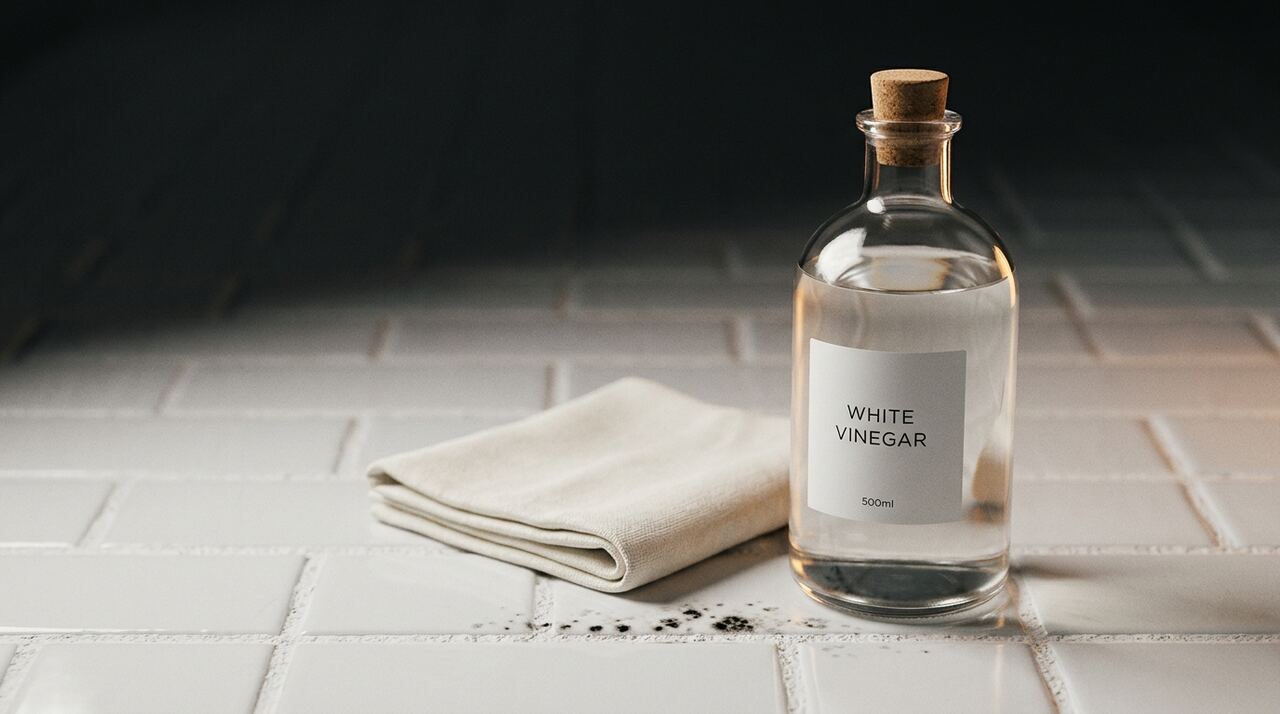
The Short Answer: Yes, For Most Household Mold
Yes, plain white vinegar kills most of the mold species you find in a house. The acetic acid in vinegar is a mild acid, and that acid breaks down the cell walls of common indoor molds like Penicillium, Aspergillus, and Cladosporium. It works on hard surfaces like tile and glass. It also works on porous surfaces like wood and drywall, and that porous win is where vinegar pulls ahead of bleach.
Use it straight. Pour ordinary white vinegar (around 5 percent acetic acid) into a spray bottle and do not water it down. Soak the moldy spot until it is wet, then walk away and let it sit for about an hour. The wait matters more than scrubbing hard. The acid needs time to sink in and reach the root threads that grow below the surface.
Vinegar is not a fix for everything, though. It struggles on a few materials, and it is the wrong call for a big job. A small spot on a damp baseboard or a patch on painted drywall is exactly the kind of job vinegar handles well, and you can read more on cleaning mold on wood before you start. Once a colony spreads past about 10 square feet, the spray bottle is no longer the answer.
Why Acetic Acid Works Where Bleach Fails
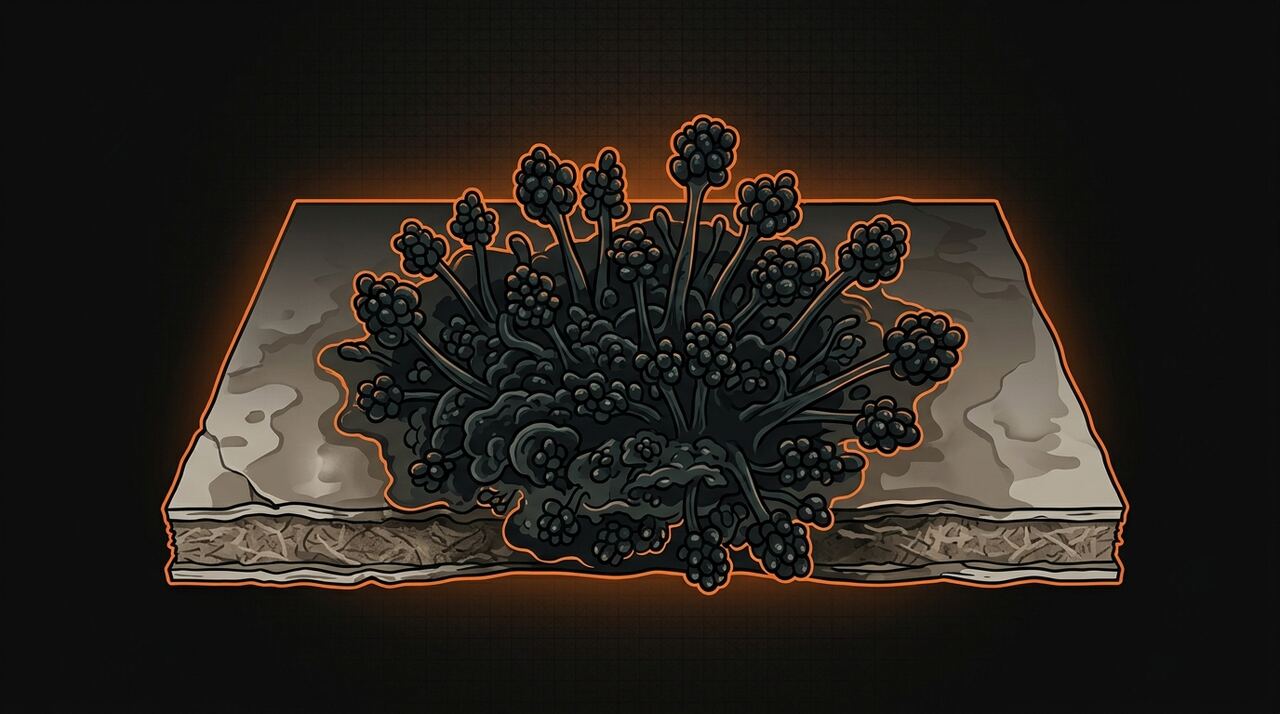
The fuzzy patch you can see is only the surface of the mold. On porous material, mold pushes tiny root threads called hyphae down into the wood, paper, or drywall. Kill the surface and leave the roots, and the colony grows right back in a week or two. So the real test of any mold cleaner is simple: can it reach the roots?
Bleach has a chemistry problem here. Chlorine bleach is made of large molecules that do not soak into porous material. The chlorine stays up on the surface while the water in the bleach carries down into the wood. Now you have wiped out the top layer and handed the roots a fresh drink of water. That is why bleach often makes porous mold come back worse, and we break the full reasoning down in does bleach kill mold.
Acetic acid behaves the opposite way. Vinegar is mostly water carrying small acid molecules, so it soaks into the same pores the mold roots use. The acid travels with the moisture instead of staying behind. It reaches deeper into the material and drops the pH around the roots, which most household molds cannot survive. That ability to sink in is the whole reason vinegar beats bleach on wood and drywall.
How to Clean Mold With Vinegar, Step by Step
Cleaning mold with vinegar takes five steps and about an hour of waiting. Read all five before you spray anything.
Step 1: Fix the moisture first. Mold needs water to live. If a leak, condensation, or high humidity is feeding the spot, vinegar buys you a few weeks at most. Find the water source and stop it. Keep indoor humidity between 30 and 50 percent so the mold cannot restart.
Step 2: Put on basic protection. Wear an N95 mask, rubber gloves, and goggles. Cleaning mold kicks a cloud of spores into the air, and you do not want to breathe them in. Open a window or run a fan for fresh air while you work.
Step 3: Spray it on undiluted. Fill a spray bottle with straight white vinegar. Do not add water. Soak the moldy area until it is visibly wet, edges included. Skip the urge to mix vinegar with other cleaners, and never combine it with bleach, because vinegar plus bleach makes toxic chlorine gas.
Step 4: Wait about an hour. This is the step people skip, and it is the one that counts. Give the acid a full hour to soak in and reach the roots. The surface can air-dry during this time. Resist the urge to wipe it early.
Step 5: Scrub, then dry completely. Work the spot with a stiff brush or a scrubbing pad. Wipe the dead mold away with a damp cloth, then dry the surface fully with a towel or fan. Leaving it damp invites the next colony. If you want a cleaner with a longer-lasting barrier, match the surface to the right option in our guide.
That is the whole method. For the bigger picture on safe removal across every surface in your home, including what to keep, what to toss, and what to leave to a pro, our step-by-step removal guide walks through it room by room.
Where to buy
Check Price on Amazon →Affiliate disclosure: the link above is an affiliate link. If you buy through it, Mold Scanner AI may earn a small commission at no extra cost to you.
Where Vinegar Fails or Does Damage
Vinegar is acidic, and acid is hard on a few materials. It also has real limits on size and on mold you cannot reach. Here is where you should put the spray bottle down.
- Natural stone. Acid etches and dulls marble, granite, travertine, and limestone. A vinegar spray can leave a permanent cloudy mark on a stone counter or tile. Use a stone-safe cleaner on these surfaces instead.
- Waxed or oiled wood. On finished or waxed wood, vinegar can strip the coating and leave a dull patch. Test a hidden corner first, or pick a finish-safe method from our notes on cleaning mold on wood.
- Aluminum and some metals. Acid reacts with aluminum and can pit or discolor it. Keep vinegar off aluminum window frames, trim, and appliance housings.
- Anything bigger than 10 square feet. This is the line the EPA draws. A patch larger than roughly 10 square feet (about a 3-foot by 3-foot square) is a job for a pro. For an area that size, hire a qualified mold remediation professional. Look for firms that follow the IICRC S520 standard. ACAC or RIA credentials and state licenses count too.
- Mold in your HVAC system. Spraying vinegar into ducts or onto the coil does not clean a contaminated system, and it can blow spores room to room. HVAC mold needs a pro with the right equipment, not a kitchen spray bottle.
- A musty odor with no visible source. Odor can justify checking for leaks and damp materials, but it cannot confirm hidden mold or locate a source. Do not open a wall or floor to chase an odor. Start with the limits of a musty smell and use a qualified professional if the moisture source remains unclear.
Vinegar vs Bleach vs Hydrogen Peroxide vs a mold-control product
Vinegar is one of four cleaners people reach for first. Here is an honest read on each, and when to choose it.
White vinegar. Cheap, safe to keep in the cupboard, and it soaks into porous material. It leaves a sour smell for a few hours and it is the wrong tool for stone and waxed wood. Best for small spots on tile, grout, painted drywall, and sealed wood.
Bleach. Bleach looks like it works because it strips the dark stain and makes the mold invisible. On porous surfaces it leaves the roots alive and adds water. It also throws off harsh fumes and turns into toxic gas if it meets ammonia. We do not recommend bleach as the fix, and the full breakdown lives in does bleach kill mold.
3% hydrogen peroxide. A solid middle option. It foams into porous surfaces, lifts stains, and rinses clean with no lasting smell. It can lighten fabric and a few finishes, so test a hidden spot first. Our hydrogen peroxide for mold walkthrough shows the right way to use it.
a no-bleach mold-control product. A purpose-built product that forms a thin film as it dries, which helps crush the mold and resist regrowth. No bleach, no strong fumes. It costs more than a jug of vinegar, but the film keeps working after it dries. Our shows how it held up on real surfaces.
For a small patch, vinegar, hydrogen peroxide, or a mold-control product will all get it done. The choice that really matters is size, not brand. Once mold covers more than 10 square feet, or you find it inside walls or your HVAC, stop comparing sprays and hire a qualified mold remediation professional who follows the IICRC S520 standard.
Does the Smell Mean It Worked?
No. The vinegar smell fading tells you the vinegar evaporated, nothing more. It does not confirm the mold is dead, and it does not mean the job is done. A spot can look clean and smell clean while dead roots are still sitting in the material.
Here is the part most people miss. Dead mold is still a problem. The EPA is clear that dead mold can still cause allergic reactions in some people, so killing it is not enough on its own. You have to physically remove it too. That is why every method above ends with scrub and wipe away, never spray and walk off.
So judge the result by what you can see and feel, not by your nose. Is the surface free of visible growth? Is it fully dry? Did you wipe the dead residue away? If a musty odor lingers after all that, you may have a second source you have not found yet, and our guide on why your house smells musty walks through the usual hiding spots. When mold keeps coming back, it is time to test the home, and for any health questions, talk to a licensed physician.
Frequently asked questions
Does vinegar really kill mold, or just clean the stain?
It does more than clean the stain. The acetic acid in white vinegar kills most common household molds, including Penicillium, Aspergillus, and Cladosporium. The key is using it undiluted and letting it sit for about an hour so the acid can soak into porous material and reach the roots. A quick wipe only removes the surface stain.
Should you dilute vinegar to kill mold?
No. Use plain white vinegar straight from the bottle, at its normal strength of about 5 percent acetic acid. Watering it down weakens the acid and lowers the odds it reaches the mold roots. Pour it into a spray bottle, soak the spot until it is wet, and leave it undiluted. Save the watered-down mix for everyday surface cleaning.
How long should vinegar sit on mold before you wipe it?
About an hour. Spray the moldy area until it is fully wet, then let the vinegar dwell for roughly 60 minutes before you scrub. This wait is the step people skip and the one that decides whether it works. The acid needs time to soak in and reach the root threads below the surface. Then scrub and dry completely.
Is vinegar or bleach better for killing mold?
On porous surfaces like wood and drywall, vinegar is the better choice. Vinegar soaks in and reaches the roots, while bleach stays on the surface and its water can feed regrowth underneath. On hard, non-porous surfaces both can remove mold, but vinegar avoids the harsh fumes. Never mix the two, since vinegar plus bleach releases toxic chlorine gas.
If the vinegar smell is gone, is the mold handled?
No. The smell fading just means the vinegar evaporated. The EPA notes that dead mold can still trigger allergic reactions, so you have to wipe the dead residue away, not only kill it. Judge the result by sight and touch: no visible growth, fully dry, residue removed. If a musty odor stays, you may have a hidden source left to find.
Does white vinegar kill mold?
Yes, distilled white vinegar at full strength kills many common household mold species on hard, non-porous surfaces like tile, glass, and sealed grout, and its acetic acid can soak into lightly porous spots too. Use it undiluted at about 5 percent acetic acid, soak the area, wait about an hour, then scrub and dry the surface completely. Vinegar is not an EPA-registered disinfectant, so it will not sanitize the way a registered product does, and it will not restore porous material that has soaked through or fix the moisture source feeding the mold. For any patch larger than 10 square feet, or growth inside walls or an HVAC system, hire a qualified mold remediation professional.
Sources
Every claim on this page traces to one of these. Links open the primary document.