Mold in Your Air Ducts: The Hidden Threat in Every Room
HVAC mold is dangerous because the duct system pushes spores into every room of your house. Signs include a musty smell from vents, dark dust around registers, and allergies that get worse when the system runs. The evaporator coil is always wet and is the primary mold colony site. Professional duct cleaning, coil cleaning, and UV light systems are the solution. You cannot clean ducts yourself.
Why HVAC mold is the most dangerous type
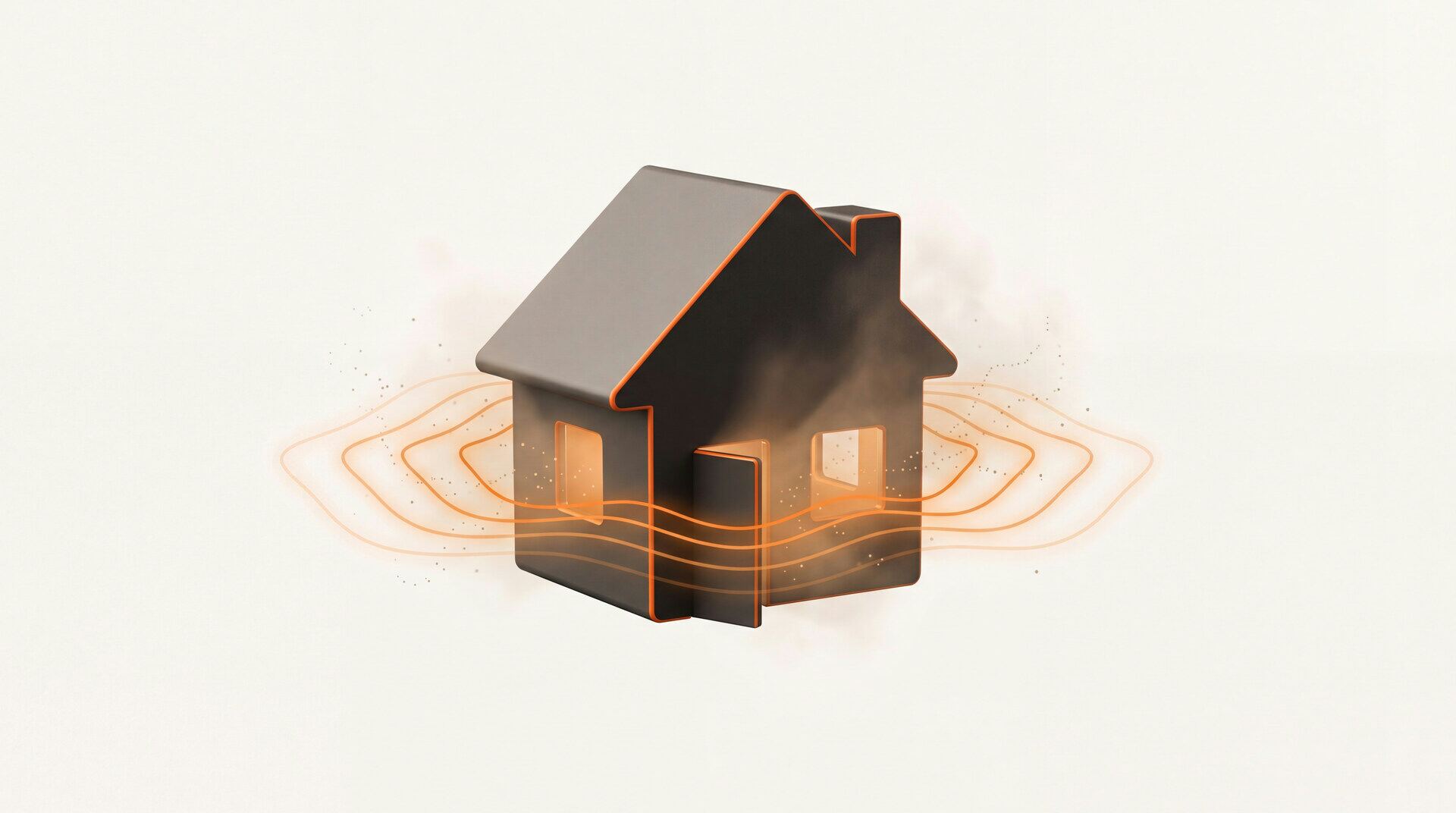
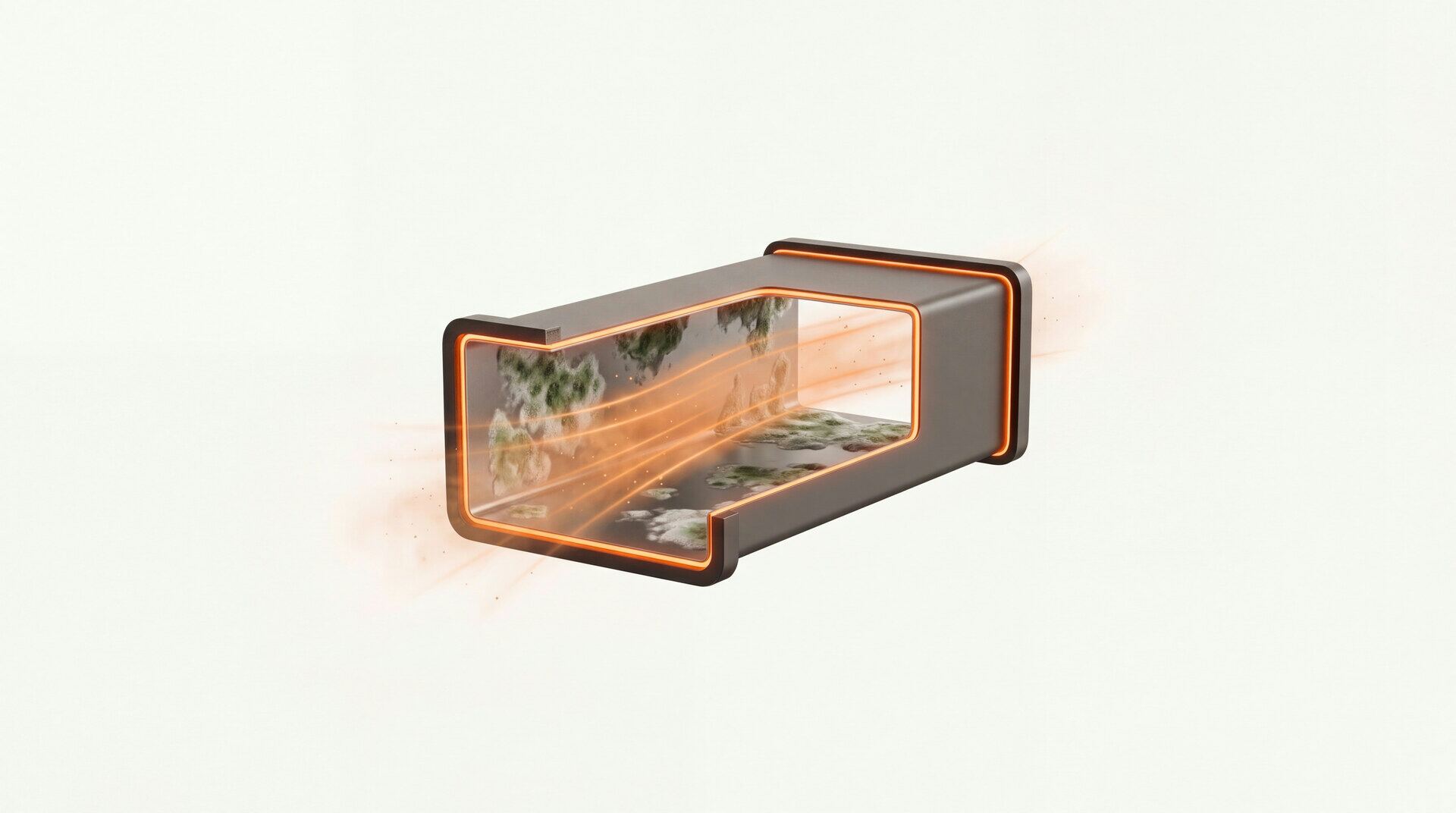
Most mold problems are local. Mold in the bathroom stays in the bathroom. Mold in the basement stays in the basement. But mold in your HVAC system is different. Your ductwork connects to every room in the house. When the system runs, it blows air across the moldy surfaces and distributes spores to every supply register in every room.
A leading remediation science expert, identifies the HVAC system as the primary vector for whole house mold exposure. In The Mold Medic, he explains that the evaporator coil is always wet during cooling operation. That constant moisture, combined with the dust and organic debris that accumulates on the coil and in the drain pan, creates an ideal environment for mold colonization.
The EPA reports that indoor air is typically 5x worse than outdoor air. A moldy HVAC system makes that number dramatically worse because it actively recirculates contaminated air throughout the home, 24 hours a day when the system is running. If your HVAC is older than 10 years and the coil has never been cleaned, there is a high probability of mold colonization.
Signs of mold in your air ducts
Musty smell from the vents: This is the most common first sign. When the HVAC turns on, you notice a musty, earthy, or stale odor coming from the supply registers. The smell may be stronger in certain rooms. It is the off gassing from mold colonies inside the ductwork or on the coil. If the smell goes away when the system is off and returns when it turns on, the source is almost certainly inside the HVAC system.
Dark dust or debris around registers: Look at the ceiling or wall around your supply and return registers. If you see dark smudges, black dots, or gray dust accumulation around the edges of the register covers, that is particulate being blown out of the ductwork. Remove a register cover and look inside the duct with a flashlight. Dark staining or visible growth on the duct walls confirms the problem.
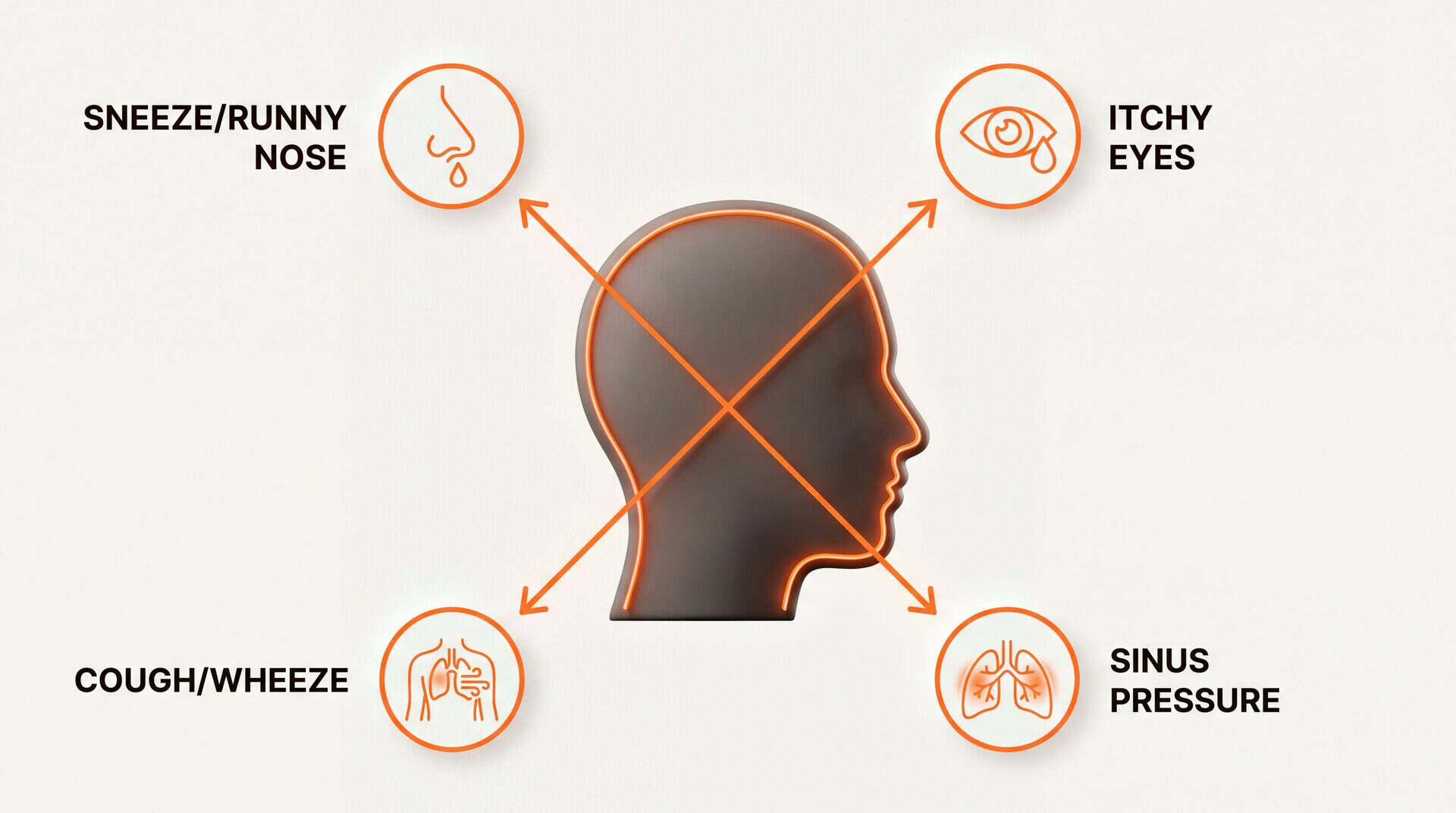
Allergies that get worse when the HVAC runs: If household members experience sneezing, congestion, watery eyes, coughing, or headaches that get worse when the heating or cooling system is running and improve when it is off or when they leave the house, HVAC mold is a likely cause. The pattern of "better away from home, worse at home" is the single most diagnostic signal for mold exposure, according to every expert in our research.
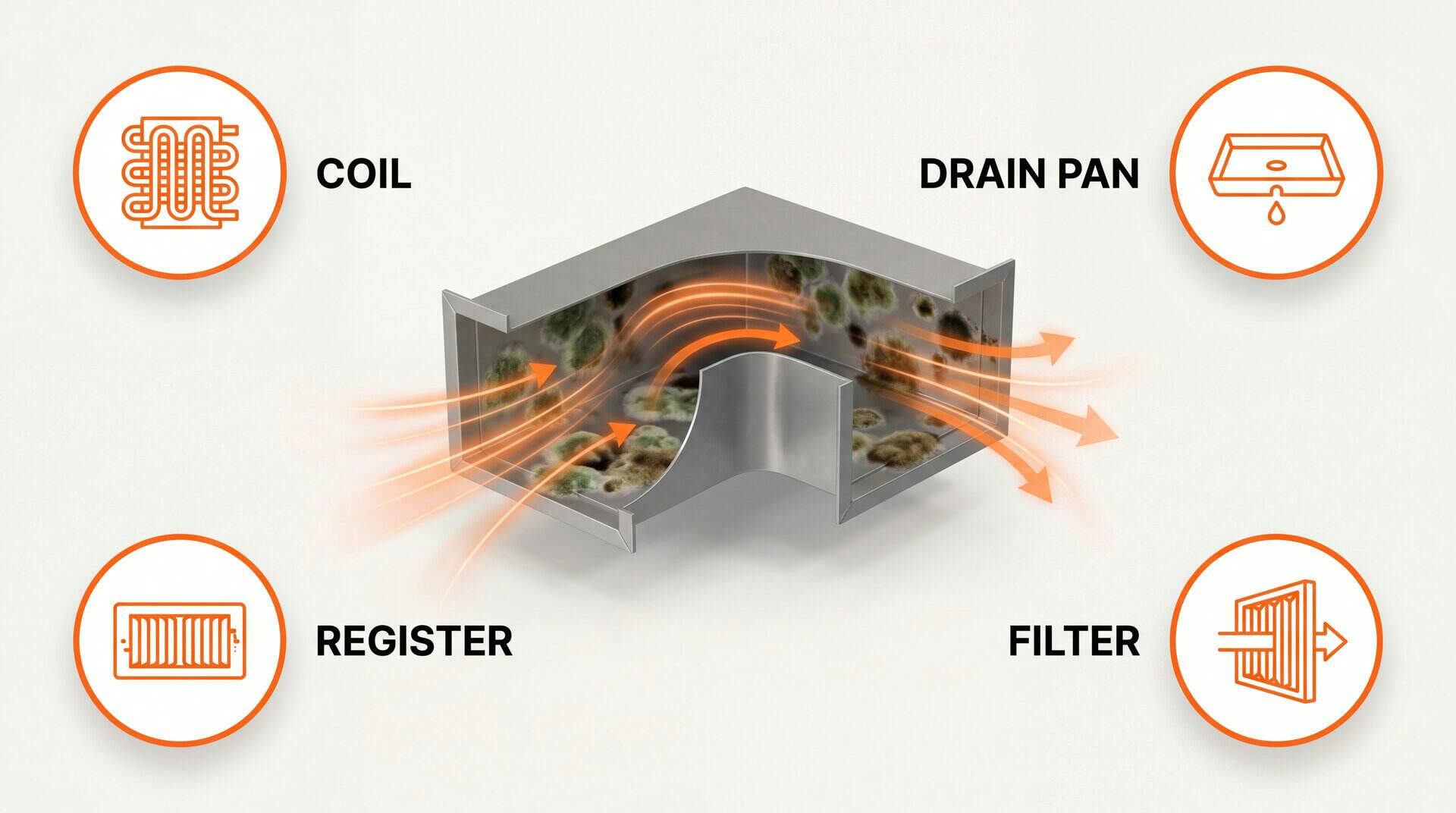
Visible mold inside the air handler: Open the access panel on your air handler (the indoor HVAC unit). Look at the evaporator coil, the drain pan below it, and the interior walls of the cabinet. Any dark staining, green or black growth, or slimy film is mold. The drain pan should be clean and dry when the system is not running. Standing water in the drain pan means the drain line is clogged, creating a perfect breeding ground.
How mold gets into your HVAC system
The evaporator coil: During cooling, the evaporator coil pulls heat from the air and produces condensation. This is by design. The problem is that the coil is always wet during operation, and dust from the return air sticks to the wet surface. That combination of moisture and organic matter is exactly what mold needs. Remediation experts call the coil the primary mold colony site in any home with central AC.
The drain pan and drain line: Condensation drips off the coil into the drain pan and exits through the drain line. If the drain line clogs with algae, dust, or debris, water backs up into the pan and sits there. Standing water in a dark, enclosed space grows mold within days. A clogged drain line is one of the most common HVAC maintenance failures.
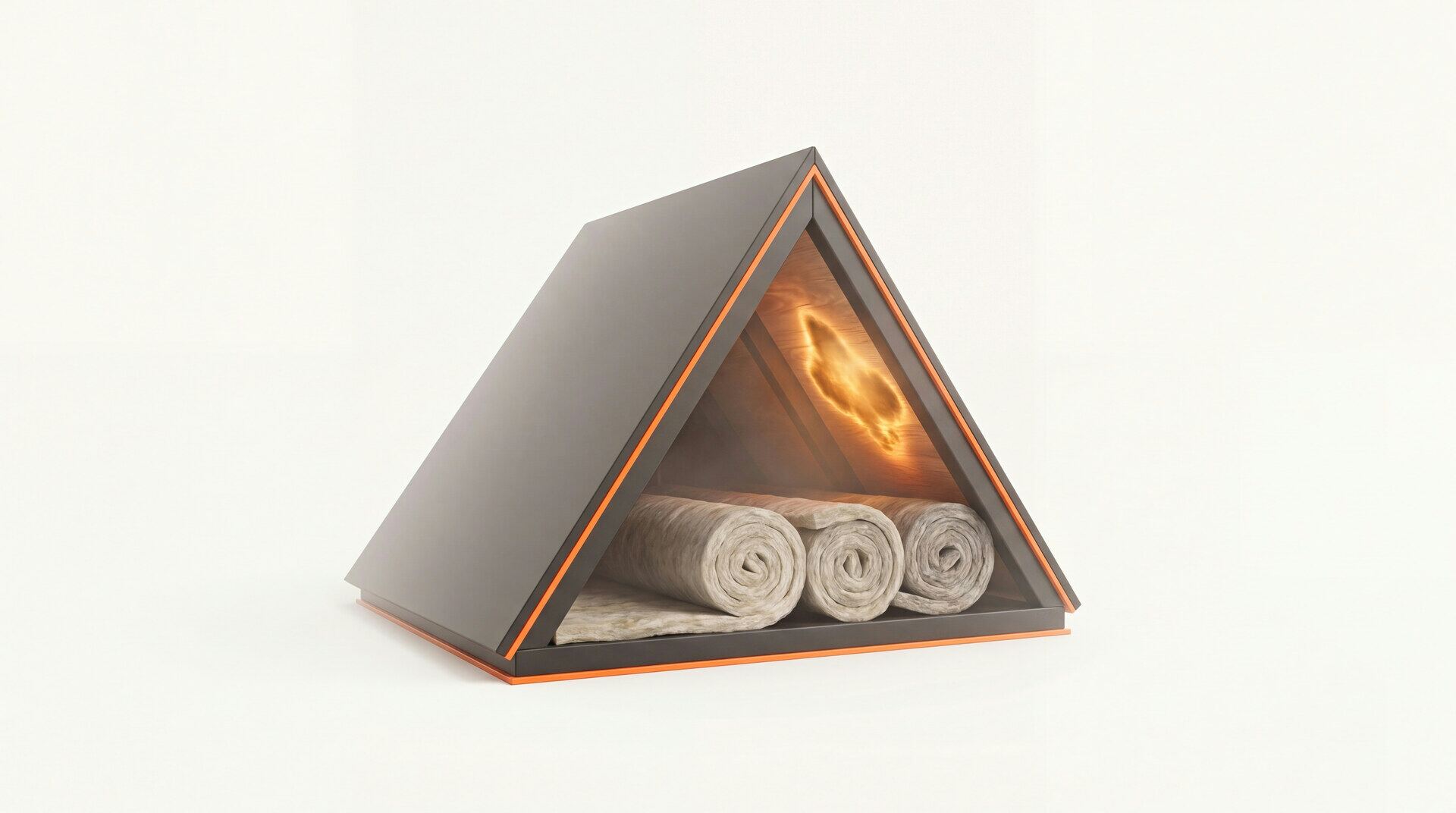
Uninsulated ducts: Ductwork running through hot attics or crawl spaces creates condensation when cold AC air runs through warm ducts. The outside of the duct sweats. If the ducts are not properly insulated, that condensation enters the duct at joints and seams. Over time, moisture accumulates inside the duct and mold grows.
Poor filtration: If you use cheap fiberglass filters or forget to change the filter regularly, dust and organic debris pass through and accumulate on the coil and inside the ductwork. This debris is food for mold. Use a MERV 11 to MERV 13 filter and change it every 60 to 90 days. Higher is not always better. MERV 16 and above can restrict airflow on residential systems not designed for them.
How to clean mold from your HVAC system
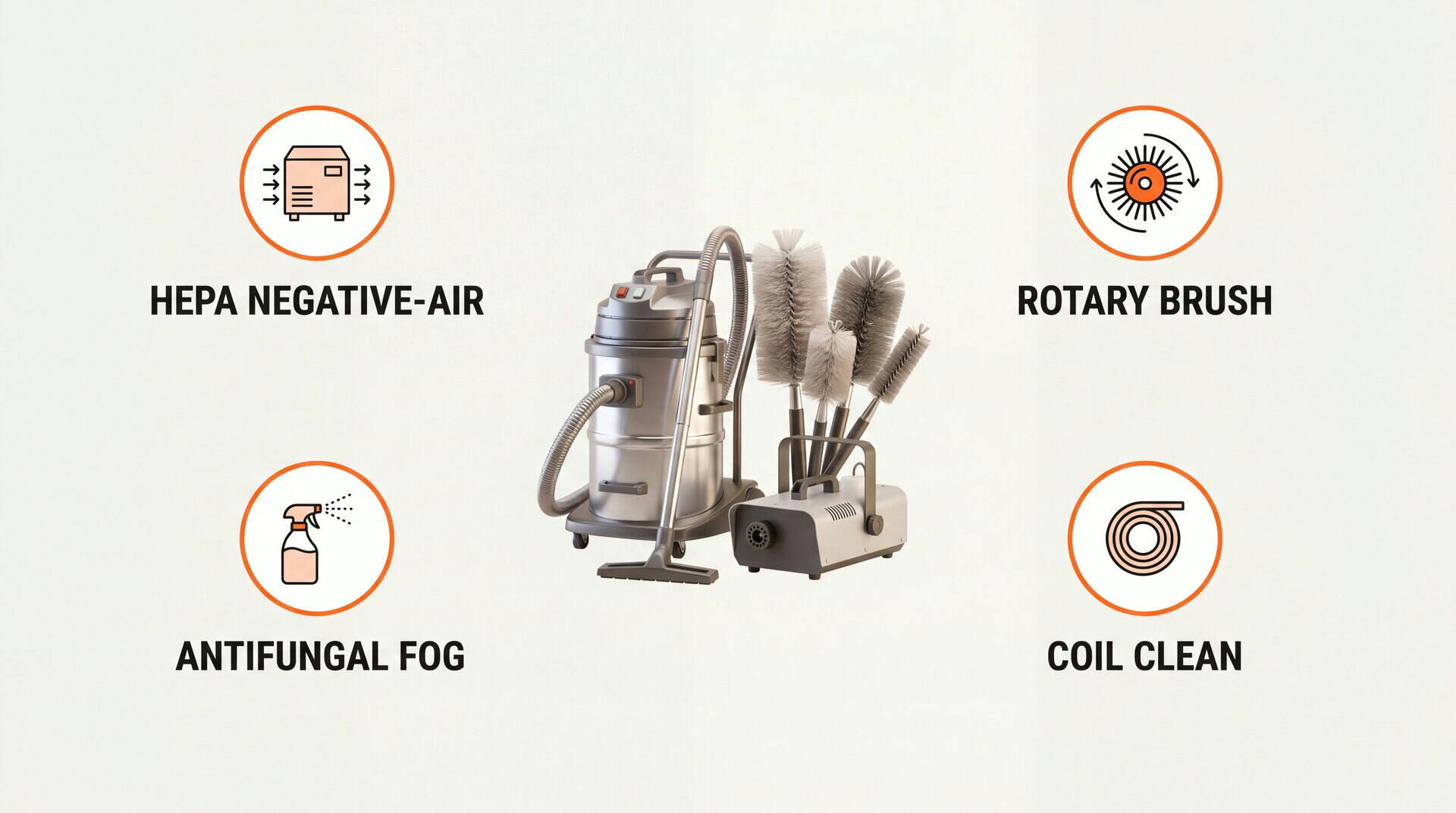
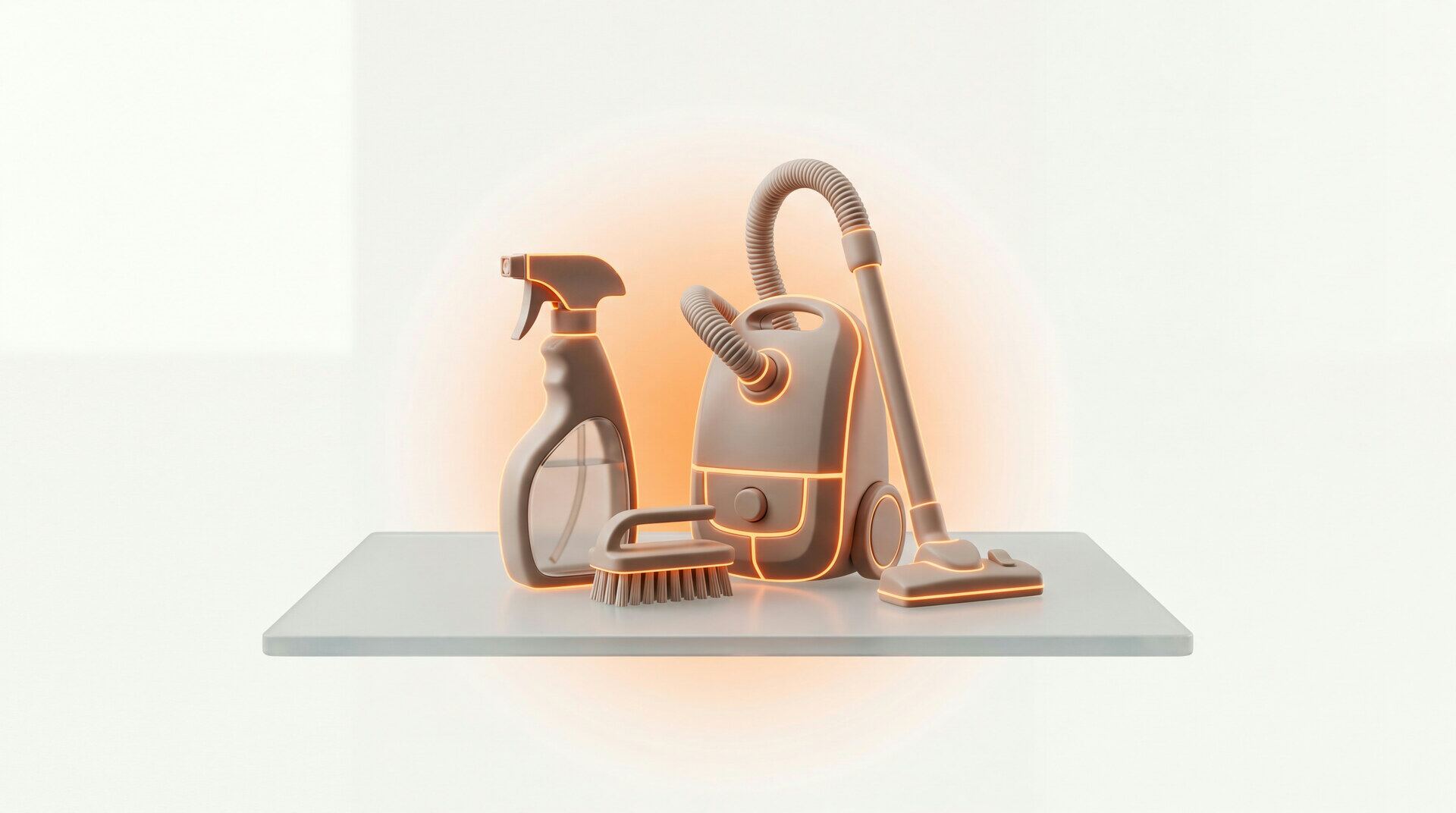
This requires a professional. You cannot do this yourself. HVAC duct cleaning requires high powered negative air machines, rotary brushes, compressed air tools, and access points cut into the ductwork. DIY cleaning with household tools cannot reach the interior surfaces of the duct runs and may spread spores further through the system.
The professional HVAC remediation protocol includes:
1. Professional duct cleaning with negative air containment. All debris is captured by the machine, not released into the home. Cost: $400 to $1,000 depending on the size of the system.
2. Evaporator coil cleaning with an antimicrobial agent. The coil fins are carefully cleaned without bending or damaging them. The drain pan is cleaned and treated. The drain line is flushed. Cost: $200 to $600.
3. Air handler cabinet interior cleaning and treatment. All interior surfaces are wiped down with an antimicrobial solution. Cost: typically included with coil cleaning.
4. UV light installation near the coil. A UV C germicidal light installed in the air handler near the evaporator coil kills mold, bacteria, and viruses on the coil surface continuously. This prevents future colonization. Cost: $200 to $800 installed. This is the single best long term investment for HVAC cleanliness.
5. Upgraded filtration. MERV 13 filter minimum. Change every 60 to 90 days. Consider a whole house air purifier if household members have mold sensitivities. Remediation experts recommend the Intellipure Compact, which filters down to 0.007 microns.
Total cost for full HVAC mold remediation: $1,500 to $4,000 depending on the size and condition of the system. This is a fraction of the cost of treating mold related health problems.
Is your HVAC spreading mold through your house?
Our app walks you through 160 professional mold hotspots room by room, including HVAC signs in every room. Same checklist every IICRC certified inspector uses. AI powered verdict in 5 minutes.
Get Early AccessFrequently Asked Questions
How do I know if there is mold in my air ducts?
The most common signs are a musty smell that comes from the vents when the HVAC turns on, dark dust or debris around supply registers, allergies or respiratory symptoms that get worse when the HVAC is running, and visible mold growth inside the ductwork when you remove a register cover and look inside with a flashlight.
How does mold get in air ducts?
The HVAC evaporator coil is always wet during cooling. That constant moisture makes the coil and drain pan a primary mold colony site. Mold grows on the coil, in the drain pan, and in the ductwork connected to it. Dust provides the food source. Condensation inside uninsulated ducts in hot attics or crawl spaces creates additional moisture. Poor filtration lets spores circulate through the system.
Can I clean mold in air ducts myself?
No. HVAC duct cleaning requires specialized equipment including high powered vacuums, rotary brushes, and negative air machines. DIY cleaning with household tools cannot reach deep into the ductwork and may spread spores further. The EPA recommends professional duct cleaning when there is visible mold growth. The coil and drain pan also require professional cleaning with specific agents.
How much does HVAC mold remediation cost?
Professional duct cleaning costs $400 to $1,000 for a standard home. If the evaporator coil needs cleaning, add $200 to $600. A full HVAC mold remediation including ductwork, coil, drain pan, and air handler can cost $1,500 to $4,000. UV light systems installed near the coil to prevent future mold growth cost $200 to $800 installed.