Where mold hides in your shower
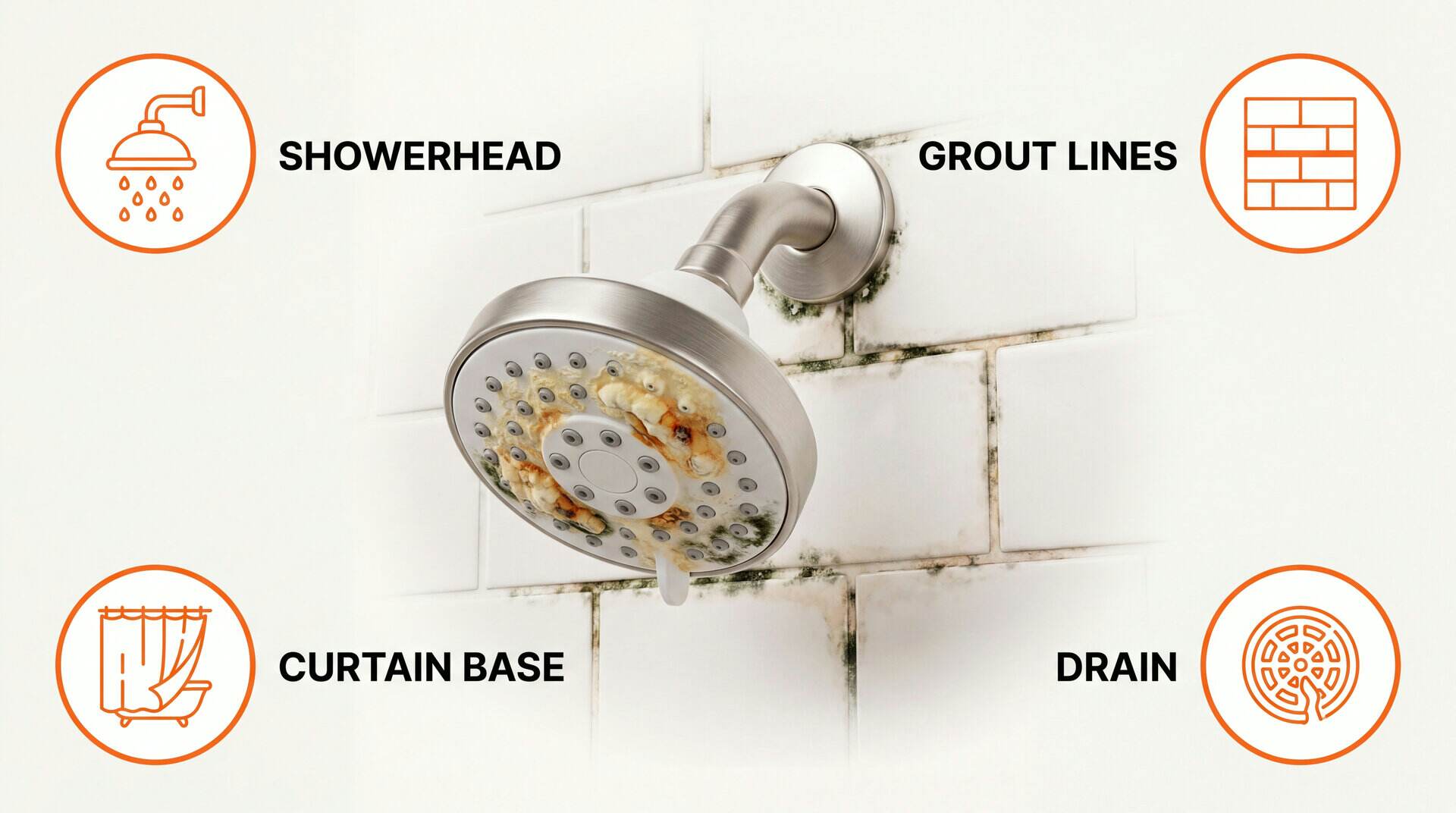
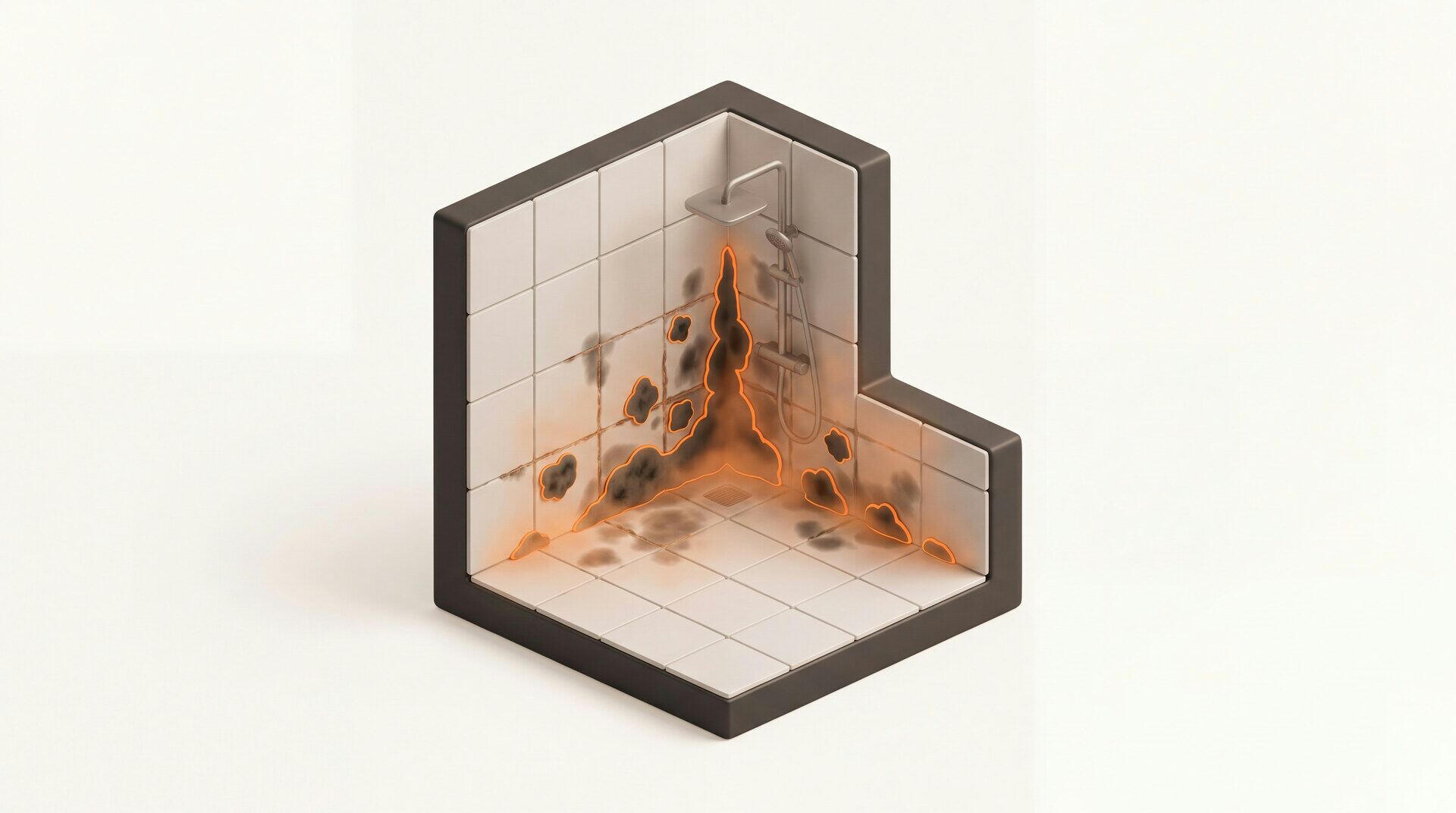
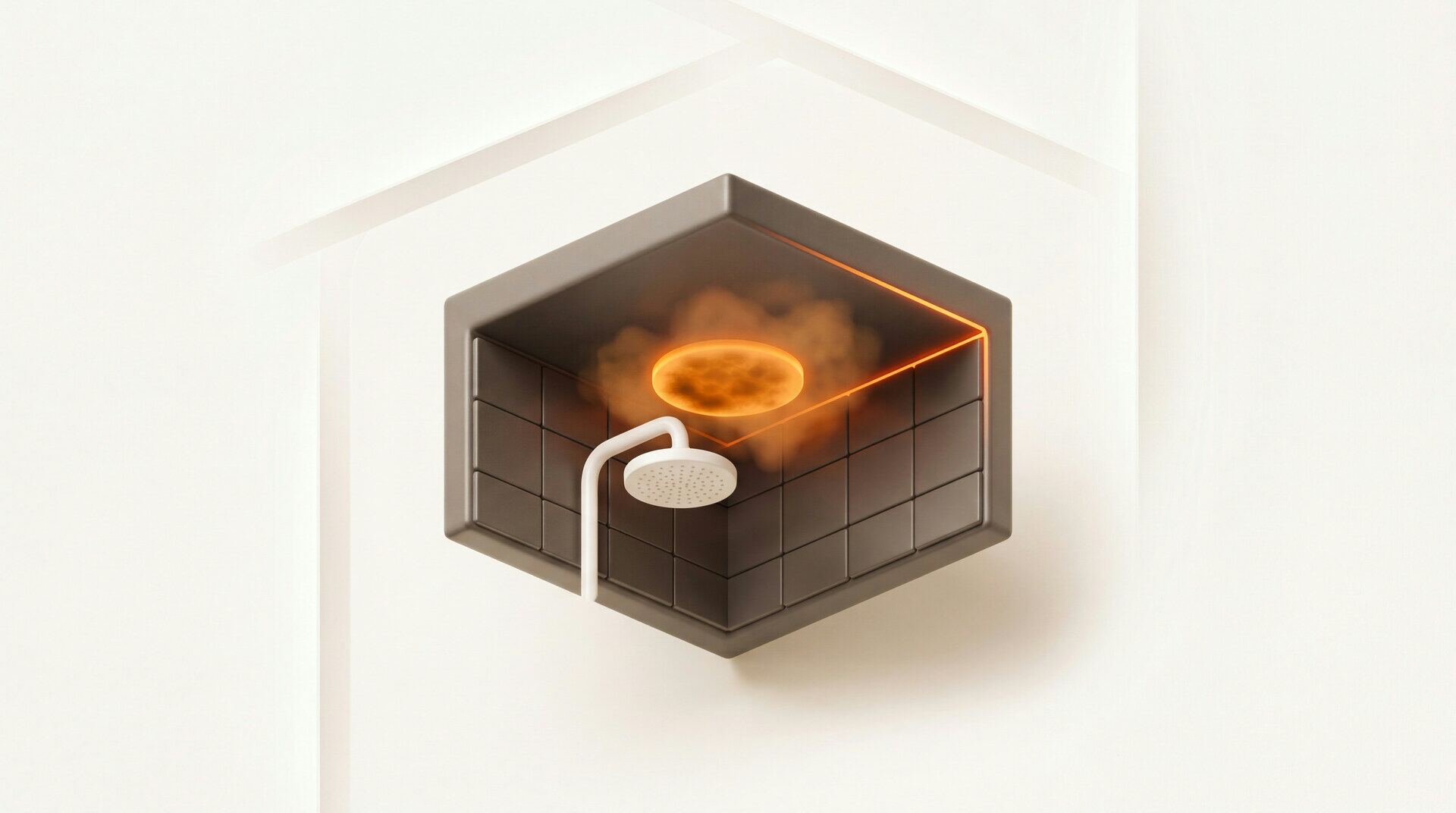
Ceiling corners: The top corners where the ceiling meets the shower walls are the number one spot. Steam rises and condenses here first. Because these corners are hard to reach, moisture sits undisturbed for hours. Look for black or dark green spots, especially in the corners farthest from the exhaust fan.
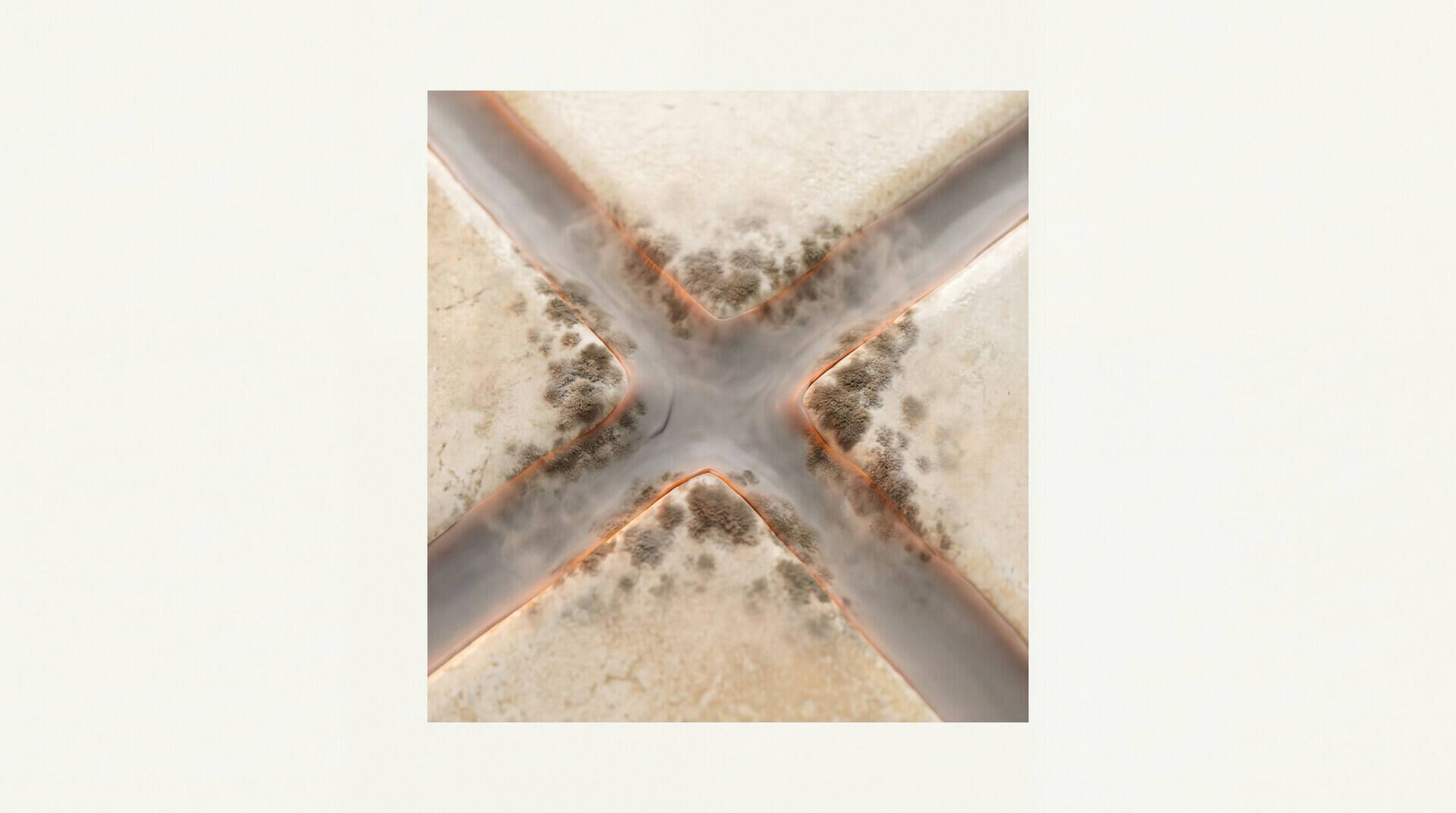
Grout lines: Grout is porous cement that absorbs water. Every time you shower, water soaks into the grout and takes hours to dry. Mold roots embed deep into the grout where surface cleaning cannot reach them. If your grout is permanently discolored despite scrubbing, the mold has penetrated below the surface.
Caulk joints: The silicone or latex caulk where the tub meets the wall, where the shower pan meets the tile, and around fixtures deteriorates over time. Cracks form. Water gets behind the caulk and sits between the caulk and the surface. This creates a perfect dark, moist space for mold. Black spots inside translucent caulk are a sure sign.
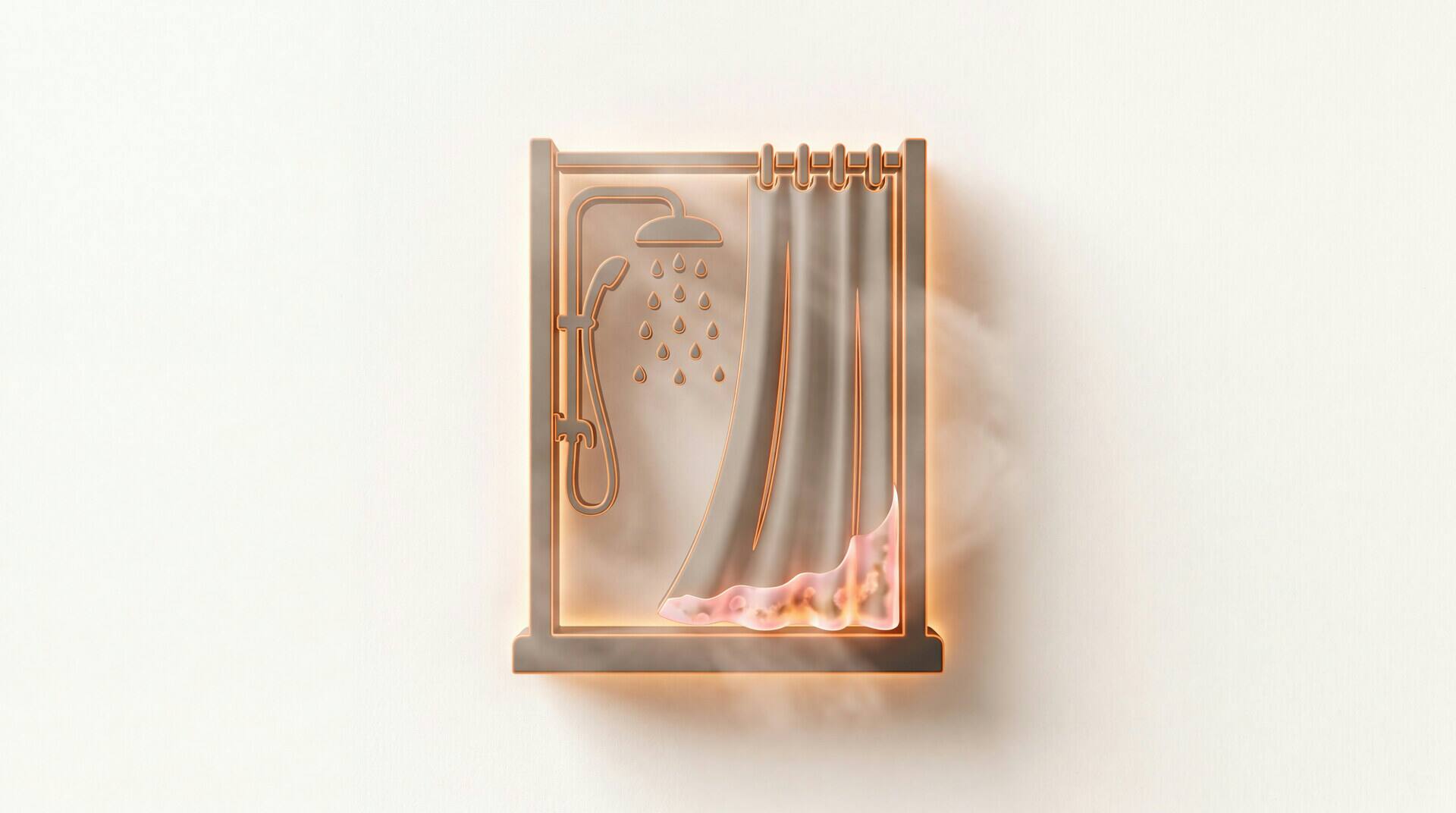
Shower curtain and liner: The bottom of a shower curtain stays wet after every shower. The folds trap moisture between the layers. Mold grows on both sides, especially along the bottom edge and in the creases. If your curtain has dark spots that feel slimy, that is mold.
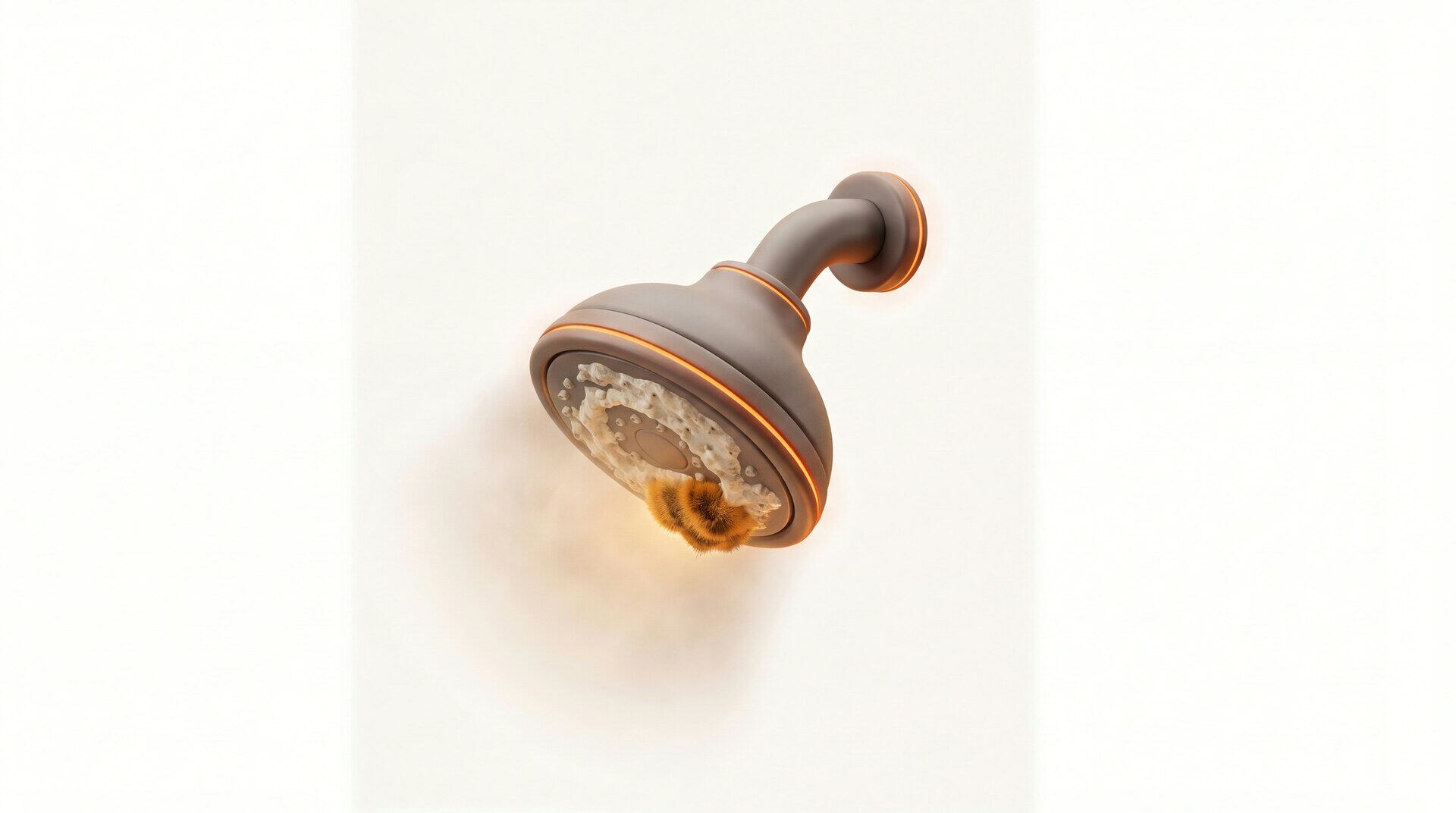
Showerhead connection: The threaded connection where the shower arm meets the showerhead collects moisture. Water drips down the arm and sits in the joint. Mold grows inside and around this connection. Unscrew your showerhead every few months and check for black or green buildup.
Soap scum vs mold: how to tell the difference
Many people confuse soap scum with mold. They look different and behave differently.
Soap scum is white or light gray. It feels waxy or chalky to the touch. It wipes off easily with a damp cloth or a bathroom cleaner. It builds up gradually on glass, tile, and fixtures. It does not have a smell.
Mold is black, dark green, dark brown, or sometimes gray with a fuzzy or slimy texture. It does not wipe away easily. It grows in patterns that follow moisture. If you clean it and it comes back within a few days, that is mold. Mold often has a musty, earthy smell.
The wipe test: Spray the spot with white vinegar. If it dissolves and wipes clean, it is likely soap scum. If it stays put or only partially lightens, it is likely mold.
Pink stuff in the shower: Serratia vs black mold
That pink or orange residue you see at the base of your shower, around the drain, or on the shower curtain is almost never mold. It is Serratia marcescens, a bacteria that feeds on soap residue and fatty deposits.
How to tell them apart: Serratia is pink, orange, or salmon colored and has a slimy film texture. Black mold is dark (black, dark green, or dark brown) and has a fuzzy or powdery texture. Serratia grows fast and comes back quickly after cleaning. Black mold grows slower but is harder to remove.
Is pink Serratia dangerous? It is not as harmful as black mold, but it is not harmless. Serratia can cause urinary tract infections and wound infections, especially in people with weakened immune systems. Clean it with hydrogen peroxide and keep the shower dry between uses. Improving airflow and ventilation prevents it from coming back.
When to worry: If you have both pink Serratia AND dark mold in the same shower, the underlying problem is moisture. Your shower is staying too wet for too long. Fix the ventilation issue and both problems will improve.
How to remove shower mold: product by product
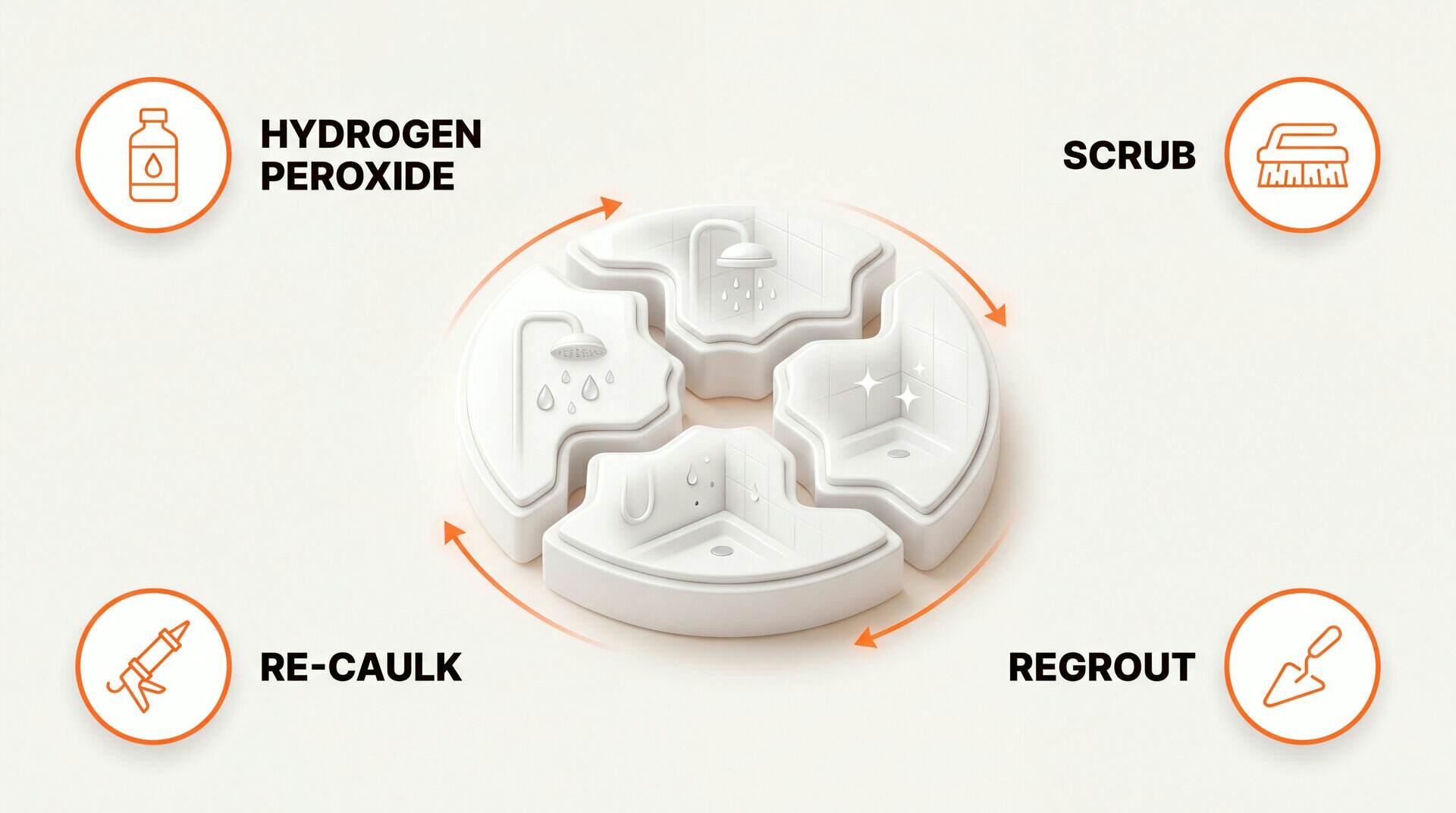
Hydrogen peroxide (3%) for grout: This is the best all around shower mold cleaner. Spray directly on moldy grout. Let it sit for 10 to 15 minutes. Scrub each grout line with a stiff nylon brush. Rinse with water and dry completely. For heavy mold, make a paste with baking soda and hydrogen peroxide, apply to the grout, cover with plastic wrap for 30 minutes, then scrub.
Caulk removal and replacement: Do not try to clean moldy caulk. It does not work. The mold is inside the caulk material. Cut away all the old caulk with a utility knife or caulk removal tool. Scrape the surface clean. Spray hydrogen peroxide on the exposed area. Let it dry for 24 hours. Apply new 100% silicone, mildew resistant caulk. Smooth it with a wet finger or caulk tool for a clean bead.
Shower curtain cleaning: Remove the curtain from the rings. Wash it in the machine on the hottest setting with a cup of white vinegar and a tablespoon of baking soda. Hang it back up to dry fully. If the mold does not come out, replace the curtain. Fabric curtains with a separate plastic liner are easier to maintain because you can replace just the liner.
What NOT to use: Bleach. Every mold remediation expert we studied agrees that bleach does not kill mold on porous surfaces. It whitens the surface so the mold looks gone, but the roots survive inside the material. The mold comes back within days or weeks. Hydrogen peroxide penetrates porous surfaces and kills mold roots.
Prevention: stop shower mold for good
Run the exhaust fan during and 20 minutes after every shower. This is the most important habit. If you do nothing else, do this. An exhaust fan rated at 50 CFM or higher is recommended for standard bathrooms. If your fan is weak or noisy, replace it. A good fan costs $50 to $150 and saves thousands in mold remediation.
Squeegee the walls after every shower. A $10 squeegee removes most of the water that would otherwise evaporate and keep humidity high. Takes 30 seconds. Hang the squeegee in the shower so it becomes part of the routine.
Leave the door or curtain open after showering. A closed shower door or curtain traps moisture inside the shower enclosure. Open it after every use to let air circulate and dry the surfaces.
Weekly peroxide spray. Once a week, spray the grout lines and caulk with hydrogen peroxide. Let it sit for a few minutes, then rinse. This kills mold before it becomes visible. Prevention is easier than removal.
Recaulk once a year. Mark it on your calendar. Even if the caulk looks fine, replace it annually. Fresh caulk with mildew resistant additives protects the joints where water is most likely to get behind the tiles.
Frequently asked questions
Is the pink stuff in my shower mold?
Pink residue in the shower is usually Serratia marcescens, a bacteria, not mold. It feeds on soap scum and fatty deposits. It is not as dangerous as black mold, but it can cause urinary tract infections and wound infections in people with weakened immune systems. Clean it with hydrogen peroxide and improve ventilation to prevent it from coming back.
How do I tell the difference between soap scum and mold?
Soap scum is white or light gray, feels waxy or chalky, and wipes off easily with a cloth. Mold is black, dark green, or dark brown, has a fuzzy or slimy texture, and does not wipe away easily. If the dark spots come back within days of cleaning, that is mold. Soap scum does not grow back that fast.
What is the best product to remove shower mold?
For grout, use 3% hydrogen peroxide. Spray it on, wait 10 minutes, and scrub with a stiff brush. For caulk, do not try to clean it. Remove the old caulk completely and apply new mildew resistant silicone caulk. For shower curtains, wash in the machine with a cup of white vinegar on the hottest setting.
How do I prevent mold in my shower?
Run the exhaust fan during and for 20 minutes after every shower. Squeegee the walls and door after each use. Leave the shower door or curtain open after showering to let air circulate. Spray the shower with hydrogen peroxide once a week as a preventive measure. Recaulk all joints once a year.
Sources
Every claim on this page traces to one of these. Links open the primary document.