Why closets are mold magnets
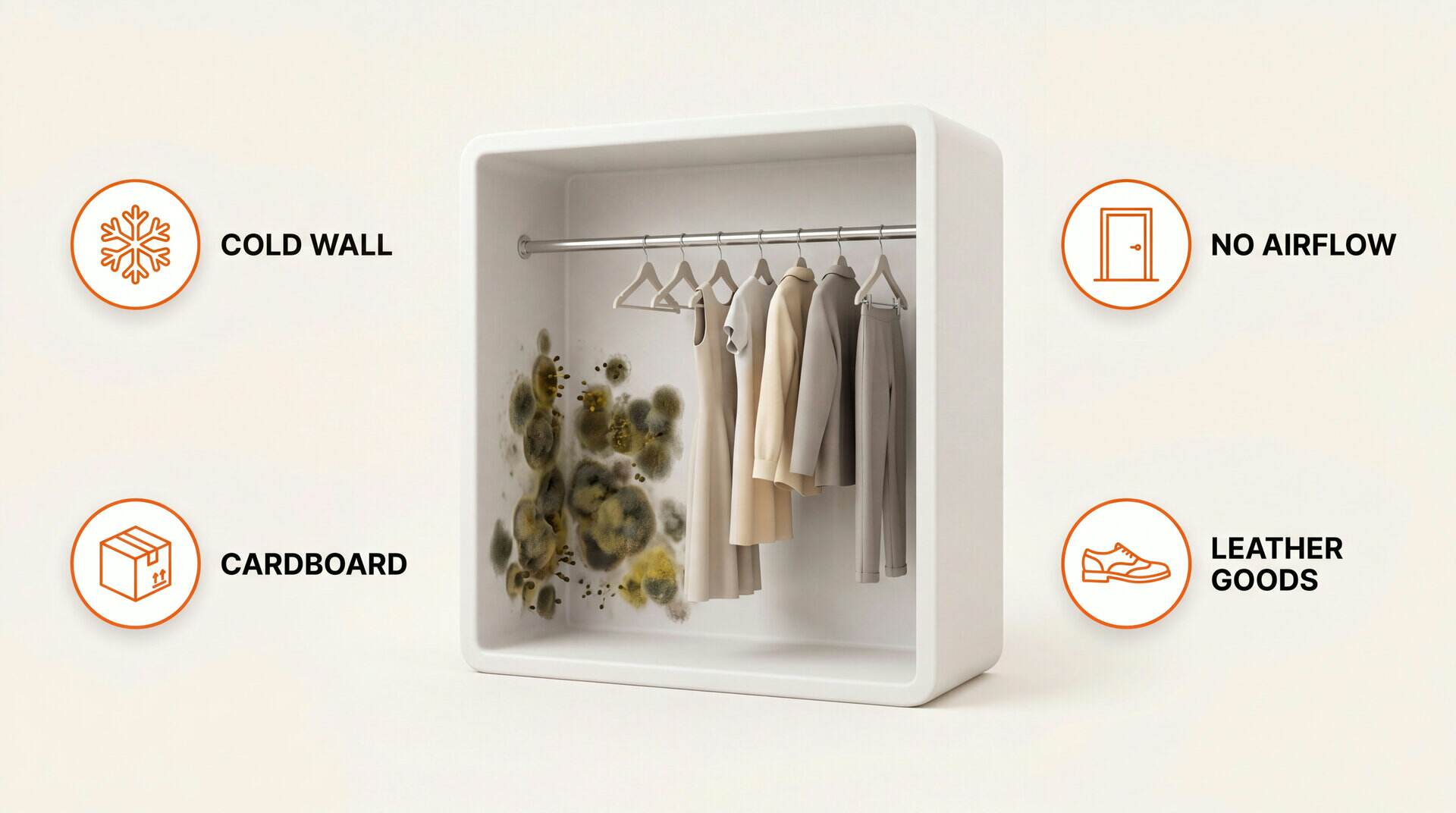
Walk into any mold inspector's job site and ask where they find hidden mold the most. The answer is almost always closets. A leading remediation science expert, explains why: closets are enclosed spaces with zero air circulation. The door stays closed 20+ hours a day. There is no vent, no fan, and no sunlight. That creates a pocket of still, humid air that never dries out.
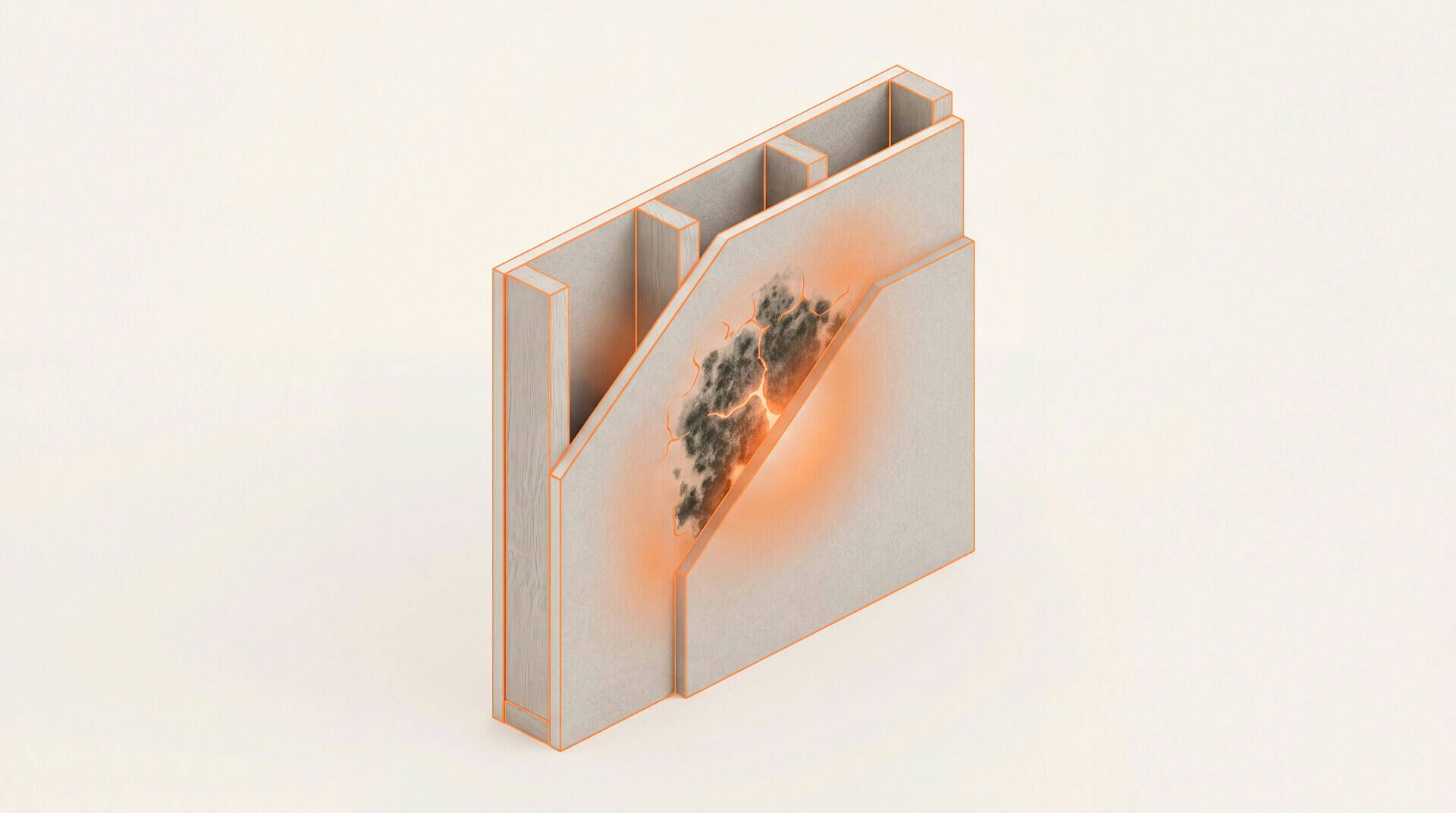
Now add an exterior wall. In winter, that wall gets cold while the rest of the room stays warm. Warm humid air hits the cold wall and creates condensation. You cannot see it behind hanging clothes, but it is there. That thin film of moisture on drywall or wood is all mold needs. Within 24 to 48 hours, spores take hold. Within a week, you have visible growth.
I found this out the hard way. I had a closet against a north facing wall in a rental apartment. Expensive leather shoes, suits, everything packed tight. One day I noticed a musty smell when I opened the door. I pulled everything out and found green mold covering the back wall and the bottom three inches of every garment touching the wall. I lost over $2,000 in clothes and shoes that day. That is why this article exists.
What mold damages in your closet
Leather: Shoes, bags, belts, and jackets. Mold feeds on the organic tanning compounds in leather. Once it penetrates the surface, the leather is permanently stained and weakened. You can clean surface mold, but deep mold destroys the material.
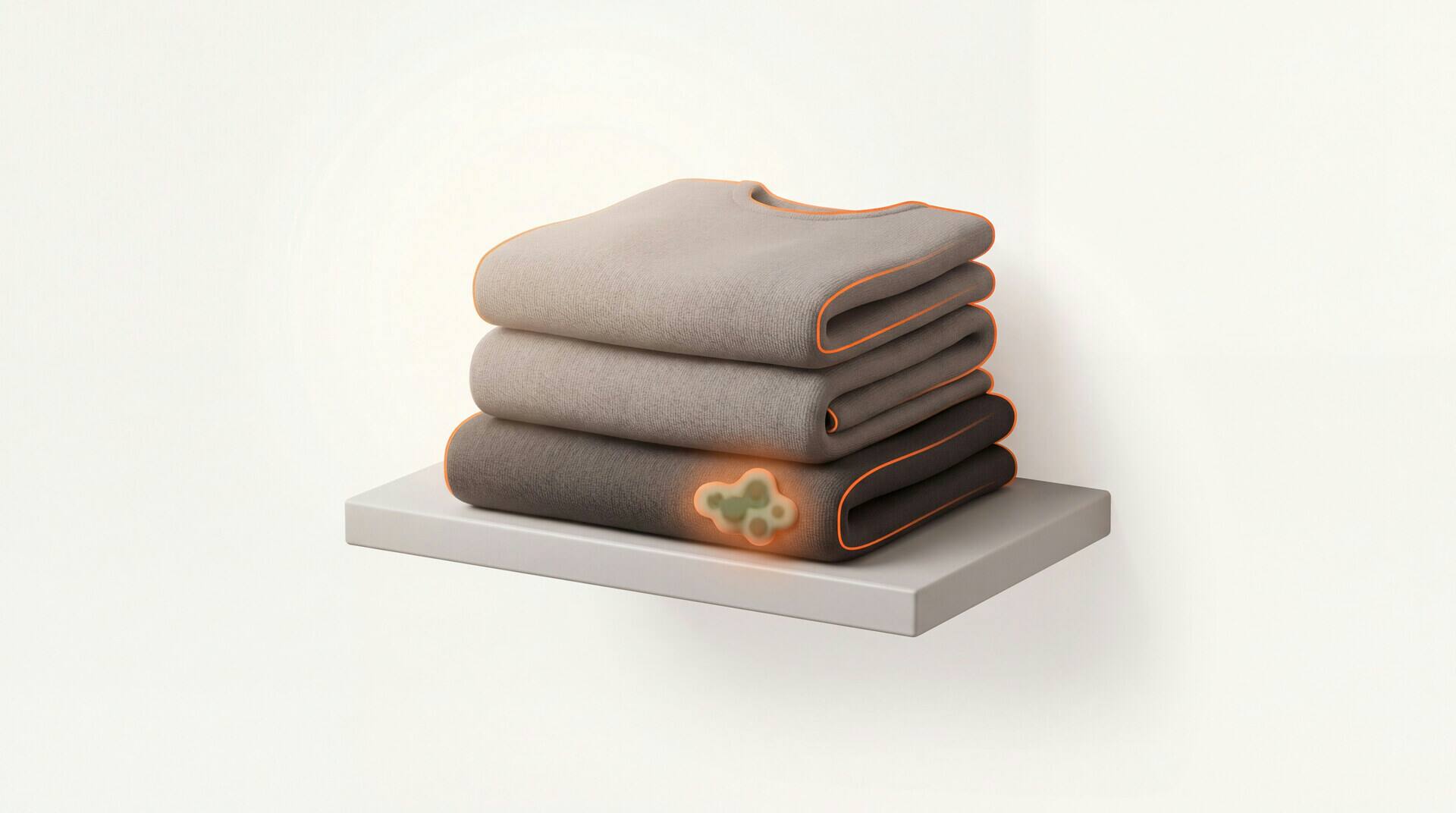
Cotton and linen: These natural fibers are a direct food source for mold. Shirts, pants, bedding stored in closets will develop musty odor first, then visible spots. Hot water washing with borax kills the mold, but stains on white fabric may be permanent.
Wool and silk: Expensive items that absorb moisture from humid closet air. Dry cleaning alone does not kill mold spores. You need to address the closet environment before putting clean items back.
Drywall and wood shelving: The wall behind your clothes and the wooden shelves are porous. Mold roots (hyphae) grow into these materials. Wiping the surface clean is not enough. If drywall has been wet for more than 48 hours, the mold has penetrated and the section may need to be cut out and replaced.
Shoes: The inside of shoes holds sweat and moisture. When stored in a dark, airless closet, that moisture feeds mold growth. Leather soles and fabric linings are especially vulnerable.
How to remove mold from a closet step by step
Step 1: Empty everything. Take every item out of the closet. Do this on a dry, sunny day if possible so you can set items outside. Wear an N95 mask and gloves.
Step 2: Clean hard surfaces. Spray hydrogen peroxide (3%) directly on moldy drywall, wood shelves, and baseboards. Let it sit for 10 minutes, then scrub with a stiff brush. Wipe clean with a damp cloth. Do not use bleach. According to every remediation expert we researched, bleach only removes the color on porous surfaces while the mold keeps growing underneath.
Step 3: Treat clothes and fabrics. Machine wash everything in hot water with 1/2 cup borax per load. For items that cannot be washed, spray with EC3 Laundry Additive and hang in direct sunlight for 4 to 6 hours. UV light kills mold spores on surfaces.
Step 4: Clean leather items. Wipe with a 1:1 mix of rubbing alcohol and water. Dry completely in sunlight. Apply leather conditioner after. If the mold has gone deep and the item still smells after cleaning, it cannot be saved.
Step 5: HEPA vacuum. Vacuum the entire closet including walls, floor, ceiling, and shelf surfaces with a true HEPA vacuum. This picks up spores that survived the cleaning. A regular vacuum blows spores back into the air.
Step 6: Dry completely. Run a fan or dehumidifier pointed into the open closet for 24 hours before putting anything back.
How to prevent closet mold permanently

Create airflow. The single most important change. Install a louvered closet door or keep the door open a few inches. If the closet has a solid door, add a vent at the top and bottom. Some people install a small USB powered fan inside the closet to circulate air.
Do not pack clothes tight. Leave space between hangers so air can move between garments. Packed clothes trap moisture against the wall and against each other.
Keep humidity below 50%. Use a small dehumidifier in the closet or the room the closet opens into. The EPA and every mold expert agrees: below 50% humidity, mold cannot grow.
Insulate exterior walls. If your closet backs up to an outside wall, the wall gets cold and creates condensation. Adding rigid foam insulation or spray foam inside the wall cavity stops the temperature difference that causes moisture.
Use moisture absorbers. DampRid or calcium chloride containers work for small spaces. They pull moisture out of the air passively. Replace them every 30 to 60 days.
Do not store damp items. Never put damp towels, sweaty gym clothes, or shoes worn in rain into a closet. Let everything dry completely first. Wet items in a closed space are a mold factory.
Frequently asked questions
Why can mold grow in closets?
Closets can retain humidity and have limited airflow, especially along cool exterior walls. Look for direct moisture evidence and correct the verified source rather than diagnosing the cause from appearance alone.
Can mold on clothes make you sick?
Mold exposure may cause nasal, eye, skin, cough, or wheeze symptoms in some people and no symptoms in others. People with asthma, mold allergy, immune suppression, or chronic lung disease may be more vulnerable. Symptoms are nonspecific, so seek medical care for personal guidance rather than self-diagnosing a cause.
How do I get mold off leather shoes and bags?
Follow the item's manufacturer or conservator guidance and avoid mixing cleaners. If the material is valuable, extensively affected, or cannot be cleaned and fully dried safely, use a qualified textile or leather professional.
Should I use bleach on closet mold?
Follow the material manufacturer's instructions and product label. Never mix bleach with ammonia or other cleaners. Porous or damaged materials may require removal rather than surface treatment.
Sources
Every claim on this page traces to one of these. Links open the primary document.