The Short Answer
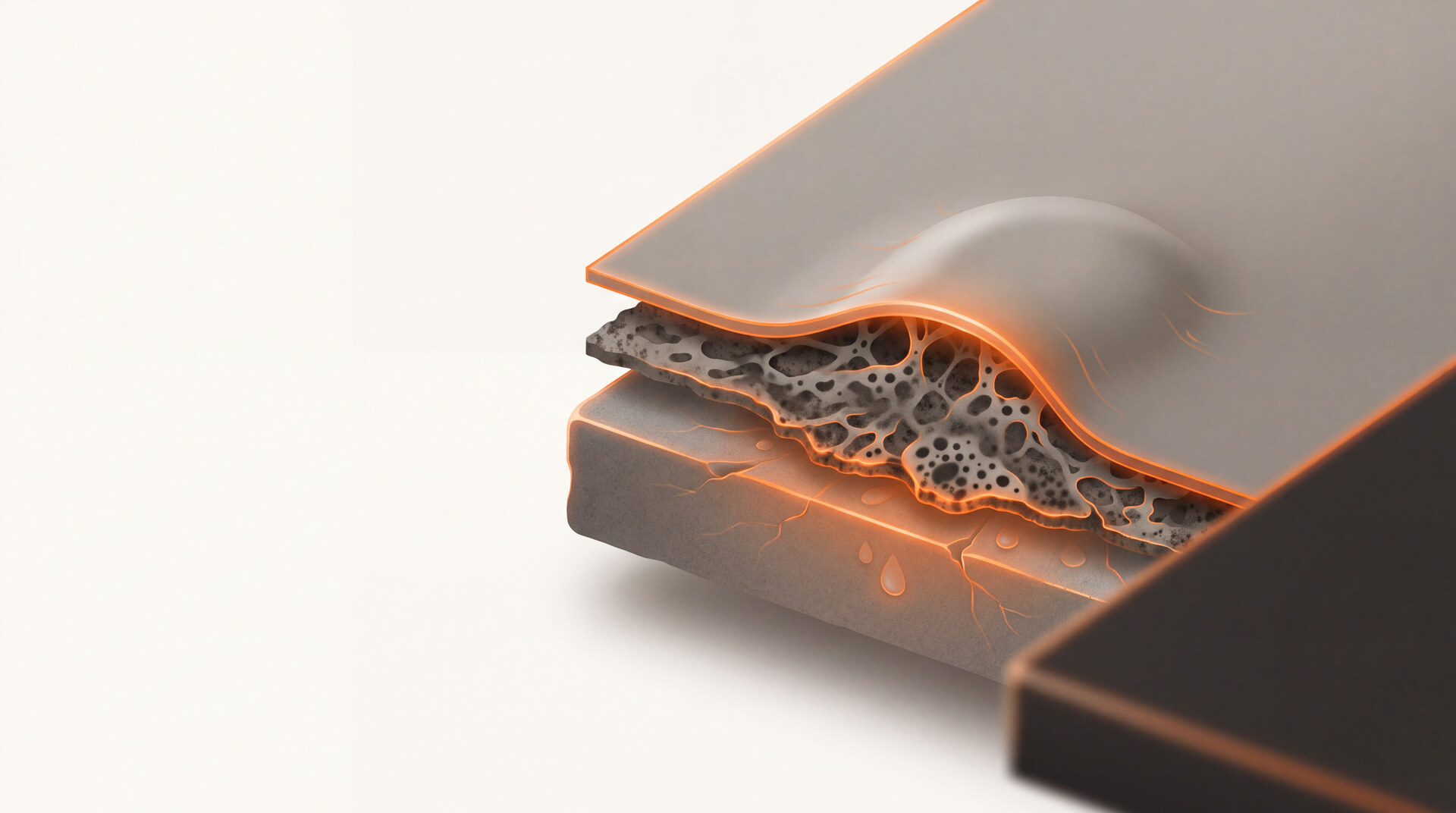
Can you paint over mold? You cannot, not if you want the problem to actually go away. Paint is a coating, not a fungicide. It was built to look good and shed light moisture, not to kill a colony of living organisms rooted in the material underneath. When you roll paint over mold, you are not removing anything. You are sealing it in.
Here is what actually happens. The visible stain disappears under the new color, so the wall looks fixed. Underneath, the mold is still alive, still feeding on whatever organic matter and moisture it found in the first place. Most interior paints are somewhat permeable, so moisture keeps moving through the film, and the mold moves with it, pushing back up through the paint as bubbles, cracks, or a new stain in the same spot, often within a few weeks.
That is why the EPA's guidance skips past "paint over it" and goes straight to moisture control and physical removal. See our full how to get rid of mold guide for the complete removal process before you touch a paintbrush.
Why Painting Over Mold Fails
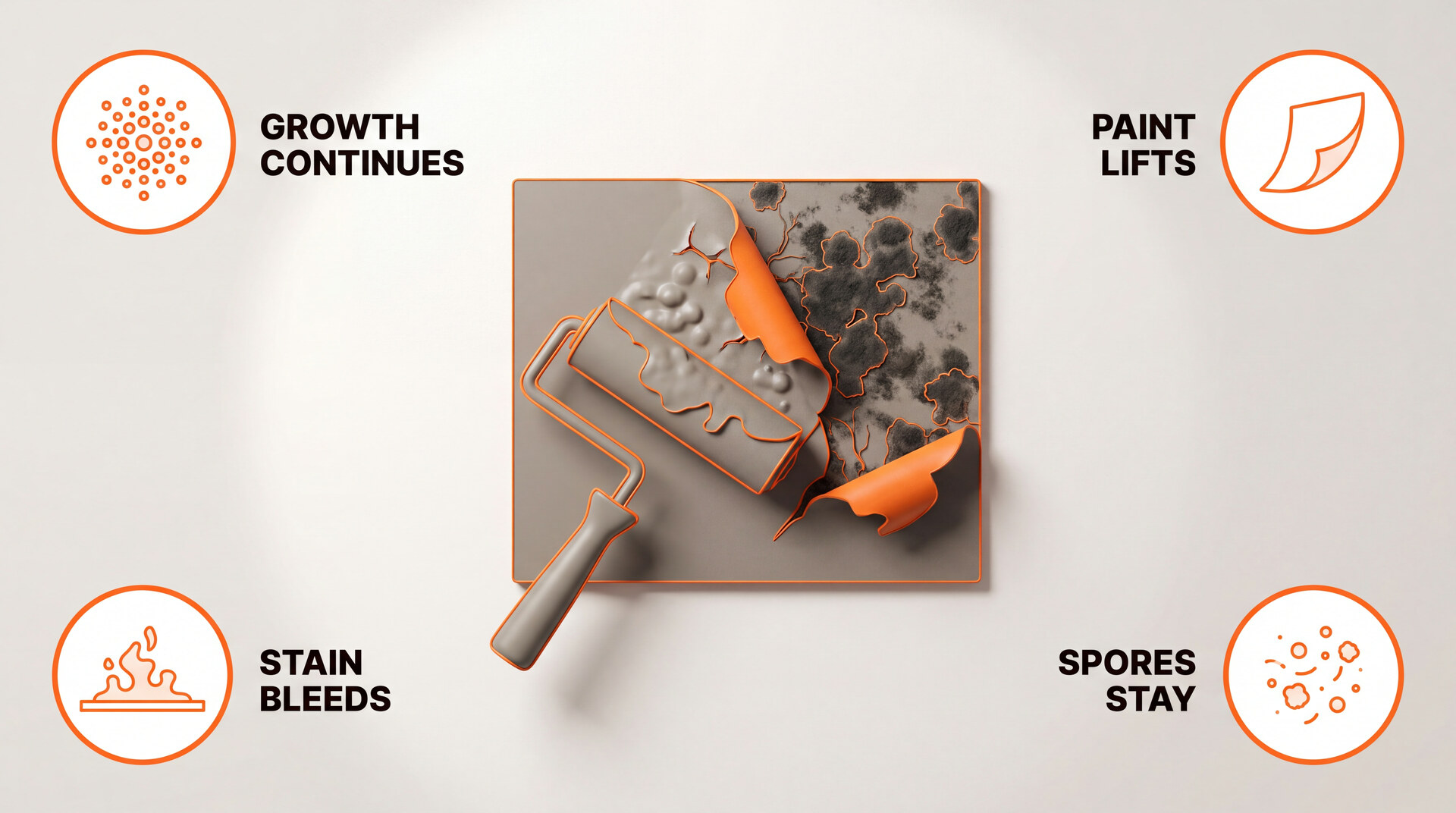
What happens when you paint over mold is that the growth stays alive under the film and usually shows back up as bubbles, cracks, or a new stain in the same spot. Three things work against you the moment you paint over live mold, and they compound each other.
The mold does not die. Nothing in ordinary paint is fungicidal. Even paints marketed as mold resistant only protect a clean, dry film from new growth landing on it later; none of them are labeled to kill an existing colony rooted in the wall. The organism under the paint keeps growing at whatever rate the moisture and food source allow.
The paint film traps moisture, not just mold. Most wall paints slow drying compared to bare drywall or wood, even though they are somewhat vapor-permeable. If the surface was damp when you painted, or the leak that caused the mold is still active, that moisture now has fewer places to escape. Trapped moisture is exactly what a mold colony needs to keep spreading.
The film physically fails. Mold rooted in porous material like drywall paper or bare wood keeps growing outward and pushing against whatever sits on top of it. Combined with trapped moisture, the paint bond weakens. Within weeks the surface bubbles, cracks, or peels, and the same dark patch reappears, often larger than before because the roots spread further while sealed in the dark.
The pattern repeats across most mold on walls cases: a quick paint job, followed by a callback a month later for the same wall, worse than before.
How to Treat Mold Before You Paint
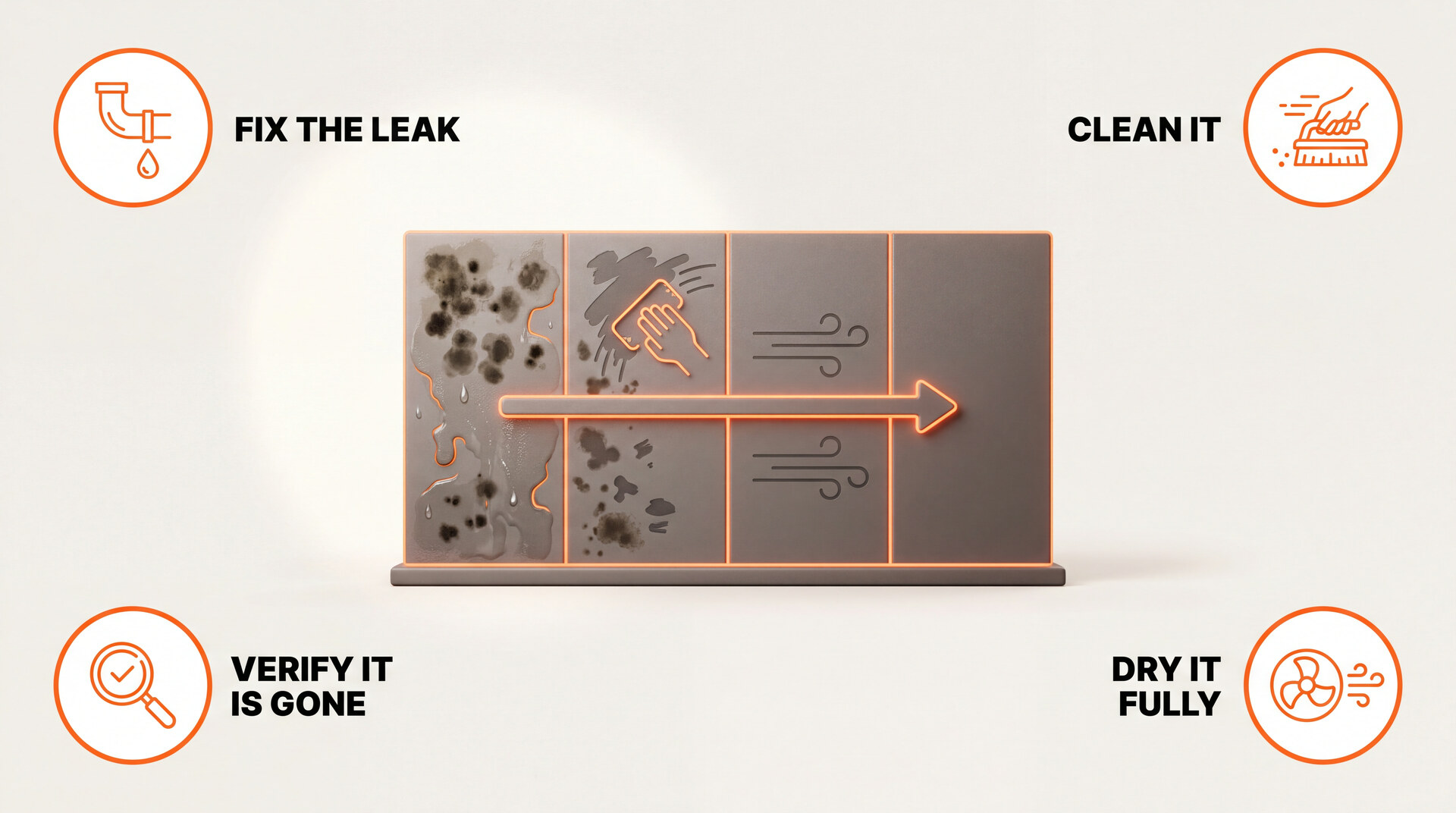
The fix is not a special paint. It is doing the cleanup in the right order before any primer touches the wall.
Step 1: Protect yourself. Put on an N95 mask, rubber or nitrile gloves, and eye protection before you disturb any mold. Scrubbing and sanding release spores into the air. Open a window and run an exhaust fan.
Step 2: Fix the moisture source. Find out why the mold grew there. A slow plumbing leak, a roof leak, condensation on a cold pipe, or chronic high humidity are the usual causes. Repair the leak or add ventilation and a dehumidifier before doing anything else. Skip this step and the mold returns no matter what you paint with.
Step 3: Clean the mold off. On hard, non-porous surfaces, undiluted white vinegar or 3% hydrogen peroxide kills most surface mold; see our guide on whether vinegar kills mold for the right technique and timing. Scrub until the visible growth and staining lift.
Step 4: Let the surface dry completely. This can take 24 to 48 hours with fans and good airflow. Painting over a damp surface undoes the cleaning and traps whatever moisture is left.
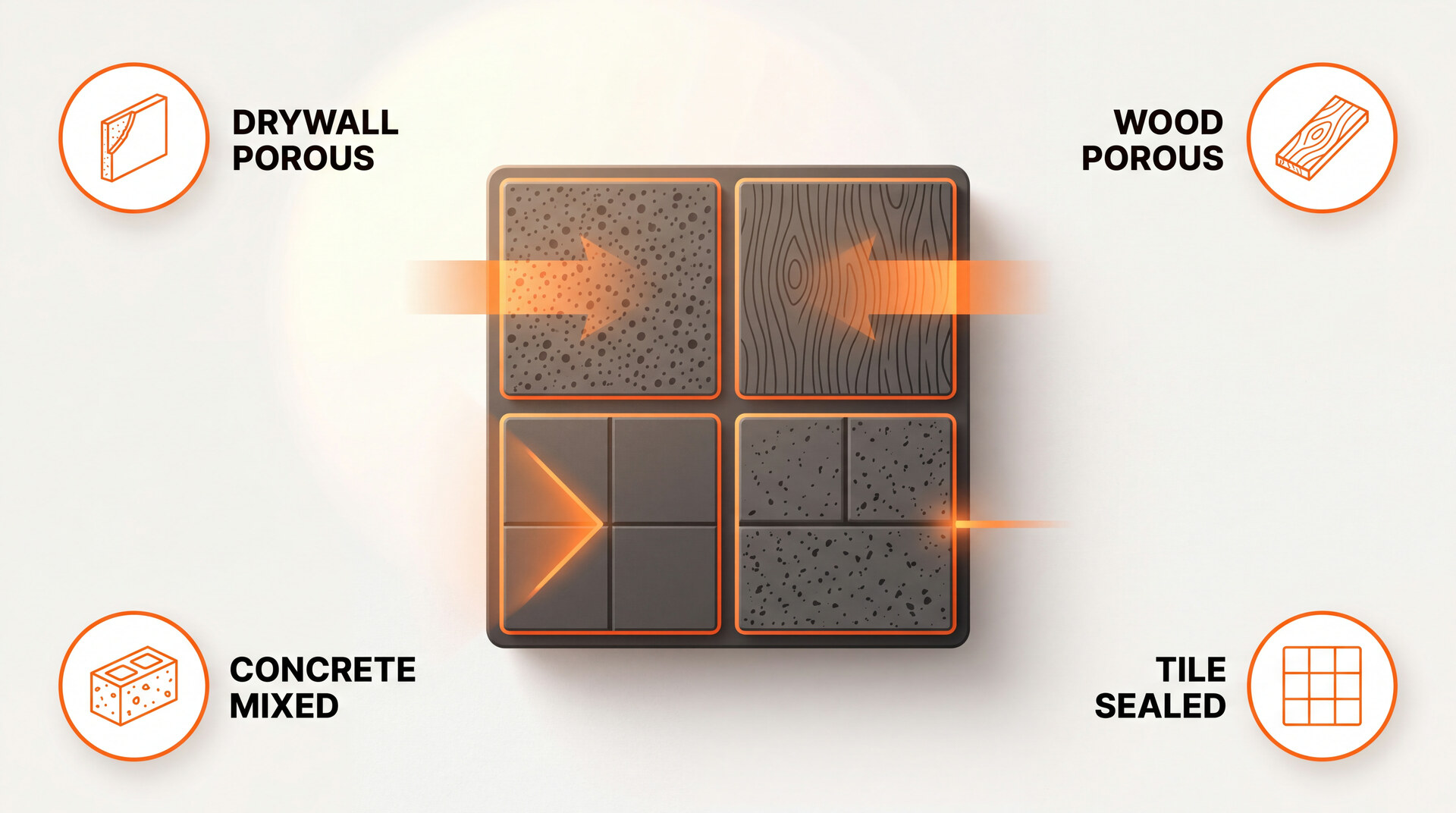
Step 5: Assess what is left. Surface mold on drywall paper or bare wood often means the roots go deeper than a wipe can reach. If the material is soft, crumbling, or still discolored after cleaning and drying, cut it out and replace it instead of painting over it. That is also the answer if you were thinking of paint over mold on drywall: drywall paper is porous, so a coat of paint will not reach the roots.
Step 6: Prime, then paint. Once the surface is clean, dry, and structurally sound, apply a stain-blocking, mold-resistant primer, then a mildew-resistant topcoat.
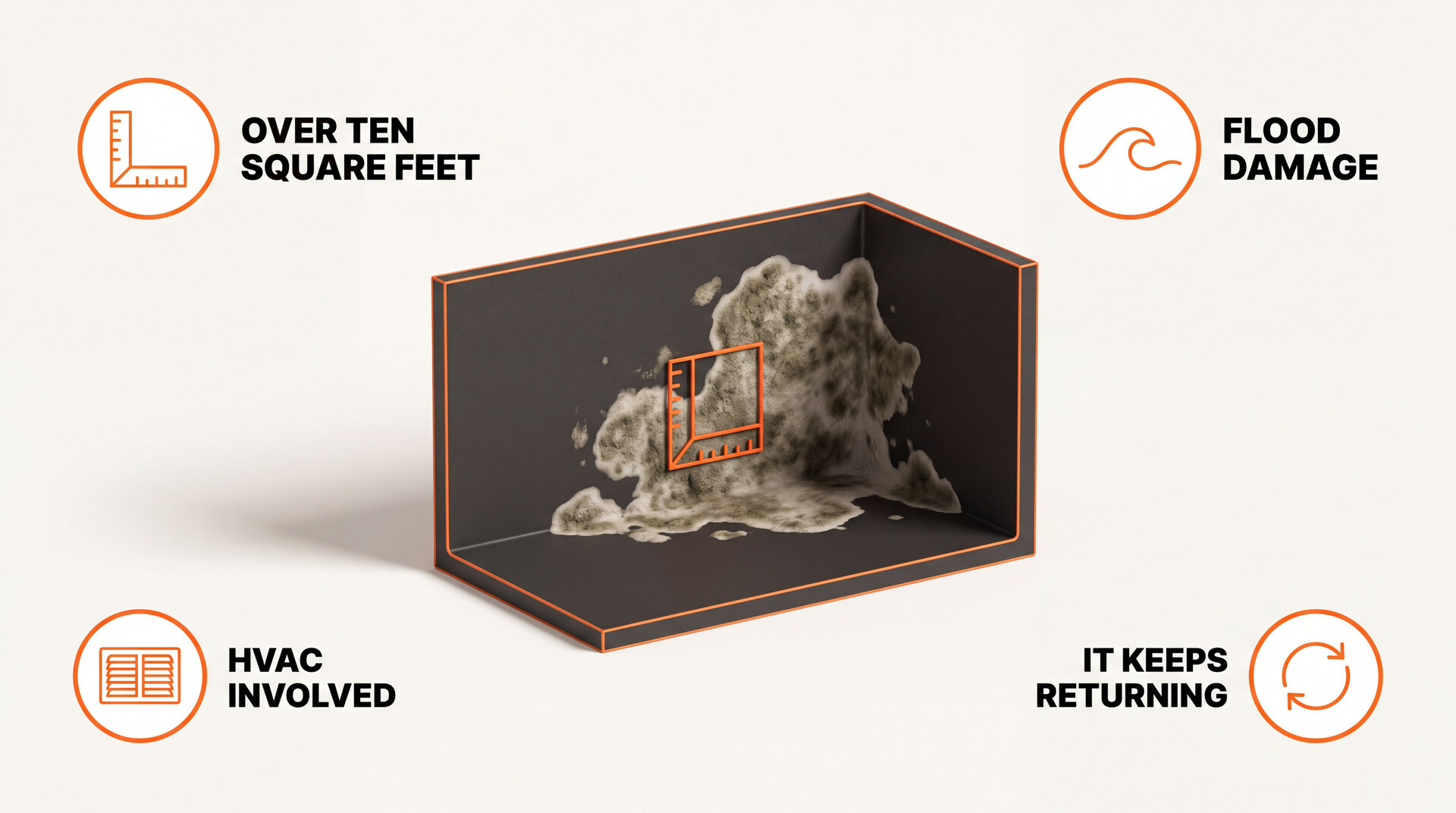
For growth larger than about 10 square feet, or mold that followed sewage or contaminated water, the EPA recommends hiring a qualified remediation professional instead of handling it yourself.
Can You Just Cover Up Black Mold With Paint?
Can you cover up black mold with paint? You can hide it, but you cannot cover up black mold in the sense of solving it. Painting over black mold, including the species most people mean when they say Stachybotrys, does the same thing as painting over any other mold: it seals live growth under a fresh coat instead of removing it.
The color disappearing is the trap. A dark stain vanishing under white primer looks like success, which is exactly why so many landlords and flippers reach for a can of paint on move-out day instead of a proper cleanup. The organism under the paint has not been treated, tested, or removed. It is just out of sight.
Black mold in particular tends to grow on chronically wet, cellulose-rich material such as drywall paper, wood, and ceiling tile. Those are also the materials where mold roots run deepest, and where a surface wipe or a coat of paint is least likely to reach the whole colony. If what you are looking at might actually be black mold rather than common dark mildew, read our guide on identifying black mold before deciding whether painting over it is even worth trying.
For anything beyond a small, already-cleaned spot, treat "paint over it" as a temporary cosmetic fix, not a repair, and plan on the real cleanup either way.
Will Mold Come Back Through the Paint?
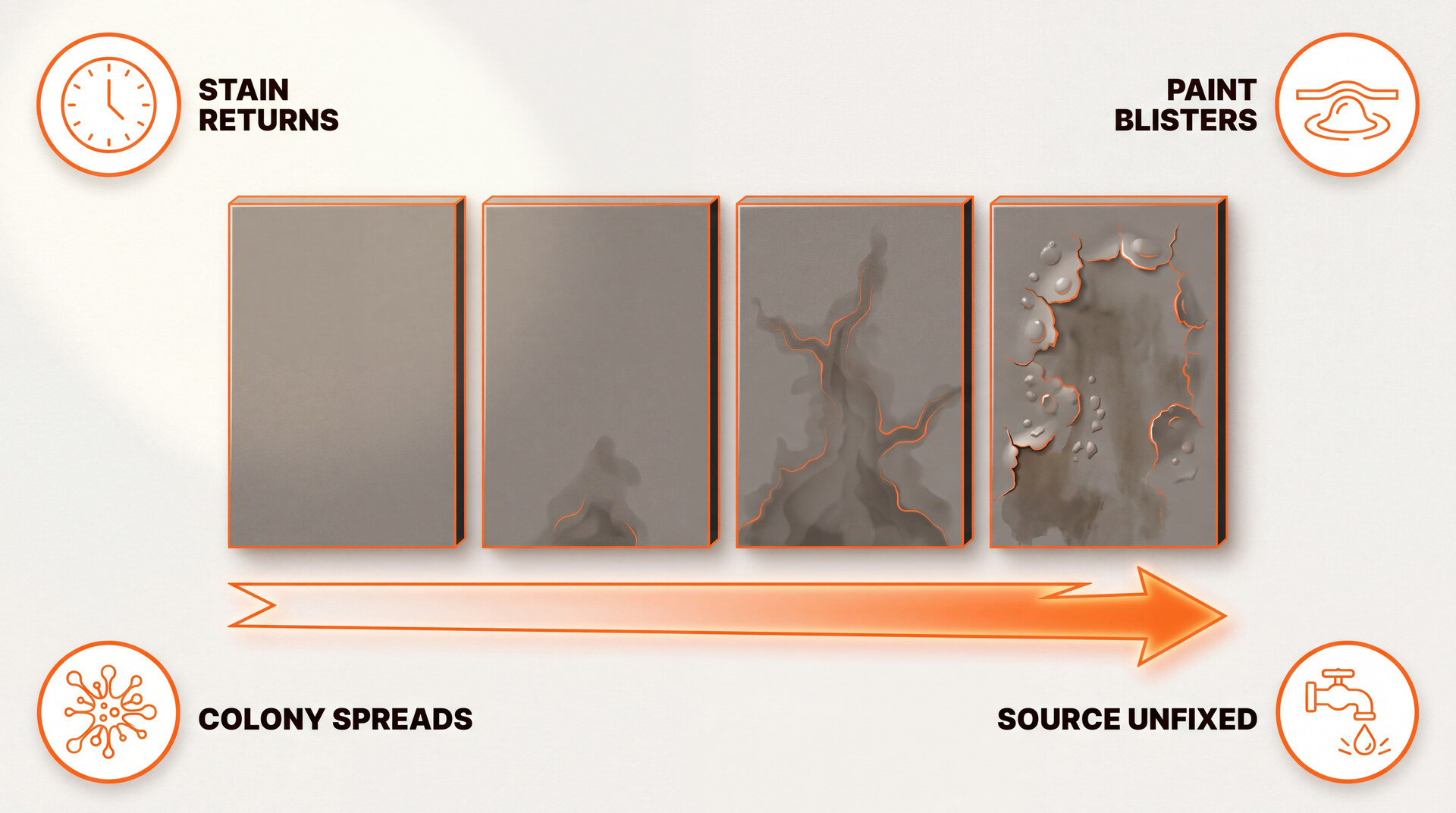
Will mold come back if you paint over it? Yes, in most cases, and usually faster than people expect. The paint film does not change the two things mold actually needs: a food source and moisture. If both are still present under the paint, the colony keeps growing, and it has nowhere to go but back through the surface.
The timeline varies with how wet the material stayed and how thick the paint film is. Light regrowth can show as a faint shadow or new spotting in two to four weeks. Heavier cases show up as bubbling, a soft or spongy patch, or a returning musty smell within a month, sometimes sooner in a humid bathroom or basement.
The giveaway that mold is regrowing under paint, rather than a new stain forming, is location: it comes back in the exact same spot, often in the same shape, because the roots that survived the original cleaning attempt, or were never cleaned, are still exactly where they were. A new stain forming somewhere else on the same wall usually points to a separate moisture problem, not the original mold pushing through.
If regrowth shows up after you have already painted, do not just repaint again. Go back to the moisture source, confirm it is actually fixed, and this time clean and dry the surface fully before any new coat goes on. Painting the same problem twice just delays it a second time.
What Kind of Paint Actually Resists Mold
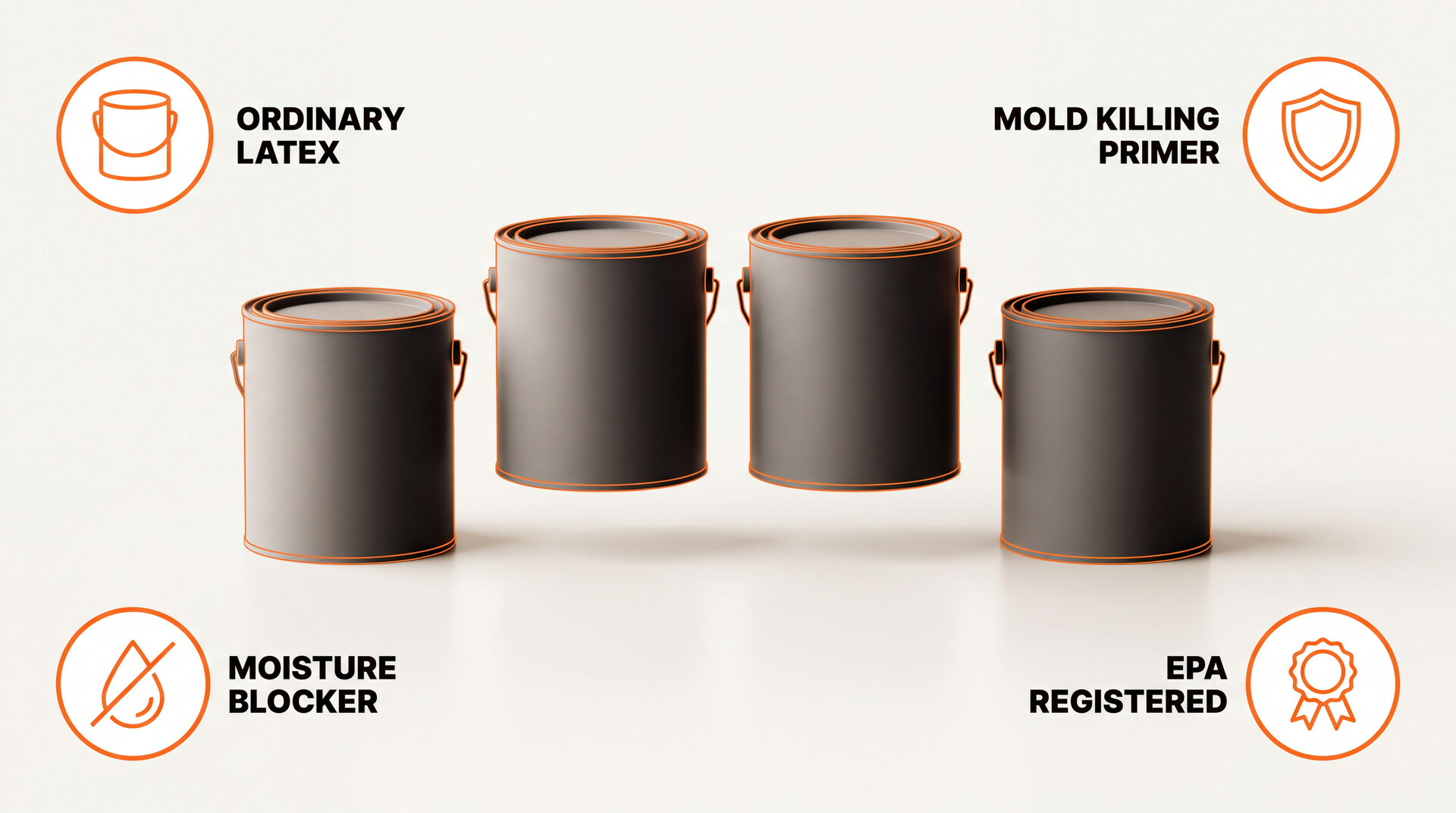
What kind of paint kills mold? None of them, in the sense of curing an existing infestation. What exists are two different product categories that get lumped together as "mold paint," and knowing which one you are buying matters.
Fungicidal primers are EPA-registered to be applied directly over small amounts of existing surface mold on non-porous surfaces, because their active ingredient is labeled to kill that surface growth as it dries. Zinsser Mold Killing Primer is the main example on the market.
Mold-resistant primers and paints contain a mildewcide that protects the dried film from new growth landing on it later. They do not kill mold that is already there; the surface has to be clean before you apply them. KILZ Mold & Mildew Primer and Zinsser Perma-White both fall in this category, and so does Zinsser B-I-N Advanced, which is mainly a stain and odor blocker rather than a mold-specific product.
| Product | Category | Paint over existing mold? | Best for |
|---|---|---|---|
| KILZ Mold & Mildew Primer | Mildew-resistant primer | No, clean first | Baths, kitchens, general damp rooms |
| Zinsser Mold Killing Primer | EPA-registered fungicidal primer | Yes, on non-porous surface mold | Non-porous surfaces with light surface mold |
| Zinsser B-I-N Advanced | Stain and odor-blocking primer | No, not a mold product | Heavy stains and odor sealing, not mold control |
| Zinsser Perma-White | Mold and mildew-proof interior paint | No, clean first | Finish coat in humid rooms |
Whichever product you choose, sheen matters too. Satin, semi-gloss, or gloss finishes shed moisture and wipe clean better than flat or matte paint, which is one more reason flat paint in a bathroom or laundry room tends to grow mildew faster than the same room finished in a higher sheen.
Safety Rules Before You Start
A few rules apply no matter which cleaner or paint you use.
- Never mix bleach with vinegar or ammonia. The combination releases toxic chlorine or chloramine gas that can burn your airways.
- Ventilate the room. Open a window and run an exhaust fan while you clean and while the paint cures.
- Wear an N95 mask, gloves, and eye protection during cleanup and sanding. Disturbed mold releases spores into the air.
- Fix the moisture source before you paint, not after. Mold returns within days if the water problem is still there.
- Call a professional for anything larger than about 10 square feet, or mold tied to sewage or contaminated water, instead of handling it yourself. Look for a firm that follows the ANSI/IICRC S520 standard.
Frequently asked questions
How do you treat mold before painting?
Protect yourself with an N95 mask, gloves, and eye protection, then fix the moisture source that let the mold grow in the first place. Clean the mold off with undiluted white vinegar or 3% hydrogen peroxide, let the surface dry completely for 24 to 48 hours, and replace any drywall or wood that stays soft or discolored. Only prime and paint once the surface is clean, dry, and structurally sound.
Can you cover up black mold?
You can hide the color, but you cannot cover up black mold in the sense of solving the problem. Paint seals live growth under the surface instead of removing it, so the mold keeps growing where you cannot see it. Clean the mold off and fix the moisture source first, then paint the clean, dry surface.
Will black mold come back if I paint over it?
Yes, in most cases. If the mold and the moisture that fed it are still there under the paint, the colony keeps growing and pushes back through as bubbling, a new stain, or a returning musty smell, often within a few weeks. Regrowth usually shows up in the exact same spot because the original roots were never removed.
What kind of paint kills mold?
No paint kills an existing mold infestation. EPA-registered fungicidal primers, like Zinsser Mold Killing Primer, are labeled to be applied directly over small amounts of existing surface mold on non-porous surfaces. Mold-resistant primers and paints, like KILZ Mold and Mildew Primer and Zinsser Perma-White, only protect an already-clean surface from new growth; they do not kill mold that is already there.
Sources
Every claim on this page traces to one of these. Links open the primary document.