Not sure what you are dealing with? Start with the guides to green mold and orange mold before you buy anything.
Why bleach does not work on mold (and what every expert says instead)
Does bleach kill mold? Only on the surface of non-porous materials like tile and glass. On drywall, wood, grout, and caulk it does not (the full answer on bleach has more). This is the single most important thing to know about cleaning mold: bleach does not work. Every mold expert we studied agrees on this. Every leading mold expert says the same thing.
Here is why. Bleach (sodium hypochlorite) is mostly water. When you spray it on tile or glass, it kills surface mold effectively because those surfaces are non-porous. The bleach touches the mold and kills it. Done.
But mold on drywall, wood, grout, and caulk is different. These materials are porous. Mold roots (called hyphae) grow deep inside the material. When you spray bleach on drywall, the chlorine evaporates off the surface while the water soaks in. You have just killed the surface mold and fed the roots with moisture. The mold comes back thicker within days.
The CDC and EPA both stopped recommending bleach for mold remediation years ago. If you see a cleaning guide that tells you to use bleach on mold, that guide is outdated.
If you have not confirmed the mold yet, our free water-damage documentation helper records accessible water-event conditions without confirming mold. This guide is part of our best mold products hub, which covers every category.
The best mold cleaning products ranked by experts
- Best overall: Concrobium Mold Control · kills at the root, no bleach
- Best pro-grade: Benefect Decon 30 · what remediators use
- Best for sensitive people: EC3 Mold Solution · gentle, botanical
- Best fast-acting stain remover: RMR-86 Instant Mold & Mildew Stain Remover · quick on hard surfaces
- Best for sealing after cleanup: Zinsser B-I-N primer
- Best mold-proof paint: Zinsser Perma-White
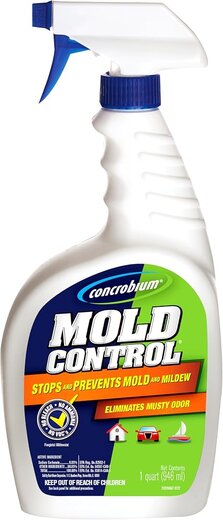
Concrobium Mold Control
Forms a thin film that crushes mold at the root as it dries, then leaves a barrier that stops regrowth. No bleach, no fumes. Best for hard surfaces: concrete, tile, wood framing, attic sheathing. Read our full review, or jump to does it kill mold and how long it takes to dry.
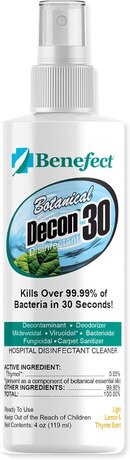
Benefect Decon 30
Hospital-grade botanical disinfectant built on thymol from thyme oil. This is what professional remediators reach for. Kills mold without harsh chemicals and works on all surfaces, porous ones included. Read our full Benefect Decon 30 review for where it beats bleach and where it disappoints.
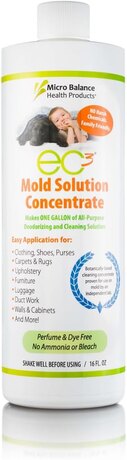
EC3 Mold Solution Concentrate
A botanical concentrate built on citrus seed extracts, gentle and fragrance-free. The pick when chemical sensitivities rule out stronger sprays. Dilutes for laundry, fabrics, and maintenance fogging in bathrooms and kitchens.
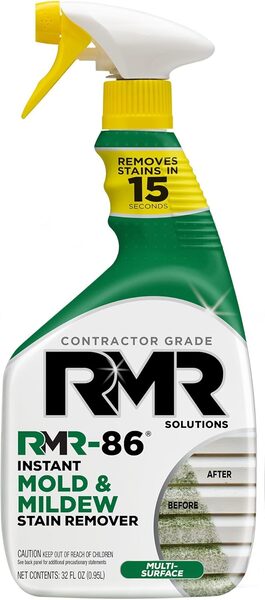
RMR-86 Instant Mold & Mildew Stain Remover
A bleach-based spray remover for hard, non-porous surfaces. It lifts mold and mildew stains in seconds on tile, grout, and fiberglass with little scrubbing. Best for surface cleanup, not for porous drywall or wood where roots grow deep.
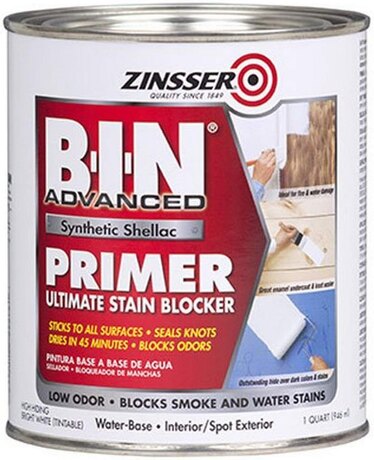
Zinsser B-I-N Shellac Primer
A shellac-based stain and spore sealer. After you clean concrete or masonry, this locks down anything left behind and blocks stains for good. It sticks to almost any surface and dries fast. Read our full Zinsser B-I-N Advanced primer review for what the label does and does not claim about mold. Want a low-odor water-based option you can paint right over surface mold? See our Zinsser Mold Killing Primer review.
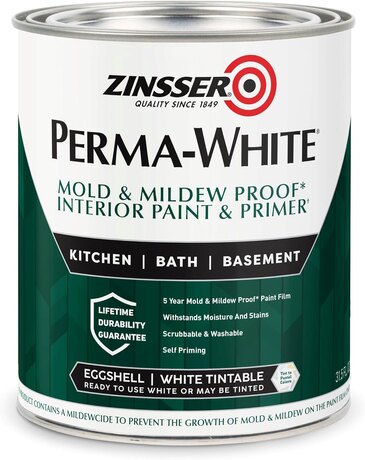
Zinsser Perma-White
A mold and mildew proof interior paint with a 5-year film guarantee. Roll it on after cleaning and priming on bathroom ceilings, basement drywall, and other damp-prone surfaces to keep new growth off the finish. Read our full Zinsser Perma-White review, including what the 5-year guarantee does not cover. For the mildew-resistant base coat that goes under it, see our KILZ Mold & Mildew Primer review.
Budget option: 3% hydrogen peroxide. A cheap oxidizer that penetrates porous grout, caulk, and wood. Spray it on, wait 10 minutes, scrub. It breaks down into water and oxygen and leaves no residue. Find it on Amazon.
Affiliate disclosure: some links above are affiliate links. If you buy through them, Mold Scanner AI may earn a small commission at no extra cost to you. We only list products our editorial review stands behind. Product photos: manufacturers.
What to use on each surface
Drywall: If mold is only on the surface (no penetration through the paper backing), spray with Concrobium, let dry, scrub, reapply. If mold has penetrated through the paper, no product can save it. Cut out the affected section plus 12 inches beyond visible growth. Replace the drywall. Seal with Zinsser Perma-White.
Wood (framing, studs, joists): HEPA vacuum the surface first to remove loose spores. Apply Concrobium or Benefect Decon 30. Let dry. Sand with 80 grit sandpaper to remove staining. Apply a second coat. For badly damaged wood, encapsulate with Zinsser BIN primer.
Concrete (basement floors and walls): Scrub with hydrogen peroxide. Rinse. Apply Concrobium and let dry. Seal with Zinsser BIN primer. Paint over with Perma-White or a concrete sealer.
Tile and grout: Spray grout lines with hydrogen peroxide. Let sit 10 minutes. Scrub with a stiff brush. For recurring mold in shower grout, remove old caulk entirely and re-caulk with silicone caulk rated for mold resistance.
Caulk: Mold in caulk cannot be cleaned. The silicone is porous and mold grows inside it. Remove all affected caulk completely. Clean the joint with hydrogen peroxide. Let dry 24 hours. Re-caulk with mold resistant silicone.
Fabrics, clothing, upholstery: Wash with EC3 Laundry Additive in hot water. For items that cannot be washed, spray with EC3 Mold Solution and place in direct sunlight for several hours. UV light kills mold spores. If the item smells musty after treatment, discard it.
The 3 step cleaning process (for any surface)
Step 1: Protect yourself. Wear an N95 mask, nitrile gloves, and safety goggles. Disturbing mold releases a massive burst of spores into the air. Without protection, you will breathe in more spores in a few minutes of cleaning than you would in a month of normal living.
Step 2: Contain and clean. Close doors and windows to the work area. Turn off HVAC to prevent spreading spores through the duct system. HEPA vacuum visible mold first. Then apply your chosen cleaning product. Let it sit for the recommended time. Scrub. Repeat the application. The professional remediation protocol calls for 3 cleaning cycles before a surface is considered clean.
Step 3: Seal and prevent. After cleaning, seal the surface with the appropriate Zinsser primer or paint. Then address the moisture source. If you clean mold but do not fix the water problem, it will come back. Every expert agrees: kill the water, kill the mold. Run a dehumidifier to keep humidity below 50%. Fix leaks. Improve ventilation.
Products to avoid
Bleach (any brand): Already explained above. Does not work on porous surfaces. Adds moisture. Every expert says no.
Vinegar: Often recommended online, but it only kills about 82% of mold species according to studies. Not effective against Stachybotrys or Aspergillus. Better than bleach but worse than the products listed above.
Baking soda alone: Mild cleaning power. Can help with surface mildew on non-porous surfaces. Not strong enough for actual mold remediation.
Tea tree oil alone: Antifungal but not strong enough for established mold colonies. It is one ingredient in EC3 Mold Solution, but EC3 uses it in combination with other agents at tested concentrations.
Ozone generators: Some companies sell these for mold. While ozone kills mold at high concentrations, those concentrations are also harmful to humans, pets, and rubber/plastic items in your home. Not recommended for DIY use.
Best mold killer for wood and drywall
Mold killer, mold cleaner, and mold remover get used as if they mean the same thing, and the difference is the usual reason a spot comes back. A cleaner lifts the soil. A killer kills the growth. Most products sold as mold removers are stain removers, which bleach the mark out of the surface and leave the colony behind. On a porous material the two jobs are separate, and buying the wrong one gets you a clean-looking board that regrows within two weeks.
Best mold killer for wood
Wood is porous and it is usually structural, so the goal is to kill the growth without soaking the material. Concrobium Mold Control is the pick, for the same reason it tops the list above: it dries into a film that crushes the colony as it dries rather than depending on a chemical that flashes off the surface. Spray, let it dry completely, then wipe. Benefect Decon 30 is the alternative when you want a plant-based active and a shorter dwell time, and it is what remediators carry for porous surfaces.
Get the wood dry afterwards and keep it dry. A killed colony on wet wood is a colony that gets replaced by the next one. On framing, sheathing, and subfloor, that means finding the leak or the condensation path first, then treating.
Best mold killer for drywall
Drywall is the hard case. The paper facing is food and the gypsum core holds water, so growth you can see on the surface is often the smaller half of the problem. If the patch is small, the board is still firm, and the discoloration wipes rather than soaks, an antimicrobial spray plus a careful wipe is a reasonable call. Press the board first: firm and dry means the core is probably intact.
If the board is soft, crumbling, or stained through from the back, no spray fixes it. You cannot reach growth inside the core, and treating the face only buys weeks. Cut the section out, back to dry material, and replace it. EPA's homeowner guidance uses roughly 10 square feet as the point where a do-it-yourself cleanup stops being appropriate, and drywall is the material that crosses that line fastest.
How the brands compare, briefly
- Concrobium Mold Control: kills as it dries and leaves a barrier. No bleach and no fumes. Against it: you wait for drying, and it is not a stain remover, so old marks can stay.
- Benefect Decon 30: botanical, works on porous surfaces, pro-grade. Against it: costs more per bottle and the thyme scent is strong for some people.
- EC3 Mold Solution: the gentlest of the three, dilutes for fabrics and laundry. Against it: it is a maintenance product more than a heavy cleanup one.
- RMR-86: the fastest thing here on a stain, and it is honest about being a stain remover. Against it: it is a bleaching agent, so treat it as cosmetic and pair it with something that handles the growth.
- Household bleach: fine on non-porous tile and glass, wrong on wood, drywall, grout, and caulk, for the reason at the top of this page.
How to clean shower mold on tile, grout, and caulk
To clean shower mold, put on gloves and goggles, scrub glazed tile with detergent and water, treat grout with hydrogen peroxide for 10 minutes, and replace any caulk that has mold growing inside it.
A shower has three different surfaces, and each one gets a different treatment.
- Ventilate and protect yourself first. Run the exhaust fan or open a window, and wear an N95 mask, nitrile gloves, and safety goggles. Never mix one cleaner with another.
- Tile, glass, and fiberglass are non-porous, so the growth sits on top. Scrub with detergent and water, rinse, and wipe dry. That is the hard-surface method in the EPA's mold cleanup guidance.
- Grout is porous. Spray it with 3% hydrogen peroxide, wait 10 minutes, and scrub with a stiff brush. If a gray shadow stays after the growth is gone, RMR-86 lifts that stain on tile, grout, and fiberglass.
- Caulk cannot be cleaned once mold is inside the bead. Remove all of the affected caulk, clean the joint with hydrogen peroxide, let it dry for 24 hours, and re-caulk with silicone rated for mold resistance.
- Dry the walls and keep the room dry afterward. Run the fan after every shower and keep humidity below 50%.
If mold returns in the same seam within a few weeks, or the wall behind the tile feels soft, water is getting behind the surround and cleaning will not hold. See mold in the shower for how that failure starts, and best mold remover for shower for product picks by surface.
Best spray to kill mold, and the best spray for mold on drywall
Concrobium Mold Control is the best spray to kill mold for most homes: it has no bleach and no fumes, and it dries into a film that crushes the growth at the root.
That same spray is the pick for the best spray for mold on drywall, with one condition. It only works on surface mold on a board that is still firm and dry. Spray it on, let it dry, scrub, and reapply. Press the board first. If it is soft, crumbling, or stained through from the back, no mold spray for drywall will reach the growth inside the core. Cut the section out, back to dry material and about 12 inches past the visible growth, and replace it.
The other two sprays worth knowing:
- Benefect Decon 30 is the best antimicrobial spray for mold when you want a botanical disinfectant. It is built on thymol from thyme oil, it works on porous surfaces, and it is what remediators reach for.
- RMR-86 is a spray too, but it is a bleach-based stain remover for hard, non-porous surfaces. It fits tile and grout, not drywall or wood.
Whichever spray you pick, it handles the growth and not the water. Fix the leak or the humidity first, or the mold comes back. For the full list by surface, see best mold removal products.
Decon 30 vs Concrobium: which one should you buy?
Concrobium is the better everyday pick and Benefect Decon 30 is the pro-grade pick, so choose Decon 30 when you want a botanical disinfectant that remediators use on porous surfaces.
People search both "decon 30 vs concrobium" and "concrobium vs decon 30", and the answer is the same in either order. The two products work in different ways.
- Concrobium Mold Control forms a thin film that crushes mold at the root as it dries, then leaves a barrier against regrowth. It has no bleach and no fumes. Against it: you have to wait for it to dry, and it is not a stain remover, so old marks can stay.
- Benefect Decon 30 is a hospital-grade botanical disinfectant built on thymol from thyme oil. It works on all surfaces, porous ones included. Against it: it costs more per bottle, and some people find the thyme scent strong.
For concrete, tile, wood framing, and surface mold on firm drywall, start with Concrobium. If the surface is porous and you want a plant-based active, or you are matching what a professional would carry, buy Decon 30. Neither one replaces fixing the moisture source.
Read the full reviews before you buy: Concrobium Mold Control and Benefect Decon 30.
Alien Power reviews: does it kill mold?
Alien Power is a super-concentrated stain remover, not a mold killer, so read its reviews as reviews of a stain remover and not as proof that it ends mold growth.
It is an As Seen on TV product sold in stores such as Home Depot and Walmart. You dilute it, spray it on the stain, let it sit, and rinse. Most demonstrations show outdoor work: patio furniture, decking, siding, fences, and masonry. That is the job a concentrated stain remover does well.
That holds whether you search Alien Power cleaner reviews or Alien Power mold remover reviews. We have not tested it, and we do not publish a star rating or review count for it here, so check the live listing for those. What we can say is where it fits.
Outdoors on a hard surface, lifting the mark is usually enough, because there is nothing for the growth to root into. Indoors on drywall, wood, grout, or caulk, lifting the mark is not ending the growth, and a surface that looks clean can regrow from underneath. On those materials, pair it with a product that deals with the growth, such as Concrobium, or skip it and buy that instead.
It is a concentrate, so follow the label on dilution. Wear gloves and eye protection, ventilate the room, and never mix it with another cleaner. More detail is in our best mold removal products guide.
Frequently asked questions
What is the best cleaner for mold on walls?
For mold on a painted drywall wall, spray Concrobium Mold Control, let it dry, then scrub and reapply. On sealed hard walls like tile, detergent and water is the method in the EPA's mold cleanup guidance. If the wall is soft or stained through from behind, no cleaner fixes it, and the section has to be cut out and replaced.
What is the best mildew remover?
For mildew on hard surfaces like tile, grout, and fiberglass, RMR-86 is the fastest stain remover on this page, and 3% hydrogen peroxide is the cheap option. RMR-86 is bleach-based, so use it only on non-porous surfaces. For a bleach-free choice, use Concrobium Mold Control. Wear gloves and ventilate the room with any of them.
Concrobium vs vinegar: which is better for mold?
Concrobium is the better pick. It dries into a film that crushes mold at the root and leaves a barrier, while vinegar kills only about 82% of mold species in the studies cited on this page and is not effective against Stachybotrys or Aspergillus. Vinegar is better than bleach on porous surfaces, but worse than Concrobium, Benefect Decon 30, and EC3.
Does Alien Power kill mold?
Alien Power is sold as a super-concentrated stain remover, and it belongs with stain removers, not mold killers. It can lift the mark outdoors on hard surfaces. On drywall, wood, grout, or caulk, a clean-looking surface can still regrow from underneath, so pair it with a product that deals with the growth, such as Concrobium or Benefect Decon 30.
Why doesn't bleach kill mold?
Bleach only kills mold on the surface of non-porous materials like tile and glass. On porous materials like drywall, wood, and grout, bleach cannot reach the mold roots growing inside. It also adds moisture, which feeds regrowth. Every mold expert we studied agrees: never use bleach for mold remediation.
What is the best product to kill mold on drywall?
For surface mold on drywall, use Concrobium Mold Control. Spray it on, let it dry, then scrub. If the mold has penetrated through the paper backing, no product will save it. Cut out the affected drywall plus 12 inches beyond visible growth and replace it. After cleaning or replacing, seal with Zinsser Perma-White paint.
Is Concrobium or EC3 better for mold?
Both work well but for different situations. Concrobium Mold Control crushes mold at the root as it dries and leaves a protective barrier. EC3 Mold Solution is a botanical spray that is safer for people with chemical sensitivities. Remediation science experts often name Benefect Decon 30 as the professional grade pick.
What should I use to seal surfaces after mold removal?
Use Zinsser BIN shellac based primer on concrete and masonry. Use Zinsser Perma-White on drywall and painted surfaces. These primers seal any remaining spores and create a mold resistant barrier. Apply after the surface is fully cleaned, dried, and tested clean.
Is bleach or vinegar better to kill black mold?
Vinegar is better than bleach, but neither is the right pick. Bleach does not work on porous surfaces and adds moisture that feeds regrowth. Vinegar is often recommended online, but studies put it at roughly 82% of mold species, and it is not effective against Stachybotrys or Aspergillus. For porous materials use hydrogen peroxide, and for hard surfaces use Concrobium Mold Control.
Sources
Every claim on this page traces to one of these. Links open the primary document.