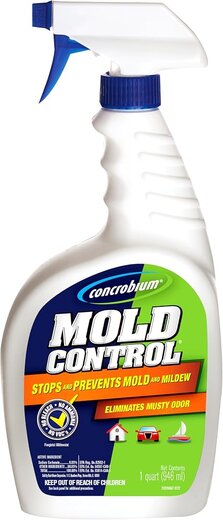
How Concrobium Mold Control works
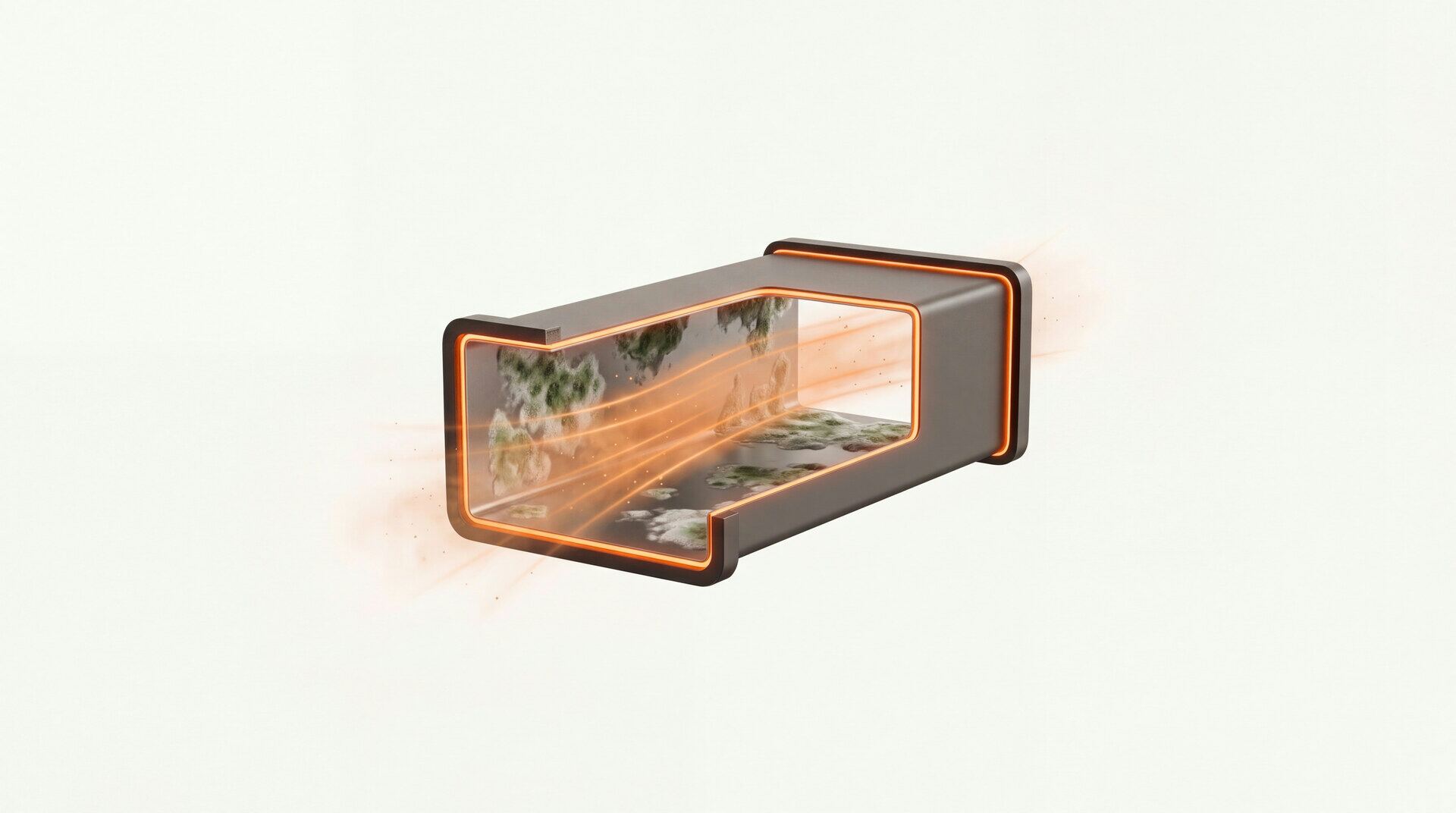
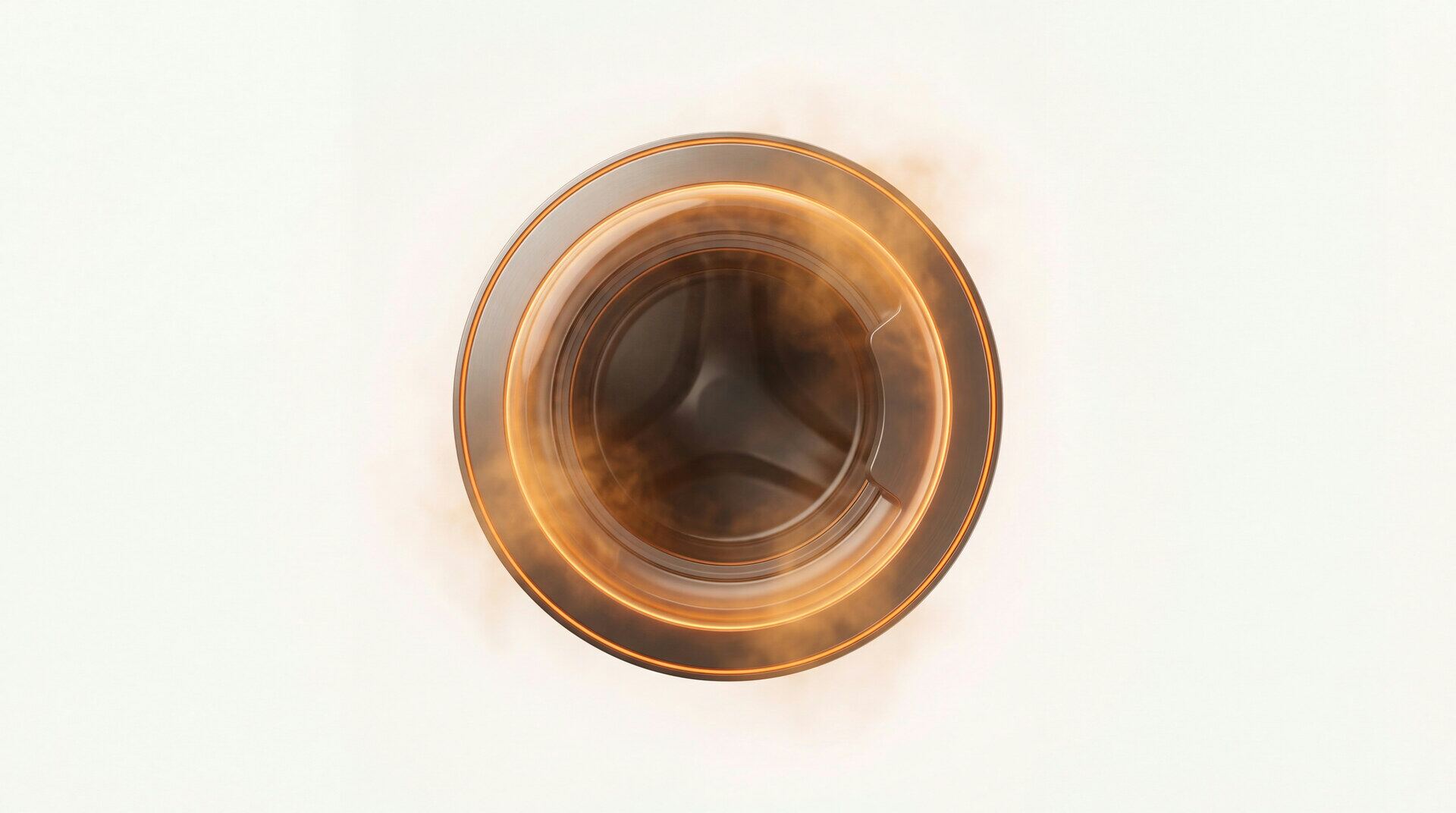
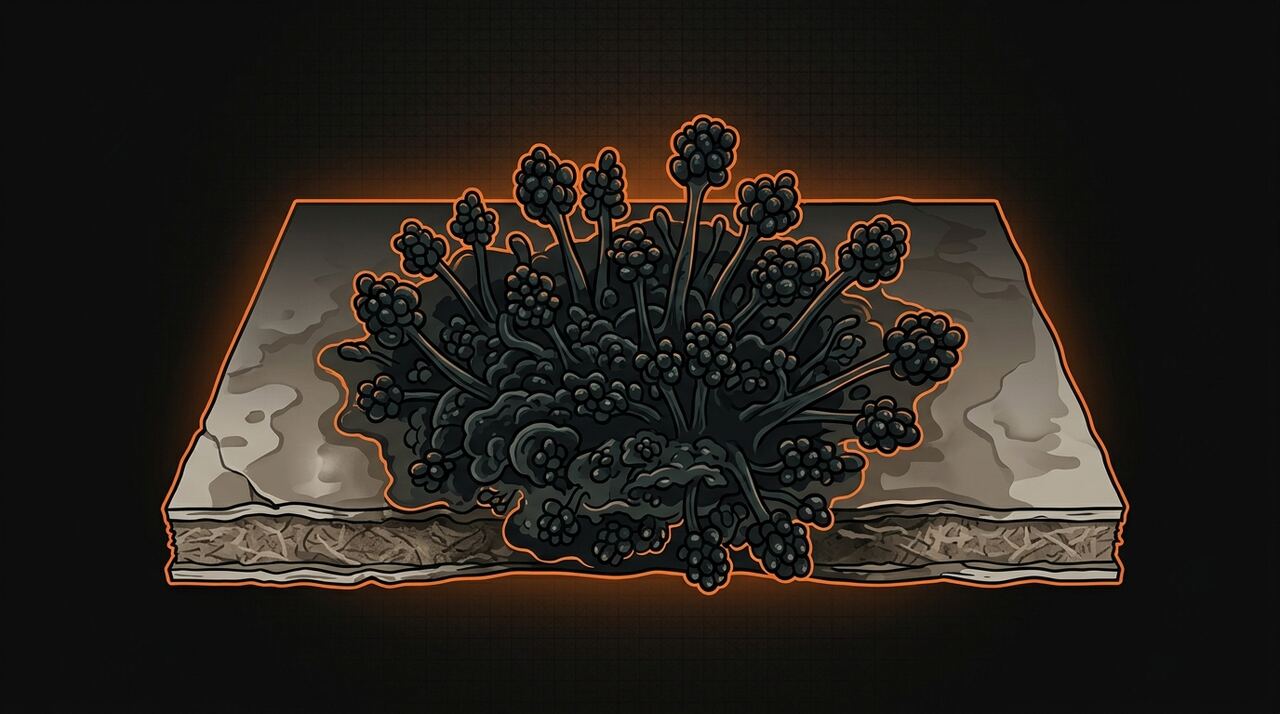
Most mold products try to poison mold with chemicals. Concrobium takes a completely different approach. It is a water based solution of inorganic salts. When you spray it on a moldy surface and let it dry, the solution forms a thin alkaline film. As the film dries, it tightens. This tightening action physically crushes the mold structure at the root level.
Think of it like pouring concrete over mold. The film hardens around the mold's cell structure and destroys it through mechanical force, not chemical reaction. This is why Concrobium works on surfaces where bleach fails. Bleach needs liquid contact to kill. Concrobium works as it transitions from liquid to solid.
The residual film stays on the surface after cleaning. This provides ongoing protection against new mold growth. As long as the film remains intact, new spores that land on the surface cannot establish colonies. Remediation science experts recommend Concrobium for homeowner DIY use on hard surfaces. If the growth looks like fuzzy, hairy black mold on porous drywall or wood, identify it first, because deeply penetrated material needs replacing, not spraying.
Where to use Concrobium (and where NOT to)
Use it on: Concrete basement walls and floors. Wood framing, studs, and joists. Attic roof sheathing. Tile surfaces. Brick and stone. Painted surfaces. HVAC duct interiors (use the fogger attachment). Outdoor furniture and decks. Boat interiors. RV and camper surfaces.
Do NOT use it on: Drywall where mold has penetrated through the paper backing. If you can see mold on both sides of the drywall, or if the paper feels soft and crumbly, no spray product can fix it. Cut out the affected section plus 12 inches beyond visible growth and replace it. Concrobium cannot reverse structural damage.
Also do not rely on Concrobium as a substitute for fixing the moisture source. The first pillar of mold remediation is fixing the source. If the basement wall is leaking, Concrobium will slow mold regrowth but it will not stop it permanently. Fix the water first. Then clean with Concrobium. Then maintain with a dehumidifier below 50% humidity.
Use with caution on: Fabrics and soft goods. Concrobium can leave white residue on dark fabrics. Test a small hidden area first. For clothing and linens, EC3 Laundry Additive is a better choice.
Not sure how serious the problem is yet? Use our free water-damage documentation helper to record accessible water-event conditions.
Step by step application instructions
Step 1: Prepare. Wear an N95 mask, gloves, and goggles. Even though Concrobium is non-toxic, disturbing mold releases spores. Turn off HVAC in the room to prevent spreading spores through the duct system.
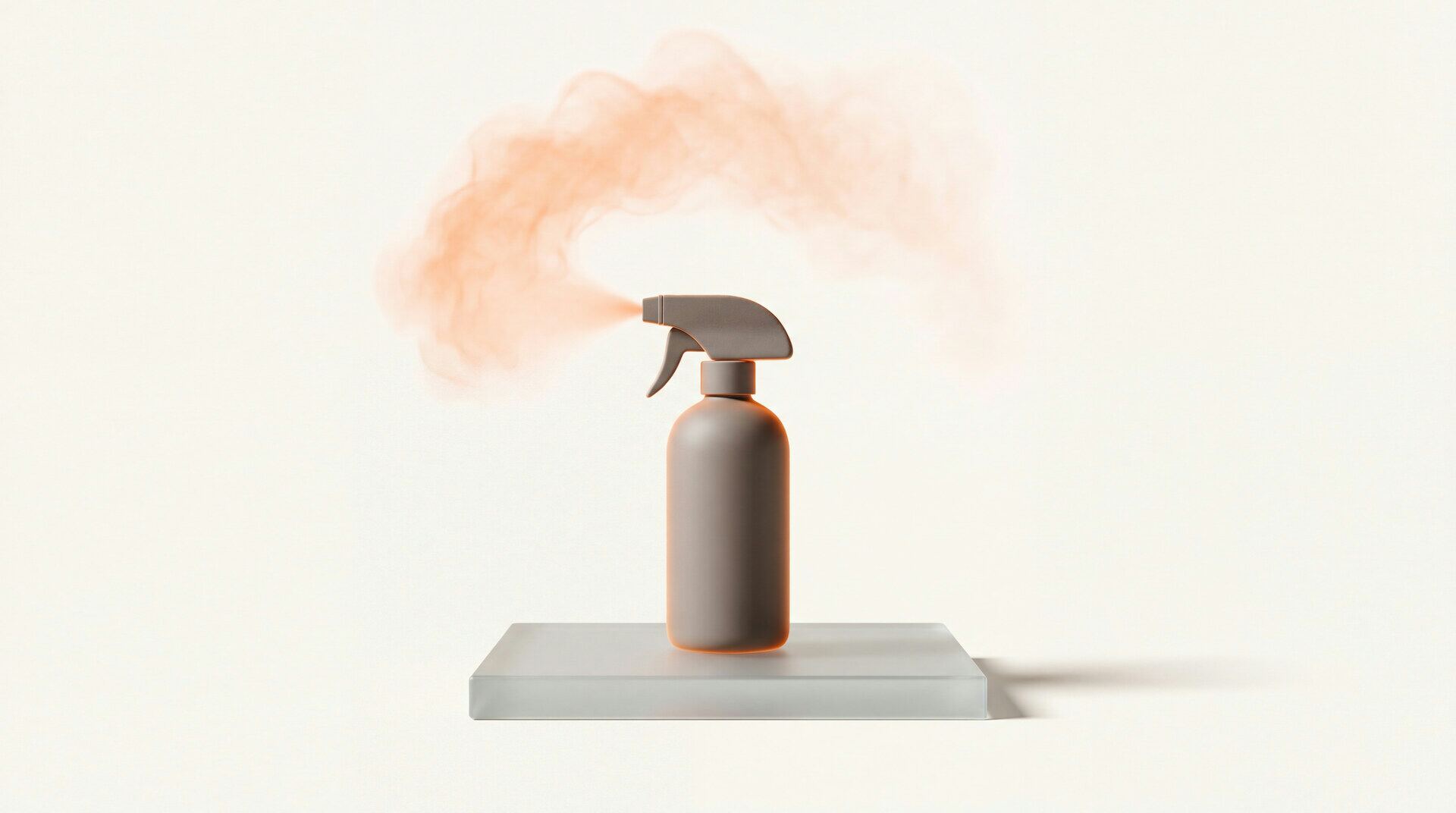
Step 2: Apply. Spray Concrobium directly onto the moldy surface. Apply a thin, even coat. Do not saturate the surface. You want a light mist, not puddles. For large areas like basement walls, a pump sprayer is more efficient than the trigger bottle.
Step 3: Wait. This is the critical step most people get wrong. You must let Concrobium dry completely before scrubbing. Drying time is 4 to 24 hours depending on humidity and temperature. The crushing action happens during the drying process. If you scrub while it is still wet, you are just wiping mold around.
Step 4: Scrub. Once fully dry, scrub the surface with a stiff brush or damp cloth to remove the dead mold. HEPA vacuum the debris. Do not use water to rinse because that removes the protective film.
Step 5: Reapply. Apply a second thin coat and let it dry. This second coat creates the residual protective barrier. Leave it in place. Do not scrub the second coat.
For the fogger: Concrobium sells a mold control fogger that connects to their spray bottles. This is excellent for attics, crawl spaces, and HVAC ducts where you cannot easily spray by hand. The fog penetrates into cracks and crevices. Let it dry for 24 hours in enclosed spaces.
Concrobium vs bleach vs EC3: head to head
Concrobium vs bleach: Concrobium wins on every measure. It kills mold roots instead of just surface mold. It does not add moisture. It leaves a protective barrier. It contains no harsh chemicals or fumes. It is safe for indoor use without ventilation concerns. Bleach should never be used for mold remediation. Period. For the bleach-based product people most often compare it to, see our RMR-86 review.
Concrobium vs EC3 Mold Solution: Concrobium is stronger for established mold colonies on hard surfaces. Its mechanical crushing action is more effective than EC3's botanical approach for heavy infestations. EC3 is better for maintenance cleaning, laundry, light surface mold, and for people with chemical sensitivities. EC3 is also better for spraying in the air to reduce airborne spore counts.
Concrobium vs Benefect Decon 30: Benefect is the professional grade choice. It is a hospital grade antimicrobial disinfectant that kills mold, bacteria, and viruses. It costs more than Concrobium and is harder to find in retail stores. For homeowners doing DIY remediation on areas under 10 square feet, Concrobium is the best balance of effectiveness and accessibility. For larger or more serious projects, Benefect is what the professionals use.
Concrobium vs hydrogen peroxide: Hydrogen peroxide is better for grout and caulk where you need to penetrate and bleach out staining. Concrobium is better for large flat surfaces like walls and floors where you want residual protection. Many remediation pros use both: hydrogen peroxide to pre-clean stains, then Concrobium for the kill and protection coat.
For how Concrobium stacks up against every other option, see our full guide to the best mold cleaning products.
Pros and cons
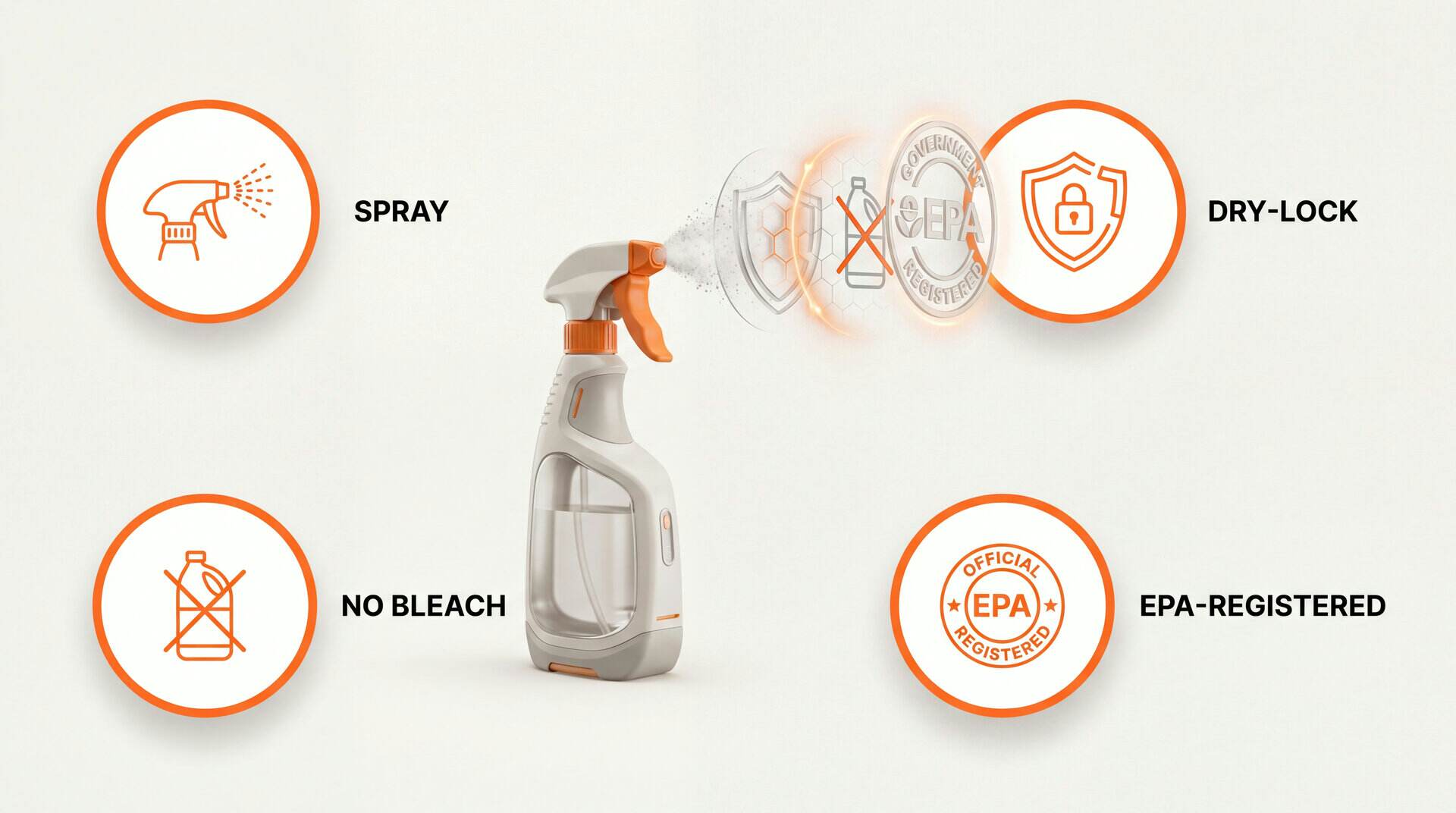
Pros: No bleach, no ammonia, no VOCs. Safe to use around children and pets when dry. Kills mold at the root structure. Leaves residual protection against regrowth. Works on concrete, wood, tile, brick, and most hard surfaces. Affordable ($10 to $15 per bottle at hardware stores). EPA registered. Available everywhere. Fogger option for hard to reach areas.
Cons: Must dry completely to work (4 to 24 hours). Not effective on deeply penetrated drywall mold. Can leave white residue on dark surfaces and fabrics. Requires two coats for best results. Not a substitute for professional remediation on large areas. Does not fix the moisture source. Does not work as fast as people expect because you must wait for drying.
Our rating: 4.5 / 5. Excellent for its lane, with two honest caveats (drying time, and it is not for big jobs).
Bottom line: Concrobium is the best DIY mold cleaning product for homeowners dealing with small to medium mold problems on hard surfaces. Combined with fixing the moisture source and running a dehumidifier, it is an effective part of the solution. For areas larger than 10 square feet or for toxic species like Stachybotrys, hire a qualified mold remediation professional (one who follows the IICRC S520 standard; ACAC or RIA credentials and state licenses count too). Concrobium is our best-overall pick in the best mold removal products ranking.
Our #1 homeowner pick · EPA-registered · no bleach. Affiliate link.
Concrobium Mold Control reviews: how to read them
Search for Concrobium reviews and you get two verdicts that flatly contradict each other. The split is not random. One group treats it as a cleaner and grades it on how fast the stain disappears. The other treats it as a preventive coating and grades it on whether growth comes back. It is built for the second job, so the two groups are scoring different products.
That is what a one-star review usually turns out to be. Somebody sprayed a black patch on a bathroom ceiling, expected bleach behavior, wiped an hour later, and found the stain still there. Concrobium has to dry to work, and drying is where the mechanism lives. Reviews that follow the label, spray and let it dry fully, read very differently from reviews written the same afternoon.
Two more things worth checking in any review before you weigh it. Was the moisture source fixed? Nothing sprayed on a surface survives water still running across it, and regrowth in that case is a plumbing result, not a product result. And what was the size of the job? A whole flooded basement is remediation work, and a consumer spray reviewed against that standard will always lose.
Our own rating is 4.5 out of 5, and the half point comes off for the two honest limits above: you wait for drying, and it is not the answer for large-area contamination. Within its lane, killing surface growth on a homeowner-sized area without bleach and leaving a barrier behind, it is the best DIY option we have tested.
How to use Concrobium Mold Control spray on wood, carpet, and fabric
To use Concrobium Mold Control spray, spray a thin coat on the moldy surface, let it dry 4 to 24 hours without touching it, then scrub away the dead mold with a stiff brush or damp cloth. Wear an N95 mask and gloves while you work.
Can you use Concrobium on wood? Yes. Wood framing, studs, joists, and attic roof sheathing are all on the label's approved surface list, and the film crushes mold sitting on the wood grain the same way it does on concrete or tile. It will not reach mold that has already rooted deep inside soft, water-damaged wood, so replace boards that are spongy or crumbling instead of spraying them.
Can I use Concrobium Mold Control on carpet? Not as a first choice. Carpet fibers trap the wet spray before it can form a continuous film, and the manufacturer does not list carpet as an approved surface. For a moldy carpet, cut out and discard the affected section, or call a restoration pro if the padding underneath is soaked.
Can Concrobium be used on fabric? Use it with caution. It can leave a faint white residue on dark cloth as it dries, so test a hidden seam first. For clothing, curtains, and linens, EC3 Laundry Additive in the wash is the better tool. Can Concrobium be used on drywall? Only on the painted paper surface. If mold has soaked through to the back side of the drywall or the paper is soft, cut that section out and replace it instead of spraying it.
Using Concrobium Mold Control the same way on every surface, wood, tile, concrete, or drywall face, means a thin even coat, a full dry before you touch it, and a second coat on any spot that tends to come back.
Decon 30 vs Concrobium Mold Control
Decon 30 vs Concrobium comes down to how each one kills mold. Decon 30 is an EPA registered disinfectant that kills mold on contact with a liquid chemical. Concrobium kills mold mechanically, by forming a film that crushes the mold structure as it dries, and it leaves that film behind as a barrier against regrowth.
Concrobium vs Decon 30 on cost and use case: Decon 30 is built for remediation crews doing a fast disinfection pass before a job closes out, and it does not leave a lasting residual coating. Concrobium is built for a homeowner who wants both the kill and an ongoing barrier on a surface that keeps getting damp, like a basement wall or an attic deck.
Neither product replaces fixing the moisture source. Both are on the EPA's list for use against mold, and both call for gloves and ventilation while you work. Pick Decon 30 when you need a one-time disinfecting wipe-down. Pick Concrobium when the same spot has come back before and you want a film that keeps protecting it after the surface dries.
Concrobium vs vinegar for mold
Concrobium vs vinegar for mold: on a hard, non-porous surface, Concrobium is the stronger pick. Vinegar's acetic acid kills some surface mold on contact but leaves nothing behind once it evaporates. Concrobium dries into an alkaline film that crushes the colony as it dries and then stays on the surface as a barrier against regrowth.
Vinegar's real advantage is that it is already in your kitchen and costs almost nothing, which makes it fine for a quick wipe of a small spot you plan to keep an eye on. It will not reach mold rooted below the surface, and unlike Concrobium it leaves no residual protection once it dries, so the same spot can regrow within days.
Concrobium vs vinegar for mold on a recurring problem, like a shower corner or a window sill that regrows every few weeks, favors Concrobium, because the leftover film keeps working after you walk away. For a one-off spot you are cleaning anyway, straight vinegar is an acceptable stopgap. Neither one fixes a leak or high humidity, which is the actual reason mold keeps coming back.
Does Concrobium work?
Yes, Concrobium works on mold growing on hard surfaces like concrete, tile, painted walls, and wood framing. It dries into a thin film that crushes mold at the root. It does not work on mold that has soaked deep into drywall or soft wood.
How does Concrobium work in practice? Spray a thin coat, leave it alone while it dries, and the salt film does the job. That is why people who wipe it off an hour later think it failed. The product has to dry, which takes 4 to 24 hours depending on humidity and temperature.
When people ask does Concrobium work, they usually mean one of three things:
- Will it kill the mold I can see? On a hard surface, yes, once it dries and you scrub off the dead growth.
- Will the mold stay gone? Only if the moisture source is fixed. The dried film is a barrier, but a steady leak or high humidity can still bring mold back.
- Will it remove the stain? Not always. A faint stain can remain after the mold is dead.
If the mold is on both sides of drywall, or the material feels soft, no spray fixes it. Cut that section out and replace it. For a small patch on a hard surface, Concrobium is the product we rate highest in our 4.5 out of 5 review above.
How to apply Concrobium Mold Control
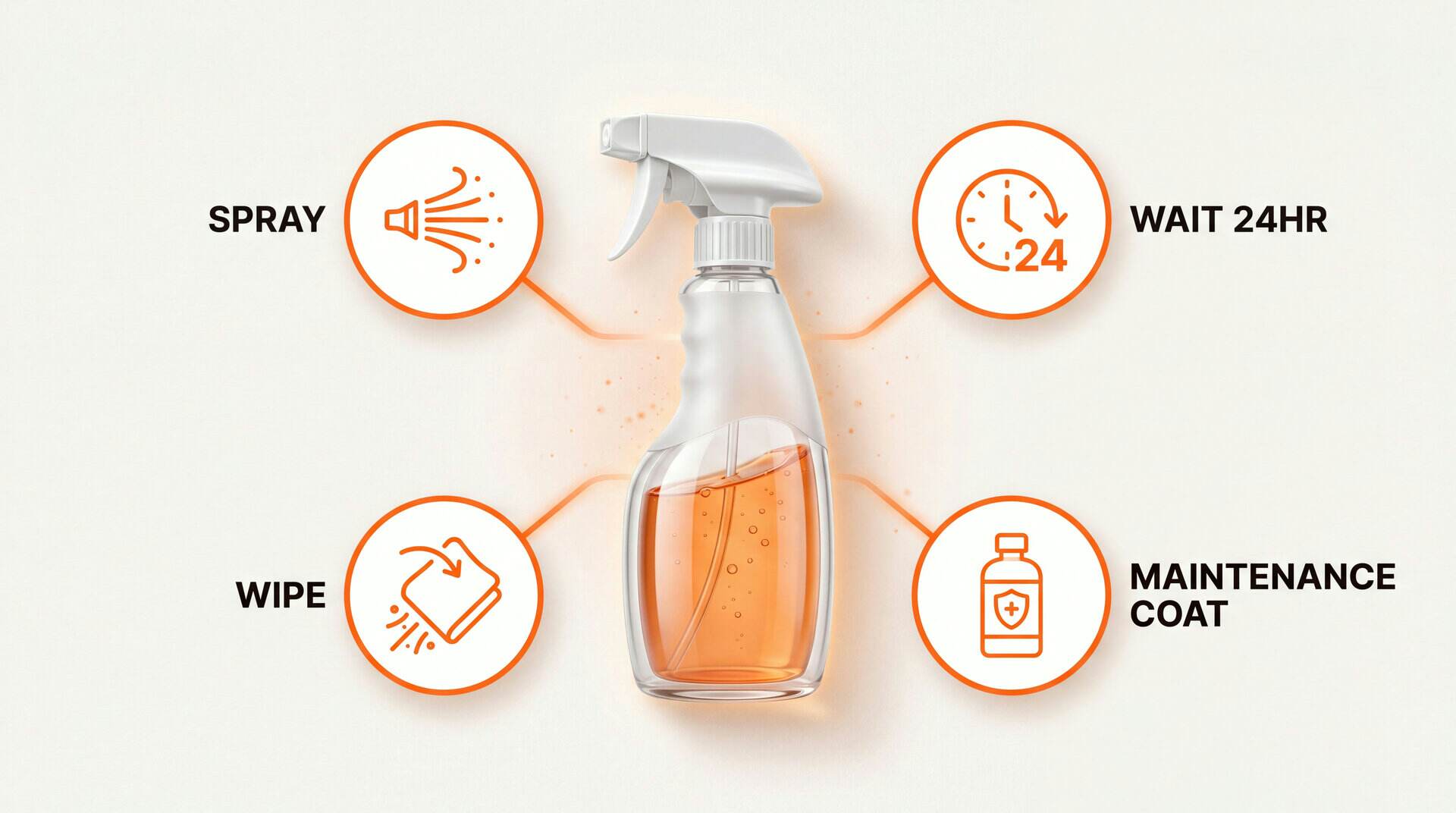
To apply Concrobium Mold Control, spray a thin, even coat on the moldy surface, let it dry fully, scrub off the dead mold, then spray a second coat and leave it in place. Do not rinse the second coat.
These Concrobium instructions are the same whether you use the trigger bottle or a pump sprayer. Here is how to use mold control spray the way the label intends:
- Wear an N95 mask, gloves, and goggles, and turn off the HVAC in the room.
- Spray a light mist over the moldy area. You want it damp, not dripping.
- Wait 4 to 24 hours. Do not touch it while it is wet.
- Scrub with a stiff brush or damp cloth, then HEPA vacuum the debris.
- Apply a second thin coat and let it dry. Leave it.
Anyone searching how to apply Concrobium for the first time tends to make two mistakes. They soak the surface, and they scrub too early. A soaked surface takes much longer to dry and can feed more mold. Scrubbing wet mold only spreads it.
For attics, crawl spaces, and ducts you cannot reach by hand, the fogger attachment works with the same bottles. Let the fog dry for 24 hours in an enclosed space.
Best mold remover for homeowners
The best mold remover for most homeowners is one that fits the surface and the size of the job. For a patch under 10 square feet on a hard surface, Concrobium is our top pick. For anything bigger, call a qualified remediation pro.
People searching for the best mold killer often expect one product that handles everything. No such product exists. Here is how the choices break down on this page:
- Small hard-surface patch: Concrobium, because it kills mold as it dries and leaves a barrier.
- Grout and caulk stains: hydrogen peroxide, which lifts staining.
- Laundry and soft goods: EC3 Laundry Additive in the wash.
- Professional disinfecting pass: Benefect Decon 30, which costs more and is harder to find in stores.
Bleach is not on that list. It adds moisture and does not reach mold below the surface. For the full ranking, see our best mold removal products guide.
Frequently asked questions
What is the best mold killer for wood?
For wood, Concrobium is a good choice on framing, studs, joists, and attic roof sheathing. Spray a thin coat, let it dry 4 to 24 hours, then scrub off the dead mold. If the wood is spongy or crumbling, replace it instead of treating it.
What are the ingredients in Concrobium Mold Control?
The label describes Concrobium Mold Control as a water based solution of inorganic salts. It lists no bleach, no ammonia, and no VOCs. As the water evaporates, the salts form a thin alkaline film over the mold. Check the bottle you own for the full ingredient list.
Can you use Concrobium on cloth?
Yes, with caution. Concrobium can leave a faint white residue on dark cloth as it dries, so test a hidden seam first. For clothing, curtains, and linens, EC3 Laundry Additive in the wash is the better tool. Carpet is not on the manufacturer's approved surface list.
Does Concrobium work?
Yes, on hard surfaces like concrete, tile, painted walls, and wood framing. Concrobium dries into a thin film that crushes mold at the root and stays behind as a barrier. It does not work on mold that has soaked deep into drywall or soft wood, and it does not fix the leak or humidity that caused the mold.
Does mold control spray work?
Does mold control spray work like Concrobium claims? Yes, on hard surfaces. Concrobium is not a general "mold control spray," it is a specific product that forms a drying film to crush mold at the root and leave a residual barrier, which is different from a disinfectant spray that only kills on contact. It works the same whether the mold reads as black, green, or gray, since color does not change how the film crushes the structure.
How effective is Concrobium Mold Control?
How effective is Concrobium Mold Control? It earns 4.5 out of 5 in our review. On hard, non-porous surfaces it reliably crushes mold at the root as it dries and leaves a barrier against regrowth. It is not effective against mold that has already rooted deep inside porous drywall or soft wood. That material needs to be cut out and replaced, not sprayed.
Is Concrobium toxic?
Is Concrobium toxic? No. The label carries no bleach, no ammonia, and no VOC warning, and the manufacturer states it is safe to use around people and pets when you follow the directions. The mold itself is the bigger hazard during cleanup, so open a window, run a fan, and wear an N95 mask and gloves while you disturb the growth, regardless of which product you spray.
What is Concrobium Mold Control made of?
Concrobium Mold Control is a water based solution of inorganic salts, not bleach and not a detergent. What is Concrobium made of, exactly: mineral salts dissolved in water with no ammonia and no VOCs listed on the label. As the water evaporates, those salts form a thin, continuous alkaline film over the mold, and that film is what crushes the growth and then stays behind as a barrier.
How long does Concrobium Mold Control last?
It is not a timer, it is a coating, so the honest answer is: as long as the dried film stays intact and the surface stays dry. Rust-Oleum, which owns the brand, states the product prevents mold regrowth once applied. Anything that removes the film ends the protection. Washing or scrubbing the surface, sanding it, painting over it, or a new leak running water across it all mean you are starting over. That is why a treated attic deck can stay clear for years while a shower corner regrows in weeks: the attic film is never touched and the shower gets cleaned. Reapply after you clean a treated surface, and after any new water event. The unopened bottle itself keeps for a long time, but check the label date on the container you own rather than trusting a number from a review.
Does Concrobium Mold Control actually kill mold?
Yes. Concrobium works differently from bleach. Instead of using chemicals to poison mold, it forms a thin alkaline film as it dries. This film physically crushes mold at the root structure. It also leaves a residual barrier that prevents regrowth. Remediation science experts recommend it for homeowner use.
Where should you NOT use Concrobium?
Do not use Concrobium on drywall where mold has penetrated through the paper backing. No spray product can reach mold growing inside porous drywall. Cut out the affected section plus 12 inches beyond visible growth and replace it. Also avoid using it as a substitute for fixing the moisture source. Without stopping the water, mold will eventually overcome any treatment.
Is Concrobium better than bleach for mold?
Yes, significantly better. Bleach only kills surface mold and adds moisture that feeds regrowth. Concrobium kills mold at the root and leaves a protective barrier. It contains no bleach, no VOCs, and no harsh chemicals. Every mold expert we consulted agrees that bleach should never be used for mold remediation.
How long does Concrobium take to work?
Concrobium needs to dry completely to work. This takes 4 to 24 hours depending on humidity and temperature. Do not scrub while it is wet. The crushing action happens as the film dries and tightens. How long does it take for Concrobium to dry: usually 4 to 24 hours, and how long does it take for Concrobium to kill mold is the same window, since the drying and the crushing happen together. After it dries fully, scrub to remove the dead mold. Then apply a second coat for residual protection.
How does Concrobium Mold Control work?
It works by drying, not by poisoning. As the clear liquid dries, it forms a thin alkaline salt film over the mold. That film tightens and physically crushes the spores as it cures. The same film stays behind as a barrier that makes it harder for new mold to take hold. There is no bleach, no ammonia, and no VOCs in the mix.
Is Concrobium safe to breathe?
The label lists no bleach, no ammonia, and no VOCs, and the manufacturer says it is safe to use around people and pets when you follow the directions. The bigger hazard is the mold itself, not the spray. Open a window, run a fan, and wear an N95 and gloves while you disturb the growth. The EPA suggests people with asthma or mold sensitivity stay out of the room during cleanup.
Does Concrobium kill black mold?
Yes. It treats the common dark molds people call black mold the same way it treats other household mold, by crushing it at the root as the film dries. Two limits matter. It cannot reach mold that has rooted deep into drywall or wood, and it does not erase the staining left behind. For heavy black mold on porous material, cut the material out instead of spraying it.
Is Concrobium just baking soda and water?
No. Concrobium Mold Control is a water based solution of inorganic salts, not household baking soda mixed at home. As it dries it forms a thin alkaline film that tightens and physically crushes mold at the root, and that dried film stays on the surface as a barrier against regrowth. A homemade baking soda spray does not form the same film and leaves no residual protection.
Is Concrobium better than vinegar for mold?
On hard non-porous surfaces, yes. Vinegar's acetic acid kills some surface mold, but it leaves no barrier behind and does nothing once it evaporates. Concrobium dries into an alkaline film that crushes the colony as it dries, and that film stays put to resist regrowth. Vinegar's the cheaper call for a one-off wipe-down of a small spot. Neither one fixes the moisture that started this.
Does Concrobium need to be wiped off?
No, and wiping it off early is the most common mistake people make. It works as it dries, so give it a full 24 hours before you touch it. Once it's dry you can wipe away the loose residue and the dead mold. Leave a maintenance coat on any surface where mold keeps coming back.
Is Concrobium a good mold killer?
Yes, it earns 4.5 out of 5 in our review. It works at the root as it dries rather than poisoning growth with chemicals, leaves a residual barrier against regrowth, and contains no bleach. The trade-off is patience, because it acts as it dries and is slower than a bleach stain remover.
Sources
Every claim on this page traces to one of these. Links open the primary document.