What Stachybotrys Chartarum Is
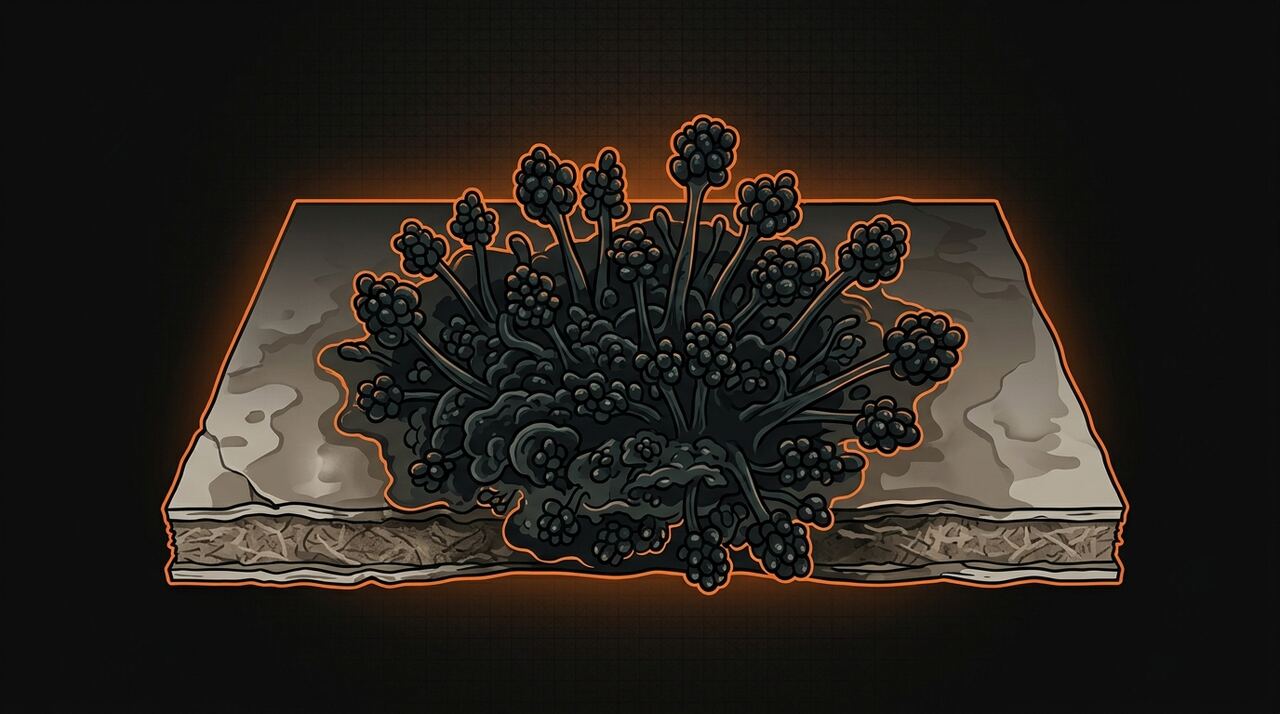
Stachybotrys chartarum is a specific mold species. It's the one people picture when they say toxic black mold. The name is a mouthful, so most folks just call it black mold or Stachy. It shows up as a dark, greenish-black growth, and its reputation runs well ahead of the facts.
Here's what sets it apart from the dozens of other dark molds. Stachybotrys is picky. It's a slow grower, and it needs a lot of water for a long time. We're talking about material that stays soaked for days or even weeks, not a wall that just feels a little humid. Most molds can get going on a damp surface. This one wants a steady, soaking-wet food source before it moves in.
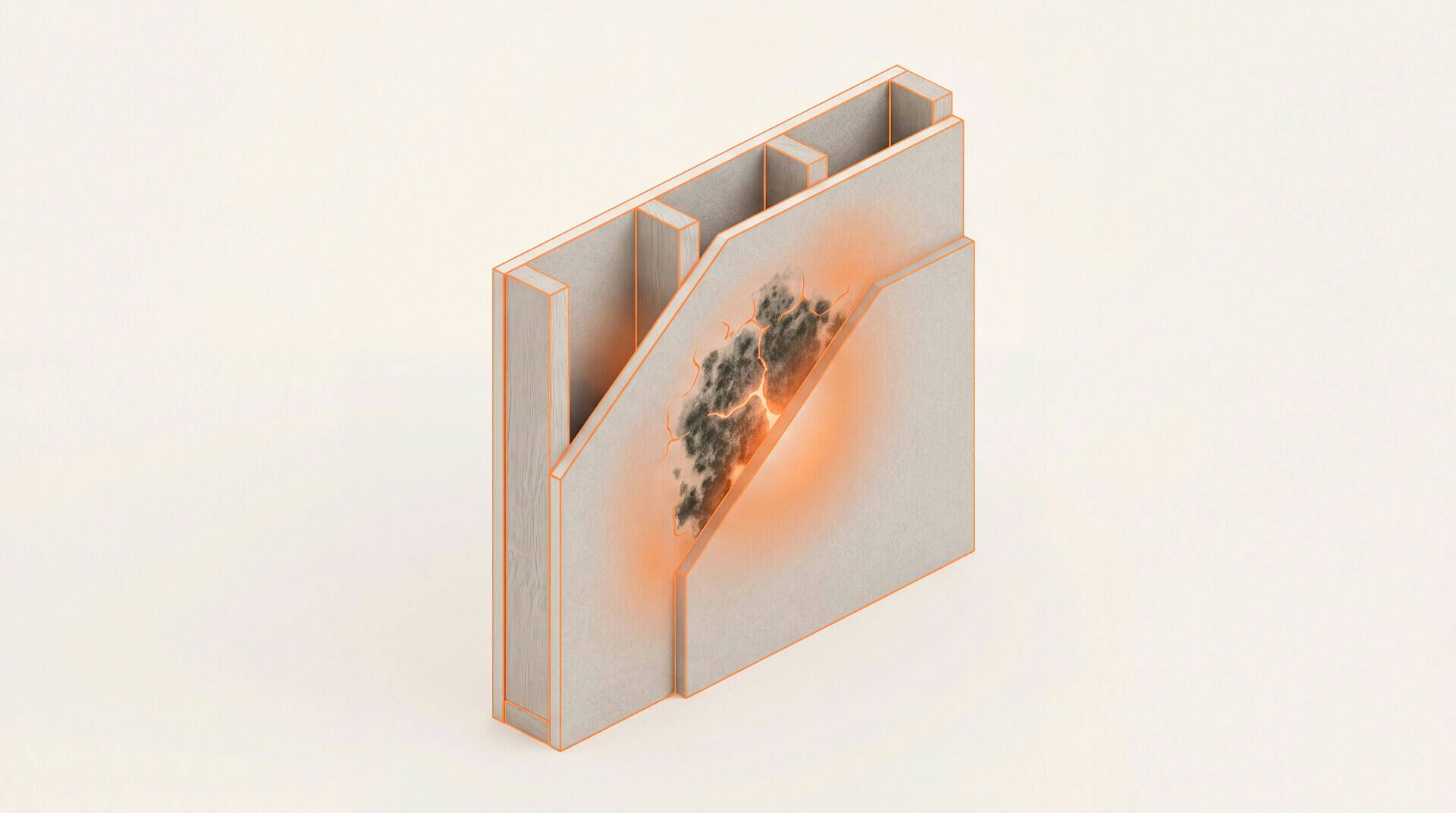
That food source is almost always cellulose. Cellulose is the plant-based material in paper, cardboard, and the paper facing on drywall. When those materials sit wet, Stachybotrys feeds on them. Dust, soap scum, and humidity in the air won't do it on their own. There has to be real, sustained moisture.
So a confirmed Stachybotrys finding tells you something useful. It usually points to a real water event: a flood, a pipe that leaked for months, a roof that let water in, or a drain that backed up. The mold is the symptom. The water problem is the cause, and that's the thing you have to find and fix. For a wider look at the species you might run into at home, see our guide to the common types of mold.
What Stachybotrys Looks Like
People want a way to spot Stachybotrys by sight. The honest answer is that you can't, not for certain. But a few traits are worth knowing.
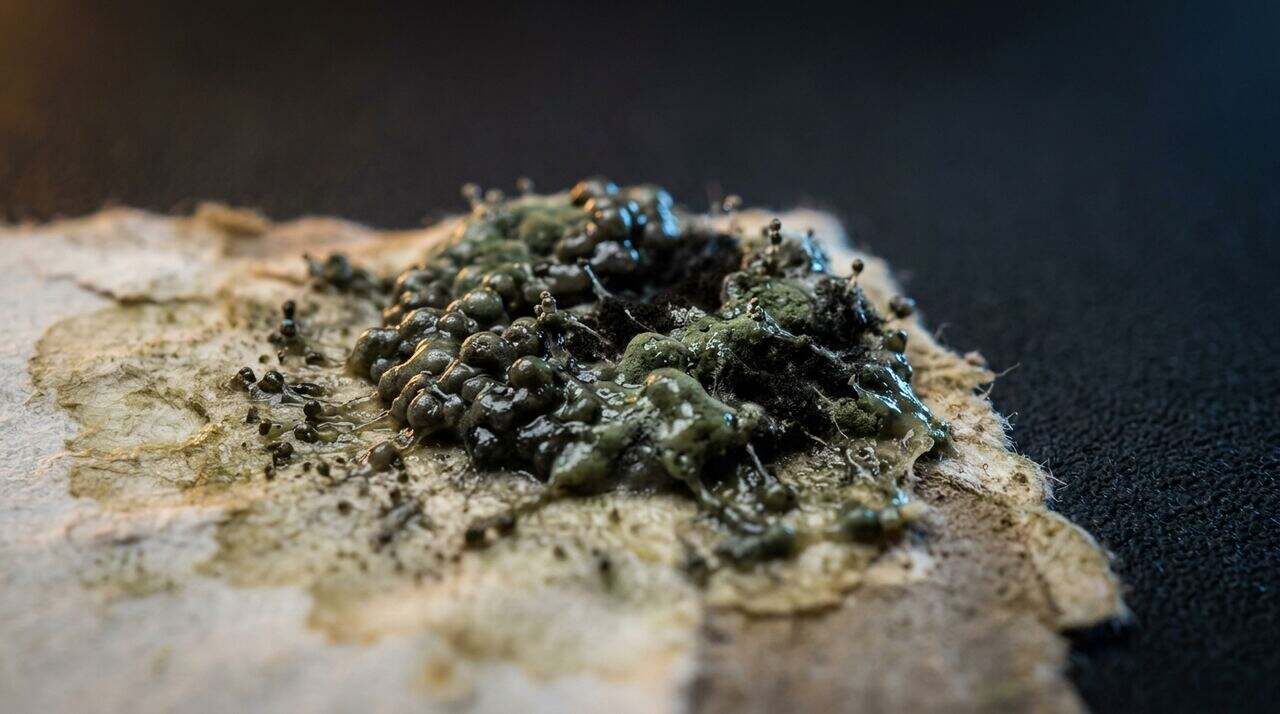
When Stachybotrys is wet and actively growing, it often looks dark and slimy, almost shiny or greasy. That wet sheen comes from the way it produces spores in a gooey mass. When the same colony dries out, it can turn powdery and sooty, like a smear of soot you could wipe with a finger. That slimy-when-wet, sooty-when-dry pattern is a clue. It's only a clue, though.
The trouble is that plenty of harmless or low-risk molds also look dark. Cladosporium shows up black or olive on window sills and bathroom grout all the time, and it's common and far less concerning. Some Aspergillus colonies darken as they age. A black spot on your shower caulk is far more likely to be ordinary bathroom mold than Stachybotrys. People see any dark patch and assume the worst, and that fear is usually misplaced.
This is the part the whole site keeps coming back to: color never confirms a species. Black does not mean Stachybotrys. Green does not rule it out. The only way to know what's growing is a lab test, where a trained analyst looks at the spores under a microscope or runs the DNA. To understand why a dark patch gets misread so often, our black mold guide breaks it down, and our mold behind walls page covers the growth you can't see at all.
The Toxicity Question, Honestly
This is where the story gets twisted, so let's keep it straight.
Stachybotrys chartarum can produce mycotoxins. The ones it's known for are called trichothecenes. That's a real thing, and it's why the species earned its scary nickname. So the worry isn't made up. But the popular phrase toxic black mold oversells it.
Here's the careful version, straight from the CDC. The CDC says the term toxic mold is not accurate. Mold itself is not toxic or poisonous. What's true is that certain molds are toxigenic, meaning they can produce toxins under the right conditions. The mold isn't poison. It's an organism that can sometimes make toxic compounds. That difference matters, because it keeps you from panicking over a label.
Experts make another point worth hearing. The World Health Organization links the health effects to dampness and mold in general, not to one villain species. In plain terms, a wet, moldy building is the documented problem. Chasing a single species can miss the bigger issue, which is the water and dampness feeding everything that grows.
As for symptoms, here's the factual picture with no advice attached. The CDC says people exposed to damp and moldy spaces may get a stuffy nose, wheezing, and red or itchy eyes or skin. People with asthma or a mold allergy may react more strongly. The CDC also notes that people with weakened immune systems or chronic lung disease may be more likely to get a lung infection. We don't give medical advice here. If you feel sick and think mold is the reason, talk to a licensed physician. For a fuller rundown of what gets reported, see our page on toxic mold symptoms.
Where Stachybotrys Grows
Stachybotrys grows where cellulose stays wet. Know the materials it loves and the water problems that soak them, and you know where to look.
The materials it feeds on
- Drywall paper. The paper facing on drywall is the classic home for Stachybotrys. The gypsum core doesn't feed it, but the paper layers on each side do.
- Ceiling tile. The soft, fibrous kind soaks up water from a roof leak or a leaking pipe above and holds it.
- Wood and wood trim. Softer or already-damaged wood that stays damp gives it a steady meal.
- Cardboard and paper goods. Boxes stored in a wet basement are a perfect host.
The water problems behind it
- Flooding. After a flood, materials can stay wet deep inside long after the surface looks dry. This is the most common trigger.
- Chronic leaks. A pipe inside a wall or under a sink that drips for weeks or months keeps the cellulose soaked the whole time.
- Roof leaks. Water comes through the roof, wets ceiling tile and the framing above it, and sits there.
- Sewer backups. These flood a space with water and organic matter at once.
Notice the pattern. Every one of these means a lot of water for a long time. That's also why so much Stachybotrys hides out of sight, inside wall cavities, above ceilings, and under floors, where leaks run unseen. Our guide to mold behind walls covers how to read the signs of growth you can't see, like a musty smell, staining that bleeds through paint, or a soft spot in the drywall.
How Labs Confirm It
Since sight can't confirm Stachybotrys, a lab has to. There are three common ways to get a sample to one.
Tape lift
You press a piece of clear sampling tape onto the visible growth, peel it off, and send it in. A lab analyst looks at it under a microscope and identifies the spores by shape. It's cheap, simple, and good for a surface patch you can see and reach.
Bulk sample
You cut out a small piece of the actual material, a chunk of drywall or a scrap of the moldy surface, and the lab examines it directly. This works well when the growth is baked into the material itself.
ERMI dust test
ERMI stands for the Environmental Relative Moldiness Index. Instead of sampling one spot, you collect settled dust from the home, and a lab runs DNA analysis to detect and count the species present, including Stachybotrys. It gives a whole-home picture rather than a single-patch reading. Our ERMI test guide explains what the score means and where the method falls short.
Which one is right depends on your situation. If you can see a patch, a tape lift or bulk sample answers the question for that spot. If you suspect hidden mold and want a broader read, ERMI looks at the dust across the home. Our how to test for mold page walks through every option, including when a DIY kit is enough and when you want a pro to sample for you.
Removal: Why This One Is Not a DIY Job at Scale
Stachybotrys removal is different from wiping a little mold off the shower. Two reasons: it usually means the material is soaked through, and disturbing a dry, sooty colony can launch a cloud of spores into the air. So the approach is more careful than a quick scrub.
Professionals keep the spores from spreading while they work. They seal off the area with plastic sheeting and run negative air pressure so spores don't drift into clean rooms. They mist surfaces to keep them damp, because wet mold releases far fewer spores than dry mold during removal. Then the soaked, moldy materials, the drywall and the ceiling tile, get cut out and bagged rather than scrubbed, because porous stuff that's grown mold all the way through can't be saved. That's why a real Stachybotrys job isn't a spray-and-wipe.
For a large area, this is not a DIY job. The federal guideline is the line to remember. If the moldy area is larger than about 10 square feet, hire a qualified mold remediation professional. Look for firms that follow the IICRC S520 standard; ACAC or RIA credentials and state licenses count too. A trained crew has the containment, the gear, and the experience to handle it without spreading the problem.
A small, confirmed spot under 10 square feet can be a careful DIY job if you protect yourself fully. That means an N95 respirator at minimum, gloves, and eye protection, plus sealing the doorway and opening a window. Fix the water source first, because mold returns in 24 to 48 hours if the surface stays wet.
For cleanable, non-porous surfaces, skip the bleach. Bleach is the wrong tool here. On porous materials like wood and drywall, the chlorine stays on the surface while the water in it soaks deeper and can feed regrowth. Use a product made for the job instead, like a no-bleach mold-control product, 3% hydrogen peroxide, or plain white vinegar. Never mix cleaners, and never combine bleach with ammonia, which creates a dangerous gas. Our full how to get rid of mold guide lays out the step-by-step for safe surfaces.
One more honest note. Most porous material with real Stachybotrys growth gets removed and replaced, not cleaned. Cleaning is for hard, non-porous surfaces the spores merely sat on. The soaked drywall comes out.
Frequently asked questions
Is Stachybotrys chartarum the same as black mold?
Mostly, yes. Stachybotrys chartarum is the specific species people mean when they say toxic black mold. But many other molds also look black, like Cladosporium on a window sill or bathroom grout. So black mold is a nickname, and Stachybotrys is one species behind it. The only way to know which mold you have is a lab test, because color alone never confirms the species.
Is Stachybotrys dangerous?
It can produce mycotoxins called trichothecenes, so the concern is real. But the CDC says the term toxic mold is not accurate: mold itself is not poisonous, though certain molds are toxigenic. The CDC links damp, moldy spaces to symptoms like a stuffy nose, wheezing, and red or itchy eyes or skin. People with asthma, mold allergies, or weak immune systems may react more strongly. We don't give medical advice; see a licensed physician if you feel sick.
How do you confirm Stachybotrys?
Only a lab can confirm it. The three common methods are a tape lift (sampling tape pressed onto visible growth), a bulk sample (a cut piece of the moldy material), and an ERMI dust test (DNA analysis of settled house dust). A tape lift suits a patch you can see, while ERMI gives a whole-home read. Our testing guide covers which one fits your situation.
Can I remove Stachybotrys myself?
A small, confirmed spot under 10 square feet can be a careful DIY job with full protection: an N95 respirator, gloves, eye protection, a sealed-off doorway, and an open window. Fix the water source first. For anything larger than about 10 square feet, hire a qualified mold remediation professional. Look for firms that follow the IICRC S520 standard; ACAC or RIA credentials and state licenses count too.
Does Stachybotrys mean my home has a water problem?
Usually, yes. Stachybotrys is slow-growing and needs cellulose, like drywall paper or ceiling tile, to stay soaking wet for days or weeks. It rarely grows from humidity alone. So finding it points to a real water event: a flood, a long-running leak, a roof failure, or a sewer backup. Find and fix that water source, or the mold comes right back.
Sources
Every claim on this page traces to one of these. Links open the primary document.