Is Mold a Fungus?
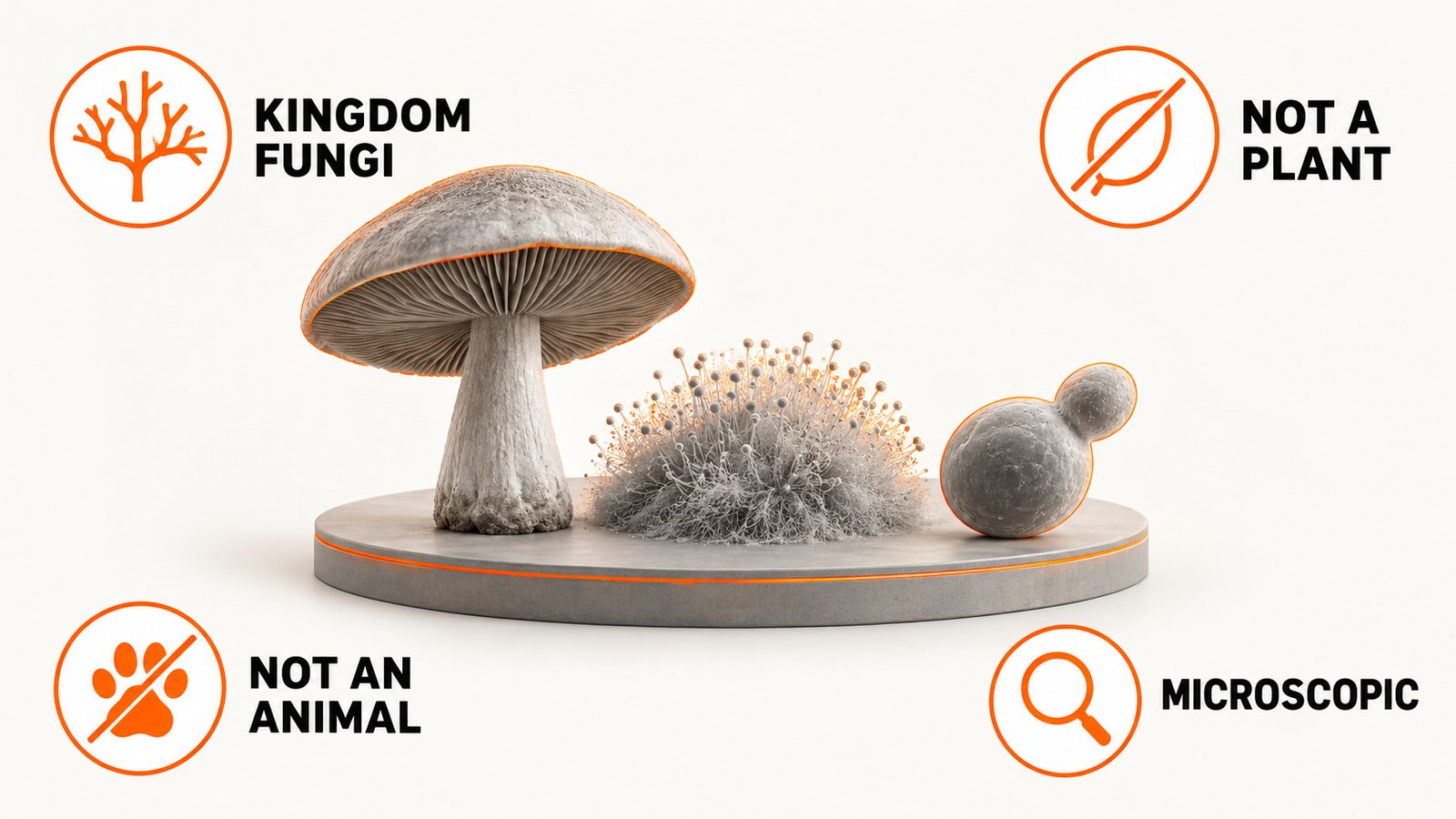
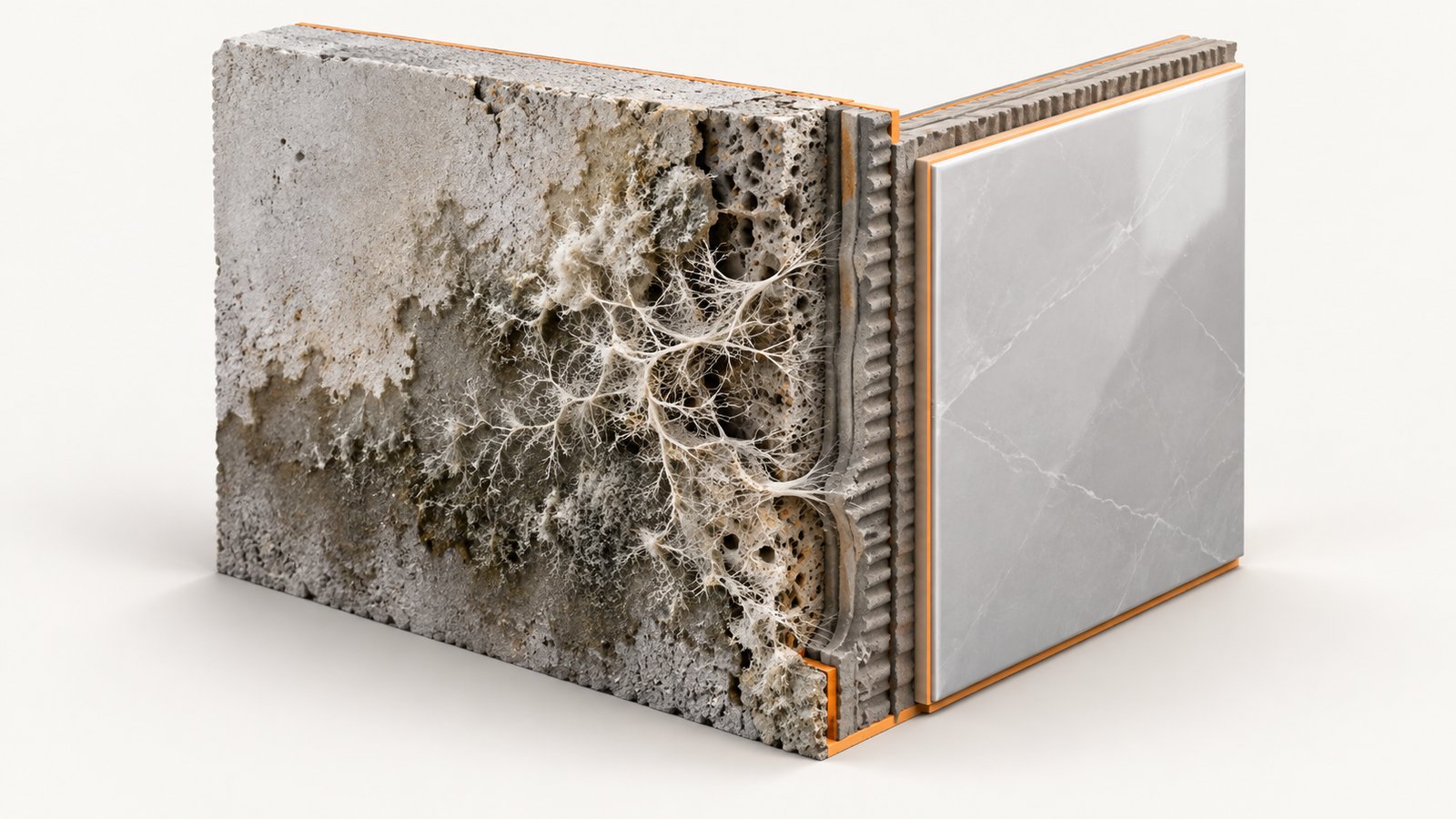
Yes. Mold is a fungus. The EPA says it plainly in its mold course: "Also called fungi or mildew, molds are neither plants nor animals; they are part of the kingdom Fungi." The National Institute of Environmental Health Sciences (NIEHS) agrees, calling mold "a microorganism and type of fungus that thrives in wet places."
So when you search for mold fungus, you are looking at one thing with two names. "Fungus" is the big family. "Mold" is the word for fungi that grow as fuzzy, thread-built patches. A medical microbiology textbook from the National Library of Medicine puts it this way: "The molds, for example, are a large group of microscopic fungi" that are "characterized by filamentous, vegetative cells called hyphae."
That means "mold" isn't one species. It's a growth style shared by thousands of species. The CDC names Cladosporium, Penicillium, and Aspergillus as the most common indoor molds, and the NIEHS adds Alternaria to its list. Each is its own fungus with its own name. Our guide to the 12 common indoor mold names walks through them and explains why a photo can't tell you which one you have.
Outdoors, the EPA says molds "play an important role in the environment by breaking down and digesting organic material, such as dead leaves." New York State's health department says the same thing in its own words: "Molds, like most fungi, break down plant and animal matter in the environment." The trouble starts when that same breakdown work happens on your drywall, wood or carpet.
Is Mold Bacteria or Fungus?
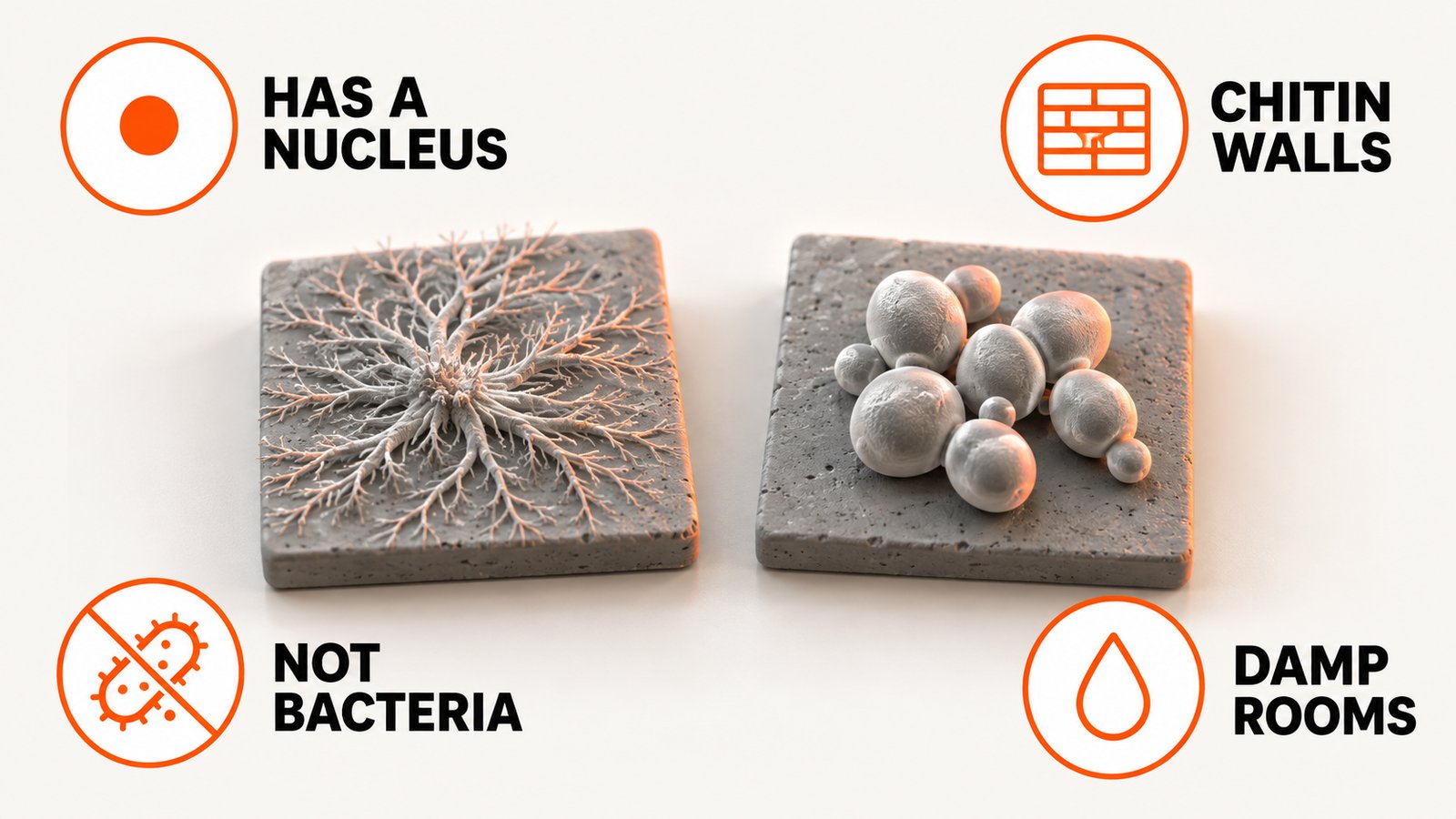
Fungus. Mold is not bacteria. People mix them up because both are tiny living things that show up on damp surfaces, and because some bacteria form thread-like filaments that look a lot like mold. (The same answer holds if you spell it "mold" and ask whether it's fungi or bacteria.)
The NLM textbook is direct about the filament lookalikes. It describes a group of bacteria called actinomycetes as "prokaryotic filamentous bacteria having peptidoglycans in their cell walls and an absence of nuclear membranes and organelles." It then adds that despite "the production of branching filaments and mold-like spores, the actinomycetes are clearly prokaryotes, whereas fungi are eukaryotes."
In plain terms, a fungal cell has a true nucleus and internal parts, and a bacterial cell does not. Fungal cell walls are different too. The same textbook notes that they include "substances not typically found in animal and plant hosts (e.g., chitin)."
Damp rooms can hold both at once. In its list of contaminants in damp or wet buildings, the EPA names bacteria next to dust mites, cockroaches and chemicals from damp building materials. Some of what looks like mold is something else. The pink film in many showers is a good example, and our pink mold page explains why it is usually a bacterium. If you want to sort a suspicious spot from dirt and other lookalikes, start with is this mold.
Are Fungus and Mold the Same Thing?
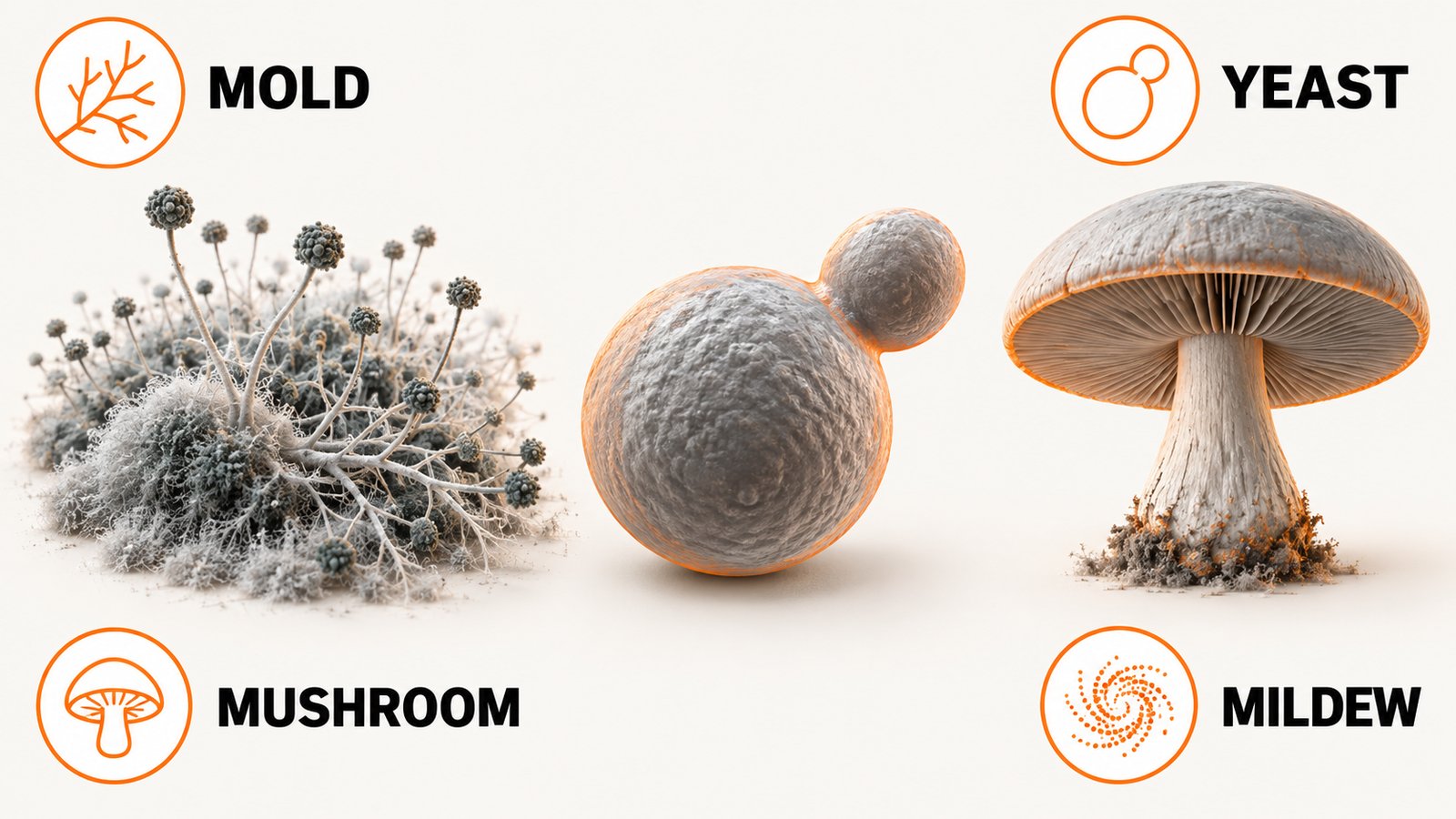
Not quite. Every mold is a fungus, but not every fungus is a mold. Think of "fungus" as the family and "mold" as one branch of it.
The NLM textbook sorts the family by shape. Some fungi grow as threads, and those are the molds. "Many fungi occur not as hyphae but as unicellular forms called yeasts, which reproduce vegetatively by budding." And the fungi you can see from across a room are a small slice: "Macroscopic fungi such as morels, mushrooms, puffballs, and the cultivated agarics available in grocery stores represent only a small fraction of the diversity in the kingdom Fungi." Some species even switch forms. The same book says certain fungi grow "as a mycelium in nature and as a vegetatively reproducing yeast in the body."
| Kind of fungus | How it's built | Where you meet it |
|---|---|---|
| Mold | Threads called hyphae, packed into fuzzy or flat patches | Damp walls, grout, bread, wet wood |
| Yeast | Single cells that reproduce by budding | Bread dough, beer, wine |
| Mushroom | A large, visible fungus | Lawns, forests, grocery stores |
| Mildew | An everyday label for flat, powdery growth | Shower walls, window sills, damp fabric |
Mildew gets its own row because people ask about it constantly. The NIEHS says "Molds and mildews are related, but distinct, types of fungi." In everyday use, mildew usually means flat, powdery growth, and mold means the fuzzier, thicker kind. Both are fungi, and the cleanup advice is the same. Our mold vs mildew guide covers the look-alike cues and why none of them is a sure test.
Is Mold a Protist?
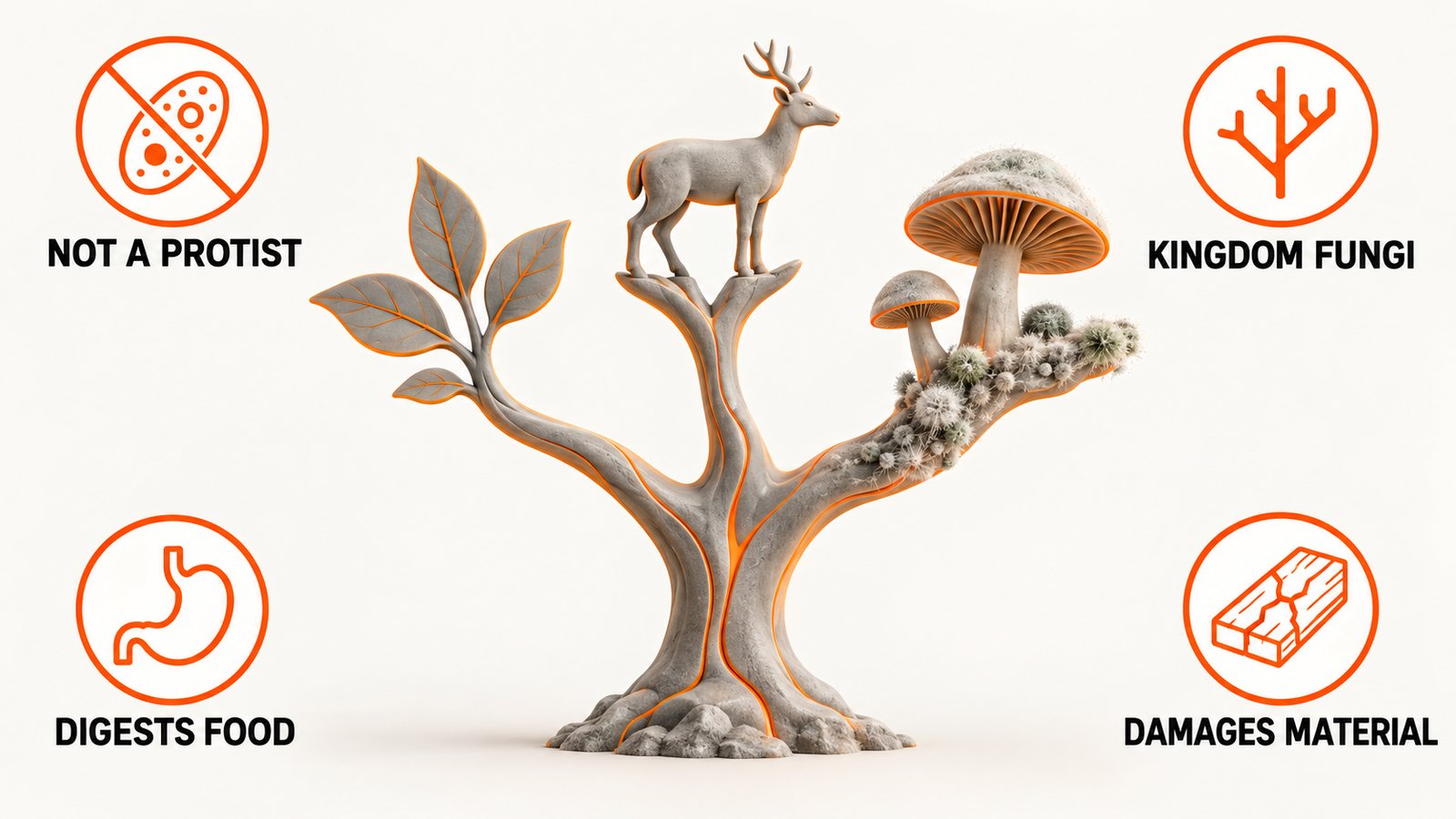
No. The EPA's mold course puts mold in the fungus kingdom, not with the protists. Its words: "molds are neither plants nor animals; they are part of the kingdom Fungi." The NIEHS and the NLM textbook use the same fungal label.
A mold gets its food by digesting what it grows on. The EPA says "As molds grow they digest whatever they are growing on." The NLM textbook describes the method: fungi release enzymes into the material around them and then "absorb the products of digestion through the fungal cell envelope."
That is why mold is a building problem and not just a stain. The EPA says "Molds gradually destroy the things they grow on."
How Does a Mold Fungus Grow Indoors?
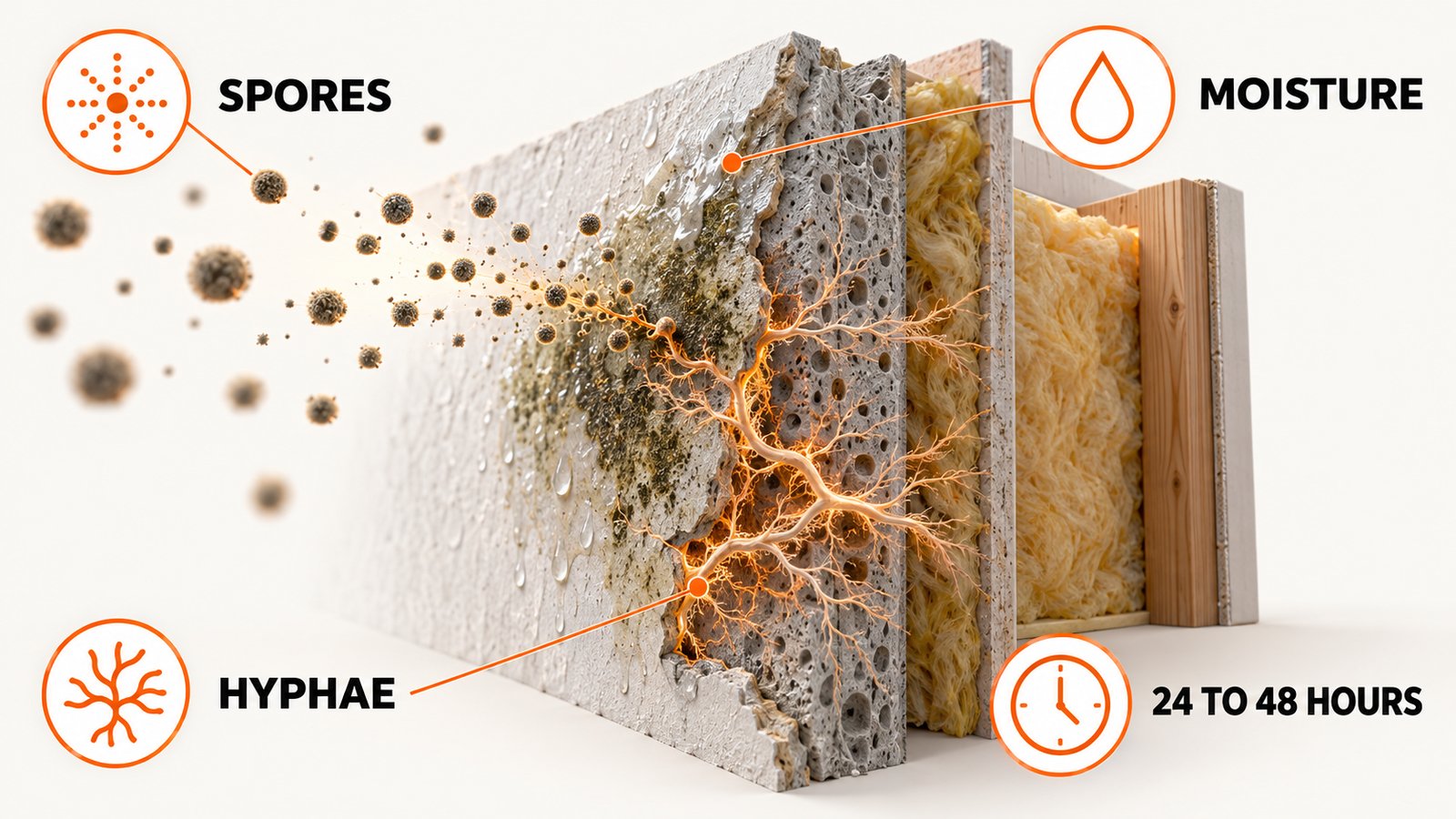
Mold grows in a simple chain: spores arrive, moisture wakes them up, and the threads spread into whatever they can digest.
Step 1: Spores float in
Mold reproduces with spores. The EPA says molds multiply by producing microscopic spores, 2 to 100 microns across, much like the seeds plants produce. They are always in the air. The same page notes that "Mold spores cannot be eliminated from indoor environments." So you can't keep spores out. You can only keep them from having a wet place to land.
Step 2: Moisture starts growth
The EPA says "There are many types of mold, and none of them will grow without water or moisture." It also advises drying water-damaged areas and items "within 24-48 hours to prevent mold growth." Our mold growth timeline breaks down what happens in that window.
Step 3: Hyphae spread and feed
Once a spore sits on a wet surface, it sends out hyphae. The NLM textbook says "Hyphal growth occurs by extension at the tips." The mass of them is the mycelium, which it describes as "A mass of hyphae" making up the body of the fungus. The hyphae release enzymes, break the material down and absorb it.
The CDC says mold "grows on paper, cardboard, ceiling tiles, and wood" and "can also grow in dust, paints, wallpaper, insulation, drywall, carpet, fabric, and upholstery."
What to watch indoors
- Humidity. The EPA advises keeping indoor relative humidity below 60 percent, ideally between 30 and 50 percent. The CDC says to keep it "no higher than 50%" all day long. A moisture meter or a humidity gauge makes this measurable.
- Leaks and condensation. Roof, window and pipe leaks are the CDC's examples of places mold grows. Our mold prevention guide and dehumidifier guide cover the fixes.
- Always-damp rooms. The EPA notes that places that are often or always damp can be hard to keep completely free of mold. Fans and regular cleaning usually keep it down. See mold in the bathroom and mold in the basement.
Killing Mold Is Not the Same as Removing It
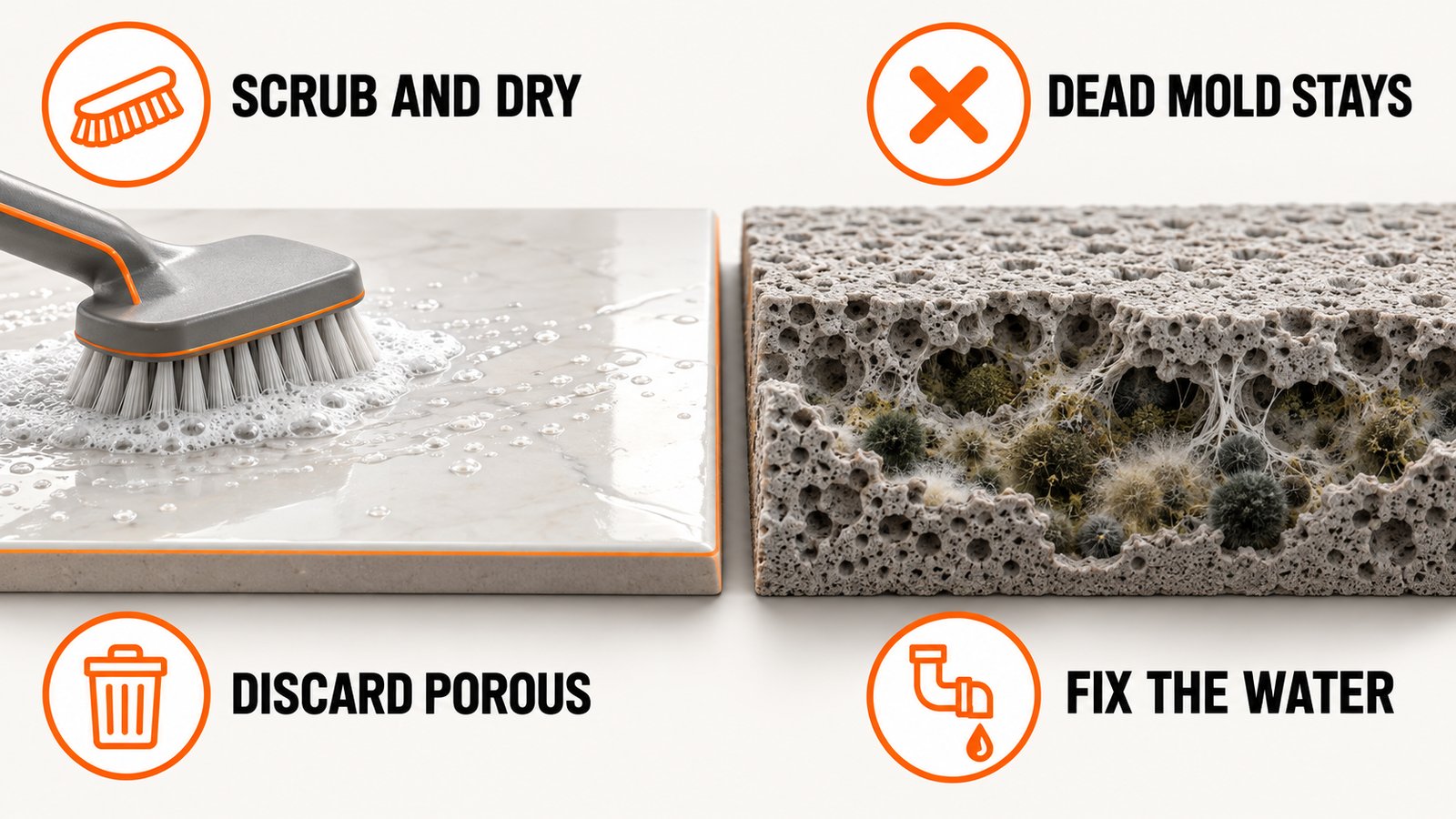
Because mold is a living fungus, many people reach for something that kills it. The EPA draws a line that surprises them: "Dead mold may still cause allergic reactions in some people, so it is not enough to simply kill the mold, it must also be removed."
The EPA also says that using a biocide such as chlorine bleach "is not recommended as a routine practice during mold cleanup." Our pages on bleach and what kills mold go through each product and what its own label claims.
What matters most is the material under the mold. That's where the fungus's threads come into play. The EPA puts it this way: "Mold can grow on or fill in the empty spaces and crevices of porous materials, so the mold may be difficult or impossible to remove completely."
| Surface | What the EPA says | On our site |
|---|---|---|
| Hard, nonporous (tile, glass, sealed countertops) | "Scrub mold off hard surfaces with detergent and water, and dry completely." | Mold on grout |
| Porous or absorbent (ceiling tiles, carpet, drywall) | "Absorbent or porous materials, such as ceiling tiles and carpet, may have to be thrown away if they become moldy." | Mold on drywall, carpet |
| Wood | Wood is absorbent, so see our wood guide for what to do | Mold on wood |
Two more EPA notes save money. First, "Do not paint or caulk moldy surfaces." Clean and dry first. Second, if you clean it up and skip the water fix, the EPA says "most likely, the mold problem will come back." The full routine is in our how to get rid of mold guide.
Cleaning stirs spores into the air, so protect yourself. The EPA lists gloves, goggles and an N-95 respirator, and New York State says "Rubber gloves and an N95 mask are recommended for jobs other than routine cleaning." Never mix bleach with ammonia or other cleaners.
Can You Tell the Type of Mold by Its Color?
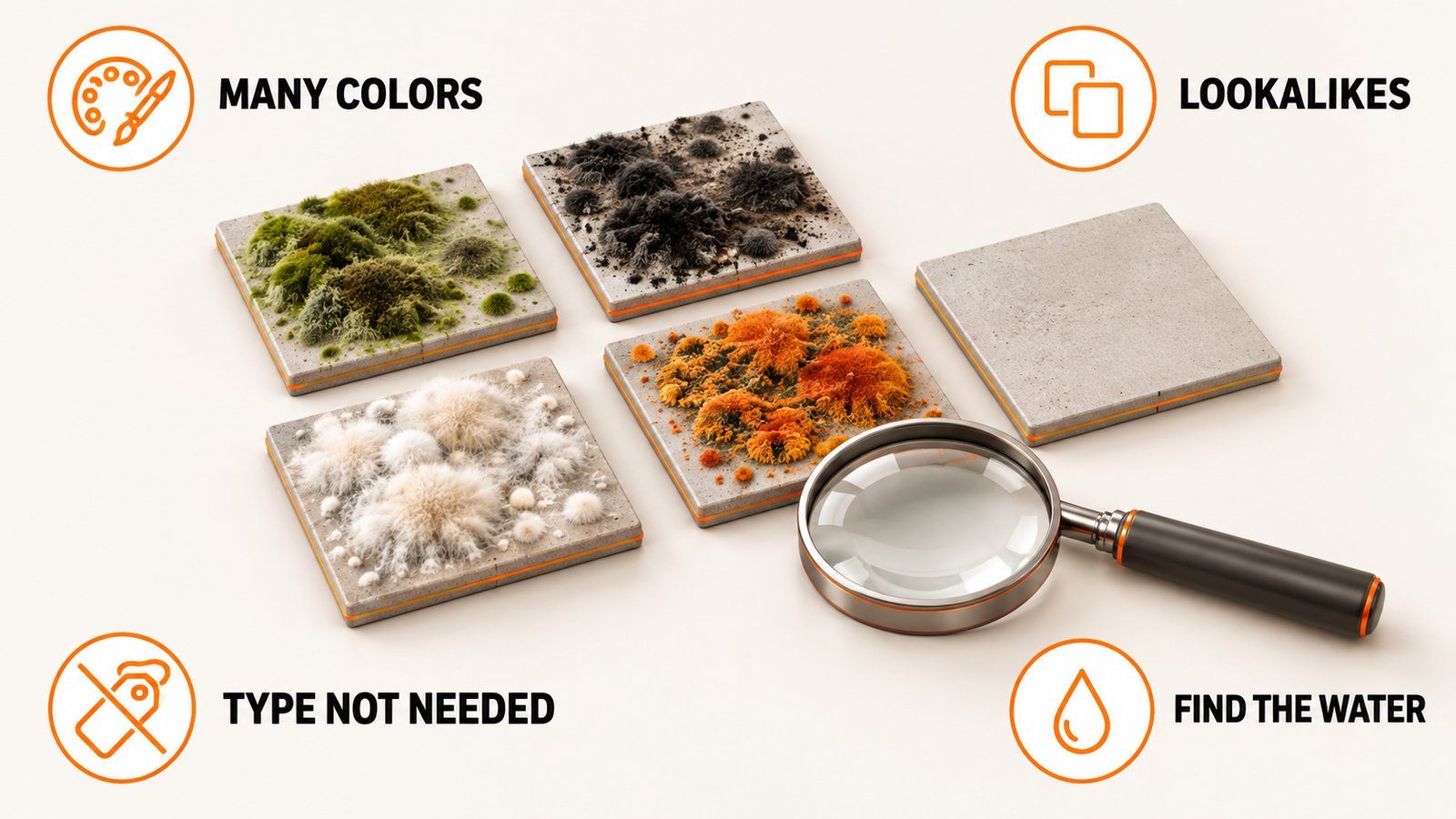
No. Color and a quick look can't name the species, and that's true of everything in the fungus family. The CDC says "Mold can look like spots of many different colors, and it can smell musty." Different species share colors. Our what mold looks like guide lays out the colors and textures, and the black mold page explains why a dark patch can't be called Stachybotrys by sight.
Lookalikes add to the problem. Dirt, soap scum, mineral deposits, rust stains and bacterial films can all pass for mold from across the room. The NLM textbook even notes "superficial morphologic similarities between actinomycetes (filamentous bacteria) and molds".
The good news is that homeowners rarely need the species name to act. The CDC says "You do not need to know the type of mold." It also says that "No matter what type of mold is present, you need to remove it." New York State agrees: "Knowing the kinds of mold present does not change this advice."
What you do need is to know where the moisture comes from, how big the patch is and what it's growing on. That is a visual question, and it's the one our app is built for. Mold Scanner AI gives an AI-assisted visual screening of what is visible in your photo, and processing time varies. It can't confirm a species, find growth behind a wall or judge anyone's health. For more, see how to tell if it is mold from a photo and mold identification.
When to Call a Pro
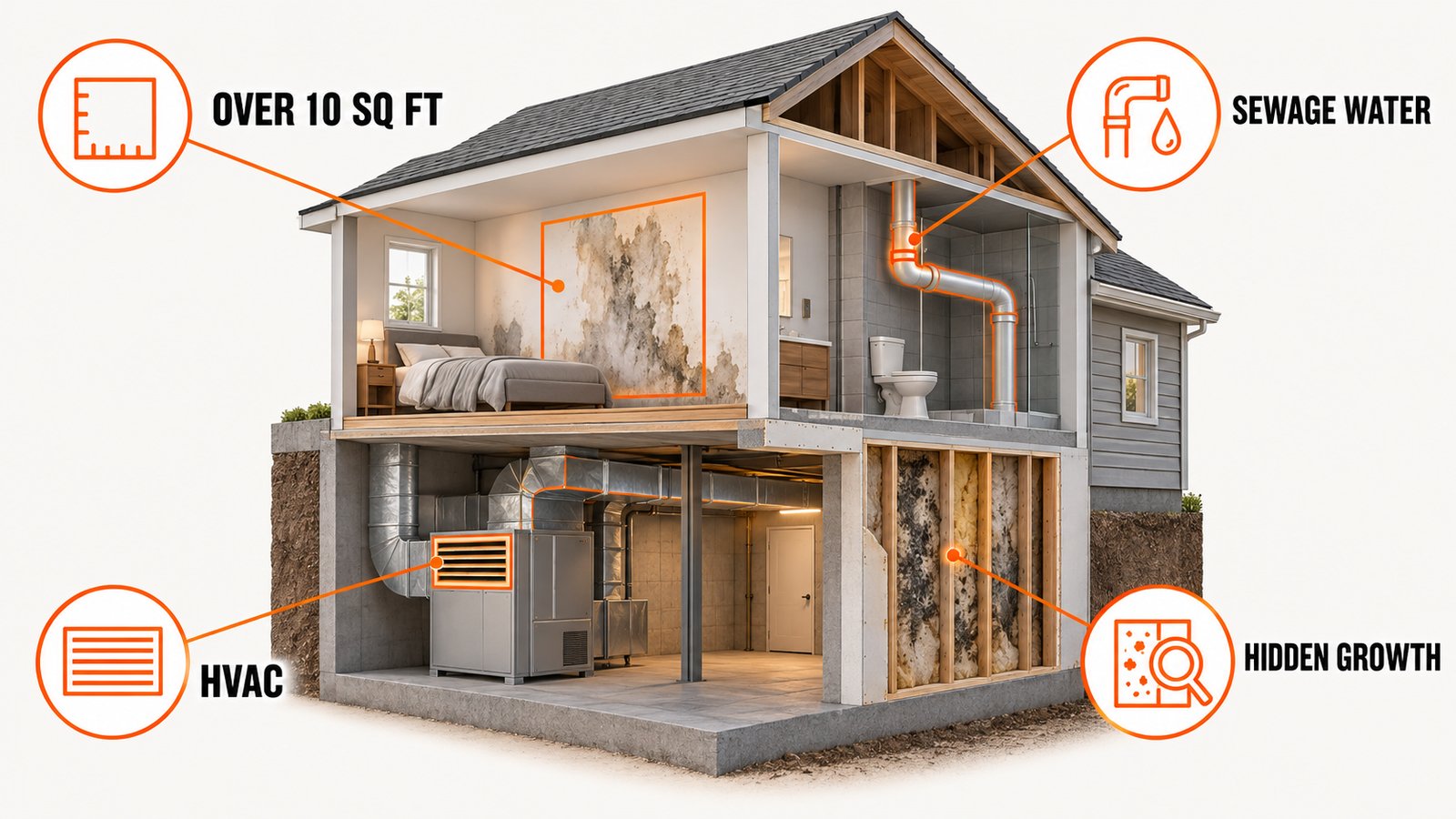
Knowing mold is a fungus doesn't change the cleanup rules. Size and water source do. The EPA's guide says a moldy area under about 10 square feet, roughly a 3 foot by 3 foot patch, is a job many people can handle. Past that, or after a lot of water damage, it points to its guide for professional cleanup. New York State says a licensed contractor "should do the work if it is a large (greater than 10 square feet) mold problem or if you are highly sensitive to mold."
Hire out when any of these apply:
- The EPA says to call in a professional with experience if water or mold damage came from sewage or other contaminated water.
- The EPA also says: "Do not run the HVAC system if you know or suspect that it is contaminated with mold - it could spread mold throughout the building." See mold in air ducts.
- The growth may be inside a wall or under flooring. The EPA lists the back of drywall, wallpaper and paneling, the top of ceiling tiles and the underside of carpet as places it can hide. Read mold behind walls.
Our pages on mold remediation and mold inspection explain what to ask a contractor. If you or someone in your home has symptoms, that is a question for a licensed physician, not a photo or a mold test.
Frequently asked questions
Is mold bacteria or a fungus?
A fungus. The EPA says molds are part of the kingdom Fungi, and a National Library of Medicine textbook states that actinomycetes, the thread-like bacteria that resemble mold, are prokaryotes, whereas fungi are eukaryotes. Mold is not bacteria, though both can be present in a damp building.
Are fungus and mold the same thing?
Not exactly. Mold is one kind of fungus, the kind that grows as fuzzy or flat patches built from threads called hyphae. Yeasts and mushrooms are also fungi, but they are built differently. Every mold is a fungus, and not every fungus is a mold.
Is mildew a fungus too?
Yes. The NIEHS says molds and mildews are related but distinct types of fungi. In everyday use, mildew usually means flat, powdery growth. The cleanup advice is the same for both, and color or texture can't prove which one you have.
Is mold a plant or an animal?
Neither. The EPA says molds are neither plants nor animals. They belong to the kingdom Fungi, and instead of making their own food they digest whatever they grow on.
Is a mushroom a mold?
No, but they are related. Both are fungi. The NLM textbook calls mushrooms macroscopic fungi and molds microscopic fungi built from hyphae.
What does mold feed on indoors?
The CDC lists paper, cardboard, ceiling tiles and wood, and says mold can also grow in dust, paints, wallpaper, insulation, drywall, carpet, fabric and upholstery. It needs moisture to start. The EPA says none of the many types of mold will grow without water or moisture.
How small is a mold spore?
The EPA gives the range as 2 to 100 microns in diameter, too small to see without magnification. The EPA says they can't be eliminated from indoor environments, so moisture control is what stops them from growing.
Can I tell what type of mold I have by its color?
No. The CDC says mold can look like spots of many different colors, and the same colors show up in dirt, soap scum and bacterial films. The CDC also says you do not need to know the type of mold, because it needs to be removed whatever it is.
Sources
Every claim on this page traces to one of these. Links open the primary document.