
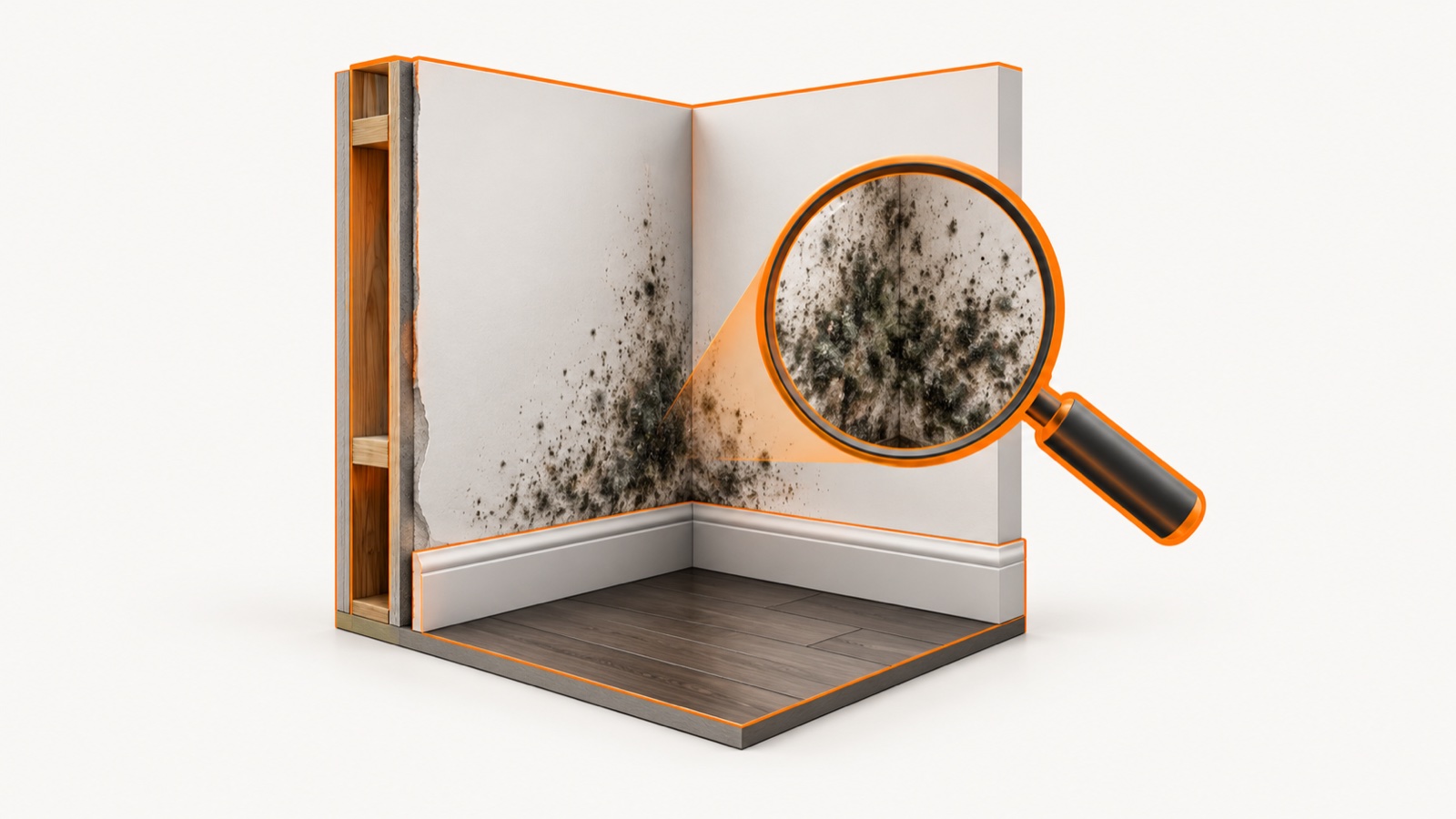
What Mold Remediation Is
Mold remediation is the structured process professionals use to deal with mold that is too large, too hidden, or too risky to wipe away yourself. The word remediation matters. It does not mean sterilizing your home down to zero spores, because spores are everywhere in normal indoor air. It means bringing the mold back to natural, background levels and making the home dry enough that it cannot grow again.
The EPA is direct about this. You cannot remove all mold from an indoor space, and you do not need to. What you can do is remove the active growth, clean the area, and control the moisture so the conditions for growth are gone. Remediation is the disciplined version of that, done with containment and air control so the cleanup itself does not spread spores into rooms that were fine.
If your problem is a small patch on a hard surface, you are probably looking at mold removal instead, which a careful homeowner can often handle. Remediation is what the job becomes once the scale or the risk crosses a line, and the next section draws that line clearly.
Removal vs Remediation
People use these words interchangeably, but the difference is real and it changes who does the work.
Removal is the act of physically taking mold off a surface. For a contained patch under about 10 square feet on a hard surface, this is often a do-it-yourself job with an N95, gloves, and a good scrub. Our how to get rid of mold guide walks through it.
Remediation is the wider professional process for mold that is large, hidden, or tied to contaminated water. It wraps removal inside a controlled system: assess the spread, seal the area, filter the air, take out and replace damaged material, dry everything, and verify the result. The reason for the extra steps is simple. Disturbing a big mold colony without containment sends spores all over the house, which turns one room's problem into the whole home's problem. If your problem is small enough for DIY, start with the before you price contractors.
The Remediation Process, Stage by Stage
A professional job following the IICRC S520 standard moves through a predictable set of stages. Knowing them helps you read an estimate and spot a contractor who skips steps.
1. Inspection and assessment
The contractor inspects the home, traces the moisture source, and maps how far the mold has spread. Moisture meters and a thermal camera find damp pockets inside walls, and air or surface sampling can document the starting point. Our mold inspection guide covers this stage in depth, and professional mold testing explains the lab side.
2. Containment
The work area gets sealed off with plastic sheeting, and the crew sets up negative air pressure inside it. That keeps the air flowing into the contained zone rather than out of it, so spores stirred up during the job do not drift into clean rooms.
3. Air filtration
HEPA air scrubbers and negative air machines run throughout the work to capture airborne spores. This is a core part of why remediation costs more than a wipe-down. The equipment is doing real protective work.
4. Removal and cleaning
Porous materials that are ruined come out and get bagged for disposal. That usually means soaked drywall, carpet, ceiling tile, and insulation, because mold roots grow into them and a surface clean never reaches the growth. Our pages on mold on drywall and mold behind walls show where that line falls. Salvageable hard surfaces get HEPA vacuumed and cleaned.
5. Drying
The structure is dried with fans and dehumidifiers until moisture readings come back to normal. This stage often sets the timeline, because nothing should be closed back up while it is still damp.
6. Repair and clearance
Removed materials get rebuilt, from new drywall to fresh paint. On larger jobs, an independent clearance test confirms the area is back to normal levels and visibly clean and dry. Use a different party for that test than the one who did the work, so nobody is grading their own homework.
When You Need a Professional
The EPA's size guideline is the simplest test. Growth larger than roughly 10 square feet, about the area of a few ceiling tiles, points toward professional remediation. A handful of other situations call for a pro no matter the size:
- Hidden mold. A persistent musty smell with no visible source, or growth inside walls, HVAC, or under the floor. See mold smell in the house.
- Contaminated water. Anything that follows sewage or floodwater, which carries its own hazards.
- Spread across rooms. Mold showing up in several places at once usually means a shared moisture problem behind the scenes.
- Health sensitivity. A household member with unexplained respiratory symptoms. The CDC notes people react to mold differently, so err toward caution. For health questions, talk to a physician, and read our source-backed overview at is mold dangerous.
How to Hire a Remediation Contractor
The remediation business has plenty of honest operators and a few that overpromise, so a little homework protects you. Look for credentials from the IICRC, which publishes the S520 standard the industry works to. Ask for an itemized written scope before any work starts, covering exactly what gets removed, how the area will be contained, and what the drying plan is.
One structural tip saves people the most grief. Keep your inspection and your remediation separate where you can. A company that both tells you how bad the problem is and then bills you to fix it has a built-in reason to find more problem. An independent inspection first, then a separate remediation bid, keeps the diagnosis honest. The same logic applies to the clearance test at the end, which should come from a third party. Before you call anyone, you can pre-screen your own home so you walk into bids knowing your trouble spots.
Cost and Insurance
Remediation cost tracks the size of the affected area, where the mold is hiding, how much material has to be torn out and rebuilt, and your region. A small contained job sits at the low end. A whole basement or a behind-wall project with structural repairs runs much higher, because the labor, the containment, and the rebuild all scale up. For real ranges by severity and state, see our mold remediation cost guide, and run your own numbers with the free remediation cost estimator.
Who pays is its own question. Homeowners coverage for mold is narrow and usually hinges on whether the water damage was sudden and accidental versus slow and preventable. We break the details down in does homeowners insurance cover mold. Whatever the cause, fixing the moisture is the part that protects your money, because remediation without a moisture fix just resets the clock. Our prevention guide covers keeping humidity below about 50 percent so the same job does not come around twice.
Frequently asked questions
What is mold remediation?
Mold remediation is the professional process of safely removing mold and returning indoor mold to normal, natural levels. It is more than cleaning a surface. A contractor seals off the work area so spores do not spread, controls the air with negative pressure, removes ruined porous material, cleans what can be saved, dries everything out, and fixes the moisture source. It follows the IICRC S520 industry standard.
What is the difference between mold removal and mold remediation?
Removal usually means physically taking a small patch of mold off a surface, often a DIY job under about 10 square feet. Remediation is the broader professional process used for larger or hidden mold: containment, air control, removing and replacing damaged materials, cleaning, drying, and fixing the water source. The EPA notes that completely removing all mold indoors is not possible, so the goal is normal levels, not zero.
How much does mold remediation cost?
Cost depends on the size of the affected area, where the mold is, how much material has to be removed, and your region. A small contained job sits at the low end, while whole-basement or behind-wall remediation with structural repairs runs much higher. Always get an itemized written estimate, and treat the inspection and the remediation as separate budgets. Our remediation cost guide and free estimator give ranges by severity and state.
How long does mold remediation take?
A small, contained job can be done in a day or two. Larger projects that involve removing drywall, drying out the structure, and rebuilding take longer, often a week or more once repairs are included. The drying stage is what sets the pace, because the area has to reach normal moisture before anything gets closed back up.
Do I need a clearance test after remediation?
For a larger job, a post-remediation verification or clearance test is a good idea. An independent party, not the contractor who did the work, inspects and may sample the air to confirm the area is back to normal levels and visibly clean and dry. Using an independent tester avoids the conflict of interest of grading your own work.
Sources
Every claim on this page traces to one of these. Links open the primary document.