Mold by color: what each color means
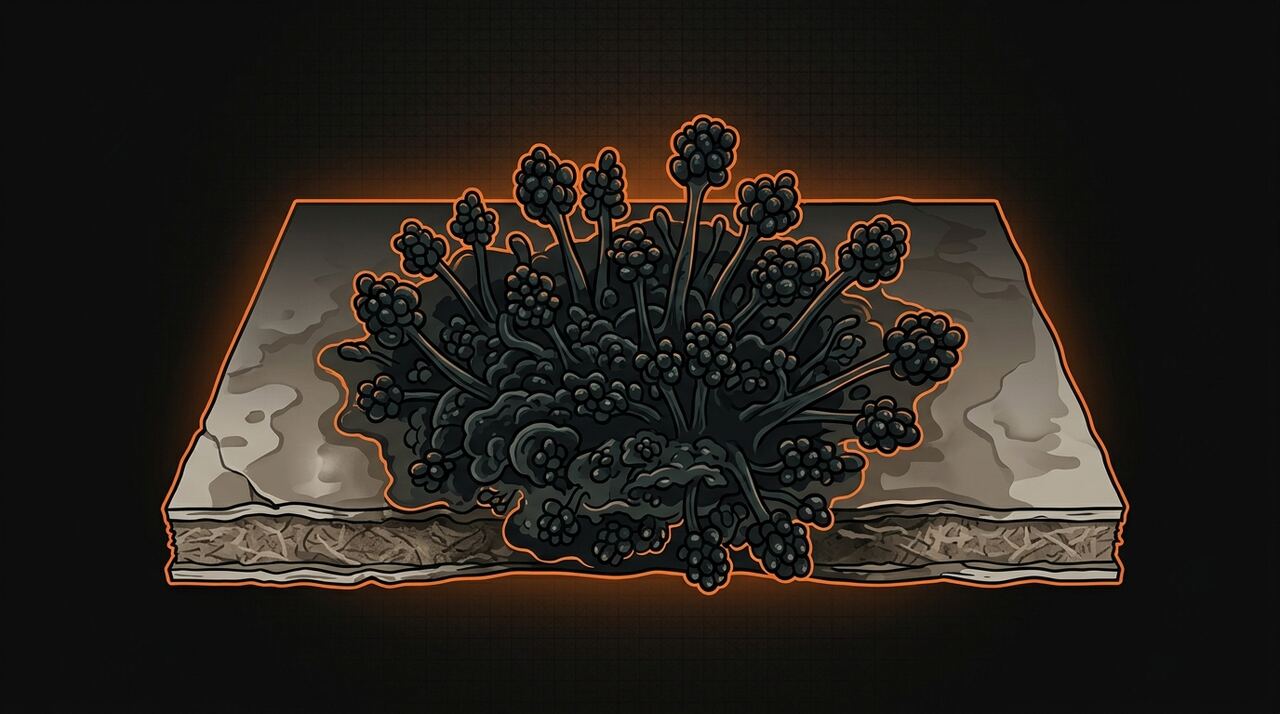
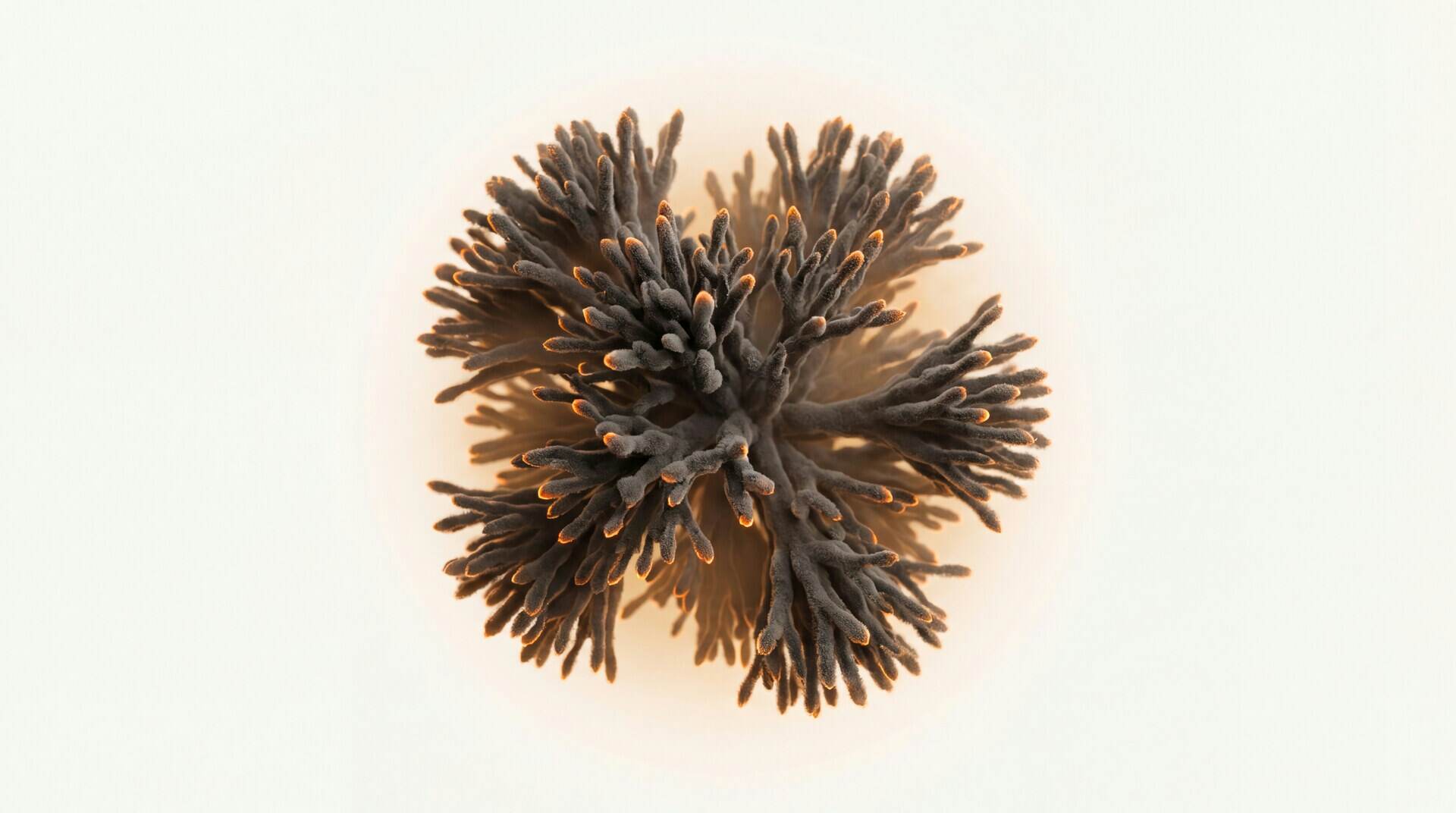
Black mold: The most feared color, but not all black mold is the same. Stachybotrys chartarum (the infamous "toxic black mold") is dark black or dark greenish black, slimy when wet, and powdery when dry. It grows on materials with high cellulose content like drywall, wood, and cardboard. It produces trichothecene mycotoxins and satratoxins that are harmful to breathe. However, Aspergillus niger and Cladosporium also appear black and are far more common. Do not panic at every black spot, but do not ignore it either.
Green mold: The most common color you will find indoors. Penicillium is bright green or blue green, often found on food, walls, and insulation. Cladosporium is olive green to dark green and commonly grows on fabric, carpet, and wood surfaces. Aspergillus can also appear green. Green mold on bread is typically Penicillium. Green mold on bathroom walls is usually Cladosporium.
White mold: Often missed because people do not associate white with mold. Early stage Aspergillus frequently appears white and cottony before developing color. White mold on basement walls can also be confused with efflorescence (mineral deposits). The difference: efflorescence dissolves when you touch it with a wet finger. White mold does not dissolve and usually has a fuzzy or cottony texture.
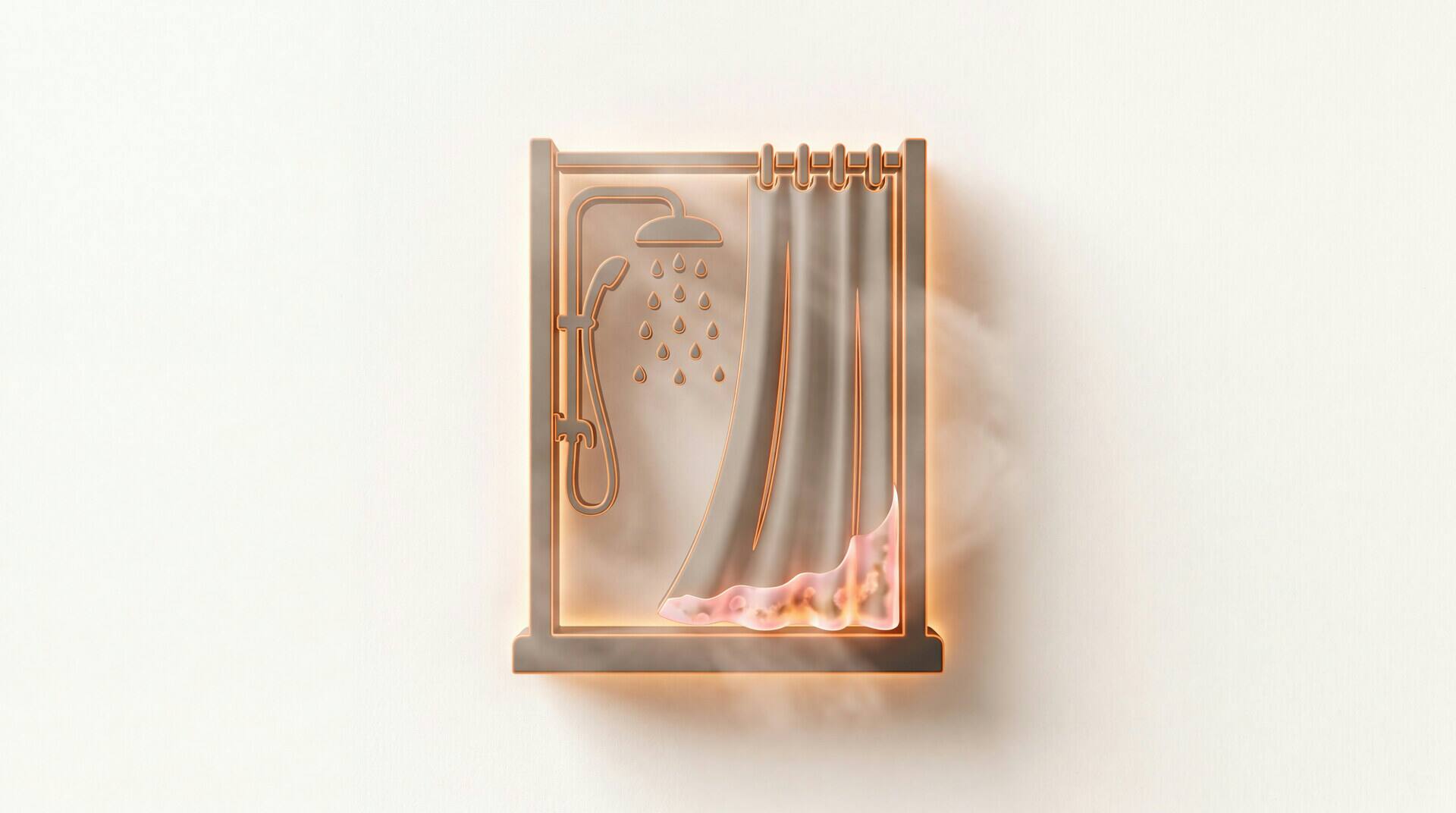
Pink or orange mold: In bathrooms, pink growth is almost always Serratia marcescens, which is actually a bacterium, not mold. It forms a slimy film on shower tiles and grout. True pink or orange mold does exist. Aureobasidium pullulans starts pink and darkens over time. Fusarium is another fungus that can appear pinkish.
Gray mold: Cladosporium often appears gray, especially on fabric and soft surfaces. Botrytis (common on plants and produce) is also gray. Gray mold on walls typically indicates Cladosporium, which is one of the most widespread indoor molds worldwide. It is less toxic than Stachybotrys or Aspergillus but still triggers allergic reactions in many people.
Mold by texture: fuzzy, slimy, or powdery
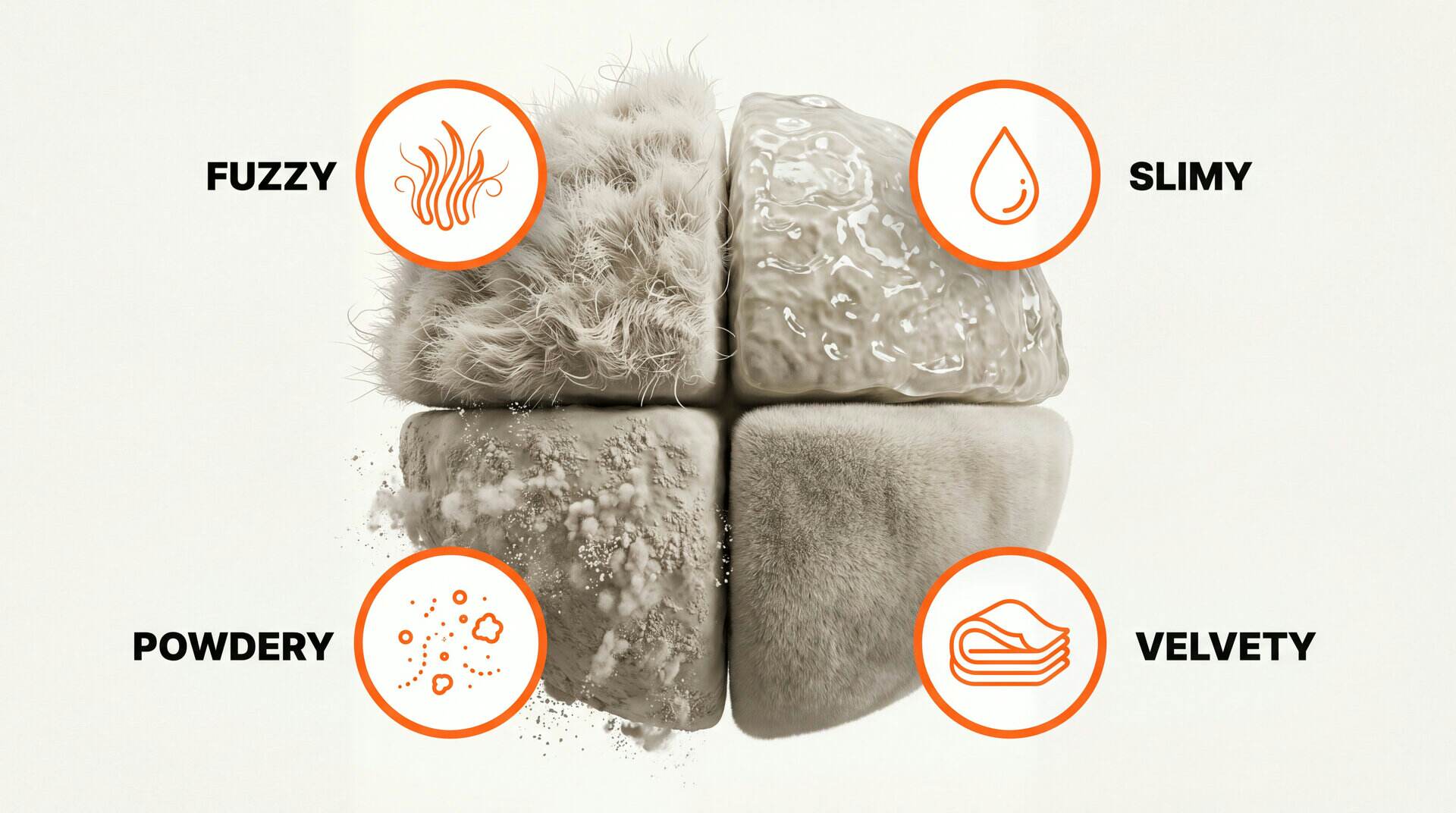
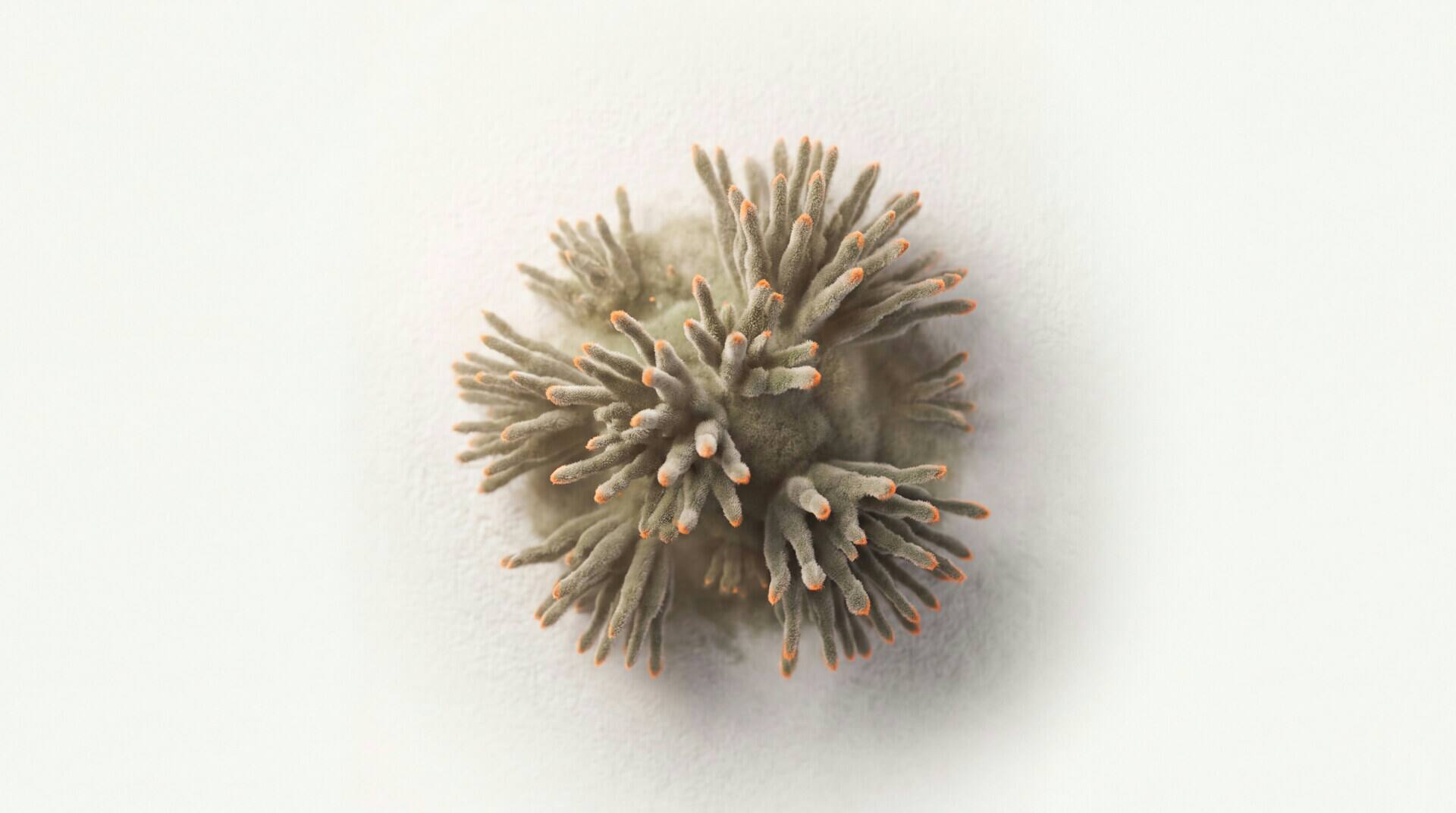
Fuzzy or cottony: This is the most recognizable mold texture. It looks like tiny hairs or fibers growing up from the surface. Think of the mold you see on old bread or fruit. Aspergillus, Penicillium, and Stachybotrys all produce fuzzy growth. If a spot on your wall looks like someone glued dryer lint to it, that is fuzzy mold.
Slimy or wet looking: Some molds appear glossy or wet, especially in very damp conditions. Stachybotrys is slimy when actively growing in wet conditions. Black yeast (Exophiala) creates shiny, slimy patches. Slimy mold is usually a sign that the area has been wet for a long time, not just humid.
Powdery: Dried mold or certain species at specific growth stages appear as a fine powder. Cladosporium is often powdery. Dried Aspergillus colonies can release clouds of powdery spores when disturbed. Be very careful with powdery mold. Those spores become airborne easily when you touch them. Wear a mask before disturbing powdery mold growth.
Flat and filmy: This is typically mildew, not mold. Mildew is a surface fungus that looks like a thin gray or white film. It sits on top of the surface and wipes off easily. If you can clean it with a damp cloth in one pass, it is probably mildew.
Common things that look like mold but are not

Not every dark spot, stain, or discoloration is mold. Here are the most common lookalikes.
Dirt and soot: Dirt collects in corners, along baseboards, and on window tracks. It is uniform in color (usually dark gray or brown) and does not spread or grow. Soot from candles, fireplaces, or cooking appears as a fine black film on walls and ceilings. Neither has a musty smell.
Soap scum: In bathrooms, soap scum builds up as a white, gray, or slightly pink film. It is slippery when wet and chalky when dry. It does not spread on its own and does not smell musty.
Efflorescence: White, chalky, crystalline deposits on concrete, brick, or masonry. This is mineral salt left behind when water evaporates through the surface. The key test: touch it with a wet finger. Efflorescence dissolves. Mold does not.
Rust: Reddish brown or orange stains near metal fixtures, pipes, or nails. Rust is a chemical reaction, not biological growth. It does not spread like mold and does not smell musty. However, rust stains around pipes can indicate moisture, which can lead to mold nearby.
Water stains: Yellowish or brown marks with clear edges, often in ring shapes. Water stains are flat and smooth. They mark where water was but do not grow or spread. However, a water stain is a red flag. Wherever water was, mold may follow.
Why a bleach swab is not an identification test
A color change after applying a cleaner does not establish that a spot is mold, mildew, algae, dirt, soot, or a particular species. Do not mix cleaners or disturb an unknown material to identify it. Record the visible condition, look for direct moisture evidence, follow the material manufacturer's guidance, and use qualified inspection or laboratory sampling when identification matters. Mold Scanner can screen visible photo features only and cannot identify a substance or species.
When dark spots are NOT mold
Appearance can suggest questions to investigate, but no color, shape, age, odor, or photograph can rule mold in or out. A side-by-side walk through the common look-alikes, with the specific check that rules each one out, is on is this mold. A stable mark may be a stain, and an irregular mark may have many causes. Check for direct moisture evidence and changes over time. If the material is unknown or the decision is high stakes, use qualified inspection or laboratory sampling rather than a visual shortcut.
Frequently asked questions
What color is mold?
Indoor growth can appear in many colors, and non-mold materials can look similar. Color, texture, and a photo cannot identify a species or determine health risk. Focus on correcting moisture and use qualified sampling only when it answers a defined question.
How can I tell if a dark spot is mold or just dirt?
Appearance alone cannot reliably distinguish mold from dirt, soot, staining, minerals, or other materials. Do not use bleach as a diagnostic test or mix cleaning products. Document the spot, check for moisture, and seek qualified help if identification matters.
Is all black mold dangerous?
Black coloration does not identify Stachybotrys or establish toxicity. Many fungi and non-fungal materials can look dark. Any indoor growth should prompt moisture correction and an appropriate cleanup decision, but color alone does not rank health risk.
What does mold smell like?
People often describe odors in damp buildings as musty or earthy. Mold can produce odors, but drains, wet materials, stored items, and other sources can smell similar. Odor alone cannot confirm mold or locate hidden growth.
Sources
Every claim on this page traces to one of these. Links open the primary document.