
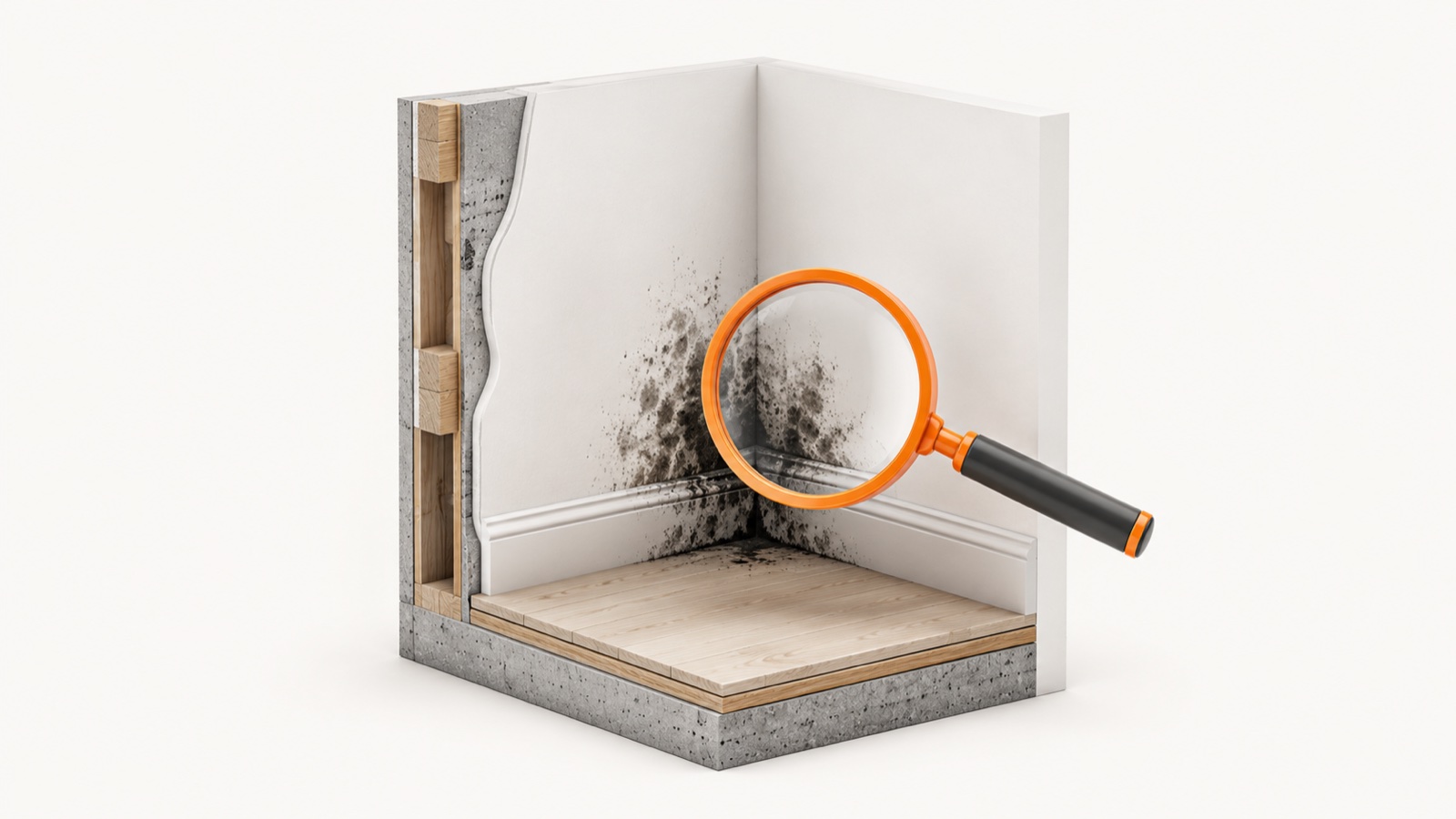
What a Mold Inspection Is
A mold inspection is a building assessment, not a medical test. The goal is simple. Find the mold, find the moisture feeding it, and write down what to fix. A good inspector spends most of their time looking for the water problem, because mold is the symptom and water is the cause.
Mold needs moisture, an organic food source like wood or drywall paper, and time. Where you have a leak, condensation, or humidity that stays high, you eventually get growth. An inspection ties the visible patch back to that source so the cleanup actually holds.
One thing an inspection does not do is diagnose your health. It tells you about the house. If you think mold is making you sick, that is a separate conversation with a physician. The EPA points out that you do not need to know the exact species to clean it up, because the response is the same: remove the mold and fix the water.
What Inspectors Actually Check
A thorough inspection covers the spots where moisture collects and the systems that move it around your home. Expect an inspector to look at:
- Wet rooms. Bathrooms, the kitchen, and the laundry area, including under sinks, behind the toilet, and around tubs and showers.
- Basements and crawl spaces. Foundation walls, the base of drywall where water wicks up, and any stored cardboard or carpet sitting on concrete.
- The building envelope. Window sills and tracks, exterior wall corners, the attic, and the roofline, where condensation and leaks show up first.
- The HVAC system. The drip pan, the coil, and supply registers. Mold here spreads spores room to room.
- Hidden moisture. A moisture meter reads damp behind a wall, and a thermal camera flags cold, wet zones you cannot see.
If the inspector takes samples, they usually pull air samples to estimate spore counts and surface samples (tape lifts or swabs) to identify what is growing. A lab returns the species and rough concentrations. Sampling is most useful when growth is hidden or when you need documentation for a landlord, an insurer, or a sale. For more on the sampling side, see our guide to how to test for mold.
DIY vs Professional
You can review safely accessible visible surfaces before you spend money. Use your eyes and note persistent musty odors, but do not treat odor as proof of active or hidden growth. Check accessible areas such as shower grout, under-sink cabinets, basement corners, window sills, and the exterior of HVAC registers without opening equipment.
An inexpensive hygrometer ($10 to $20) tells you which rooms stay above 50 percent humidity, which is the zone where mold gets comfortable. Our free Water Damage Documentation Helper walks you through a structured self-check in a couple of minutes.
Bring in a professional when the stakes go up. That means growth larger than about 10 square feet, a musty smell you cannot trace, anything after a flood or major leak, a pre-purchase inspection, or a household member with respiratory symptoms. Look for credentials from the ACAC or IICRC, or a state license where your state requires one. Pick an inspector who inspects but does not also sell you the remediation, so the findings stay honest.
What a Mold Inspection Costs
Price depends on your region, the size of the home, and whether lab sampling is part of the job. A basic visual inspection with a moisture meter typically lands in the low hundreds of dollars. Add air and surface samples plus lab analysis and the total climbs, since each sample carries its own lab fee. Before booking, compare the written scope, sampling purpose, laboratory fees, and interpretation limits.
Two tips keep you out of trouble. First, get the scope in writing, including how many samples and the price per sample, before anyone shows up. Second, treat the inspection cost and the cleanup cost as separate budgets. If you want a sense of the cleanup side, our mold remediation cost guide and the free remediation cost estimator give you ranges by severity and state.
Worried about who pays? Coverage is narrow and depends on the cause. We break it down in does homeowners insurance cover mold.
Start With Visible Surfaces
A guided visual pass can help you organize photographs and note visible areas to discuss with a qualified inspector. It cannot establish the size, source, or severity of a condition, and it should not be used to decide that an inspection is unnecessary.
Mold Scanner offers 266 guided photo prompts across 19 rooms, with 38 in Quick and 129 in Standard. It provides AI-assisted visual screening only. Processing time varies, and important findings require independent confirmation.
Frequently asked questions
What does a mold inspection include?
A mold inspection is a visual and moisture survey of your home. A qualified inspector checks for visible growth, hunts for the moisture source behind it, uses a moisture meter and sometimes a thermal camera to find damp spots inside walls and ceilings, and may collect air or surface samples for a lab to identify the species and spore count. The report tells you where mold is, why it is growing, and what to fix.
How much does a mold inspection cost?
Costs vary by region, home size, and whether lab sampling is included. A basic visual inspection is typically a few hundred dollars. Adding air or surface samples and lab analysis usually pushes the total higher. Get a written scope and a per-sample price before you book, and ask whether the inspector also does remediation, since that can be a conflict of interest.
Can I inspect for mold myself?
You can review safely accessible visible surfaces yourself. Use your eyes and nose, note high-moisture areas, and use an inexpensive hygrometer to find rooms that stay above 50 percent humidity. Mold Scanner offers guided photo prompts for AI-assisted visual screening only. It cannot locate hidden growth, measure moisture, establish severity, or determine that an inspection is unnecessary.
When should I hire a professional mold inspector?
Hire a pro when growth covers more than about 10 square feet, when you smell mold but cannot find it, after major water damage or a flood, before buying a home, or when someone in the household has unexplained respiratory symptoms. Look for ACAC, IICRC, or state-licensed inspectors, and choose one who inspects but does not also sell you the remediation.
Does a mold inspection test for health effects?
No. A mold inspection assesses the building, not your body. It can identify species and spore counts, but it does not diagnose illness. The CDC notes that people react to mold differently, so if you have symptoms you think are linked to mold, talk to a physician. Use the inspection to fix the moisture and remove the growth.
Sources
Every claim on this page traces to one of these. Links open the primary document.