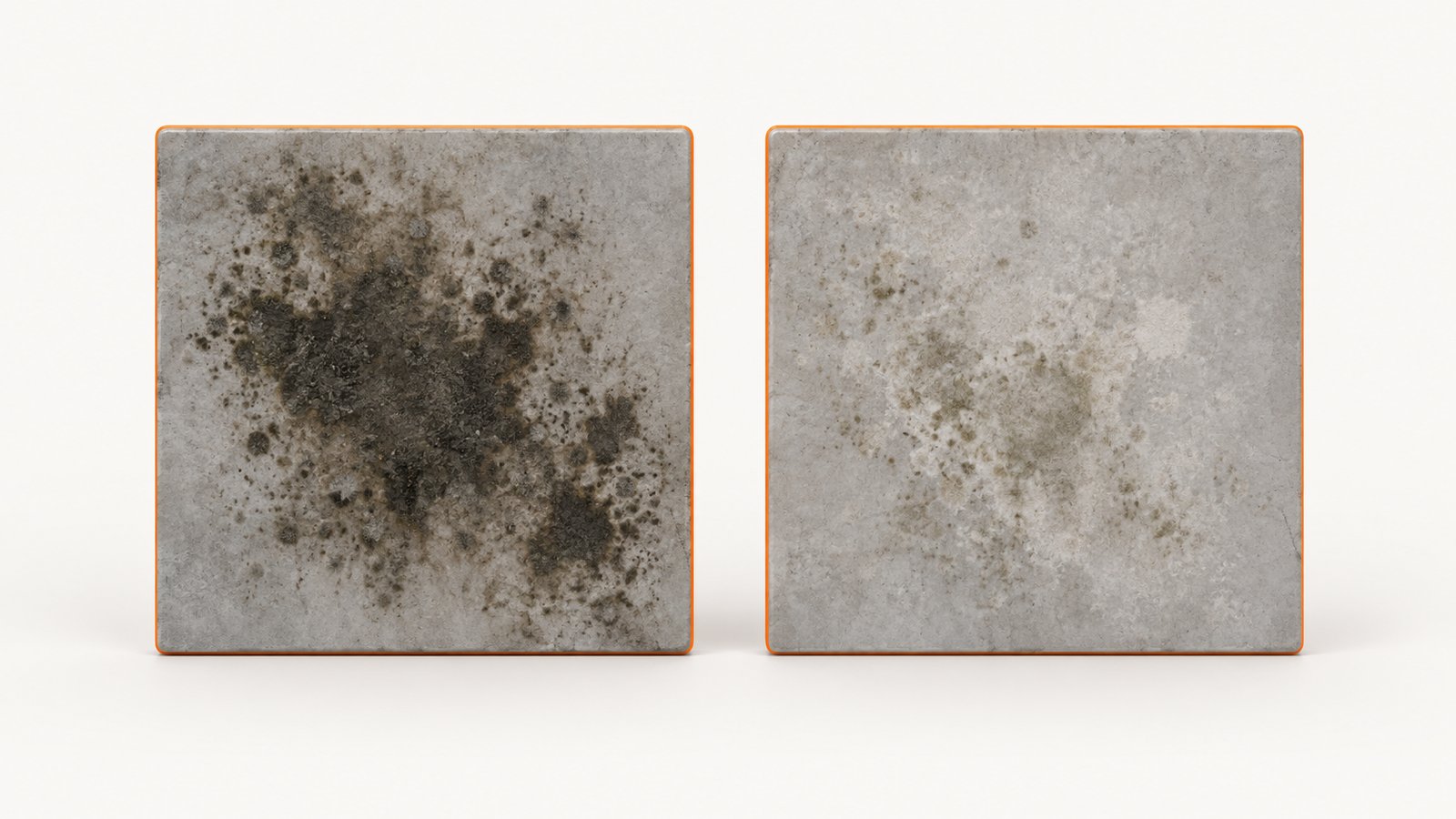
Black mold vs regular mold, side by side
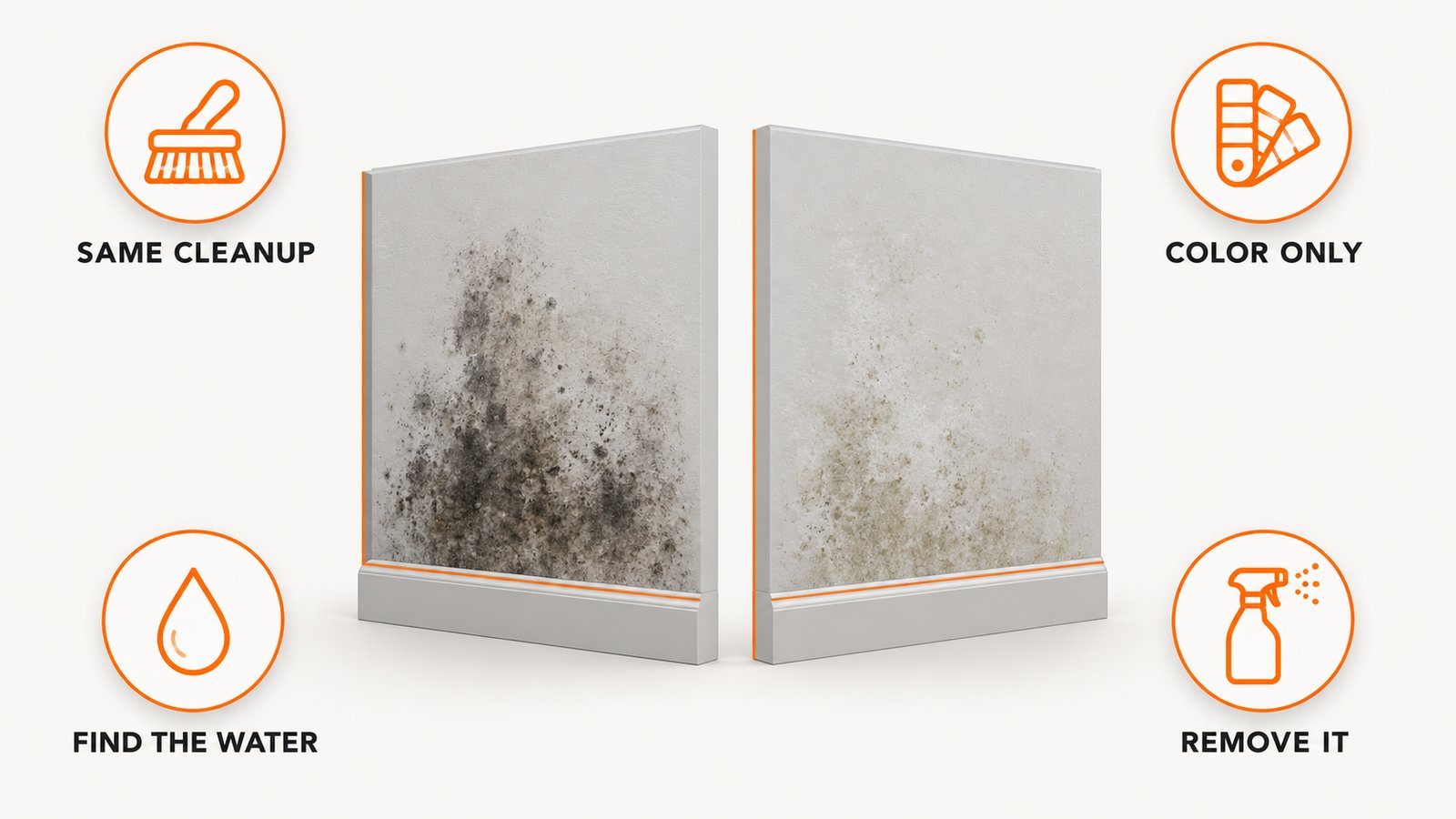
People type "black mold vs regular mold" expecting two products on a shelf. It is closer to asking about a red car and a regular car. One word is a color, and the other is a loose label for everything else. The table puts the two terms next to each other.
| Question | "Black mold" | "Regular mold" |
|---|---|---|
| What people mean by it | Dark green to black growth. Many people mean Stachybotrys chartarum, but the phrase is used for any dark patch. | Any mold that is not dark: white, green, gray, brown, orange or yellow growth. It is not a scientific term. |
| Can you tell by looking? | No. Dark growth can be several different molds, and some dark stains are not mold at all. | No. Pale growth can also be several molds, or mineral deposits, or something else. |
| What can a lab tell you? | A lab can name the organism in a collected sample. It cannot say how a person will react to it. | Same. A sample is the only route to a name. |
| What CDC says to do | "If you see or smell mold, you should remove it." | "If you see or smell mold, you should remove it." |
| What EPA says to do | Clean up the mold promptly and fix the water problem. | Clean up the mold promptly and fix the water problem. |
The last two rows match on purpose. Both agencies give one set of instructions for indoor mold. They do not split the advice by color. The rest of this page explains why, one row at a time.
If you landed here with a photo in mind, our guides to what mold looks like and black mold show example growth and spell out the limits of a photo.
What "black mold" actually means
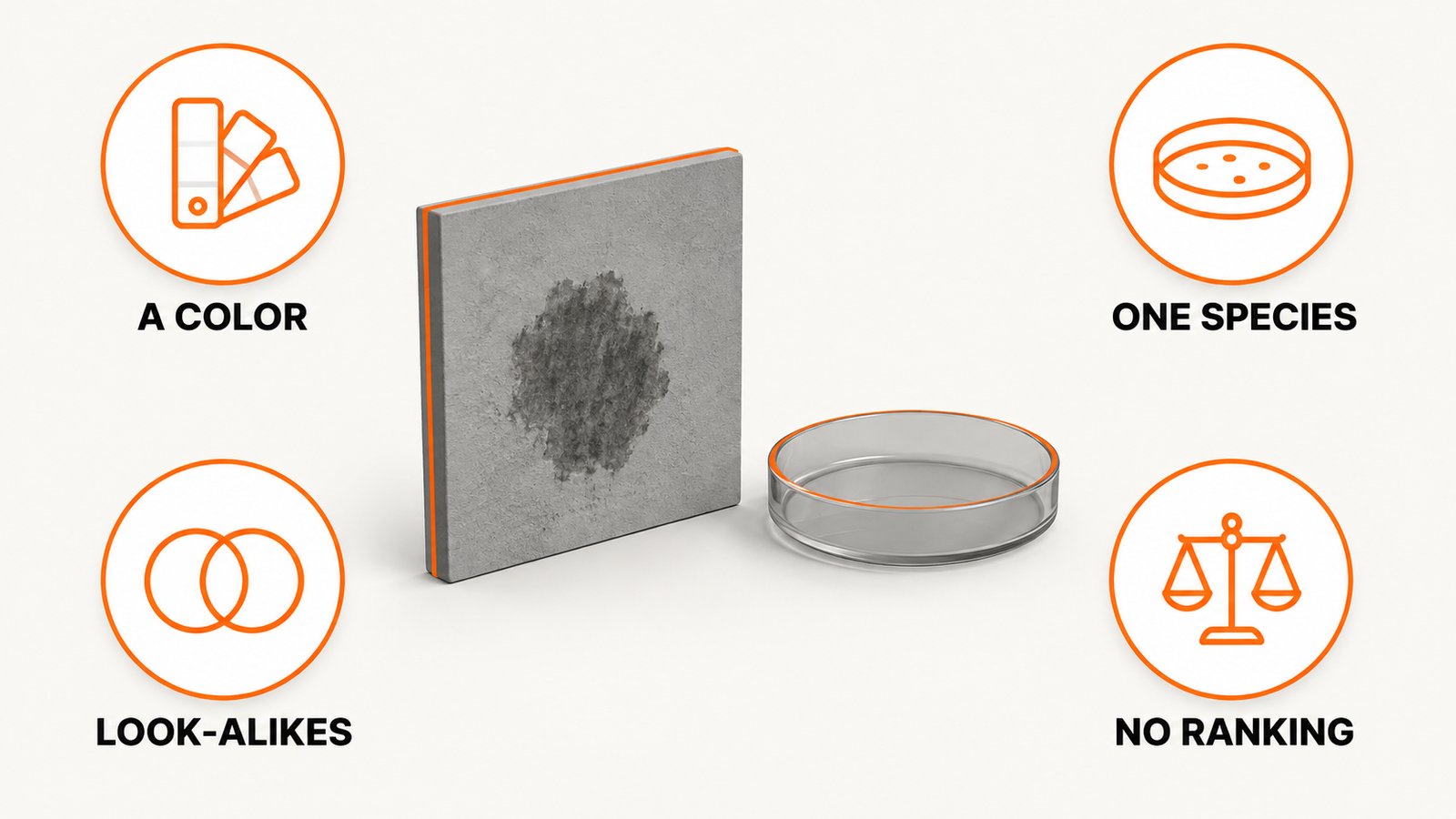
News stories, listings and ads use the phrase "black mold," but it has no formal definition. In everyday use it points at one of three things:
- A color. Any mold that looks dark green, gray-black or black on a wall, grout line or ceiling.
- One species. Stachybotrys chartarum, the greenish-black mold that grows on very wet, paper-rich material such as the facing on drywall. Our page on Stachybotrys chartarum covers it in detail.
- A scare phrase. A shorthand for "the dangerous kind," which is the part no photo can settle.
Several common indoor molds also look dark. Cladosporium often shows up as dark green to black patches on window sills and bathroom surfaces. Aspergillus includes species that grow black. So a black patch in your shower is a color match for Stachybotrys, but a color match is not an identification.
"Regular mold" is even looser. It is what people say when the growth is not black. It could be green mold, white mold, Penicillium or one of the dozens of other kinds described on our types of mold page.
CDC describes the situation without a ranking of types. Its mold page says mold "can look like spots of many different colors, and it can smell musty." EPA's guide says the same thing about its own photo: molds come in many colors, and it shows white and black ones together.
Black mold vs regular mold pictures
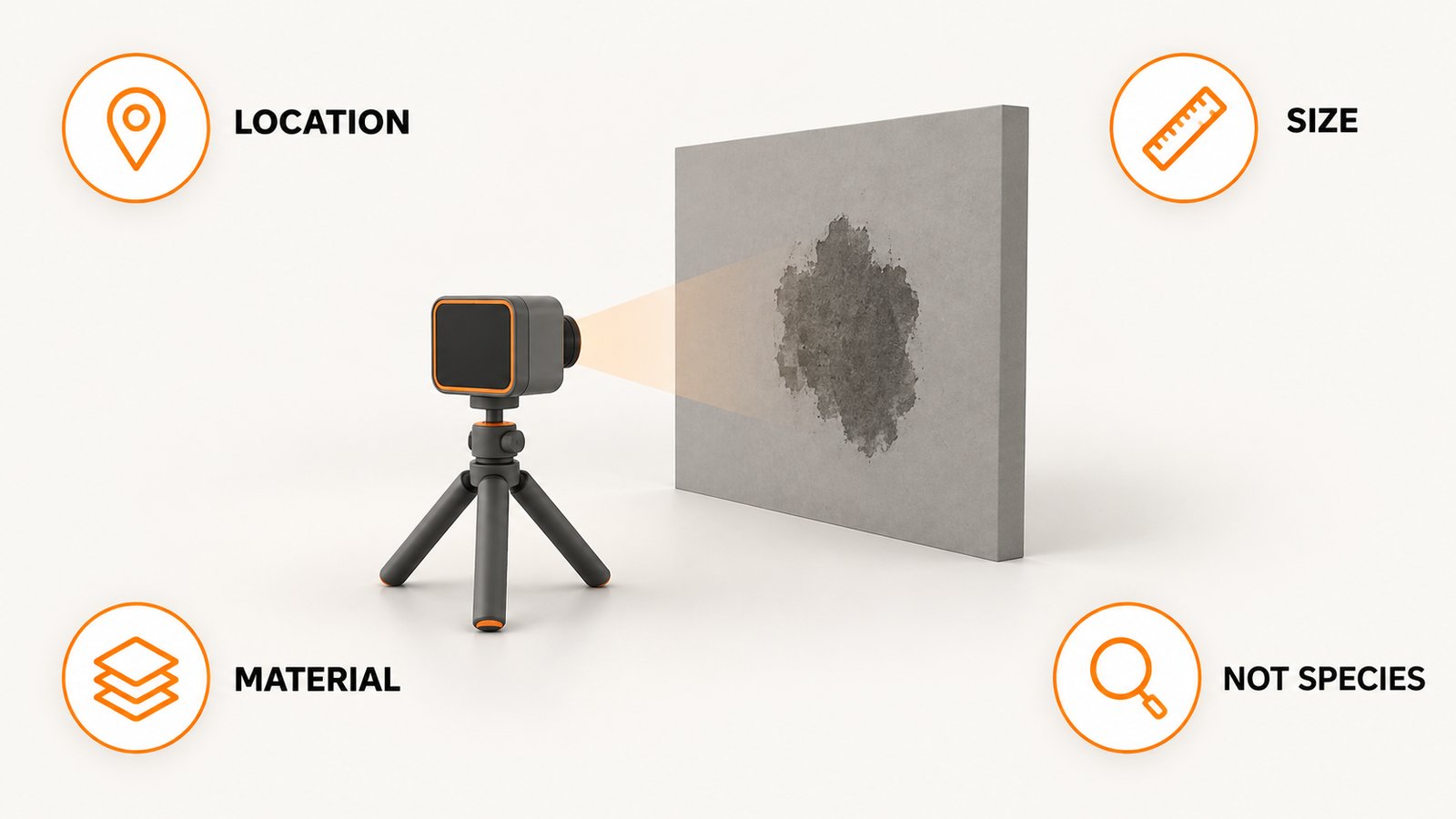
Searching for black mold vs regular mold pictures is a reasonable first step, as long as you treat the result as a description of the patch and not a name for it. A photo shows color, shape, size and the material underneath. It does not show species.
What you can usefully read off a photo or a close look:
- Where it is. A ceiling corner above a shower, the underside of a sink, a window frame with condensation, or a wall below a leak all point to a moisture source.
- How big it is. EPA uses about 10 square feet, roughly a 3 foot by 3 foot patch, as the dividing line for do-it-yourself work.
- What it is growing on. Hard, sealed surfaces behave differently from drywall, carpet or ceiling tile.
- Whether it is spreading. New spots near an old one tell you the water is still there.
What a photo cannot tell you is whether dark specks are Stachybotrys, Cladosporium, soot, dirt or a stain. Our guide on telling if it is mold from a photo walks through the look-alikes, and mold identification explains why even trained eyes use a lab for a name.
Is all black mold toxic
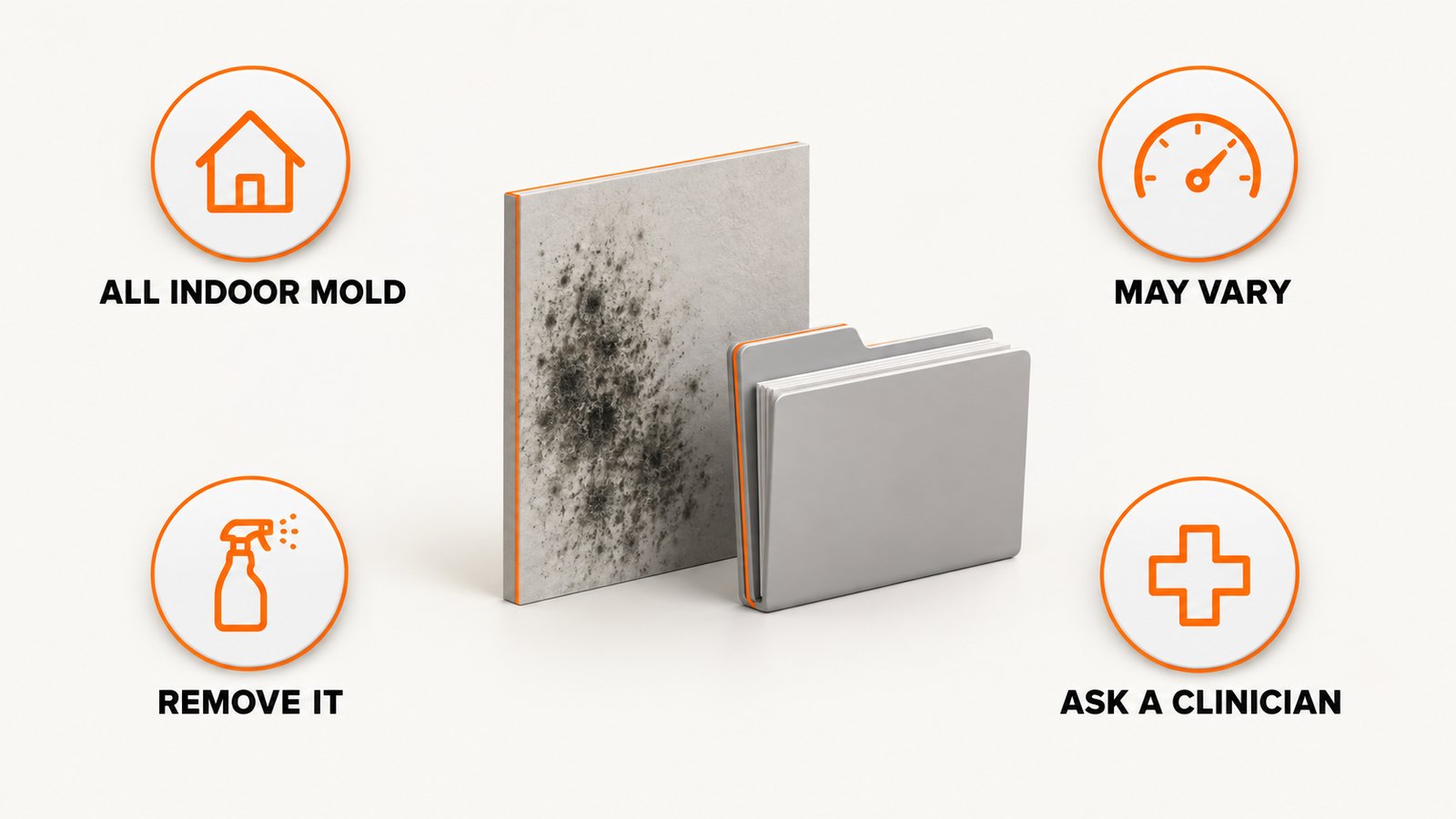
This page does not diagnose anything and it does not rank molds by risk. What the two agencies actually say is short, and it is worth reading carefully because the word "toxic" does a lot of work online.
EPA's guide says that molds "produce allergens (substances that can cause allergic reactions), irritants, and in some cases, potentially toxic substances (mycotoxins)." That sentence is about molds in general. It does not single out dark ones.
CDC says exposure to damp and moldy environments "may cause a variety of health effects, or none at all." It also says the health effects of mold are different for different people.
Put those together and the answer to "is all black mold toxic" is that neither agency sorts indoor mold into a toxic color and a safe color. The same page tells you what to do whatever you find: "You do not need to know the type of mold." That line is about cleanup, which is what you control.
If you or someone in your home has symptoms, or has asthma, an allergy or a weakened immune system, talk to a licensed clinician. That is a medical question, and this page is about cleaning and protective equipment only. For the general safety picture, see is mold dangerous and the home mold safety guide.
How to identify black mold vs regular mold
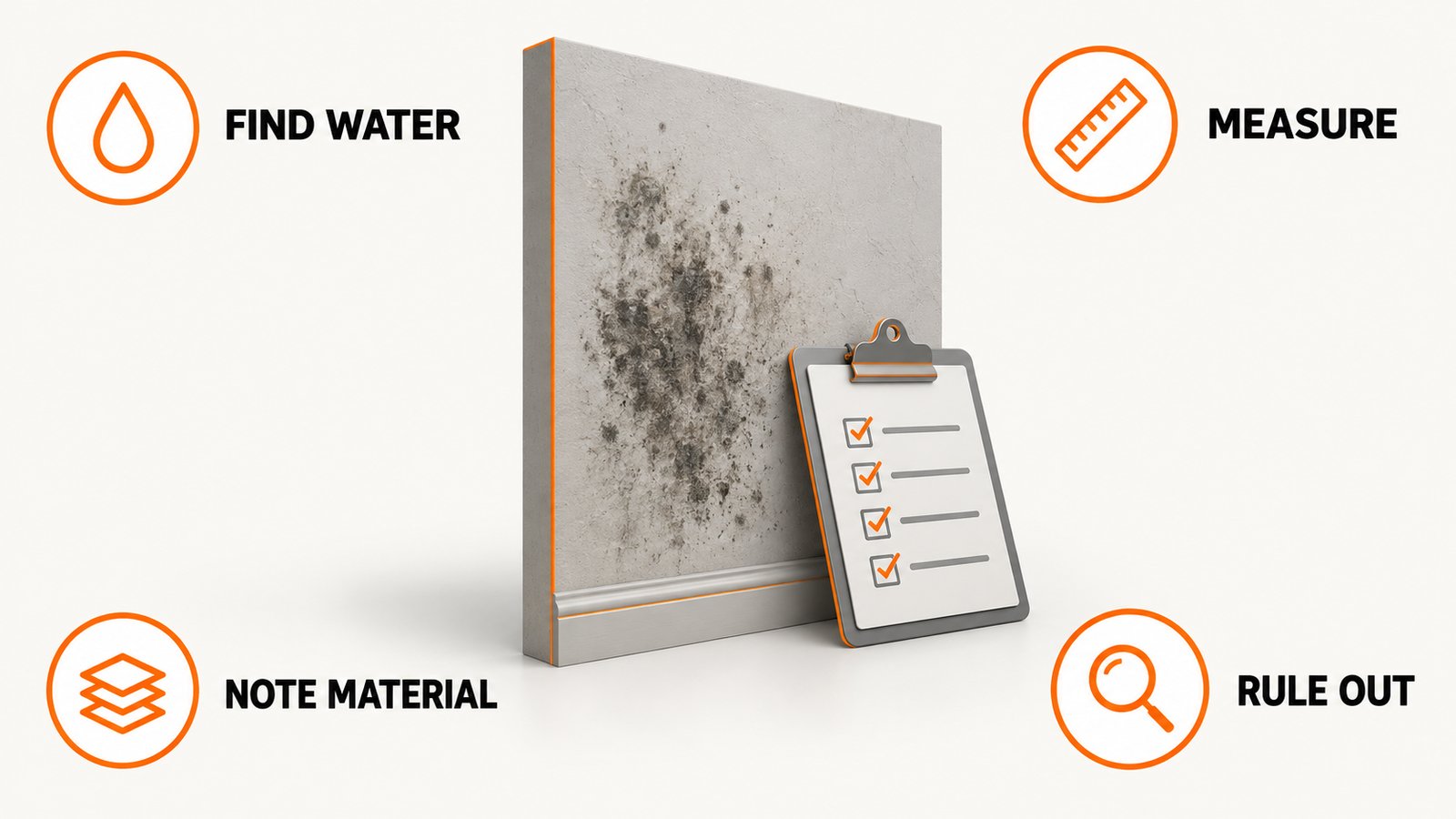
You cannot identify black mold vs regular mold by looking, but you can size up the situation, and that is the part that drives what you do. Use this order:
- Find the water. Check for leaks, condensation, a missing exhaust fan or a recent flood. Without water, the growth does not return.
- Measure the patch. Under about 10 square feet is the EPA line for most do-it-yourself cleanup.
- Note the material. Hard surfaces can be scrubbed. EPA says absorbent or porous materials such as ceiling tiles and carpet "may have to be thrown away if they become moldy."
- Rule out look-alikes. Our pages on mold vs mildew and black mold vs mildew cover surface film, soot and mineral crust.
- Decide whether a name matters. For cleanup it does not. For a lease dispute, a purchase or a contractor scope, it might. That is the case for a lab.
A mold detection app can help with step 4 by giving you a structured look at the visible surface. The Mold Scanner app offers AI-assisted visual screening with variable processing time. It does not tell black mold from other mold, and it does not name a species. See mold detection apps compared and is this mold for what a photo check can and cannot do.
What a lab can tell you
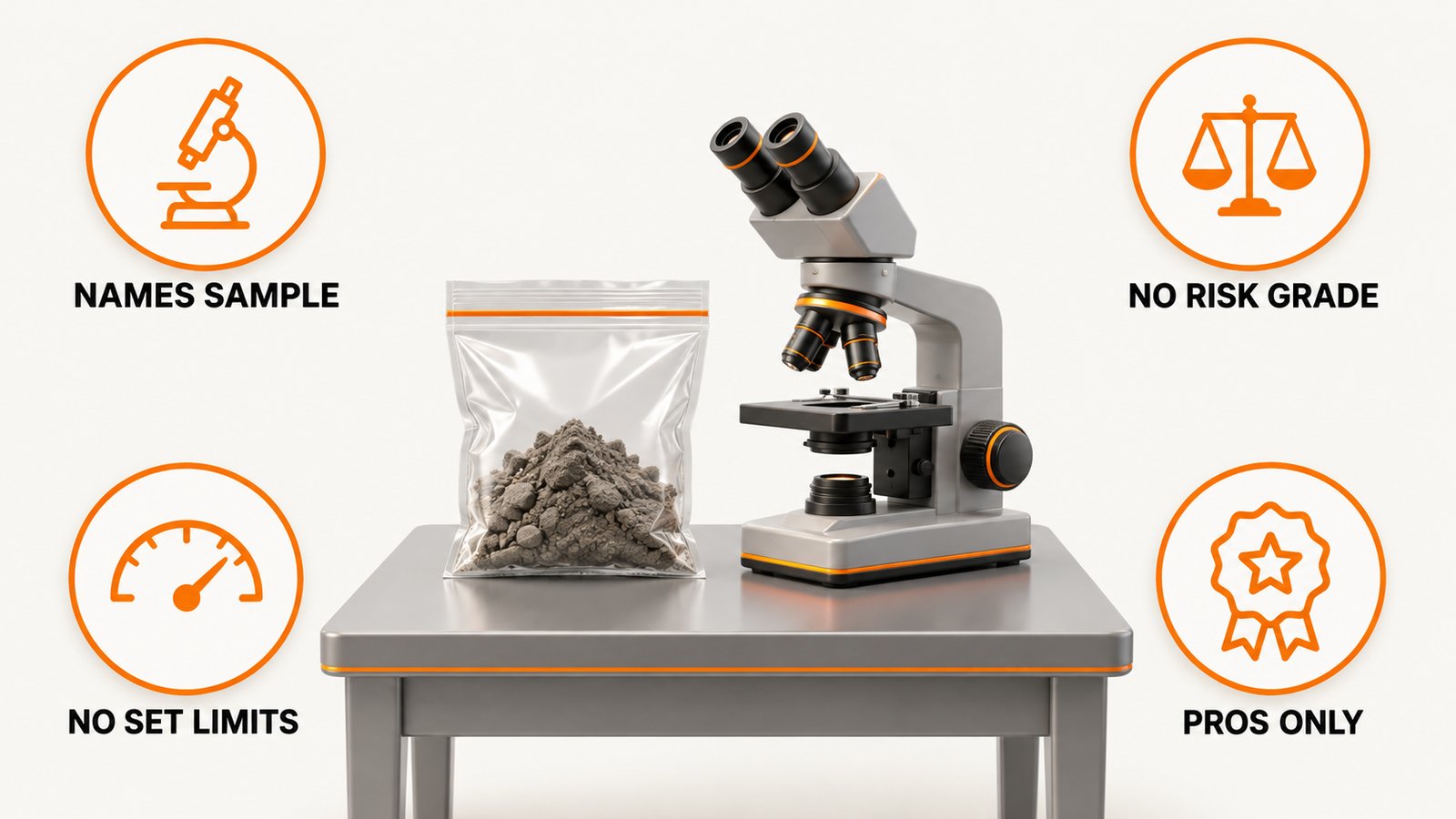
Lab work is the only way to put a species name on a sample, and it comes with limits that are worth knowing before you pay for it.
CDC states plainly: "CDC does not recommend mold testing." It explains that the health effects of mold differ from person to person, so you cannot rely on sampling and culturing, and that there are no set standards for what is an acceptable quantity of different kinds of mold in a home.
EPA adds that "in most cases, if visible mold growth is present, sampling is unnecessary," because no EPA or other federal limits have been set for mold or mold spores. It says surface sampling may be useful to check whether an area was cleaned adequately, and that sampling should be done by professionals with experience in designing sampling plans and reading results.
So a lab result can answer a narrow question such as "what genus is in this swab" or "did this cleanup work." It cannot tell you whether a past illness came from the home. It also cannot turn "black" or "regular" into a safety grade.
If you are weighing a home kit, our black mold test kit guide explains what those kits do and do not show, and professional mold testing covers when a hired tester makes sense. The mold inspection page covers the walk-through itself.
What to do about either one
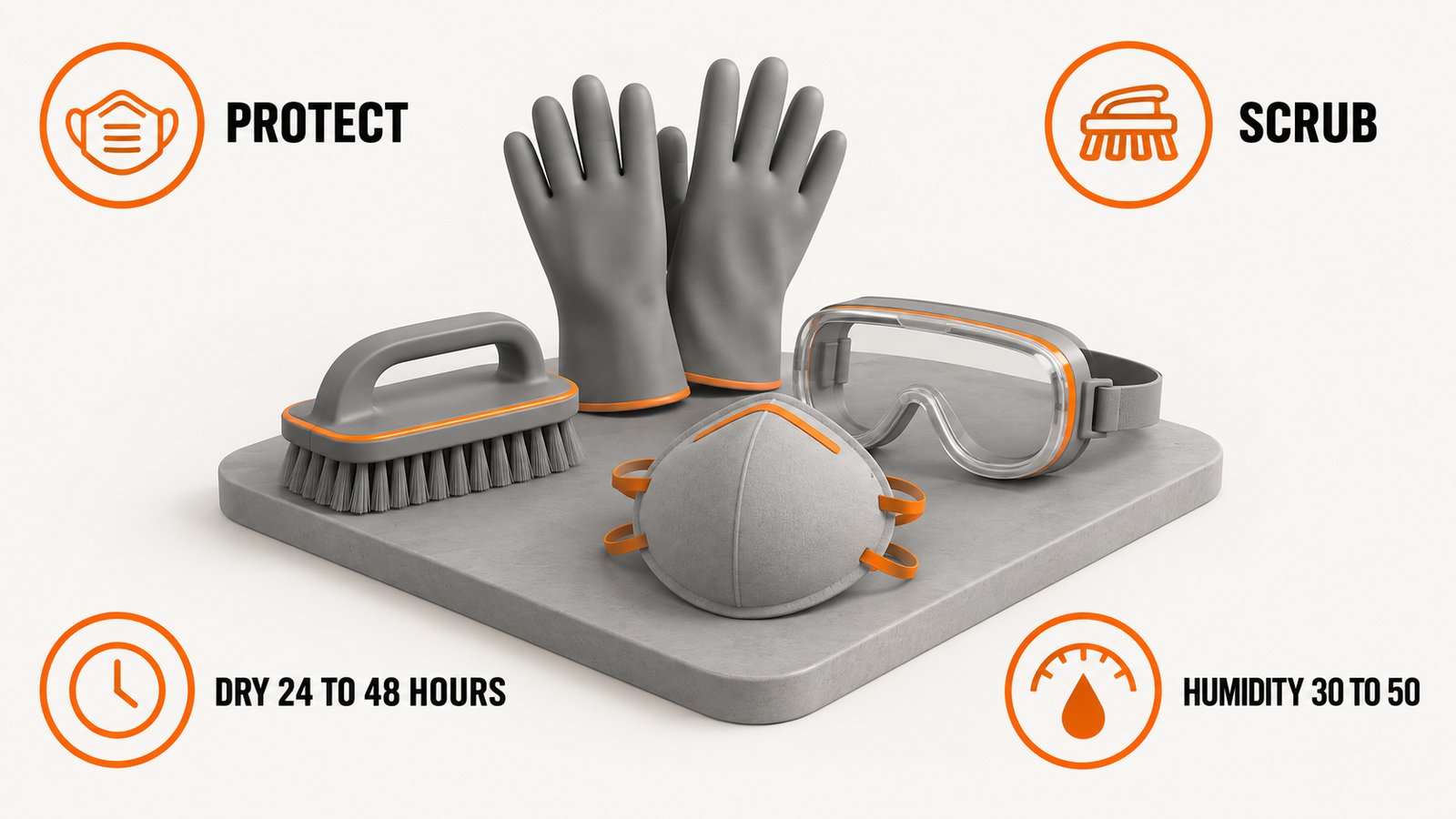
Because the guidance is the same, one plan covers both. This is the EPA and CDC approach in plain steps, for small areas on hard surfaces.
- Stop the water first. EPA says to dry water-damaged areas and items within 24 to 48 hours to prevent mold growth, and that the key to mold control is moisture control.
- Protect yourself. EPA's cleaning guidance lists gloves, goggles and an N-95 respirator.
- Scrub hard surfaces. EPA's wording is to "scrub mold off hard surfaces with detergent and water, and dry completely."
- Replace soaked porous material. Wet ceiling tile, carpet and similar items are often not recoverable.
- Keep humidity down. EPA suggests keeping indoor humidity below 60 percent, ideally between 30 and 50 percent.
Bleach is not the default fix for dark growth. EPA does not recommend a biocide such as bleach as routine practice, and color is not a reason to change that. Read does bleach kill mold before reaching for it. Full instructions are in how to get rid of mold and mold removal.
When to call a pro
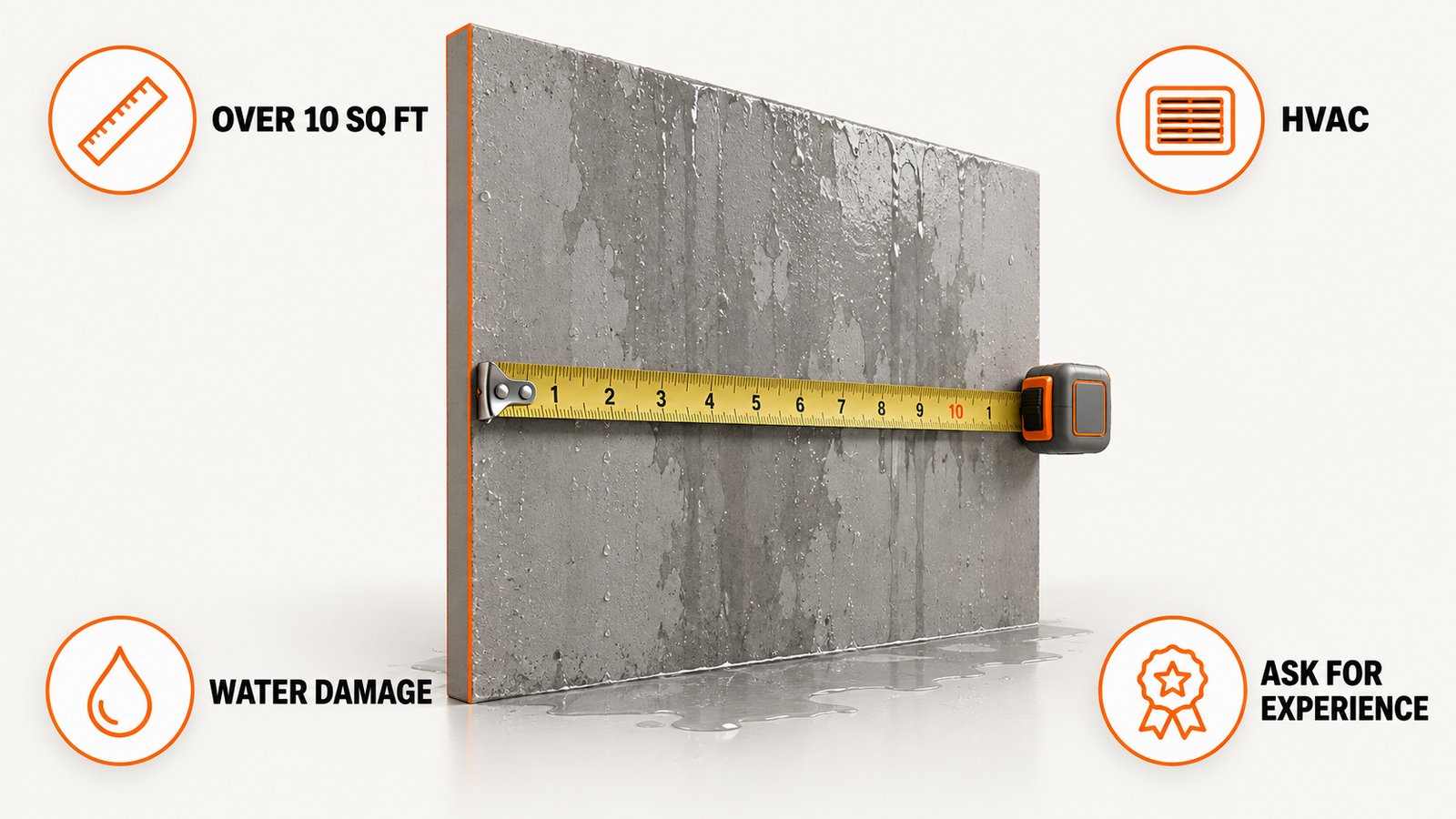
The triggers for outside help are the same for dark and pale growth, and none of them is color.
More than about 10 square feet. EPA says that if there has been a lot of water damage, or mold growth covers more than 10 square feet, consult its remediation guide. If you hire a contractor, make sure the contractor has experience cleaning up mold, check references, and ask the contractor to follow EPA's guide or the guidelines of ACGIH, IICRC or similar organizations.
Suspected HVAC contamination. EPA tells you to consult its air duct guidance before taking further action if mold may be in the heating or cooling system.
Water you cannot trace. If the growth keeps coming back, the moisture source has not been found. A mold inspection or a mold specialist can look for it, and mold remediation explains how pros scope the work. Expect costs in the ranges on mold remediation cost.
Health concerns. Ask a licensed clinician. A cleaning guide cannot answer a medical question.
Frequently asked questions
What is the difference between black mold and regular mold?
"Black mold" is a color description, often used for Stachybotrys chartarum, and "regular mold" is a loose label for everything else. Color alone cannot tell you the species. CDC says "No matter what type of mold is present, you need to remove it," so the cleanup plan is the same for both.
Is black mold worse than other mold?
Neither CDC nor EPA ranks indoor mold by color. CDC says exposure to damp and moldy environments "may cause a variety of health effects, or none at all," and EPA says molds in general can produce allergens, irritants and, in some cases, potentially toxic substances. For a health question, ask a licensed clinician.
Is all black mold toxic?
The agencies do not sort mold into toxic and non-toxic by color. EPA notes that some molds produce mycotoxins, and many different molds look dark. A dark patch could be one of several organisms, or not mold at all, so color is not a safe basis for either alarm or relief.
Can I tell black mold from regular mold by looking at it?
No. Many molds look dark, and pale growth can also be several kinds. A photo shows color, size, location and material. Only a laboratory analysis of a collected sample can name the organism.
Does black mold need different cleanup than regular mold?
No. EPA says to clean up mold promptly and fix the water problem, and to scrub mold off hard surfaces with detergent and water and dry completely. CDC says "You do not need to know the type of mold." Porous materials that are moldy may have to be thrown away.
Should I test to find out if it is black mold?
CDC states "CDC does not recommend mold testing." EPA says that in most cases, if visible mold growth is present, sampling is unnecessary. Testing can make sense for a specific decision, such as checking whether a cleanup worked, and it should be done by an experienced professional.
Does the Mold Scanner app tell black mold from other mold?
No. The app gives an AI-assisted visual screening of visible surfaces, with variable processing time. It does not name a species, and it is not a professional inspection or a lab test.
When should I hire a professional for dark mold?
EPA points to professional help when the area is larger than about 10 square feet, when there has been a lot of water damage, or when the heating or cooling system may be involved. Color is not one of the triggers.
Sources
Every claim on this page traces to one of these. Links open the primary document.