Four jobs people call a mold specialist
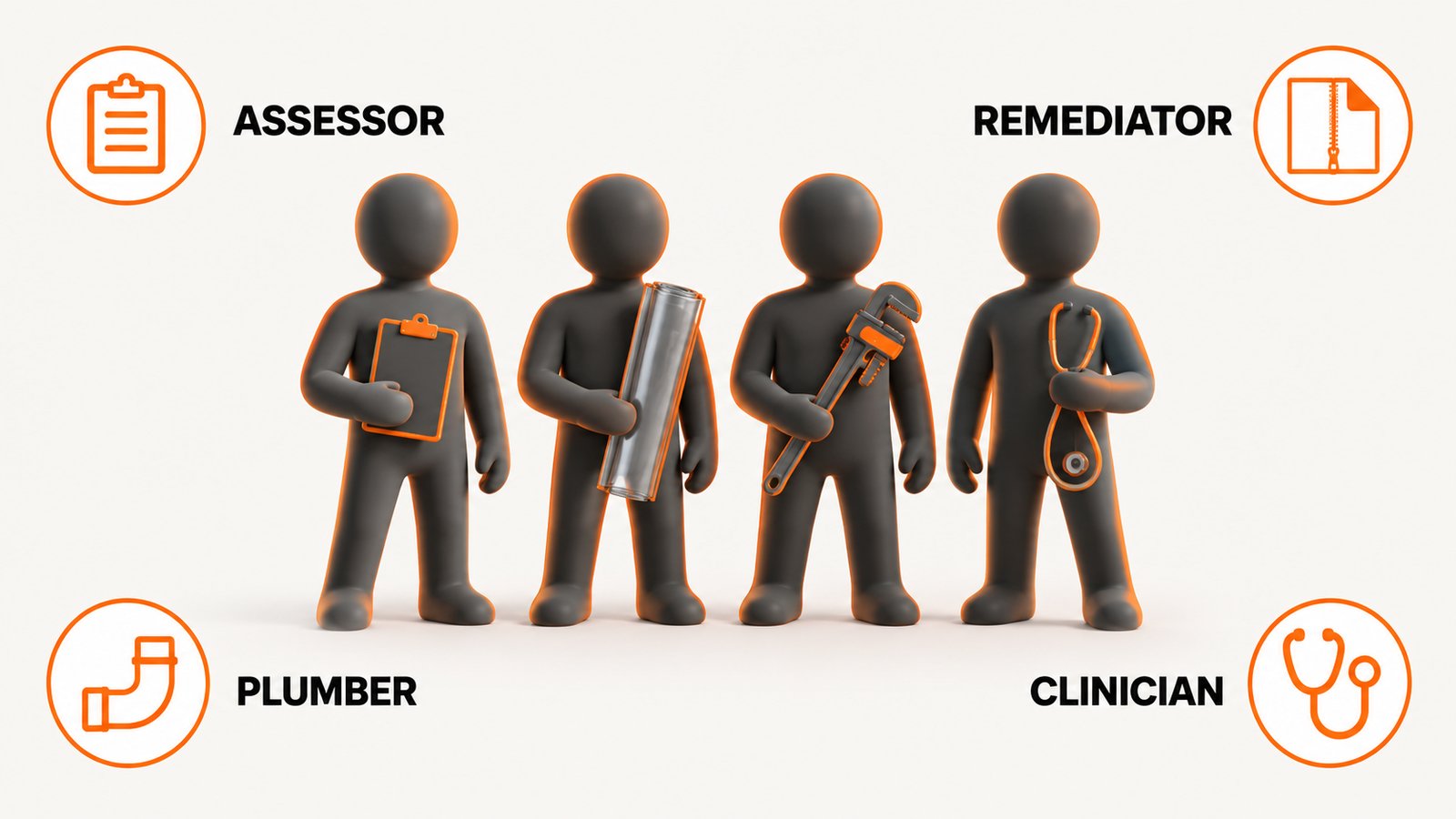
Search for a mold specialist and you get inspectors, remediation companies, restoration franchises, plumbers and clinics, all under the same phrase. They do different work, they are paid differently, and hiring the wrong one is how people end up paying twice.
| Who they are | What they do | Call them when | Look for |
|---|---|---|---|
| Assessor, inspector or industrial hygienist | Inspects the building, finds moisture, defines the extent, writes a scope of work and sets acceptance criteria. | You need to know how far it goes, or you need an independent scope before hiring anyone to tear anything out. | State license where required, ACAC or AIHA credentials, no financial interest in the removal work. |
| Remediation contractor | Sets containment, removes affected material, cleans, dries and rebuilds. | Growth is past about 10 square feet, or there was heavy water damage, or it is in an air system. | Mold experience, references, written scope, and work run to the IICRC S520 standard. |
| Plumber, roofer or envelope contractor | Stops the water: the leak, the drainage, the flashing, the grade, the condensation. | Always, and usually first. Remediation without this is a repeat visit. | Trade license, insurance, and a willingness to show you the source. |
| Licensed clinician | Everything about a person: history, examination, testing, treatment. | Anyone in the household is unwell or has questions about exposure. | A licensed medical professional. EPA advises consulting one before starting cleanup if you have health concerns. |
The order matters as much as the choice. Find and stop the water first, because EPA's position is that the water or moisture problem has to be completely fixed before a cleanup can be considered finished. Removing growth while the leak still runs buys a few weeks.
Credentials that mean something

There is no single national license for mold work in the United States. What exists is a mix of state programs, industry standards and third-party certifications, and knowing which is which stops a laminated card from doing more work than it should.
State licensing, where it exists. Requirements vary widely and change, so check your own state. Three current examples show the range:
- Texas licenses the whole chain through the Department of Licensing and Regulation, with separate credentials for Mold Assessment Technician, Mold Assessment Consultant, Mold Assessment Company, Mold Remediation Contractor, Mold Remediation Company, Mold Remediation Worker Registration and Mold Analysis Laboratory.
- New York runs a mold program under Article 32 of the Labor Law that requires training and licensing before a contractor may advertise or perform covered work, with limited exceptions such as owners working on their own property.
- Florida licenses mold assessors and mold remediators and, under section 468.8419 of the Florida Statutes, bars a mold assessor or the assessor's company from performing remediation on a structure where they provided the assessment within the previous 12 months, with a narrow carve-out for certain certified contractors.
The industry standard. ANSI/IICRC S520 is the consensus standard for professional mold remediation. Asking a contractor which standard the work will follow, and getting S520 as the answer in writing, is a fair filter.
Certifying bodies. The American Council for Accredited Certification and the American Industrial Hygiene Association certify individuals on the assessment side. EPA specifically names the ACGIH guidelines and the IICRC alongside its own remediation guide as the recommendations a hired contractor should follow.
Insurance and references. General liability plus pollution coverage, and two references from jobs like yours. EPA's own advice is simply to make sure the contractor has experience cleaning up mold and to check references.
Why the assessor should not also do the removal
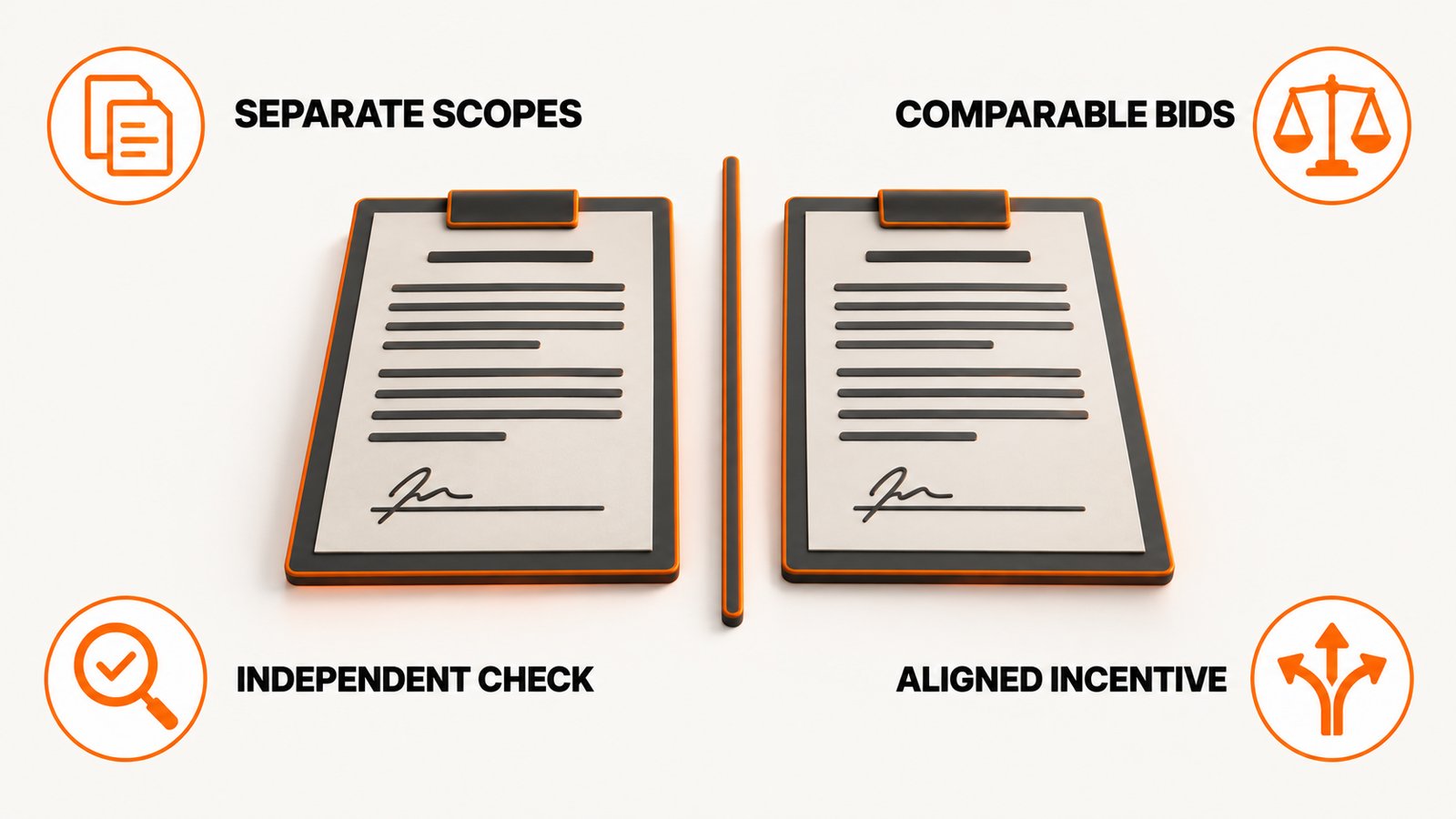
This is the part of the industry most people learn about too late. When the company that tells you how bad it is also sells the removal, the size of the problem and the size of the invoice are set by the same person.
Two states have written that conflict into law. New York's mold program lists, as protection against fraud, prohibiting the performance of both the assessment and the remediation on the same property by the same individual or company. Florida's statute bars an assessor or the assessor's company from remediating a structure they assessed within the last 12 months.
Even where nothing prohibits it, the separation is worth paying for on any job large enough to involve demolition:
- An independent scope gives you a document to bid against, so contractors quote the same work.
- Post-remediation verification means something when the person checking did not do the work.
- Insurance and disputes go better with an independent assessment in the file.
On a small bathroom patch, none of this applies. EPA's guidance is that under about 10 square feet, in most cases you can handle the job yourself, and our removal guide covers that work.
How to vet one before you sign
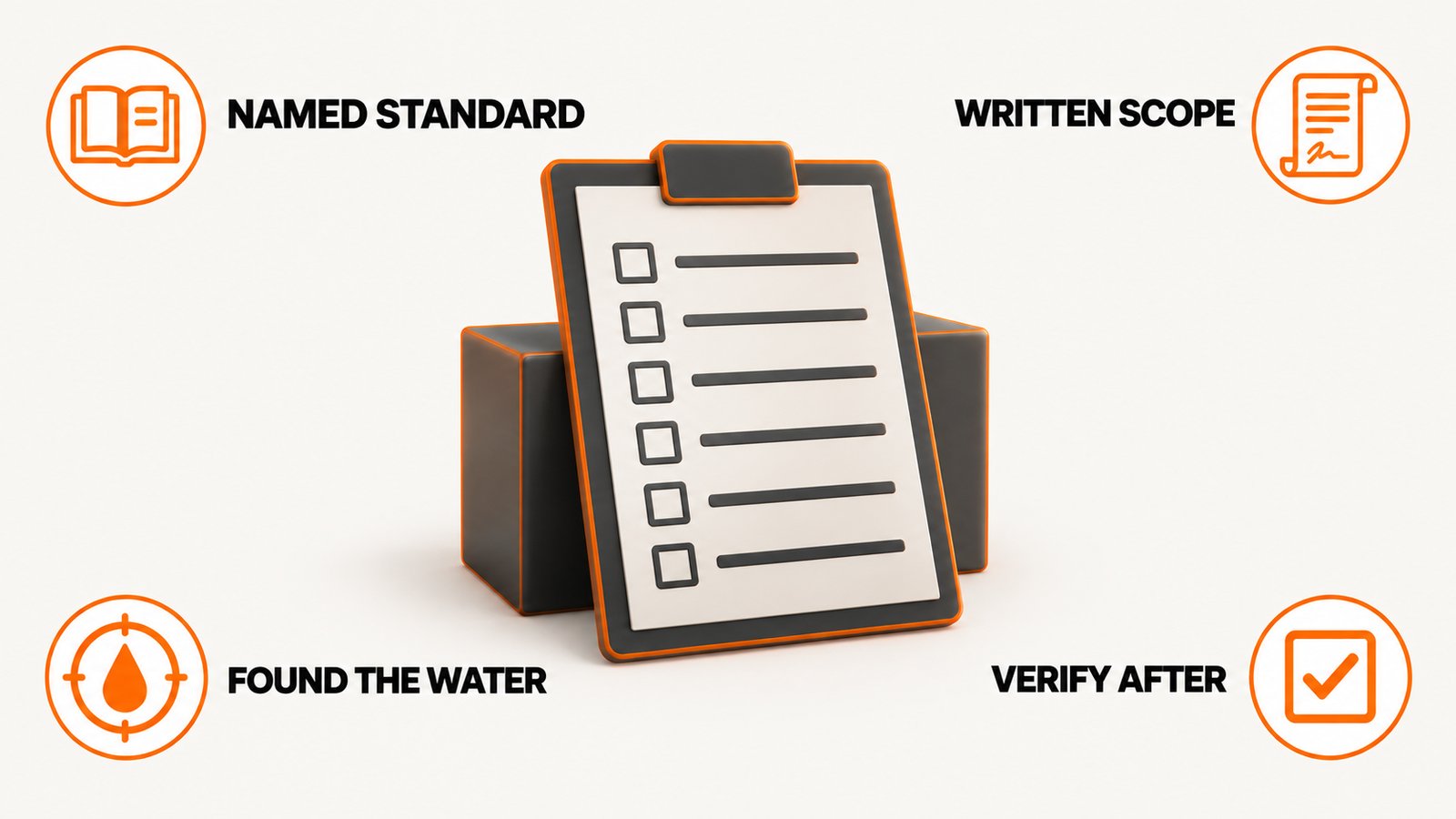
Six questions, asked on the phone, will thin the field fast.
- What standard will the work follow? You want a named standard, in writing. EPA points to its own remediation guide, ACGIH guidelines or the IICRC.
- What is the written scope? Materials to be removed, containment, the drying plan, the rebuild, and what is excluded. A price with no scope is not a quote.
- Who is fixing the water, and how do you know you found it? If the answer is vague, the job will not hold. EPA is explicit that the moisture problem has to be fixed before the work can be considered finished.
- How will we know it worked? EPA's own completion test is practical: the water problem is fixed, visible growth and moldy odors are gone, a revisit shows no signs of water damage or new growth, and people can occupy the space without complaints.
- Are you assessing, removing, or both? If both, ask why, and consider hiring an independent assessor anyway.
- License, insurance and references? Verify the license number with the state rather than accepting a screenshot.
Two warning signs worth naming. A free inspection that ends in a same-day contract is a sales call, not an assessment. And a company that leads with a laboratory number rather than a moisture finding is selling the wrong thing, because CDC states that you do not need to know the type of mold and does not recommend mold testing. Our page on professional mold testing covers what sampling can and cannot support.
What drives the price

There is no honest flat rate, and anyone quoting one over the phone has not seen the job. What actually moves the number:
- Affected area and material. Hard surfaces get cleaned. EPA notes that absorbent or porous materials such as ceiling tiles and carpet may have to be thrown away, because growth fills the spaces in the material and can be impossible to remove completely. Replacement is where the money goes.
- The water category. EPA is direct that damage caused by sewage or other contaminated water calls for a professional experienced in that work, which is a different scope and a different price.
- Access and containment. A crawl space, an attic in August or a wall behind cabinetry all cost more than an open bathroom wall.
- The rebuild. Removal leaves a hole. Drywall, paint, trim, flooring and cabinetry are frequently the larger half of the invoice.
- The HVAC question. EPA says not to run a system you know or suspect is contaminated, because it could spread growth through the building, and to read its duct-cleaning guidance before acting.
For real ranges and what each line item covers, see mold inspection cost, mold remediation cost and mold test cost.
What about a mold doctor?
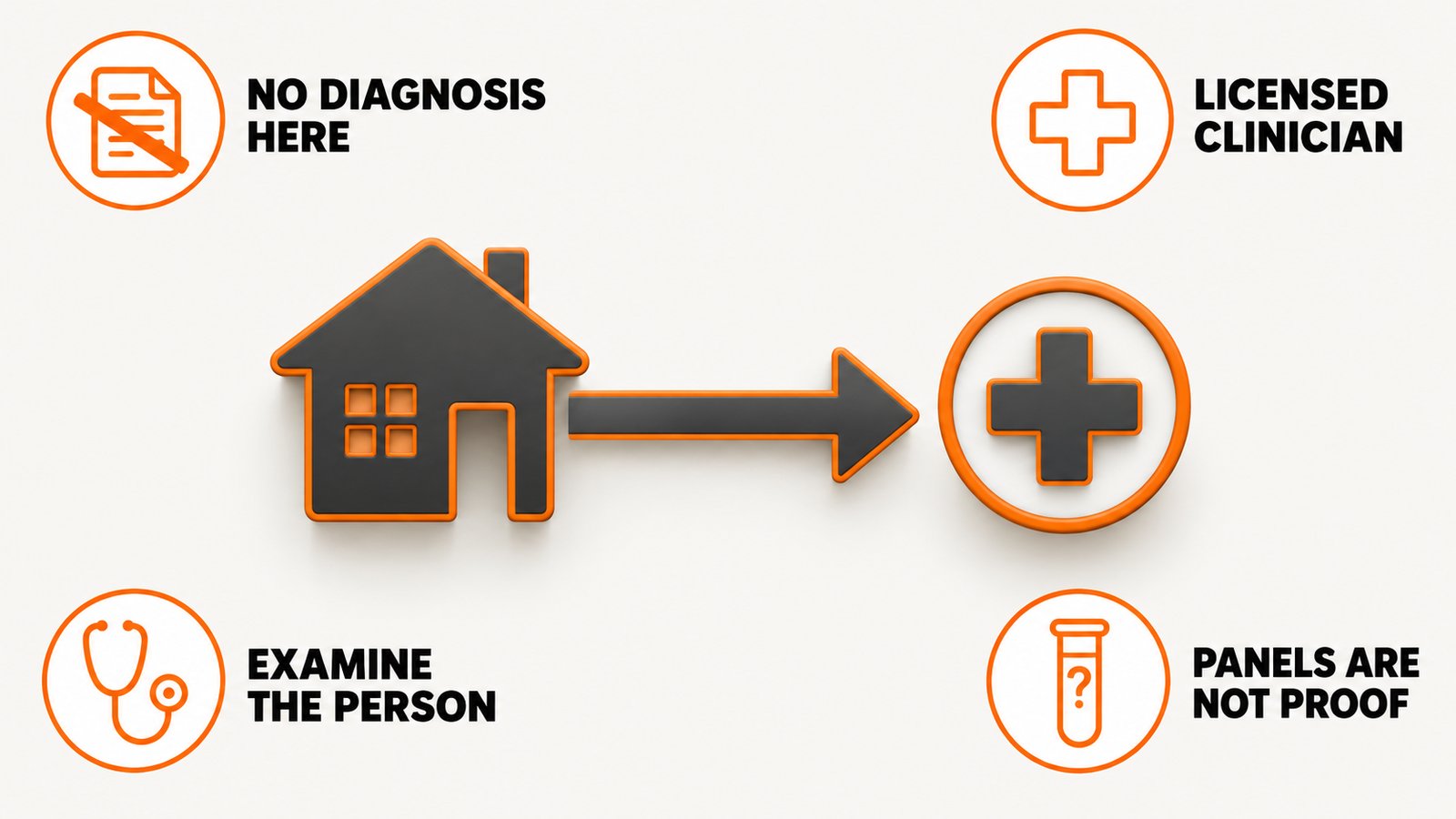
People searching for a mold doctor are usually asking a medical question, and this page does not answer medical questions. What it can do is describe the field honestly.
Where the evidence is settled. The position paper on the medical effects of mold exposure in the Journal of Allergy and Clinical Immunology reviews the mechanisms by which molds are known to cause human disease, naming asthma, allergic rhinitis, allergic bronchopulmonary aspergillosis, sinusitis and hypersensitivity pneumonitis. Those are handled by ordinary licensed medicine, and allergists and pulmonologists see them routinely.
Where it is not. The same paper states that many newer mold-related illnesses hypothesized in recent years remain largely or completely unproved. CDC's own framing is that exposure to damp and moldy environments may cause a variety of health effects or none at all, that people with asthma or a mold allergy may have severe reactions, and that immune-compromised people and people with chronic lung disease may get lung infections from mold.
What to watch for in a clinic that markets to this audience. A practice that opens by selling a testing panel and a supplement protocol is selling, not diagnosing. Our comparison of the mold blood test and the mycotoxin urine test covers what those panels measure and what they do not, and mycotoxin testing covers the environmental side of the same claim.
The safe rule. Take health questions to a licensed clinician who can examine the person. Take building questions to a qualified building professional. Neither one substitutes for the other, and EPA advises consulting a health professional before starting cleanup if you have health concerns.
When to call one and when not to
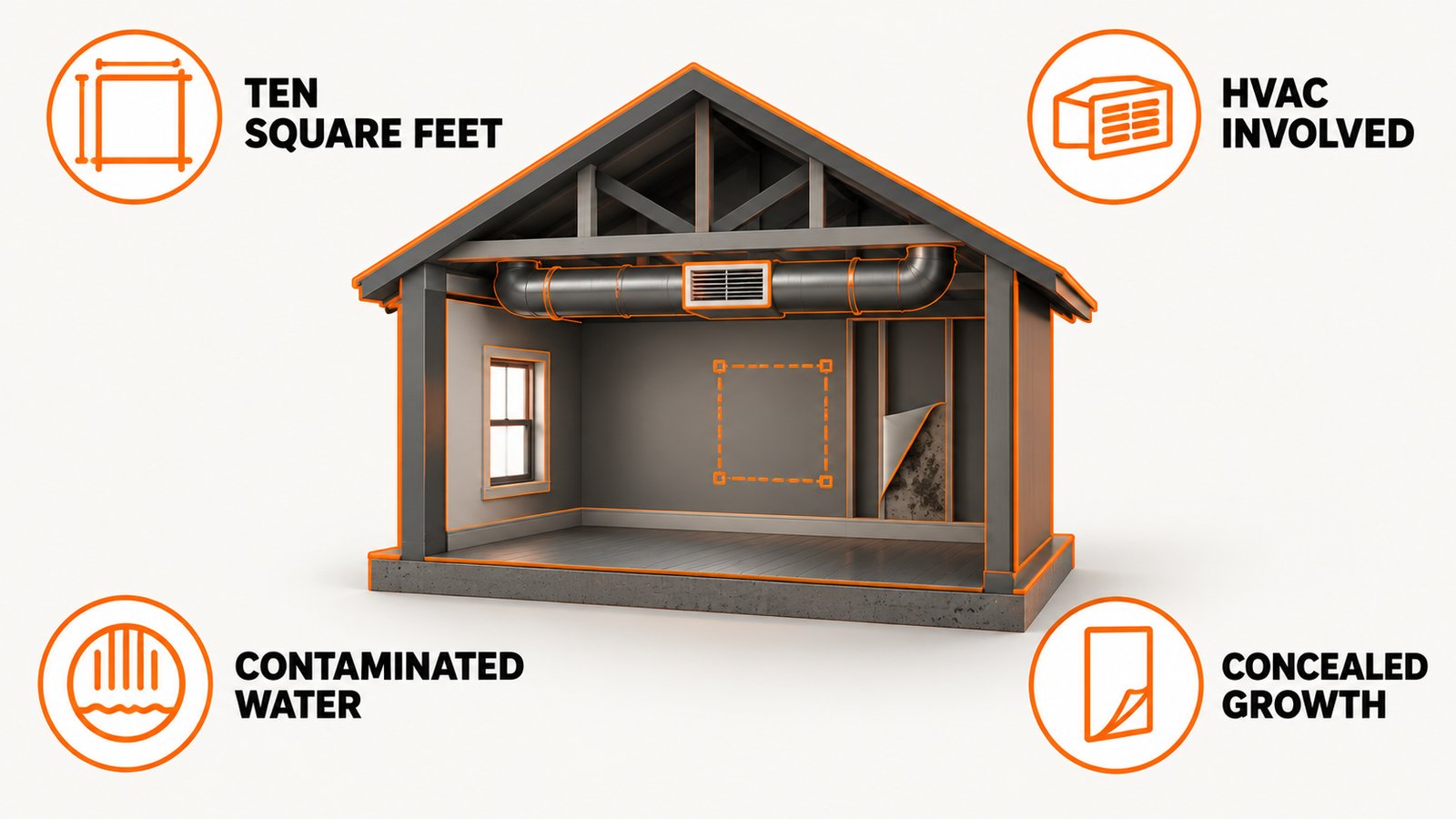
Call a professional when growth covers more than about 10 square feet, there has been significant water damage, the water came from sewage or another contaminated source, an air-handling system is or may be involved, the growth is concealed inside an assembly, or someone in the household is in a higher-risk group. EPA names each of those situations directly.
Handle it yourself when the patch is small, the surface is hard and non-porous, and you have found the water. EPA's method is detergent and water, scrub, then dry completely, wearing gloves, goggles without ventilation holes and an N-95 respirator. Do not paint or caulk over it, because paint applied to a moldy surface is likely to peel.
Do not use an app or a photo as the deciding factor. A phone image describes a visible surface. It does not measure moisture inside a wall, define a scope or replace an inspection. Guides for the surfaces most often involved are at mold behind walls and mold in air ducts.
If you are a renter, the sequence is different. Notice in writing usually comes before any contractor, and the rules vary by jurisdiction. Our page on mold in an apartment covers documentation and notice.
Frequently asked questions
What does a mold specialist actually do?
It depends which one you hired. An assessor or industrial hygienist inspects the building, finds the moisture, defines how far the problem goes and writes a scope. A remediation contractor sets containment and removes affected material. A plumber or envelope trade stops the water. A licensed clinician handles anything about a person. Those are four separate jobs sold under one phrase.
Do I need an inspector and a remediation company, or just one?
On a small job, neither. On a large one, both, and preferably not the same firm. New York's mold program prohibits the same individual or company from performing the assessment and the remediation on the same property, and Florida bars an assessor from remediating a structure they assessed in the previous 12 months. Even where it is allowed, an independent scope lets you compare bids on identical work.
Is mold remediation licensed in every state?
No. There is no single national license, and requirements vary by state and change over time. Texas licenses assessors, remediators, companies and analysis laboratories through its Department of Licensing and Regulation. New York licenses the work under Article 32 of its Labor Law. Florida licenses mold assessors and remediators. Many states license none of it. Check your own state agency directly.
What certifications should a mold contractor have?
Ask which standard the work will follow and expect ANSI/IICRC S520 in writing. On the assessment side, ACAC and AIHA certify individuals. EPA advises that a hired contractor follow the recommendations in its own remediation guide, the ACGIH guidelines or the IICRC, so asking for one of those by name is a reasonable filter.
How big does a mold problem have to be before I hire someone?
EPA's line is about 10 square feet, less than roughly a 3 foot by 3 foot patch. Below that, most people can do the cleanup themselves with detergent, water and basic protective equipment. Above it, or after significant water damage, EPA points to its guide for schools and commercial buildings, which it says applies to other building types.
Should the same company that tests my home also fix it?
Be careful with that. The party that defines the size of the problem also defines the size of the invoice, which is why two states restrict the arrangement outright. If a single company is doing both, ask why, get the scope in writing, and consider paying separately for an independent assessment on any job involving demolition.
What is a mold doctor?
It is a marketing phrase rather than a recognized specialty. Mold-related conditions with established mechanisms, including asthma, allergic rhinitis, sinusitis, allergic bronchopulmonary aspergillosis and hypersensitivity pneumonitis, are treated by licensed clinicians such as allergists and pulmonologists. The published position paper on mold and health also notes that many newer hypothesized mold illnesses remain largely or completely unproved. Take health questions to a licensed clinician.
Sources
Every claim on this page traces to one of these. Links open the primary document.