What Is Aspergillus?
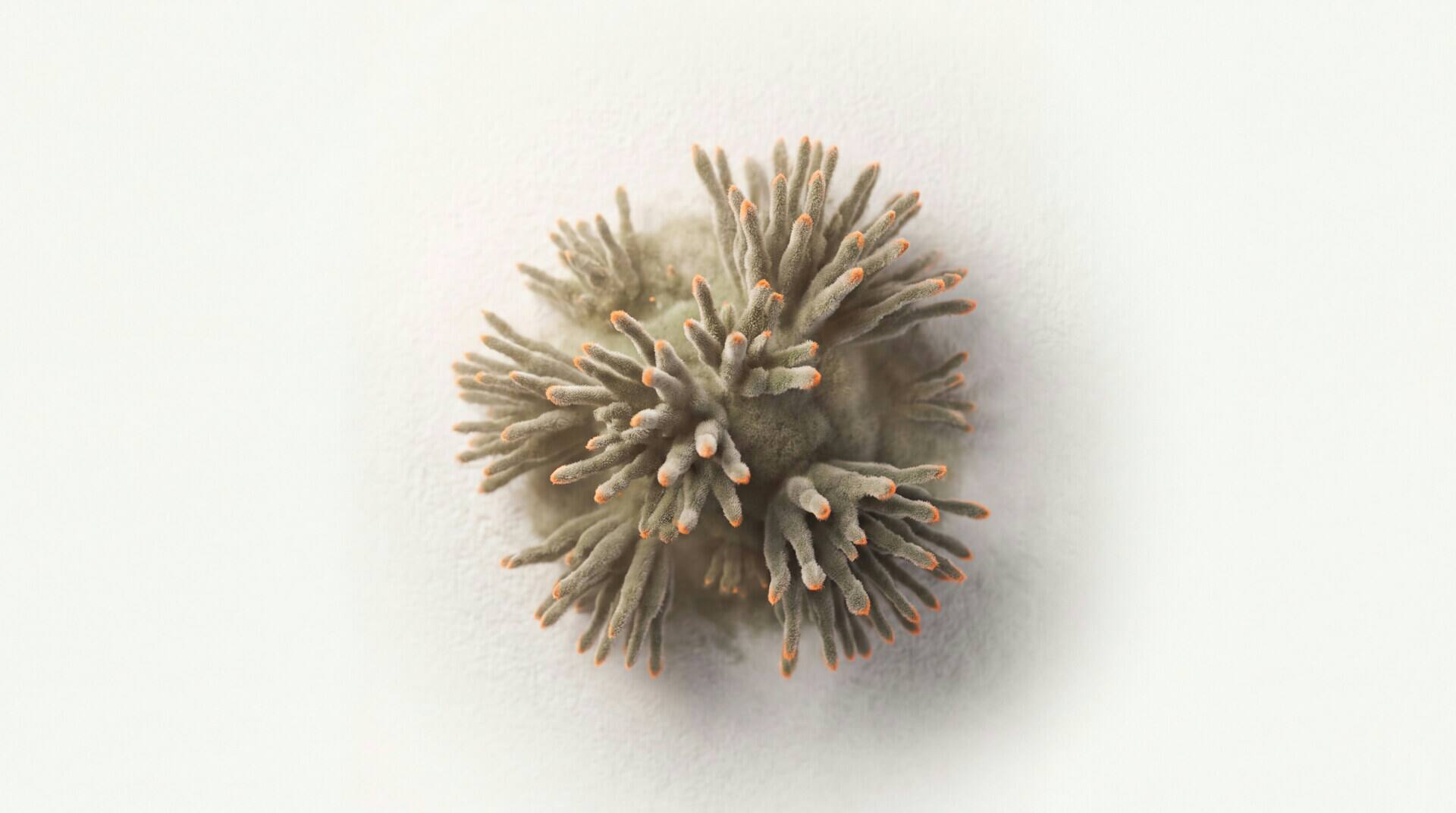
Aspergillus is not one mold. It's a genus, a whole family of molds that share a common structure. Scientists have named hundreds of Aspergillus species, and the genus is among the most common molds found in house dust anywhere in the world. If you took a dust sample from your floor right now, there's a strong chance some Aspergillus would show up in it.
The name comes from the shape of the mold under a microscope. The spore-bearing head looks like an aspergillum, the brush used to sprinkle holy water. To the naked eye, though, Aspergillus doesn't look like one thing at all. Colors range from green to yellow to brown to black, depending on the species and its age. A young colony might look pale and fuzzy. The same colony a week later can be dark and powdery.
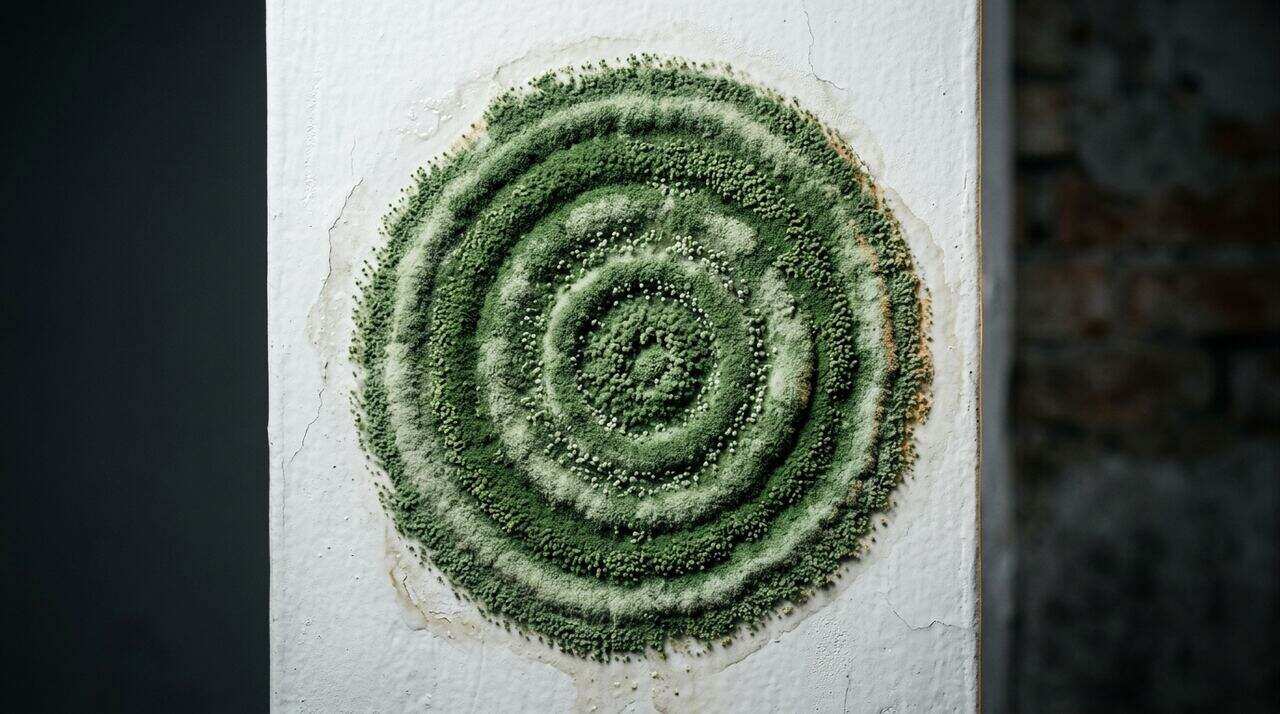
This is why guessing by color fails. People see a green patch and assume one thing, or a black patch and panic about "toxic black mold." Aspergillus breaks that habit, because a single genus can appear in almost any color, including the green mold shades people most expect. It's one of many types of mold you'll find indoors, and like the rest, it takes a lab to identify with certainty.
What every Aspergillus species shares is a taste for warm, slightly damp spots with something organic to eat. Dust, wood, paper, fabric, food, and soil all work. The spores float through the air constantly, indoors and out. They only become a colony when they land on a surface that stays damp long enough to let them grow. No damp surface means no colony, just spores passing through.
The Aspergillus Species You Actually Meet
Most homeowners will never know the exact species in their house without a test. But a handful of Aspergillus species show up often enough that they're worth knowing by name.
Aspergillus niger (black, on damp walls)
This is the one people often mistake for toxic black mold. A. niger grows as a black, powdery layer on damp walls, bathroom grout, and around drains. It's extremely common and usually low risk for healthy people. Because it looks black, it gets confused with Stachybotrys, but they're different molds with different behavior. If you see a black powdery patch and want to be sure, a lab test settles it. Some pale, early Aspergillus growth can also get confused with white mold before it darkens.
Aspergillus fumigatus (the medically significant one)
This species is green-gray and often hard to spot, because it tends to grow in compost, soil, and HVAC systems rather than on an obvious wall. A. fumigatus is the species the CDC links most often to aspergillosis, a lung infection that mainly affects people with weak immune systems. For most healthy people, it passes through the lungs without trouble. For a smaller group, it's the species that matters most.
Aspergillus versicolor (the water-damage indicator)
This species starts pale and shifts to green, tan, or yellow as it ages. It's a marker of long-term moisture, so finding it usually means a surface has been damp for a while. A. versicolor is one of the key species in the ERMI dust panel and the related HERTSMI-2 score, both used to judge how water-damaged a building is. If it turns up in a test, it's a signal worth taking seriously.
Aspergillus flavus (on stored food)
This yellow-green species is best known for growing on stored grain, nuts, corn, and other food. Some strains produce aflatoxins, compounds that are a real concern in agriculture and food storage. In a home, the practical rule is simple. Don't eat moldy food, and store grain and nuts somewhere cool and dry.
The Health Picture, Honestly
Here's the honest version, without the scare tactics. According to the CDC, most people breathe in Aspergillus spores every single day and never get sick. Healthy lungs are built to clear them. For the average person, a small Aspergillus colony in the bathroom is a cleaning job, not an emergency.
The risk is real for specific groups. The CDC links Aspergillus to aspergillosis, a set of lung and sinus conditions that mainly affect people with weakened immune systems, people who've had organ transplants, and people with severe asthma or chronic lung disease. In these groups, the same spores that pass harmlessly through most lungs can take hold and cause an infection.
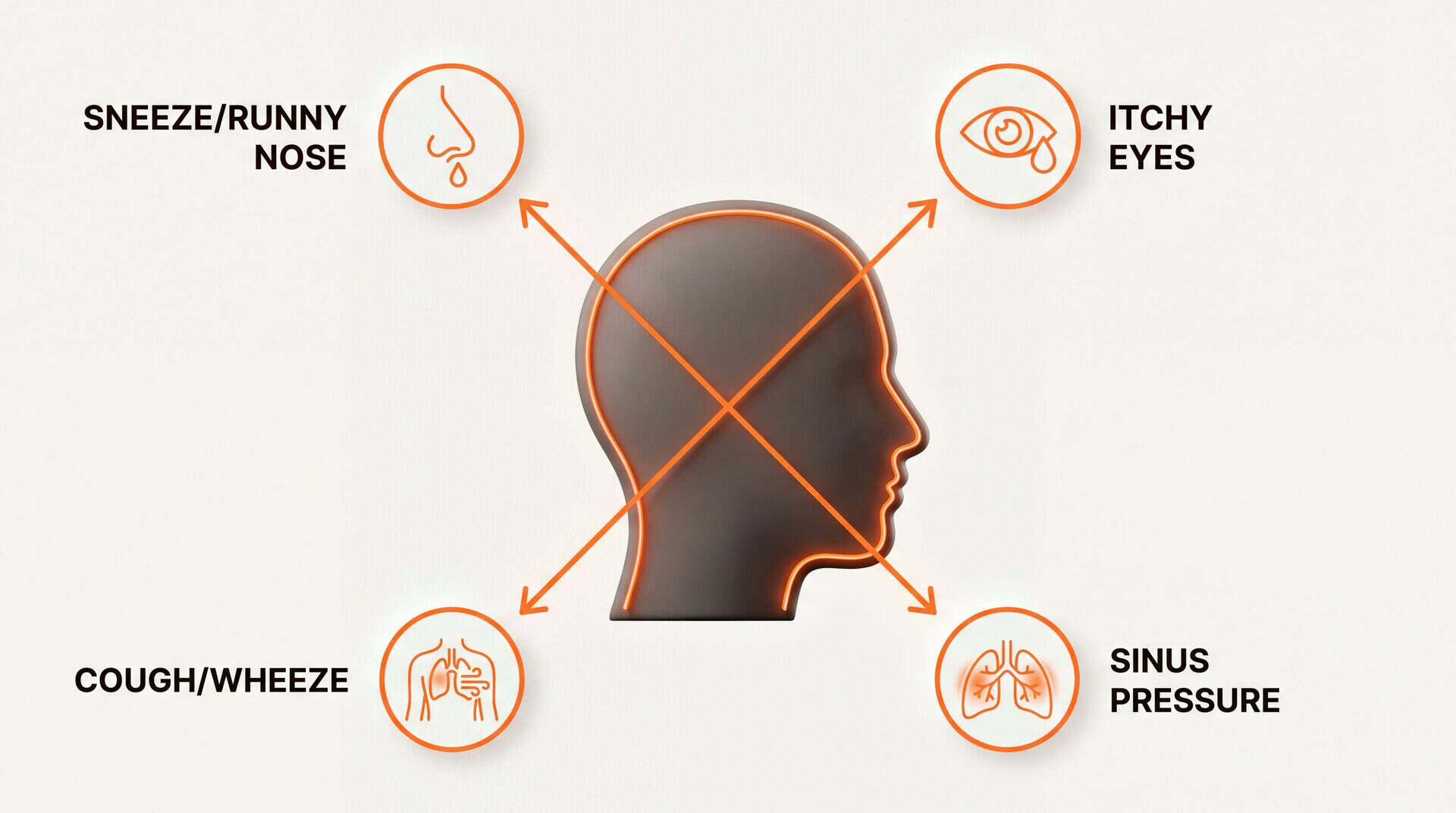
Symptoms that people in these higher-risk groups report include coughing, wheezing, shortness of breath, and a stuffy or runny nose. Some people with mold allergies react to Aspergillus too, with the kind of sinus and breathing signs covered on our mold allergy symptoms page. These are plain descriptions, not a diagnosis.
Here's the line this page won't cross. It won't tell you how to treat anything. If you have ongoing symptoms you think are tied to mold in your home, the right move is to talk to a licensed physician who can actually examine you. No website can diagnose you, and no cleaning product treats a medical condition. Clean the mold, control the moisture, and let a doctor handle the health side.
Where Aspergillus Grows in Homes
Aspergillus follows the same rule as every mold. It grows where moisture meets a food source. Because its spores are already in your house dust, all it needs is a damp spot to start a colony. These are the usual places.
House dust. Aspergillus is one of the most common molds in settled dust. It isn't growing actively most of the time, but the spores collect in carpet, on shelves, and in corners that rarely get cleaned. Regular HEPA vacuuming keeps the load down.
HVAC systems and air ducts. Warm, dark, and often damp around the coil, an HVAC system is a favorite Aspergillus home. Once it grows on the coil or inside the ducts, the blower spreads spores to every room. If you suspect growth in your system, our guide on mold in air ducts walks through the signs and next steps.
Bathroom walls and grout. A. niger loves the steady moisture of a bathroom. Walls, the ceiling corners above the shower, and grout lines are all common spots.
Basements and crawl spaces. Cool, damp, and full of organic material like cardboard and wood, basements give Aspergillus everything it needs. Foundation moisture wicking up through the lower walls is a frequent cause.
Potted plants. The damp soil of indoor plants can grow Aspergillus on the surface. If you see fuzzy growth on the top of potting soil, that's often it.
Stored grain and food. A pantry holding flour, rice, nuts, and grain can grow A. flavus and other species if the humidity creeps up. Cool, dry, sealed storage prevents it.
Testing and Identification
You cannot identify Aspergillus just by looking at it. Color, texture, and location give hints, but hundreds of species overlap in appearance, and the only honest answer to "which species is this?" comes from a lab. Anyone who claims to name the exact species by eye is guessing.
There are two practical ways to test. The first is a direct sample of the visible growth, where a small piece or a swab goes to a lab that identifies what's growing. The second is a dust analysis, which looks at the mix of mold DNA across a whole room or home. Our how to test for mold guide compares the options in plain language.
The most common dust test is the ERMI, the Environmental Relative Moldiness Index. It analyzes a settled-dust sample and reports the mold species it finds, including the key Aspergillus species. ERMI specifically includes water-damage indicators like Aspergillus versicolor, and the shorter HERTSMI-2 score uses a few of these species to judge whether a building is a good fit for sensitive people. Our ERMI test page explains how the panel works and how to read the results.
One caution. A test tells you what's present, not whether your moisture problem is solved. If a test finds high Aspergillus, the job isn't to test again. It's to find the water source feeding it and fix that first.
Removal and Prevention
Removing Aspergillus follows the same playbook as any household mold. The full method is in our how to get rid of mold guide, but here are the essentials.
Fix the moisture first. Mold regrows on a wet surface in 24 to 48 hours, so cleaning without fixing the water source is wasted effort. Find the leak, the condensation, or the humidity problem and solve it before you clean.
Protect yourself. Wear an N95 mask, gloves, and eye protection. Cleaning disturbs a colony and sends a burst of spores into the air. Open a window if you can.
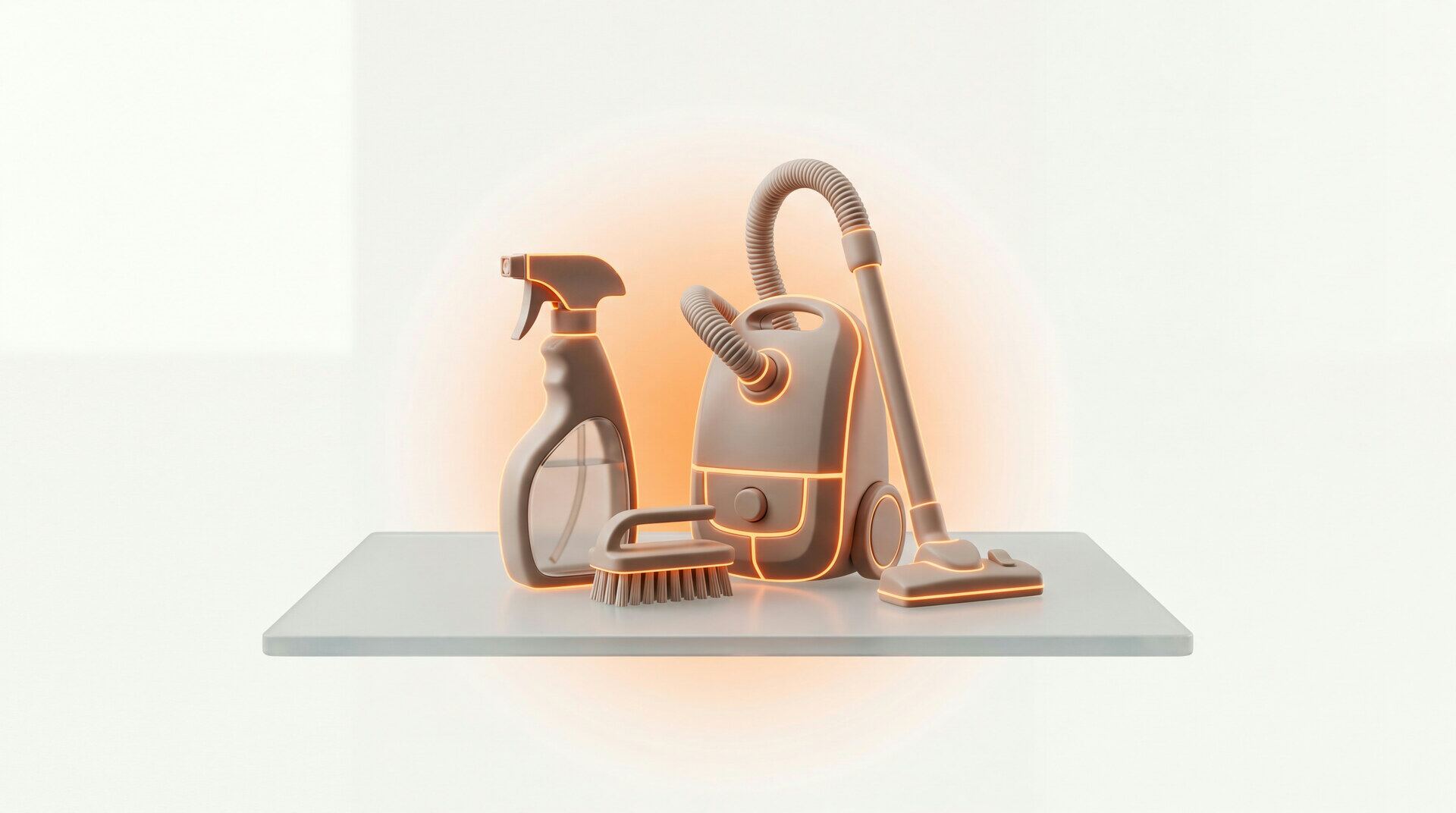
Clean small areas the right way. For a patch under 10 square feet on a hard surface, spray it with a no-bleach mold-control product or 3% hydrogen peroxide, let it sit about 10 minutes, scrub with a stiff brush, and wipe clean. Undiluted white vinegar works on hard surfaces too. For porous materials like drywall or carpet that the mold has soaked into, cleaning won't reach the roots. Cut out and replace the affected section.
Skip the bleach. Bleach is the old habit worth breaking. On porous surfaces like wood and drywall, the chlorine stays on top while the water soaks in and feeds the regrowth. Never mix bleach with ammonia or other cleaners, since that combination produces a dangerous gas. A mold-control product, hydrogen peroxide, or plain physical removal do the job without the downside.
Know when to call a pro. For any mold area larger than 10 square feet, hire a qualified mold remediation professional. Look for firms that follow the IICRC S520 standard; ACAC or RIA credentials and state licenses count too. A large or hidden colony, especially inside an HVAC system, is worth a professional's containment and tools.
Prevent the next one. Keep indoor humidity below 50 percent with a dehumidifier, and use a cheap hygrometer to watch it. Run bathroom and kitchen exhaust fans. Dry any spill or leak within a day or two. Clean and replace HVAC filters on schedule. Aspergillus spores are always floating in the air, so dry surfaces are your real defense.
Frequently asked questions
Is Aspergillus mold dangerous?
Most healthy people breathe in Aspergillus spores every day without getting sick, according to the CDC. The risk rises for people with weak immune systems, severe asthma, or chronic lung disease, who can develop a condition called aspergillosis. Color alone cannot tell you the species or the risk. Only a lab test can confirm which Aspergillus you have.
What does Aspergillus look like in a house?
Aspergillus shows up in many colors. A. niger looks black and powdery on damp walls and bathroom grout. A. flavus is yellow-green on stored food. A. versicolor starts pale and turns green or tan on water-damaged drywall. The colonies are often flat and velvety. You cannot identify the exact species by sight, so lab testing is the only sure way.
How do you get rid of Aspergillus mold?
Fix the moisture source first, or it grows back in 24 to 48 hours. For areas under 10 square feet, wear an N95 mask and gloves, spray with a no-bleach mold-control product or 3% hydrogen peroxide, let it sit, then scrub and wipe. For porous drywall or carpet the mold has soaked through, cut it out and replace it. For areas larger than 10 square feet, hire a qualified mold remediation professional. Look for firms that follow the IICRC S520 standard; ACAC or RIA credentials and state licenses count too.
Can Aspergillus make you sick?
It can, but mostly in specific groups. The CDC links Aspergillus to lung and sinus infections in people with weakened immune systems and severe asthma. Symptoms people report include coughing, wheezing, and congestion. Healthy people usually breathe it in without harm. If you have ongoing symptoms you think are linked to mold, talk to a licensed physician. This page is not medical advice.
Does an ERMI test detect Aspergillus?
Yes. The ERMI dust panel and the related HERTSMI-2 score both include key Aspergillus species, such as Aspergillus versicolor, a common water-damage indicator. An ERMI test analyzes a settled-dust sample in a lab and reports the mold DNA it finds. It tells you which species are present and roughly how much, which a visual inspection cannot do.
Sources
Every claim on this page traces to one of these. Links open the primary document.