How does mold spread?
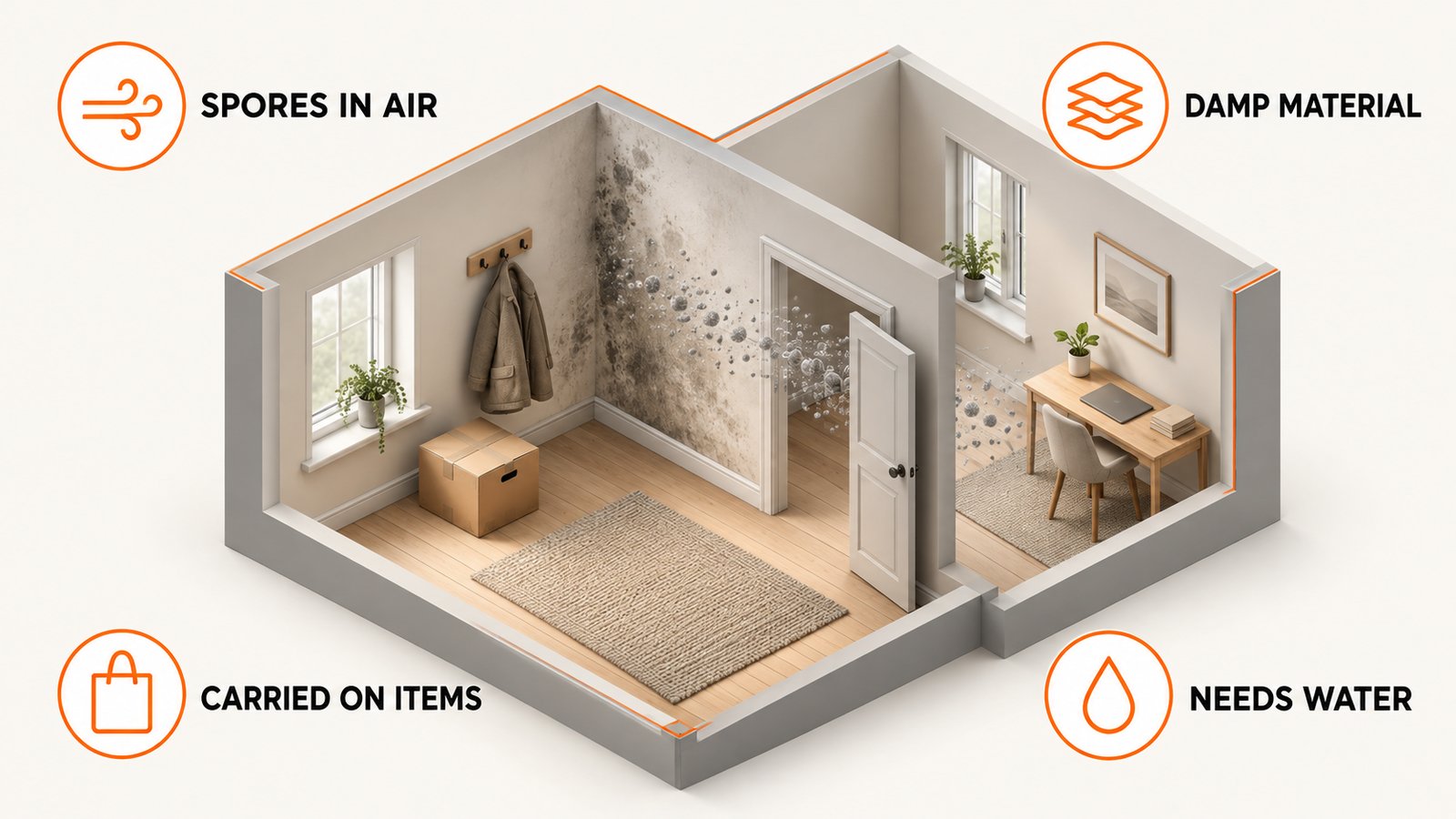
Mold spreads three ways.
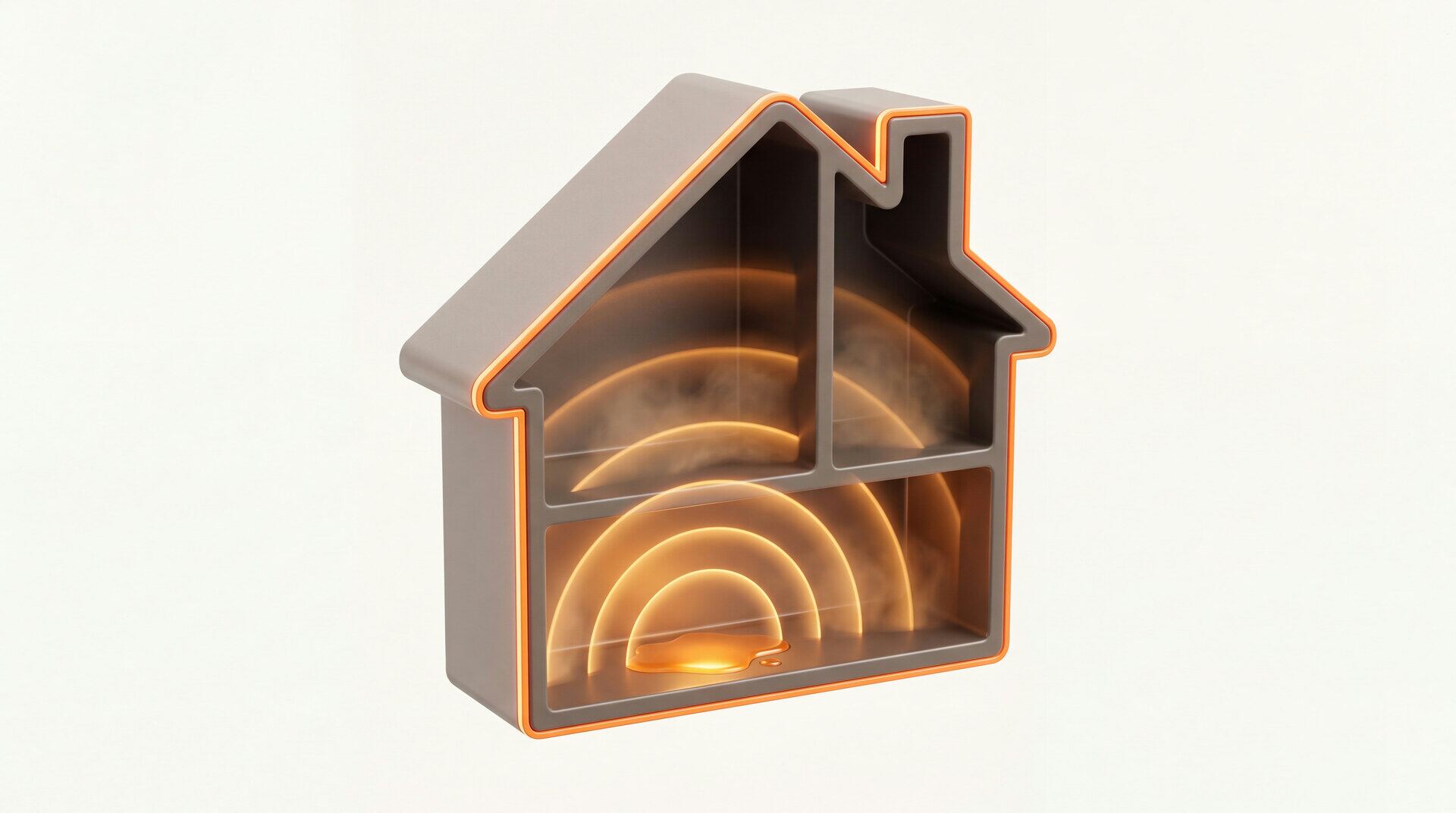
Spores in the air. The EPA says molds reproduce by tiny spores, and "the spores are invisible to the naked eye and float through outdoor and indoor air." The USDA puts it this way: "When airborne, the spores spread the mold from place to place like dandelion seeds blowing across a meadow."
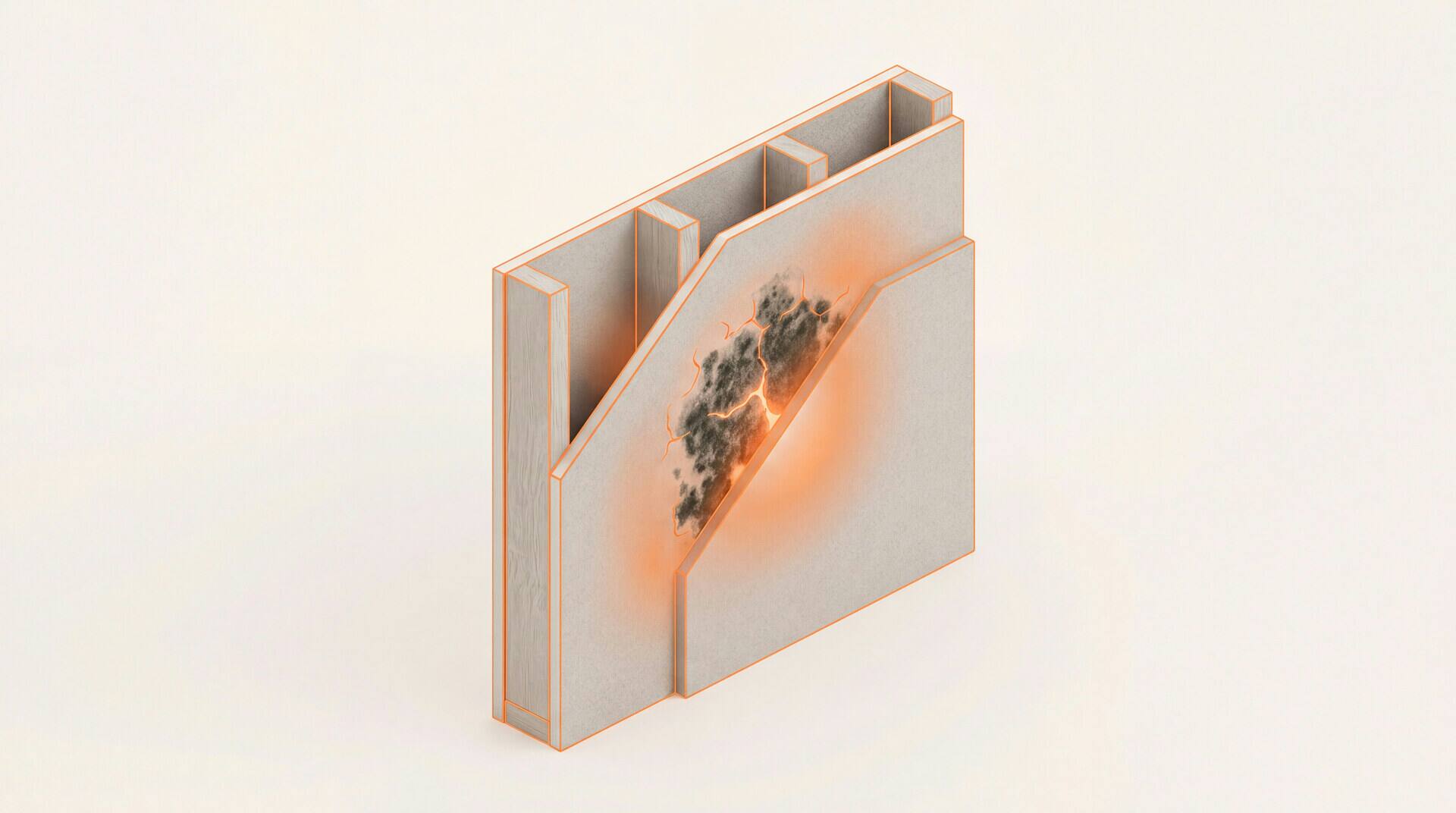
Growth across damp material. Mold feeds on what it grows on. The EPA writes, "Mold damages what it grows on." The CDC lists paper, cardboard, ceiling tiles, wood, dust, wallpaper, insulation, drywall, carpet, fabric, and upholstery as places mold grows. Since "none of them will grow without water or moisture," a patch can only keep widening across material that stays damp.
Carried on things. The CDC notes that "Mold in the air outside can be brought indoors on clothing, shoes, bags, and even pets." The USDA says a musty dishcloth means "they're spreading mold around."
Traveling is easy for spores. Taking hold is the hard part, and it needs moisture.
What does mold need to take hold in a new spot?
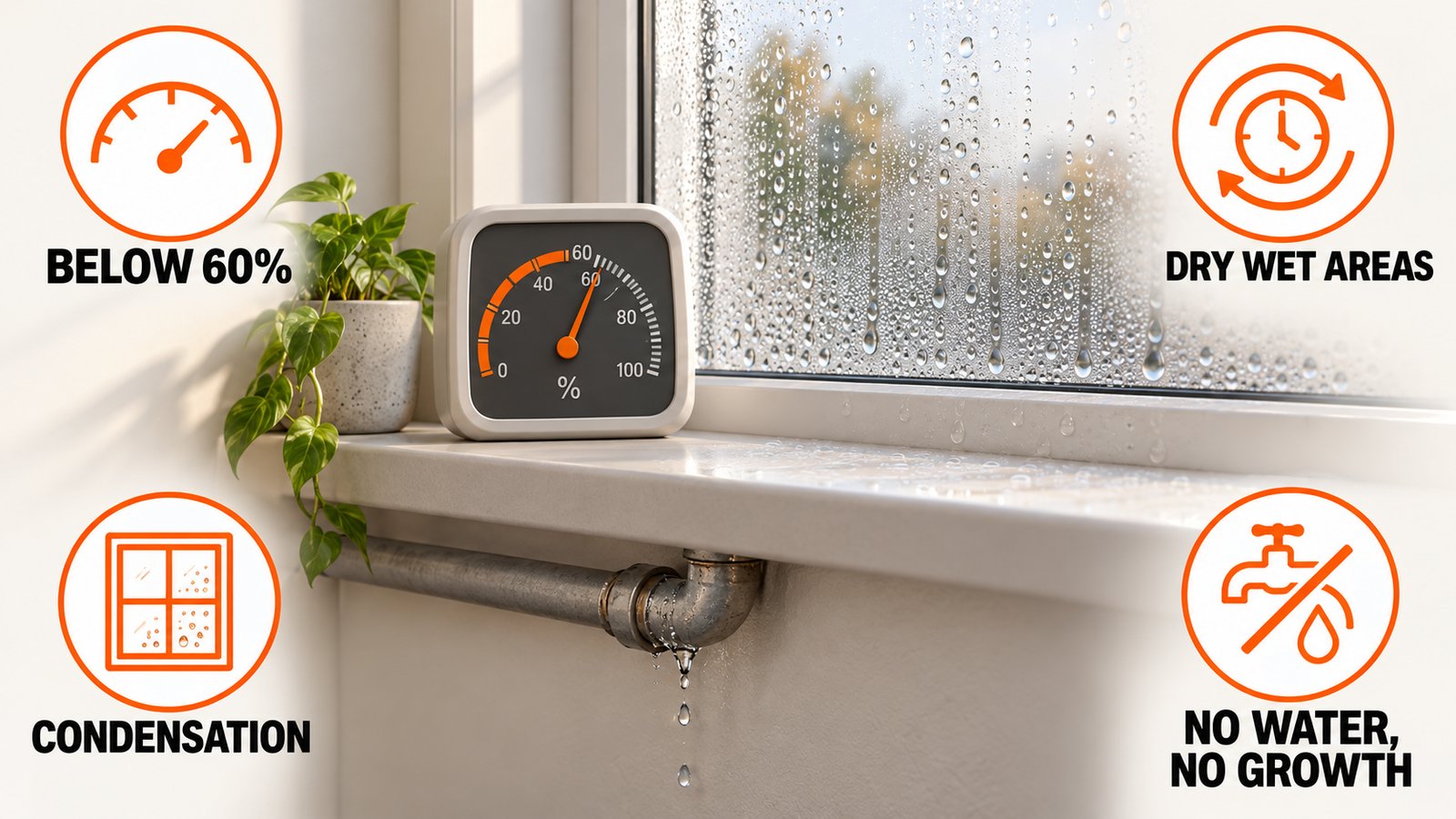
Moisture. The EPA says "Mold may begin growing indoors when mold spores land on surfaces that are wet." It also says "It is impossible to get rid of all mold and mold spores indoors; some mold spores will be found floating through the air and in house dust."
So spores are already in your home. They stay quiet while things are dry. After cleanup, the EPA says a background level of spores will remain, and "these spores will not grow if the moisture problem has been resolved."
Speed matters. The EPA says that if wet or damp areas are dried 24 to 48 hours after a leak or spill, "in most cases mold will not grow."
Humidity is the other half. The EPA says to keep indoor humidity below 60 percent, ideally between 30 and 50 percent. The CDC says no higher than 50 percent. A humidity meter costs $10 to $50 at many hardware stores, according to the EPA. Condensation on windows, walls, or pipes is a sign of high humidity. A dehumidifier and the humidity risk calculator help, and how to prevent mold covers each room.
Can mold spread from room to room?
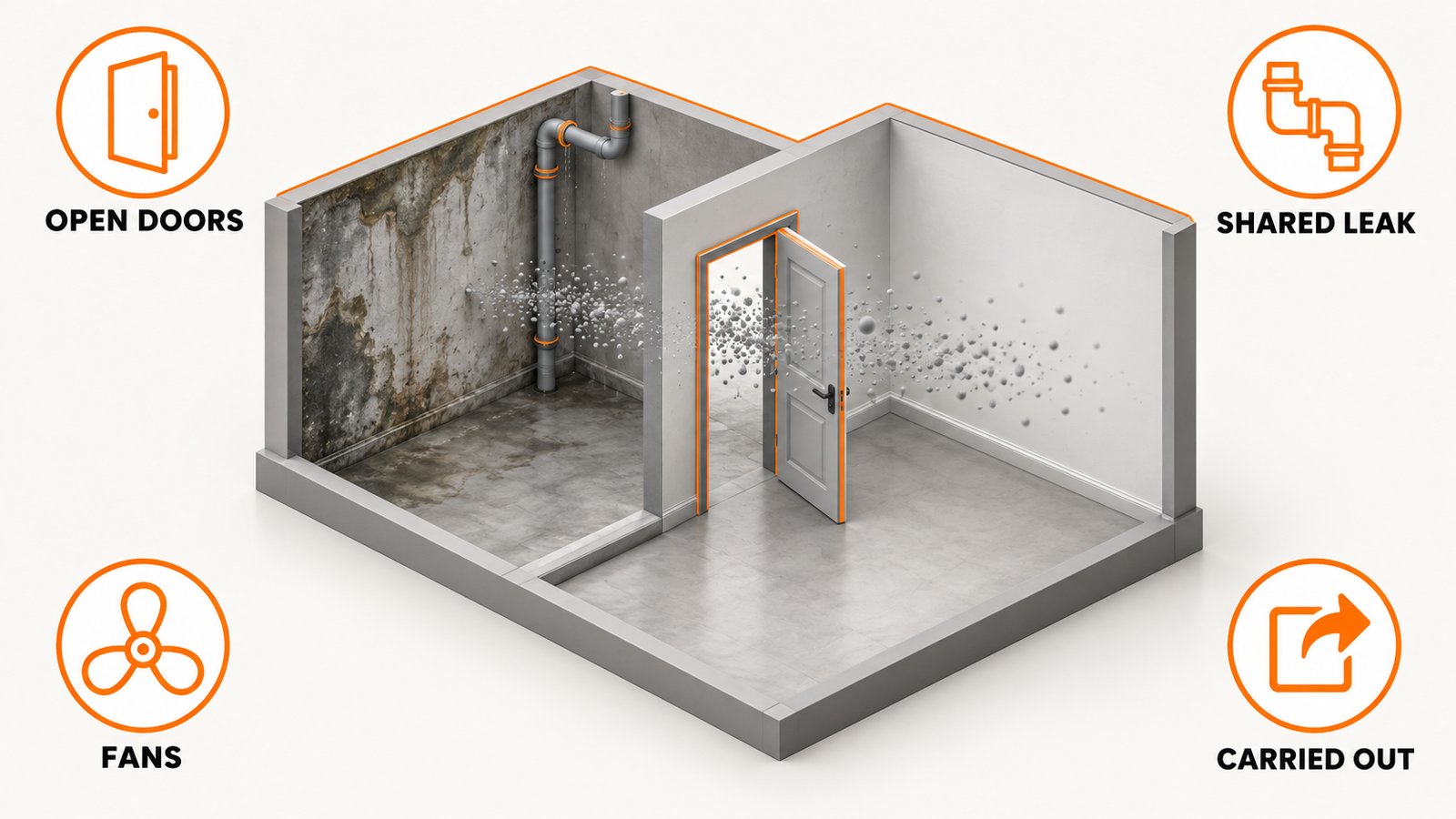
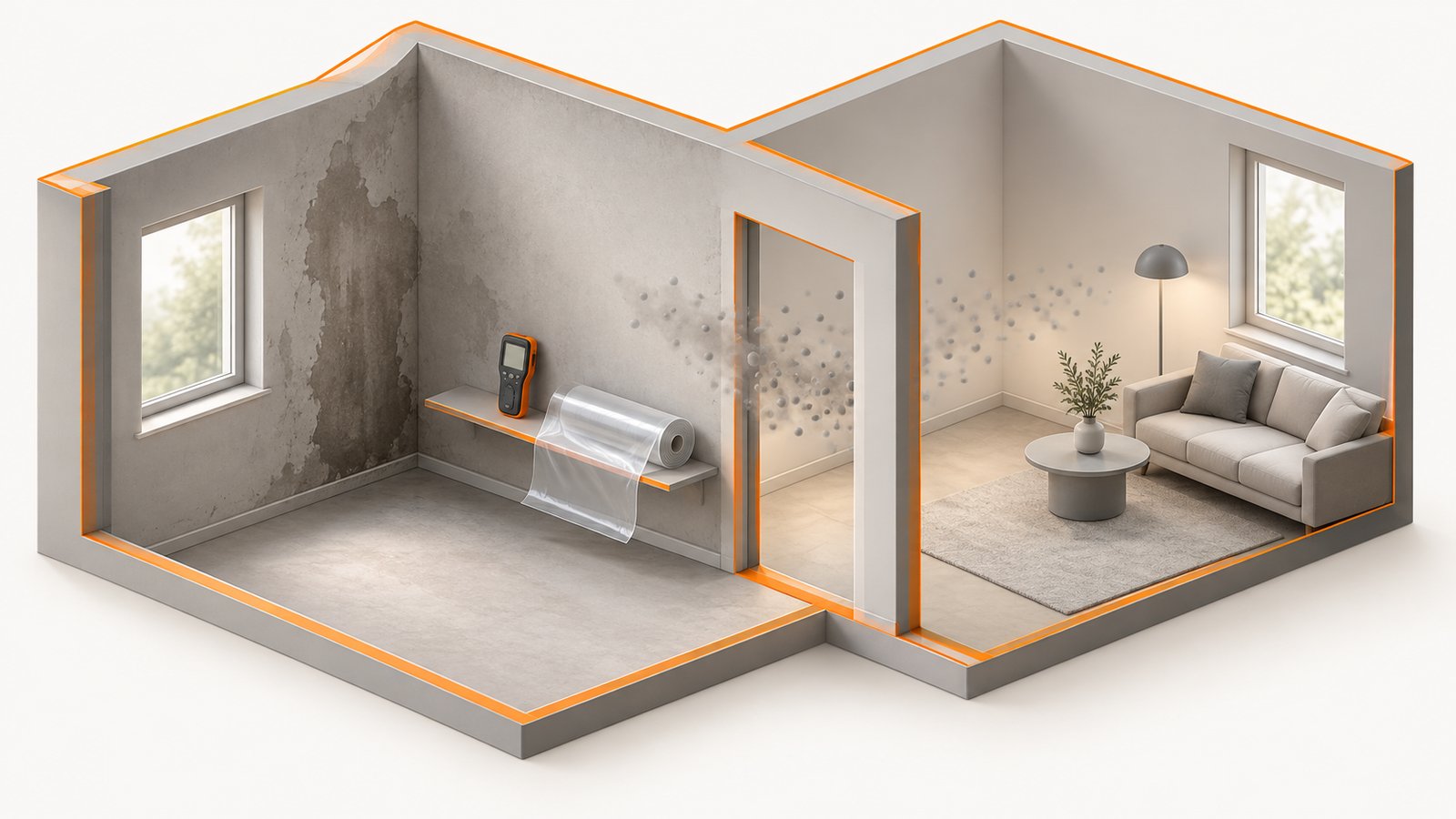
The spores can. Whether new mold grows depends on what is wet in the other room.
Air moves through open doors, vents, and gaps, and spores move with it. The CDC says mold can get into a home "through open doors, windows, vents, and heating and air conditioning systems." Inside the house, three things usually carry it from one room to the next.
- A shared water source. One leak can wet two rooms. It looks like spread, but it is two patches with one cause.
- Cleanup that stirs it up. The EPA warns that removing wallpaper "can lead to a massive release of spores if there is mold growing on the underside of the paper." For fans, it says to take care "not to distribute mold spores throughout an unaffected area."
- Things you carry out. Moldy boxes, rugs, and clothes bring spores with them. Bag them before they leave the work area.
If you found mold in one room, check the walls, ceilings, and closets next to it for moisture. Our signs of mold in a house guide and the mold on walls page show what to look for.
Can mold spread through walls?
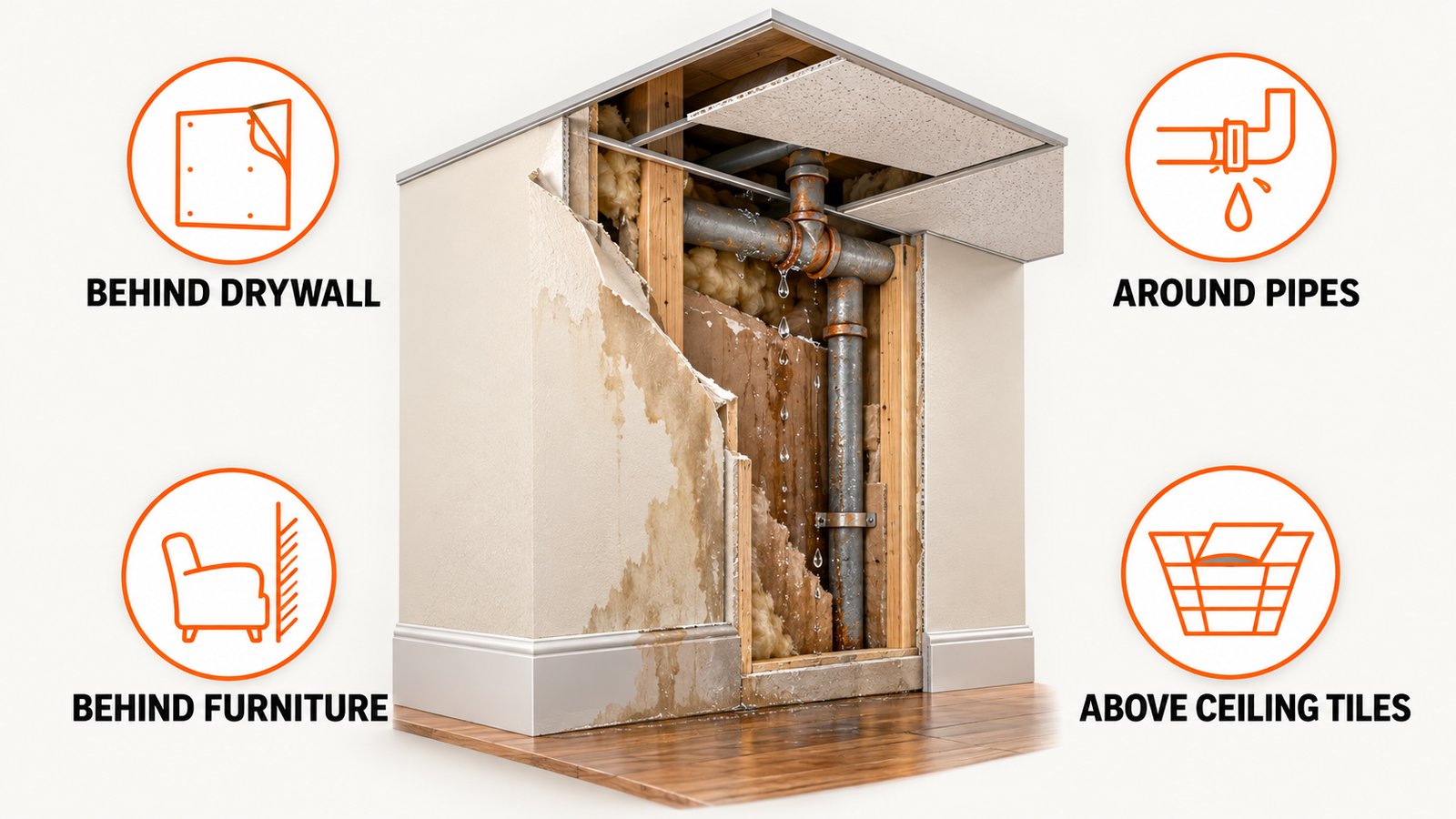
Not by itself. None of the EPA or CDC pages we read describe mold crawling through a solid wall. What they describe is water.
The EPA lists where hidden mold can be: the back side of drywall, wallpaper, or paneling; the top side of ceiling tiles; the underside of carpets and pads; inside walls around pipes that leak or sweat; the surface of walls behind furniture where condensation forms; and inside ductwork. A leak that wets a wall cavity can also wet the ceiling or floor next to it, and each wet spot can grow its own mold.
So if you see mold on one side of a wall, ask where the water came from and what else it reached. A moisture meter reading can support that search, but it does not confirm mold. Do not cut into the wall to look. Wall cavities can hold wiring and plumbing, and the EPA says to consider hiring an experienced professional for hidden mold. Our guides on mold behind walls and mold on drywall cover this in more detail.
Can mold spread through HVAC?
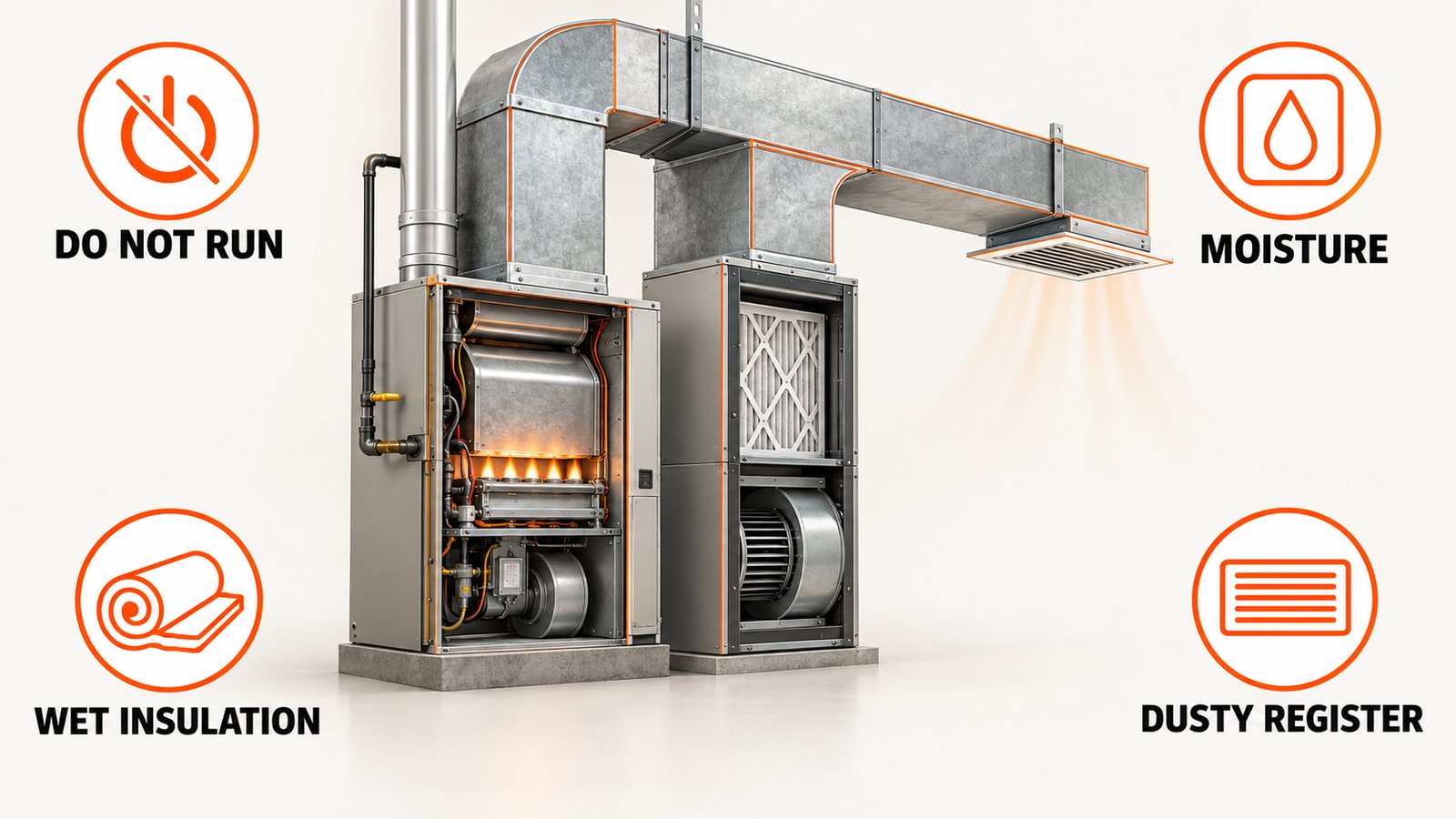
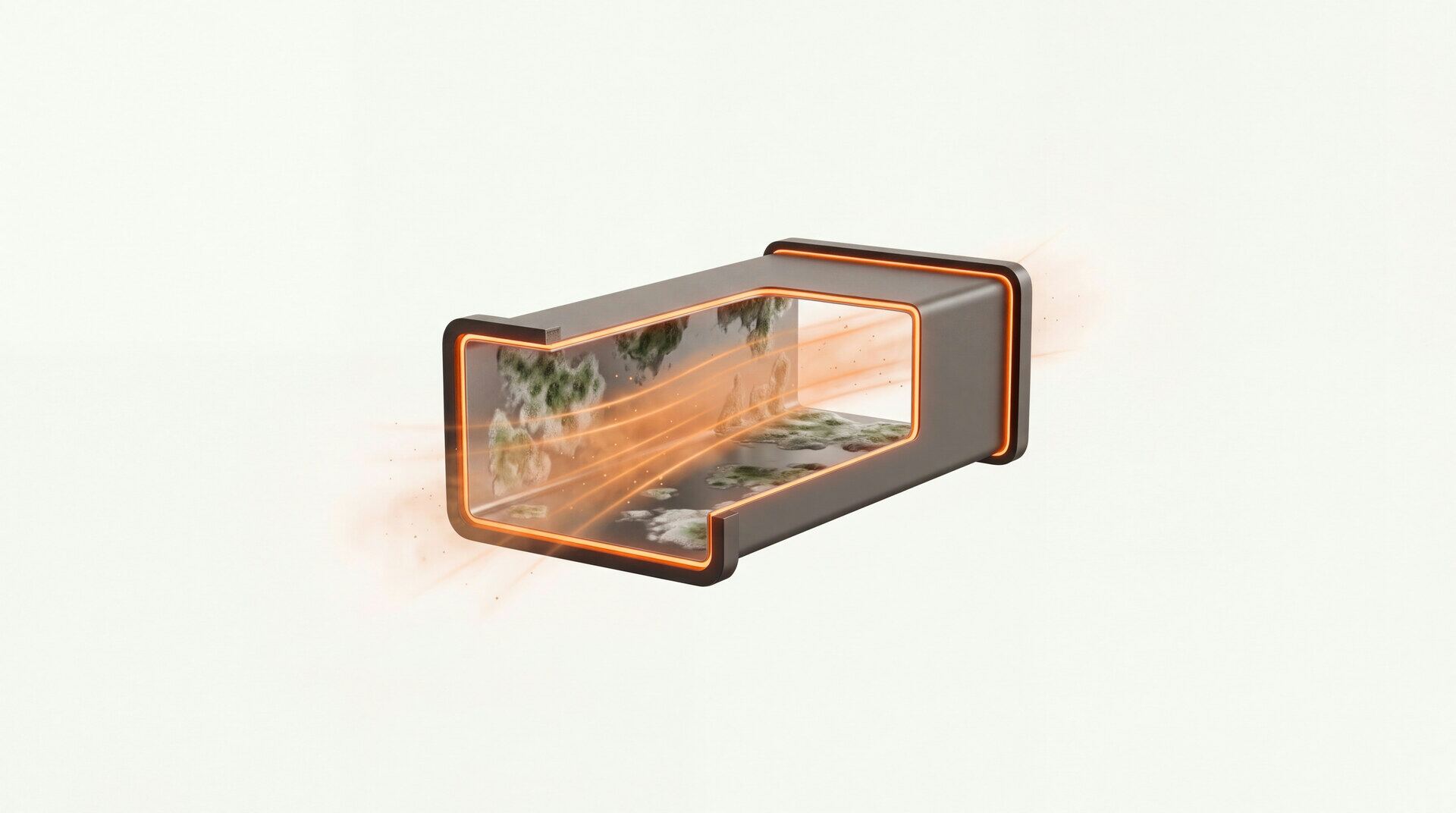
It can. The EPA says: "Do not run the HVAC system if you know or suspect that it is contaminated with mold," because it could spread mold throughout the building.
The EPA also says that when moisture is present in heating and cooling parts, spores from growth there may be released into the living space. It advises asking a duct cleaner to show you any mold they say exists, and to consider cleaning when there is substantial visible mold growth inside hard-surface ducts or on other system parts. Insulated duct that gets wet or moldy cannot be effectively cleaned and should be removed and replaced. If the cause is not fixed, growth will come back.
A dusty register is not proof. The EPA says it is normal for return registers to get dusty and that this does not mean the ducts are contaminated.
Do not open panels or ductwork yourself. Read mold in air ducts, run through the HVAC mold checklist, and call a qualified HVAC professional for anything inside the system.
Can mold spread to clothes and furniture?
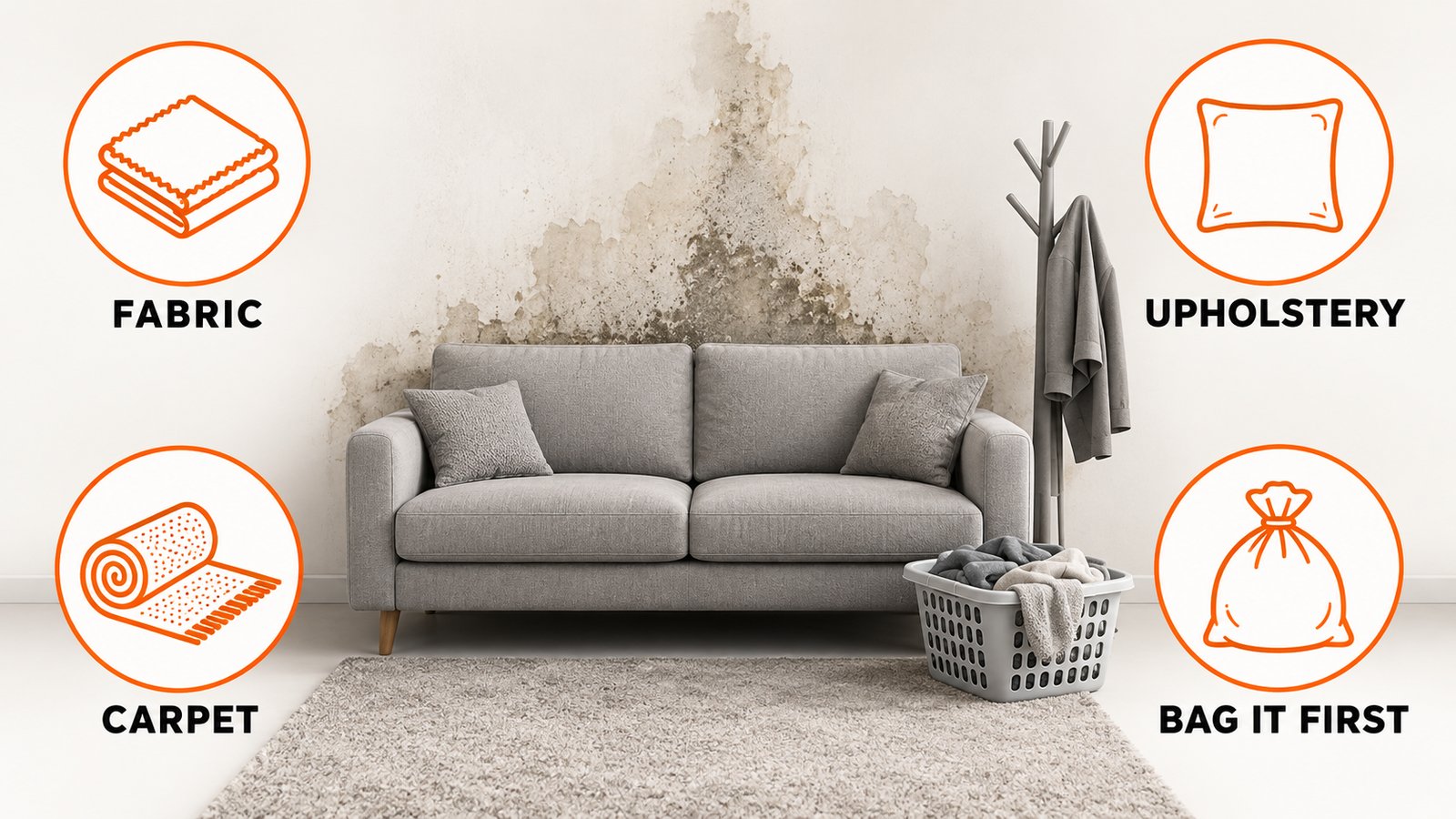
Yes. The CDC lists fabric and upholstery, along with carpet, among the places mold grows. The EPA says absorbent or porous materials, such as ceiling tiles and carpet, "may have to be thrown away if they become moldy," because mold can fill the empty spaces and crevices in them.
The usual route is simple. A damp item sits against a damp wall, or stays damp in a hamper, and spores settle on it. Once it is moldy, it can carry spores into other rooms.
- Take a moldy item outside before you brush or shake it, and bag it before you carry it through the house.
- Pull furniture a few inches off exterior walls so air can move behind it.
- Do not store damp laundry, towels, or gym clothes.
The full cleanup steps are in our guides on mold on clothes and mold on furniture. For specific spots, see mold in a closet and mold on a mattress.
Can mold spread from one food to another?

Yes. The USDA says to "Check nearby items the moldy food might have touched. Mold spreads quickly in fruits and vegetables."
The USDA describes mold as having root threads that invade the food it lives on, a stalk, and spores at the ends of the stalks. The roots can be very deep and hard to see. Spores can also build up in the refrigerator, dishcloths, and other cleaning tools.
- Discard it, then clean where it sat. The USDA says to put moldy food in a small paper bag or wrap it in plastic, then into a covered trash can. Clean the refrigerator or pantry spot where it was stored.
- Do not sniff it. The USDA says this can cause respiratory trouble.
- Watch the knife. When trimming hard cheese, the USDA says to keep the knife out of the mold itself so it does not cross-contaminate other parts of the cheese.
For specific foods, see mold on bread, mold on cheese, mold on strawberries, and mold in the fridge.
Does mold spread fast?
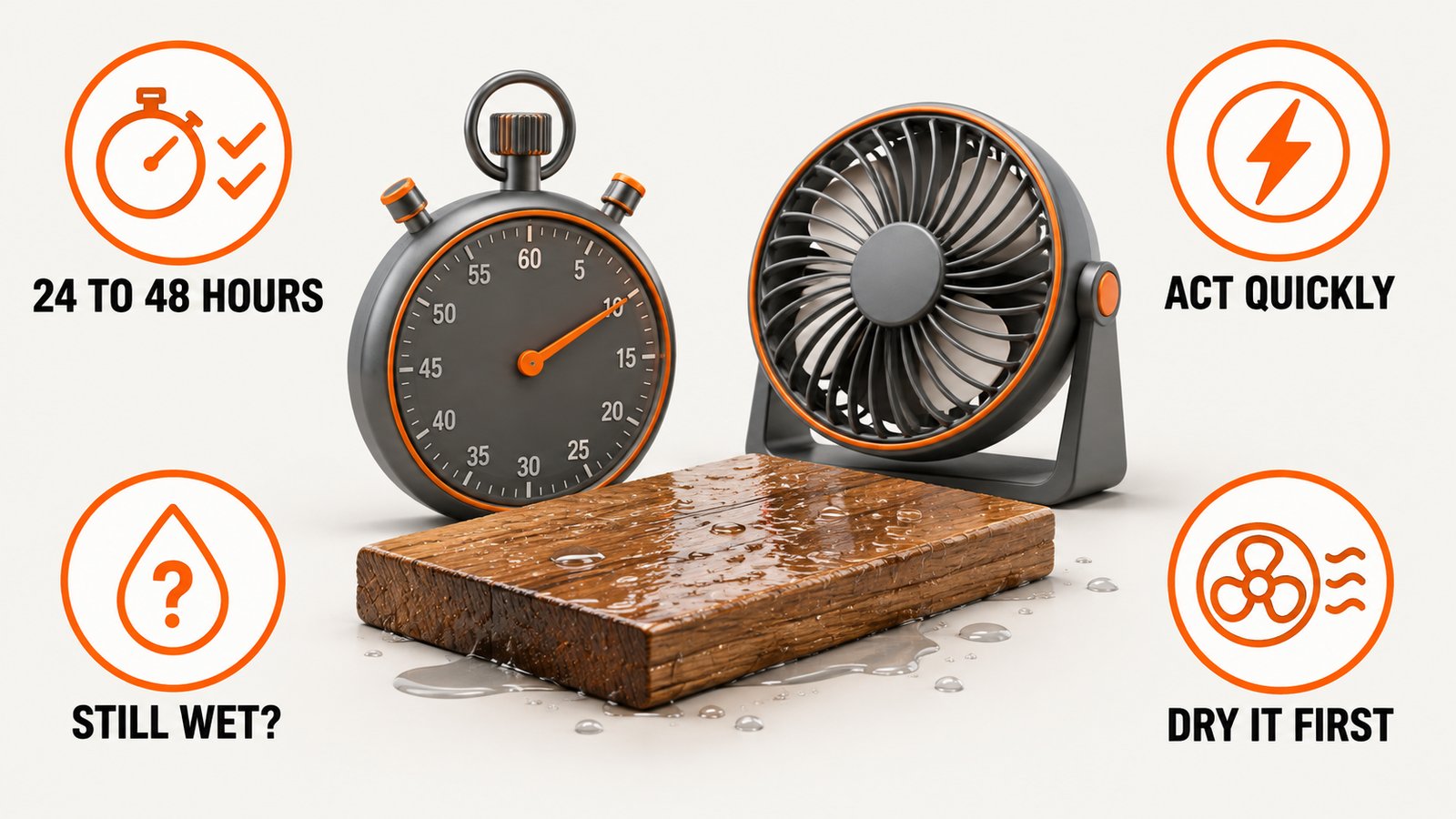
It depends on how wet things are. The agencies we read give one clear time marker for houses: the 24 to 48 hour drying window. If wet areas are dried in that time after a leak or spill, the EPA says mold will not grow in most cases.
After growth starts, the EPA says "The longer it grows, the more damage it can cause," and advises that if you already have a mold problem, act quickly. The USDA says mold spreads quickly in fruits and vegetables.
We are not giving a day count for walls or floors, because no agency we read gives one. The better question is whether the spot is still wet. If it is, assume growth can continue. Our how fast mold grows page goes through materials, and the storm damage mold timer helps after a flood.
How to stop mold from spreading during cleanup
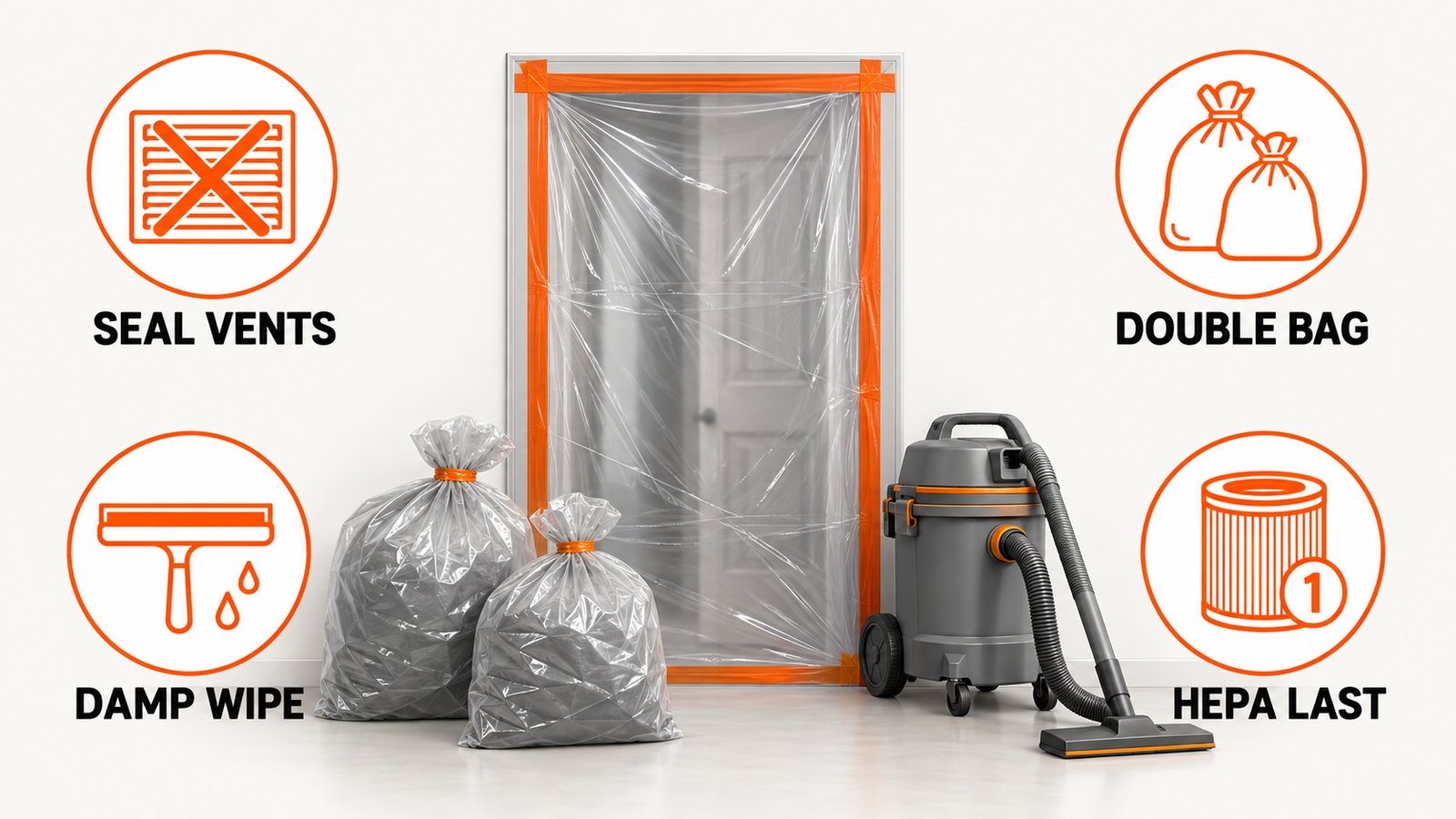
Cleanup is when spores are most likely to leave the room. These steps come from the EPA remediation guide and the EPA cleanup page.
- Fix the water first. The EPA says if you clean up the mold but do not fix the water problem, the mold will most likely come back.
- Know your size. The EPA says an area under about 10 square feet, roughly 3 feet by 3 feet, can in most cases be handled by you. For jobs between 10 and 100 square feet it recommends limited containment with 6-mil polyethylene sheeting, which is professional work.
- Seal the work area. For larger jobs, the EPA says supply and air vents, doors, chases, and risers must be sealed with polyethylene sheeting. The EPA's aim: "Mold and moldy debris should not be allowed to spread to areas in the building beyond the contaminated site."
- Do not dry brush or sweep. The EPA's four cleanup methods are wet vacuum, damp wipe, HEPA vacuum, and discard. Dry brushing is not one of them, and the wallpaper warning above shows why. Wipe or scrub hard surfaces with water and detergent and dry them quickly. The EPA also says "wet vacuums may spread spores if sufficient liquid is not present."
- Bag what you remove. The EPA says non-salvageable materials should be double-bagged using 6-mil polyethylene sheeting, and sealed in bags before they leave the containment area.
- HEPA vacuum last. The EPA recommends it for final cleanup after materials are dry and contaminated materials are removed, and for dust that settled outside the work area. The filter and contents must go in well-sealed plastic bags. Our HEPA vacuum for mold guide explains what qualifies.
- Wear protection. For a small area, the EPA says to use an N-95 respirator, long gloves, and goggles without vent holes. For medium and large projects it recommends disposable clothing to prevent spreading mold to your clothes.
Steps for each surface are in how to get rid of mold.
How to check nearby spots for new mold
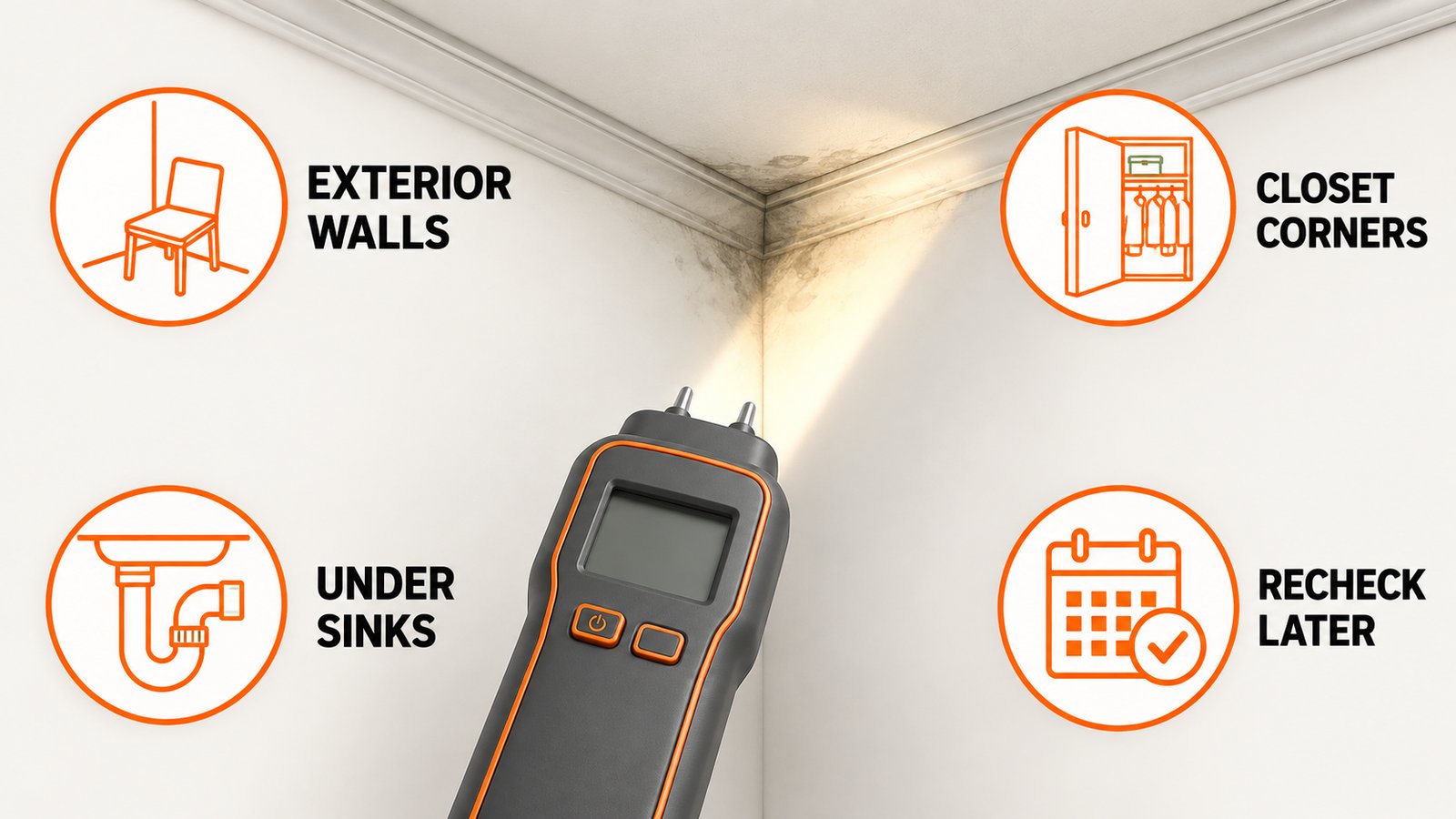
Look where the EPA says hidden mold lives, and check each spot for moisture. Do this the day of cleanup and again later.
- Walls behind furniture and along exterior walls.
- Closet corners and the back of hung clothes.
- Under carpet edges and pads, and above ceiling tiles.
- Around pipes, under sinks, and where condensation collects.
Use your eyes and nose, then a meter. A musty smell is a reason to look for water, not proof of mold on its own.
The EPA says to revisit the site shortly after cleanup and expect no signs of water damage or mold growth. It says sampling is unnecessary in most cases when mold is visible, and the CDC does not recommend home mold testing. If you want to know what testing can and cannot do, see mold test for home. Our free 160-point checklist walks through the rooms one by one.
Is mold contagious between people?
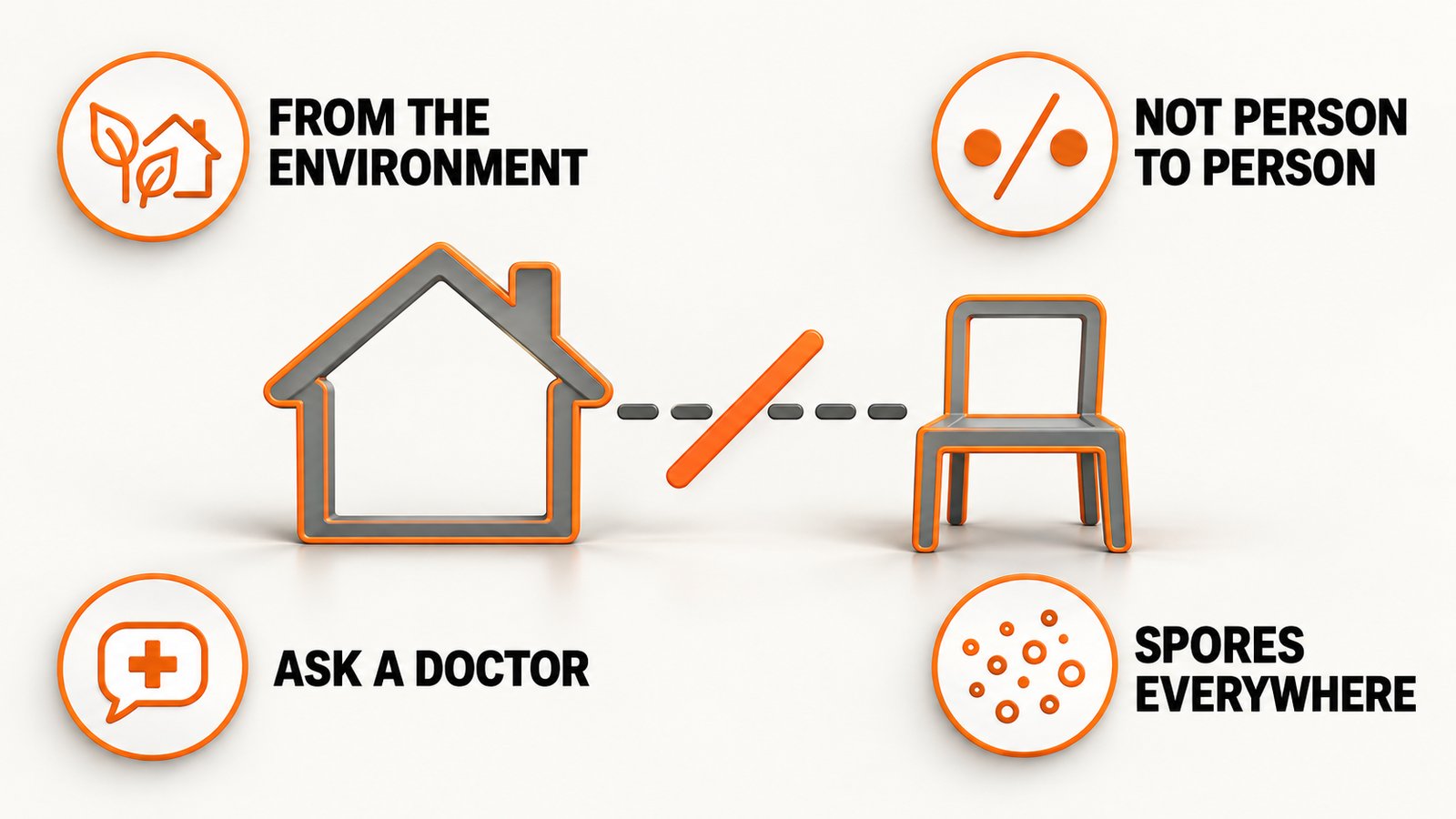
CDC says it cannot. On aspergillosis, the infection caused by Aspergillus mold spores, the CDC writes: "It cannot be spread between people or between people and animals."
The CDC explains that people get it by breathing in microscopic spores from the environment. It also says most people breathe in Aspergillus spores every day without getting sick. The EPA describes mold reactions in sensitive people as allergic or irritant. In the pages we read, neither agency describes a person passing mold to another person.
This page cannot tell you what is happening to any person. Take health questions to a doctor, and read what the agencies publish on mold in the lungs and mold allergy symptoms.
When to call a pro
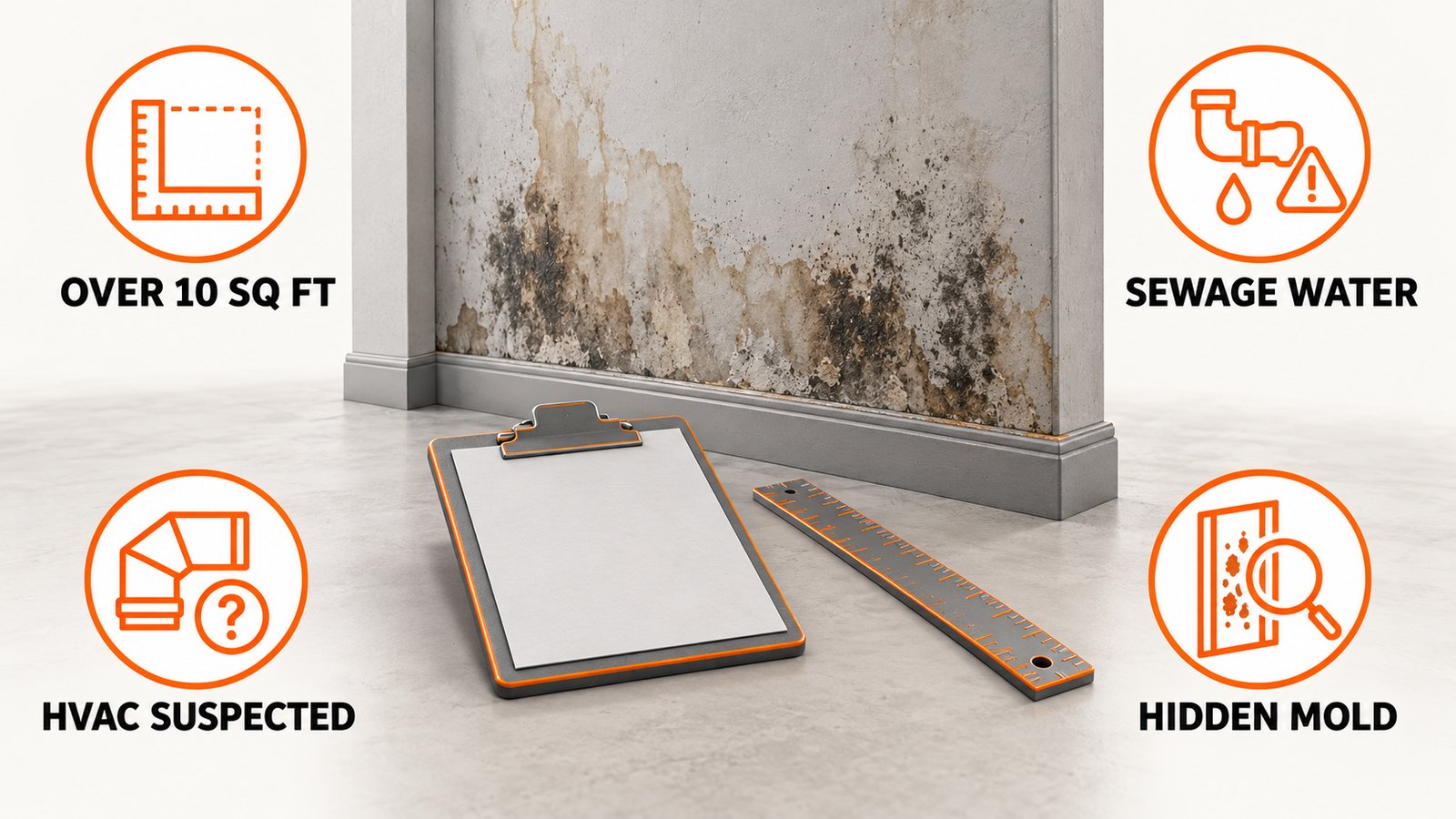
The EPA says to hand the job off in these cases:
- The moldy area is more than about 10 square feet, or there has been a lot of water damage.
- The water was sewage or other contaminated water. The EPA says to call a professional with experience cleaning buildings damaged by contaminated water.
- You know or suspect the HVAC system is contaminated.
- You suspect hidden mold. The EPA says to consider hiring an experienced professional.
- You have health concerns. The EPA says to consult a health professional before starting cleanup.
Ask a contractor to follow the EPA's remediation guidance or IICRC guidance, and check references. Our mold removal guide explains DIY versus professional work.
Frequently asked questions
Can mold spread if I leave it alone?
Yes. The EPA says mold damages what it grows on and that the longer it grows, the more damage it can cause. Growth continues only while the material stays damp, so find and fix the water, then clean or remove the moldy material.
Can mold spread from one room to another?
Spores can travel between rooms on air, on fans, and on things you carry. New growth needs moisture, so check the connecting walls, ceilings, and closets for leaks and condensation.
Can mold spread through air vents?
It can. The EPA says not to run an HVAC system you know or suspect is contaminated with mold, because it could spread mold throughout the building. Ask a qualified HVAC professional to look.
Can moldy clothes spread mold to other clothes?
Yes, items that touch or share a damp closet can pick up spores. Take moldy items outside, bag them before carrying them through the house, and fix the moisture in the closet or hamper.
Can mold spread from one food to another?
Yes. The USDA says to check nearby items that moldy food touched, and that mold spreads quickly in fruits and vegetables. Throw out the moldy food and clean the spot where it sat.
Does bleach stop mold from spreading?
The EPA says using a biocide such as chlorine bleach is not recommended as a routine practice during mold cleanup. It also says dead mold may still cause allergic reactions in some people, so mold must be removed, not just killed.
Does white mold spread differently than black mold?
The CDC says you do not need to know the type of mold, and the EPA notes that molds come in many colors, including white and black. The steps are the same: fix the moisture, contain and clean, and dry the area. See our page on black mold for the specifics people ask about.
Sources
Every claim on this page traces to one of these. Links open the primary document.