Is Mold on Bread Safe to Eat?
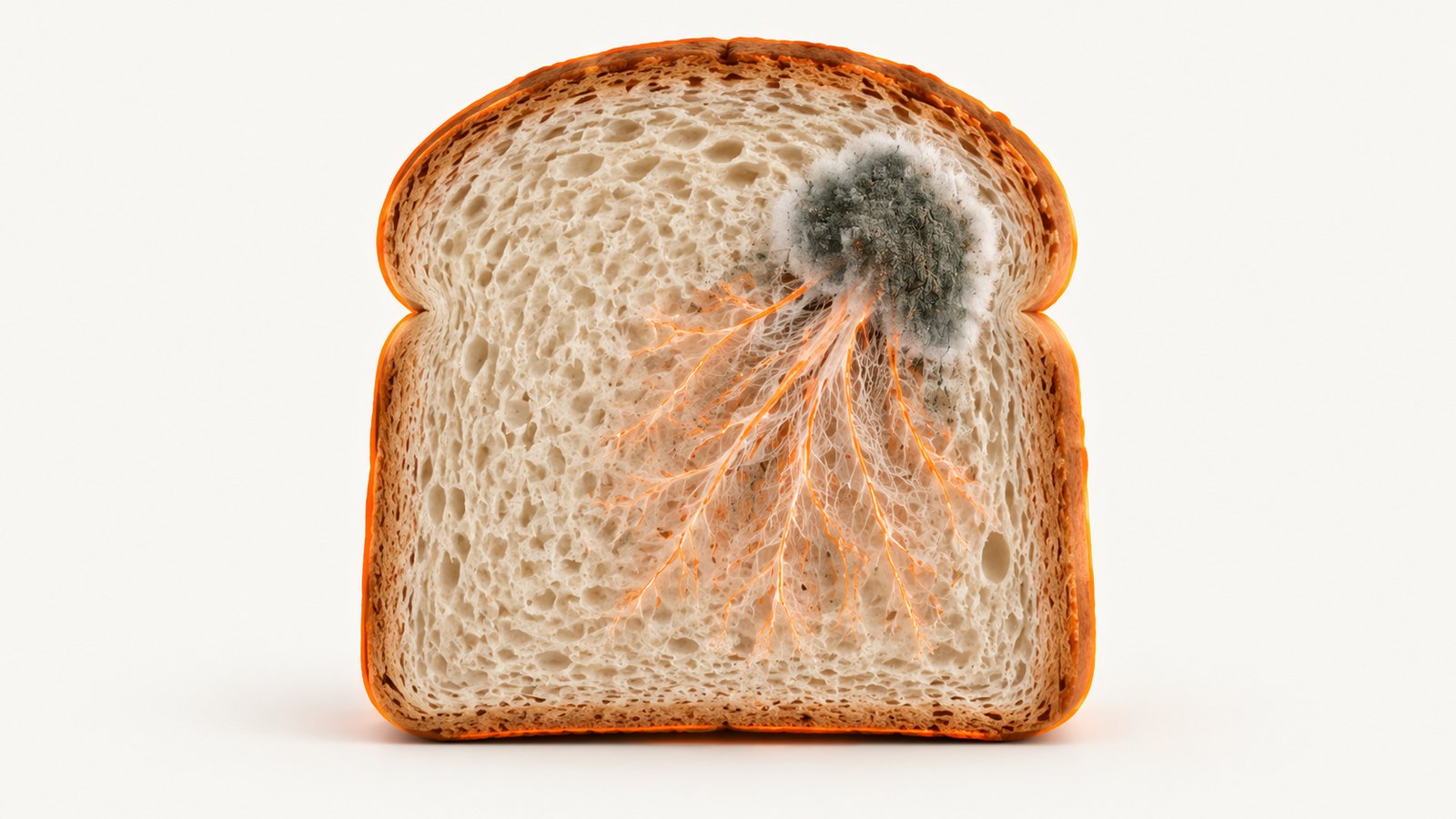
The USDA's Food Safety and Inspection Service publishes a food-by-food table for exactly this question. Bread and baked goods sit in the discard column, and the stated reason is one line: porous foods can be contaminated below the surface.
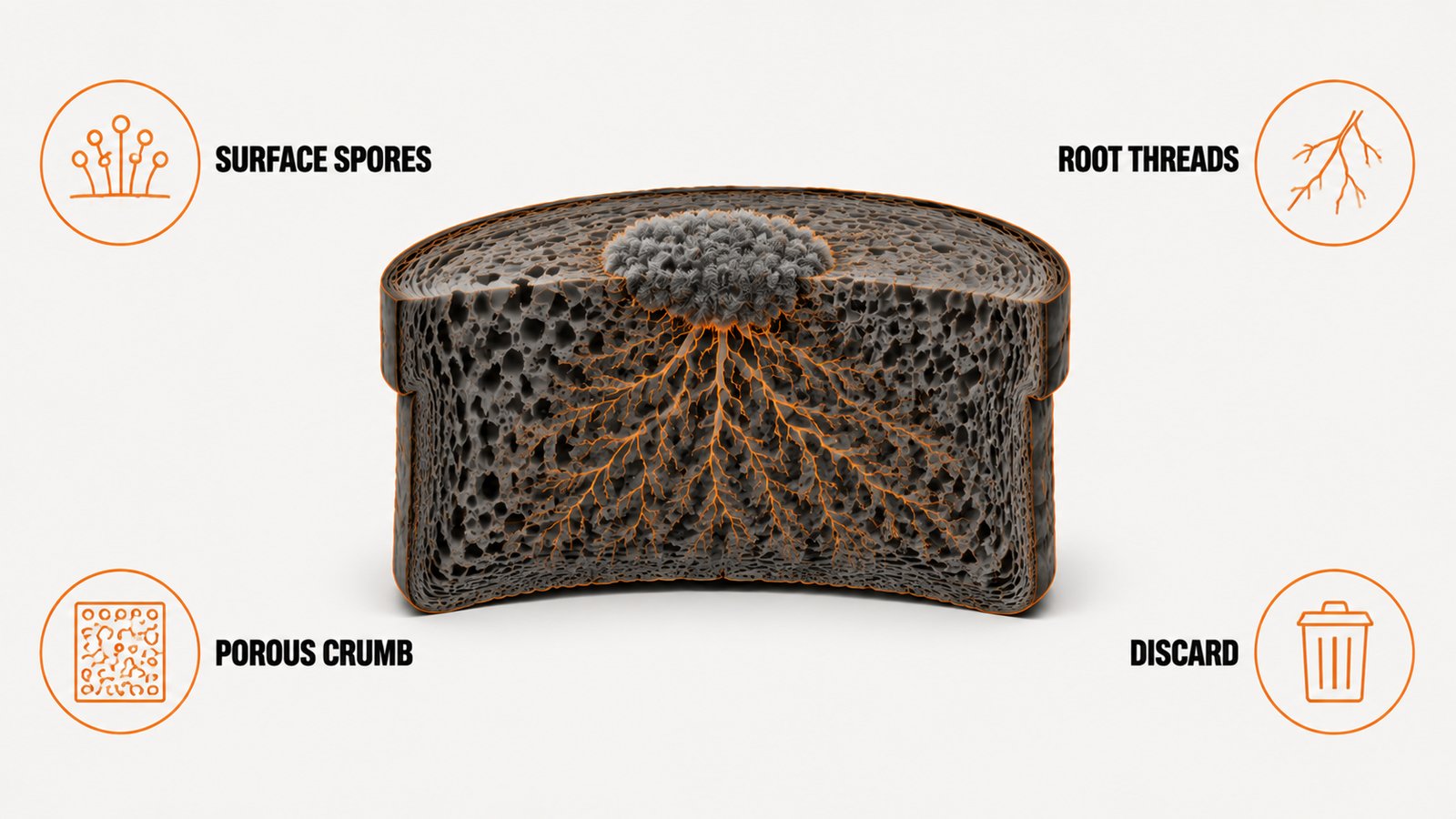
That is the whole argument, and it rests on how a mold is built. The USDA describes the body of many molds as root threads that invade the food it lives on, a stalk rising above the food, and spores that form at the ends of the stalks. The spores give mold the color you see. So the green or white fuzz is the top of the organism, the reproductive end. The part doing the eating is already inside the crumb, and the agency notes those roots may be difficult to see and may be very deep in the food.
Bread is close to the worst-case material for this. It is soft, moist, and full of air pockets, which is exactly the structure the USDA means by porous. There is nothing dense enough to slow the threads down, so by the time a spot is visible on the crust, the network below it has had days to spread through slices you cannot see.
Two more agency lines close the door on cutting around it. When a food shows heavy mold growth, root threads have invaded it deeply, and in dangerous molds poisonous substances are often contained in and around those threads, with toxins in some cases spread throughout the food. And separately: foods that are moldy may also have invisible bacteria growing along with the mold. You are not only deciding about the fungus.
So no, do not cut the corner off and toast the rest. Hard cheese is the food where the USDA does allow trimming, because mold generally cannot penetrate deep into a dense product, and even there it asks for at least an inch cut around and below the spot. Bread does not get that exemption. Mold on cheese covers the case that does.
What the Fuzzy Patch Actually Is
The USDA describes molds as microscopic fungi living on plant or animal matter, with estimates of the number of fungal species running from tens of thousands to perhaps 300,000 or more. Under a microscope they look like skinny mushrooms. On your counter, all you get is color, and color alone does not identify a species.
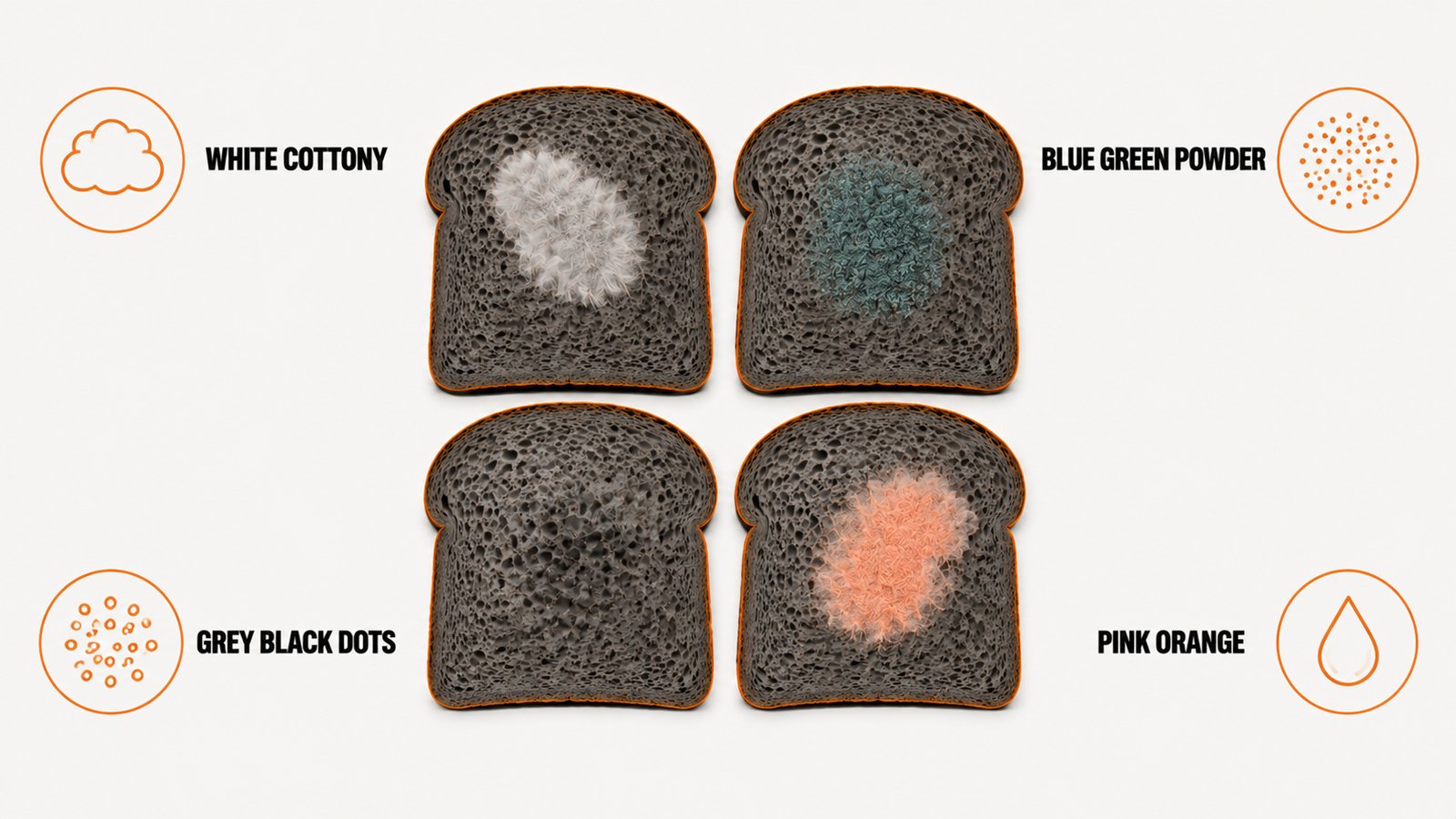
What the color does tell you is which reproductive structures are on top, and roughly how far along the growth is:
- White and cottony. Usually the youngest visible stage, before spores have matured and taken on color. Our page on white mold covers the same appearance on building surfaces.
- Blue-green with a powdery surface. The look most people associate with a forgotten loaf. See blue mold and green mold.
- Gray to black with pinhead dots. The dots are spore heads on stalks. It looks alarming and it is not automatically the mold from the news headlines.
- Pink or orange. Less common on bread, and often bacterial rather than fungal.
Naming the organism takes a laboratory, and for a loaf of bread there is no reason to bother, because the answer does not change what you do. Every color in that list ends in the same place: the loaf goes out. Where identification actually matters is on walls, wood, and other building surfaces, where the species affects how hard the cleanup is. Types of mold and what mold looks like cover that side.
One myth worth killing: mold on bread is not related to the antibiotic story people half remember. The genus that produced the first antibiotic is a large group, most of its members do not produce anything medicinal, and none of it makes a moldy sandwich a good idea.
What to Do With a Moldy Loaf
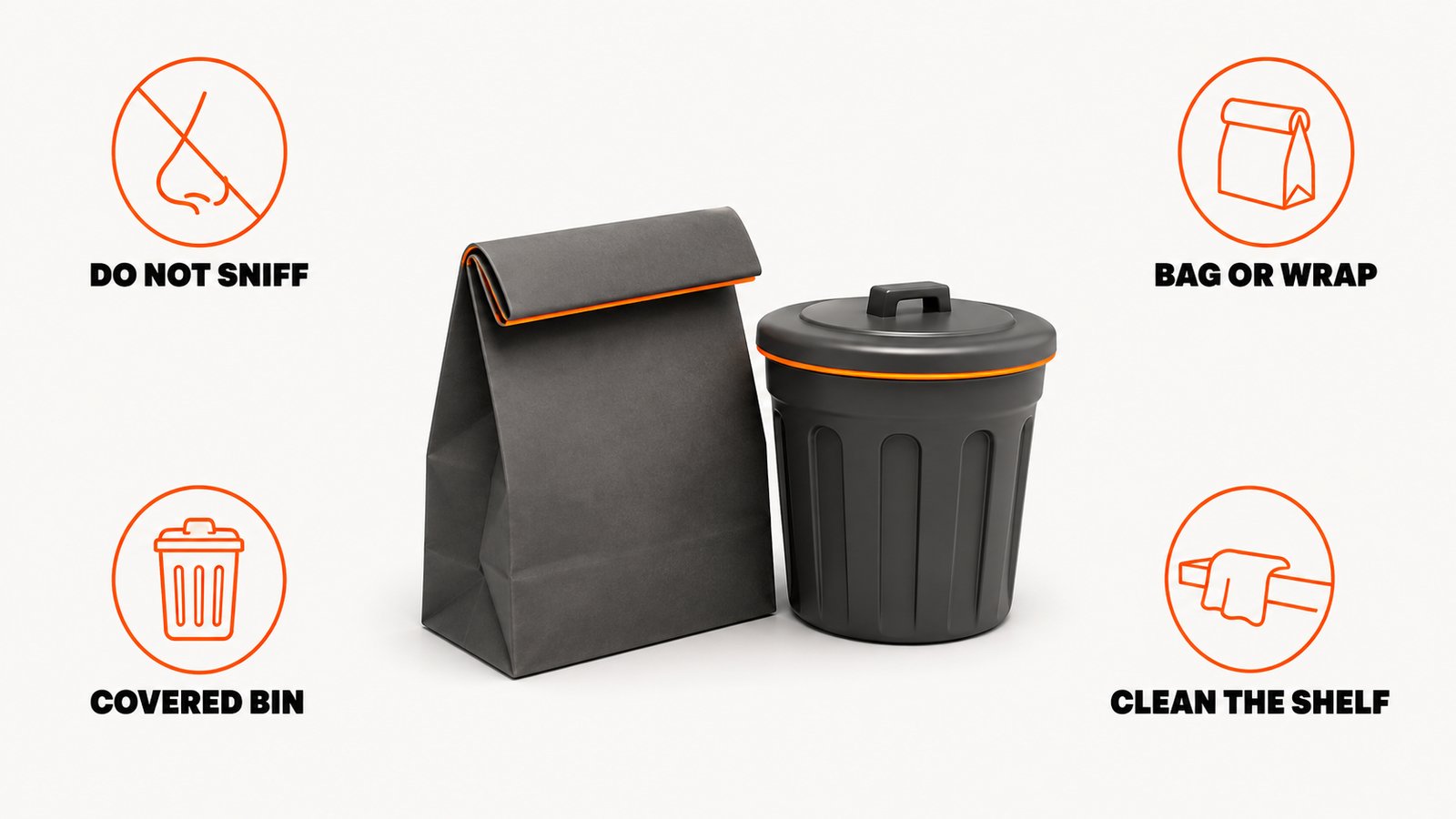
The USDA gives specific handling instructions for moldy food, and two of them are things almost nobody does.
- Do not sniff it. The agency states plainly that sniffing a moldy item can cause respiratory trouble. Leaning in to check the smell is the single most common reflex and the one it warns against.
- If food is covered with mold, discard it. Not into an open bin. Put it into a small paper bag or wrap it in plastic and dispose of it in a covered trash can that children and animals cannot get into.
- Clean the spot where it was stored. The refrigerator shelf, the pantry surface, the inside of the bread box. Spores drop, and the next loaf lands on them.
- Check nearby items the moldy food might have touched. The bag next to it, the fruit in the same bowl, the cutting board.
For the storage container itself, the USDA's kitchen guidance is straightforward. Clean the inside of a refrigerator every few months with a tablespoon of baking soda dissolved in a quart of water, rinse with clear water, and dry. Visible mold on rubber door casings gets scrubbed with three teaspoons of bleach in a quart of water. Keep dishcloths, towels, sponges, and mops clean, because a musty smell means they are spreading mold around, and discard anything you cannot clean or launder.
If the bread box or pantry shelf itself has visible growth on the wood or the wall behind it, that is no longer a food question. Mold in the kitchen covers the surfaces, and mold in the fridge covers the appliance.
Why It Molded So Fast, and How to Slow It Down
Bread molds because the loaf gives them everything they need and the room does nothing to stop them. Fixing the room is more effective than any storage trick.
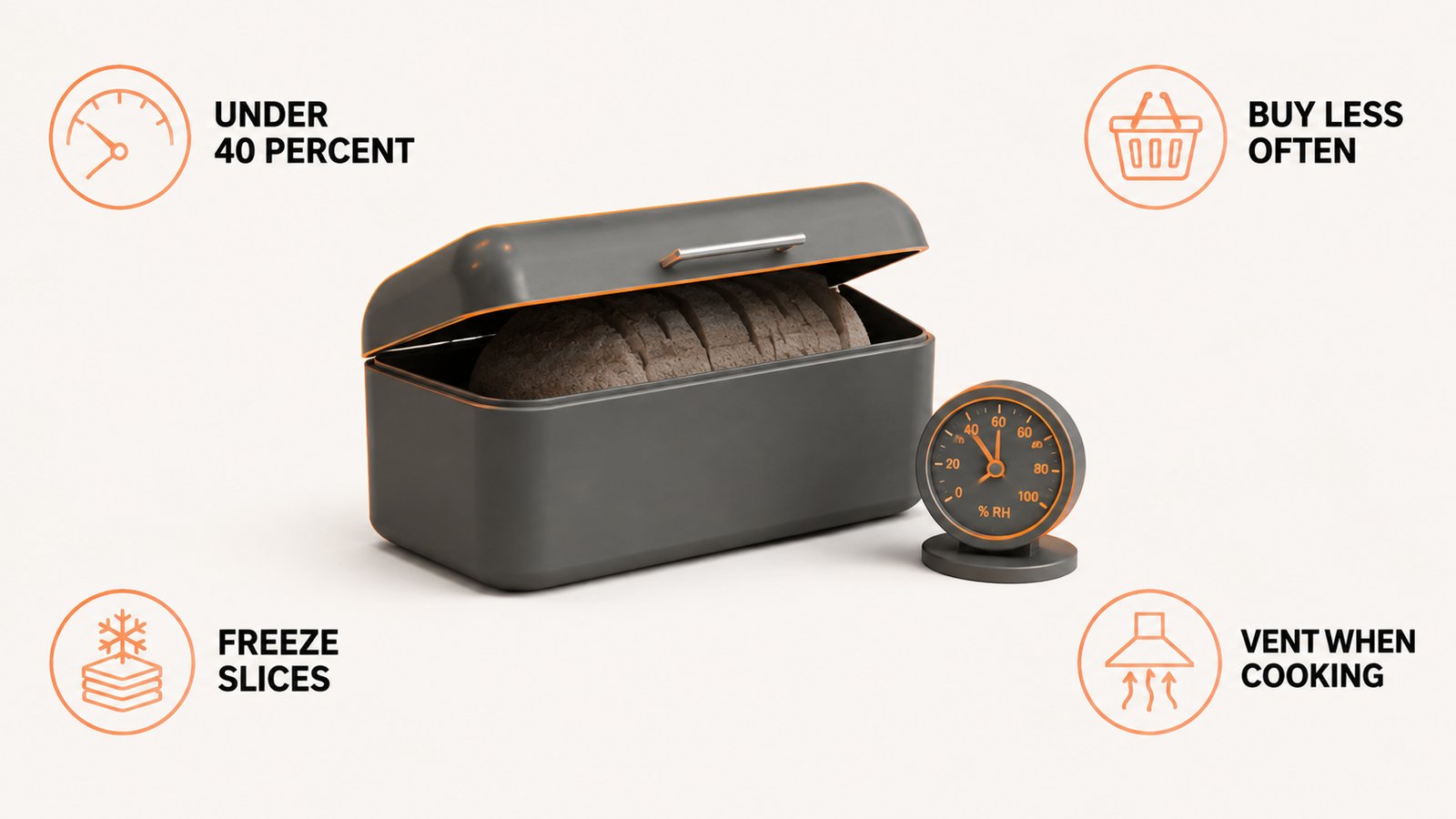
The USDA's own prevention line for the home is a number: keep the humidity level in the house below 40 percent. That is stricter than the EPA's building guidance of below 60 percent, and ideally 30 to 50 percent, because food spoilage sets a tighter bar than wall growth does. If your kitchen sits above that, everything on the counter has a shorter life, and you can check yours with our free humidity and mold risk calculator.
What actually extends the life of a loaf:
- Buy less, more often. The USDA's first prevention line for mold on food is buying small amounts and using them quickly.
- Freeze what you will not eat this week. Freezing stops growth outright. Slice first so you can take what you need.
- Keep the bag closed and dry. Condensation inside a plastic bag is a greenhouse. If the loaf went in warm, it made its own weather.
- Do not store bread on top of the refrigerator. It is one of the warmest surfaces in a kitchen.
- Run the exhaust fan when you cook. Boiling and dishwashing are the two largest humidity events in most kitchens.
The refrigerator is a mixed answer. Cold slows mold, but it also stales bread quickly by driving starch retrogradation, so refrigerated bread stays mold-free and turns dry and crumbly. For anything you will finish within a few days, a cool dry counter beats the fridge. For anything longer, the freezer beats both. How to prevent mold covers the same logic for the rest of the house.
When It Means a Bigger Problem
One moldy loaf is a groceries problem. A pattern is a building problem, and the difference is worth catching early.
Treat it as a building signal when:
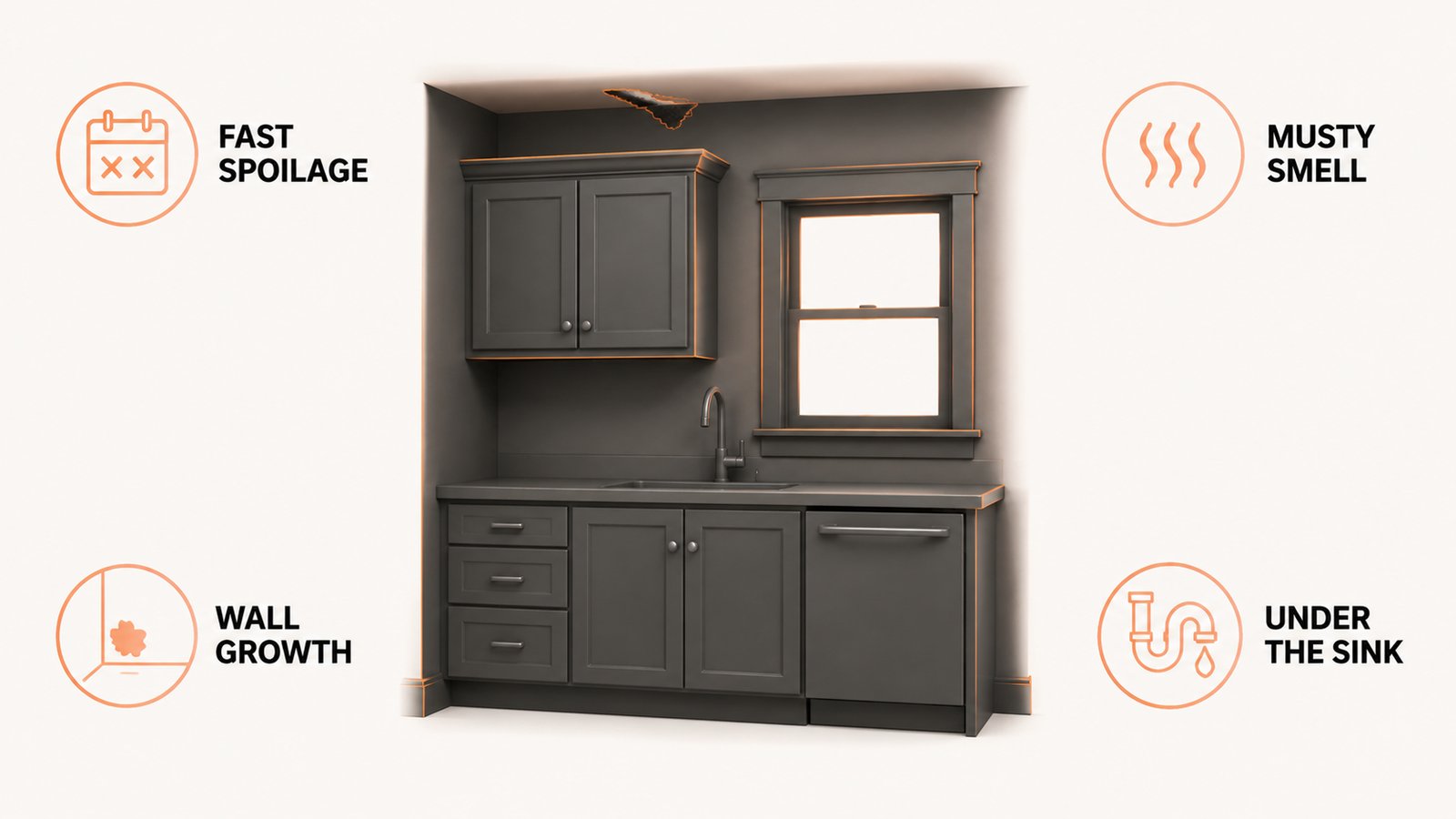
- Bread molds within two or three days, repeatedly. Fresh bread should hold longer than that at normal room humidity. Consistently fast spoilage points at the room, not the bakery.
- Other foods on the same counter go over quickly too. Fruit, tortillas, and baked goods failing together is an environment reading.
- There is a musty smell in the kitchen with no visible source. Odor with nothing to see usually means growth behind or under something.
- You can see growth on the wall, the window frame, under the sink, or on the ceiling. At that point the loaf is the least of it.
For building growth, the EPA line applies: if the moldy area is less than about 10 square feet, roughly a 3 foot by 3 foot patch, in most cases you can handle the cleanup yourself. Above that, after extensive water damage, or when sewage or floodwater is involved, hire a professional. Clean mold off hard surfaces with water and detergent and dry completely, and expect to replace absorbent materials that will not come clean.
If a household member is immune-compromised or has chronic lung disease, the CDC notes people in those groups may get infections in their lungs from mold, which makes any indoor growth a question for their physician rather than a cleaning decision. This page covers food handling, cleaning, and moisture control only, and gives no medical advice. Mold under the kitchen sink and signs of mold in a house cover where to look next.
Frequently asked questions
Can I just cut the mold off bread and eat the rest?
No. The USDA puts bread and baked goods in the discard column specifically because porous foods can be contaminated below the surface. Mold grows as root threads that push into the food, and the agency notes those roots may be difficult to see and may be very deep. Hard cheese is the food where trimming is allowed, and even there the USDA asks for at least an inch cut around and below the spot.
Is mold on bread dangerous to eat?
The USDA states that some molds cause allergic reactions and respiratory problems, and that a few molds in the right conditions produce mycotoxins, poisonous substances that can make people sick. It also notes that moldy foods may have invisible bacteria growing alongside the mold. That is why the guidance is to discard rather than to risk it. Any health question belongs with a physician, not a web page.
What should I do with a moldy loaf?
Do not sniff it, because the USDA warns that sniffing a moldy item can cause respiratory trouble. Put it in a small paper bag or wrap it in plastic and dispose of it in a covered trash can that children and animals cannot reach. Then clean the spot where it was stored and check nearby items it might have touched.
Why did my bread mold so fast?
Warmth, moisture, and a container that traps both. The USDA's home prevention line is to keep household humidity below 40 percent and to buy small amounts you will use quickly. A loaf bagged while still warm makes its own condensation, and the top of a refrigerator is one of the warmest shelves in a kitchen.
Does refrigerating bread stop mold?
It slows mold considerably, but it stales bread fast, because cold accelerates the starch changes that make a loaf dry and crumbly. For a loaf you will finish in a few days, a cool dry spot on the counter is better. For anything longer, slice it and freeze it, which stops growth rather than slowing it.
Is the white fuzz on bread the same as mold on my walls?
Not necessarily the same organism, and it does not matter much for the bread. Color tells you which spore structures are on top, not which species you have, and naming a species takes a laboratory. On food, every color ends the same way, in the bin. On building surfaces the species can change how hard the cleanup is, which is where identification is worth doing.
If bread keeps molding, is my kitchen the problem?
It can be. Fresh bread failing within two or three days repeatedly, other counter foods going over at the same rate, or a musty smell with no visible source all point at room humidity rather than the bakery. The EPA advises keeping indoor humidity below 60 percent and ideally 30 to 50 percent, and the USDA sets a tighter bar of below 40 percent for preventing mold on food.
Sources
Every claim on this page traces to one of these. Links open the primary document.