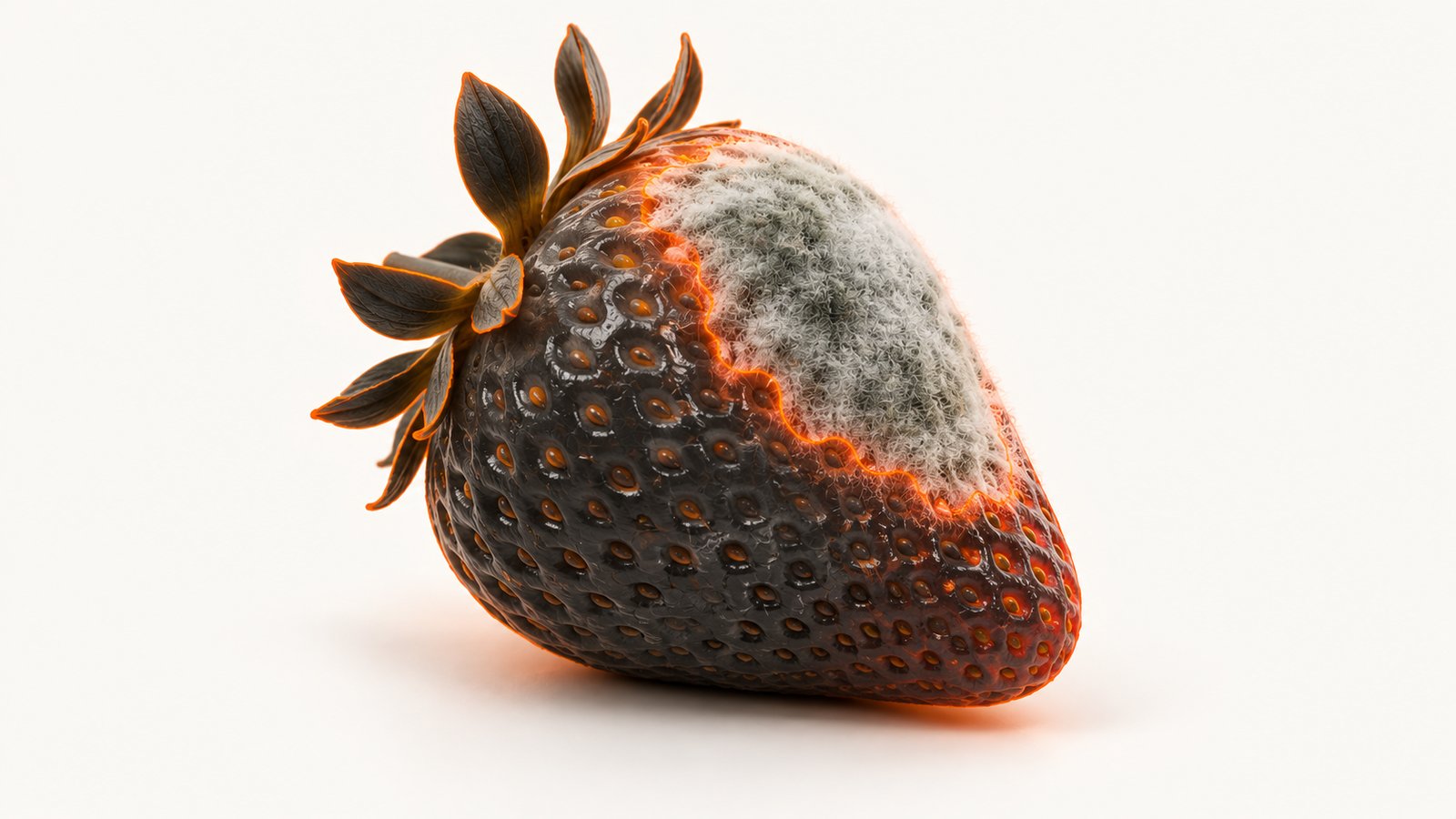
Is mold on strawberries safe to eat?
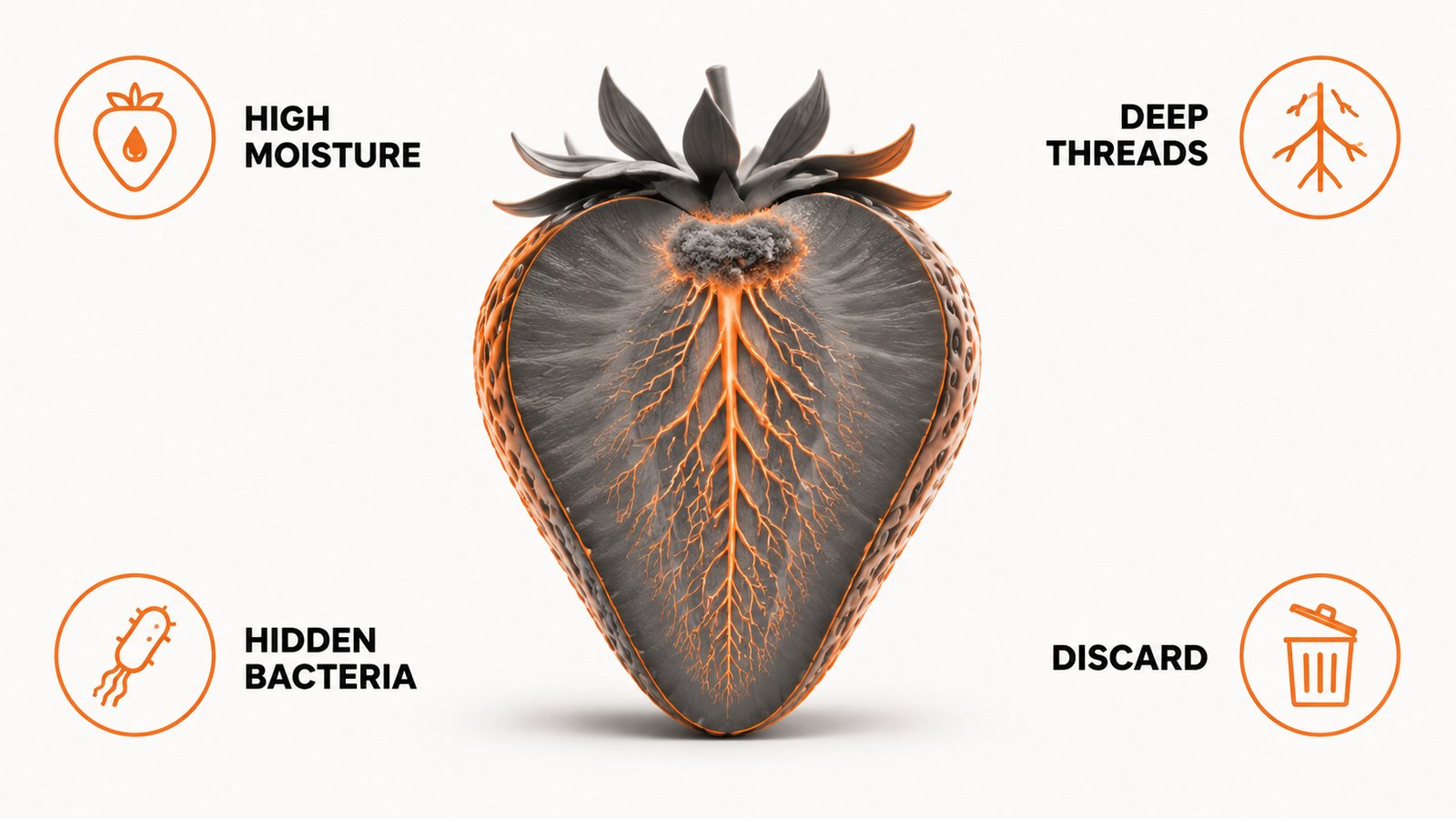
The USDA Food Safety and Inspection Service is unambiguous about soft produce. Its handling table puts soft fruits and vegetables with high moisture content in the discard column, and gives the reason directly: they can be contaminated below the surface. A strawberry is about as soft and as wet as fresh produce gets.
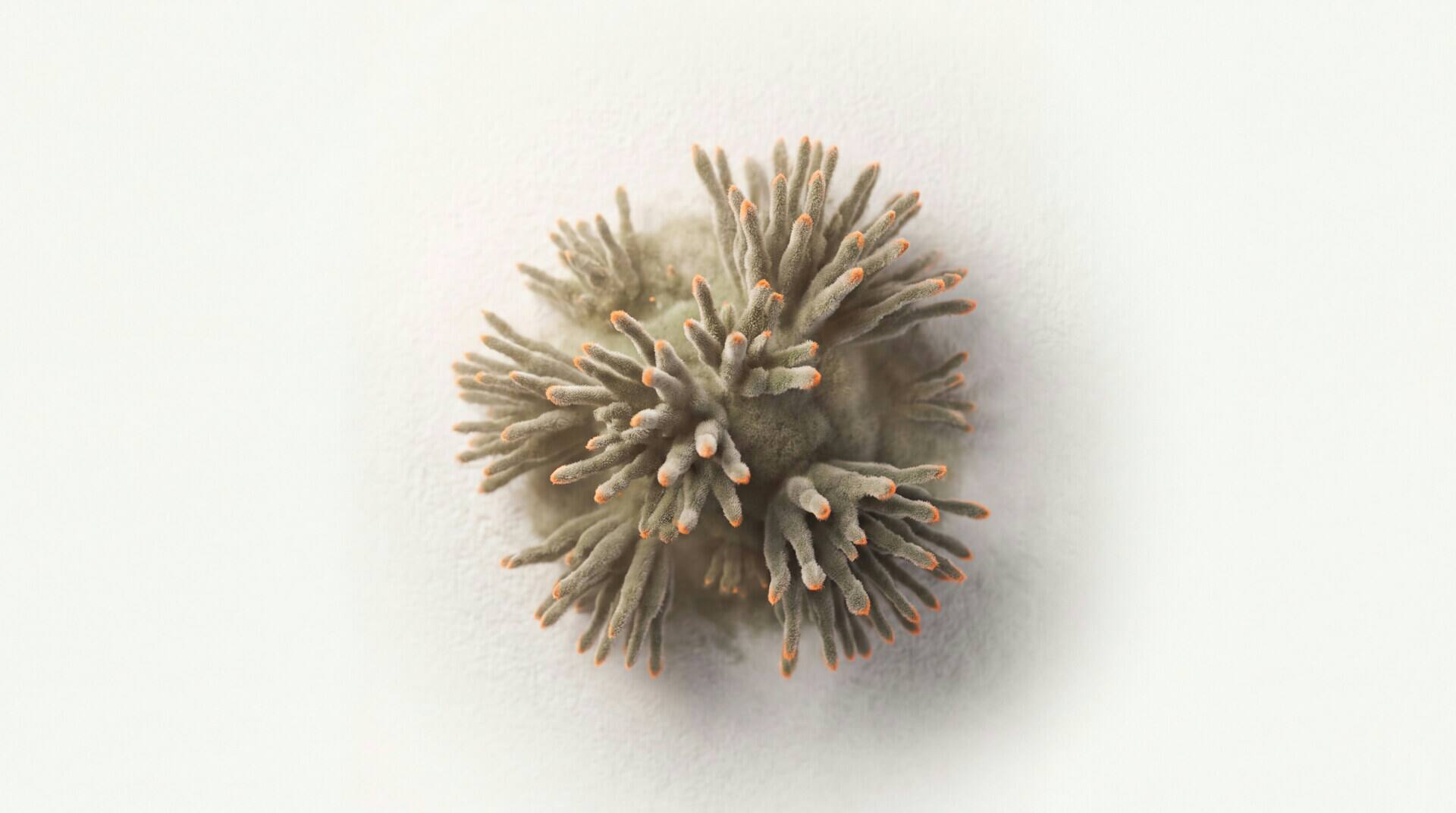
The physical reason is in how a mold colony is built. USDA describes the body of a mold as root threads that invade the food it lives on, a stalk rising above the food, and spores that form at the ends of the stalks, adding that the spores give mold the color you see. So the fuzz is the part of the organism that is already finished growing. The roots may be difficult to see when the mold is growing on food and may be very deep in the food.
There is a second reason that has nothing to do with fungi. USDA notes that foods that are moldy may also have invisible bacteria growing along with the mold. Cutting the visible patch off a berry does nothing about that, because you cannot see what you are trying to remove.
The third reason is mycotoxins. USDA defines these as poisonous substances produced by certain molds, notes that when a food shows heavy mold growth the root threads have invaded it deeply, and adds that in dangerous molds the poisonous substances are often contained in and around those threads. Most household mold on fruit will not be producing them, but you have no way to tell by looking. More on that testing question is on mycotoxin testing.
So the answer is no. Do not trim a moldy strawberry and eat the rest of it, and do not rinse the fuzz off and carry on.
Why one moldy strawberry ruins the box
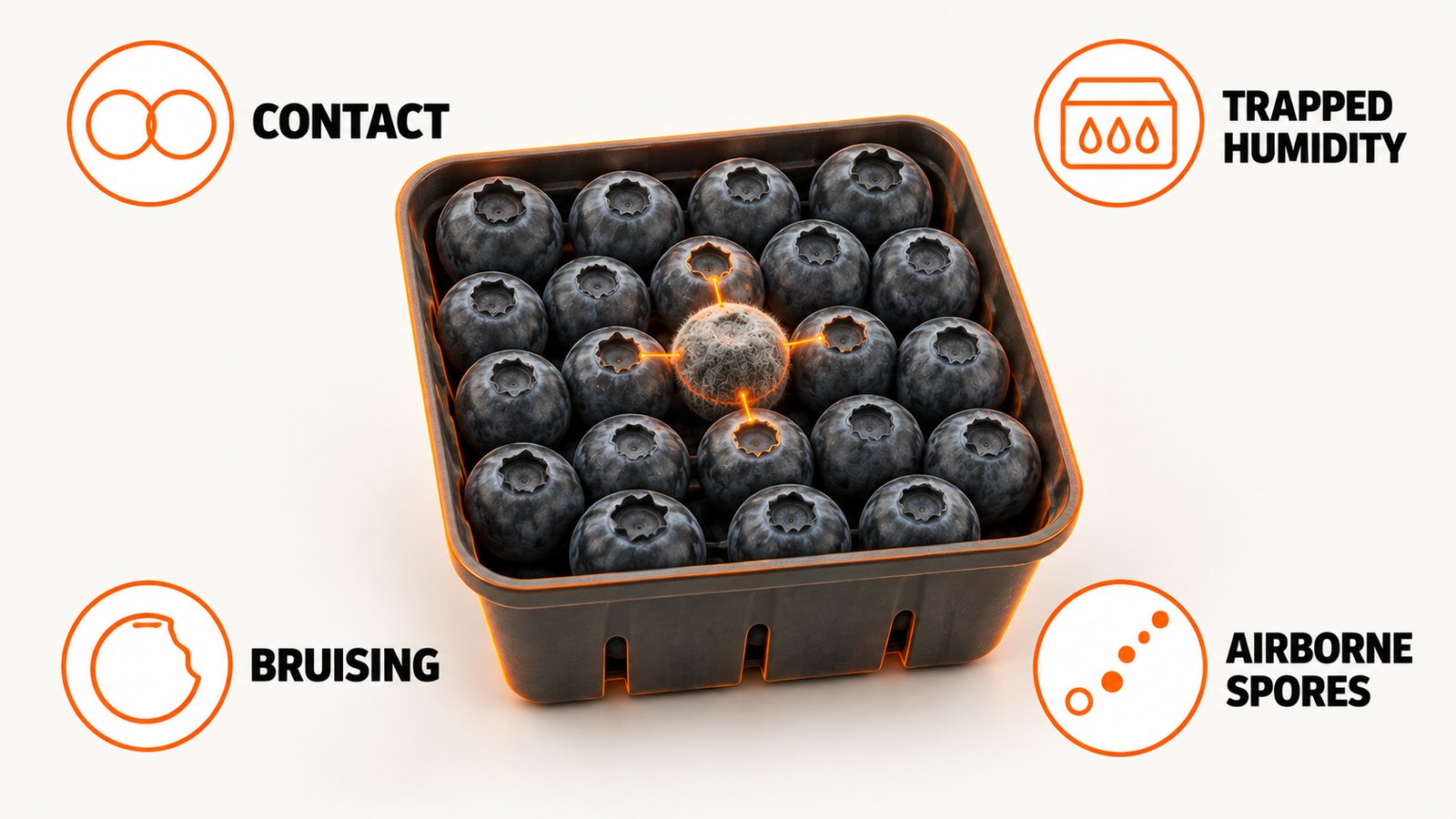
USDA puts it in five words: mold spreads quickly in fruits and vegetables. In a closed plastic clamshell, four things work together to make that happen fast.
Contact. Berries are packed touching each other, so a colony on one has a direct bridge to its neighbors and does not need to travel through the air at all.
Trapped humidity. A sealed container holds the moisture the fruit gives off. The air inside sits near saturation, which is exactly the condition growth needs. That is the same relationship covered on how fast mold grows.
Bruising. A bruised berry has broken skin and leaking sugar, which is an open door. This is why the berries at the bottom of the box go first: they carry the weight of everything above them.
Airborne spores. USDA describes spores as forming at the ends of the stalks and being transported by air, water, or insects, and says that when airborne they spread the mold from place to place. Disturbing a fuzzy berry releases them into the container.
The practical rule that follows: pull the affected berry out the moment you see it, and check every berry that was touching it. If several berries are affected, or the container smells sour and fermented, discard the whole box. A single spot in an otherwise firm, dry, unbruised container is a one-berry problem. A box that has been sitting for four days is not.
What the fuzz on a strawberry actually is
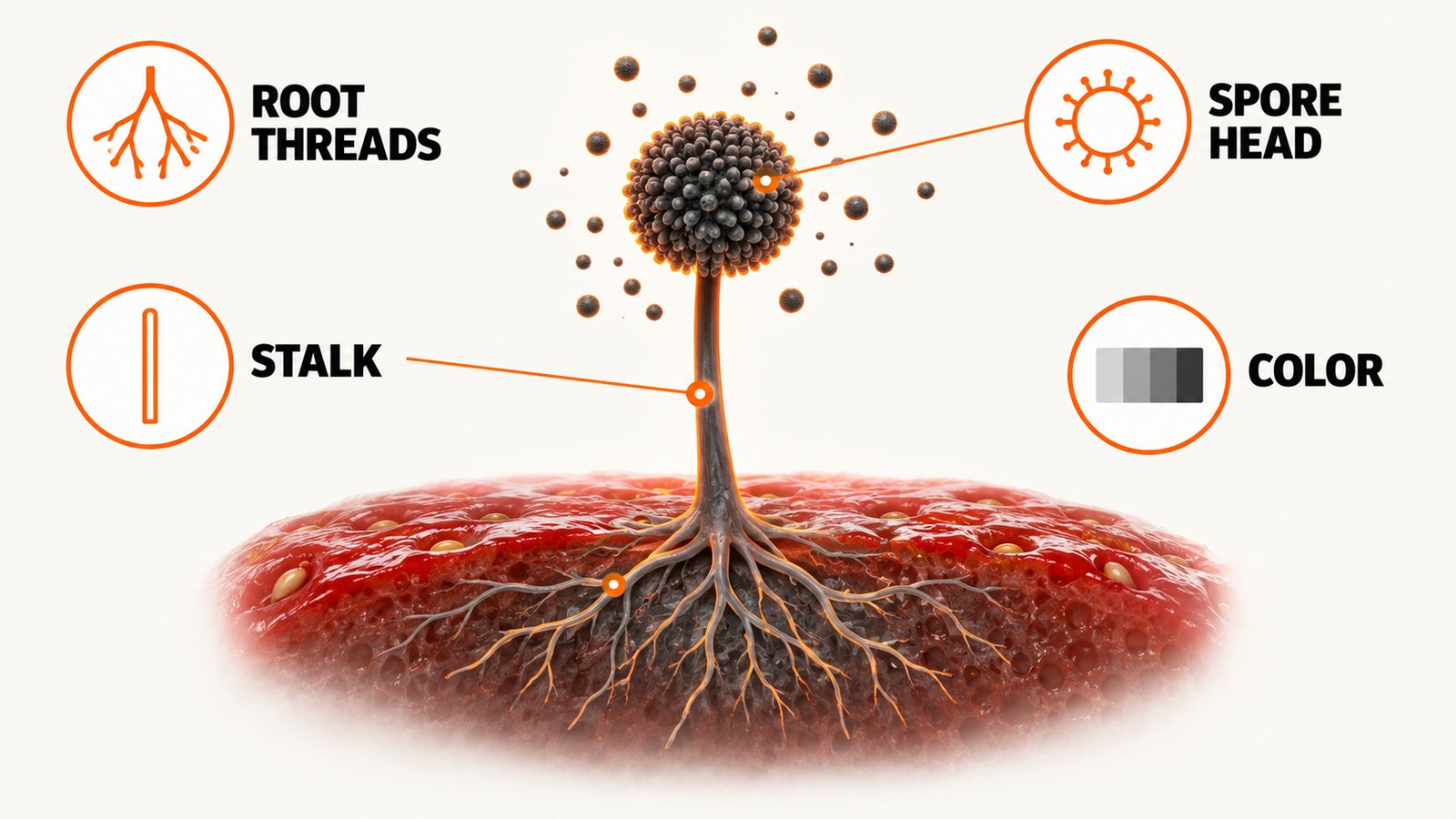
The gray-white fuzz on a strawberry is usually Botrytis cinerea, which growers call gray mold. Published work on strawberry cultivation calls it one of the most destructive diseases in the crop, and it is a postharvest problem as much as a field one, which is why fruit that looked perfect in the store turns fuzzy two days later at home. USDA also lists Botrytis among the molds most often found on food.
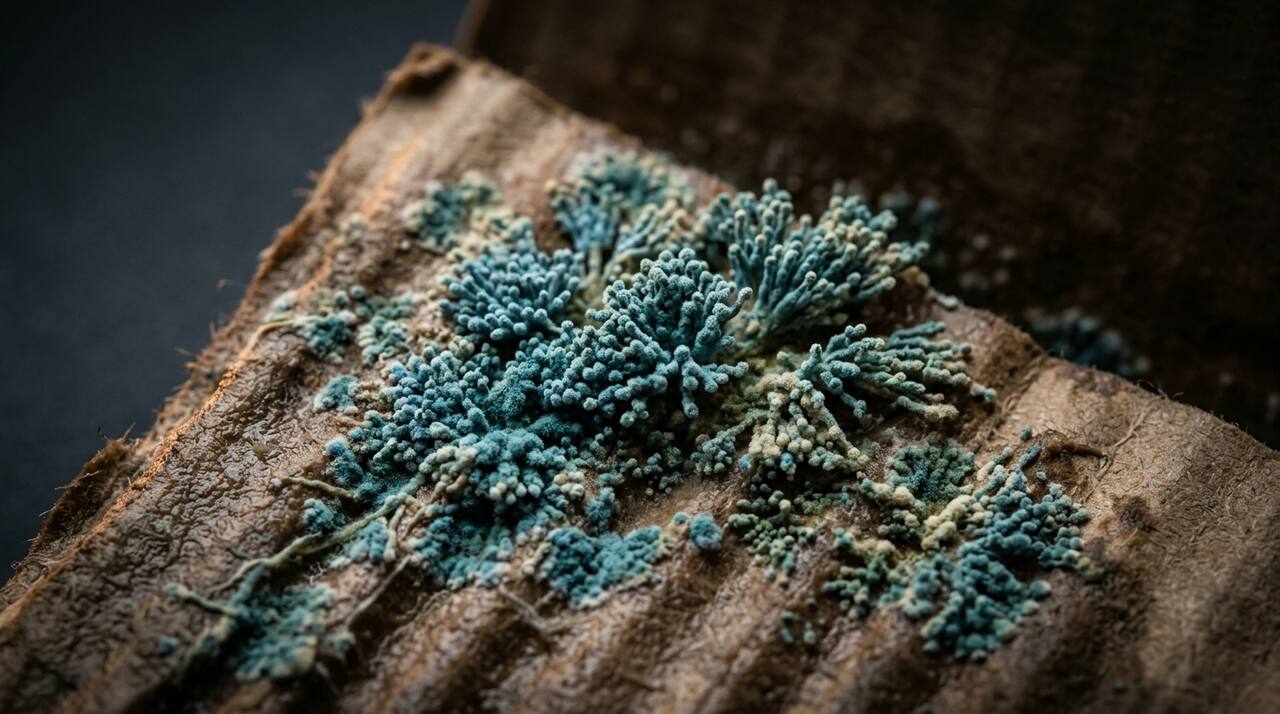
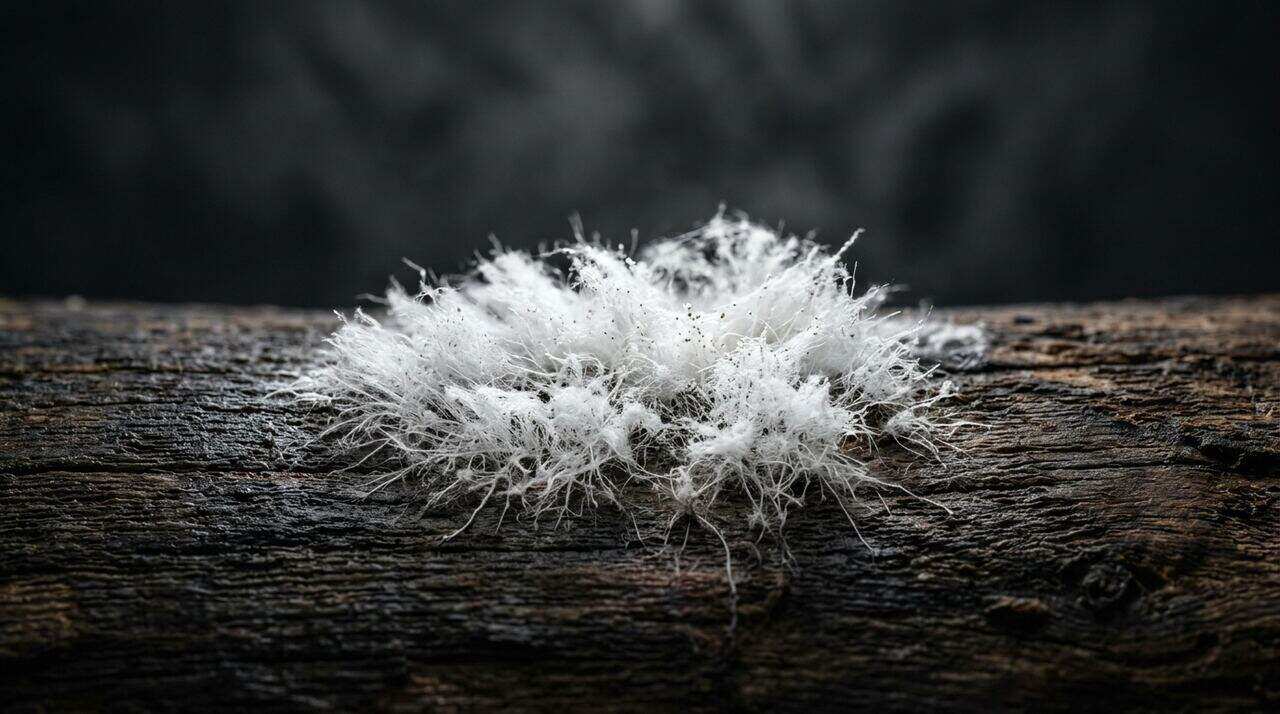
Other colors show up on berries too. A blue-green powdery patch is usually a Penicillium species, covered on Penicillium mold. A fast, wispy, gray-black growth with visible pinheads is often a Rhizopus bread mold. A dense white cottony patch behaves like the growth described on white mold. USDA lists Alternaria, Aspergillus, Botrytis, Cladosporium, Penicillium and Rhizopus among the molds found most often on food.
None of that changes the decision. You cannot identify a species from a photograph, and the food-safety rule for soft, wet produce is the same for all of them. The naming is interesting rather than useful, and the reasons color is a weak identifier are on types of mold and green mold.
One detail people get wrong: mold on fruit is not stopped by the refrigerator. USDA notes that while most molds prefer warmer temperatures, they can grow at refrigerator temperatures too. Chilling slows growth down. It does not switch it off.
Mold on fruit: what to toss and what to save

USDA splits moldy food into two columns, and the dividing line is moisture and density rather than how bad it looks.
| Food | USDA verdict | Reason given |
|---|---|---|
| Soft fruit and vegetables, such as strawberries, peaches, tomatoes, cucumbers | Discard | High moisture content means they can be contaminated below the surface |
| Firm fruit and vegetables, such as cabbage, bell peppers, carrots | Use, after trimming | Cut off at least one inch around and below the spot. Low moisture makes it hard for mold to penetrate dense food |
| Hard cheese, where mold is not part of the process | Use, after trimming | Cut at least one inch around and below, keeping the knife out of the mold. Mold generally cannot penetrate deep into the product |
| Soft cheese, shredded or sliced cheese | Discard | High moisture content means contamination below the surface |
| Bread and baked goods | Discard | Porous foods can be contaminated below the surface |
| Jams and jellies | Discard | The mold may be producing a mycotoxin. Molds tolerate salt and sugar better than most other food invaders |
The pattern is simple once you see it. Dense and dry means the growth stays near the surface and a generous trim gets ahead of it. Soft and wet means the threads are already deeper than the patch you can see. Strawberries sit at the far soft end, which is why they are the clearest discard on the whole list.
What to do the moment you find it
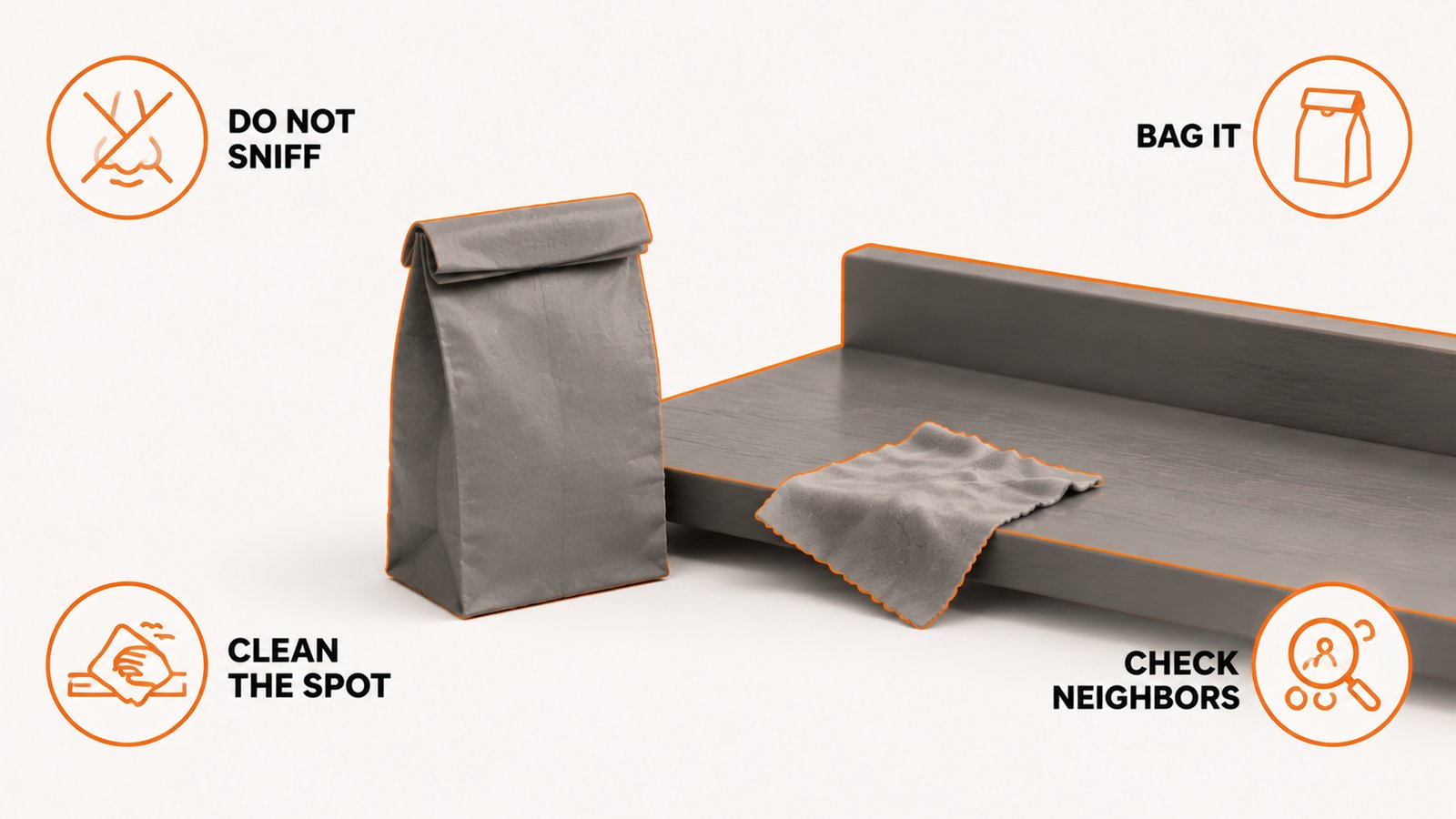
USDA gives four handling steps, and the first one surprises people.
Do not sniff it. USDA's instruction is direct: do not sniff the moldy item, because this can cause respiratory trouble. Leaning in for a close smell is the standard reflex and it is the one thing not to do.
Bag it before it travels. If food is covered with mold, discard it. USDA says to put it into a small paper bag or wrap it in plastic and dispose of it in a covered trash can that children and animals cannot get into. Carrying an open container of fuzzy berries through the house disturbs the colony on the way.
Clean the spot where it was stored. Wipe the shelf, the drawer, or the counter where the container sat. USDA also recommends cleaning the inside of a refrigerator every few months with one tablespoon of baking soda dissolved in a quart of water, rinsing with clear water and drying, and scrubbing visible dark growth on rubber door casings using three teaspoons of bleach in a quart of water.
Check what it touched. USDA's line is to check nearby items the moldy food might have touched, because mold spreads quickly in fruits and vegetables. Go through the rest of the container berry by berry, and look at whatever was stacked next to it.
One more habit worth building: USDA notes that mold spores from affected food can build up in your refrigerator, dishcloths, and other cleaning utensils, that a musty smell means they are spreading mold around, and that you should discard items you cannot clean or launder. A sour dishcloth reseeds every surface you wipe with it.
How to keep strawberries from molding
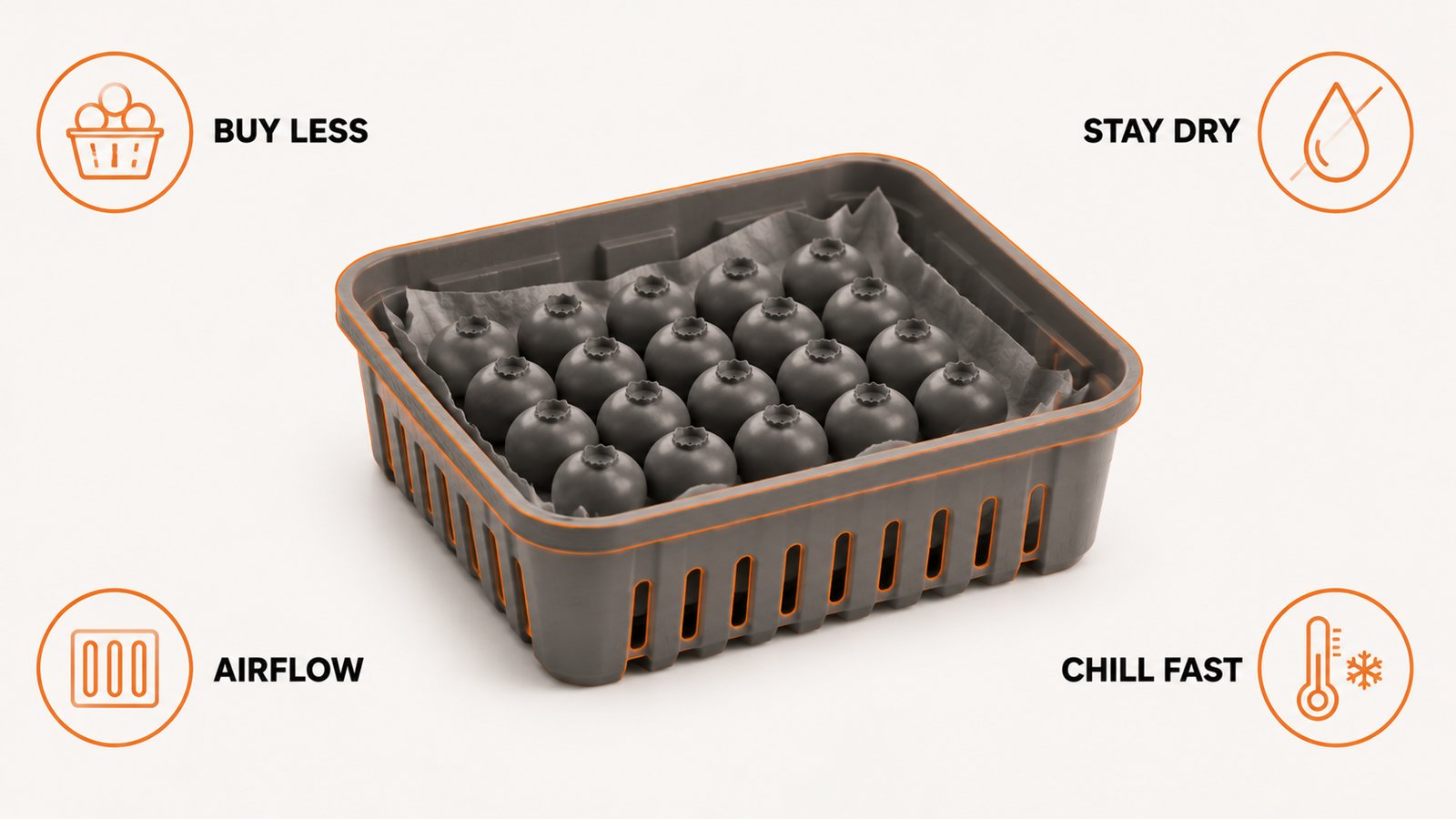
Strawberries have a short shelf life and no storage trick changes that. What good handling does is stop a three-day box becoming a one-day box.
Buy less, more often. USDA's own advice is that buying small amounts and using food quickly can help prevent mold growth. A smaller box eaten in two days never gets the chance.
Inspect before you buy. USDA recommends examining food well before purchase, looking at the stem areas on fresh produce, and avoiding bruised produce. Turn the container over and look at the bottom layer, which is where the crushed berries are.
Do not wash them until you are about to eat them. Surface water is the one variable you fully control. A washed berry going back into a sealed box is a wet berry in a humid box.
Give them air and a single layer. Move them out of the sealed clamshell into a vented container or a shallow dish with a paper liner. Depth is the enemy: the berries at the bottom get bruised and stay wet.
Refrigerate straight away. Chilling slows growth even though it does not stop it, and USDA notes molds can still grow at refrigerator temperatures.
Pull the bad one immediately. One berry removed on day one saves the box.
USDA also gives a whole-house number that is easy to miss in a food article: keep the humidity level in the house below 40 percent. That is tighter than the 30 to 50 percent range EPA gives for building moisture control, and it is aimed at food spoilage rather than building materials. If your kitchen sits well above it, see how to prevent mold and the free humidity tool.
When it is a house problem, not a food problem

If fresh produce keeps going fuzzy inside two days, the problem may not be the produce. Four kitchen conditions reseed food faster than shopping habits can keep up with.
- The refrigerator door seal. The rubber gasket holds moisture and is one of the few places USDA calls out by name for scrubbing. Growth there sits inches from everything you store.
- The produce drawer. Designed to hold humidity, rarely emptied and dried. Take it out, wash it, and dry it fully before it goes back.
- Dishcloths, sponges, and mops. USDA says a musty smell means they are spreading mold around and to discard what you cannot clean or launder.
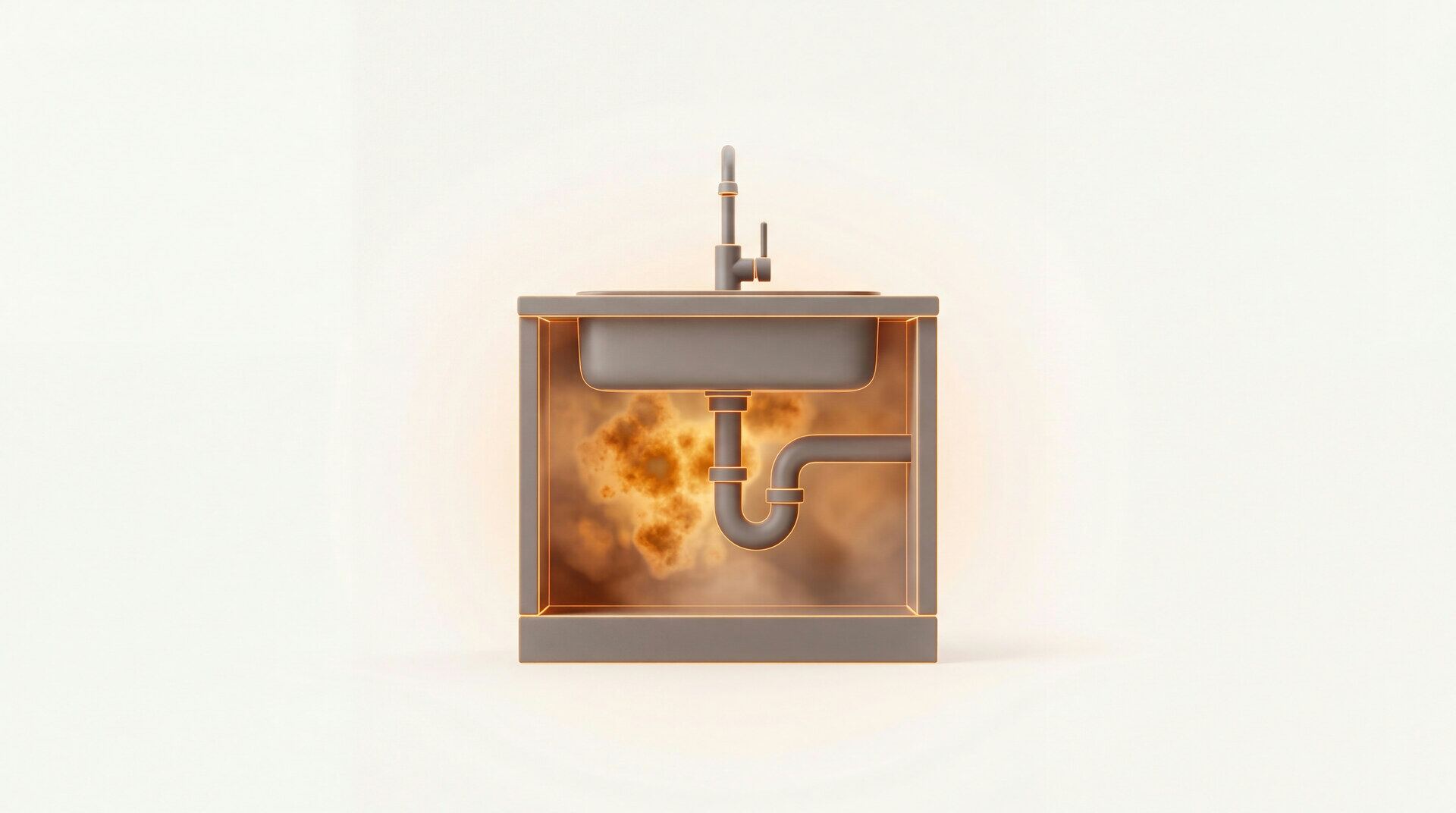
- A slow leak under the sink. A damp cabinet a few feet from the fruit bowl raises the humidity of the whole area. That is the most common concealed kitchen moisture source, and it is covered on mold in the kitchen.
Call a qualified professional when the kitchen problem is a building problem:
- Visible growth larger than about 10 square feet. That is EPA's size guide for when a job stops being a do-it-yourself one.
- Growth on cabinet carcass, subfloor, or drywall rather than on a wipeable surface. Porous material that has been wet may have to be removed, because mold fills the empty spaces in it.
- A musty smell with no visible source after you have cleaned the obvious places, which points at concealed moisture. See why a house smells musty.
- Any water event under the sink or behind an appliance. EPA advises drying water-damaged areas and items within 24 to 48 hours to prevent mold growth, and a cabinet base that stayed wet past that is already a repair.
For professional work, look for firms that follow the ANSI and IICRC S520 standard, and get a written scope before anyone starts. Costs are on mold remediation cost.
Frequently asked questions
Can you cut the mold off a strawberry and eat the rest?
No. USDA's handling guidance puts soft fruits and vegetables with high moisture content in the discard column, because they can be contaminated below the surface. It also notes that a mold's root threads may be difficult to see and may be very deep in the food, and that moldy foods may have invisible bacteria growing along with the mold. Trimming works on firm, dense foods, not on berries.
Can you wash mold off strawberries?
Washing removes the visible fuzz, which is only the spore-bearing top of the colony. USDA describes the body of a mold as root threads that invade the food, a stalk, and spores at the ends of the stalks, with the spores giving mold the color you see. Rinsing takes off the part you can see and leaves the part that matters, and it adds surface water that speeds up whatever is left.
If one strawberry is moldy, do I have to throw out the whole box?
Not automatically. USDA says mold spreads quickly in fruits and vegetables and advises checking nearby items the moldy food might have touched. Pull the affected berry, inspect every berry that was touching it, and use the rest promptly. Discard the whole container if several berries are affected, if the box smells fermented or sour, or if the berries are soft and weeping.
What is the white fuzzy mold on strawberries?
The gray-white fuzz is usually Botrytis cinerea, which growers call gray mold and which published research describes as one of the most destructive diseases in strawberry cultivation. Blue-green powder is more often a Penicillium species. USDA lists Alternaria, Aspergillus, Botrytis, Cladosporium, Penicillium and Rhizopus among the molds found most often on food. The species does not change the handling decision.
Does refrigerating strawberries stop mold?
It slows it down and does not stop it. USDA notes that while most molds prefer warmer temperatures, they can grow at refrigerator temperatures too, which is why a chilled box still turns in a few days. Chilling buys time, and keeping the berries dry, unwashed until use, and in a single layer with airflow buys more.
What should you do the moment you find moldy food?
USDA gives four steps. Do not sniff the moldy item, because this can cause respiratory trouble. Put it in a small paper bag or wrap it in plastic and dispose of it in a covered trash can children and animals cannot reach. Clean the refrigerator or pantry at the spot where the food was stored. Then check nearby items the moldy food might have touched.
What humidity should a kitchen be kept at to slow mold on food?
USDA's food-safety guidance says to keep the humidity level in the house below 40 percent. That is tighter than the 30 to 50 percent range EPA gives for general building moisture control, because it is aimed at food spoilage rather than building materials. An inexpensive hygrometer on the counter tells you where you actually are.
Sources
Every claim on this page traces to one of these. Links open the primary document.