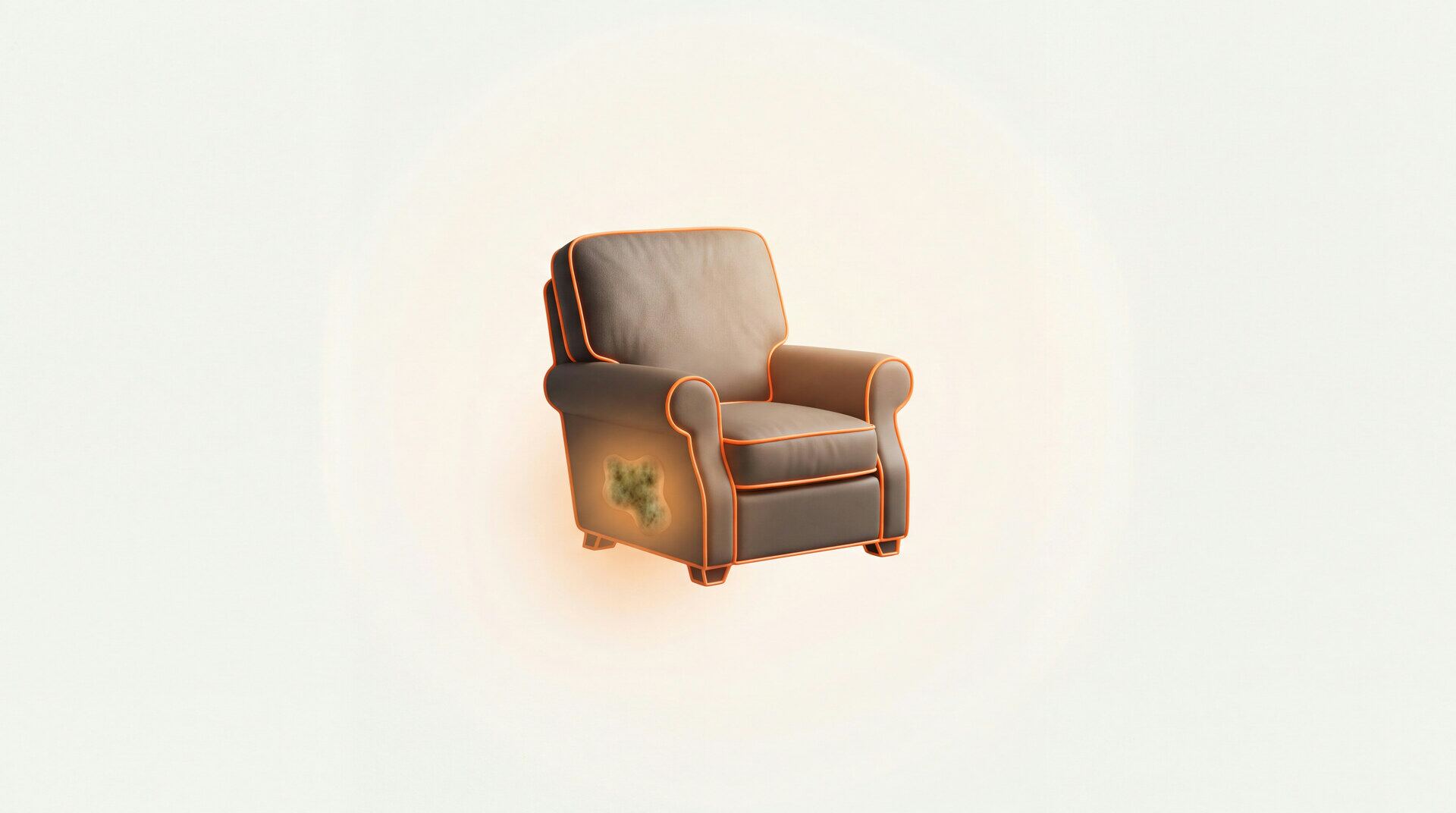
Why furniture grows mold
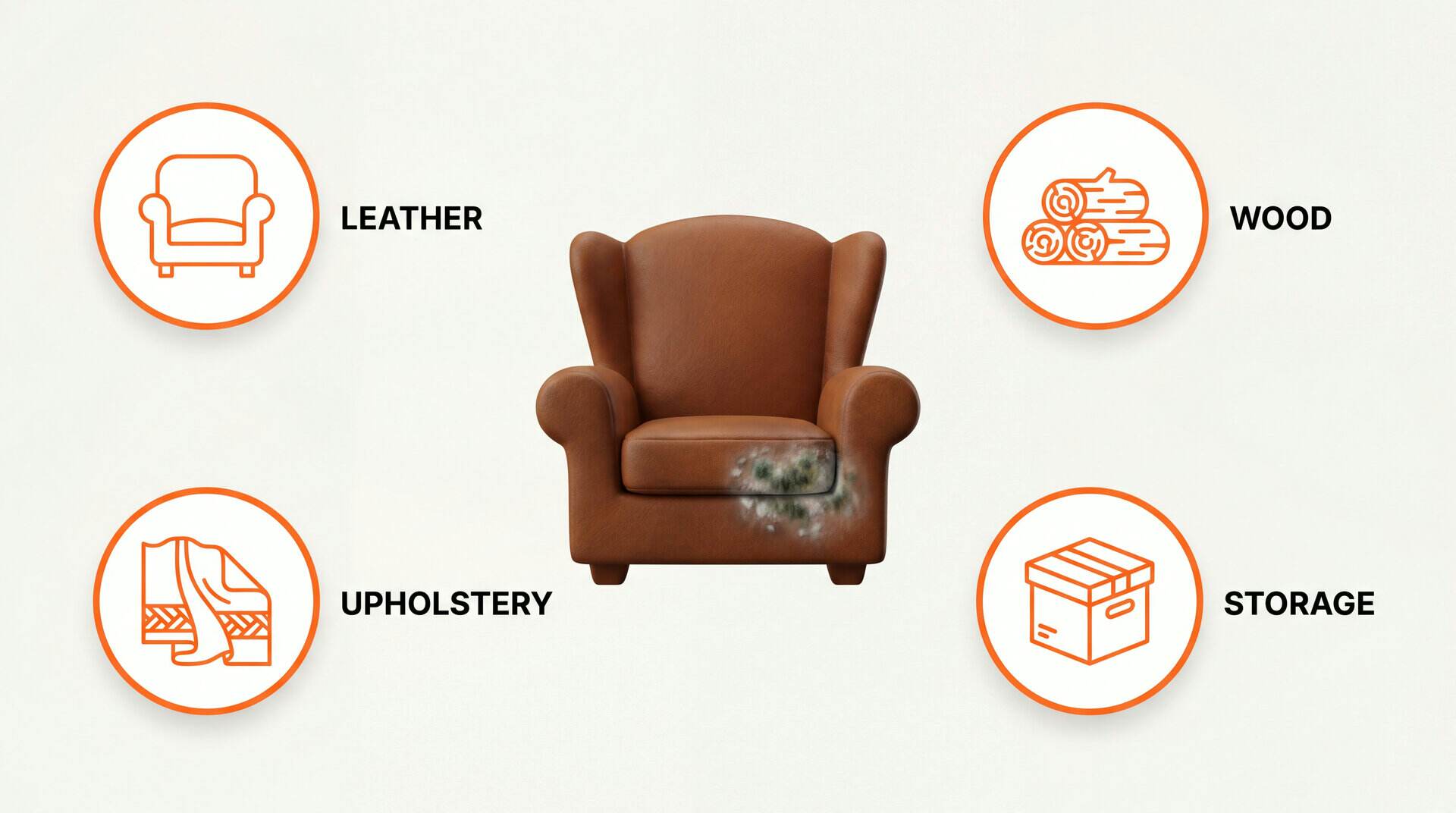
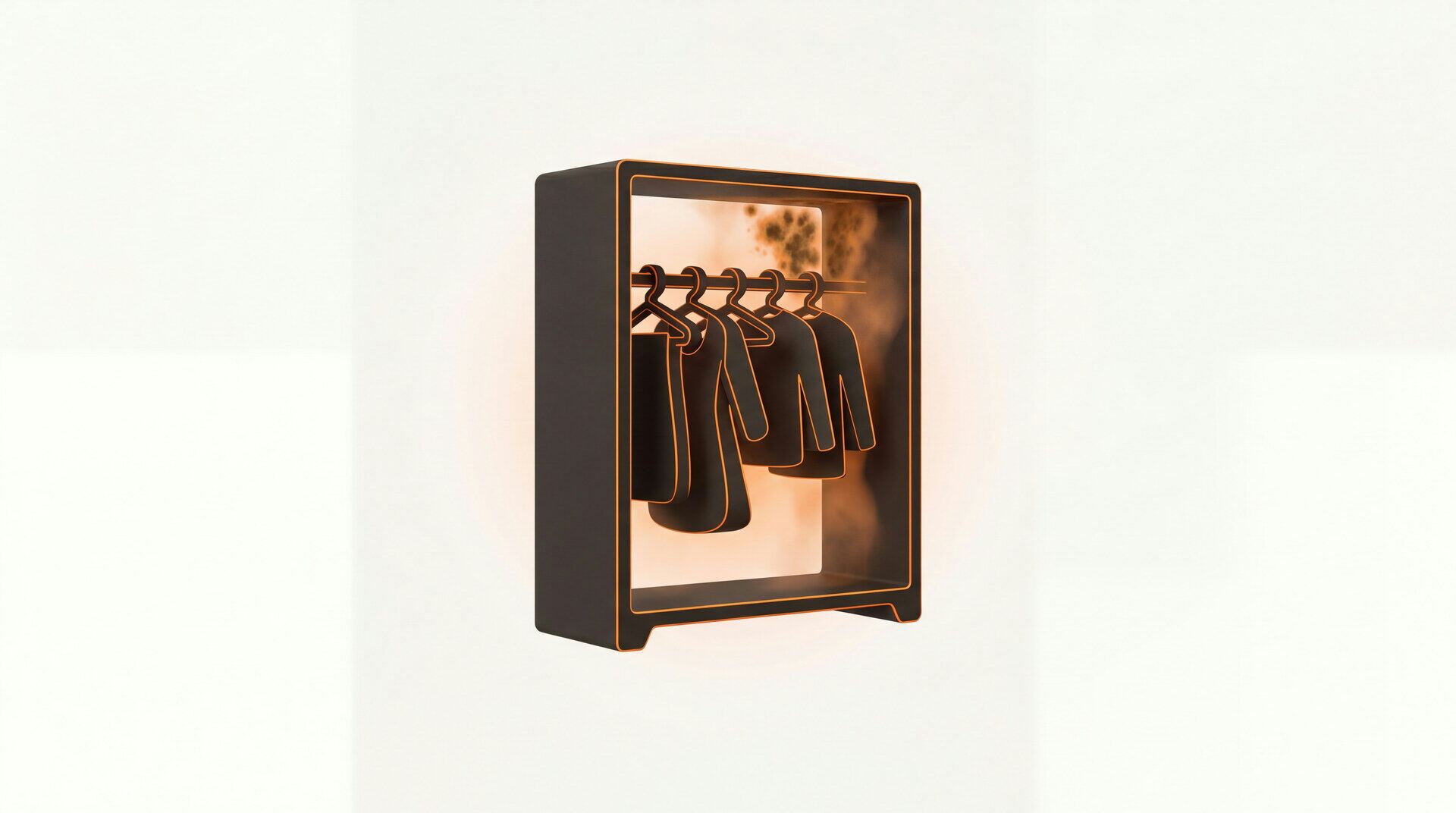
The most common scenario is furniture pushed against an exterior wall. In winter, that wall gets cold. The furniture blocks airflow behind it, trapping humid air between the piece and the wall. Moisture condenses on the cold wall surface and on the back of the furniture. Mold grows on that damp surface for months before anyone pulls the piece away to look.
Basements, garages, and storage units are also high risk. Any furniture stored in a space above 60% humidity is at risk. Flooding is the most obvious cause, but it does not take a flood. A slow plumbing leak, a humidifier running too high, or storing furniture in an unfinished space with no moisture control is enough.
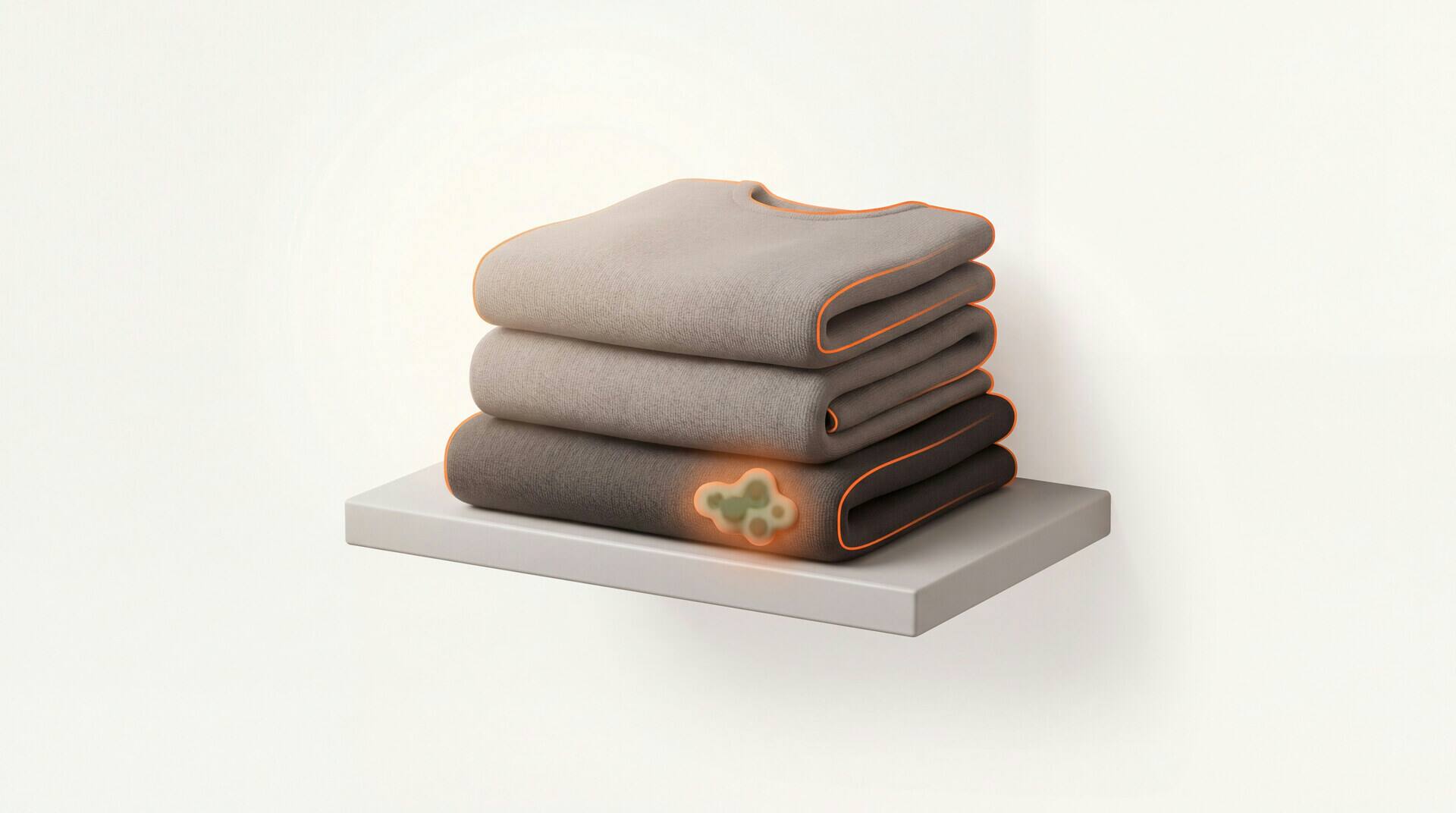
Spills also cause mold. Liquid that soaks into a fabric couch and is not dried within 24 to 48 hours creates a localized mold pocket inside the cushion padding. You may not see it on the surface, but the musty smell gives it away.
Cleaning mold off wood furniture
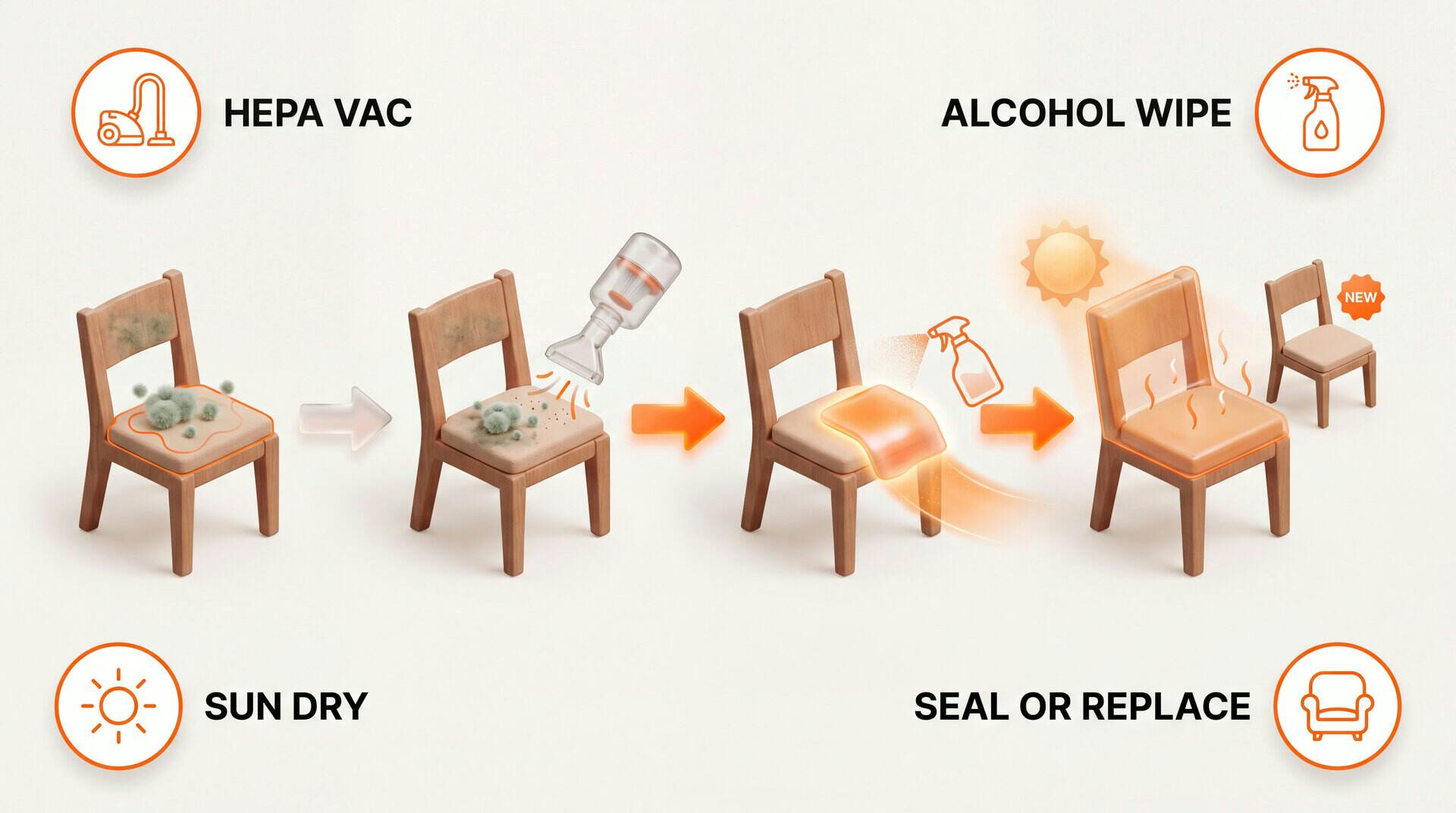
Step 1: Take it outside. Move the furniture outdoors if possible. This prevents spreading spores inside your home and gives you sunlight, which kills mold.
Step 2: HEPA vacuum. Vacuum all surfaces with a true HEPA vacuum to remove loose mold spores. A regular vacuum blows spores back into the air through its exhaust.
Step 3: Clean the surface. Mix 1 tablespoon of dish soap in 1 quart of warm water. Wipe down all moldy areas with a cloth dampened in this solution. For stubborn mold, spray 3% hydrogen peroxide directly on the surface. Let it sit 10 minutes, then wipe. Do not oversaturate the wood.
Step 4: Dry in sunlight. Place the piece in direct sunlight for 4 to 6 hours. UV light kills mold spores and helps dry the wood. Flip or rotate the piece to expose all sides.
Step 5: Sand if needed. If mold staining remains after cleaning and drying, lightly sand the affected area with 120 grit sandpaper. Wipe with a tack cloth. Apply wood sealer or furniture polish to protect the fresh surface.
Solid wood vs particle board: Solid wood (oak, pine, maple, walnut) is saveable because mold sits on the surface. Sand and refinish if needed. Particle board, MDF, and pressed wood absorb water deep into the material. Once swollen and crumbling, they cannot be saved. Replace the piece.
Cleaning mold off upholstered furniture
Fabric surface: HEPA vacuum the entire piece, including crevices and undersides. Spray hydrogen peroxide on visible mold spots and let it sit 15 minutes. Blot (do not rub) with a clean white cloth. For the whole piece, mix 1 cup white vinegar with 1 cup water in a spray bottle and lightly mist all fabric surfaces. Let it air dry completely.
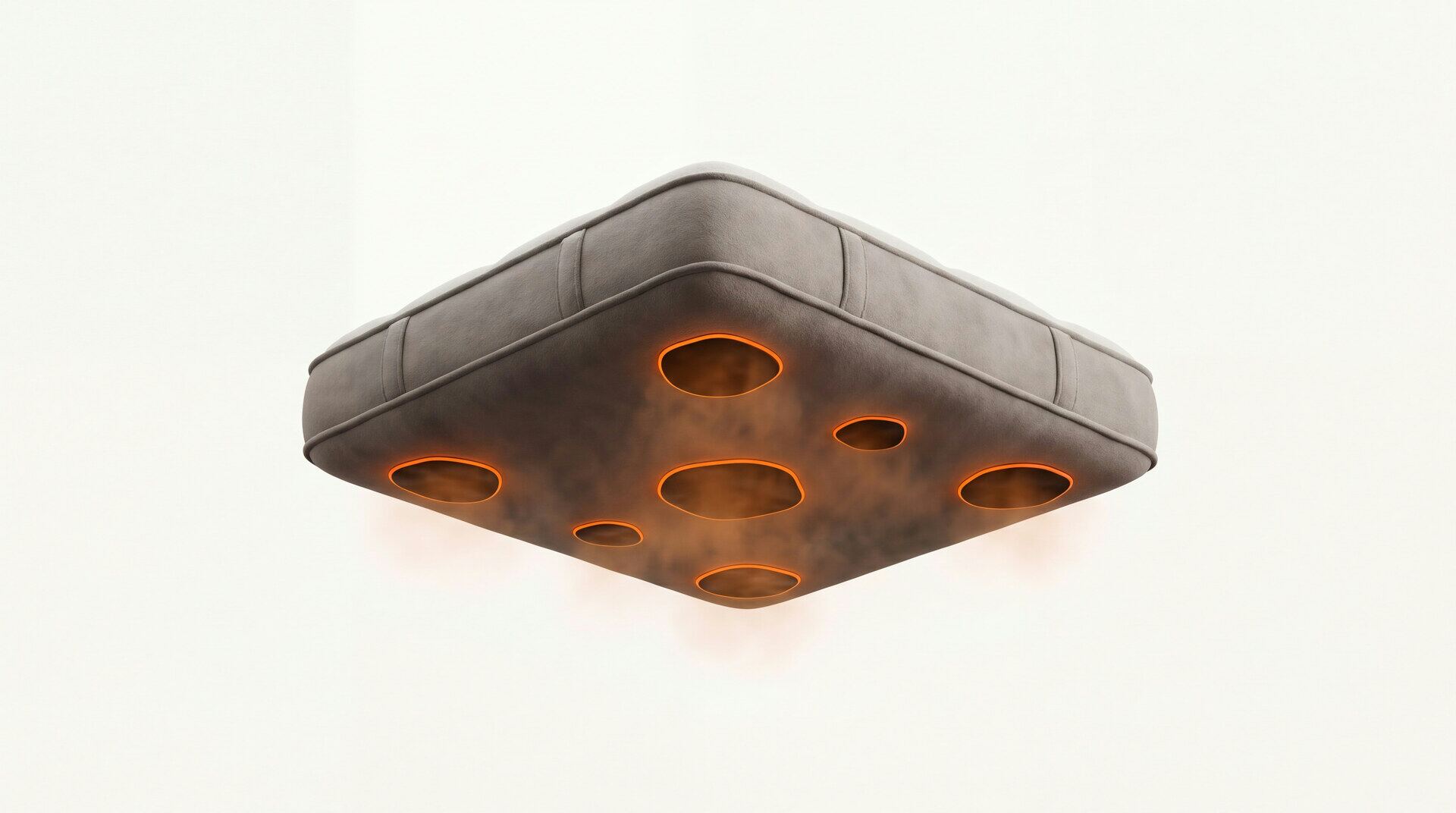
Cushion check: Remove cushion covers if they are zippered. Inspect the foam inside. If the foam smells musty, has visible mold, or is discolored, replace the foam inserts. Cleaning the fabric cover does nothing if the foam inside is contaminated. Replacement foam is available at most fabric and craft stores.
Leather furniture: Wipe with a 1:1 mix of rubbing alcohol and water. Let it dry completely. Apply leather conditioner after. Leather mold is usually surface level and responds well to cleaning. Do not use vinegar on leather because it dries out the material.
When to throw it away: If the piece is particle board with swollen, crumbling structure. If upholstery foam is saturated and musty after cleaning. If mold keeps returning within days of cleaning. If the piece sat in standing water for more than 48 hours. The cost of thorough decontamination often exceeds the value of the furniture.
Preventing mold on furniture
Leave a gap. Pull all furniture at least 2 to 3 inches away from walls, especially exterior walls. This allows air to circulate behind the piece and prevents condensation buildup.
Control humidity. Keep indoor humidity below 50% with a dehumidifier or properly sized HVAC system. This is the single most effective way to prevent mold on anything in your home.
Check behind furniture seasonally. Pull pieces away from the wall twice a year and look at the back. Catch mold early before it spreads.
Do not store furniture in damp spaces. Basements, garages, and storage units without climate control are mold risks. If you must store furniture, use a dehumidifier in the space and wrap pieces in breathable fabric (not plastic, which traps moisture).
Frequently asked questions
How do you remove mold from wood furniture?
HEPA vacuum the surface first to remove loose spores. Then wipe with a cloth dampened in a mix of 1 tablespoon dish soap and 1 quart warm water. For stubborn mold, spray hydrogen peroxide (3%) and let it sit 10 minutes before wiping. Dry the wood completely in sunlight for several hours. Sand lightly if staining remains. Apply a wood sealer or furniture polish after cleaning to protect the surface.
Can mold be removed from a fabric couch?
Surface mold can be removed by HEPA vacuuming, then treating with hydrogen peroxide or EC3 Mold Solution spray. However, if mold has penetrated the foam padding inside the cushions, cleaning the fabric surface alone will not fix it. You will need to replace the foam inserts or discard the entire piece. If the couch smells musty even after thorough cleaning, the mold is in the padding.
Why does furniture get mold?
Furniture placed against exterior walls in humid rooms is the most common scenario. The wall gets cold, moisture condenses between the furniture and the wall, and mold grows on the back of the piece where you never look. Furniture in basements, garages, storage units, and any room above 60% humidity is at risk. Spills that soak into upholstery or wood grain also create localized mold growth.
When should I throw away moldy furniture?
Throw away the piece when mold has penetrated the internal structure: soaked foam padding, particle board that is swollen and crumbling, or fabric that smells musty after multiple cleanings. Solid wood furniture can almost always be saved because mold stays on the surface. But particle board, MDF, and pressed wood absorb moisture deeply and are often not worth saving.
Sources
Every claim on this page traces to one of these. Links open the primary document.