Why your mattress is a mold factory
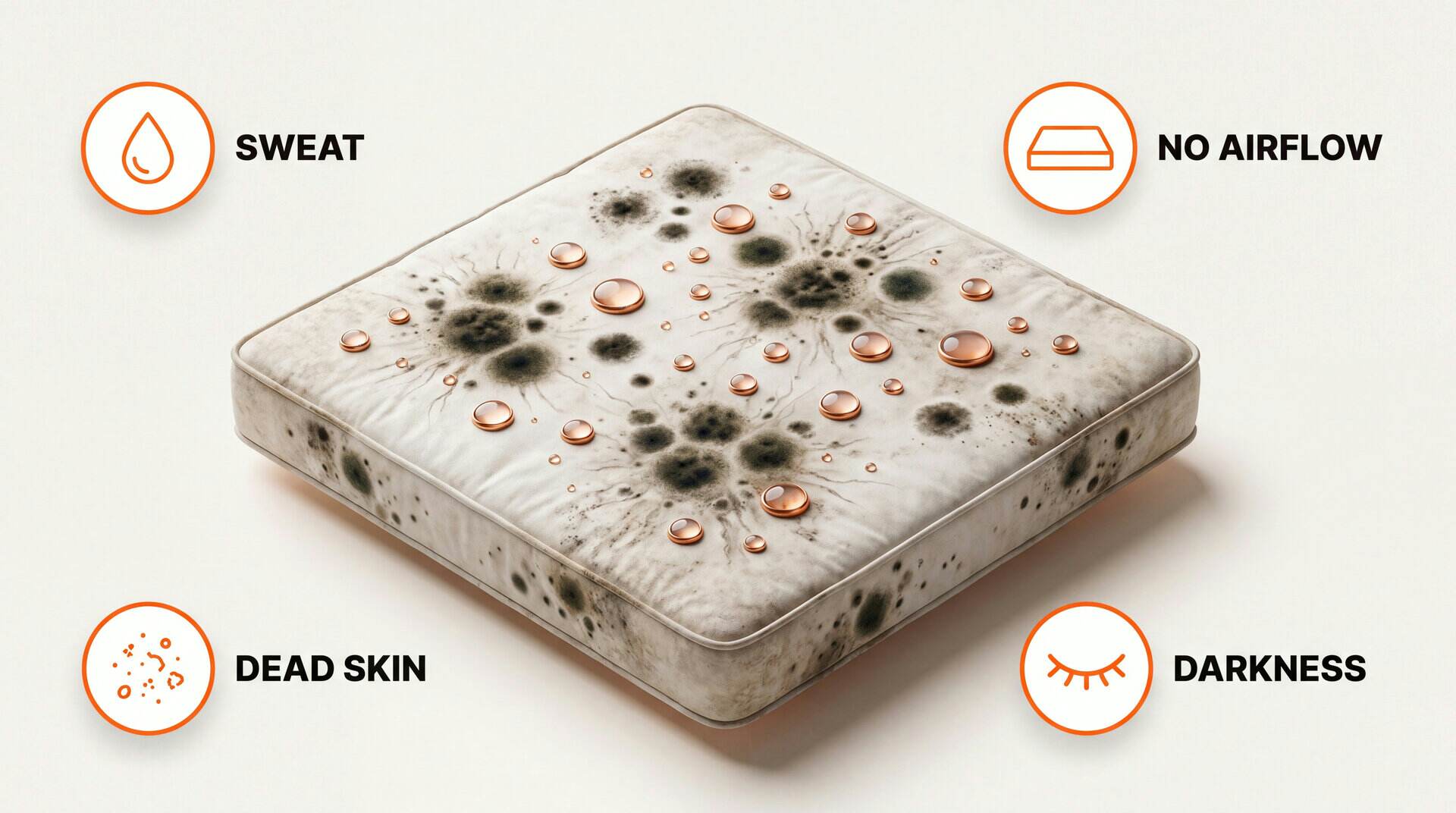
The average person sweats about 500 ml (roughly half a liter) every single night. Some people sweat even more, especially in warm climates or if you sleep hot. That sweat soaks through your sheets and pillowcases into the mattress material. Night after night, moisture accumulates.
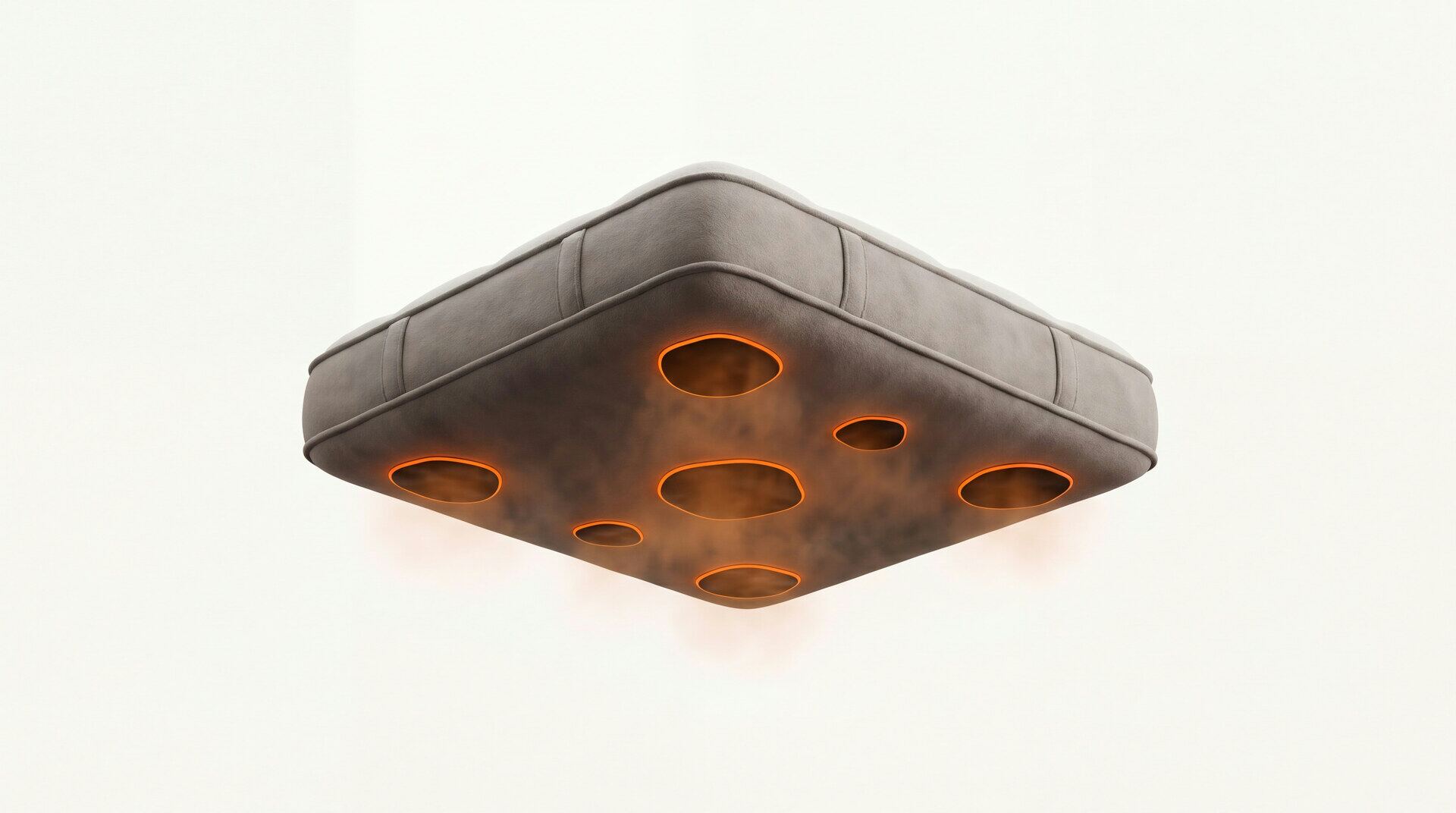
Now think about what is under your mattress. If it sits on a solid platform or directly on the floor, there is zero airflow on the bottom side. The underside stays damp in the dark, exactly the way mold likes it. Add dead skin cells (your body sheds about 1.5 grams per day) as a food source, and you have all three ingredients for mold growth: moisture, food, and darkness.
This is not a rare problem. A study by mattress researchers found that the average mattress doubles in weight over 10 years from accumulated sweat, skin cells, dust mites, and their waste. That is a lot of organic material for mold to feed on. The mattress industry does not talk about this because it makes people uncomfortable, but it is reality.
How to check your mattress for mold

Step 1: Flip or lift the mattress. You need to see the underside. This is where mold grows first because moisture migrates downward through the mattress and gets trapped against the bed frame or floor. Ask someone to help you if the mattress is heavy.
Step 2: Look for visual signs. Dark spots or stains that are not from spills. Black, green, or white fuzzy patches. Discoloration that follows a pattern along the edges or center. Any growth that looks raised or textured.
Step 3: Smell it. Bring your nose close to the underside. A musty, sour, or earthy smell is a strong indicator of mold, even if you cannot see it. Mold can grow inside the foam where it is not visible from the surface. The smell often appears before visible growth.
Step 4: Check the bed frame. Look at the slats, the box spring top, or the platform surface. If there is mold on the mattress underside, there is usually mold on whatever it was sitting on too. Check the floor under the bed as well.
Step 5: Check your pillows. Pillows absorb moisture from breath and face sweat. Unzip the pillow cover if it has one. Look for discoloration or smell for must. Memory foam pillows are especially susceptible because the dense foam holds moisture.
How to clean mold off a mattress
For surface mold on a small area (less than a few inches): Take the mattress outside if possible. HEPA vacuum the entire surface, paying extra attention to the moldy spots. Mix equal parts rubbing alcohol (isopropyl alcohol) and water in a spray bottle. Spray the moldy area. Blot with a clean white cloth. Do not soak the mattress as this adds more moisture. Let it dry completely in direct sunlight. UV light from the sun kills mold spores. Leave it in the sun for at least 4 to 6 hours, flipping halfway.
For moderate surface mold: Follow the steps above, then sprinkle baking soda over the entire mattress surface. Let it sit for several hours to absorb odor and remaining moisture. HEPA vacuum the baking soda off. If the musty smell persists after cleaning and drying, the mold has penetrated deeper than the surface.
When to replace the mattress: If the mold covers a large area, if it has penetrated into the foam or springs (the smell persists after surface cleaning), if the mattress is more than 7 years old, or if anyone sleeping on it has respiratory symptoms. A mattress is porous and absorptive. Once mold gets inside the material, surface cleaning cannot remove it. Replacing the mattress is the only real solution.
Do not use bleach. Bleach adds moisture to the mattress and cannot penetrate the foam to kill subsurface mold. It also damages mattress materials.
Prevention: keep your mattress mold free
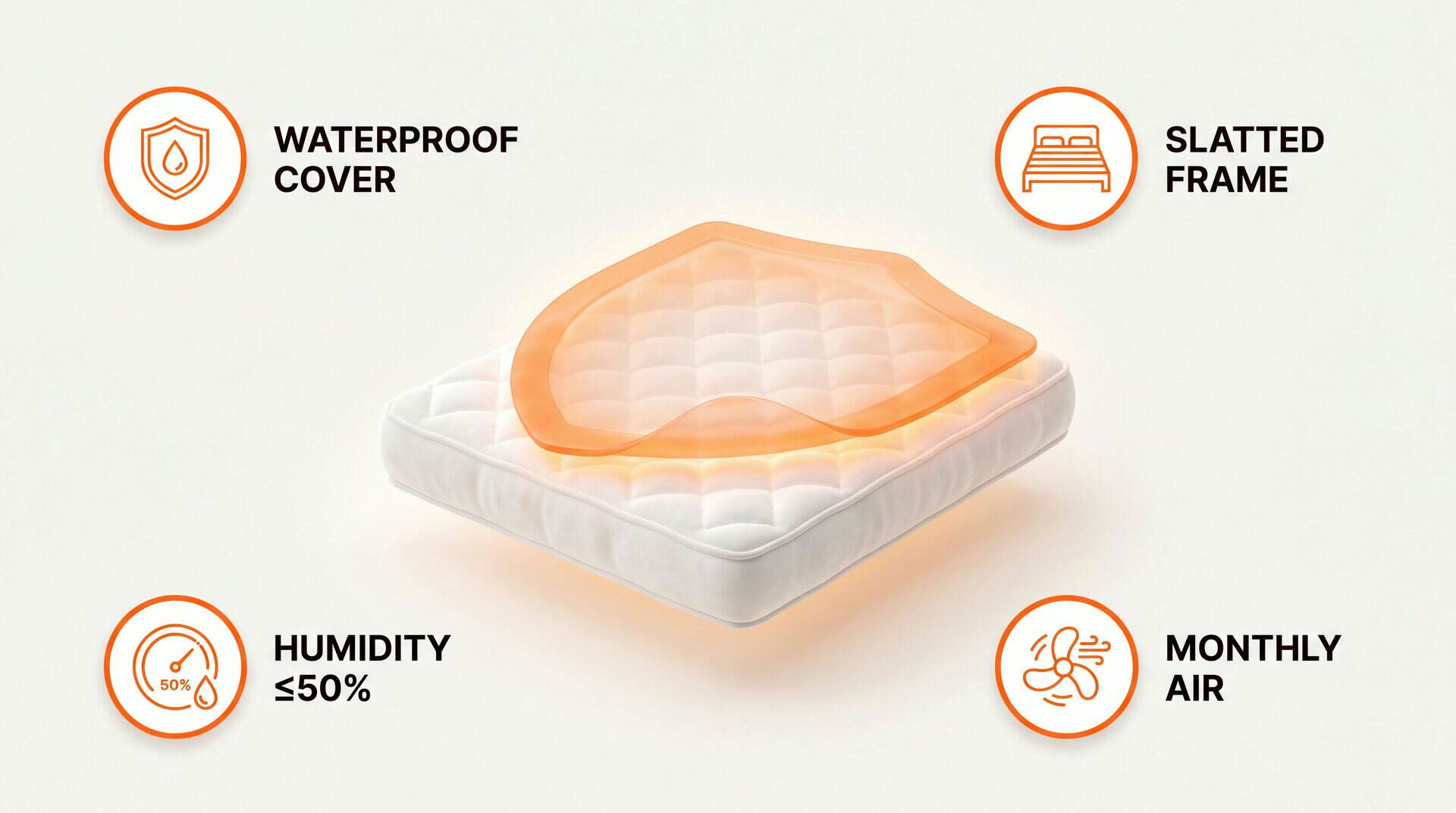
1. Waterproof, breathable mattress protector. This is the single most important step. A good protector blocks sweat from soaking into the mattress while allowing air to pass through. Look for one labeled "waterproof" (not just "water resistant") with a breathable membrane. Wash it monthly.
2. Airflow under the bed. Use a bed frame with slats spaced 2 to 3 inches apart, or a breathable foundation. Never place your mattress directly on the floor. Never use a solid platform with no gaps. Air needs to circulate under the mattress to carry away moisture.
3. Keep bedroom humidity below 50%. Use a dehumidifier if you live in a humid climate or your bedroom does not have good ventilation. A simple hygrometer (humidity meter) costs $10 and tells you exactly where you stand.
4. Air out the mattress monthly. Strip all the bedding and let the mattress breathe for a few hours. Open the bedroom windows if the weather allows. This lets trapped moisture evaporate.
5. Wash bedding weekly in hot water. Sheets and pillowcases absorb sweat every night. Washing them weekly in hot water (130F or higher) kills dust mites and removes moisture and skin cells before they transfer to the mattress.
6. Replace pillows every 1 to 2 years. Pillows absorb the most moisture per square inch because of their proximity to your face and breath. They are the first bedding item to develop mold.
What the EPA says about replacing a moldy mattress
The EPA says porous materials may have to be thrown away if they get moldy, because mold can grow into their empty spaces and be hard or impossible to remove completely. A mattress is a porous material, so this guidance applies to it.
That is why the fix depends on how deep the mold went. If the growth is a small surface spot and the smell goes away after you clean and dry the mattress, cleaning can be enough. If the mold covers a large area, or the musty smell comes back after cleaning, it has likely gone below the surface and the mattress should be replaced.
Three things push the decision toward replacing it:
- Mold on the underside that spreads across a large area instead of one small spot.
- A musty smell that returns after you clean and fully dry the mattress.
- A mattress older than 7 years, where the material has had years to soak up sweat and moisture.
Whatever you decide, fix the moisture source too. Mold on a mattress usually comes from trapped moisture, so a new mattress on the same solid platform or damp floor can grow mold again. Mold Scanner checks a photo for signs of mold growth, which can help you decide whether a spot is worth cleaning or worth a closer look before you spend money.
Frequently asked questions
Should I replace a mattress with mold on it?
It depends on how far the mold has spread. For a small surface spot, you can clean it with rubbing alcohol and water, then dry it in direct sunlight. If the mold covers a large area, the smell returns after cleaning, or the mattress is more than 7 years old, replace it. The EPA notes that porous materials with mold may have to be thrown away because the mold is hard to remove completely.
Is fungus on a bed the same as mold?
Mold is a type of fungus, so fungus on a bed usually means mold or mildew growing where moisture has built up. Look at the underside of the mattress and the bed frame first, since that is where sweat and trapped moisture collect. Dark spots, fuzzy patches, or a musty smell are the usual signs. If you are not sure what you are seeing, upload a photo to Mold Scanner and it will check the photo for signs of mold growth.
Why does mold grow on mattresses?
The average person sweats about half a liter (500 ml) per night. That moisture soaks through the sheets into the mattress and gets trapped, especially on the underside where there is no airflow. Add dead skin cells as a food source, body heat as warmth, and a dark enclosed space under the bed, and you have everything mold needs to grow.
How do I check my mattress for mold?
Flip or lift your mattress and check the entire underside. Look for dark spots, discoloration, or fuzzy growth. Smell the underside. A musty or sour smell is a strong indicator. Check the bed frame, box spring, and slats underneath. Mold on the mattress underside is the most common and the most overlooked spot.
Can I clean mold off a mattress?
For surface mold on a small area, you can try cleaning it. HEPA vacuum the entire mattress first. Mix equal parts rubbing alcohol and water, spray the moldy area, and blot with a clean cloth. Let it dry completely in direct sunlight if possible. However, if the mold has penetrated deep into the foam or springs, cleaning the surface will not remove it. Replace the mattress.
How do I prevent mold on my mattress?
Use a waterproof, breathable mattress protector. This is the single most important prevention step. Make sure your bed frame allows airflow under the mattress using slats or a breathable foundation, not a solid platform. Do not put your mattress directly on the floor. Keep bedroom humidity below 50%. Strip the sheets and air out the mattress for a few hours monthly.
Sources
Every claim on this page traces to one of these. Links open the primary document.