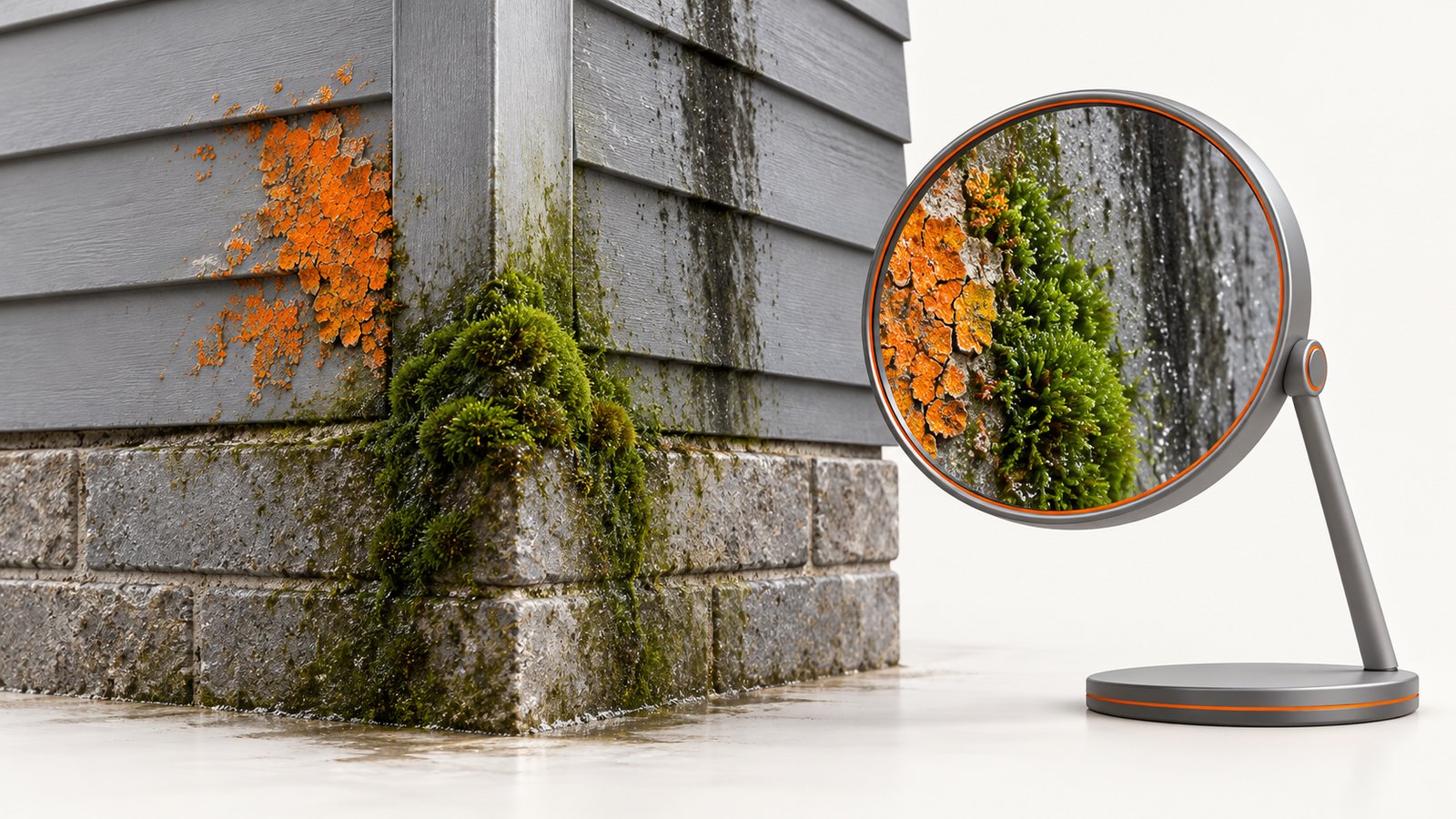
Moss vs Mold: What Each One Is
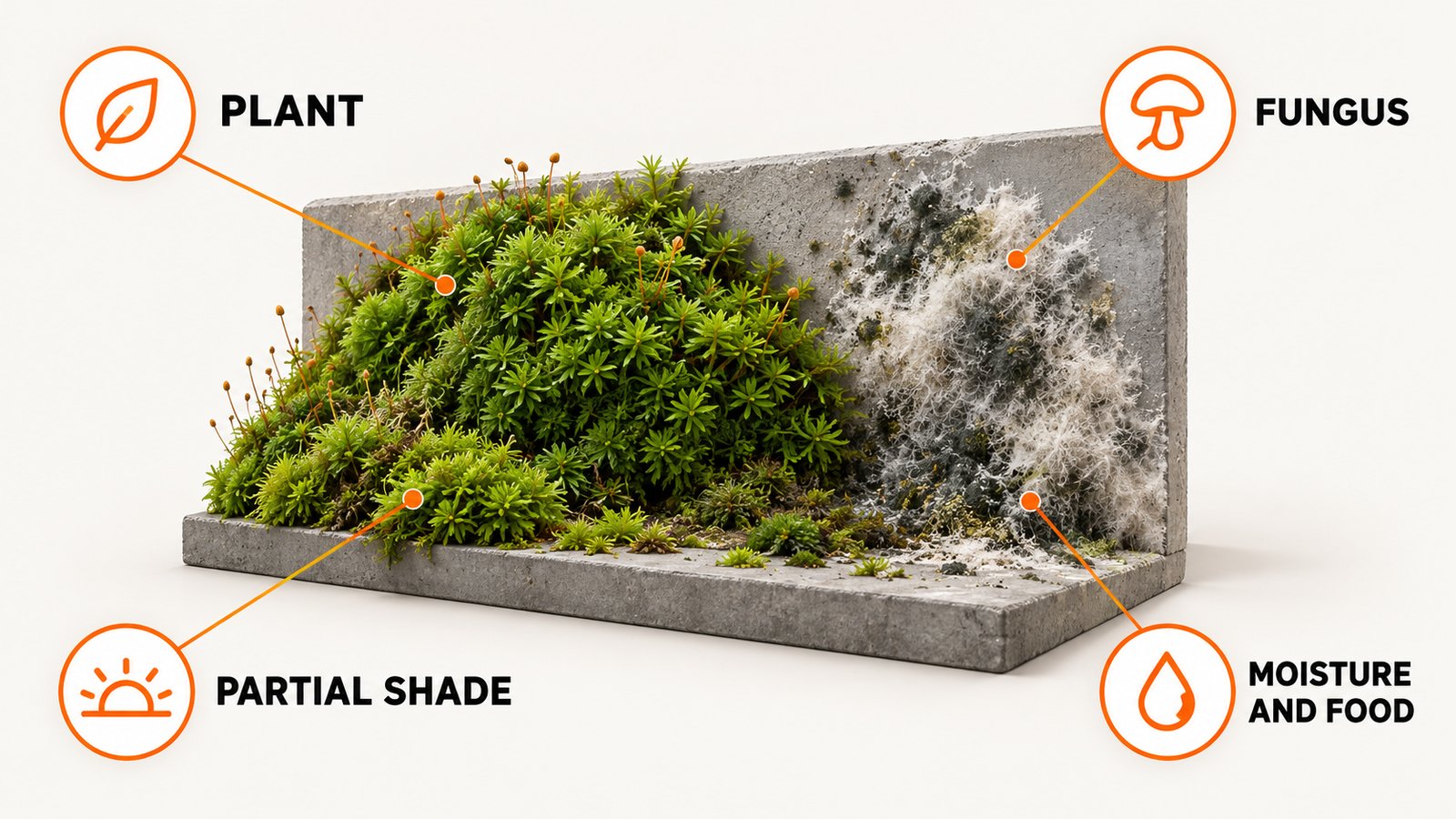
People mix up moss and mold because both show up in damp, shady places and both can look green. They are not related. Moss is a plant. Mold is a fungus.
Oregon State University Extension describes mosses as "primitive, flowerless plants with an estimated 12,000 species worldwide." The U.S. Forest Service says mosses "still have plant-like structures that look like and function like leaves, stems and roots." Look closely at a clump of moss and you will see tiny leaves on tiny stems, packed together like a miniature forest. The Forest Service adds that mosses "can photosynthesize from all sides of their structures," which is why moss needs some light.
Mold works differently. The EPA says molds are "neither plants nor animals; they are part of the kingdom Fungi." Mold has no leaves, stems or roots like a plant. It spreads across whatever it feeds on as a stain, a fuzz, a film or a powder. The EPA's mold course says "To grow indoors, mold needs moisture and food. Moisture is the most important factor influencing mold growth indoors." Light is not on that list.
That is the first quick clue. Moss grows where it is damp and partly shaded, because it needs some light. OSU Extension says moss "depends on shade to thrive," and UC IPM says "Moss prefers partly shaded locations." Mold only needs a wet spot and something to feed on, so it shows up in closets, behind furniture and inside cabinets just as easily as on a shaded wall.
The EPA also reminds us that "Molds are part of the natural environment," and that they are "usually not a problem indoors, unless mold spores land on a wet or damp spot and begin growing." So mold outdoors is normal. Mold growing on your indoor surfaces is the part that needs a response, and a later section covers it. If your question is really about the color, our green mold guide explains why color cannot name a species.
Mold vs Algae: How They Differ
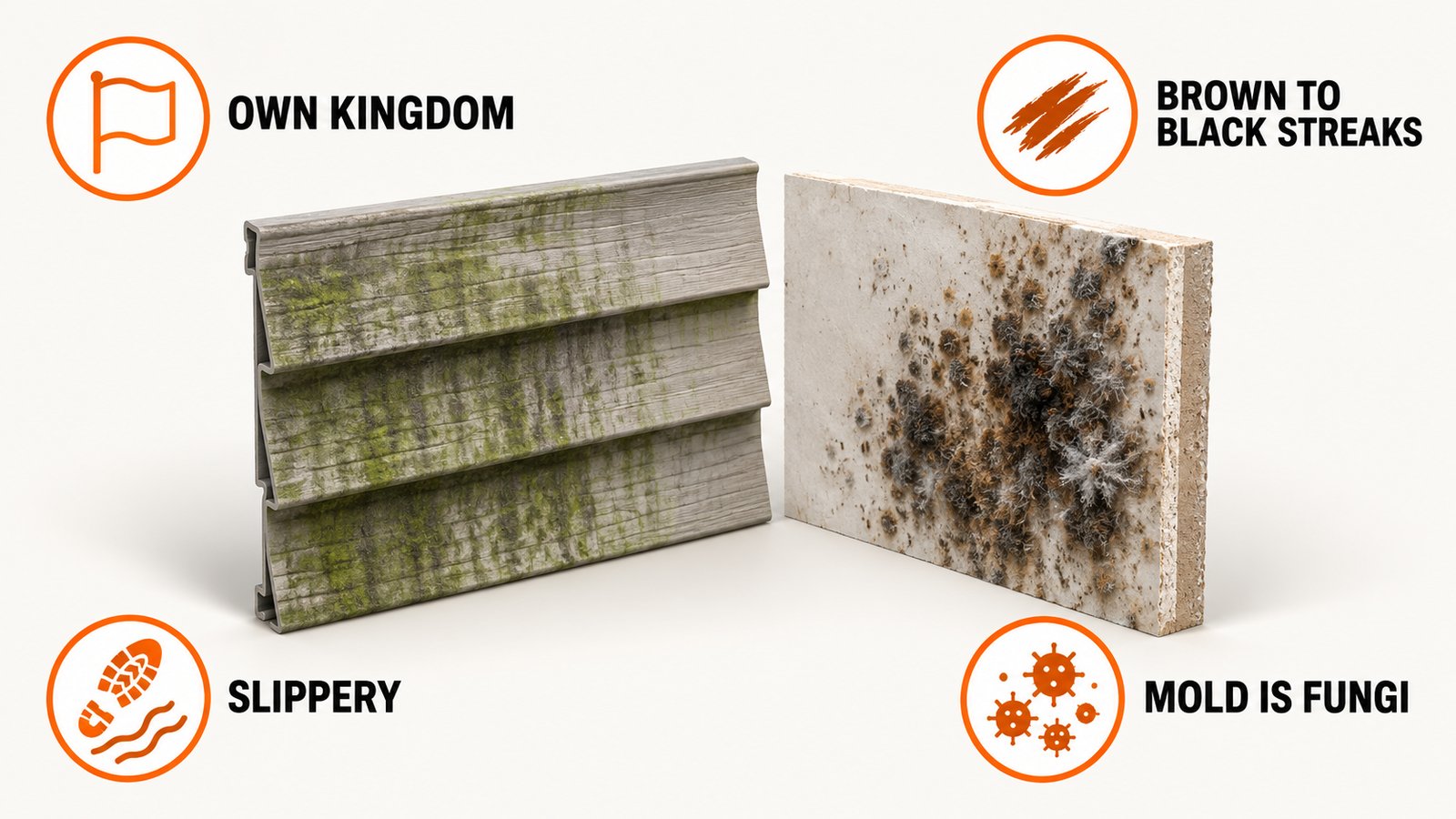
Algae is the one people get wrong most often. The U.S. Forest Service puts it plainly: "Algae are in another kingdom (Protista) separate from plants and fungi." So algae is not a plant and it is not a fungus. Mold is a fungus. That alone settles the mold vs algae question on paper.
What matters on your house is how they behave. Algae makes its own food from light, like a plant does. That is why it sits out on the surface of siding, roofs and patios, where it can see daylight. Mold has to feed on something, and the EPA says it "can grow on virtually any organic substance." Mold needs a damp material to eat. Algae mostly needs a damp surface to sit on.
Algae also does not always look green. The Asphalt Roofing Manufacturers Association (ARMA) writes that roof discoloration from algae "usually has a brown to black appearance and may be mistaken for fungus growth, soot, dirt, moss, or tree droppings." It adds that "Discoloration may appear uniform or as streaks." Those dark streaks running down a shingle roof are the classic example. ARMA also says algae discoloration should not be confused with moss or tree droppings, which "typically produce only localized discoloration."
Outdoors, algae on a hard surface is also a safety problem. UC IPM says "Algae and mosses on sidewalks or other hard surfaces make them slippery, perhaps unsightly, and unsafe for walking."
What about mildew? For the word "mildew," see our mold vs mildew page. In short, algae is its own group, while mold and mildew are names people use for fungus growth.
Is Algae a Mold?
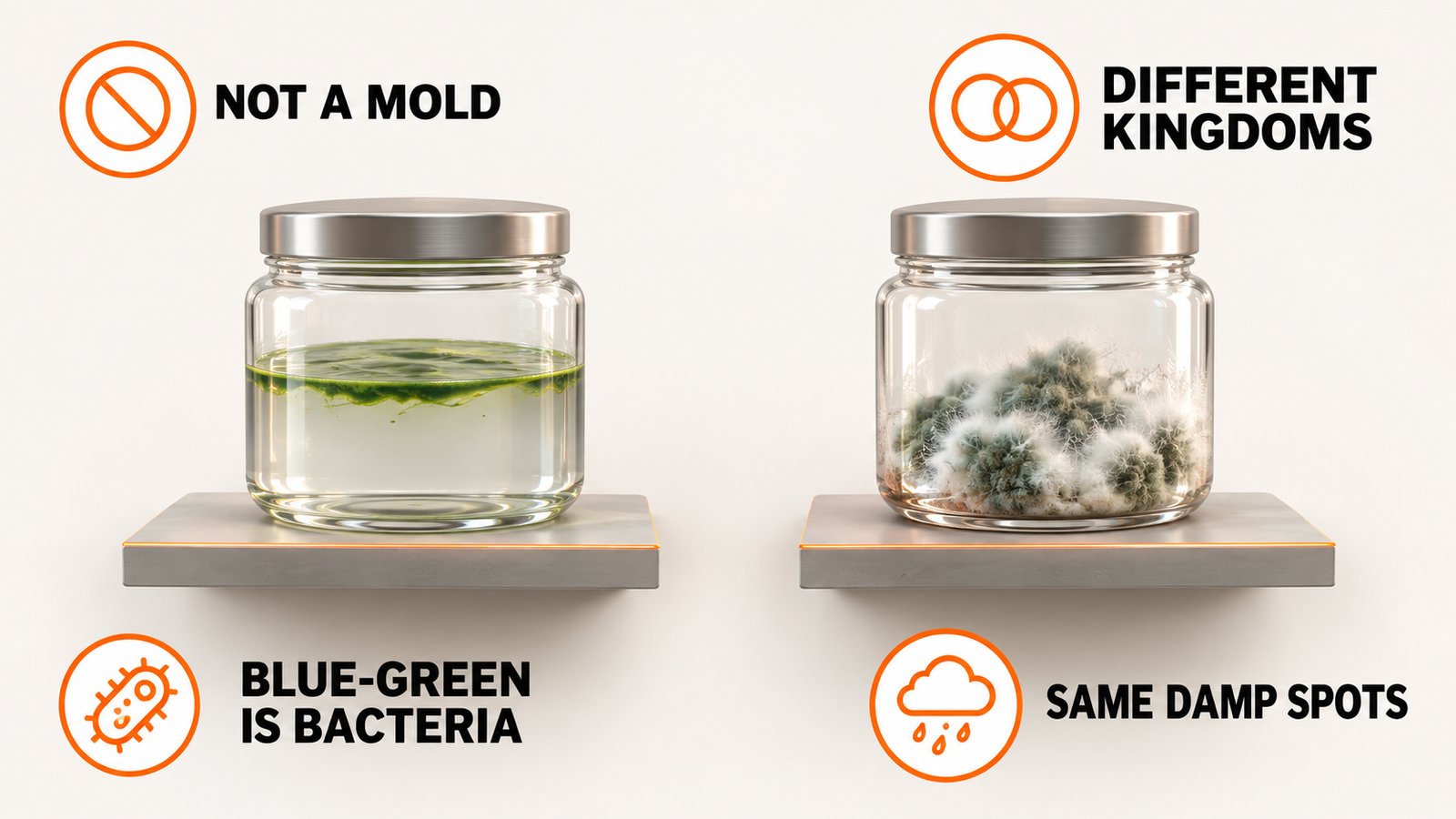
No. Algae is not a mold and it is not a type of mold. The Forest Service places algae in its own kingdom, separate from the fungi that molds belong to. The two get lumped together because they love the same damp spots and because cleaning products list them side by side. The manufacturer's FAQ for Wet & Forget Outdoor Spaces, for example, says it "cleans moss, mold, mildew, and algae stains on outdoor surfaces." That is a list of four different stains the product targets, not a statement that they are the same thing.
There is one more twist. You may hear about "blue-green algae." The Forest Service notes that "Although cyanobacteria are called blue-green algae, they are actually bacteria." So even the word algae is used loosely in everyday talk.
In practice, you do not have to name the organism to act. Outdoors, all four growths want the same thing: shade and moisture. Indoors, the story changes, because the EPA guidance is about mold. If you want help sorting a specific mark, the five checks on our is this mold page work for dirt, stains and mineral deposits too.
Lichen vs Mold
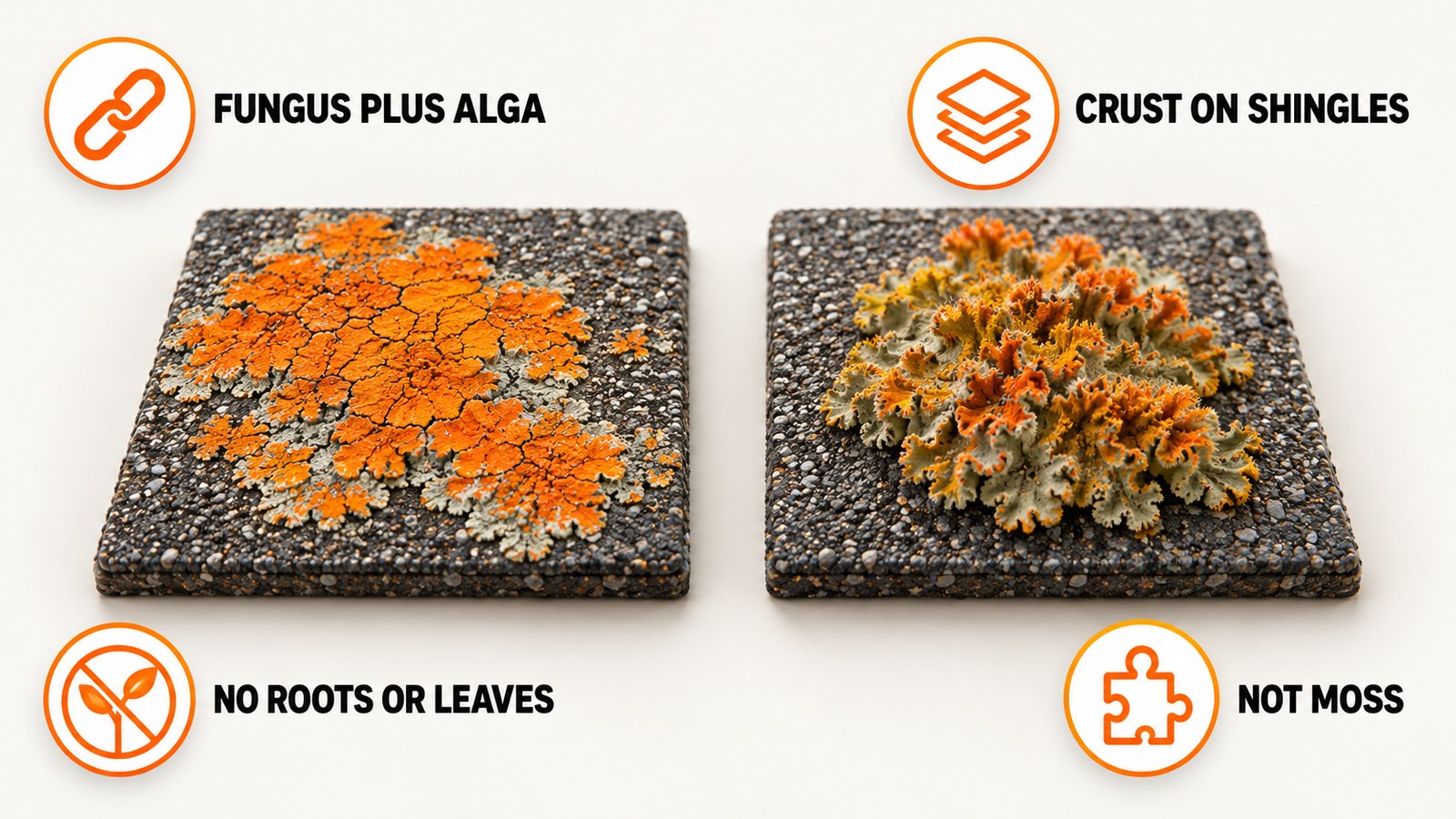
Lichen is the strangest one. The Forest Service describes lichens as "a complex life form that is a symbiotic partnership of two separate organisms, a fungus and an alga." UC IPM says the same thing in fewer words: "Lichens are an association between certain algae and fungi." The fungus is the boss of the pair. The Forest Service says "The dominant partner is the fungus," while the alga makes food from light for both.
So a lichen has a fungus in it, but it is not mold. Mold is a fungus living alone and feeding on organic material. A lichen is a team, and the alga does the feeding with light.
Lichen is also not moss, even though people say "reindeer moss" and "mossy rocks." The Forest Service says "only mosses are plants," and lichens "do not have any roots, stems or leaves."
Lichens come in three basic shapes. The type that shows up on roof shingles is the crust. The Forest Service says crustose lichens "form a crust over a surface, like a boulder, the soil, a car, or your roof shingles," in colors like "sunny yellow, orange, and red, as well as grays and greens."
Lichens also change with the weather. The Forest Service says that if lichen "looks pale and is dry and brittle, then it is dormant," and the darker or brighter it looks, "chances are that it is photosynthesizing." A crust that looks gray in a dry week and turns brighter after rain is a good lichen clue.
The Forest Service says lichens can harm buildings, but "it is a very slow process." On light, it says "Different lichens need different amounts of light," and UC IPM warns that more light "can also stimulate growth of lichens and sometimes algae." Opening up a shady spot helps against moss but may not stop lichen.
White Algae vs White Mold
Searches for "white algae vs white mold" are common, so here is an honest answer. None of the sources used on this page describe a white algae growing on siding or decks. ARMA describes algae as brown to black, and the Forest Service lists green, brown, red and gold algae. White or pale patches outdoors can be a dry, dormant lichen, a mineral deposit or a growth you cannot name from a photo. Indoors, white fuzz on a damp surface is a white mold question. Our white mold guide and the what does mold look like guide cover the look-alikes, including mineral salts called efflorescence.
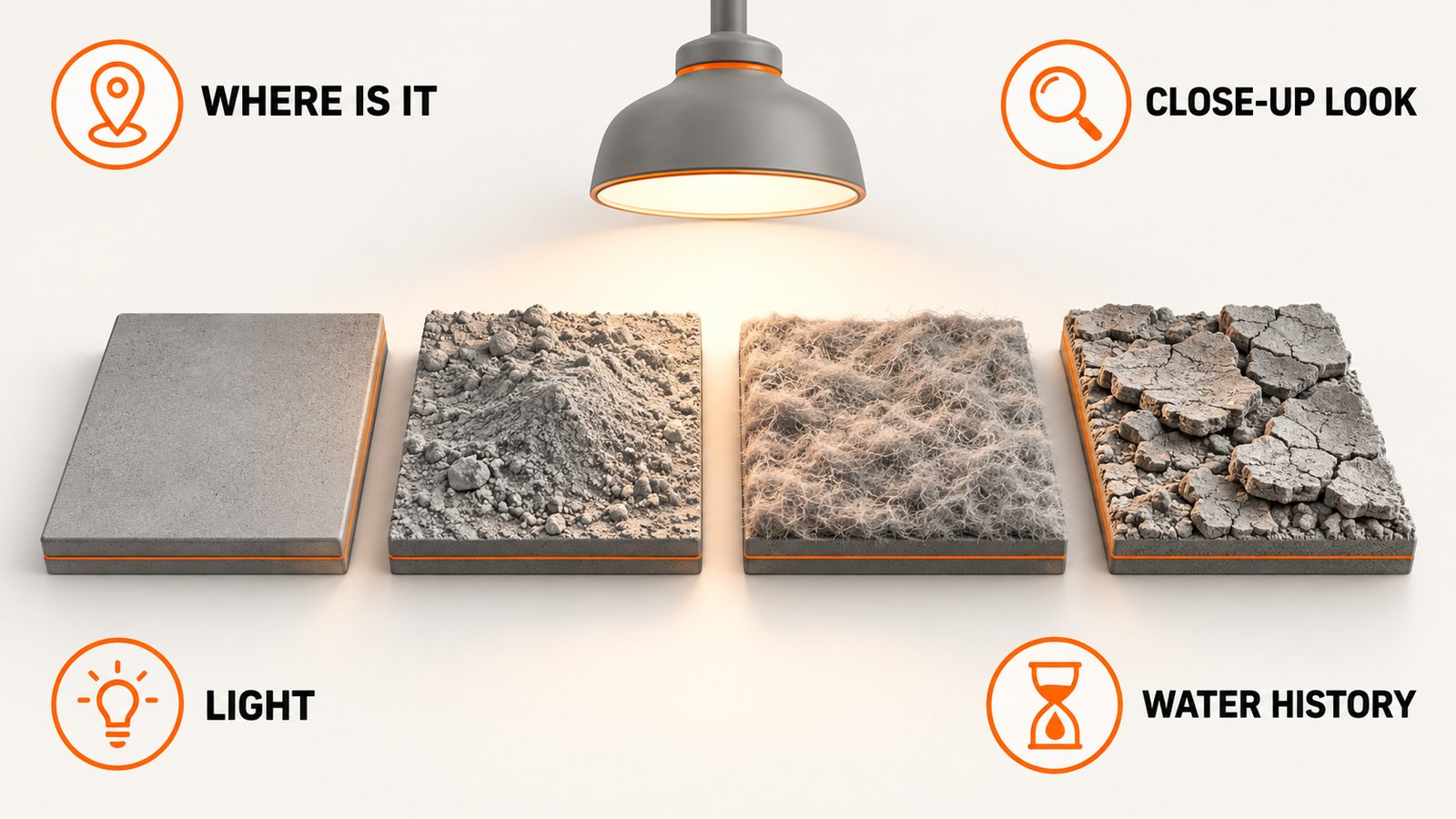
Here is a quick way to sort what you are seeing. Use all four clues together, because no single one is enough.
- Where is it? A damp wall, ceiling, closet or grout line inside the home points to mold. A shaded roof, deck, fence or siding wall points to moss, algae, lichen or outdoor mold.
- What does it look like up close? Tiny leaves on stems mean moss. A flat crust pressed onto the surface in yellow, orange, gray or green is probably a lichen. A thin film or a dark streak is algae-like. A fuzzy, slimy or powdery stain is mold-like.
- How much light does the spot get? Moss likes partial shade. Lichen and algae can take more light than moss. The EPA lists moisture and food for mold, not light.
- What is the water history? A roof leak, a plumbing drip, a gutter that overflows or a wall that never dries is the real story. Growth that comes back after cleaning means something is still feeding it.
| Growth | What it is | Close-up look | Where it grows | Light |
|---|---|---|---|---|
| Moss | A plant | Tiny leaves on stems, in cushions | Shaded, damp roofs, decks, steps, soil | Partial shade |
| Algae | Its own kingdom, not a plant or fungus | Thin film or streaks, often green on walls, brown to black on roofs | Damp roofs, siding, pavement | Uses light to make food |
| Lichen | A fungus living with an alga | Flat crust, leafy, or shrubby; yellow, orange, gray, green | Rock, bark, roof shingles, buildings | Varies by kind |
| Mold | A fungus | Fuzzy, slimy, powdery or flat stain in many colors | Any damp organic material, indoors or out | EPA lists moisture and food, not light |
These are clues, not a diagnosis. Our green mold page explains that color and species labels are not a risk ranking, and our is this mold page walks through the same checks one at a time.
How to Remove Green Algae From House Siding
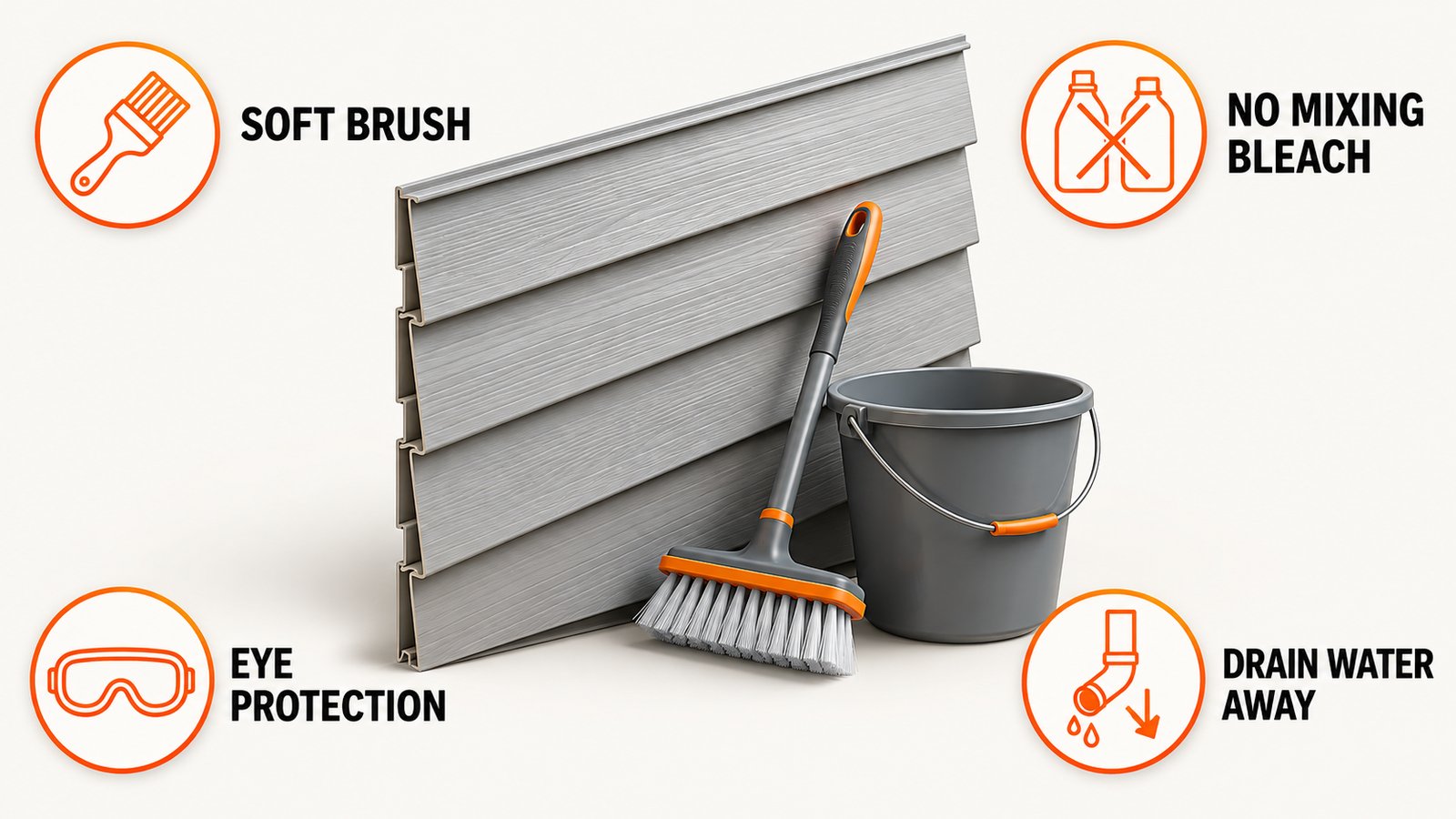
The same plan works for most green or dark growth outdoors: wear protection, clean gently, and then change the conditions that let it grow. Treat any outdoor surface with care, because the wrong tool can hurt the surface, and a wet surface is slippery.
Siding
Start with the mildest method: a soft brush, detergent and water, then a rinse. That matches the EPA's basic advice for mold on hard surfaces, "Scrub mold off hard surfaces with detergent and water, and dry completely." Check the siding maker's care instructions before you try anything stronger, and wear eye protection and rubber gloves. ARMA's bleach precautions say the same: "eye protection and rubber gloves." ARMA says, about roofs, that other cleaning methods "should not be used without the approval of the shingle manufacturer," and the same common sense applies to siding. Our own Wet & Forget Outdoor review notes that a pressure washer can force water under siding. If you use bleach, the EPA warns: "Never mix chlorine bleach solution with other cleaning solutions or detergents that contain ammonia because toxic fumes could be produced." Our guides on bleach and vinegar cover where each one helps.
Decks, patios and steps
Remove moss and algae from walking surfaces. OSU Extension says moss "should be removed from roofs, decks and steps where moisture increases slip risk." UC IPM adds a drainage fix: "redirect downspout water away from hardscapes." Wear shoes with grip while you work and let the surface dry before anyone walks on it.
Roofs
Roofs are the risky one. ARMA recommends that "only trained professionals" walk, climb or work on a roof, and warns that cleaning "will make the roof slippery." For asphalt shingles, ARMA says "DO NOT use a power washer or any type of brush or broom to clean algae from the roof surface." OSU says moss itself "doesn't directly damage roof materials," but "it traps soil and debris, holding moisture and extending the time wood roofs remain wet." OSU lists zinc sulfate and potassium salts of fatty acids as moss treatments applied with a pump sprayer after the roof is cleaned. Follow the label, and note that OSU warns zinc corrodes copper gutters and flashing. UC IPM says to keep these products "out of waterways and away from desirable, succulent plant parts, which they may damage."
Ready-made outdoor stain removers
Many people ask whether Wet & Forget works on moss. The manufacturer's FAQ says Outdoor Spaces "cleans moss, mold, mildew, and algae stains on outdoor surfaces." It also says "Green algae stains typically clean up in a few weeks" while "Black stains from mold and moss can take a few months, depending on buildup and conditions." It adds "Do not apply if rain is in the forecast." Read our full Wet & Forget Outdoor review for the timeline, where it works and where it does not. It is an outdoor product only.
Stop it from coming back
Cleaning only resets the clock. OSU's plant pathologist put it this way: "You can clean all you want but to keep moss at bay, the environment needs to change." The fix is more light and less water: trim back trees, repair gutters and downspouts, and move sprinklers off the wall. Remember the lichen and algae exception, since UC IPM says more light can stimulate those two.
Green Mold on a Damp Wall Indoors
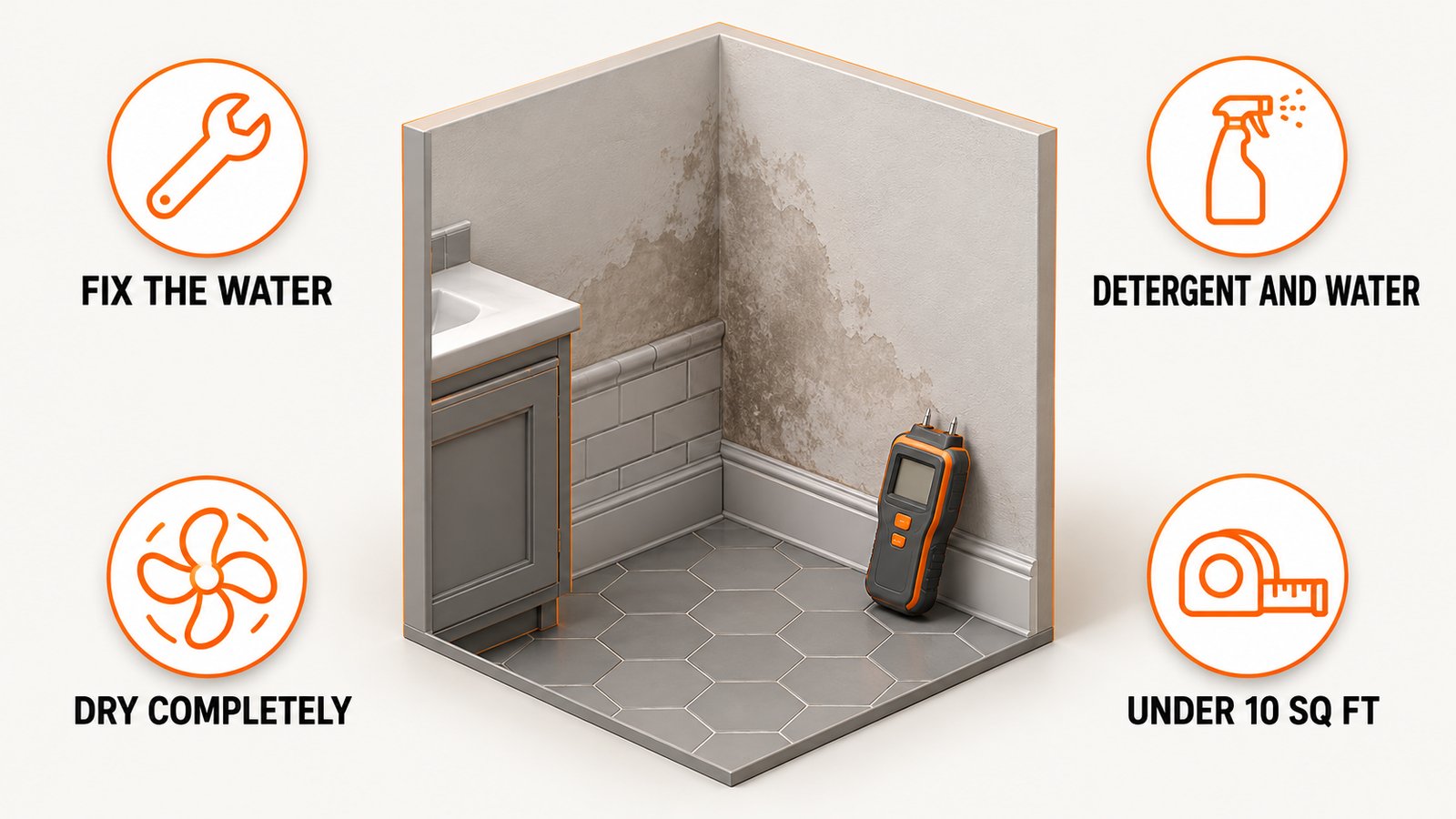
Everything above is about outdoor growth. Inside the house, the sources here treat green growth on damp walls, ceilings, grout and wood as a mold question. This is where mold on interior surfaces matters, because spores land on a wet spot and start growing there. The EPA's brief guide says it simply: "The key to mold control is moisture control."
For a small patch on a hard surface, the EPA's steps are short:
- Fix the water problem first. Cleaning without fixing it means the growth comes back. Our mold prevention guide and moisture meter roundup help you find it.
- Protect yourself. The EPA's brief guide lists gloves, goggles and an N-95 respirator under cleanup protection.
- Scrub. "Scrub mold off hard surfaces with detergent and water, and dry completely."
- Remove it, do not just kill it. The EPA says "Dead mold may still cause allergic reactions in some people, so it is not enough to simply kill the mold, it must also be removed."
- Know the size line. The EPA's cleanup guide treats a moldy area of less than about 10 square feet (roughly a 3 foot by 3 foot patch) as one a homeowner can often handle.
Our step-by-step pages cover how to get rid of mold, mold on walls, mold on ceilings, caulk and window sills. If the damp spot is in a basement, start with mold in basements.
Slimy green growth in a humidifier tank or an air conditioner drip pan can also be algae, bacteria or mold, and a photo cannot tell you which. Follow the maker's cleaning instructions, and read our pages on humidifiers and window air conditioners. White fuzz on plant soil has its own page: mold on houseplant soil.
When a photo check makes sense
A photo check makes sense when the spot is indoors, you can see it, and you are deciding what to do next: clean it, watch it, or call someone. Mold Scanner AI gives an AI-assisted visual screening of what is visible in the frame. It cannot confirm the species, see inside a wall, or say anything about a person's health. Processing time varies. For outdoor moss, algae and lichen, you do not need one: the sorting clues above are enough to choose a cleaning plan.
When to Call a Pro
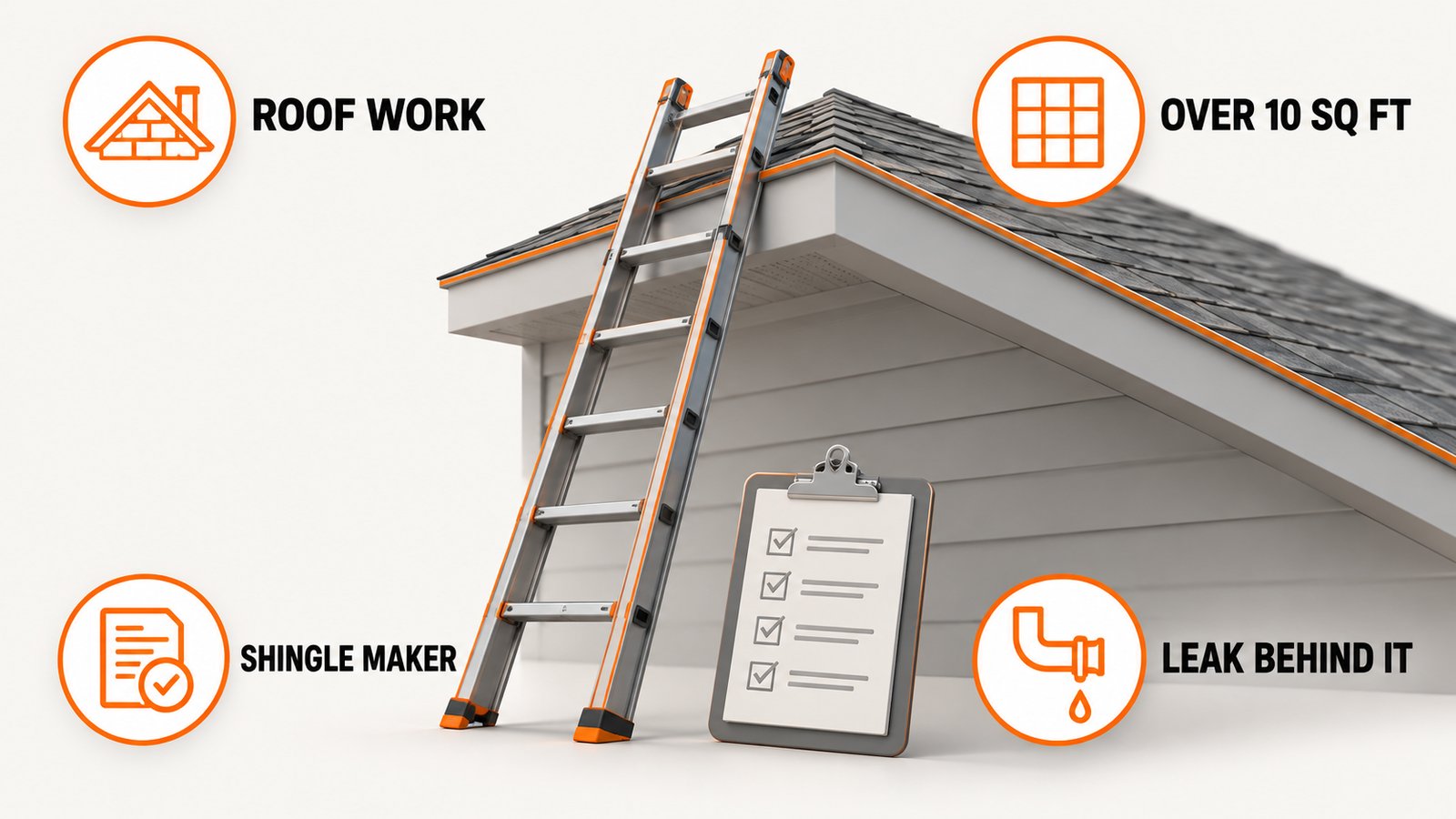
Call a professional when any of these is true:
- The growth is on a roof. ARMA says "only trained professionals" should engage in roof work, and a cleaned roof is slippery.
- Your roof has copper parts or a manufacturer warranty. OSU warns that zinc corrodes copper, and ARMA says to get the shingle maker's approval before using other cleaning methods.
- The indoor patch is large. The EPA says that if "mold growth covers more than 10 square feet," you should consult its remediation guide, which it says applies to other building types too. Our mold remediation process page explains what a professional does.
- A leak or lot of water damage is behind it. Recurring growth means a moisture source is still active. Our mold remediation page and signs of mold in the house help you decide.
- You are not sure what it is and a decision depends on it. A visual guess cannot settle a dispute, a sale or a lease. A licensed inspector or lab sample can.
If you have a symptom you connect to a damp building, see a physician. No article or photo can examine you, and a growth check on the building is a separate question.
Frequently asked questions
Is moss a type of mold?
No. Oregon State University Extension calls mosses "primitive, flowerless plants." The EPA says molds are "neither plants nor animals; they are part of the kingdom Fungi." Moss is a plant and mold is a fungus.
Is algae a mold?
No. The U.S. Forest Service says algae are "in another kingdom (Protista) separate from plants and fungi." Mold belongs to the fungi. They share damp conditions, which is why they are often named together on cleaning labels.
Is lichen a mold or a moss?
Neither. A lichen is "a symbiotic partnership of two separate organisms, a fungus and an alga," per the Forest Service. It is not a plant like moss, and it is not a mold, which is a fungus living alone.
What is the green stuff on my siding, deck or roof?
Usually moss, algae or lichen, and sometimes outdoor mold. Tiny leaves on stems mean moss, a flat crust usually means lichen, and a thin film or streak is algae-like. ARMA says roof algae often looks brown to black rather than green. Color cannot name the exact organism, so pick a cleaning plan by surface.
Can I tell mold from algae by color alone?
No. The EPA says molds come in many colors, and ARMA says roof algae can look brown to black and be mistaken for fungus, soot, dirt or moss. Use location, close-up shape, light and water history together.
Does Wet and Forget work on moss?
The manufacturer says Wet & Forget Outdoor Spaces "cleans moss, mold, mildew, and algae stains on outdoor surfaces," with black stains from mold and moss taking "a few months." It is for outdoor use only. See our Wet & Forget Outdoor review for the full timeline.
Does moss damage a roof?
OSU Extension says moss "doesn't directly damage roof materials," but it traps soil and debris and holds moisture, which extends how long a wood roof stays wet. Roof work is risky, so a professional is the safer choice.
Sources
Every claim on this page traces to one of these. Links open the primary document.