Why mold grows in a humidifier
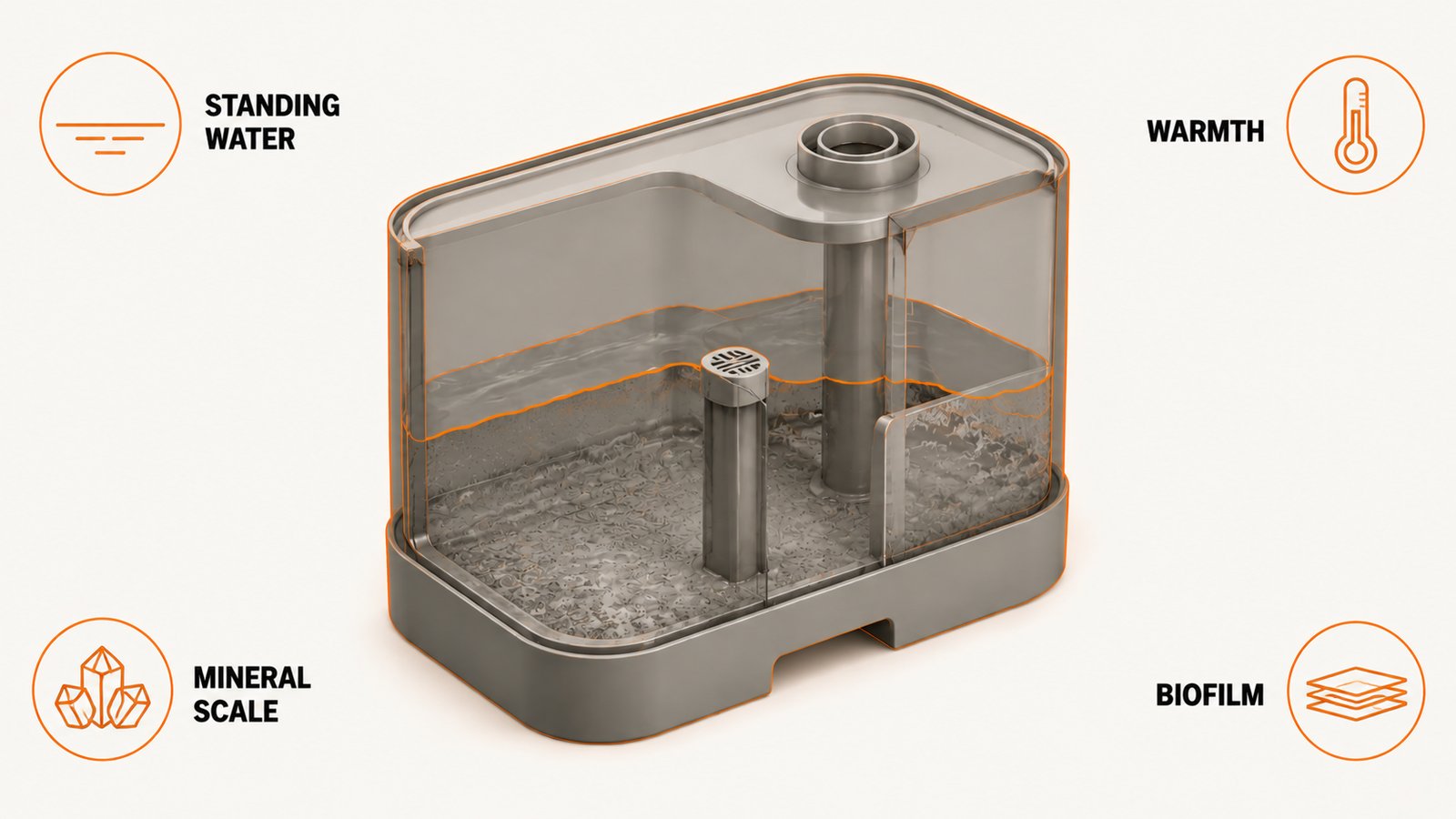
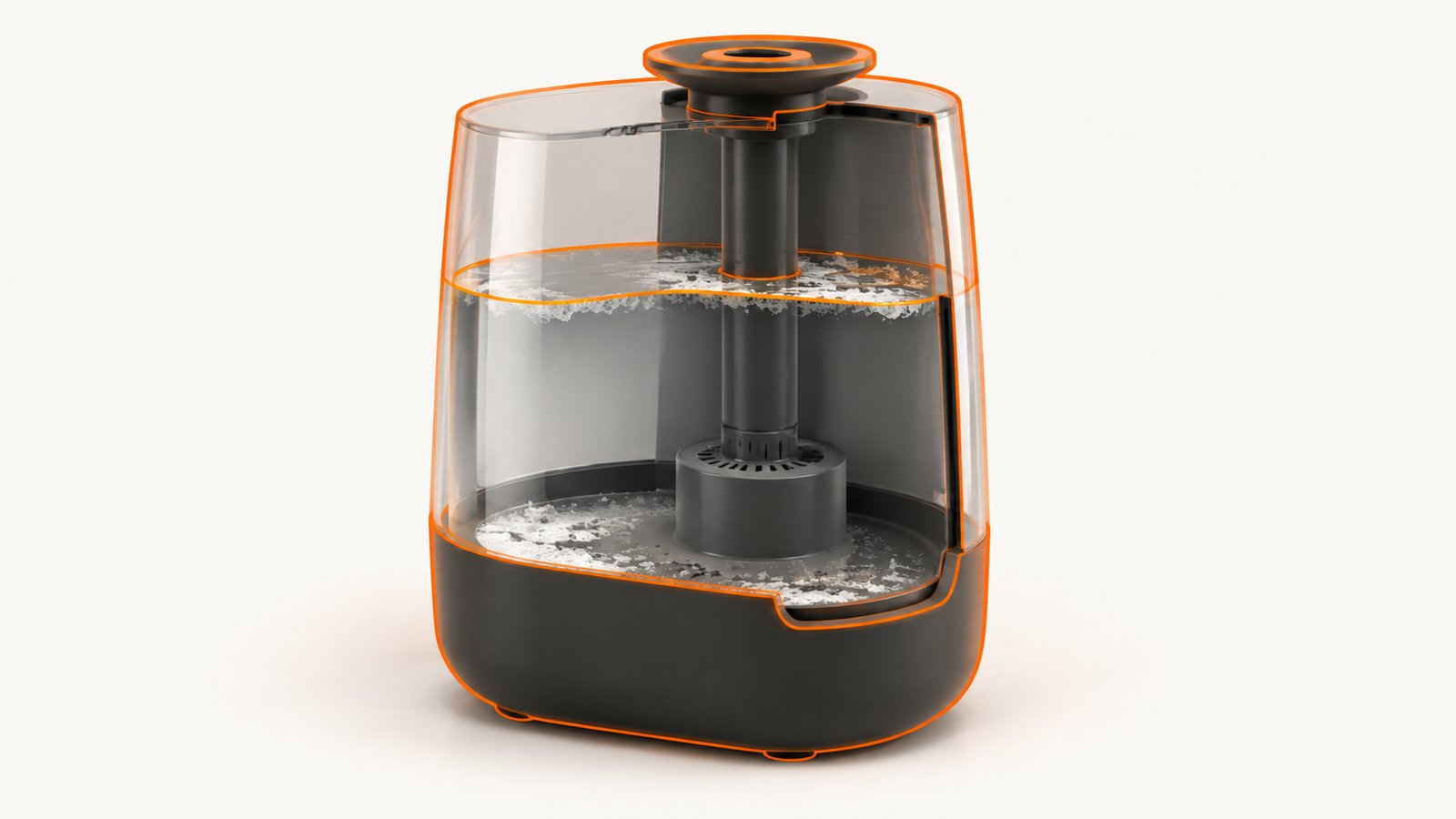
A humidifier is a warm tank of standing water with a large wetted surface area, run for hours at a time and then left to sit. That is close to an ideal culture vessel, and EPA is direct about it: microorganisms often grow in humidifiers that are equipped with tanks containing standing water.
Four things stack up inside the housing. There is water, obviously, and it never fully leaves between runs. There is warmth, because the motor and the room both keep the tank above room ambient. There is mineral scale, which builds from tap water and gives everything else a rough surface to hold on to. EPA notes that the scale itself can become a breeding ground for microorganisms. And there is a film, because whatever settles in the water starts as a slick and thickens into something you can feel with a fingertip.
The parts that go bad first are the ones you cannot see. The base reservoir under the tank, the wick cartridge, the float housing, and the tubing between them are where the film gets thick, because they never get emptied and never dry out.
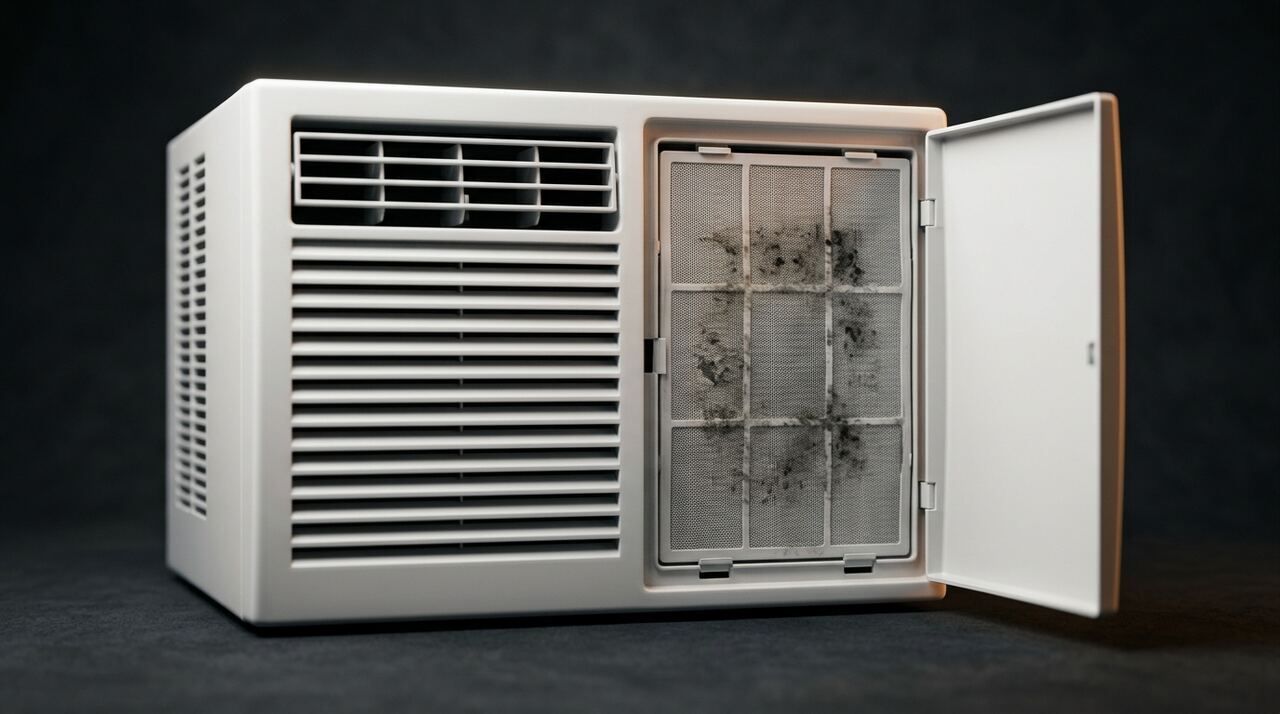
A humidifier is a maintenance item, not an appliance. Left alone for two weeks in a heating season it will develop a film. That is not a defect in your unit, it is what standing water does. The same logic drives growth in a window air conditioner, which also holds water it never quite drains.
Pink mold in a humidifier is usually not mold
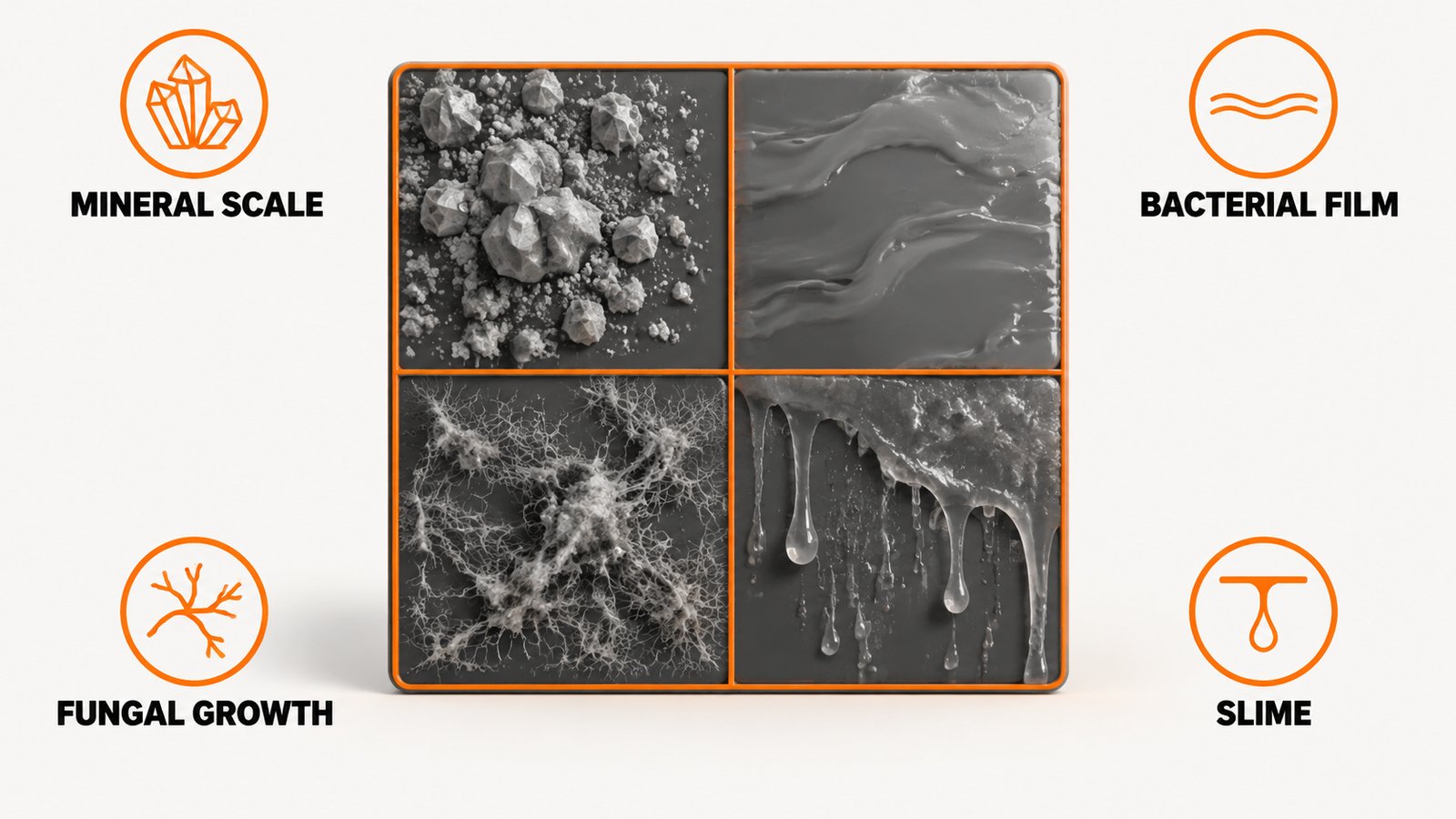
The pink or orange film people find on a humidifier tank wall is almost always a bacterial slime rather than a fungus. It has the same look in a shower, on a toilet rim, and in a pet bowl, and it is the same class of organism in all four places. Calling it pink mold is a habit rather than an identification, and the same confusion is covered on pink mold in a shower.
Four deposits turn up inside a tank and they behave differently:
- Chalky white or gray crust. Mineral scale from tap water. Not alive. It comes off with a descaling soak rather than a scrub.
- Pink to orange film. Bacterial slime. Wipes away easily and comes straight back if the tank stays wet between uses.
- Dark green, gray, or black patches. Fungal growth, usually on the wick or on a plastic surface that never dries.
- Clear or gray slippery coating. An early biofilm that has not picked up pigment yet. Easy to miss because you can only feel it.
The answer is the same for all four: physically remove it, then change the routine that let it build. CDC's guidance for indoor growth generally is that you do not need to know the type of mold and that all molds should be treated the same with respect to potential health risks and removal. Identification only matters when choosing between a descaler and a scrub brush, and texture tells you that. Background on why color is a weak signal is on mold vs mildew and types of mold.
What EPA says about humidifier care
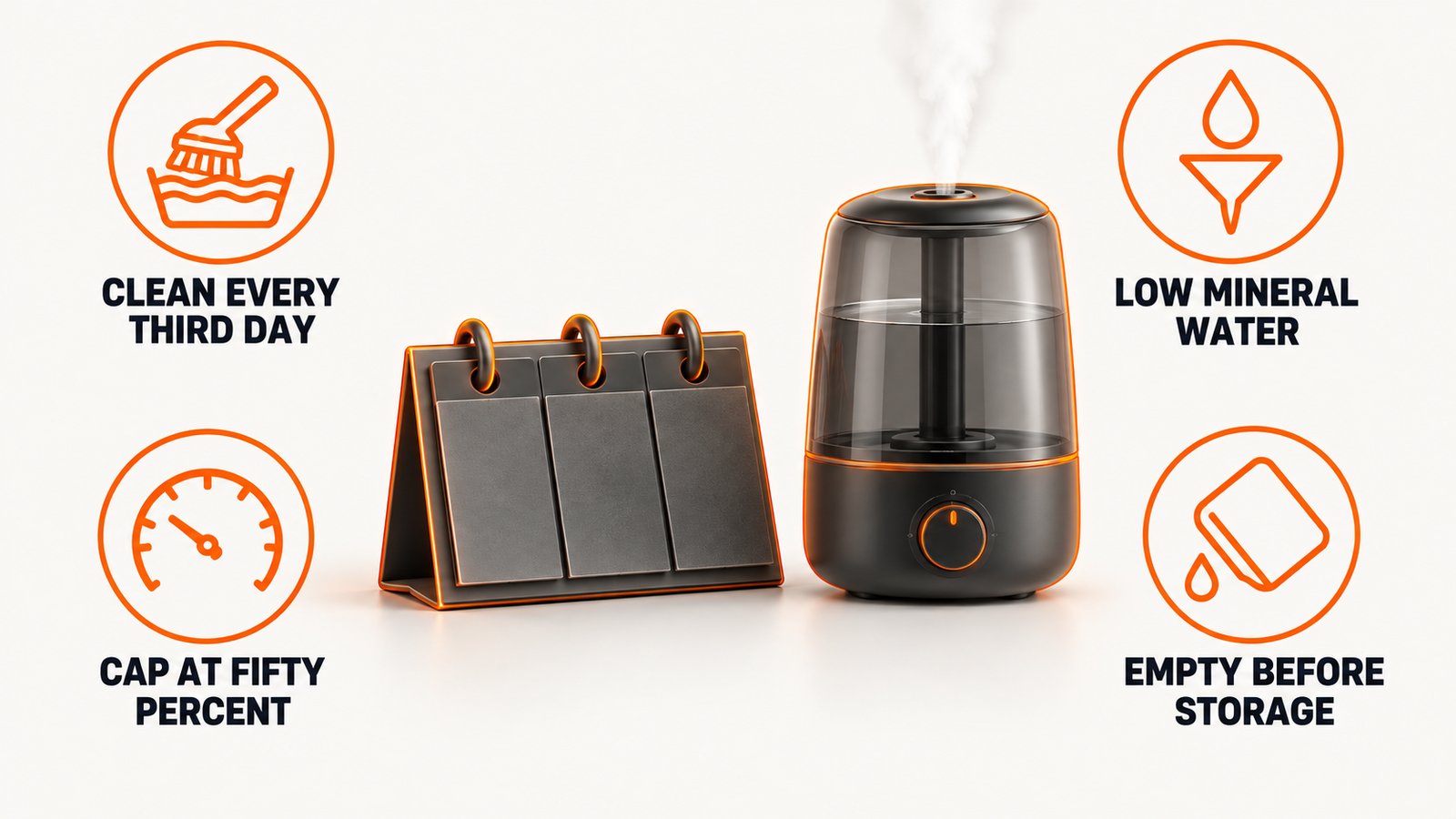
Federal indoor air quality guidance on home humidifiers is short and specific, and most people are breaking at least two of the four rules.
Clean portable humidifiers every third day. Not weekly, not when it looks dirty. EPA gives three days as the interval for a portable unit in use, because that is roughly how long it takes for scale and growth to establish on a wetted surface.
Use water with low mineral content, such as distilled water. EPA gives this to stop minerals being released into the air, and it has a second benefit: less scale means fewer footholds inside the tank. This matters most for ultrasonic and impeller units, which EPA describes as very efficient at dispersing minerals in tap water into the air.
Do not humidify above 50 percent relative humidity indoors. EPA's line is direct, because higher levels may encourage the growth of biological organisms in the home. That is the same range EPA gives for general moisture control, where the advice is to keep indoor humidity below 60 percent and ideally between 30 and 50 percent. Run a hygrometer in the room and treat 50 percent as the ceiling rather than a target. The free humidity tool turns a reading into a straight answer.
Empty and dry the unit before storing it. A tank put away with water in it comes out of the closet with a film already established. Empty, scrub, dry fully open, and store the parts separated. Wider prevention is on how to prevent mold.
How to clean a humidifier step by step
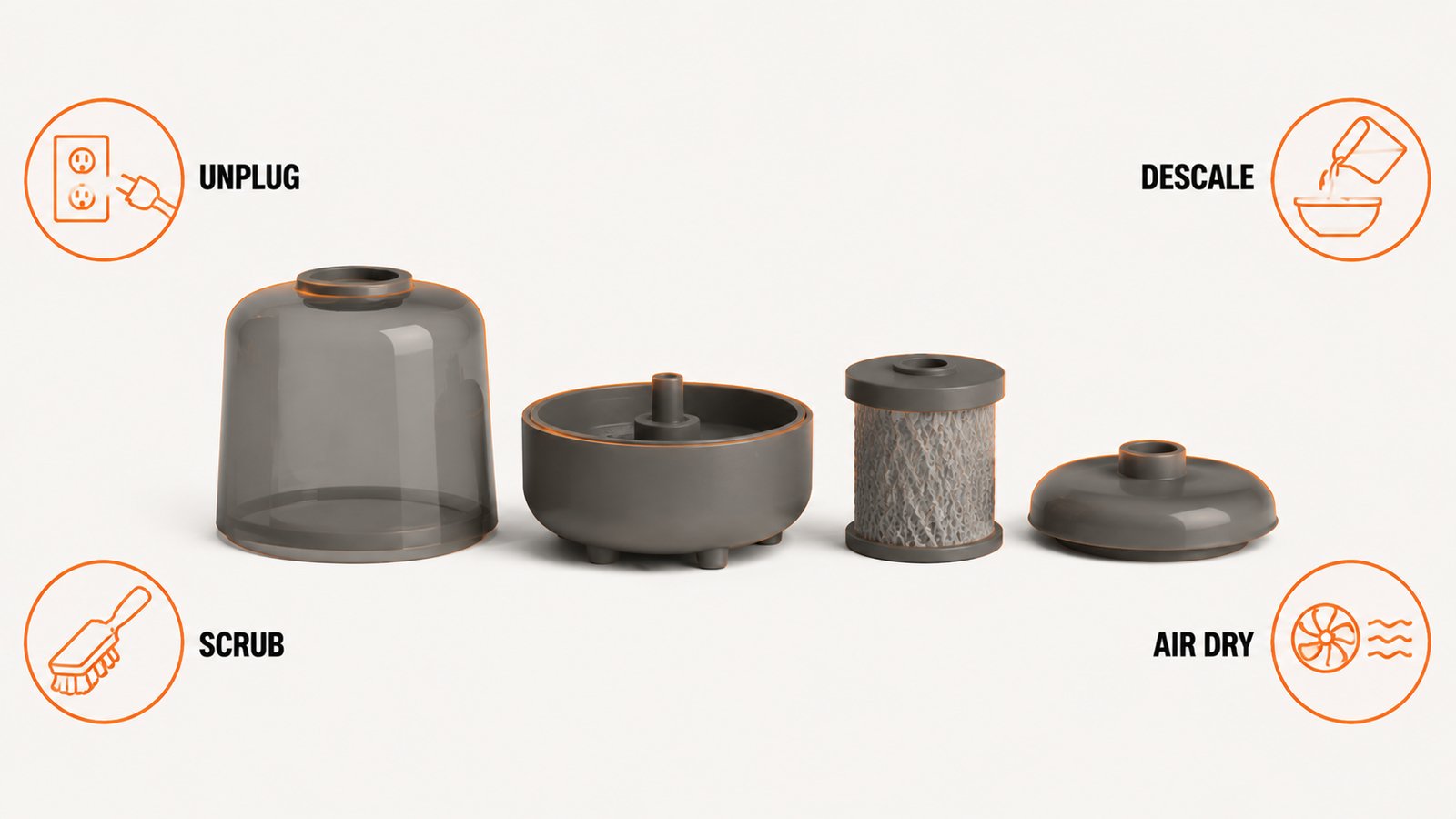
Set aside 20 minutes and take the whole thing apart. Half measures are what let the film survive.
1. Unplug it and empty everything. Tank, base reservoir, and any tray. Pour the water down a drain, not into a sink you prepare food in. Separate the wick or filter cartridge and set it aside.
2. Descale the mineral crust first. Scale shields growth from anything you scrub with, so it comes off first. A soak with white vinegar in the base and tank for 20 to 30 minutes loosens it. Details on how acetic acid behaves are on does vinegar kill mold.
3. Scrub every wetted surface. A bottle brush for the tank neck, a soft brush for the base, a toothbrush for the float and the seams. EPA's instruction for hard surfaces is to scrub with detergent and water and dry completely, and a plastic tank is a hard surface. The goal is physical removal: EPA notes that dead mold may still cause allergic reactions in some people, so it is not enough to simply kill the mold, it must also be removed.
4. Rinse thoroughly. Any cleaner left in the tank goes into the room air on the next run. Rinse until there is no smell and no residue, and never mix two cleaners. EPA warns never to mix chlorine bleach with cleaners containing ammonia, because toxic fumes could be produced.
5. Replace the wick, do not clean it. Evaporative wicks are designed to be consumed. A wick that has gone stiff, discolored, or smells is finished, and scrubbing it just breaks it down.
6. Air dry fully, open. Leave the parts separated on a towel until every surface is dry to the touch. Reassembling a damp unit restarts the clock immediately. If you want a stain-lifting option instead of vinegar, hydrogen peroxide is the other household choice.
Why standing water in a humidifier matters
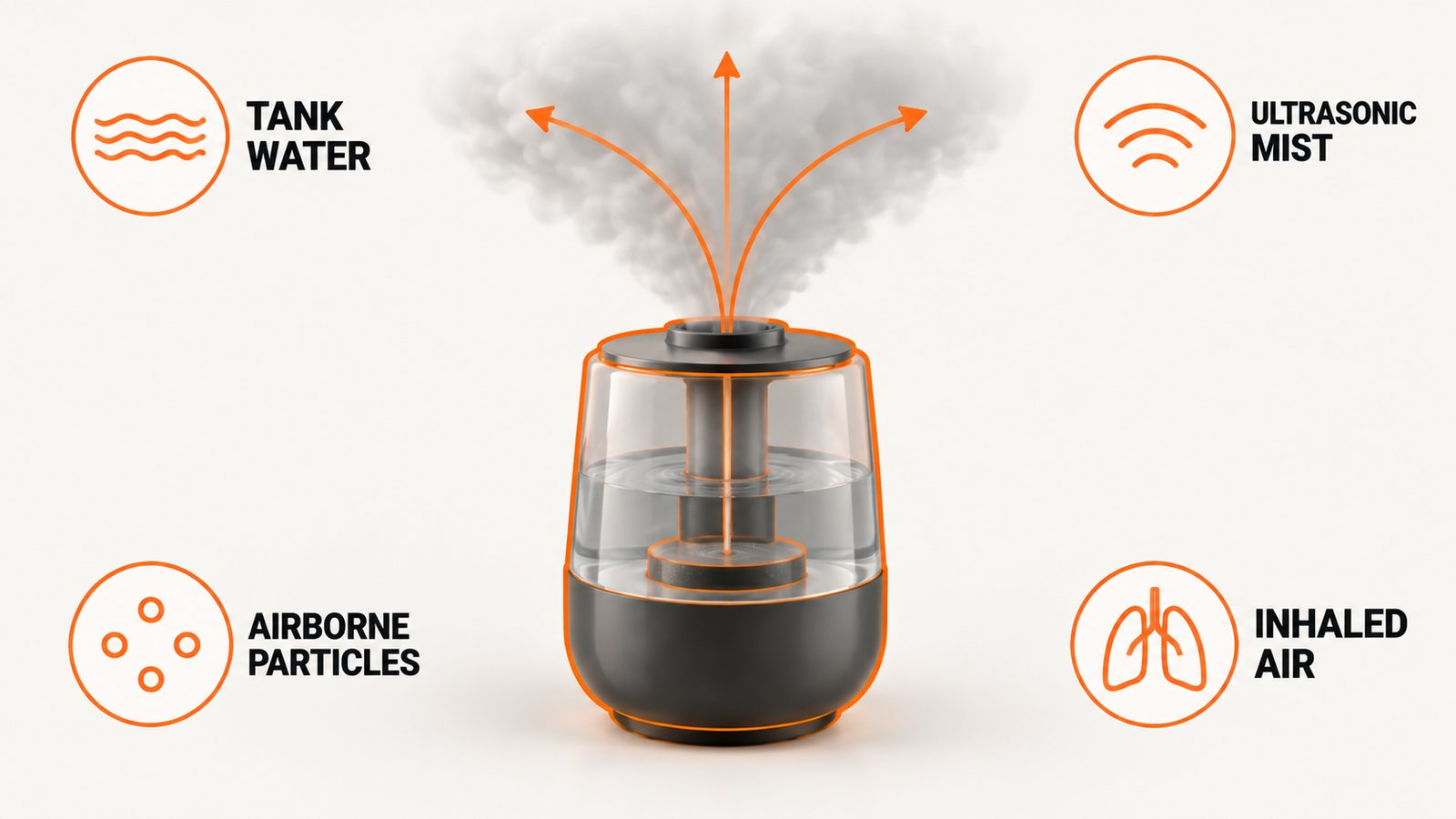
A humidifier is different from most household mold questions because the point of the device is to move what is inside the tank into the air you breathe. EPA states that ultrasonic and impeller humidifiers can disperse materials such as microorganisms and minerals from their water tanks into indoor air, and that breathing mist containing these pollutants has been implicated as causing a certain type of inflammation of the lungs.
That condition has a name in the medical literature. The National Heart, Lung, and Blood Institute describes hypersensitivity pneumonitis as a condition that happens in some people after they breathe in certain substances in the environment, such as mold, and lists air conditioners, humidifiers, and ventilation systems among the places those substances are found. It is known by several informal names depending on the source, including farmer's lung, hot tub lung, and humidifier lung. NHLBI also notes that without treatment it can cause permanent damage to the lungs.
Two things need saying plainly. It is uncommon, and the overwhelming majority of people running a dirty humidifier will not develop it. And nothing on this page can tell you whether you have it. Symptoms are nonspecific, they overlap with ordinary winter illness, and only a licensed clinician can evaluate a person. What the evidence supports is covered on mold exposure symptoms and mold allergy symptoms.
The building-side action is simple regardless: keep the tank clean and do not run a unit with visible growth in it. That is a maintenance decision, not a medical one.
Choosing a humidifier that stays clean
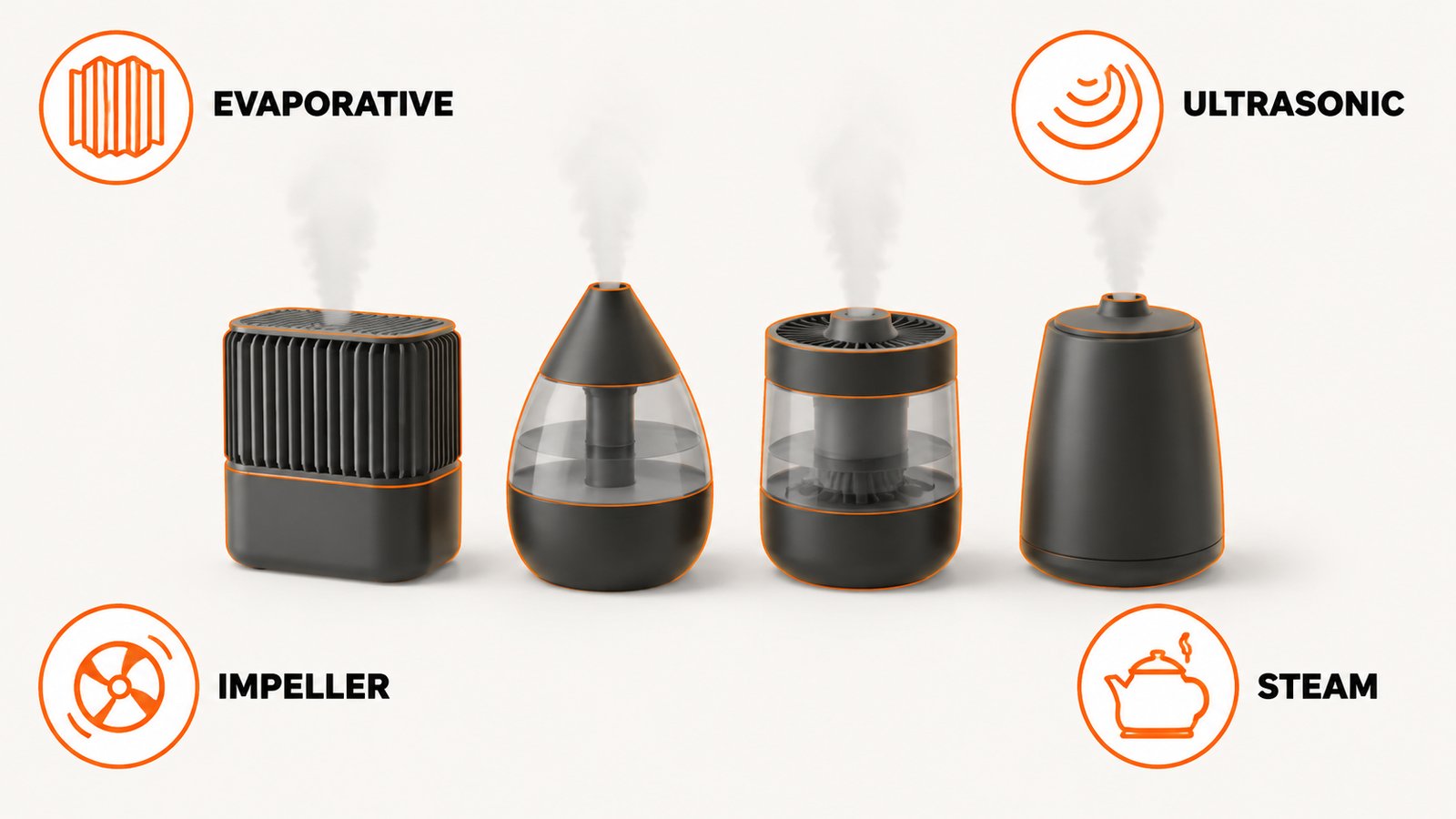
Four common designs, four different maintenance profiles.
| Type | How it works | Maintenance reality |
|---|---|---|
| Evaporative wick | A fan pulls air through a wet wick. Self-limiting, it will not over-humidify a room easily. | The wick is a consumable and has to be replaced on schedule, not cleaned. |
| Ultrasonic | A vibrating plate throws a cool visible mist. Quiet and popular. | EPA names this type as efficient at dispersing tank minerals into the air. Distilled water and the three-day clean matter most here. |
| Impeller | A spinning disc flings water through a diffuser as cool mist. | Same dispersal concern as ultrasonic, plus more small parts to reach into. |
| Steam vaporizer | Boils water and releases steam. Boiling means the water leaving is not carrying tank organisms. | Scale builds fast and the unit runs hot, which is a burn risk around children. |
Three habits do most of the work. Refill with fresh water daily instead of topping up, because topping up never resets the tank. Run it only when a hygrometer says the room needs it. And keep it away from a wall, curtain, or upholstered furniture, because a cool-mist unit aimed at a surface wets it, which is how growth on a wall sometimes begins.
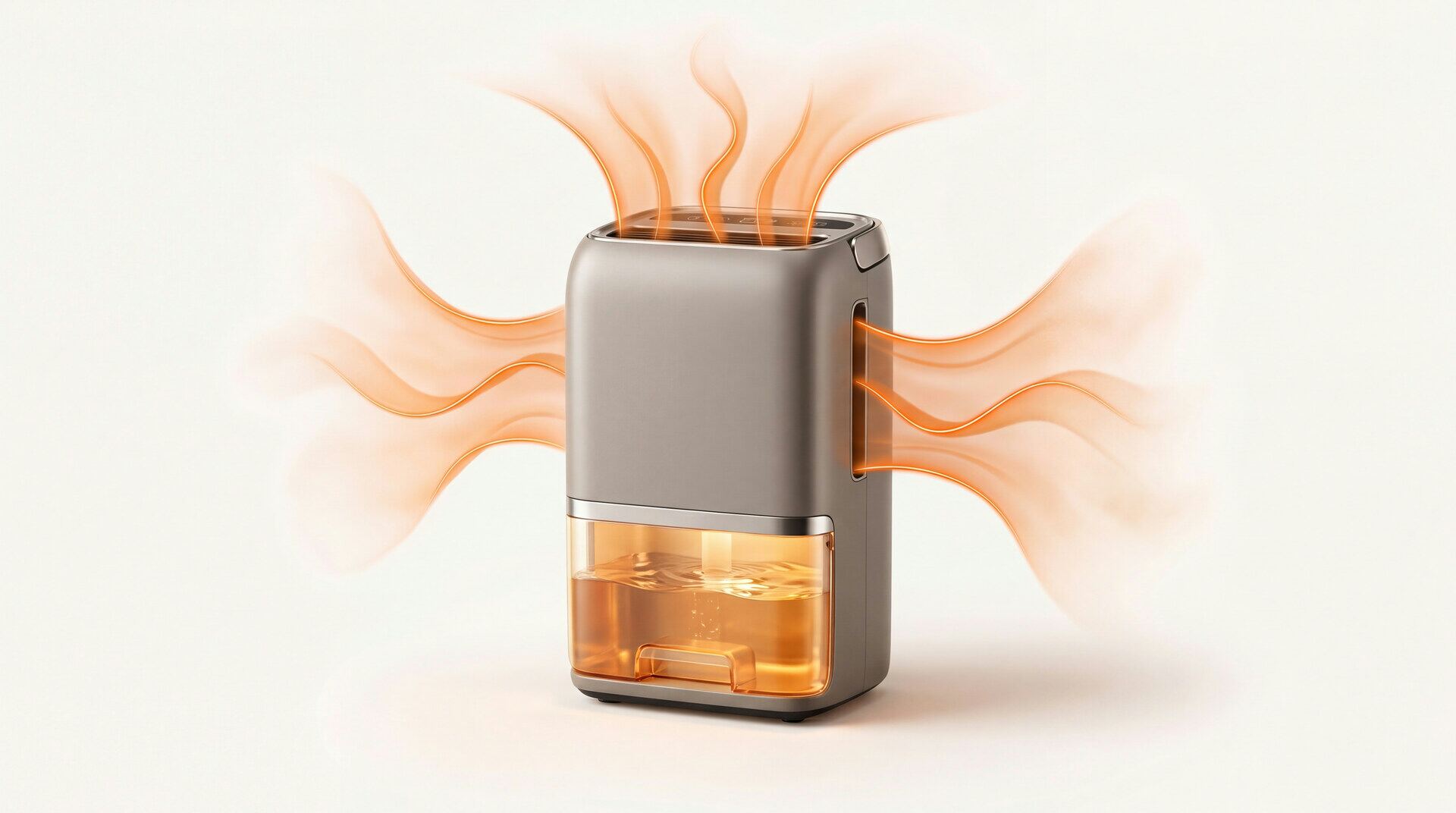
If your real problem is a room that is too damp rather than too dry, a humidifier is the wrong device entirely. That is a job for a dehumidifier, and running both in the same house at the same time is common and self-defeating.
When to replace it or call a professional
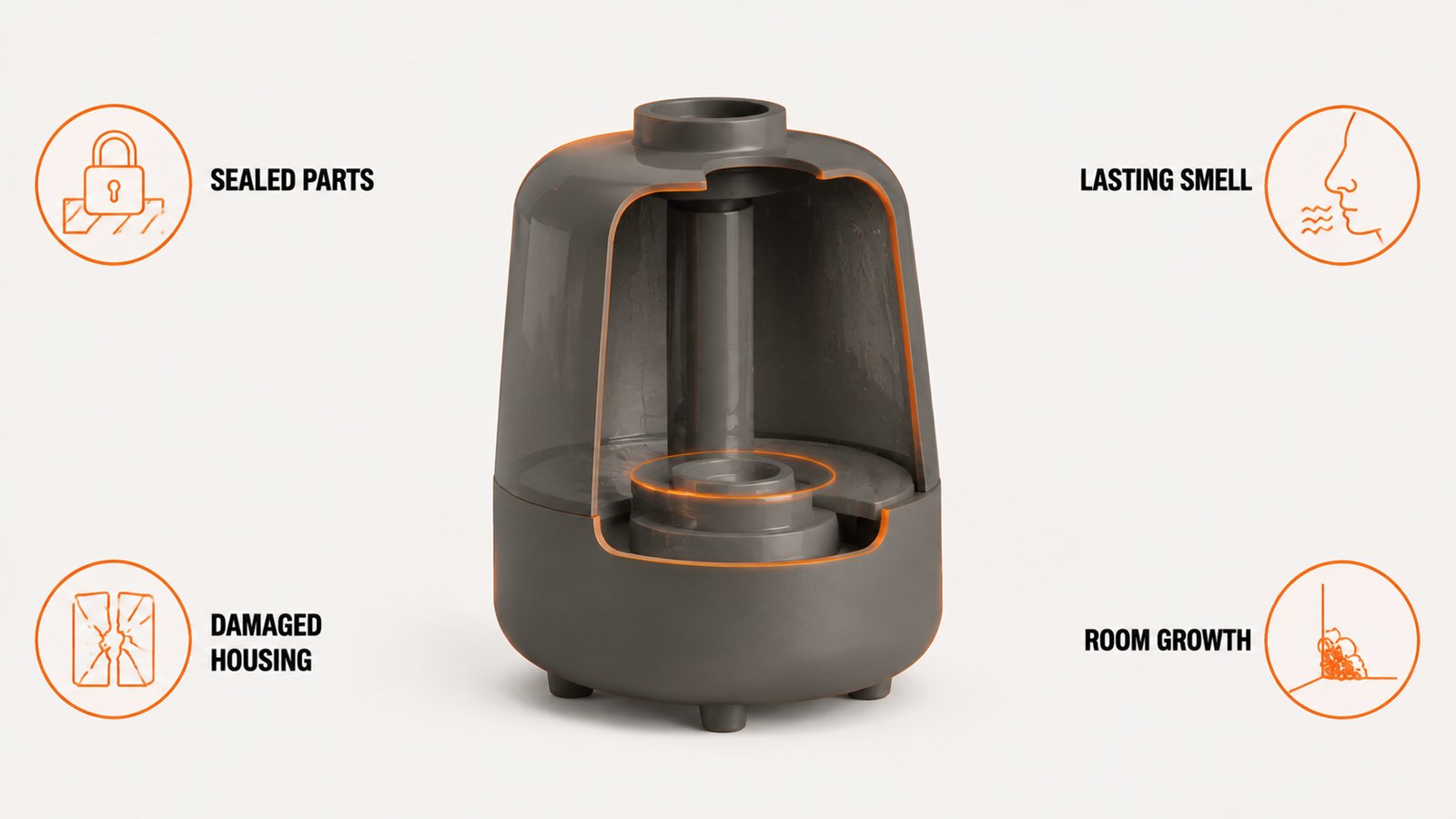
Some units are past cleaning. Replace rather than scrub when any of these is true:
- Growth is inside a sealed assembly. If the film is behind a molded housing, inside the mist chamber, or in tubing you cannot open, you cannot physically remove it, and physical removal is the whole point.
- A musty smell survives a full clean and a dry. That means material is still in there somewhere you did not reach.
- The housing is cracked or the wick tray is warped. Water sits in the damage and never dries.
- Replacement wicks are no longer made for the model. A wick that cannot be replaced is a permanent culture surface.
A humidifier itself is never a remediation job, but it can be a symptom of one. Call a qualified professional when the growth is no longer confined to the appliance:
- Growth has spread to the wall, floor, or furniture around the unit. A cool-mist unit run against a surface can wet it for months.
- The affected area is larger than about 10 square feet. That is EPA's size guide for when a job stops being a do-it-yourself one.
- A whole-house humidifier on the furnace is involved. Do not open ducts or disturb duct lining yourself. See mold in air ducts.
- Someone in the home has asthma, a mold allergy, a suppressed immune system, or chronic lung disease and cannot be kept out of the area while work happens.
For professional work, look for firms that follow the ANSI and IICRC S520 standard for professional mold remediation and get a written scope before anyone starts. Costs are on mold remediation cost, and the general cleanup order is on how to get rid of mold.
Frequently asked questions
How often should a humidifier be cleaned?
EPA's guidance is to clean portable humidifiers every third day while they are in use. That interval exists because scale and microbial film establish on a wetted surface within a few days, not weeks. Empty and dry the unit completely before storing it at the end of the season, because a tank stored with water in it comes back out with a film already growing.
Is it safe to use a humidifier with mold in it?
Not without cleaning it first. The device exists to move what is in the tank into the air of the room, and EPA states that ultrasonic and impeller humidifiers can disperse materials such as microorganisms and minerals from their water tanks into indoor air. Take it apart, remove the growth physically, dry it, and only then run it again.
What kills mold in a humidifier?
Physical removal is what matters, not the chemical. EPA's instruction for hard surfaces is to scrub with detergent and water and dry completely, and a plastic tank counts as a hard surface. A white vinegar soak loosens mineral scale first so the scrub can reach the film underneath. Rinse thoroughly afterward, because anything left in the tank goes into the room air on the next run, and never mix two cleaners.
What is the pink stuff in my humidifier?
A pink or orange film on a tank wall is almost always a bacterial slime rather than a fungus. It is the same deposit people find on a shower floor and a toilet rim. It wipes off easily and returns quickly if the tank stays wet between uses, so the fix is the routine rather than a stronger product.
Should I use distilled water in a humidifier?
EPA recommends water with low mineral content, such as distilled water, to prevent releasing minerals into the air. It also reduces scale, and scale matters because EPA notes it can become a breeding ground for microorganisms. The advice applies most strongly to ultrasonic and impeller units, which EPA describes as very efficient at dispersing tank minerals into indoor air.
What humidity level should a humidifier be set to?
EPA advises not humidifying indoor relative humidity above 50 percent, because higher levels may encourage the growth of biological organisms in the home. For general moisture control EPA gives a range of below 60 percent, ideally 30 to 50 percent. Use an inexpensive hygrometer in the room rather than guessing from how the air feels.
When should a humidifier be replaced instead of cleaned?
Replace it when the growth is inside a sealed assembly you cannot open, when a musty smell survives a full clean and a complete dry, when the housing is cracked or a tray is warped so water sits in the damage, or when replacement wicks are no longer available for the model. Physical removal is the goal, and a surface you cannot reach cannot be cleaned.
Sources
Every claim on this page traces to one of these. Links open the primary document.