What the White Fuzz on Plant Soil Actually Is
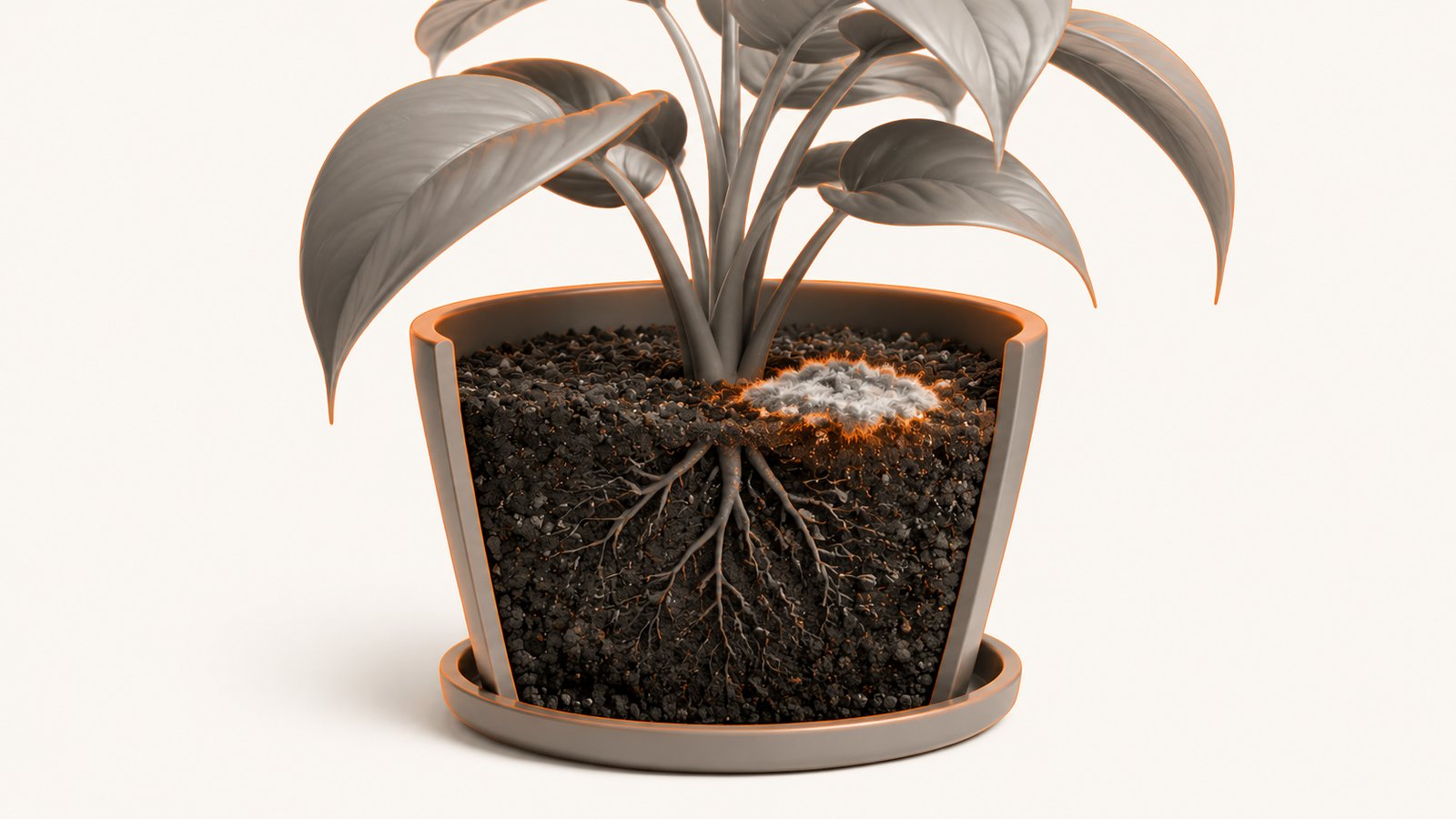
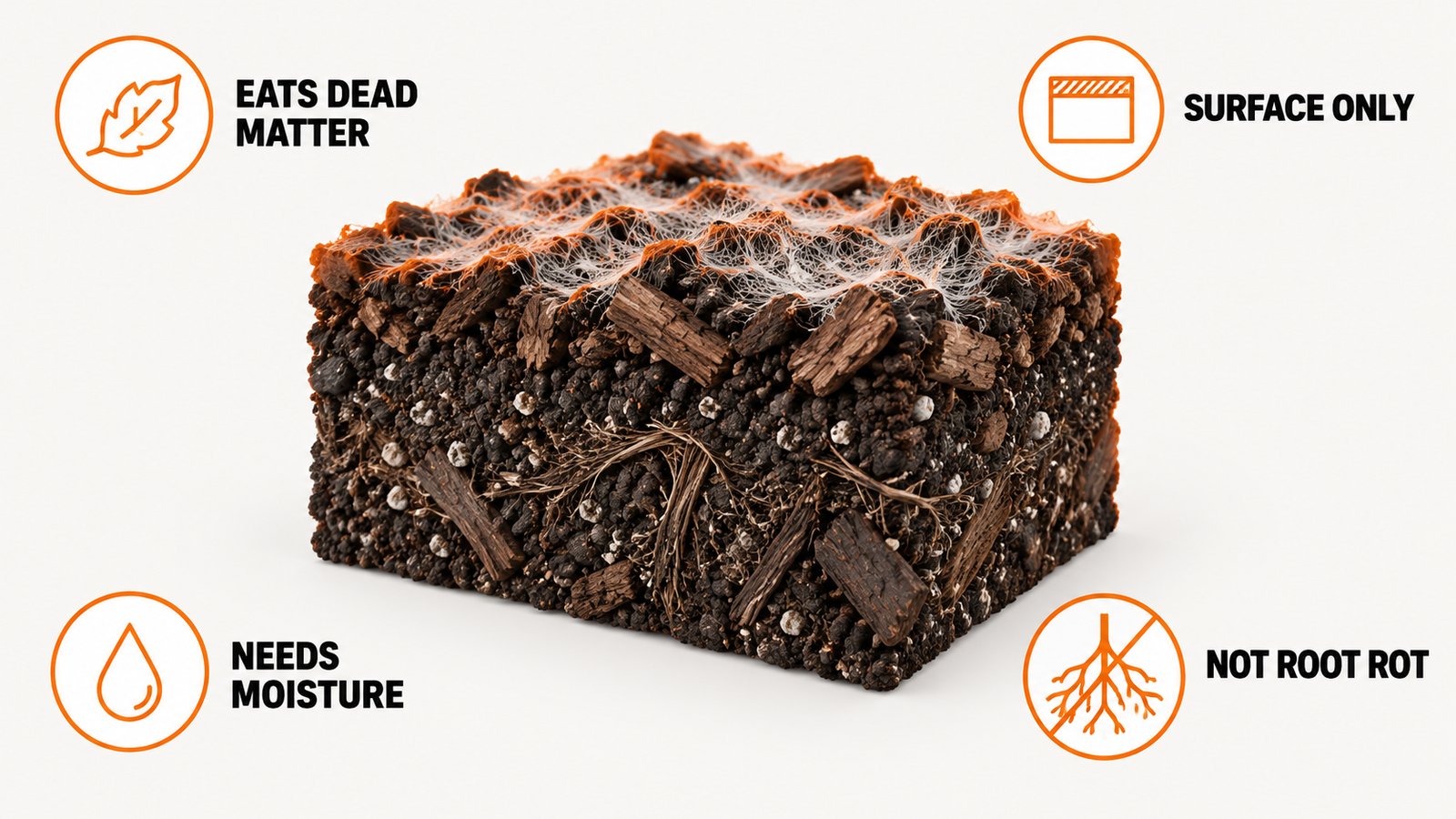
What you are looking at is almost always a saprophytic fungus, which is the group that lives by breaking down dead organic matter. A bag of potting mix is a buffet for it: peat or coir, composted bark, worm castings, and whatever leaves have dropped onto the surface since you potted the plant. Add water and low airflow and something will colonize it. That is not a defect in the mix. It is the mix doing what organic material does.
The CDC's description of mold covers this without any special case: mold will grow where there is moisture, and it names plant pots directly in its list of places where spores landing on excessive moisture will grow, alongside roofs, pipes, walls, and flooded areas. It also notes that mold is part of the natural environment, that spores enter homes through open doors, windows, vents, and heating and cooling systems, and that they arrive on clothing, shoes, bags, and pets. Nothing you did introduced it. Conditions let it take.
The practical news is good. A surface fungus feeding on dead organic matter is not attacking your plant, because it has no mechanism for that. Root rot is a different problem with different organisms and different symptoms, and it comes from the same underlying cause, which is soil that stays too wet for too long. The white fuzz is a warning light, not the failure itself.
The EPA frames the general principle the same way: there is no practical way to eliminate all mold and mold spores in the indoor environment, and the way to control indoor mold growth is to control moisture. On a plant pot that translates into a watering change, not a product purchase.
Mold or Mineral Crust? How to Tell Them Apart
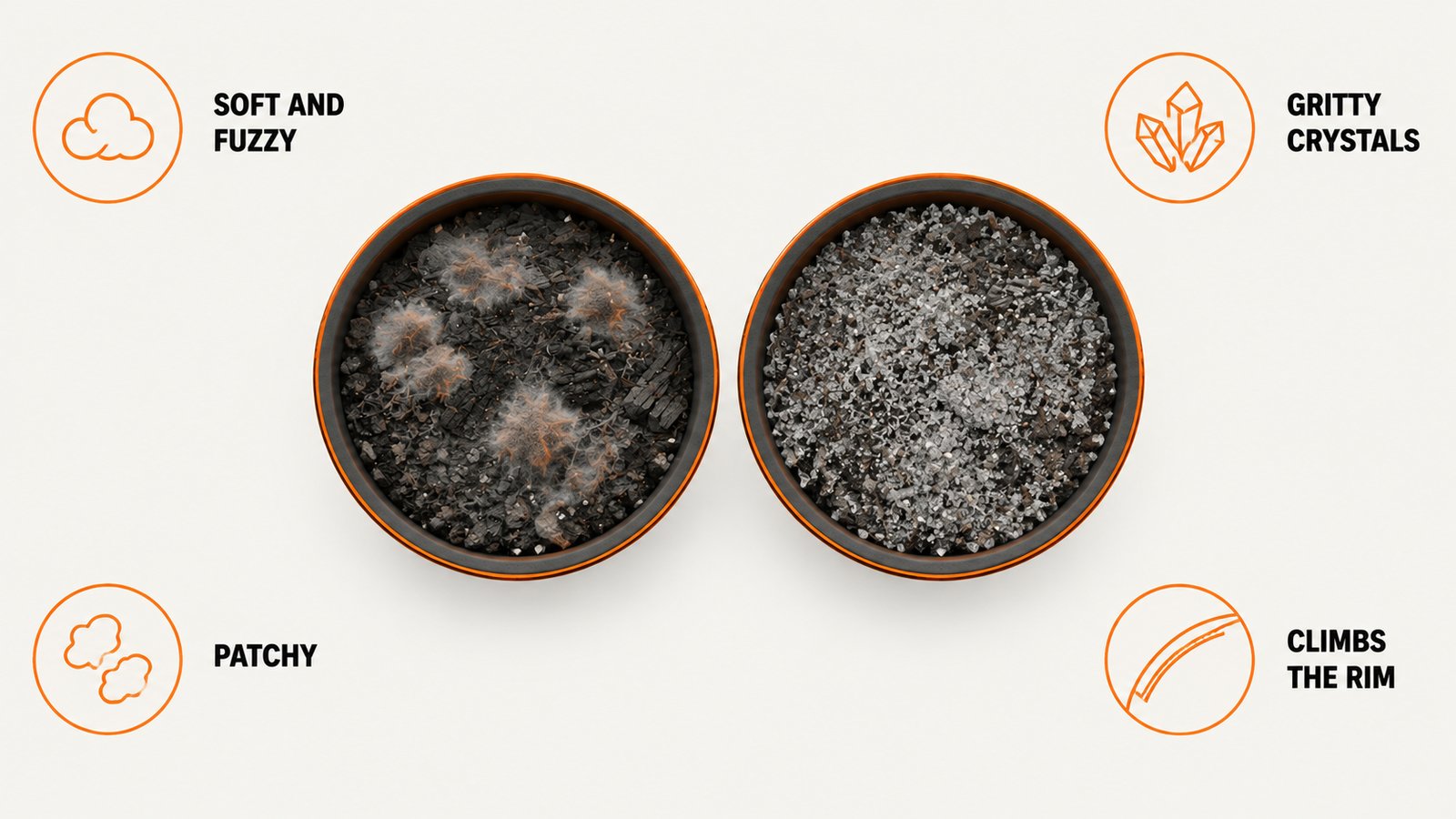
Half the photos posted asking about this are not mold at all. They are mineral crust, and the two look almost identical from three feet away. Telling them apart takes thirty seconds and changes what you do.
| Test | Mold | Mineral crust |
|---|---|---|
| Texture under a fingertip | Soft, fuzzy, cobwebby, squashes flat | Gritty and crunchy, crumbles like salt |
| Under magnification | Fine threads radiating outward | Angular crystals, no threads |
| Where it sits | Patches on the soil, often near debris | Even film on soil and up the pot rim |
| On terracotta | Rare on the outside of the pot | Classic white bloom on the outside |
| Smell | Earthy or musty | No smell |
| What causes it | Wet soil, low airflow, organic debris | Fertilizer salts and hard water evaporating |
Mineral crust is fixed by leaching: water the pot slowly with plain water until a good volume runs out the drainage holes, three or four times, then let it drain fully. That flushes accumulated salts. Mold is fixed by changing how wet the soil stays, which the rest of this page covers.
Two other things people find on potting soil and misread. A small bright yellow mushroom appearing overnight in a warm indoor pot is a different organism from the fuzz, and it is likewise feeding on the organic matter rather than the plant, though the usual caution applies about children and pets and anything unidentified in a pot. And a spreading yellow or tan blob with a slimy texture is a slime mold, which is not a fungus at all and behaves quite differently. White mold, yellow mold, and types of mold cover the wider identification question.
Why It Appeared, and What It Says About Your Watering
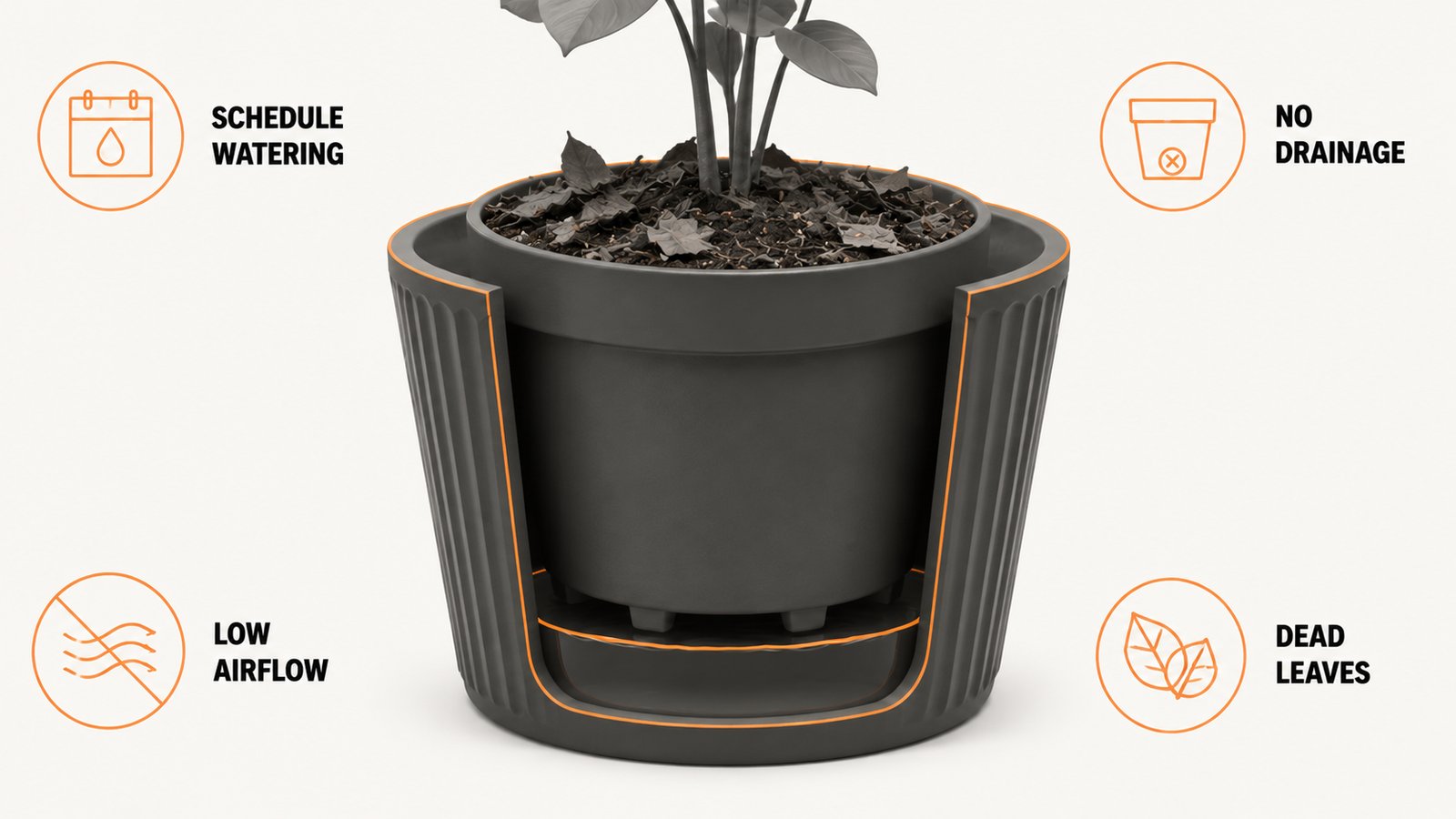
Every cause traces back to the same thing: the surface of the soil stays wet for longer than it should. Five reasons that happens indoors.
- You are watering on a schedule instead of on the soil. A plant's water use changes with season, light, and temperature. Watering every Sunday regardless is how a pot stays saturated through winter, when the plant is drinking a fraction of what it did in July.
- The pot is not draining. No drainage hole, a decorative cachepot holding standing water underneath, or a saucer that never gets emptied. Roots sitting in water is the single most common houseplant mistake, and it makes the surface a permanent wet zone.
- Not enough light or airflow. A dim corner with no air movement is a room where nothing dries. The EPA's own condensation remedy is to increase surface temperature or reduce moisture in the air, and to increase air circulation to raise surface temperature. That works on a pot as well as it works on a wall.
- Dead material is sitting on the surface. Fallen leaves, spent blooms, and the top layer of an aging peat mix are all food. Clear them and you remove the substrate.
- The room is simply humid. The EPA advises keeping indoor humidity below 60 percent and ideally between 30 and 50 percent. A bathroom shelf or an unventilated bedroom in a humid climate can hold a pot surface damp indefinitely. You can check your own with our free humidity and mold risk calculator.
Two smaller contributors worth knowing. Bagged mix that sat wet in a warm store often arrives already colonized, so growth appearing days after repotting usually came in with the bag rather than from your care. And overfeeding leaves unused organic fertilizer on the surface, which is more food, not more plant.
The useful reframe: the fuzz is telling you something about the pot that you would otherwise learn later from yellowing leaves and a failing root system. How to prevent mold covers the same moisture logic across the house.
How to Get Rid of It, Step by Step
Work in this order. The first three steps solve most cases, and the last two are for pots that keep coming back.
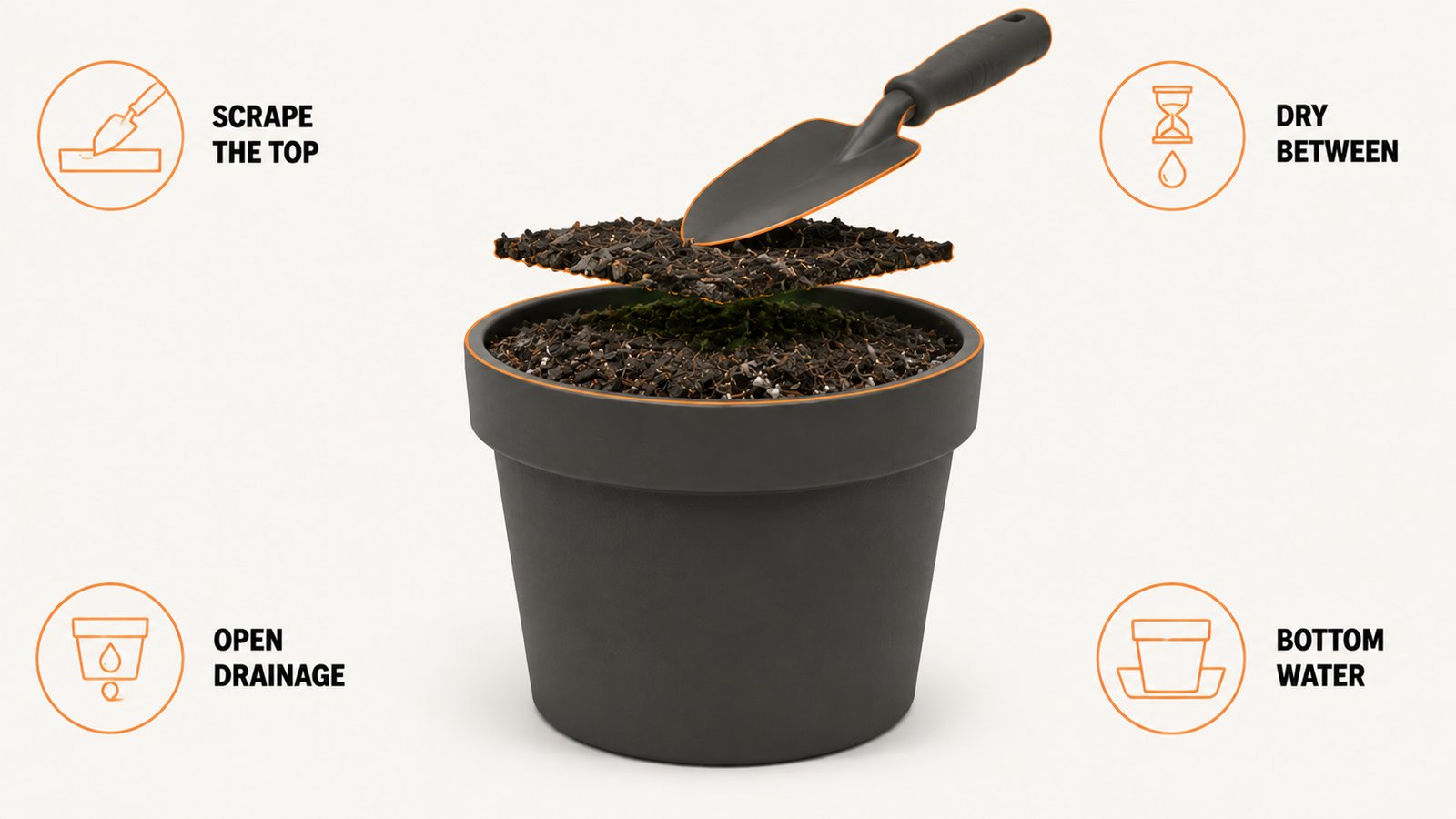
- Scrape off the visible layer. Take out the top half inch to inch of soil where the growth sits, along with any fallen leaves and debris. Bag it rather than shaking it out indoors, and dispose of it outside the house. The EPA notes that disturbing moldy areas can release spores, and the same principle applies at pot scale.
- Let the soil dry properly before the next watering. Push a finger in to the second knuckle. If it is damp at that depth, wait. This one change fixes more cases than everything else combined.
- Fix the drainage. Confirm the pot has an open hole, empty the saucer or cachepot after every watering, and if the mix is dense and waterlogged, amend it with perlite, bark, or pumice so water moves through instead of sitting.
- Add light and airflow. Move the plant somewhere brighter and run a small fan in the room on low. Moving air dries a soil surface faster than anything else you can do without repotting.
- Repot if it keeps returning. Take the plant out, remove as much old mix as you can from the roots without tearing them, wash the pot with detergent and water, and use fresh mix. The EPA's baseline instruction for hard surfaces is to scrub with detergent and water and dry completely, and a plastic or glazed pot is a hard surface. Terracotta is porous and holds more, so scrub it and let it dry fully before reuse.
- Water from the bottom afterward. Setting the pot in a tray of water for twenty minutes and then draining it keeps the surface layer drier than top watering, which removes the wet zone the fungus needs.
What not to bother with. Sprinkling ground cinnamon on the surface is the most repeated remedy on the internet, and there is no published work supporting it for this use. More importantly, it does nothing about the water, so at best it decorates the problem. The same goes for hydrogen peroxide drenches and household fungicides poured into a pot: they may knock back what is visible, but the growth returns as soon as the soil is wet again, and the EPA makes the general point that using a biocide is not recommended as a routine practice during mold cleanup. Fix the moisture and the fuzz has nothing to eat.
When It Matters for the Room, Not the Plant
For the plant, this is a minor problem. For the room, it is worth a moment of attention, because a pot is a small, permanently damp reservoir sitting in your living space.
The CDC lists plant pots among the places where mold spores landing on excessive moisture will grow, and describes mold as an ordinary part of the environment that enters homes through doors, windows, vents, and heating and cooling systems, and on clothing, shoes, bags, and pets. It also states that exposure to damp and moldy environments may cause a variety of health effects, or none at all, listing stuffy nose, sore throat, coughing or wheezing, burning eyes, and skin rash, and noting that people with asthma or a mold allergy may have more severe reactions, and that immune-compromised people and people with chronic lung disease may get infections in their lungs from mold.
That is not a reason to get rid of your plants. It is a reason to keep the number of permanently wet surfaces in a bedroom sensible, and to take a mold-allergic or immunosuppressed household member into account when deciding where pots live. Any health question there belongs with a physician, not a plant care page.
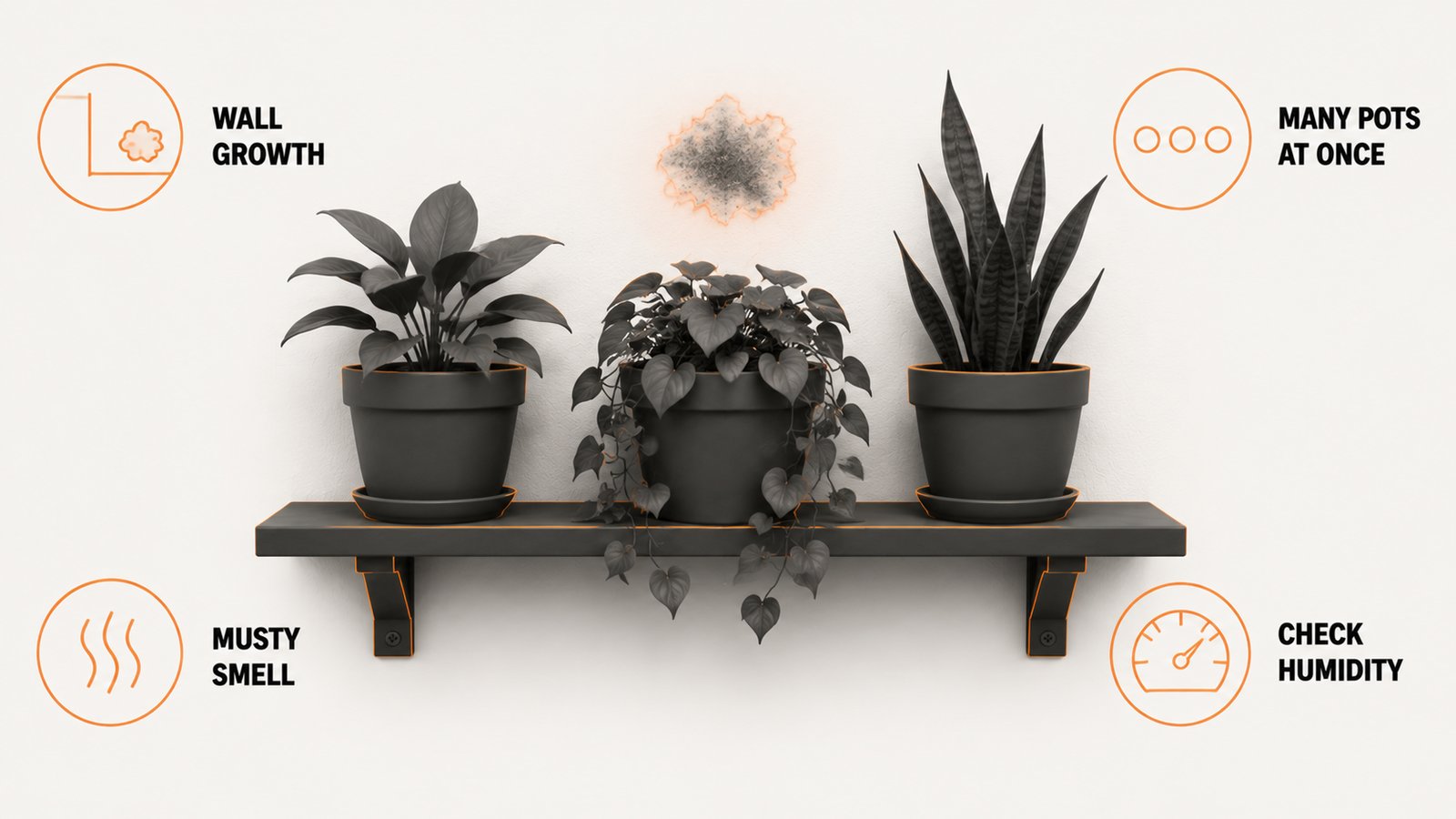
Escalate beyond the pot when:
- Growth appears on the shelf, the wall, or the window frame near the plants. That is a building surface, not a soil surface, and it means the room humidity is the driver.
- Several pots and unrelated surfaces go over at once. Same conclusion, and a hygrometer will confirm it in a day.
- There is a musty smell with nothing visible. The EPA states you may suspect hidden mold if a building smells moldy but you cannot see the source.
- The affected building area passes about 10 square feet, roughly a 3 foot by 3 foot patch, which is the EPA's own line for handling cleanup yourself.
At that point you are no longer solving a houseplant problem. Signs of mold in a house covers what to look for, and a dehumidifier is usually the fix when a whole room is holding above 60 percent. This page covers plant care, cleaning, and moisture control only, and gives no medical advice.
Frequently asked questions
Is mold on plant soil harmful to the plant?
Usually not. The white fuzz on potting mix is typically a saprophytic fungus feeding on dead organic matter in the mix, and it has no mechanism for attacking living roots. What it does signal is soil staying wetter than it should, and that same condition is what leads to root rot, which is a real problem with a different cause.
Can I still use potting soil that has mold in it?
Scrape off and discard the visible layer, then judge the rest by how it smells and drains. Mix that smells earthy and drains freely is fine to keep using once the surface layer is gone and the watering changes. Mix that is dense, sour-smelling, and waterlogged is worth replacing entirely, along with a pot wash in detergent and water.
How do I tell mold from mineral crust on soil?
Touch it. Mold is soft and fuzzy and squashes flat, and under magnification it shows fine threads radiating outward. Mineral crust from fertilizer salts and hard water is gritty and crunchy, crumbles like salt, has no smell, and typically forms an even film that climbs the pot rim, especially on terracotta. Crust is fixed by flushing the pot with plain water, mold by watering less.
Does cinnamon get rid of mold on plant soil?
There is no published work supporting ground cinnamon on potting soil for this, and more to the point it does nothing about the moisture that caused the growth. The same applies to peroxide drenches and household fungicides poured into a pot: whatever they knock back returns as soon as the soil is wet again. Change the watering instead.
Why does mold keep coming back on my houseplant soil?
Because the underlying condition has not changed. The usual culprits are watering on a fixed schedule rather than checking the soil, a pot or cachepot that holds standing water, a dim corner with no airflow, dead leaves left on the surface, or a room sitting above 60 percent relative humidity, which is above the level the EPA advises for a home.
Should I repot a plant that has mold on the soil?
Only if scraping the surface, drying out properly between waterings, and improving light and airflow do not hold. When you do repot, remove as much old mix from the roots as you can without tearing them, wash the pot with detergent and water and dry it completely, and use fresh mix. Terracotta is porous, so give it longer to dry before reuse.
Is mold on plant soil a problem for the room?
It is a small permanently damp surface in your living space, which is worth being deliberate about. The CDC names plant pots among the places where spores landing on excessive moisture will grow, and notes that exposure to damp and moldy environments may cause a variety of health effects, or none at all, with more severe reactions in people who have asthma or a mold allergy. Any health question belongs with a physician.
Sources
Every claim on this page traces to one of these. Links open the primary document.