Why Window AC Units Grow Mold
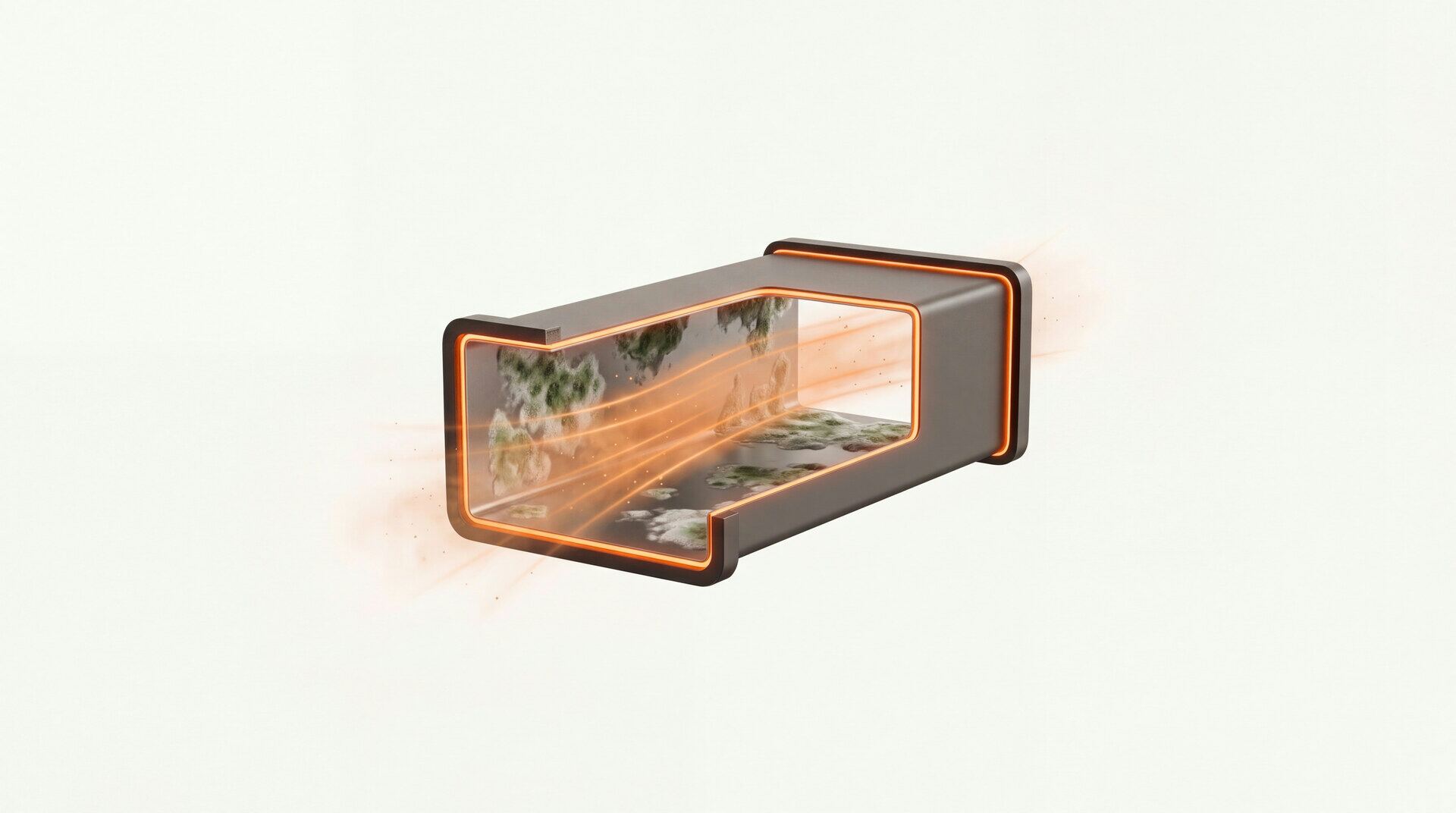
A window air conditioner is a mold habitat by design. The evaporator coils inside get cold while the unit runs. Warm room air hits those cold coils, and the moisture in that air condenses into water, the same way a cold glass sweats in summer. The water drips into a pan at the bottom of the unit. On a humid day, a window unit pulls a surprising amount of water out of the air, hour after hour.
Now add food. The filter catches some dust, but plenty slips past and coats the coils, the foam insulation, and the inside of the housing. Dust is organic material. Mold eats it.
Then close the lid. The inside of a window unit is dark, and the sealed box holds moisture long after the compressor shuts off. Damp, dark, and dusty, with almost no airflow between cooling cycles. Mold can start growing on a damp surface within 24 to 48 hours, and the inside of a working window unit stays damp for months at a stretch.
Tilt makes it worse. A window unit should lean slightly toward the outside so the drain pan empties outdoors. Units installed dead level, or tilted into the room, trap water in the pan instead. That standing water never dries. It turns into a slimy soup that feeds mold and bacteria all season, and the fan sits right above it, pushing air across the surface and into your room.
The Signs Your Window AC Has Mold
The smell. The unit kicks on and the first blast of air smells musty, earthy, or like dirty socks. The odor is strongest in the first minute or two, then fades as it spreads through the room and your nose adjusts. If you catch it every time the compressor starts, something inside the unit is growing. Our guide to the musty mold smell in a house covers the other usual sources, but when the smell arrives with the AC, the AC is the suspect.
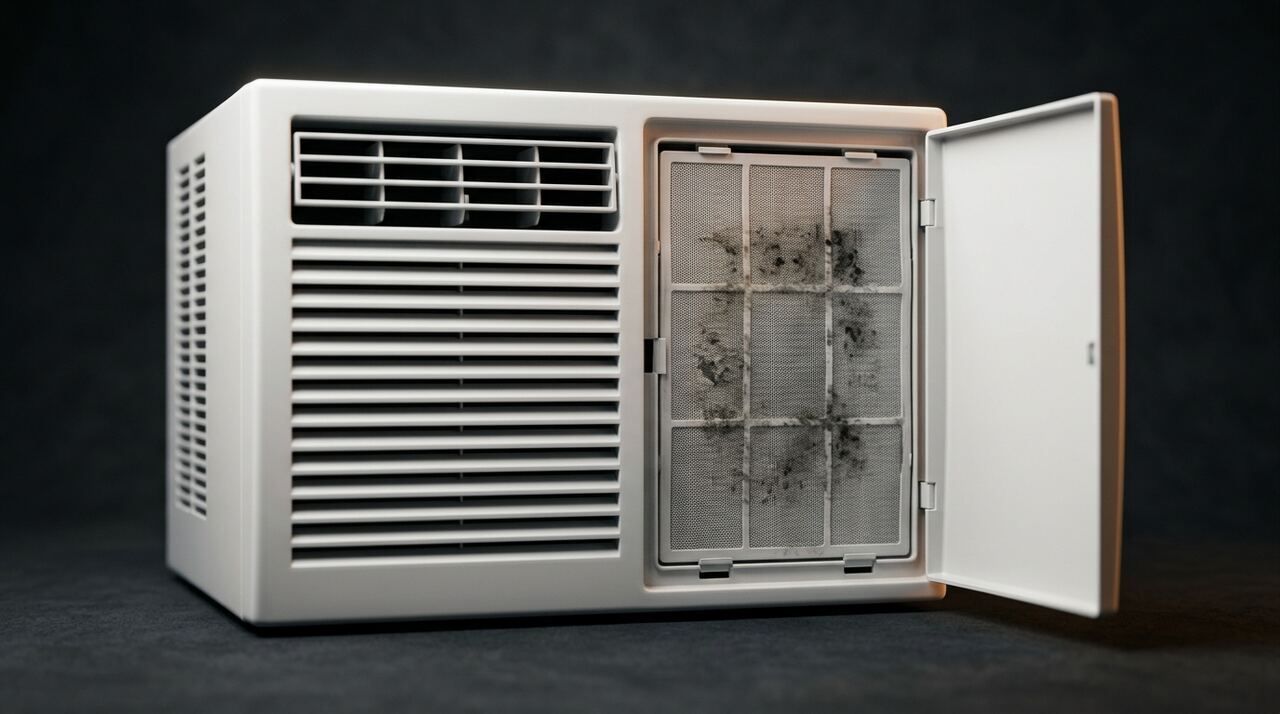
The spots. Look at the louvers (the slats where air blows out) and the edges around them. Black, gray, or greenish speckles on the louvers or the front grille usually mean spores are riding the airstream from a colony deeper inside. A filter with dark patches tells the same story.
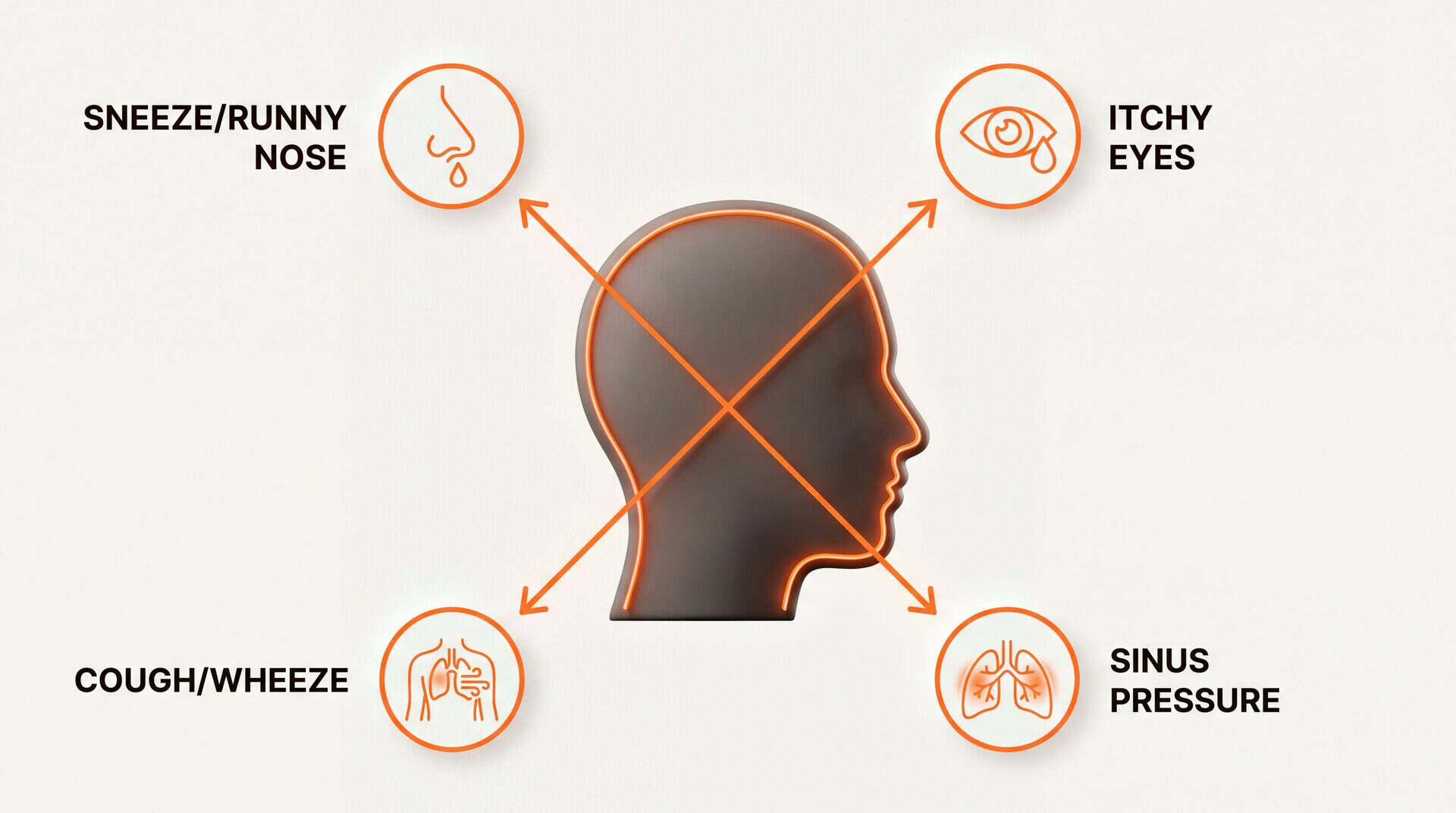
Your body. The CDC links mold exposure to stuffy nose, coughing, wheezing, and itchy eyes, and people with asthma or mold allergies tend to react harder. The pattern to watch: symptoms flare when the unit runs and ease when it's off or when you leave the room. If that sounds familiar, read up on mold allergy symptoms and check the unit the same day.
How to Check Your Unit
Unplug it first. Not off with the remote, unplugged at the wall. You'll have fingers near the fan, the coil fins, and electrical parts that can hold a charge. Then work front to back with a flashlight:
- Filter. Slide it out of the front grille and hold it up to a light. Dark patches, green fuzz, or a musty smell mean it's overdue. Most filters pop out in seconds, no tools needed.
- Louvers and grille. Check the slats and the inside edges. Speckling here usually points to growth deeper in the unit.
- Evaporator coils. Remove the front panel (most are held by clips or a couple of screws). The coils are the rows of thin metal fins. Look for dark blotches, fuzzy patches between the fins, or a thick gray coat of dust.
- Drain pan. Shine the light at the base of the unit under the coils. Standing water, pink or black slime, or a sour smell means the pan isn't draining.
- Foam insulation. The gray or black foam panels lining the housing. Mold shows up as dark speckling across the surface. Press gently; foam that feels damp is a bad sign.
Our free HVAC Moisture Maintenance Checklist helps document accessible HVAC moisture and maintenance conditions. It does not inspect inside a window unit or other equipment.
Cleaning a Window AC Step by Step
Most mold jobs happen wherever the mold is. A window unit is the rare one you can carry to a better spot. Pull it from the window and work outside, or on a tarp by an open window. Scrubbing throws spores, and outdoors they disperse instead of settling on your couch.
Wear an N95 mask, gloves, and goggles. The same PPE rules apply here as in our full guide to getting rid of mold.
- Unplug the unit. Then remove it from the window if you can. Two people make this safer; these things are heavier than they look.
- Pull the filter. Wash it in warm, soapy water and let it dry in the sun. If it's torn, warped, or still smells after washing, replace it.
- Vacuum with a HEPA vacuum. Go over the louvers, coils, pan, and any visible mold with the brush attachment. A HEPA filter traps spores. A regular vacuum blows them back into the air.
- Clean the coils. Use a no-rinse foaming coil cleaner from the hardware store, or a mild detergent solution and a soft brush. Work along the direction of the fins. They bend if you scrub hard, and bent fins choke airflow.
- Treat the hard plastic. Spray 3% hydrogen peroxide on the drain pan, louvers, housing, and any fan blades you can reach. Let it sit 10 minutes, scrub, and wipe clean.
- Flush the drain pan. Scrub out the slime, rinse with clean water, and watch that the water drains out the back the way it should.
- Dry everything completely. Let the unit sit open in the sun or a dry room until every part is bone dry. Running it wet starts the cycle all over again.
The part you can't save: the foam insulation. If the foam lining inside the housing is moldy, it can't be cleaned. The growth roots into the foam, and scrubbing tears the material apart without reaching them. Replace the foam with new foam panels cut to fit, or replace the unit.
And skip the bleach. Bleach can corrode the aluminum coil fins, the fumes build up inside the boxed housing, and on any porous part the water in bleach soaks deeper while the chlorine stays at the surface, which sets up regrowth. Never mix bleach with ammonia or any other cleaner; the combination creates toxic gas. Peroxide, coil cleaner, or mild detergent do this job better and safer.
When to Replace the Unit Instead
Some mold problems inside a window AC aren't worth fighting:
- Mold on the blower wheel. The blower wheel is the squirrel-cage fan buried in the middle of the unit. Reaching it means a full teardown, and every blade has to come clean. Miss a little and the wheel reseeds the whole unit every time it spins.
- Moldy foam insulation. On most units the foam is glued into the housing. If you can't remove and replace it, you can't fix it, and that moldy foam sits inches from the airstream.
- Old or low-cost units. Weigh the hours of teardown against the price of a basic new unit. If the unit is old, weak, or was cheap to begin with, replacement usually wins. A unit that blew moldy air for a season can also hold growth in spots you'll never see.
One more line to draw: the wall around the unit. Window units drip, and a slow leak into the sill or the drywall below the window can feed hidden growth for years. If the moldy area on the wall is larger than 10 square feet, hire a qualified mold remediation professional. Look for firms that follow the IICRC S520 standard; ACAC or RIA credentials and state licenses count too.
Preventing Mold in a Window AC
Prevention comes down to one word: dry.
- Run fan-only mode before you shut down. After a cooling session, switch to fan-only for 30 to 60 minutes. The fan dries the coils and the inside of the box instead of sealing the moisture in. Some newer units have an auto-dry or fan-delay setting that does this for you.
- Check the tilt. The unit should slope slightly toward the outside, per your manual, so condensate drains out the back. Set a level on top. If it sits flat or leans into the room, water is pooling in the pan right now.
- Clean the filter monthly in season. A clean filter keeps dust off the coils and foam, and dust is the food half of the mold equation. Rinse, dry, reinstall.
- Keep the room's humidity in range. The drier the air, the less water the unit wrings out and the faster its insides dry. Aim for indoor humidity between 30 and 50 percent. If the AC alone can't hold that line, a dehumidifier picks up the slack.
- Store it dry over winter. Before you pull the unit, run fan-only until the inside is fully dry. Store it upright in a dry indoor spot. A unit stored damp in a basement comes back in spring already growing.
Central Air Is a Different Problem
Everything above works because a window unit is a self-contained box. You can unplug it, carry it outside, open it up, and reach most of the parts that matter.
Central air is the opposite. The evaporator coil sits inside an air handler, the condensate runs through a drain line you rarely see, and the ducts thread through walls, attics, and crawl spaces. Mold in that system can push spores into every room of the house, and most of the system is out of reach without opening it up.
The warning signs overlap: a musty smell when the system kicks on, allergy flare-ups indoors, dark speckling around the supply vents. The response is different, though. Don't go at your ductwork with a scrub brush. Start with our guide to mold in air ducts, which covers what you can check yourself and when duct cleaning makes sense.
Frequently asked questions
Why does my window air conditioner smell musty when it turns on?
A musty smell on startup usually means mold or mildew is growing on the evaporator coils or in the drain pan. The fan pushes air across those wet parts and carries the smell straight into the room. Unplug the unit and check the filter, coils, and pan. Cleaning those parts and letting the unit dry fully usually clears the smell. If it comes back fast, mold is likely deeper inside.
Can I use bleach to clean mold in my window air conditioner?
Skip the bleach. On the coils it can corrode the metal fins, and inside a boxed-up unit the fumes have nowhere to go. Use 3% hydrogen peroxide on hard plastic parts, a foaming coil cleaner on the coils, or mild dish soap and water. Never mix bleach with ammonia or any other cleaner. The mix creates toxic gas. Dry every part before you run the unit again.
Can a moldy window air conditioner make you sick?
It can affect how you feel. The CDC links mold exposure to stuffy nose, coughing, wheezing, and itchy eyes, and the effects are stronger for people with asthma or mold allergies. A moldy AC is a special case because the fan blows spores right at you while you sleep or sit nearby. Clean or replace the unit, and talk to a licensed physician about any symptoms that persist.
Should I throw away a window air conditioner with mold in it?
It depends on where the mold is. Spots on the filter, louvers, or drain pan clean up fine. Mold on the foam insulation inside is different. Foam can't be scrubbed clean, so the foam has to be replaced, and on many units that's not practical. If mold coats the blower wheel or the inside of the housing, or the unit is old and cheap, replacement is usually the smarter move.
How do I keep mold from growing back in my window AC?
Dry the inside before it sits. Run fan-only mode for 30 to 60 minutes after cooling so the coils dry out instead of sitting wet. Check that the unit tilts slightly toward the outside so the drain pan empties. Clean or rinse the filter monthly during the season. Before winter storage, run the fan until everything is dry and store the unit in a dry indoor spot, never a damp basement floor.
Sources
Every claim on this page traces to one of these. Links open the primary document.