What the research says about heat and mold
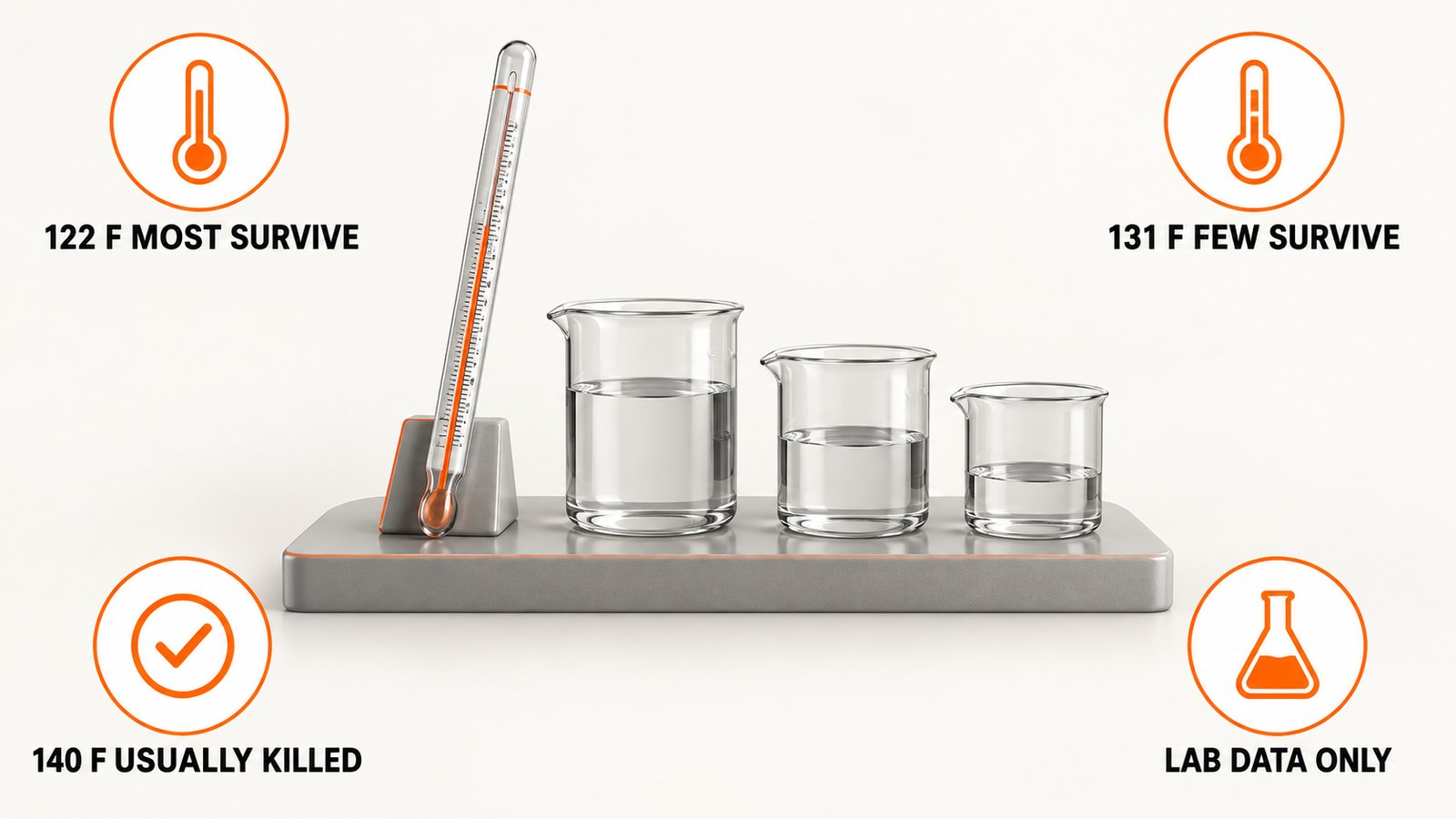
Yes, heat kills mold in a lab. The best numbers we could verify come from an early food-science paper by Wallace and Tanner at the University of Illinois (it cites work from 1928). They sealed mold spores in small tubes, set the tubes in water baths, and pulled tubes out at set times to see which spores were still alive. Their results:
| Water bath | What happened |
|---|---|
| 122 degrees F (50 C) | After one hour, most molds tested survived. Four did not: two Aspergillus species, Rhizopus nigricans and Fusarium. |
| 131 degrees F (55 C) | After one hour, only one mold tested survived (Monilia sitophila). The molds named in the paper were destroyed in 5 to 25 minutes. |
| 140 degrees F (60 C) | None of the organisms in that test survived 5 minutes. |
The authors sum it up this way: 60 C (140 F) for 5 minutes is usually enough, with exceptions. Some Aspergillus niger resisted 10 minutes, and one mold, Oidium lactis, survived 30 minutes at that temperature. So yes, but it depends on the mold, the temperature and the clock.
Dry heat looks tougher. The same paper describes an early bread test where dry heat at 248 degrees F (120 C) for 10 minutes still left Aspergillus and Penicillium alive, although most of the cells were destroyed.
Keep the limits in mind. These were mold spores in liquid, in sealed tubes, brought to a measured temperature. Nothing in the paper tells you what a wall, a rug or a dryer drum reaches, and the EPA and CDC cleanup pages we read give no heat temperature for cleaning mold. They point to scrubbing, drying and fixing the moisture.
Does heat kill mold on walls?
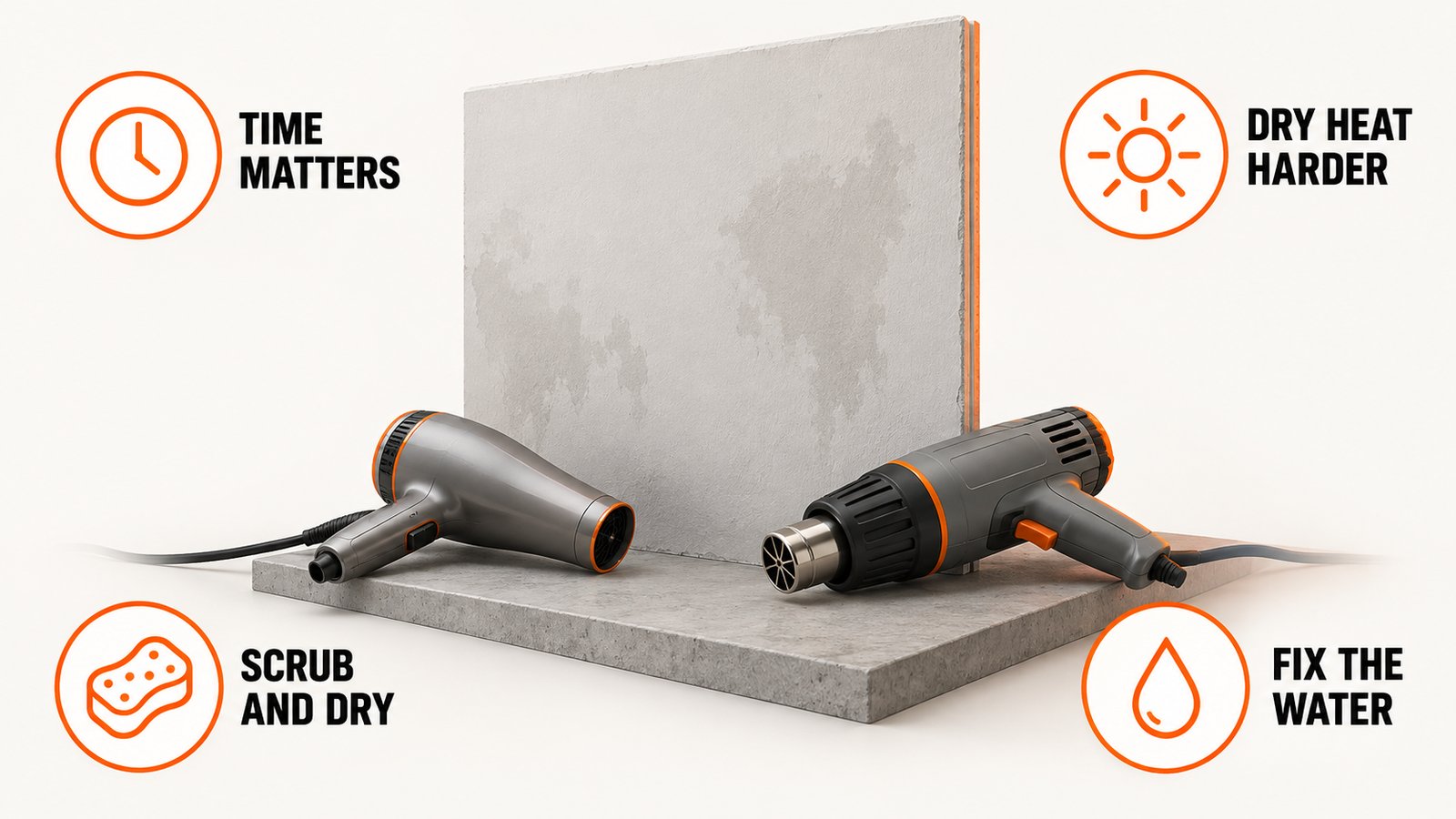
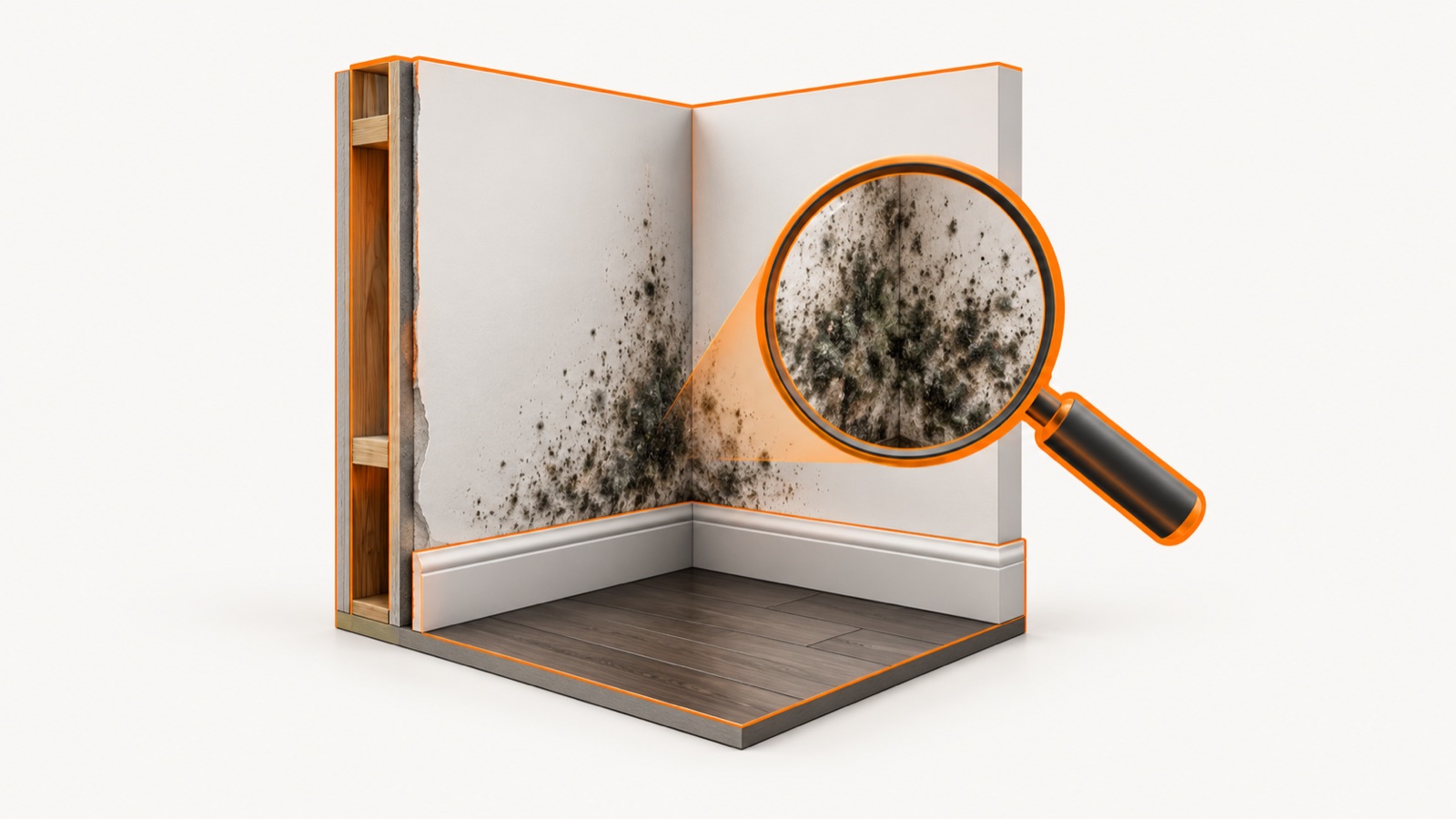
Not in any way you can count on. Three things work against you. First, the lab results needed a steady temperature for minutes, and a hair dryer, space heater or heat gun doesn't hold one on a wall surface. Second, mold in drywall and wood sits in the paper and fibers, so heat has to get in there and stay. Third, dry heat did worse than water in the one test that compared them.
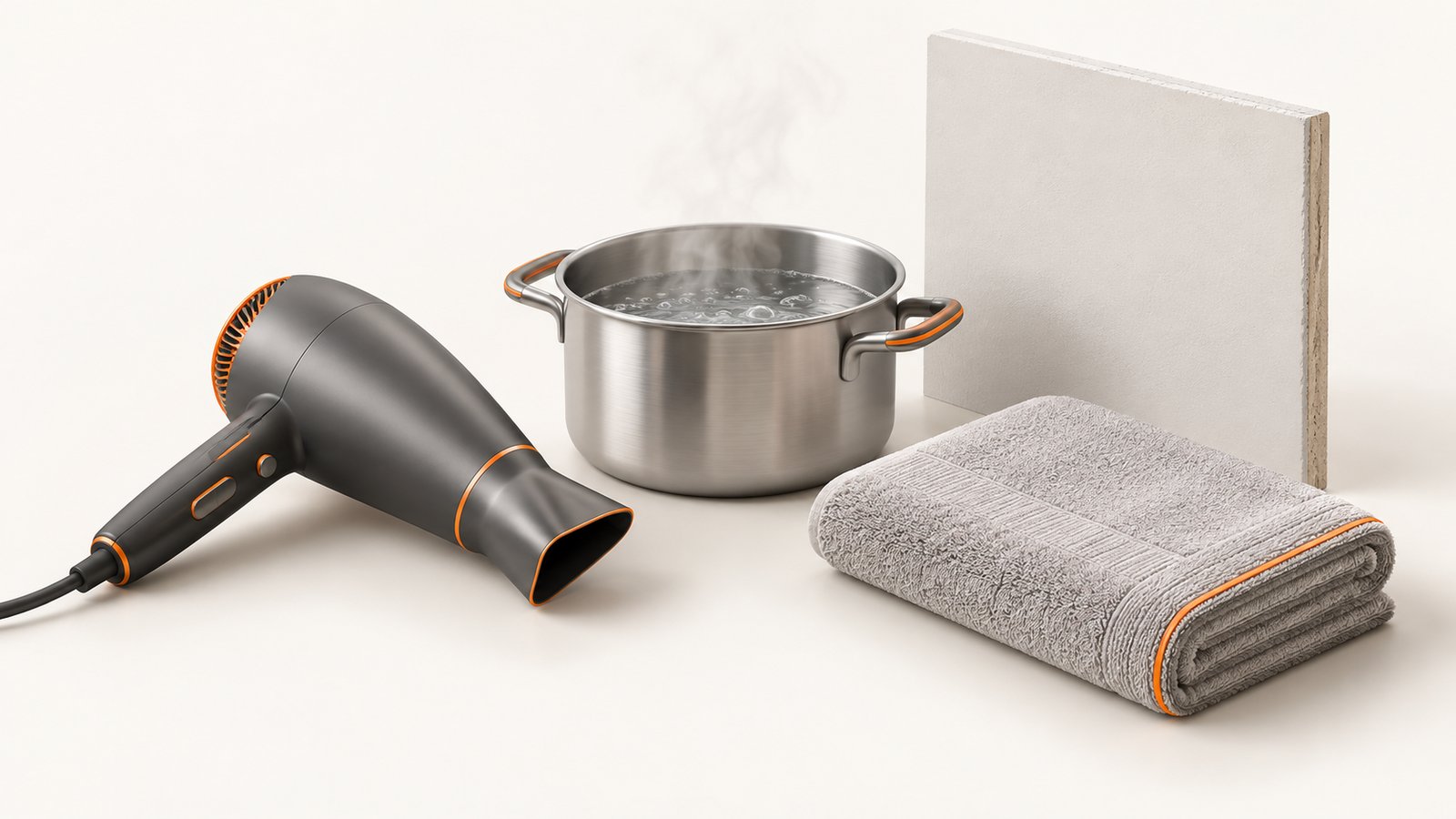
A heat gun can also scorch paint and start a fire, and we found no tested temperature to aim for. Don't use one, a torch or a hair dryer on a moldy wall.
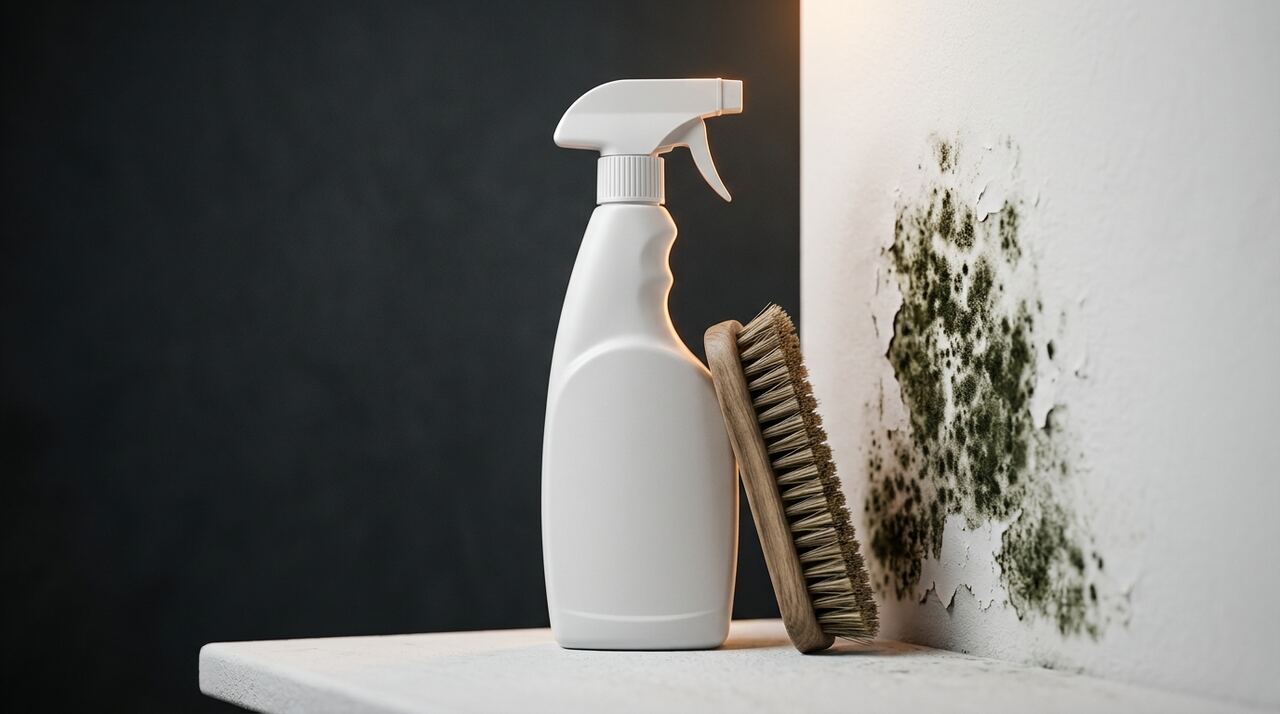
Here's what EPA suggests for hard surfaces: scrub the mold off with detergent and water, then dry the surface completely. Moving air from a fan helps a cleaned wall dry, and drying is a job heat does well. It's a different job from killing. For a step-by-step version, see our guide on how to get rid of mold, or the page on mold on walls. If you can't tell whether a stain is mold at all, start with the photo check.
Does boiling water kill mold?
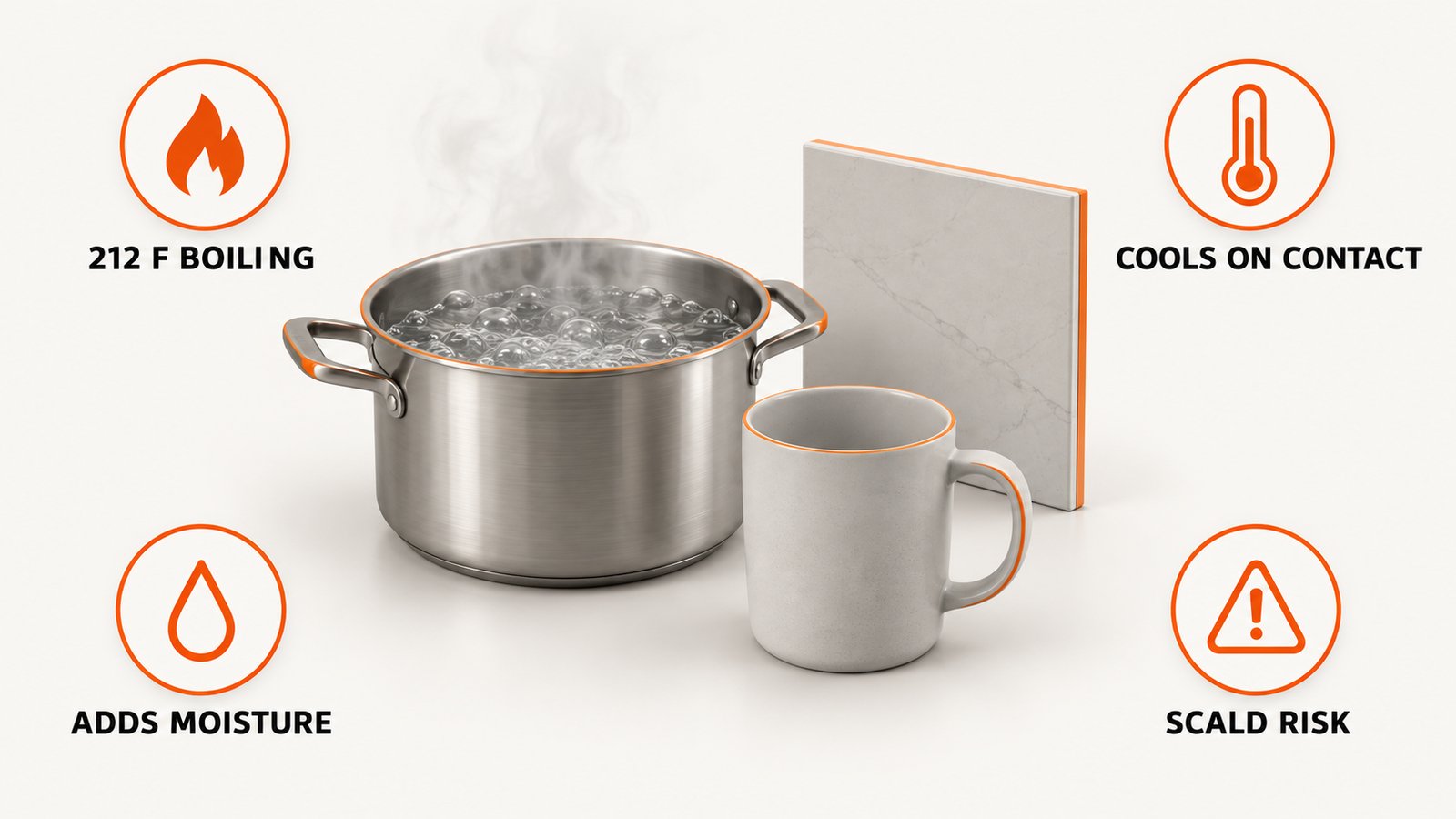
Boiling water is hot enough, if it stays hot and touches the mold. Water boils at 212 degrees F (100 C) at sea level, and in the bread study in that same paper, mold suspensions raised slowly to 212 degrees F left no survivors. That makes a pot of boiling water the one place the lab numbers fit, for a small hard item that can safely sit in the pot.
Pouring it on a wall or floor is a different story. Poured water meets a cold surface and cools quickly, and we have no source for how hot a poured stream stays. It also soaks porous material, and EPA's advice is to clean and dry wet or damp spots within 48 hours, so boiling water on drywall or carpet can leave you with a wetter problem.
The burn risk is real. Don't carry a full pot across a room, and keep kids and pets away. For options that don't scald anyone, see mold cleaning products, does vinegar kill mold and does bleach kill mold.
What about steam?
Steam is the same idea at a higher temperature, and it has the same problems: it adds moisture to porous materials, it can burn you, and we found no tested temperature or time for use on walls. EPA's baseline of detergent, water and complete drying still applies.
Does a dryer kill mold on clothes?
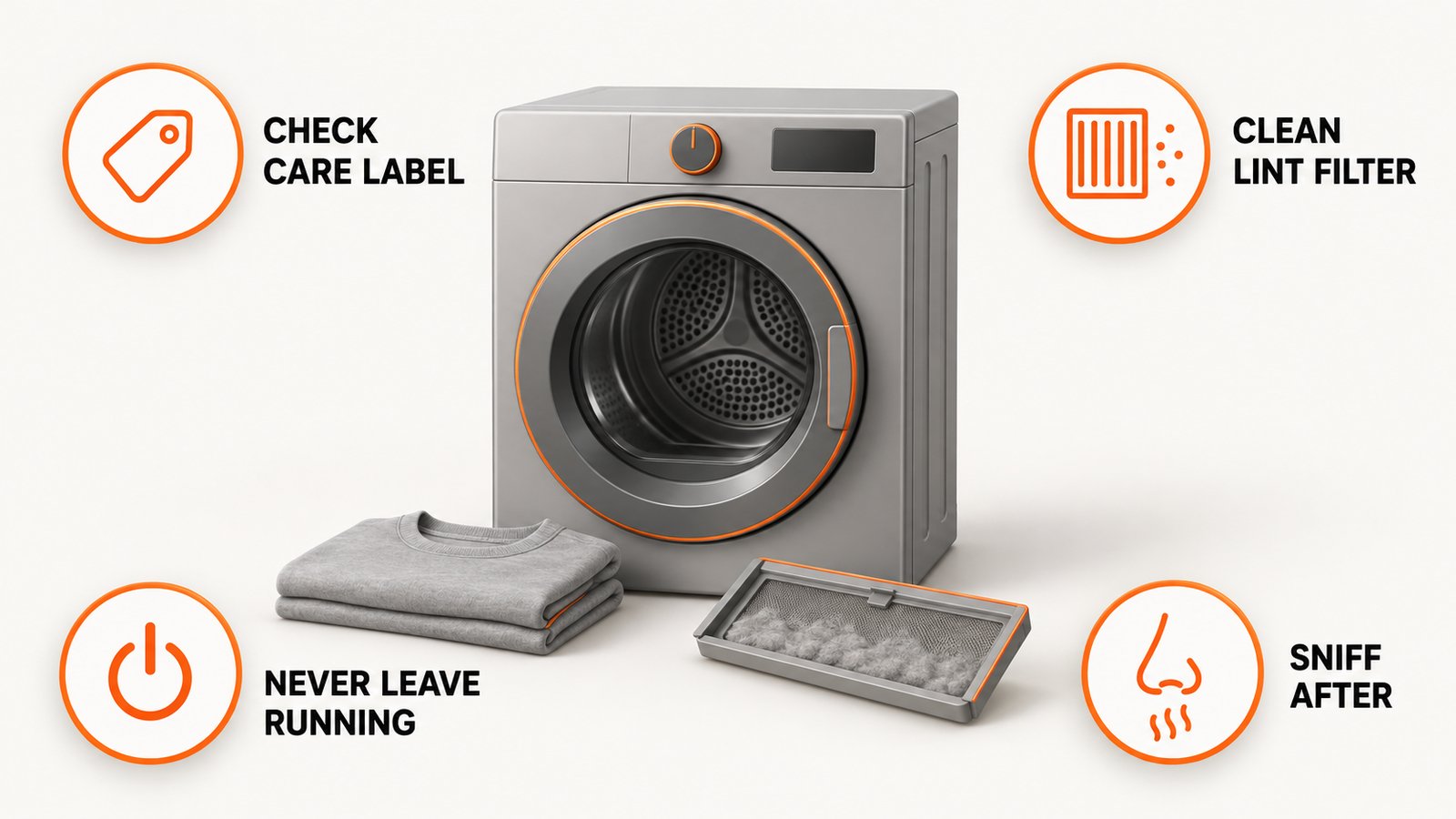
Heat fits best here, because fabric can be washed first and then dried hot. Check the care label before anything else: heat can shrink or ruin some fabrics, and leather, foam and delicate items shouldn't go in a dryer. Our guides on mold on clothes and getting the mold smell out of clothes cover the wash steps, and they note that a dryer is a finishing step, not proof the clothes are mold-free.
We can't give you a verified temperature for what a dryer drum delivers to the clothes inside, so don't assume it reaches the lab numbers above. If the clothes still smell musty after drying, wash them again. Bulky items like a mattress, carpet or leather can't go in a dryer at all and need a different approach.
Dryer fire safety
Hot, linty air is a fire risk, so follow the NFPA tips:
- Clean the lint filter before or after each load, and never run the dryer without one.
- Once a year, or sooner if clothes take longer to dry, clean the lint out of the vent pipe.
- Don't overload the dryer.
- Turn the dryer off if you leave home or go to bed.
NFPA says the leading cause of home clothes dryer fires is failure to clean the dryer.
Does a heat treatment kill mold in a whole room?
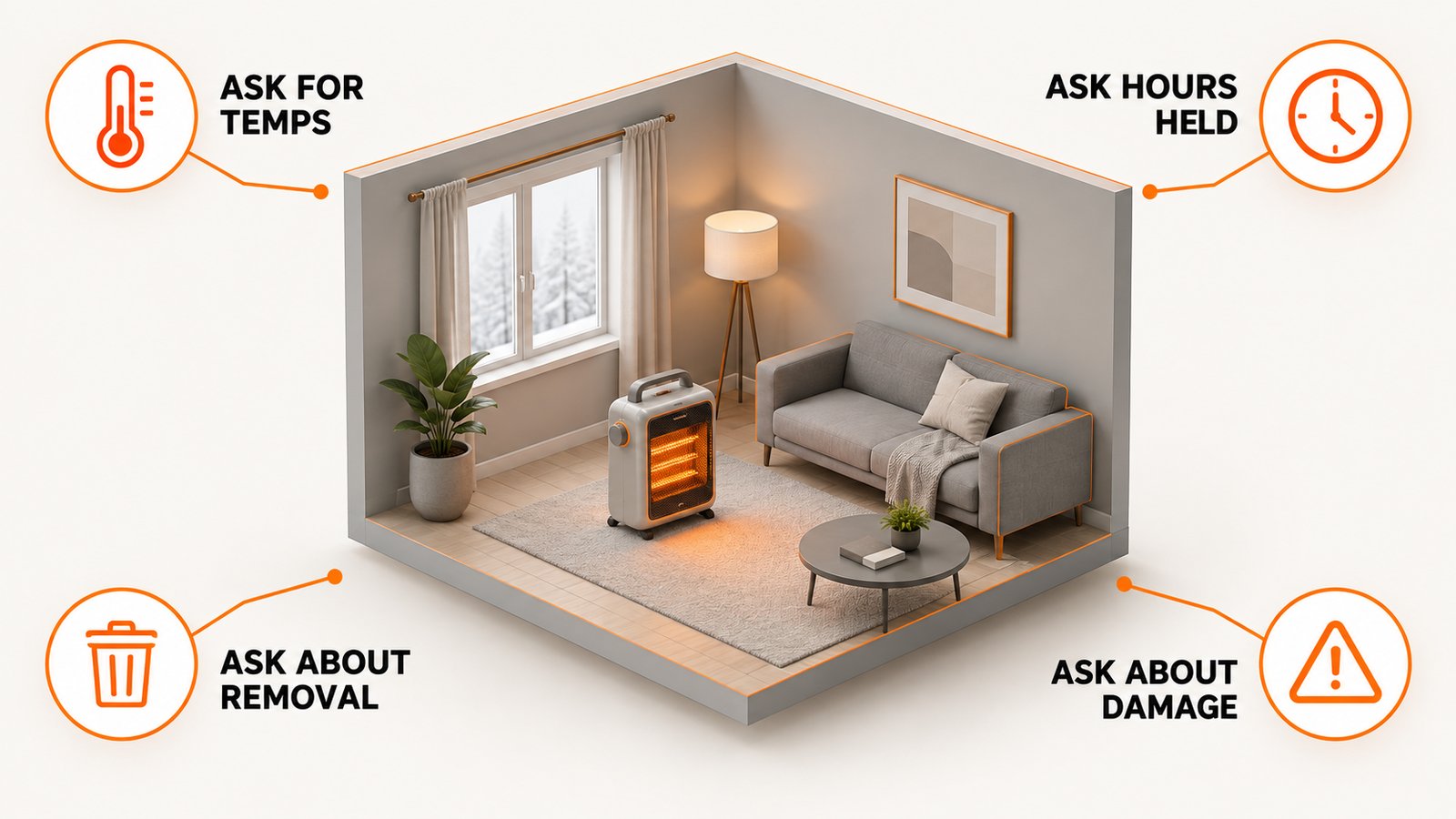
Some mold remediation companies offer a heat treatment: they raise the temperature of a room or a whole structure and hold it there. We couldn't find an independent, peer-reviewed study that sets a temperature and time which clears mold from a finished building, so any number a company quotes is theirs. Ask for it in writing.
Before you pay for one, ask these four questions:
- What target temperature do you hold, and for how many hours?
- How do you check that the heat reached inside walls, and not just the air?
- What will you remove or clean after the heat, since dead mold doesn't disappear?
- What in my home could the heat damage, and who pays if it does?
The leak or humidity that grew the mold in the first place is a separate item, and a heat treatment doesn't fix it. For what a normal job includes, read about the mold remediation process, and for pricing context see mold remediation cost.
Killing mold is not the same as removing it
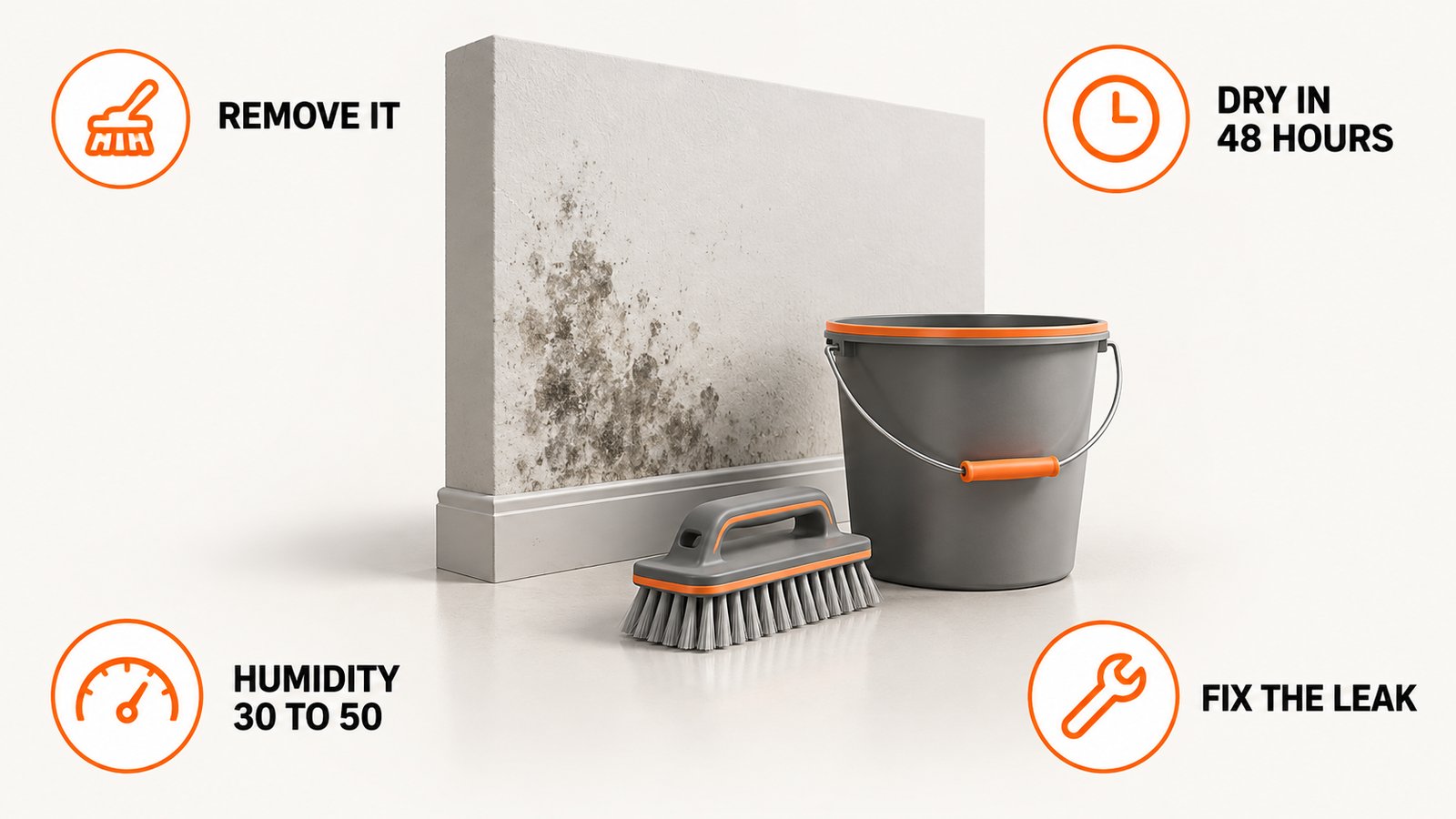
This is the point people miss. EPA says it plainly: dead mold may still cause allergic reactions in some people, so it is not enough to simply kill the mold. It must also be removed. EPA also says using a biocide that kills mold, chlorine bleach for example, is not recommended as a routine part of mold cleanup. Heat is in the same position. Even if it worked perfectly, you'd still have the mold to scrub off or the material to replace.
Then there's the water. Heat does nothing about the moisture source, and mold comes back where the dampness stays. EPA's guidance for buildings is to keep indoor humidity below 60%, ideally between 30% and 50%, and to clean and dry wet or damp spots within 48 hours. A dehumidifier can help with humidity, but a leak needs a repair. See how to prevent mold and how fast mold grows.
How to kill mold with heat safely
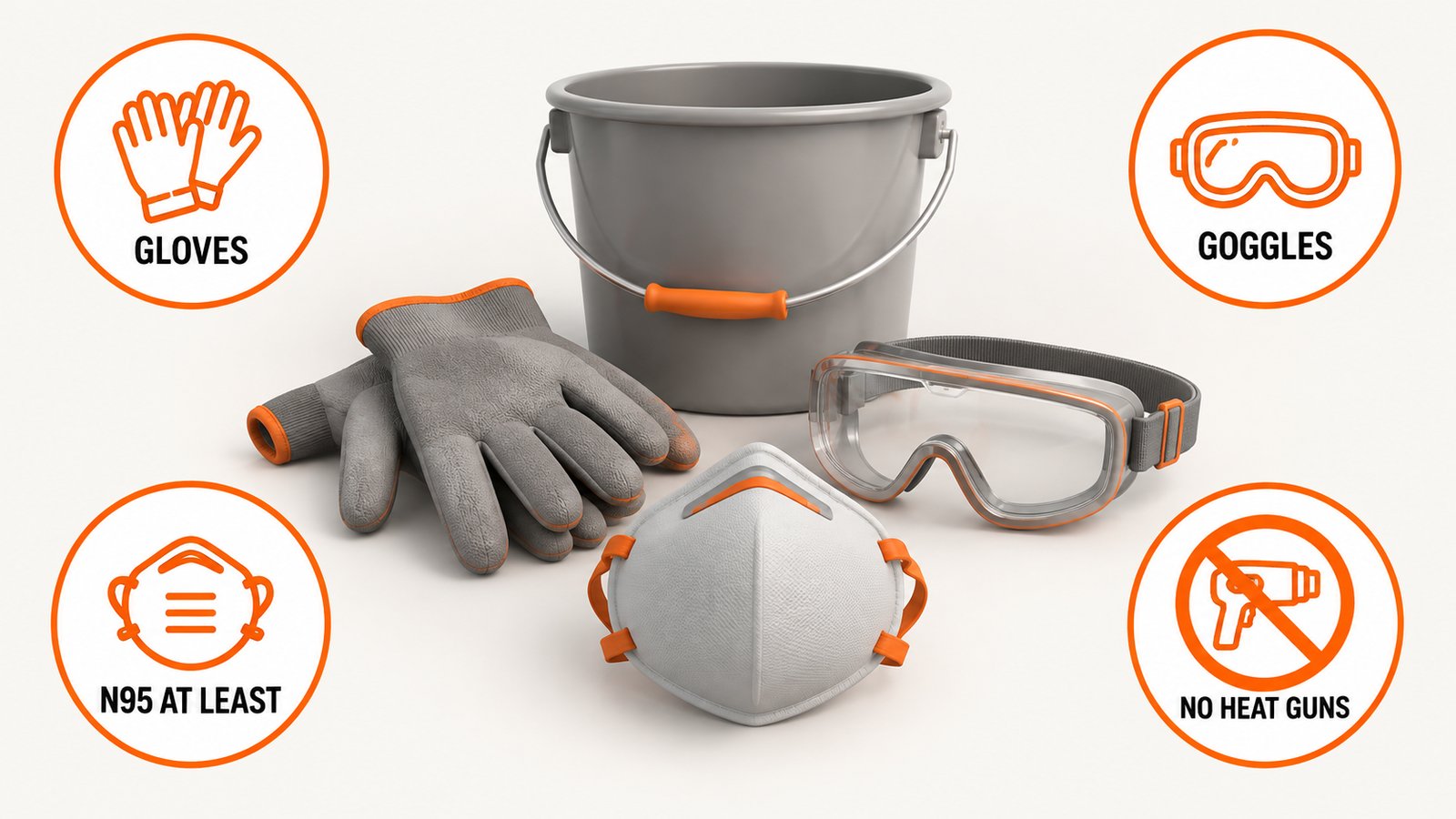
If you use heat, keep it to washable fabric and small hard items, as one step in a cleanup.
- Stop the water first. Find and fix the leak or humidity, or the mold returns.
- Put on protection. CDC says to wear gloves, a mask and goggles, and its disaster cleanup guide says an N-95 respirator at a minimum.
- Read the care label. If it doesn't allow heat, don't use heat.
- Clean the mold off. Wash fabric. Scrub hard surfaces with detergent and water.
- Add heat where it's safe. A hot dryer cycle for fabric that allows it, with the lint filter clean and the dryer attended.
- Dry everything completely and watch the spot over the next few weeks.
| Heat method | Where it fits | Main caution |
|---|---|---|
| Hot dryer cycle | Washed fabric that the care label allows | Dryer fires. Clean the lint filter and don't leave it running. |
| Boiling water | Small hard items that fit in a pot | Scalds. Never pour it on walls or carpet. |
| Steam | Not recommended on walls without a tested method | Burns and added moisture. |
| Hair dryer or heat gun | Drying a cleaned surface at a safe distance, never to "kill" | Scorching and fire. |
| Whole-room heat treatment | A professional job, with written temperatures and removal | Material damage, and mold left behind. |
When to call a pro
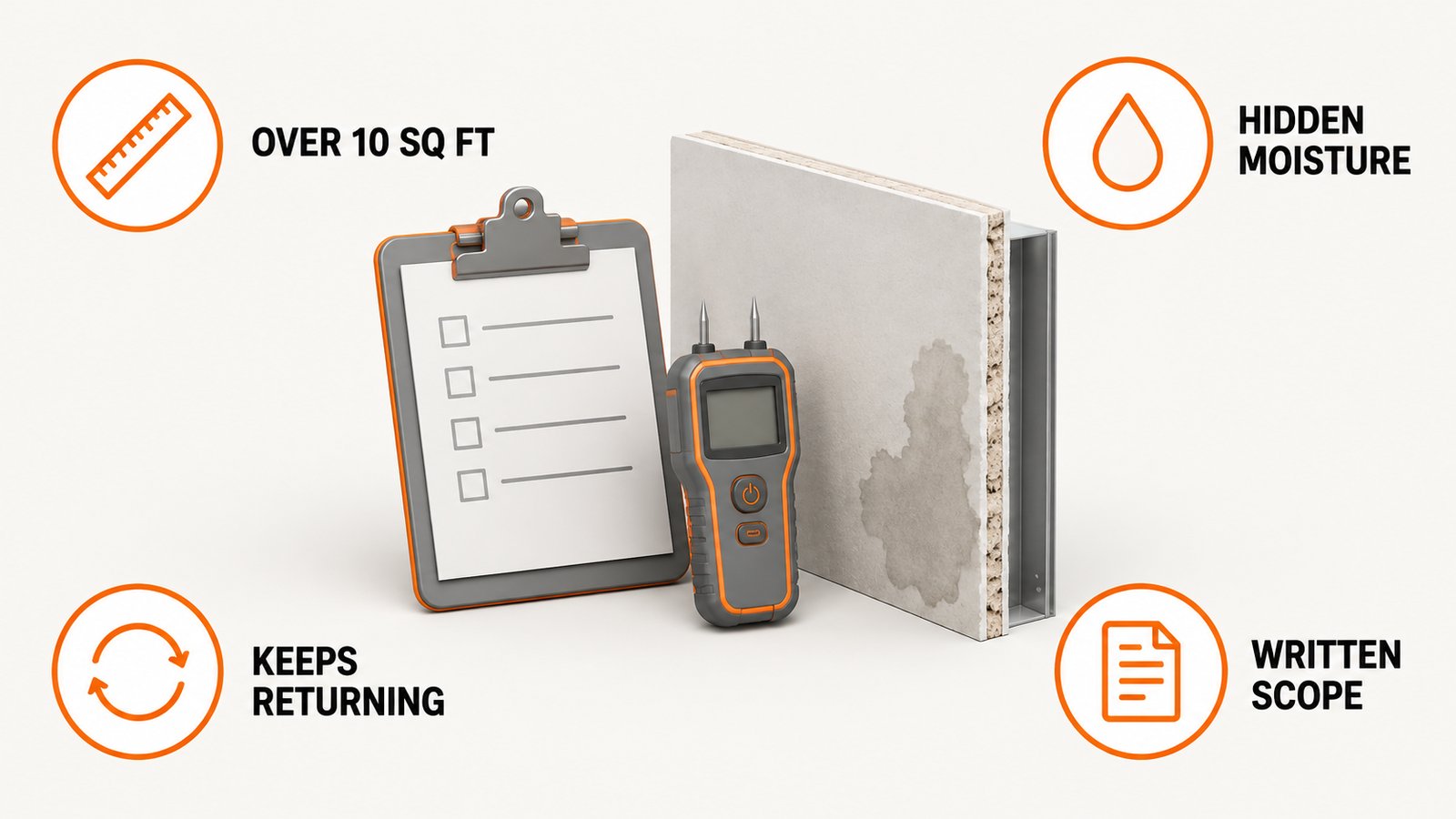
EPA's cleanup page says the area you can handle yourself is generally about 10 square feet, and points to its remediation guide for anything bigger or for a lot of water damage. Call a professional if the patch is larger, the moisture source is hidden, the growth keeps coming back, or the HVAC system may be involved. See mold inspection and mold specialists for who does what.
Ask for a written scope that covers the moisture fix, what gets removed and how the job is checked when it's done. A promise to "kill" mold isn't a scope.
Frequently asked questions
Does heat kill mold?
Yes, in a lab, if the temperature is high enough and held long enough. Heat doesn't remove dead mold, which EPA says can still cause allergic reactions, and it doesn't fix the moisture behind the problem.
Does boiling water kill mold?
It can on a small hard item that stays in the pot, since water boils at 212 degrees F (100 C). Poured on a wall or carpet it cools quickly and adds moisture. Boiling water also causes scalds.
Does heat kill mold on walls?
Not reliably. A hair dryer, space heater or heat gun doesn't hold a steady temperature on a wall, and mold in drywall and wood sits below the surface. EPA's approach for hard surfaces is to scrub with detergent and water and then dry completely.
What temperature kills mold?
The best figures we could verify are from a lab study: most molds tested were destroyed at 140 degrees F (60 C) within 5 minutes, but a few resisted longer, and at 122 degrees F (50 C) most survived an hour. Those were spores in liquid, so they aren't a rule for walls or fabric.
Does the dryer kill mold on clothes?
A hot dryer cycle can be a finishing step on washed fabric that the care label allows, but we can't verify the temperature the clothes reach, and a dryer doesn't prove clothes are mold-free.
Does a heat treatment from a remediation company kill mold?
It can, if the heat reaches the mold and is held long enough, but we found no independent study that sets a temperature and time for a finished building. Ask the company for its numbers in writing, and ask what it removes afterward.
If heat kills the mold, do I still need to clean it up?
Yes. EPA says dead mold may still cause allergic reactions in some people, so killing it is not enough and it must also be removed. Then fix the moisture source, or the mold is likely to return.
Can I kill mold with a hair dryer or heat gun?
We don't recommend it. Neither holds a measured temperature on a wall, and a heat gun can scorch paint and start a fire. Use detergent and water, then dry the area completely.
Sources
Every claim on this page traces to one of these. Links open the primary document.