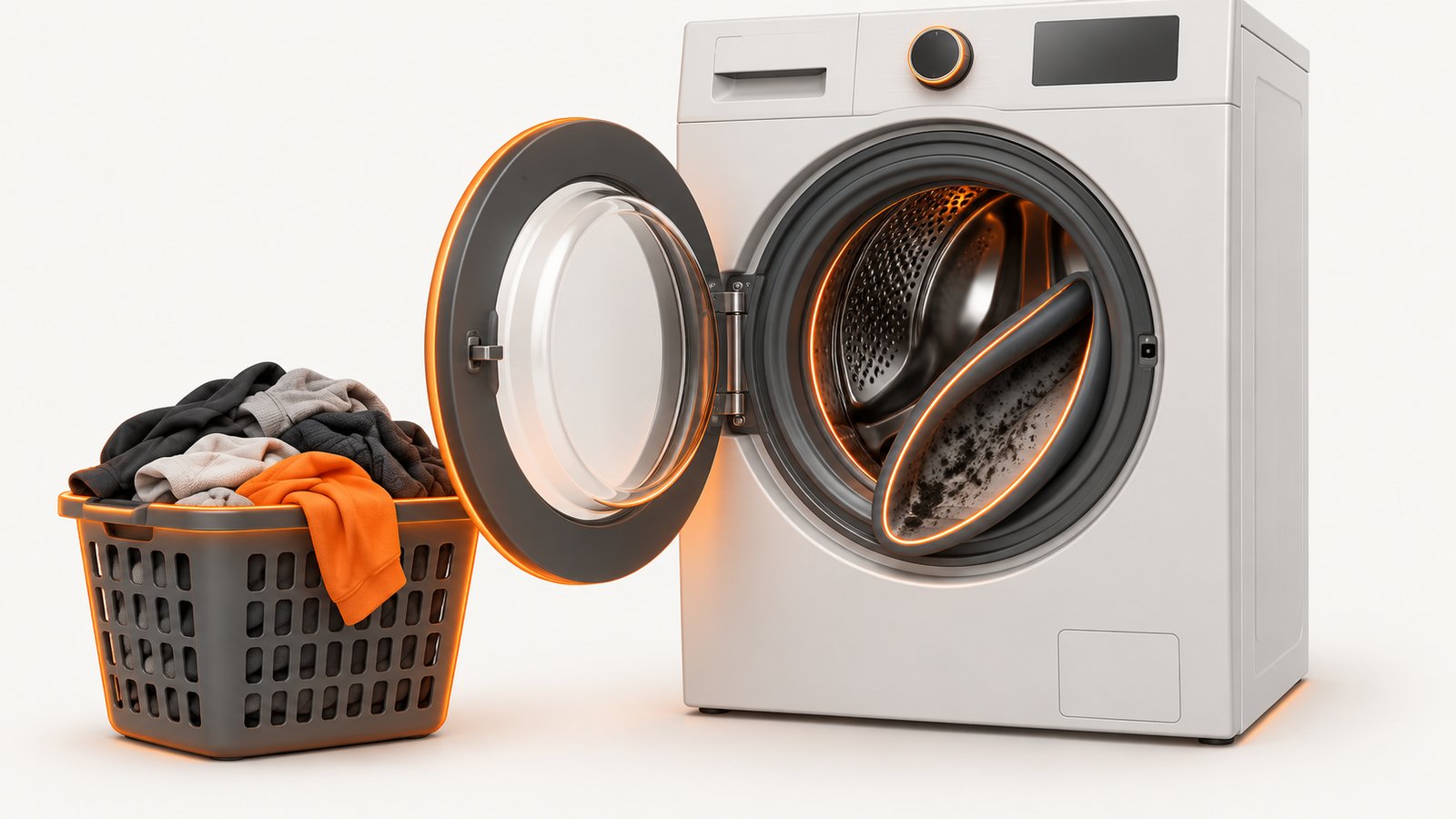
Why mold smell survives a normal wash
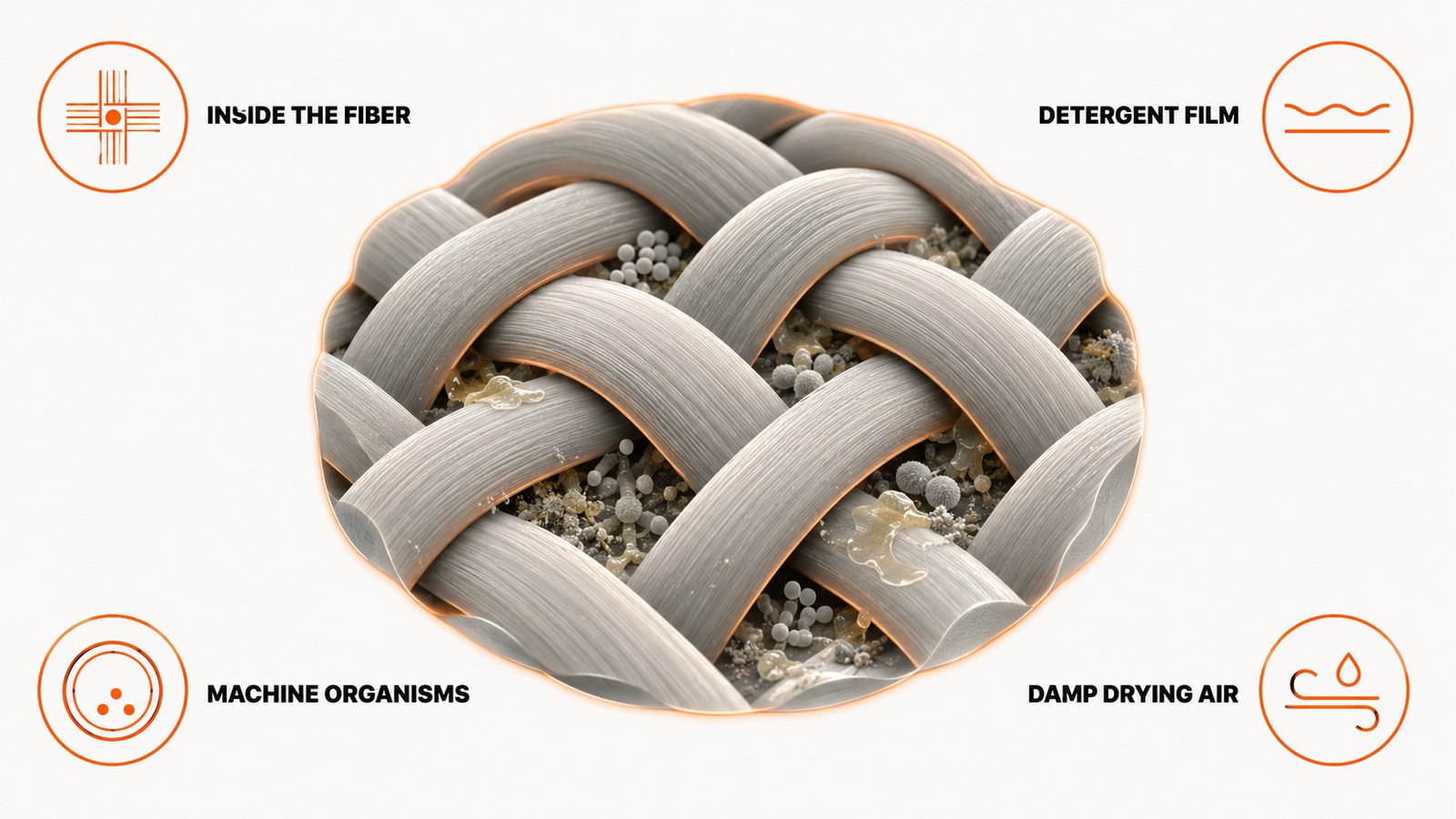
The smell is not a stain. It is a set of volatile compounds produced by living organisms on the fabric, which is why a wash that removes the visible mark can leave the odor completely intact.
Laundry science has gotten specific about this. A 2025 study in BMC Biology tracked worn shirts through wearing, washing and drying and found that washing reduced known malodor compounds while the count of intact bacteria on the clothing went up, because skin organisms were displaced by the washing machine's own community. The same work found that humid drying conditions produce characteristic odors and favor particular Gram-negative bacteria. In plain terms: the machine reseeds the clothes, and a slow damp dry finishes the job.
Detergent residue makes it worse. Fabric softener and undissolved detergent leave a film that traps body oil and moisture, and that film is food. This is why a garment can come out of the wash smelling clean, sit folded for a week and smell musty again with no new exposure at all.
The other half of the problem is time. EPA's rule for materials is that wet items dried within 24 to 48 hours will in most cases not grow mold. A gym bag left closed over a weekend or a load left in the drum overnight is well past that window before the wash ever starts.
The wash that actually removes the smell
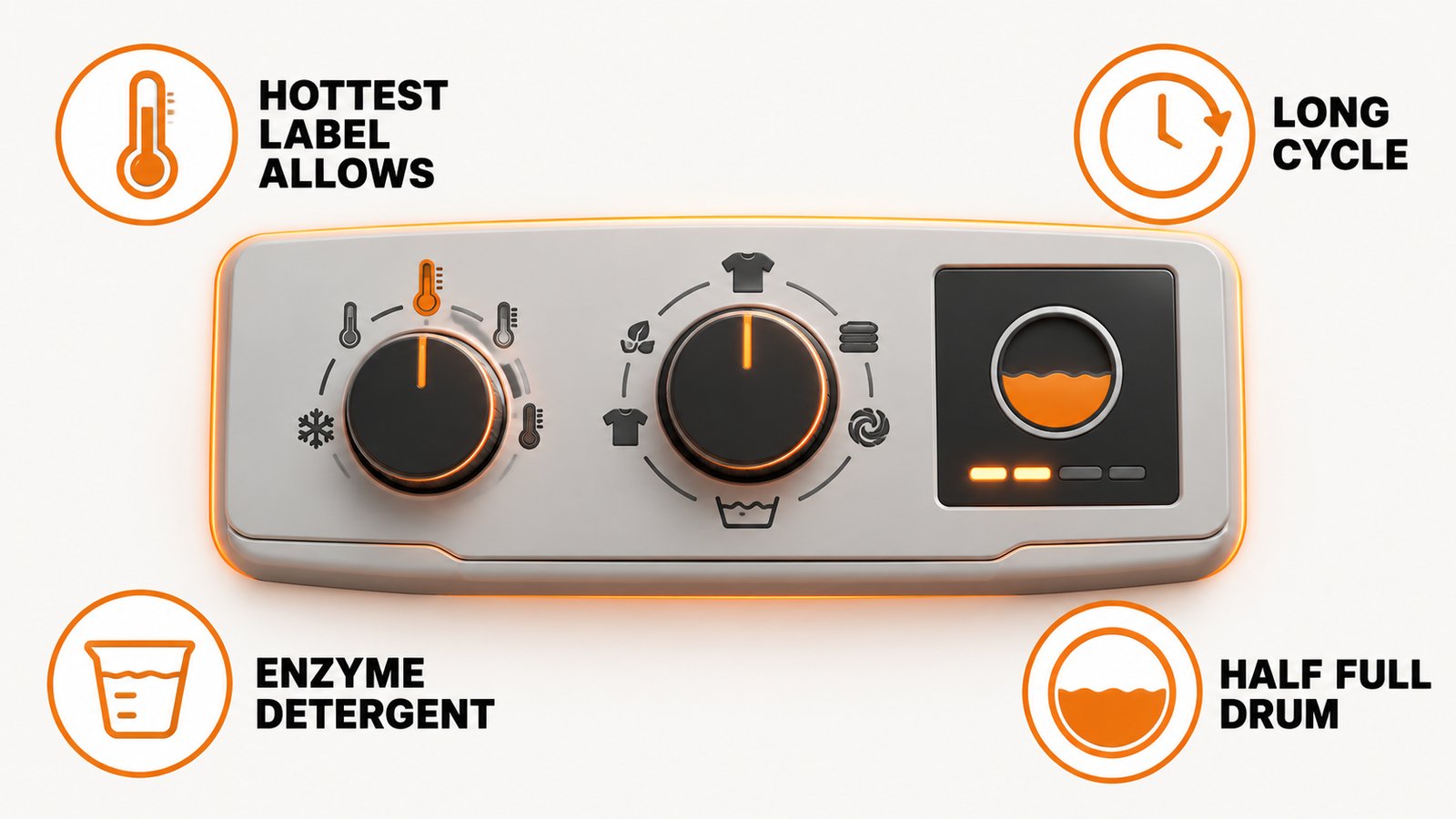
Temperature, time and detergent type all trade against each other, and you can win with any two of them. A 2014 study in the Journal of Applied Microbiology washed contaminated cotton swatches at temperatures from 20 to 60 degrees Celsius, about 68 to 140 degrees Fahrenheit, and found the temperature needed for decontamination depended on both the wash cycle time and the detergent. Detergents containing activated oxygen bleach improved hygiene performance even at the lowest temperatures, and both higher temperature and oxygen bleach reduced transfer of organisms onto clean items in the same load.
That study is the whole method:
- Sort the musty items into their own load. Cross-contamination onto clean laundry is measurable, and it is the reason one forgotten towel can make a whole load smell.
- Use the hottest water the care label allows. Check the label first. Hot water shrinks wool, sets some stains and warps synthetics.
- Pick the long cycle, not the quick one. Enzymes and oxygen bleach both need dwell time. A 30 minute express cycle is the most common reason a wash fails on odor.
- Use an enzyme detergent, and add oxygen bleach if the label allows. That combination is what compensates when you cannot run hot water.
- Do not overfill the drum. Fabric needs room to move through the water. A packed load washes the outside of a wad of clothing.
- Run a second rinse. Residue holds odor, so getting the chemistry back out matters as much as getting it in.
If the fabric also carries visible growth rather than only a smell, treat that first. Our guide to mold on clothes covers the removal side, including what a stain does to the fabric underneath.
Vinegar, baking soda and oxygen bleach compared
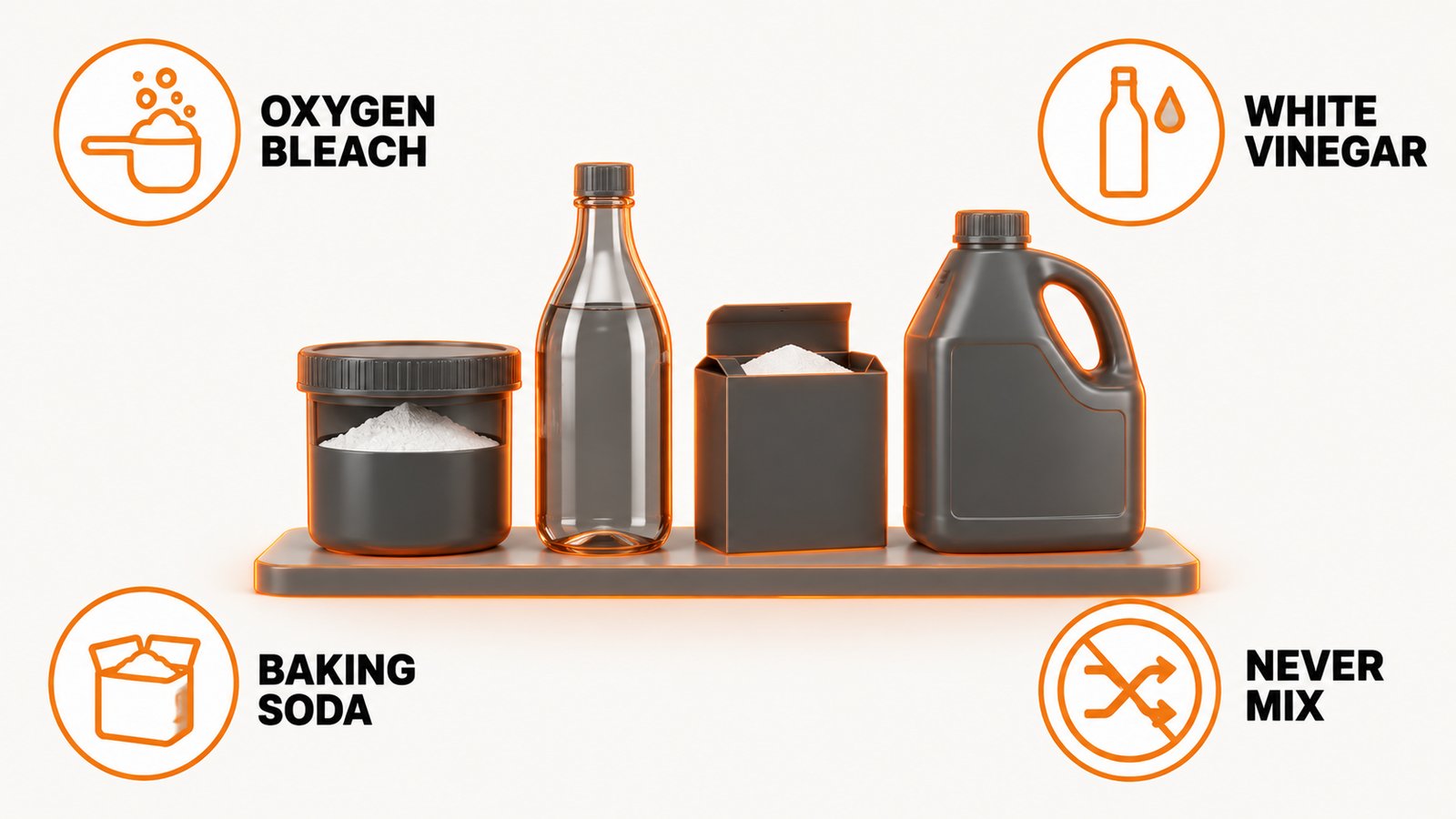
Every laundry additive gets sold as a mold cure. They do different jobs and only one of them has laboratory evidence behind it for hygiene at low temperature.
| Additive | What it does in the drum | Best for | Watch out for |
|---|---|---|---|
| Oxygen bleach, sodium percarbonate | Releases hydrogen peroxide in the wash water. The one additive with published evidence that it lifts hygiene performance at low temperature. | Colors and whites, cold or warm loads, and stopping transfer to clean items in the same load. | Needs a long enough cycle to dissolve and work. It is not instant. |
| White vinegar, about 1 cup | Acidifies the water, cuts detergent and mineral residue that holds smell, softens fibers. | Towels and cottons that smell after they dry. | Never in the same load as chlorine bleach. Skip it on delicate or rubberized fabric. |
| Baking soda, about half a cup | Buffers the wash water and absorbs odor compounds. USDA uses the same baking soda solution for cleaning a refrigerator interior. | A pre-soak, and for gym clothes that hold smell in synthetic fiber. | Mild. On its own it deodorizes more than it cleans. |
| Enzyme detergent | Breaks down the protein and oil residue that feeds the organisms making the smell. | Every load. This is the base, not an add-on. | Enzymes need dwell time, so a fast cycle wastes them. |
| Chlorine bleach | Strips color and kills organisms on contact. | White cotton only, and only when the label allows it. | EPA does not recommend it as routine practice, and never mix it with ammonia cleaners or vinegar. |
Two combinations to avoid. Vinegar and chlorine bleach in the same load can release chlorine gas, and EPA warns specifically against mixing chlorine bleach with cleaners that contain ammonia. If you want the full argument for each cleaner on a surface rather than in a drum, see does vinegar kill mold, does bleach kill mold and baking soda for mold.
A useful sequence when one item is stubborn: soak it for an hour in warm water with oxygen bleach or half a cup of baking soda, drain, then run the full hot cycle with enzyme detergent. The soak breaks up the residue film, and the wash removes what the soak loosened.
Drying is the step that decides it
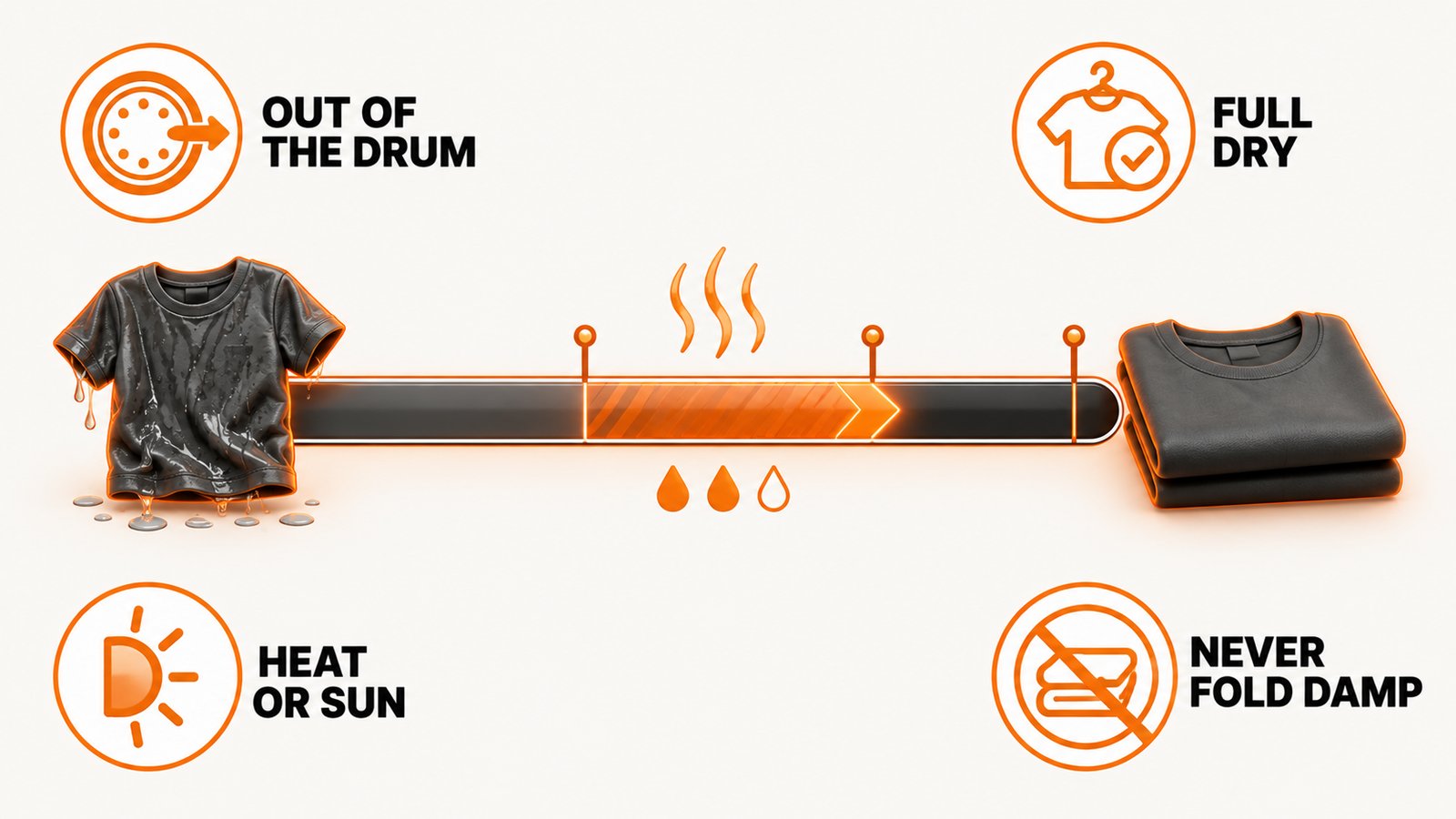
More loads fail here than in the wash. The BMC Biology work found that extended humid drying was associated with its own odor profile, so a garment that washed perfectly and then dried slowly in a closed room can come out smelling worse than it went in.
Get it out of the drum immediately. A finished load sitting in a warm, wet, sealed cylinder is the single easiest way to recreate the problem. If it sat for hours, rewash it rather than drying it.
Dry it all the way through. Thick seams, waistbands and towel hems hold water long after the flat panels feel dry. Fold something that is still cool to the touch and you have made a small damp package inside a closed drawer.
Use heat or sunlight. A dryer on a normal heat setting finishes the job fast. Outdoor line drying works well in dry air and moving air, less well on a humid day, and an indoor rack in a closed bathroom is the worst of both.
Do not put it away in a damp room. EPA asks for indoor humidity below 60 percent and ideally between 30 and 50 percent. A closet on an exterior wall in a humid house will re-scent clean laundry within a week, which is covered in mold in the closet.
If every load smells, the machine is the source
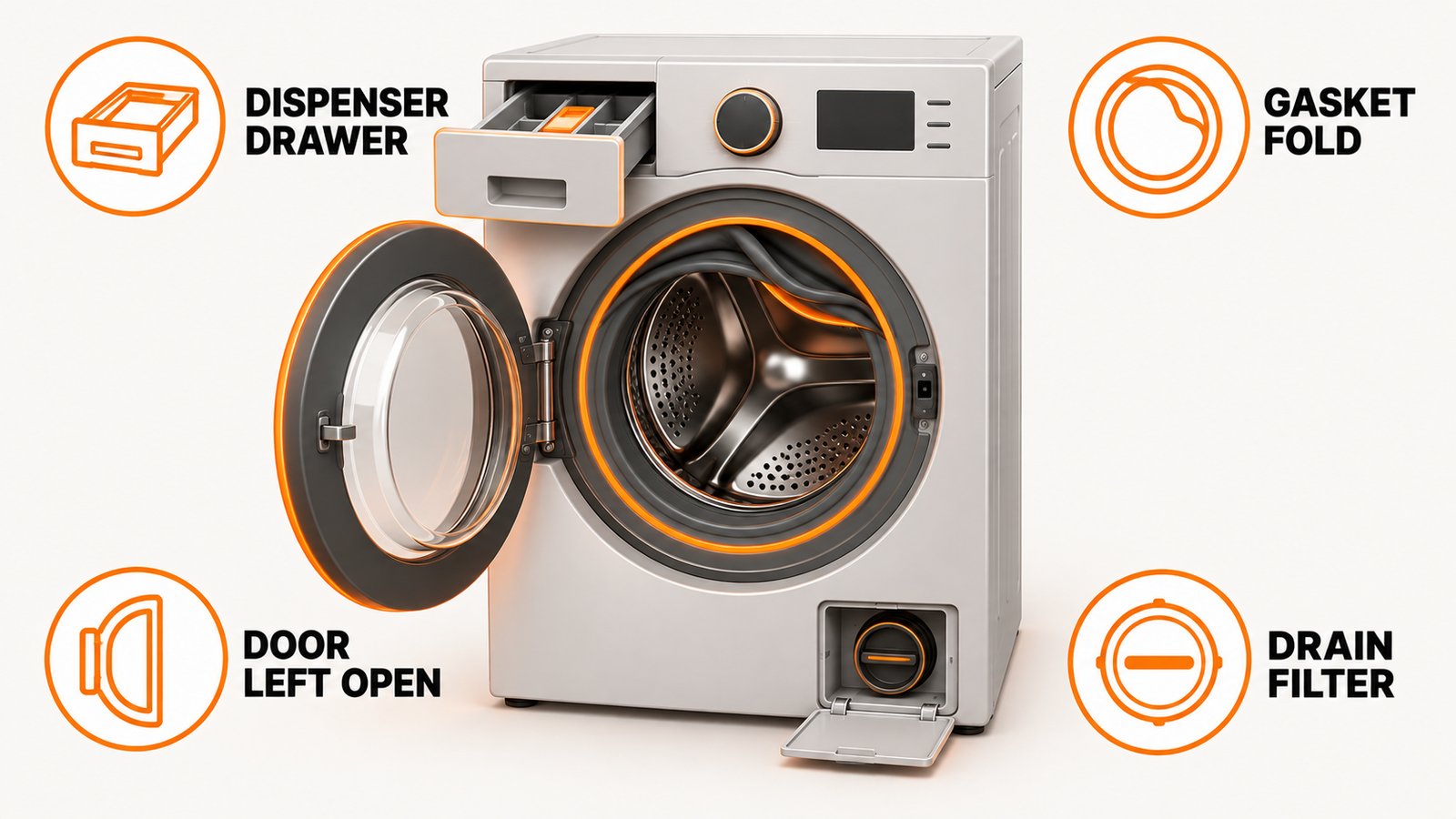
One musty shirt is a laundry problem. Every load coming out musty is an appliance problem, and no amount of vinegar in the drum fixes a machine that is reseeding each wash.
- The door gasket. On a front loader, fold the rubber boot back and look in the fold. Standing water and dark growth live there, and it is the first place to check.
- The detergent drawer. Pull it out completely and wash it in the sink. Softener residue in the tray is a reliable source.
- The drain pump filter. Usually behind a small panel at the bottom front. It traps lint, hair and water.
- The tub itself. Run the machine's clean cycle, or an empty cycle at the hottest setting with oxygen bleach. Repeat weekly for a month if the smell has been there a while.
- Leave the door open between loads. A sealed damp drum never dries. This one habit prevents most repeat cases.
Our guide to mold in a washing machine covers the appliance in detail, including what the drain and the detergent choice have to do with it.
What to save and what to give up
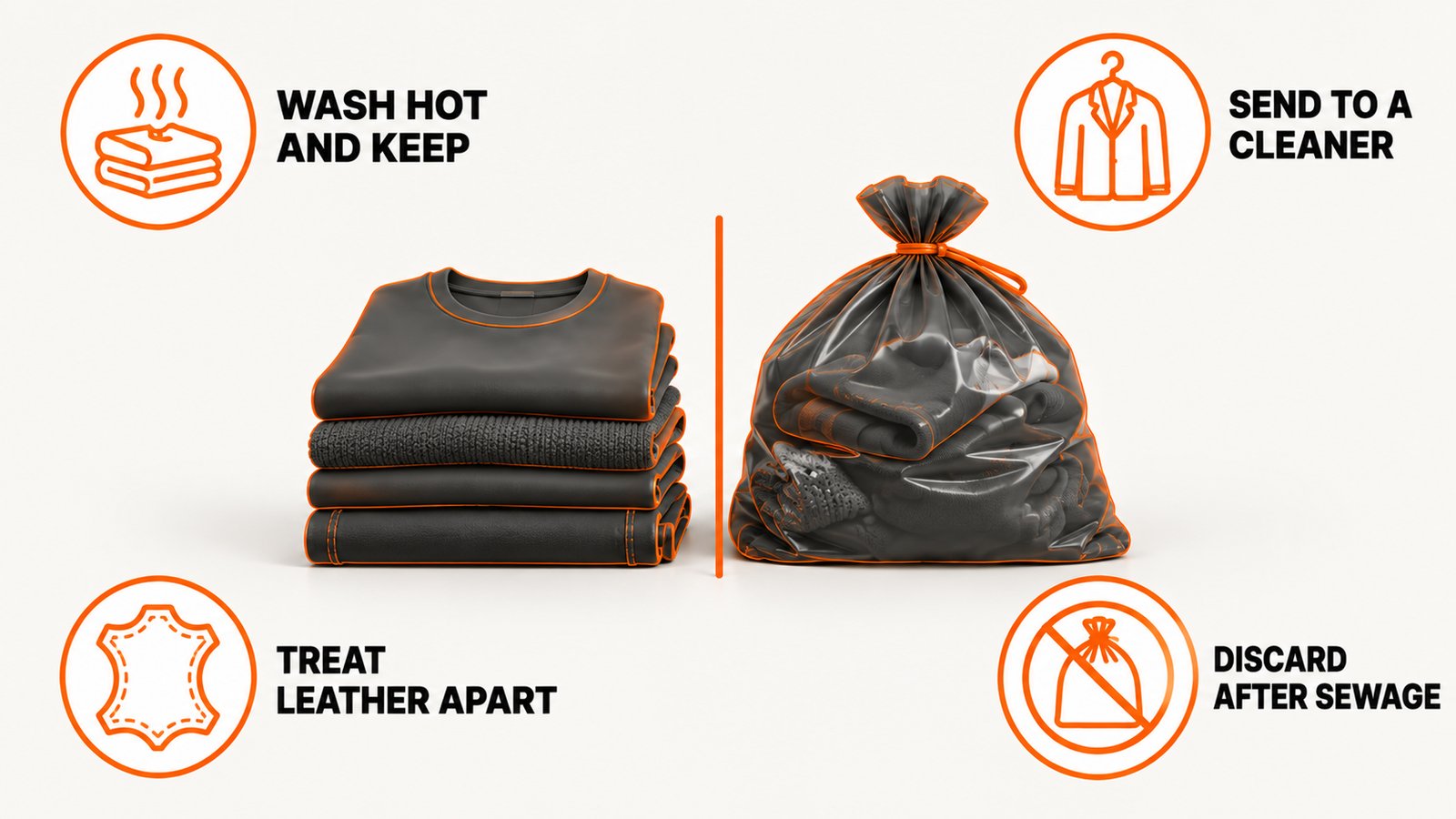
Most clothing is salvageable. The exceptions come down to what the item is made of and what soaked it.
Usually saved: cotton, linen, denim and most synthetics, if you can wash them hot and dry them completely. Two or three cycles is normal for a badly stored item.
Take to a specialist: wool coats, structured tailoring, and anything dry-clean only. Tell the cleaner exactly what happened rather than dropping it off silently, because the treatment differs.
Handle separately: leather and suede absorb and stain, and household laundry chemistry damages them. See mold on leather before you put water on it.
Consider giving up: anything that went through sewage or flood water, and heavily colonized padded items where the growth is inside the filling. EPA's position on materials is that absorbent or porous items may have to be thrown away when they become moldy, because growth fills the spaces inside the material and can be impossible to remove completely. The agency also says outright that damage caused by sewage or other contaminated water is a job for a professional.
One more thing worth knowing before you decide: EPA notes that dead mold can still cause allergic reactions in some people, so killing it is not the finish line. It has to come out of the fabric.
When to call a pro
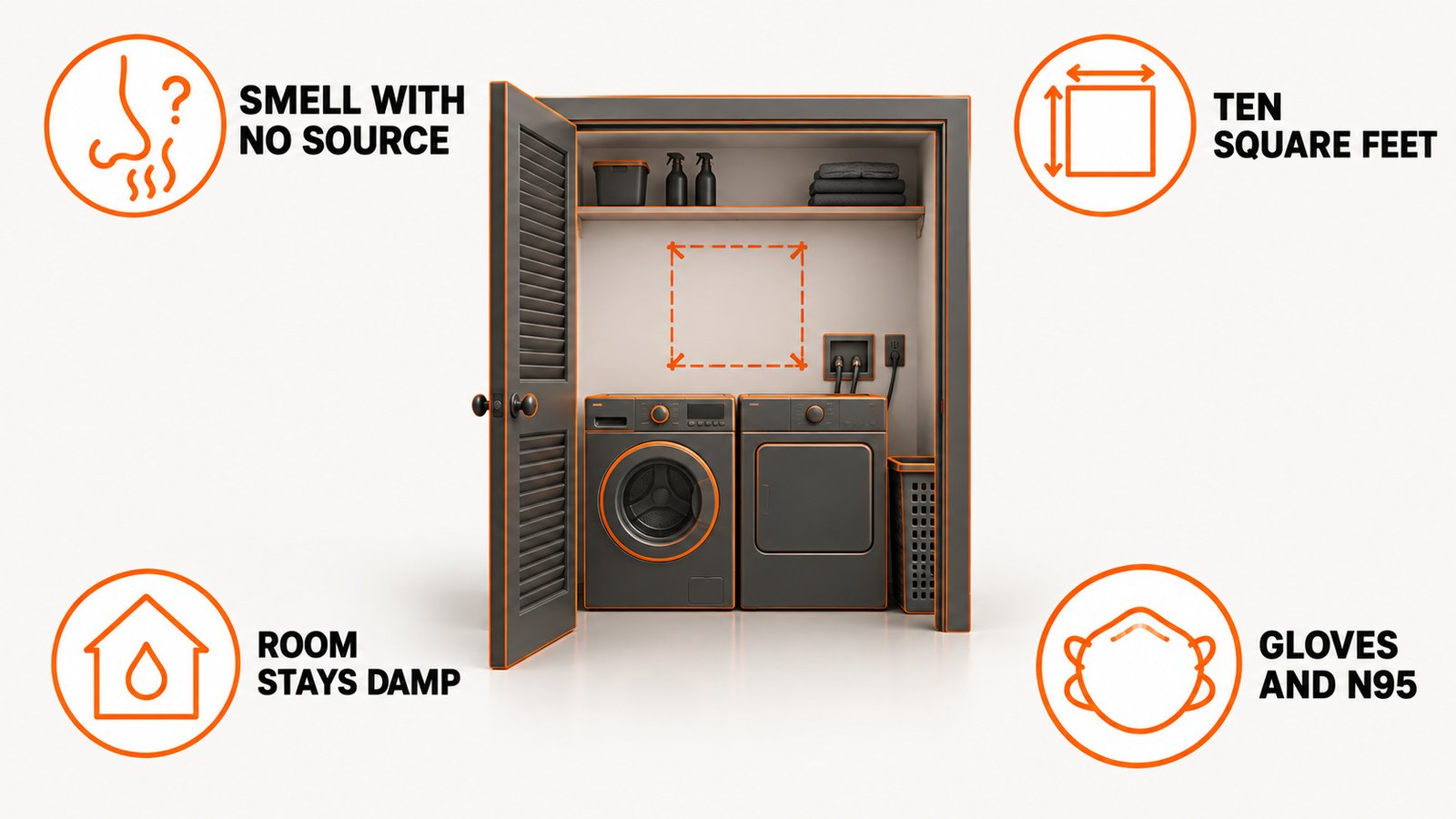
Clean laundry that turns musty again in the same room is telling you about the room.
Call a qualified remediation professional when the smell is in the space. EPA says you may suspect hidden mold if a building smells moldy but you cannot see the source, and it puts the do-it-yourself line at roughly 10 square feet of growth, less than about a 3 foot by 3 foot patch. Past that, or after significant water damage, the guidance is to bring in a contractor with mold experience who follows EPA's remediation guide, the ACGIH guidelines or the IICRC standard. Our page on a musty smell in the house covers how to trace it.
Call a plumber or appliance technician for a laundry room that stays damp. A leaking supply line, a slow drain or an unvented dryer keeps the whole room above the humidity range EPA asks for, and no wash routine survives that. Prevention across the house is covered in how to prevent mold.
Wear the right protection while you handle badly affected laundry. EPA's cleanup guidance is gloves, goggles without ventilation holes, and an N-95 respirator, and it advises against touching moldy items with bare hands.
Call a clinician about a person. CDC states that exposure to damp and moldy environments may cause a variety of health effects or none at all, and that people with asthma or a mold allergy may have severe reactions. Symptoms are a medical question, and this page will not answer one.
Frequently asked questions
Why do my clothes still smell musty after washing?
Usually because the cycle was too short, too cold, or the machine itself is the source. Research on domestic laundering found the temperature needed to decontaminate fabric depends on both cycle time and detergent type, and that washing can leave a higher intact bacterial load on clothing as machine organisms replace skin organisms. Run a long hot cycle with an enzyme detergent plus oxygen bleach, then clean the machine gasket, drawer and drain filter.
Does vinegar get mold smell out of clothes?
It helps and it is not the whole answer. About 1 cup of white vinegar in the wash cuts the detergent and mineral residue that holds odor, and it acidifies the water. It does not replace a hot cycle or a proper detergent, and it must never share a load with chlorine bleach. For badly affected items, oxygen bleach has better published support for hygiene performance at low wash temperatures.
How many times should I wash clothes that smell of mold?
Two or three cycles is normal for something that sat damp for days. Wash, then smell the item while it is still wet and again once it is fully dry, because odor can be undetectable when wet and obvious when dry. If a third full cycle changes nothing, the problem is either the machine or growth inside padding or a lining that laundering cannot reach.
Can you get mold smell out of clothes without washing them?
Not reliably. Airing an item outdoors and using baking soda in a sealed bag can reduce the smell, and neither removes what is producing it. Since the compounds come from organisms living in the fiber, an actual wash and a complete dry are what end it. Treat no-wash methods as a stopgap for items you cannot launder until a specialist handles them.
Should I use hot water or cold water on musty laundry?
Hot, if the care label allows it, because temperature is one of the three levers that decide hygiene performance. When the label rules out hot water, compensate the way the research says to: use a detergent containing activated oxygen bleach and extend the cycle time. That combination raised hygiene effectiveness even at the lowest tested temperatures.
Why does my washing machine make clothes smell?
Because water sits in it. The gasket fold on a front loader, the detergent drawer and the drain pump filter all hold residue and moisture between loads, and a sealed door never lets the drum dry. Clean all three, run an empty hot cycle with oxygen bleach, and leave the door open between loads.
When is a musty smell a house problem instead of a laundry problem?
When clean laundry turns musty again in the same room, or the smell is there with no laundry present. EPA says you may suspect hidden mold if a building smells moldy but you cannot see the source. At that point you are looking for a moisture problem in the room, not a better detergent, and growth beyond about 10 square feet calls for a professional.
Sources
Every claim on this page traces to one of these. Links open the primary document.