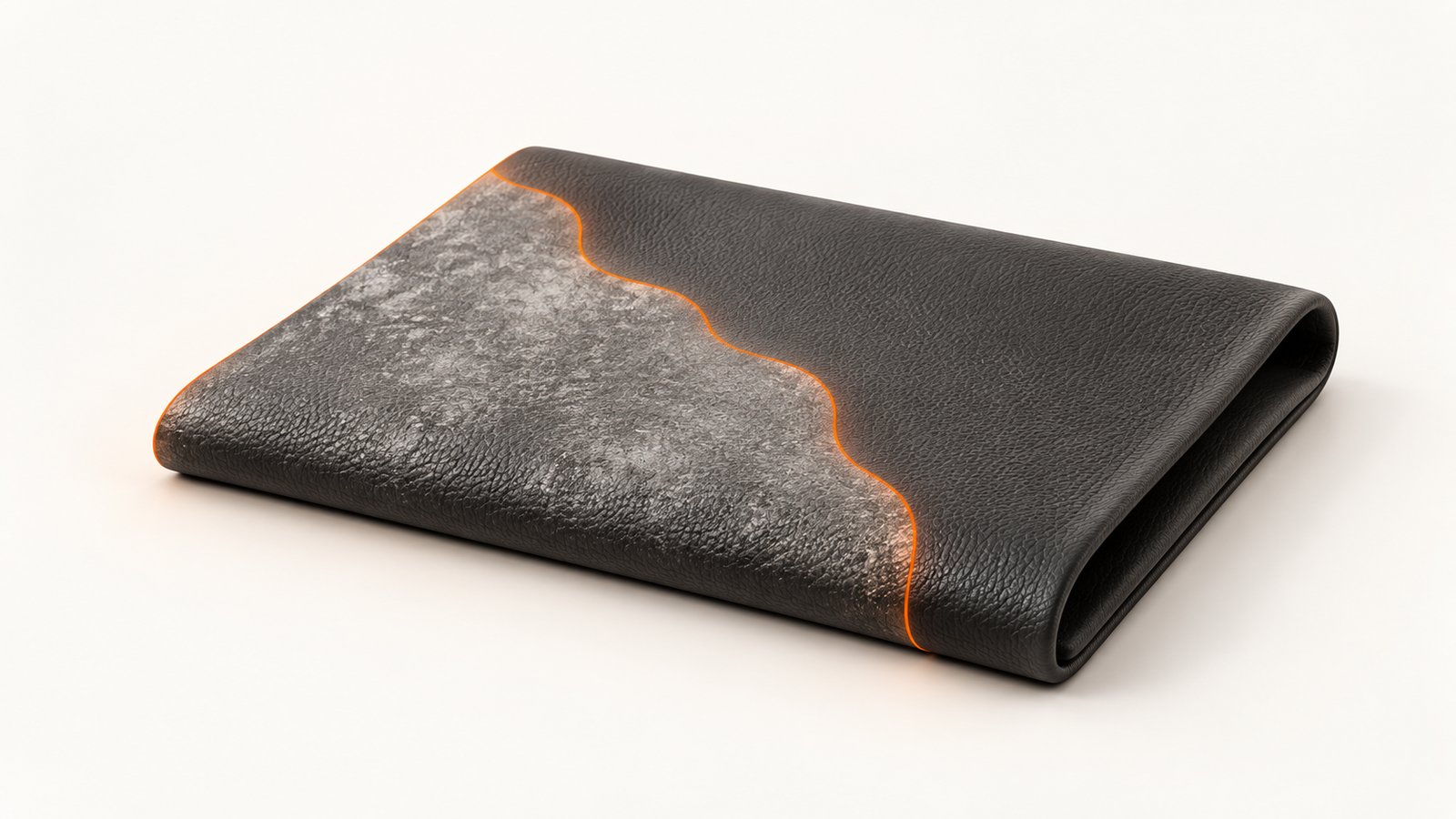
Why mold grows on leather
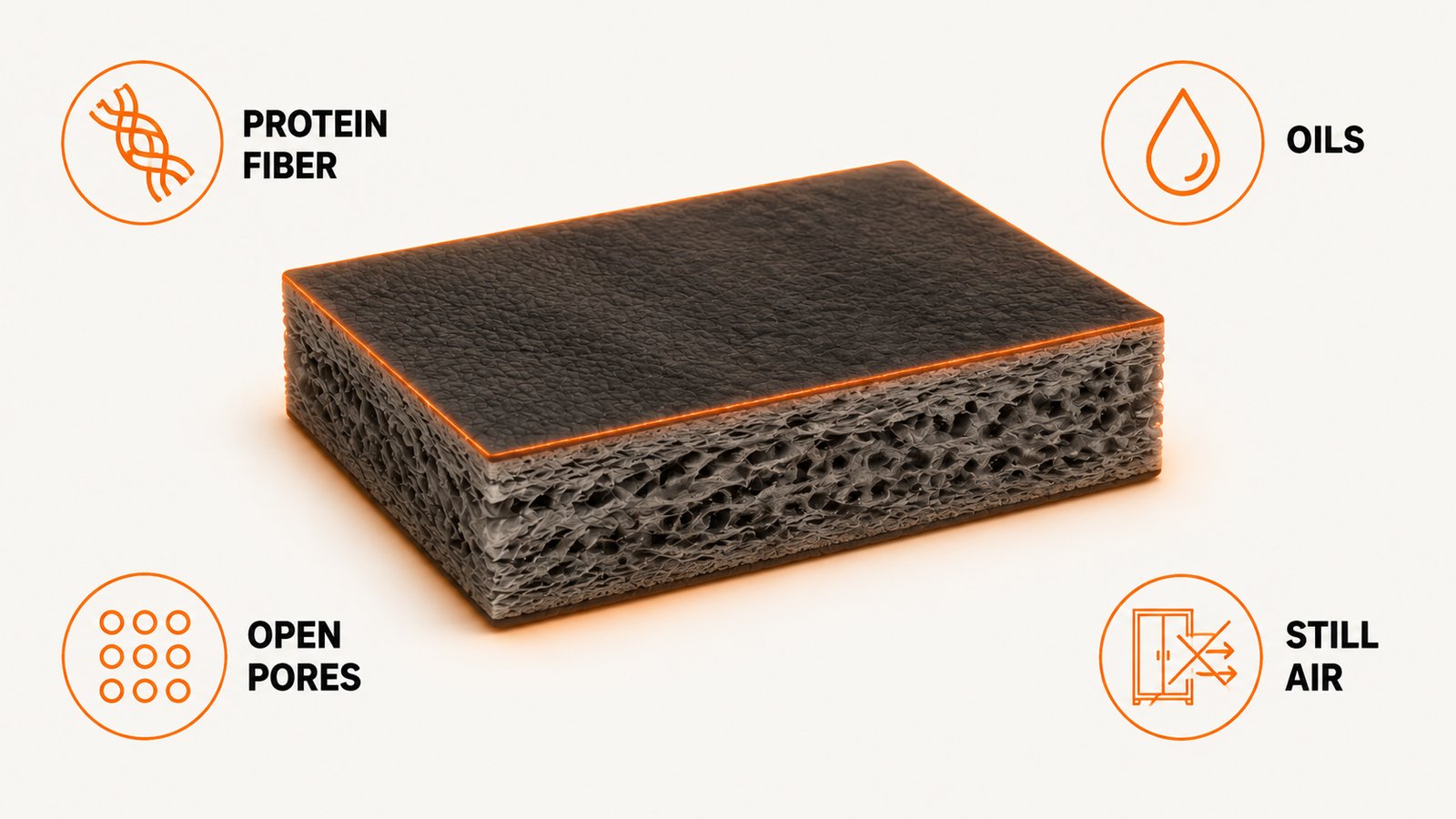
Leather is animal skin, which means it is a protein structure with oils and finishing agents worked into it. That is food. The Canadian Conservation Institute puts collections materials in order of vulnerability and names damp cellulosic and proteinaceous materials as the most affected, because they are entirely digestible, relatively soft, and hard to clean at the porous cellular level where microorganisms contaminate an object.
The humidity threshold is the number worth remembering. CCI states that once hyphae develop, even the most hardy species require moisture levels of at least 65 percent relative humidity to continue to grow, that growth becomes vigorous above 75 percent, and that it is strongly active above 85 percent. A closet on an exterior wall in a humid month sits in that band without anybody noticing.
Then there is the storage pattern, which turns a vulnerable material into a ruined one. Leather goods hang still for months in a dark closed space, often inside a plastic garment bag or a zipped case. No airflow, no light, no inspection.
Tanning matters too, and there is published work on it. A study in Scientific Reports tested leathers prepared by several traditional tanning methods and found that vegetable-tanned, aluminum-tanned, and iron-tanned leathers resisted fungal infection well, while oil-tanned and smoke-tanned leathers performed relatively poorly. Different jackets genuinely have different vulnerability, and a soft oiled leather is on the wrong side of it.
None of that means the item is doomed. It means the item is a moisture indicator and the closet is the real subject. Start there and see mold in a closet.
White fuzz, green patches, or a mildew stain
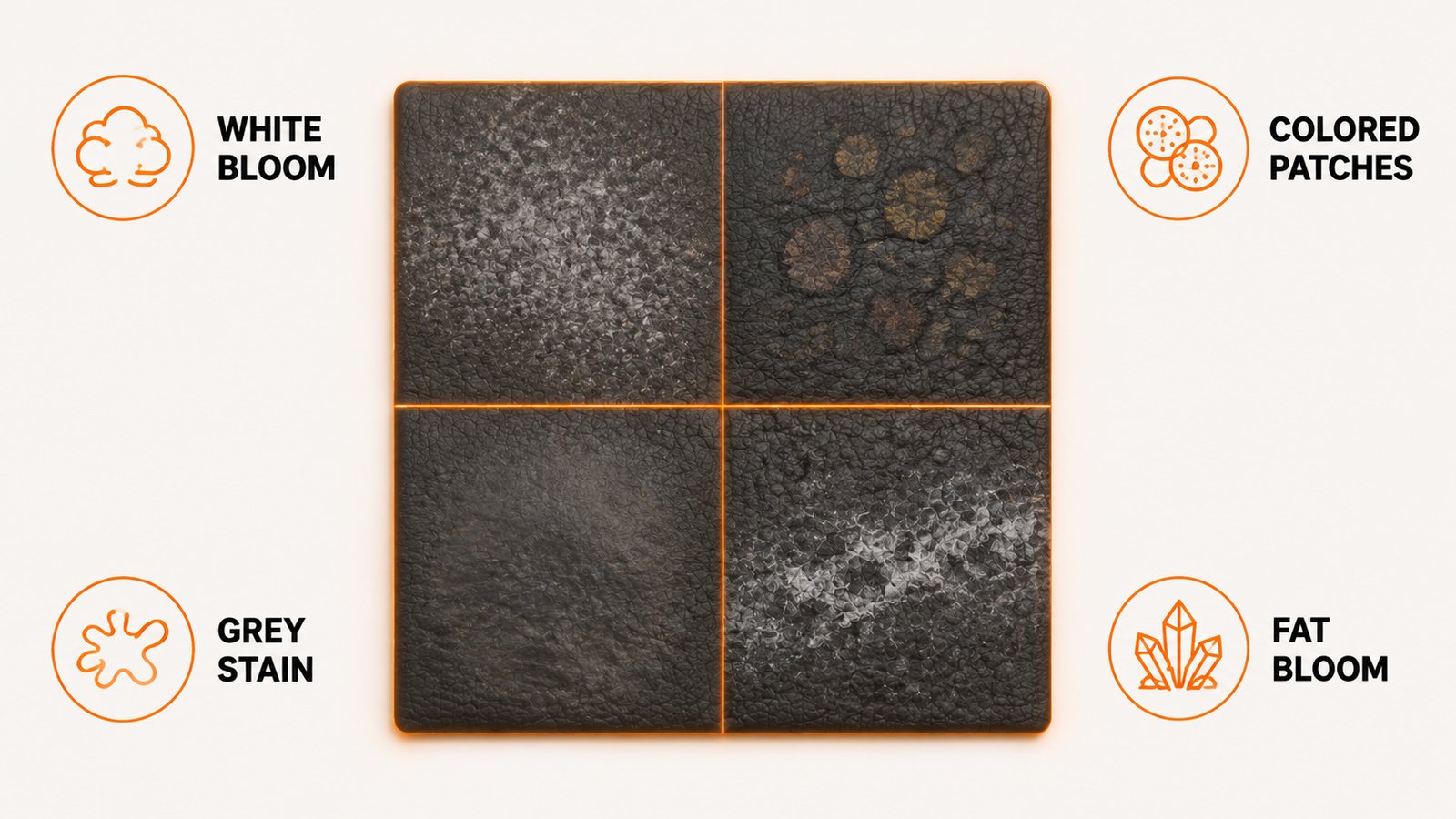
Four different things get called mold on leather, and one of them is not growth at all.
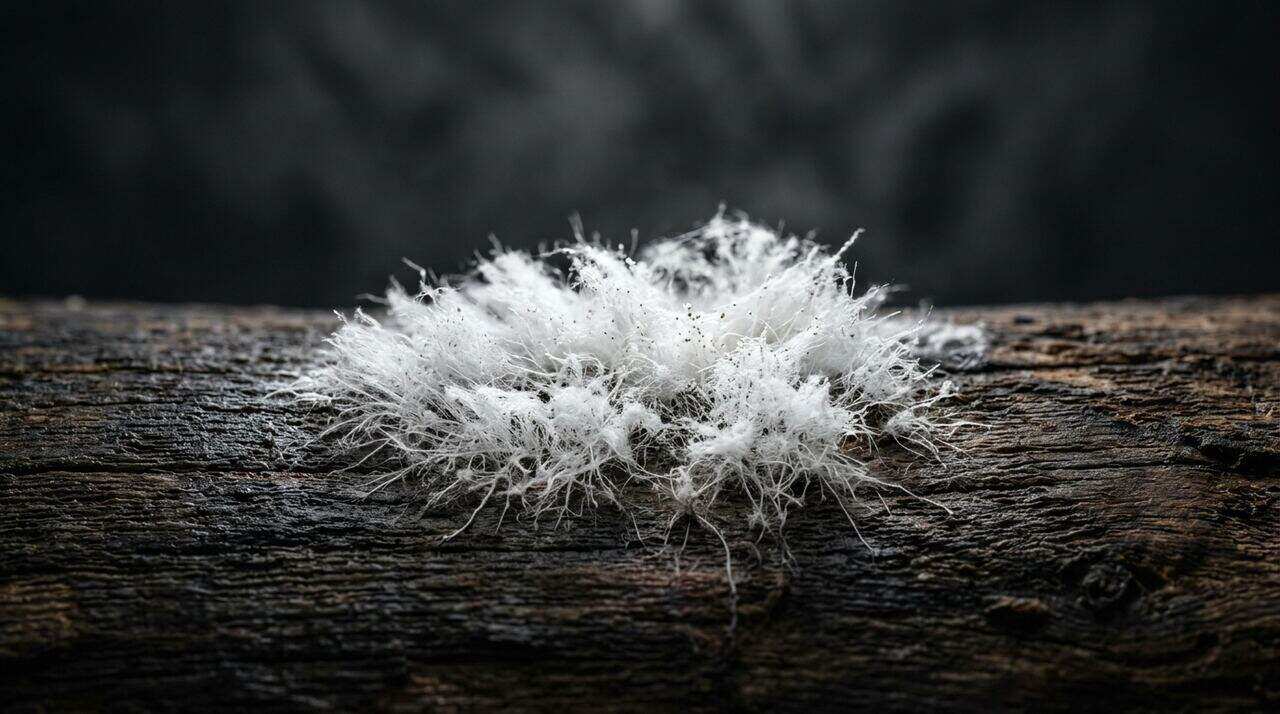
- A fine white or gray bloom that sits on the surface and lifts with a soft brush. This is the classic early growth on a stored jacket or bag. It has a faintly furry look under angled light and it comes back within weeks if the storage does not change.
- Green, blue-green, or black patches with a defined edge. Better established growth that has had longer or damper conditions. Colors like these are covered on green mold and white mold.
- A flat gray or brown stain with no texture, often on a lining or a pale panel. Usually a mark left after growth has been rubbed off or dried out, so it is a dye problem more than a live one.
- A waxy white haze that will not brush off. This is fat bloom, the fats and oils in the leather migrating to the surface in cool storage. It is not fungal, it usually responds to gentle warmth and buffing, and treating it as mold is how people wreck a good jacket with a cleaner it never needed.
You cannot identify a species by looking and you do not need to. CDC's guidance is that you do not need to know the type of mold and that all molds should be treated the same with respect to potential health risks and removal. The distinction that matters on leather is live growth versus a stain versus fat bloom, and texture tells you that: growth lifts, a stain does not, and fat bloom smears rather than flakes. Related identification limits are on mold vs mildew and types of mold.
How to remove mold from leather
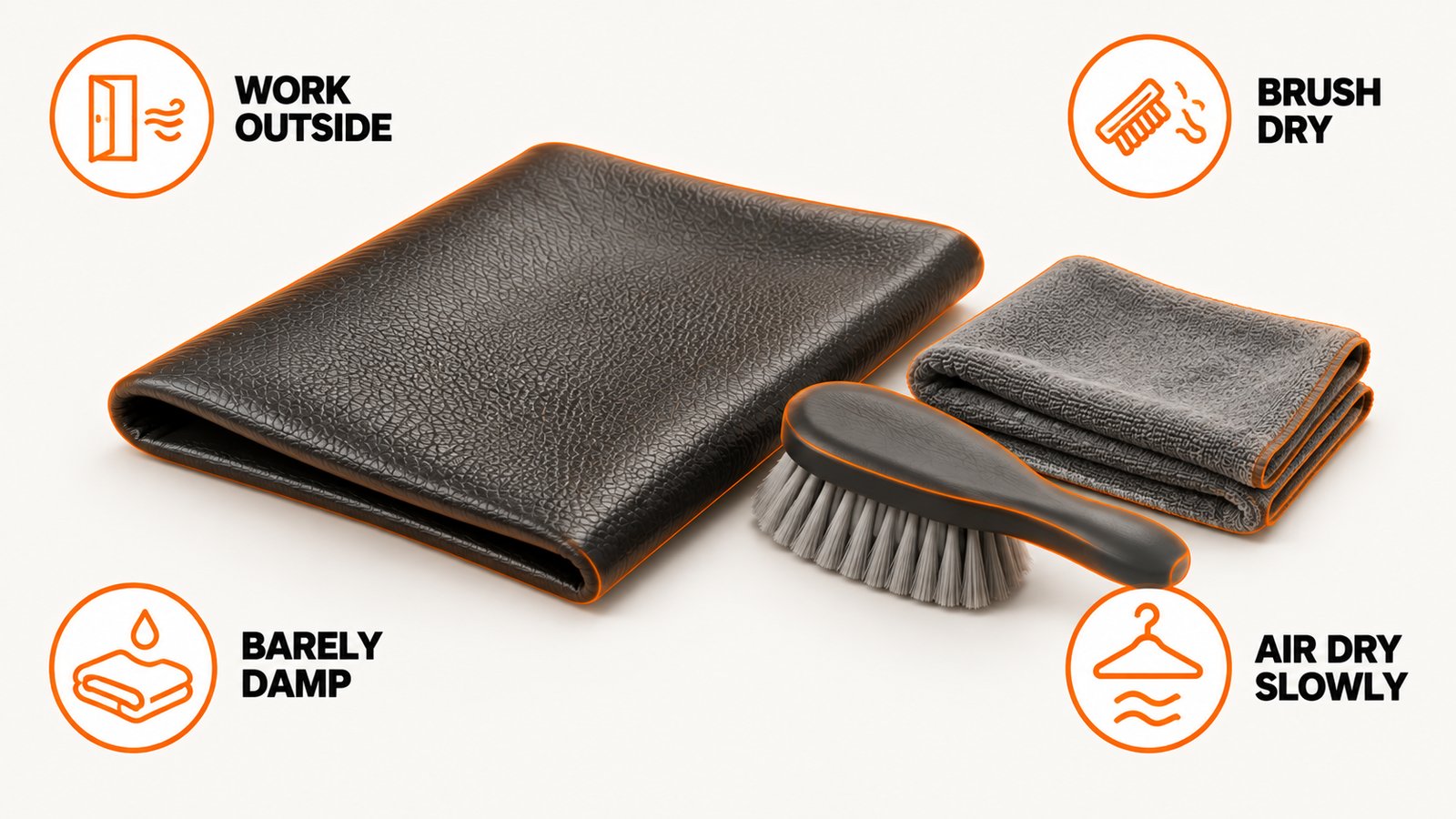
The method that works on tile is the method that ruins leather. Leather cleaning is dry-first, minimal-moisture, and slow.
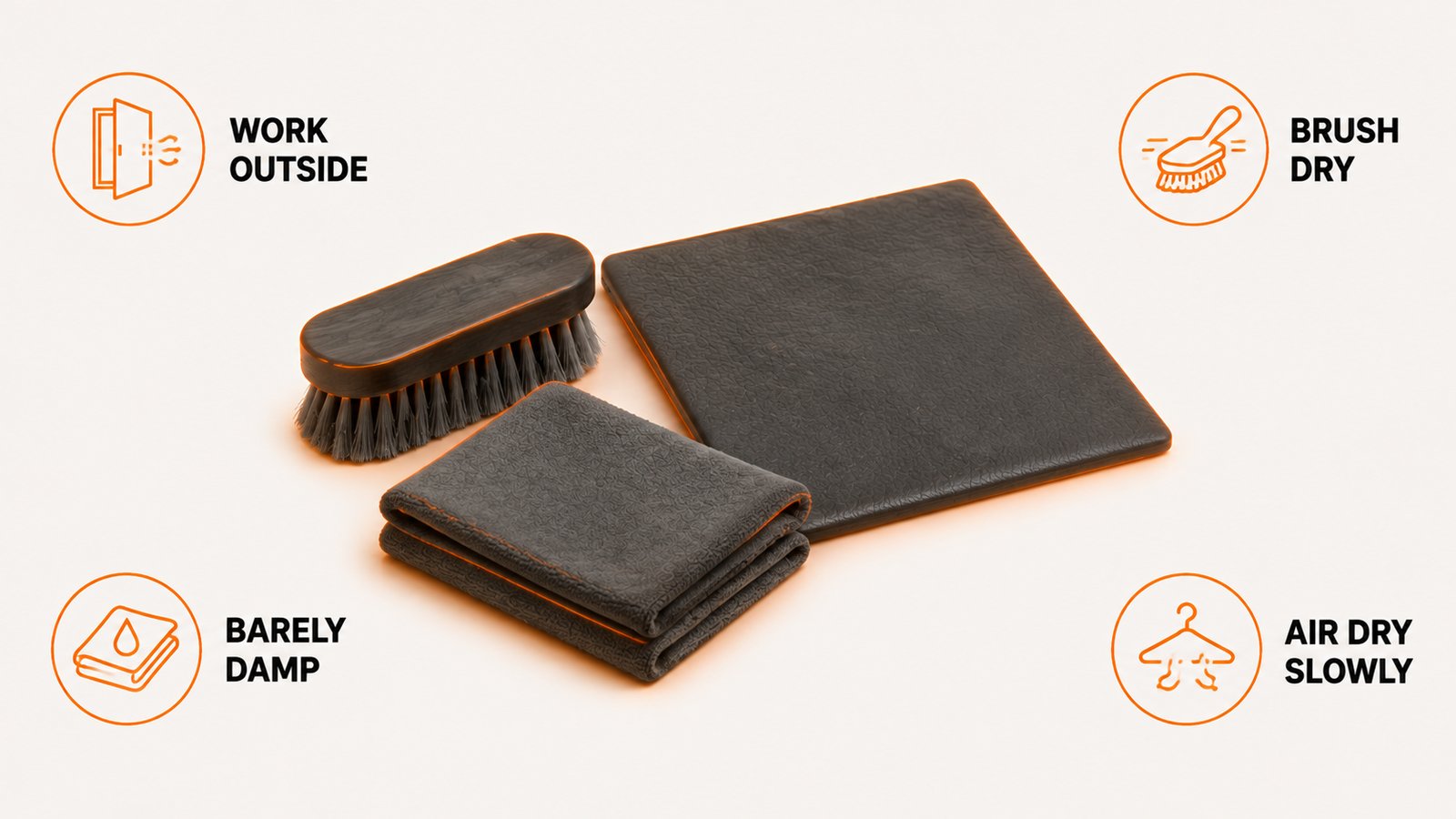
1. Take the item outside. Brushing indoors moves the growth into the room and onto everything else in the closet. Work outdoors or in a garage with the door open, on a day that is not damp.
2. Wear the gear. EPA lists gloves, goggles, and an N-95 respirator for mold cleanup. You are about to make a small cloud at chest height.
3. Brush it dry first. A soft brush or a dry microfiber cloth, working in one direction away from you, lifts most surface growth before any liquid is involved. Every bit you remove dry is a bit you do not have to wet.
4. Wipe with a barely damp cloth. Mild soap or a dedicated leather cleaner on a cloth wrung out until it is almost dry. Wipe, do not scrub, and never pour or spray liquid onto the leather. Test an inside seam or the underside of a flap first, because finishes and dyes react differently.
5. Do the lining separately. Fabric linings are usually worse than the outside and are treated as fabric. The approach is on mold on clothes.
6. Dry slowly, away from heat and sun. Hang it on a wide hanger in moving air at room temperature for a day or more. Never use a hairdryer, a radiator, or direct sunlight, all of which shrink and crack leather permanently.
7. Condition once it is fully dry. Cleaning strips oils. A leather conditioner restores flexibility, and skipping it is why a rescued jacket goes stiff a month later.
EPA notes that dead mold may still cause allergic reactions in some people, so it is not enough to simply kill the mold, it must also be removed. On leather that makes the brushing step the important one, not whatever product you finish with.
Jackets, shoes, bags, and luggage
The same method applies across items, but the place growth starts differs, and so does the part people miss.
| Item | Where it starts | The step people skip |
|---|---|---|
| Leather jacket | Shoulders, under the collar, and the fabric lining | Turning it inside out and treating the lining as a separate garment |
| Shoes and boots | The footbed and inside the toe, where sweat collects | Pulling the insoles out and drying the inside before storing them |
| Handbags | Bottom corners, under the base feet, and inside pockets | Emptying it completely and standing it open rather than stuffed and zipped |
| Luggage and backpacks | Seams, zipper tape, and the inside lining after a damp trip | Airing it fully open for a day before it goes back in a basement or attic |
| Car seats and trim | Seat bases, seat belt webbing, and under floor mats | Finding the water leak first, because a car interior does not dry on its own |
Two of those have a source to fix rather than clean. Shoes absorb sweat every wearing, so rotating pairs and letting each dry a full day does more than any cleaner. And a car with growth on the seats has water getting in somewhere, covered on mold in a car.
What not to use on leather
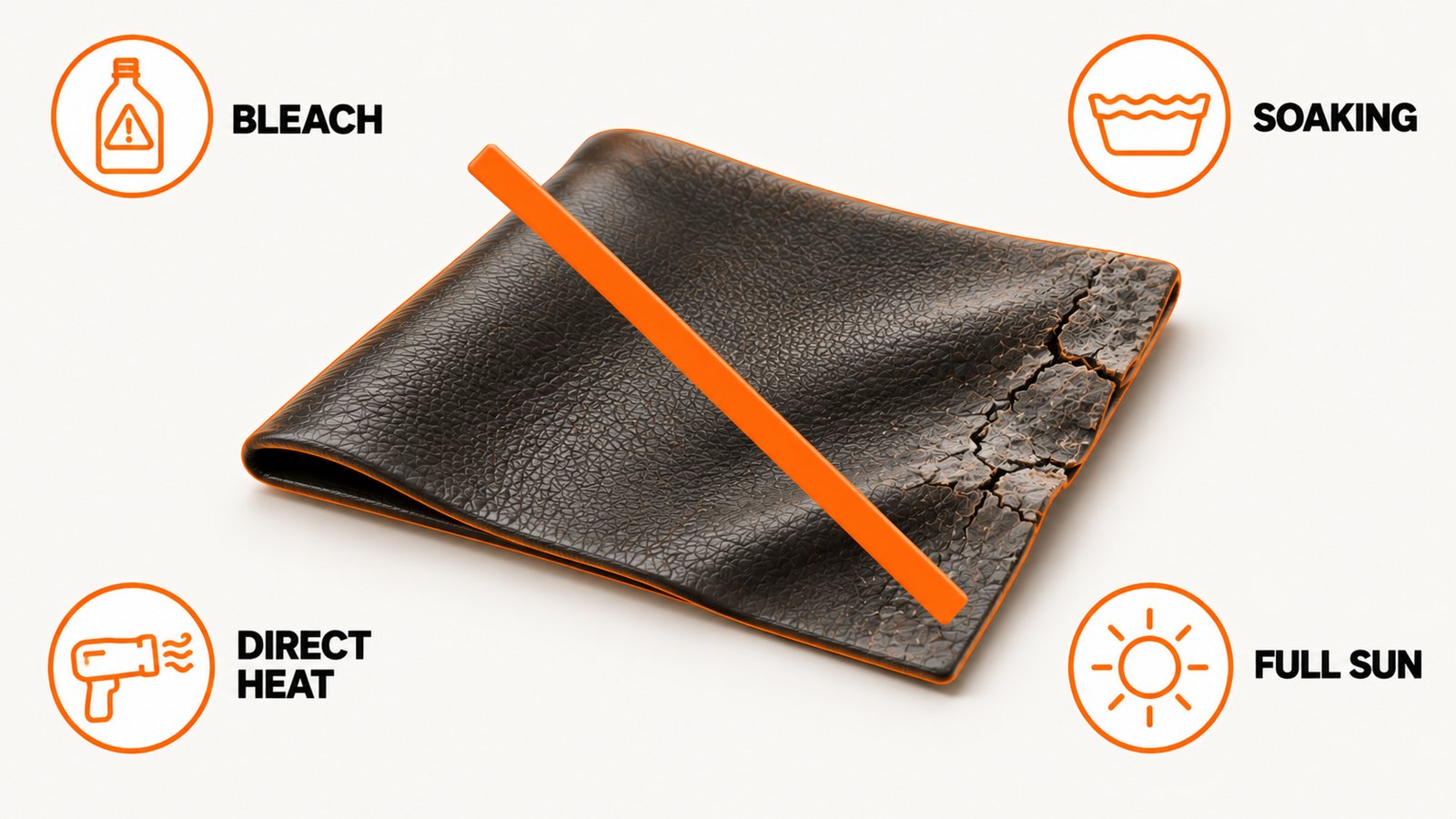
Four common approaches do permanent damage to leather, and three of them are standard advice for other surfaces.
Chlorine bleach. It strips dye, breaks down the protein structure, and leaves a pale patch no conditioner brings back. It also removes the dark color while leaving growth in a porous material, the failure explained on does bleach kill mold. Ammonia-based cleaners are the same story. And EPA warns never to mix chlorine bleach with cleaning solutions or detergents that contain ammonia, because toxic fumes could be produced.
Soaking or machine washing. Water swells the fibers, carries dye, and dries the item hard. A leather jacket that has been through a washing machine is finished. Even saddle soap, which is a legitimate leather product, is applied on a barely damp cloth rather than flooded on.
Direct heat. A hairdryer, a radiator, a heat gun, or a hot car shrinks leather and cracks the grain. Slow air drying at room temperature is the only safe way.
Full sun. Ultraviolet light does suppress growth. It also fades dye and drives out the oils, so a long session in direct sun trades a mold problem for a brittleness problem. A short spell in bright shade with moving air is the sensible version.
Full-strength vinegar is a common household suggestion and a risky one here. Acid affects dyes and finishes on leather in ways it does not on tile. If you use it at all, dilute it heavily and test an inside seam first. The general case is on does vinegar kill mold.
How to stop mold coming back on leather
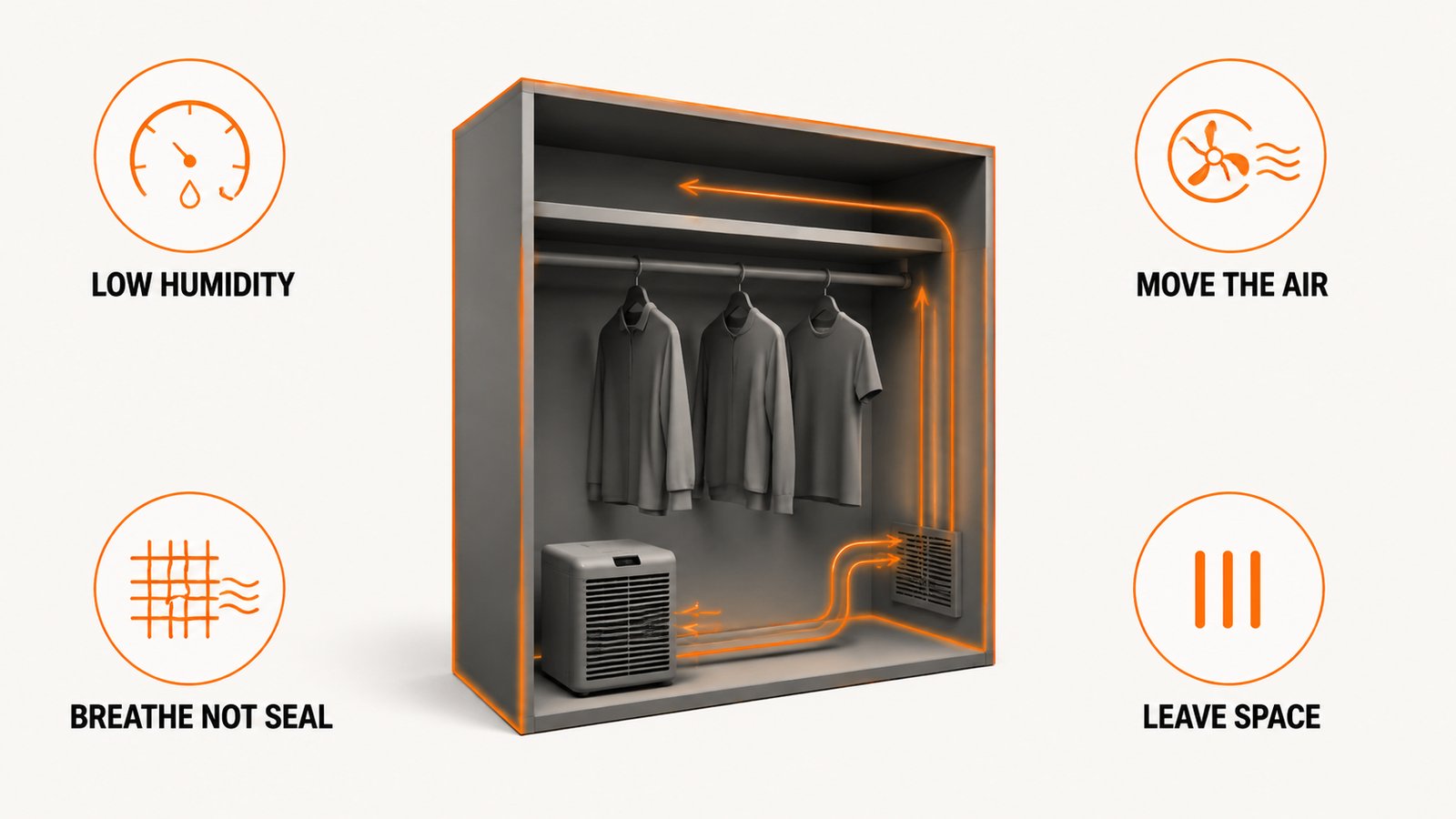
Cleaning the item is the small half of this. Storage is the half that decides whether you do it again next year.
Get the humidity down. EPA advises reducing indoor humidity to between 30 and 60 percent, and the conservation threshold for continued fungal growth is at least 65 percent, so the gap between those numbers is your margin. A cheap hygrometer in the closet tells you which side you are on, and the free humidity tool turns the reading into an answer. When a room sits high, a dehumidifier is the tool.
Move the air. A closet on an exterior wall with the door always shut is the worst case. Leave the door ajar, add a vented panel, or run a small fan periodically. Still air is half the problem.
Let it breathe rather than sealing it. Plastic garment bags and sealed plastic tubs trap moisture against the item. Use cotton garment bags, acid-free tissue for stuffing a bag's shape, and boxes that are not airtight.
Leave space between items. Packed hanging rails have no airflow at all. A hand's width between shoulders is enough.
Store it dry, never damp. A jacket worn in the rain or shoes worn on a wet day go on a rack in open air until fully dry before they go back. EPA's timing rule for wet material is to dry within 24 to 48 hours, and it applies just as well to a leather bag as to a floor.
Inspect twice a year, at the start and end of the humid season. Early bloom brushes off with one pass of a soft brush. A season of growth is a restoration job.
When to call a professional
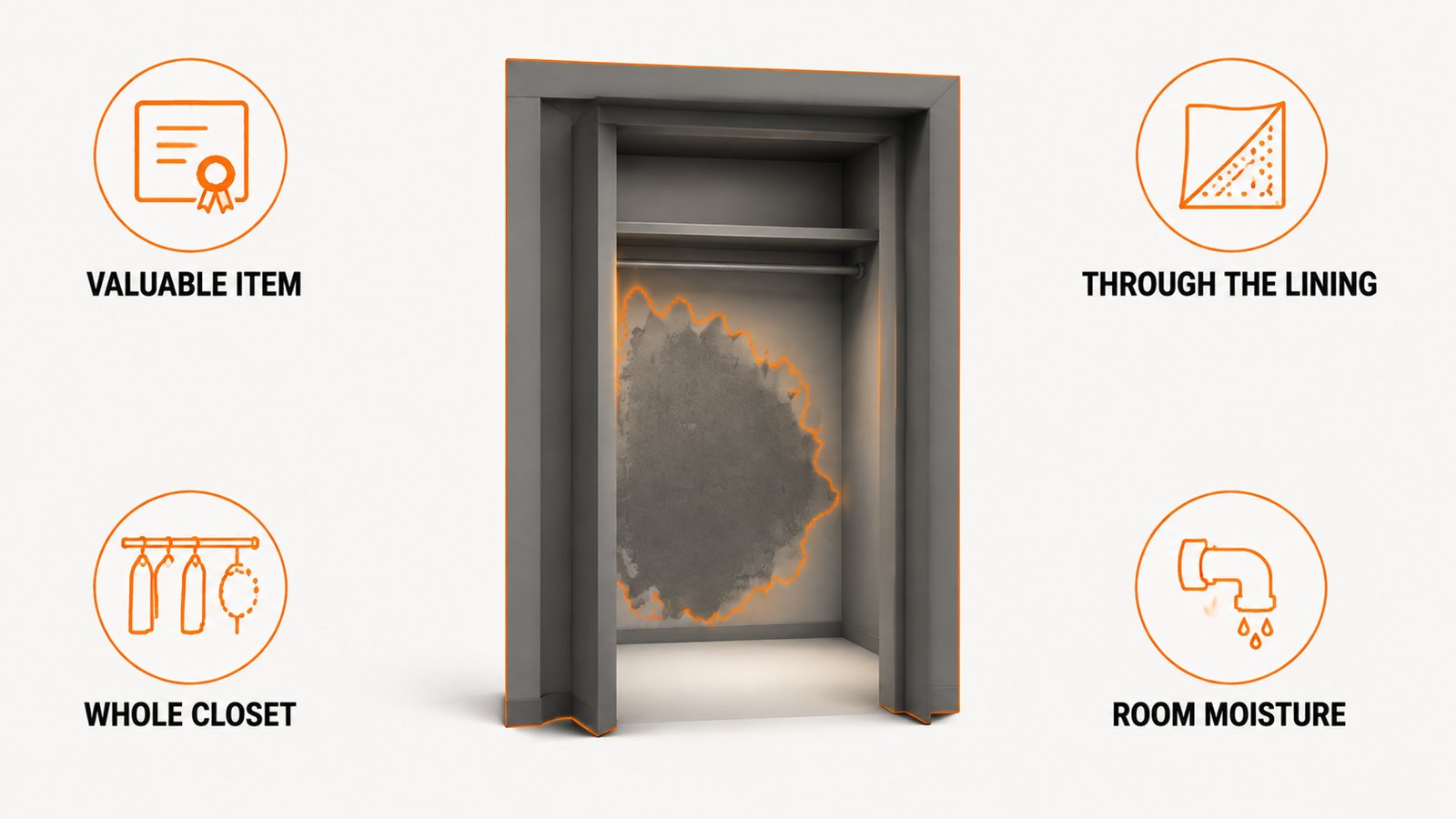
Two different professionals apply here and they solve different problems.
A leather specialist or conservator for the item, when:
- The piece is valuable, antique, or sentimental. Suede, aniline, and unfinished leathers stain from a single drop, and a first attempt at home is usually the last one that could have worked.
- Growth has gone through the lining into padding or shoulder structure. Anything you cannot reach is not something a surface clean fixes.
- The leather has already stiffened, cracked, or lost color. That is a restoration question, not a cleaning one.
A qualified mold remediation professional for the room, when:
- Several items are affected at once. One moldy bag is an item problem. A whole closet is a building problem.
- Growth is visible on the closet wall, the floor, or the ceiling above it, and the affected area is larger than about 10 square feet, which is EPA's guide for when a job stops being a do-it-yourself one.
- There is a moisture source you cannot find. A musty smell with nothing visible points at concealed damp. See why a house smells musty and mold behind walls.
- The closet backs onto a bathroom, an exterior wall, or a basement that has its own history of damp. See mold in a basement.
Look for firms that follow the ANSI and IICRC S520 standard, and get a written scope covering the moisture repair, removal, drying, and verification before anyone starts. Pricing is on mold remediation cost, and the general cleanup order is on how to get rid of mold.
Frequently asked questions
How do you get mold off leather without damaging it?
Dry first. Take the item outdoors, put on gloves, goggles, and an N-95 respirator, and lift the surface bloom with a soft brush or dry microfiber cloth working away from you. Only then wipe with a cloth wrung out until it is barely damp, testing an inside seam first. Air dry slowly at room temperature away from heat and sun, then condition once it is fully dry, because cleaning strips the oils.
What humidity does leather need to be stored at?
Below the growth threshold with margin. The Canadian Conservation Institute states that once hyphae develop, even the most hardy species require at least 65 percent relative humidity to continue growing, with vigorous growth above 75 percent. EPA advises reducing indoor humidity to between 30 and 60 percent. A hygrometer in the closet tells you which side of that gap you are on.
Can you use bleach or vinegar on moldy leather?
Bleach, no. It strips dye, attacks the protein structure, and leaves a permanent pale patch, and it removes color without removing growth from a porous material. Vinegar is risky at full strength because acid affects leather dyes and finishes; if you use it, dilute it heavily and test a hidden seam first. Never mix chlorine bleach with a cleaner containing ammonia, because EPA warns toxic fumes could be produced.
Should you put moldy leather in the sun?
Briefly and in bright shade, not for hours in direct sun. Ultraviolet light does suppress growth, but direct sun also fades dye and drives out the oils that keep leather flexible, so a long session trades one problem for a worse one. Moving air at room temperature does most of the drying work.
Why does mold keep coming back on stored leather?
Because the storage has not changed. Leather goods sit still for months in dark, closed, often sealed spaces, and a plastic garment bag or an airtight tub traps moisture against the item. Use breathable cotton covers, leave a hand's width between hanging items, keep the closet door ajar or ventilated, and never put a damp item away.
Is the white powder on my leather jacket mold?
Not always. A waxy white haze that smears rather than brushing off is usually fat bloom, the fats and oils in the leather migrating to the surface in cool storage, and it is not fungal. Live growth lifts off with a soft brush and has a faintly furry look under angled light. Treating fat bloom as mold is how people damage a jacket with a cleaner it never needed.
When should a moldy leather item go to a specialist?
When the piece is valuable, antique, or made of suede, aniline, or unfinished leather that marks from a single drop. Also when growth has gone through the lining into padding you cannot reach, or when the leather has already stiffened, cracked, or lost color, which is a restoration question rather than a cleaning one.
Sources
Every claim on this page traces to one of these. Links open the primary document.