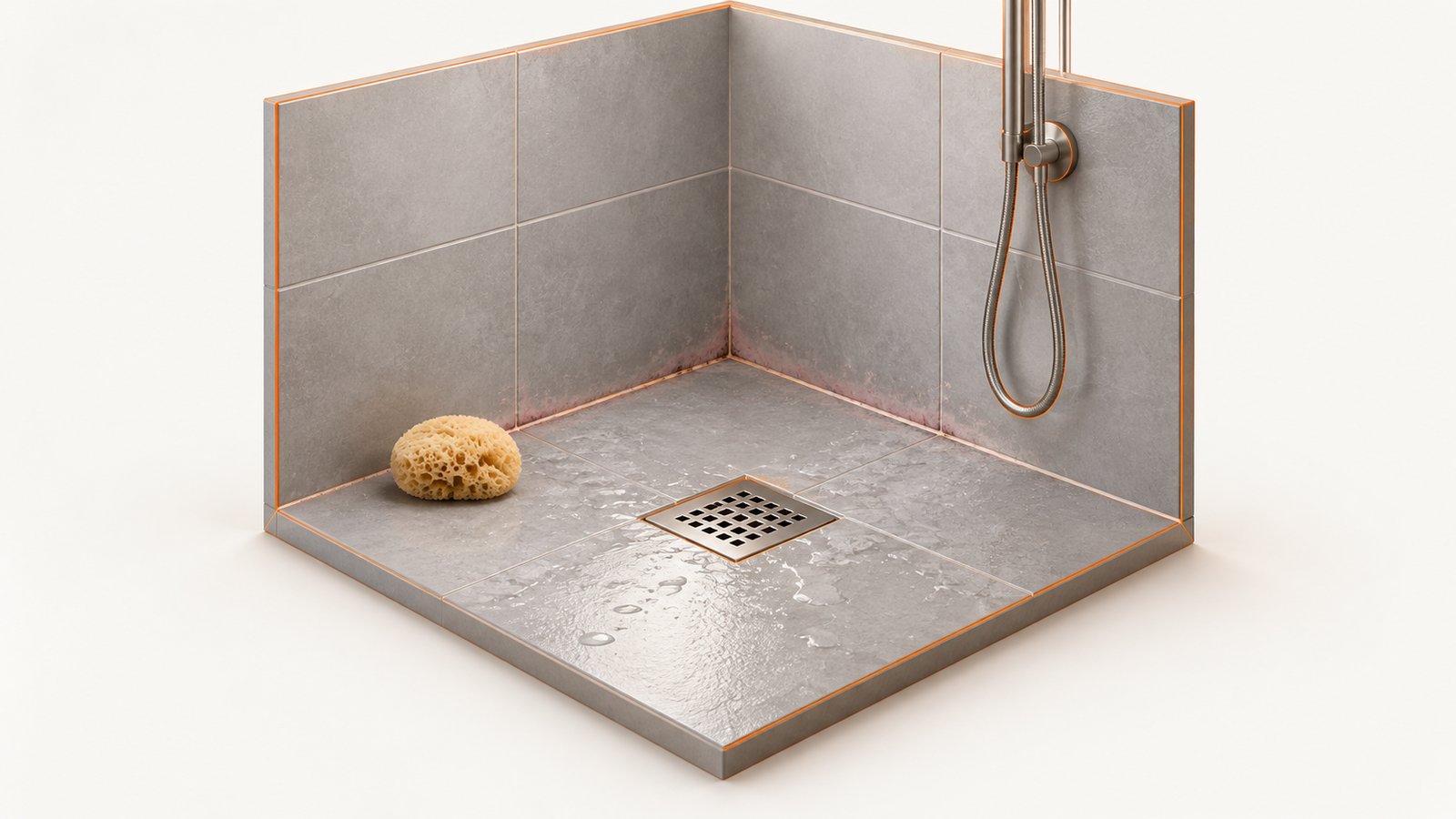
What is red mold?
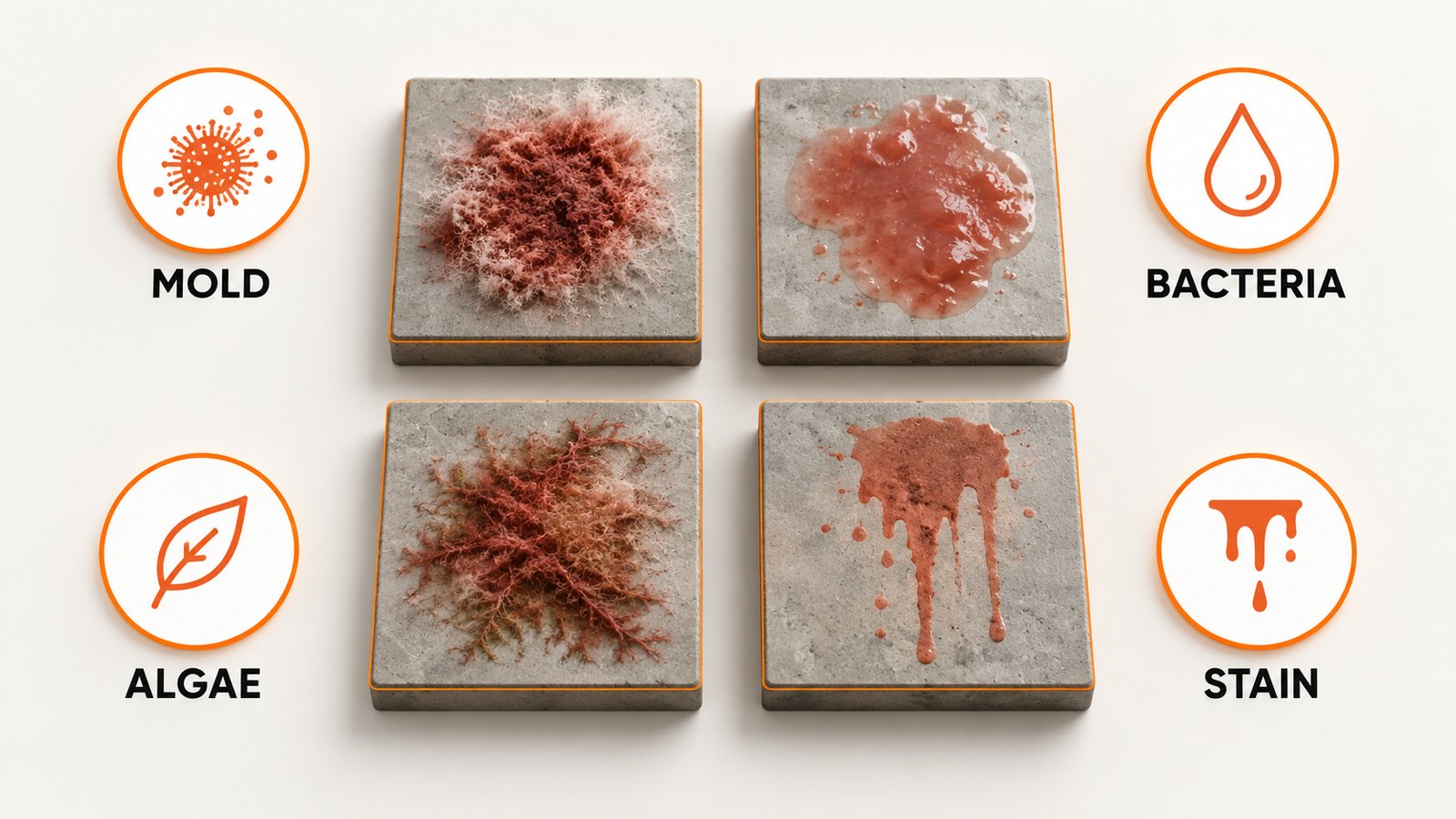
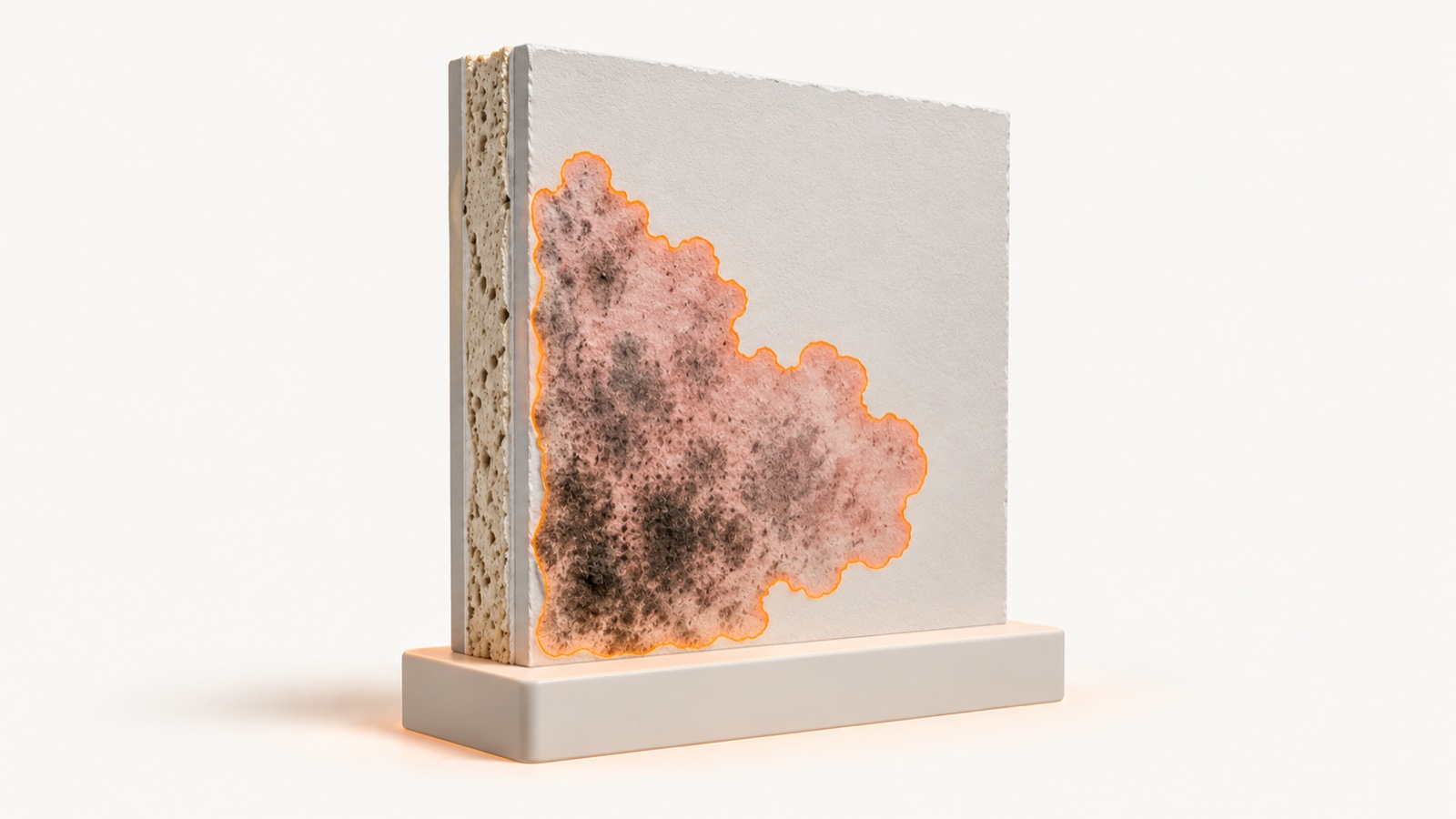
Red mold is a nickname for any red, reddish, orange-red, or rust-colored growth that people find on a surface and suspect is mold. It is not one species, and a lot of the time it is not mold at all. Color is the weakest clue you have.
The CDC says plainly that "Mold can look like spots of many different colors, and it can smell musty." The EPA says "Molds come in many colors." USDA food safety staff explain why: "The spores give mold the color you see." So some real molds can show a reddish tint, but the same reddish look also shows up on things that are bacteria, algae, rust, or plain stains.
That is why this page does not name a species. A photo and a guess from color cannot tell you what is growing. Our own pink mold in the shower page makes the same point about pink and orange film, and the broader types of mold guide covers every color. What you can do is look at four things: where it is, what it feels like, whether it comes back, and what is wet.
Here is the honest short version. If the red growth is fuzzy, raised, or spreading on a damp porous material, treat it as possible mold and handle it the way you would any mold. If it is a smooth, slick film in a wet bathroom, it is often a bacterial film. If it follows a nail, screw, or metal edge, it may be rust. If it is on an outside wall in a shady, damp spot, it may be algae. You will not know for sure from a photo, and you do not have to. The CDC says: "You do not need to know the type of mold."
Can mold be red?
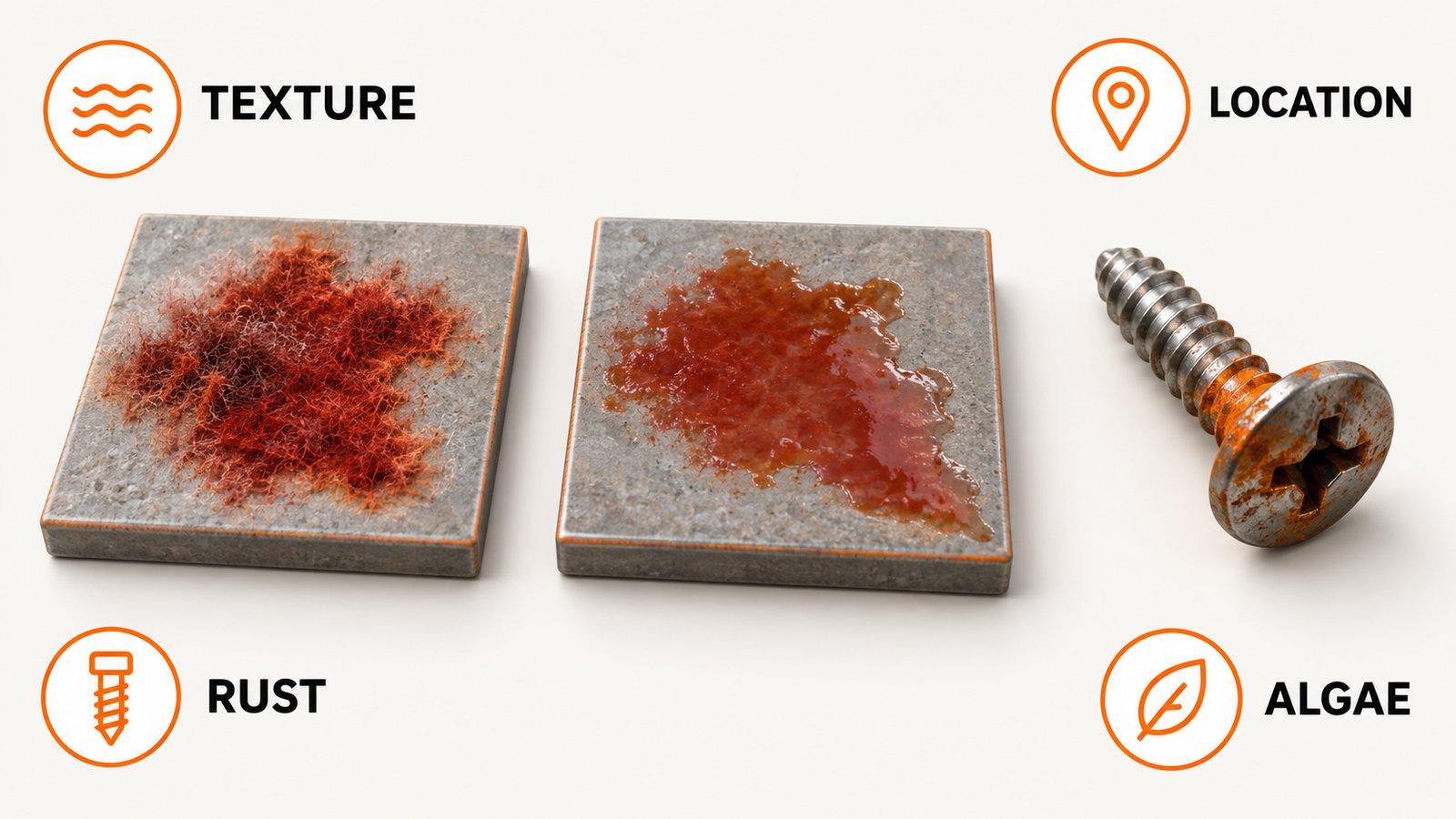
Yes, some molds can look red or reddish, but a red color is much more often something else. The table below lists the common look-alikes. It is a way to decide what to do next, not a way to name an organism.
| What it might be | What it tends to look like | Where it tends to show up |
|---|---|---|
| Mold | Fuzzy, speckled, or powdery. Grips the surface and may smell musty. | Damp porous materials: wood, drywall, fabric, carpet, caulk. |
| Bacterial film | Smooth, slick, or slimy. Pink, orange, or red. Smears when wiped. | Shower corners, grout, drains, basins, anything wet and soapy. |
| Iron bacteria | Rusty or reddish slime or slimy strands. | Toilet tanks and fixtures on well water. |
| Rust | Flat orange-brown stain with no fuzz or slime. Follows the metal. | Around screws, nails, drains, metal edges, and old fixtures. |
| Algae | Orange to red crust or patches. Often dry looking. | Damp outdoor walls, concrete, bark, and shaded siding. |
| Paint, dye, or stain | Even color that does not grow, spread, or smell. | Anywhere something red spilled, bled, or faded onto a surface. |
None of those rows is a diagnosis. A bacterial film can sit on top of real mold, and rust can sit next to it. Our what does mold look like guide has the wider set of looks, and how to tell if it is mold from a photo explains what a picture can and cannot settle.
Red mold in the shower
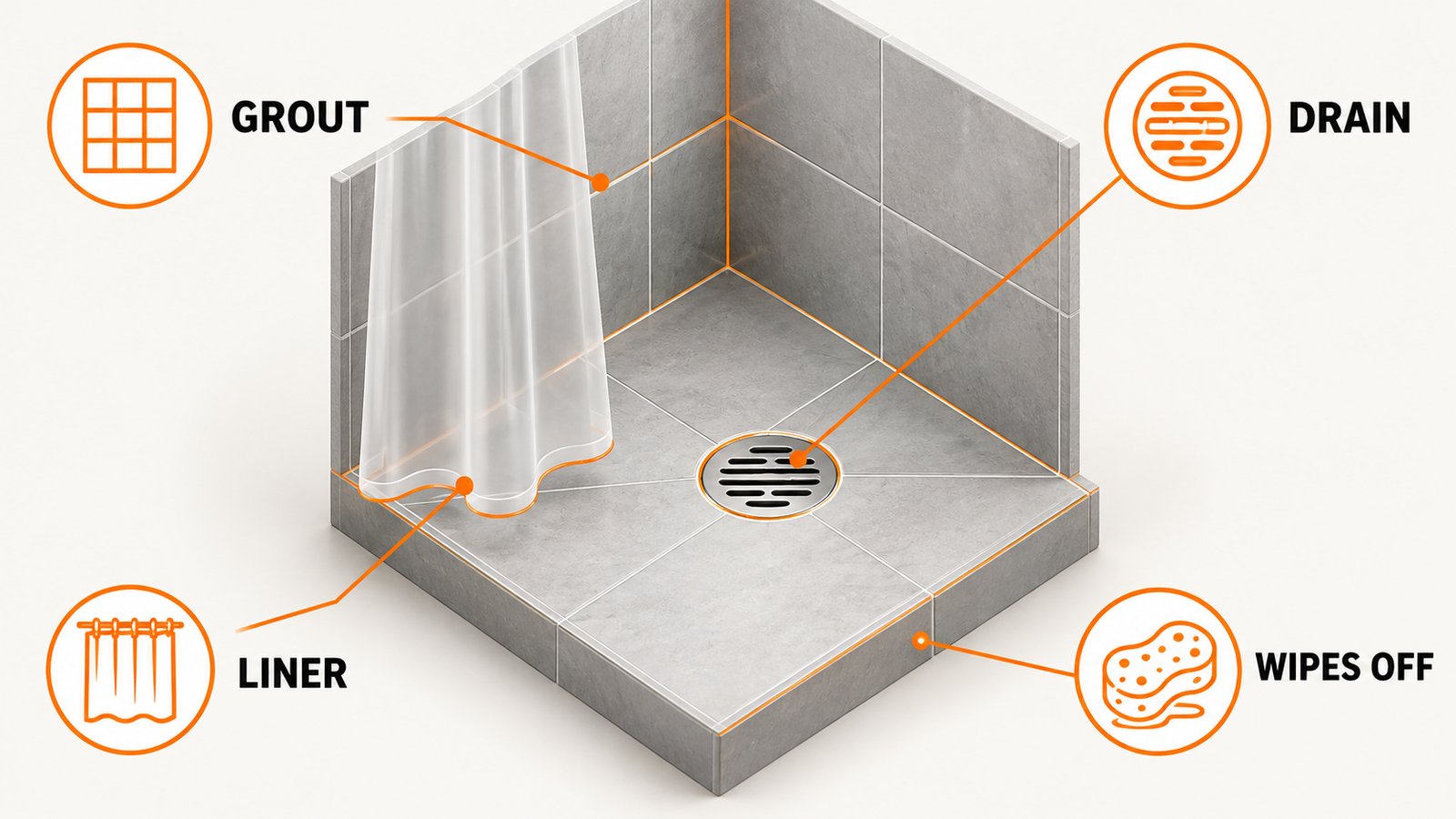
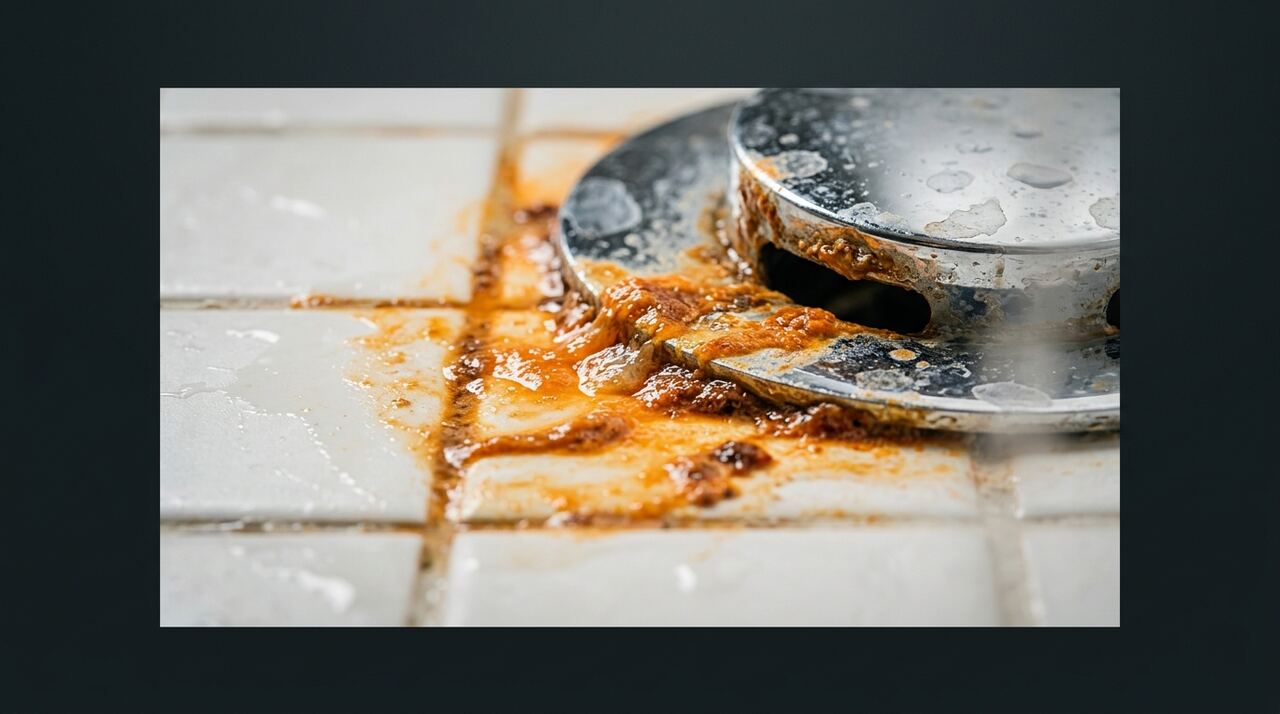
A red or pink-orange film in a shower corner, on grout, around the drain, or on the curtain liner is the most common "red mold" people find. It is often not mold.
A bacterium called Serratia marcescens is the usual suspect. A journal article from the CDC's Emerging Infectious Diseases describes it as "abundant in damp environments" and says it can be found in "shower corners and basins." The same article notes that "The colonies are red because of a pigment (prodigiosin) produced by this organism." So a red film in a wet bathroom has a real, documented explanation that is not a fungus.
Two cautions keep this honest. First, a bathroom film can have more than one cause, and our pink mold in the shower page explains why we do not name an organism from color. Second, the same article notes that this bacterium can cause "urinary tract and wound infections," which is a reason to keep it away from open cuts and to ask a physician about any health concern, not a reason to panic.
Signs it leans toward a bacterial film: it is slick, it smears when wiped, it sits on tile, grout, or plastic, and it comes back within days. Signs it leans toward mold: it is fuzzy or speckled, it is digging into caulk, or it darkens over time. For the second kind, see mold in the shower, mold on grout, mold on caulk, and mold on a shower curtain. Our pink mold and orange mold pages cover the same bathroom film in nearby colors.
The EPA also says what to do about a bathroom that stays damp: "increasing ventilation (running a fan or opening a window)" and cleaning more often will usually keep growth down.
Red mold on wood
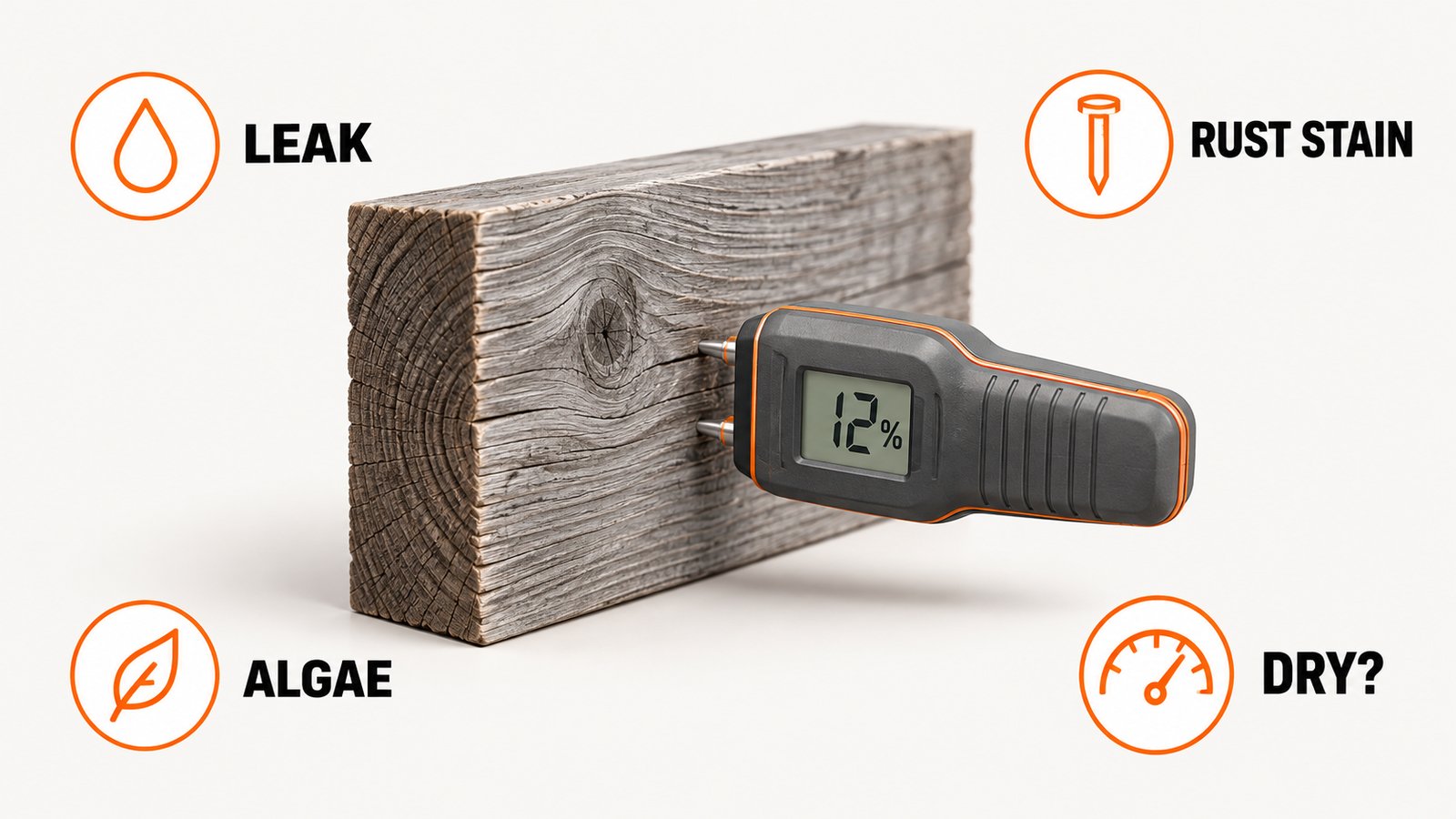
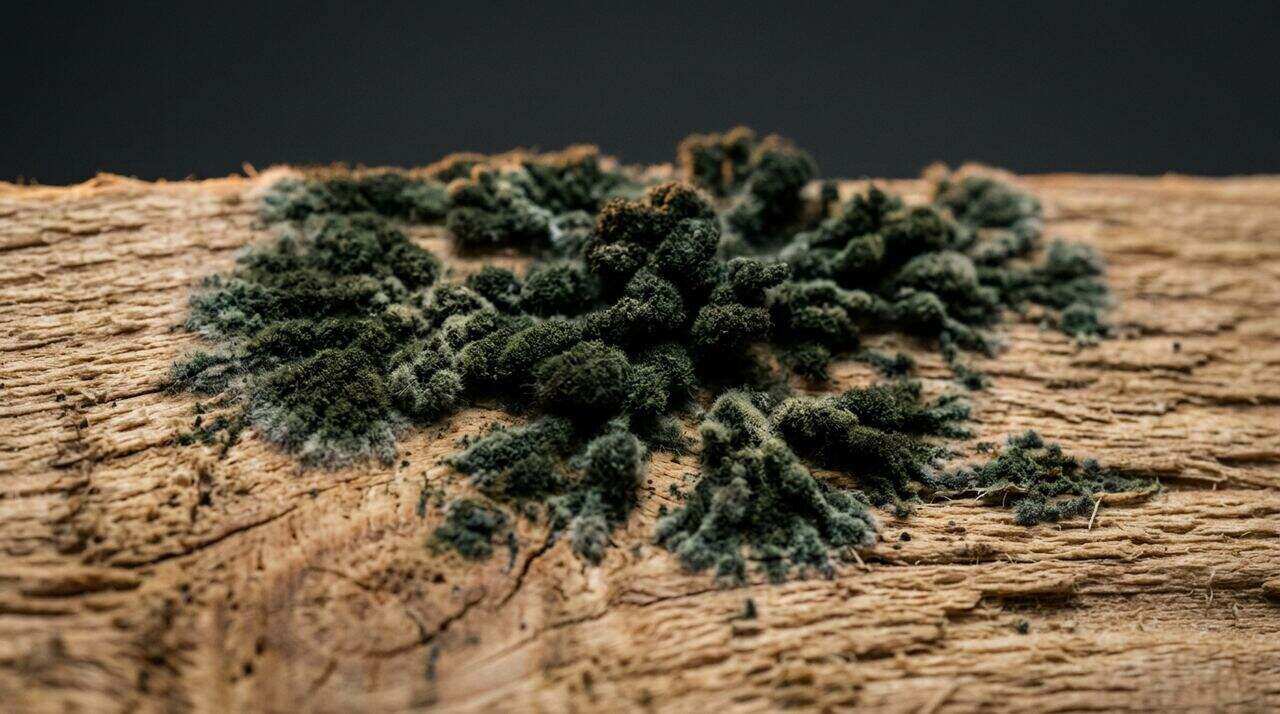
Red or reddish growth on wood is a different problem from a shower film. Wood is porous, so whatever is on it can be growing into it, and wood only stays that way when it stays damp.
Common causes include a leak, a damp crawl space, wet firewood, a deck board that never dries, or wood stained by metal fasteners. Some of those are mold, some are stains, and a photo will not sort them out. Look at the pattern instead:
- Fuzzy or speckled and spreading on damp wood points to possible mold. See mold on wood.
- Flat orange-brown streaks that follow nails or screws point to rust staining.
- Dry orange-red patches on outdoor wood or siding may be algae. One peer-reviewed paper describes a genus of green alga whose "typical orange to red macroscopic appearance" is well known, and says it grows on bark, rock, and "man-made surfaces like concrete walls."
- A stain that did not change in weeks and the wood is dry may be a stain from paint, dye, or tannins, not growth.
In every case the question that matters is whether the wood is wet. The EPA's first cleanup tip is "Fix plumbing leaks and other water problems as soon as possible." If a moisture meter shows the wood is wet, fix the water first. If the wood is soft, crumbly, or deeply stained, call a pro, because cleaning the surface will not fix what is inside. The EPA also says to avoid painting over the problem: "Do not paint or caulk moldy surfaces."
Red mold on clothes, food, and carpet
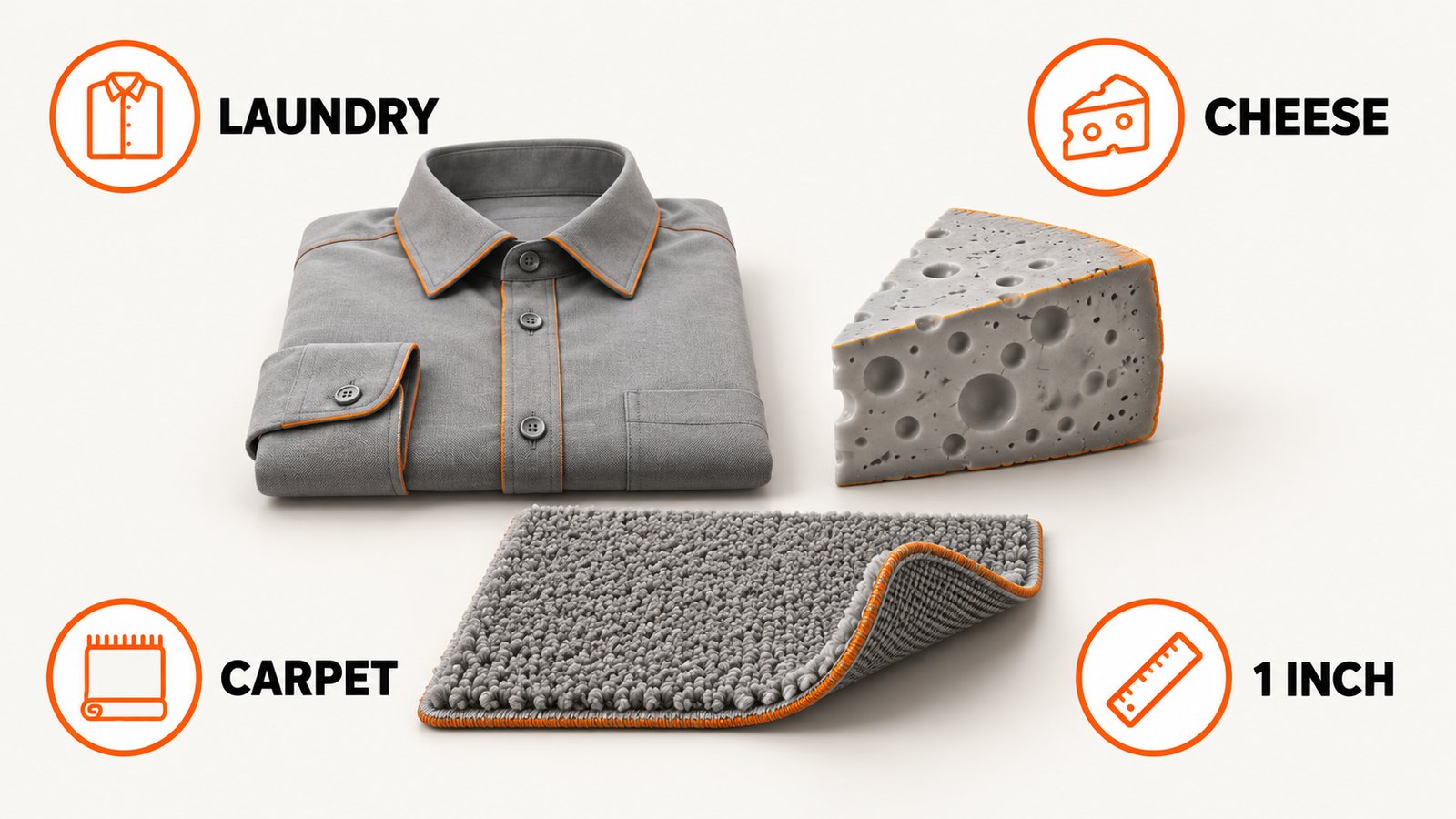
Searchers also ask about red mold on clothes, on cheese, and under carpet. The color question is the same as everywhere else, but the next step is different.
Clothes and fabric. Reddish spots on damp laundry can be mildew, dye transfer, or rust from a washer drum or a metal zipper. Dye and rust do not grow, spread, or smell musty. If the spots are fuzzy, smell musty, or come back after washing, treat the cause as moisture: wet clothes sitting in a washer, a damp closet, or a laundry basket that never dries. Our mold on clothes page goes through washing and drying.
Food. This is the one place where a federal agency gives clear instructions. The USDA's Food Safety and Inspection Service says that on hard cheese you should "Cut off at least 1 inch around and below the mold spot," and it puts soft cheeses, and shredded, sliced, or crumbled cheeses, on its discard list. It adds that "Moldy foods may also have bacteria growing along with the mold." The USDA also says "Don't sniff the moldy item."
Carpet. Carpet is porous. The EPA says "Absorbent or porous materials, such as ceiling tiles and carpet, may have to be thrown away if they become moldy." Red staining on carpet is more often spilled dye than mold, but if the carpet is damp, smells musty, or the stain spreads, the damp is the problem to chase.
What causes red mold?
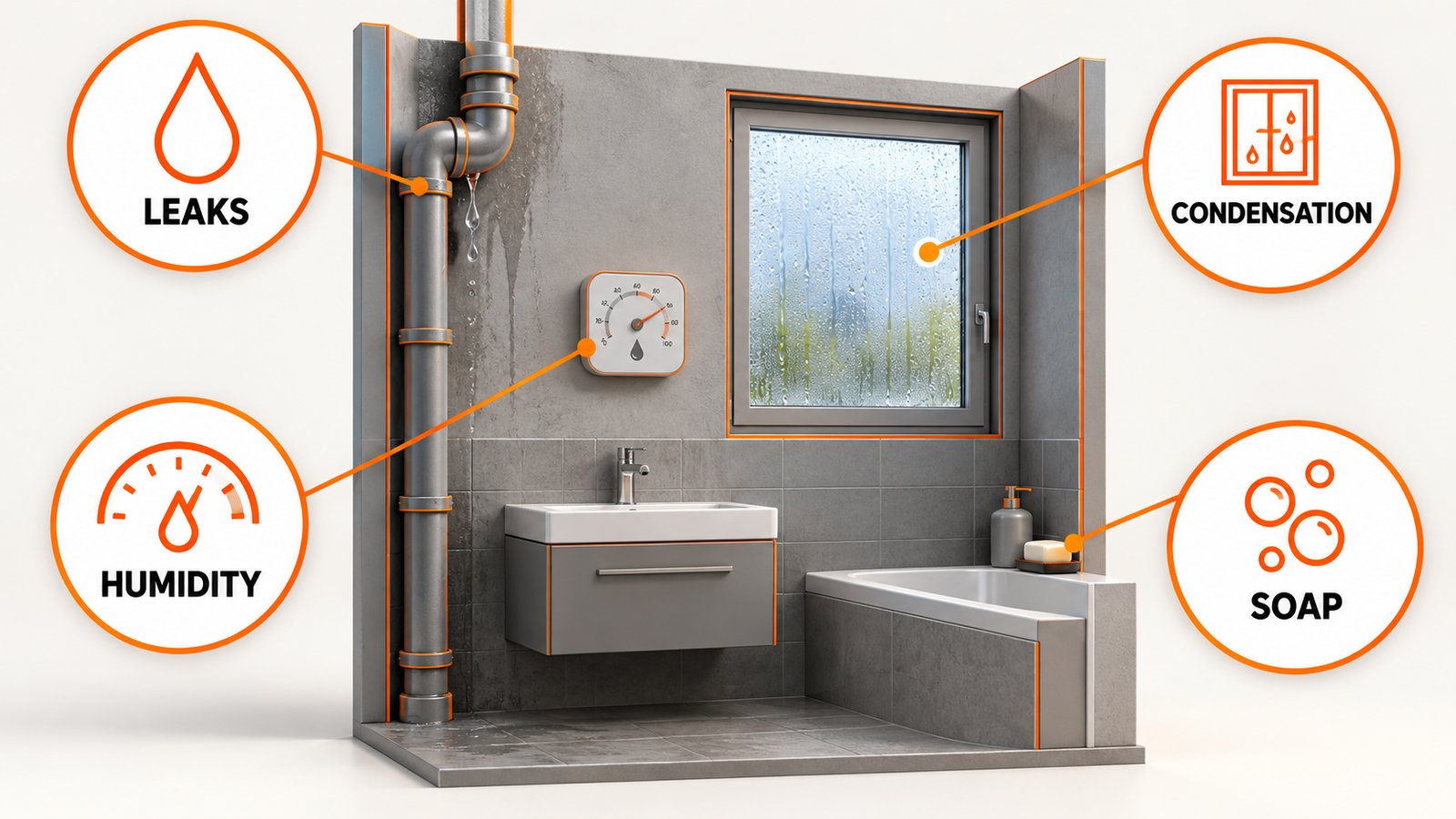
Whatever the red growth turns out to be, the cause is almost always the same: a surface that stays wet, and in a bathroom, soap and body oil left on it. The Emerging Infectious Diseases article above calls the bacterium "abundant in damp environments," and the EPA says "Fix plumbing leaks and other water problems as soon as possible."
The usual sources are a plumbing leak, a roof or window leak, condensation, a bathroom with weak ventilation, a damp basement or crawl space, and laundry left wet. The EPA's humidity advice is to keep indoor humidity below 60 percent, ideally between 30 and 50 percent, and says a humidity meter costs about $10 to $50 at many hardware stores. The CDC says no higher than 50 percent.
If you do not know where the water comes from, our humidity risk calculator helps turn a meter reading into a plain picture, and how to prevent mold lists the habits that keep surfaces dry. A dehumidifier helps in rooms that stay above the line.
Is red mold dangerous?
Nobody can say from the color. A red patch might be mold, a bacterial film, algae, or a stain, and each carries a different, usually small, level of concern. This page does not give medical advice, and a photo cannot tell you about a person's health.
What the agencies do say is general. The EPA says mold can cause allergic reactions in sensitive people, and that mold exposure can irritate the eyes, skin, nose, throat, and lungs. The CDC says "If you see or smell mold, you should remove it." The articles on the bacterium above add that it can cause "urinary tract and wound infections," and Penn State Extension says the bacteria in a toilet tank are "typically considered more of a nuisance than a health hazard." Those are different organisms in different places, which is the point.
Wear protection while you clean, keep red film away from open cuts and eyes, and take any symptom or health question to a licensed physician. Our is mold dangerous page walks through what the research does and does not show.
How to clean red mold safely
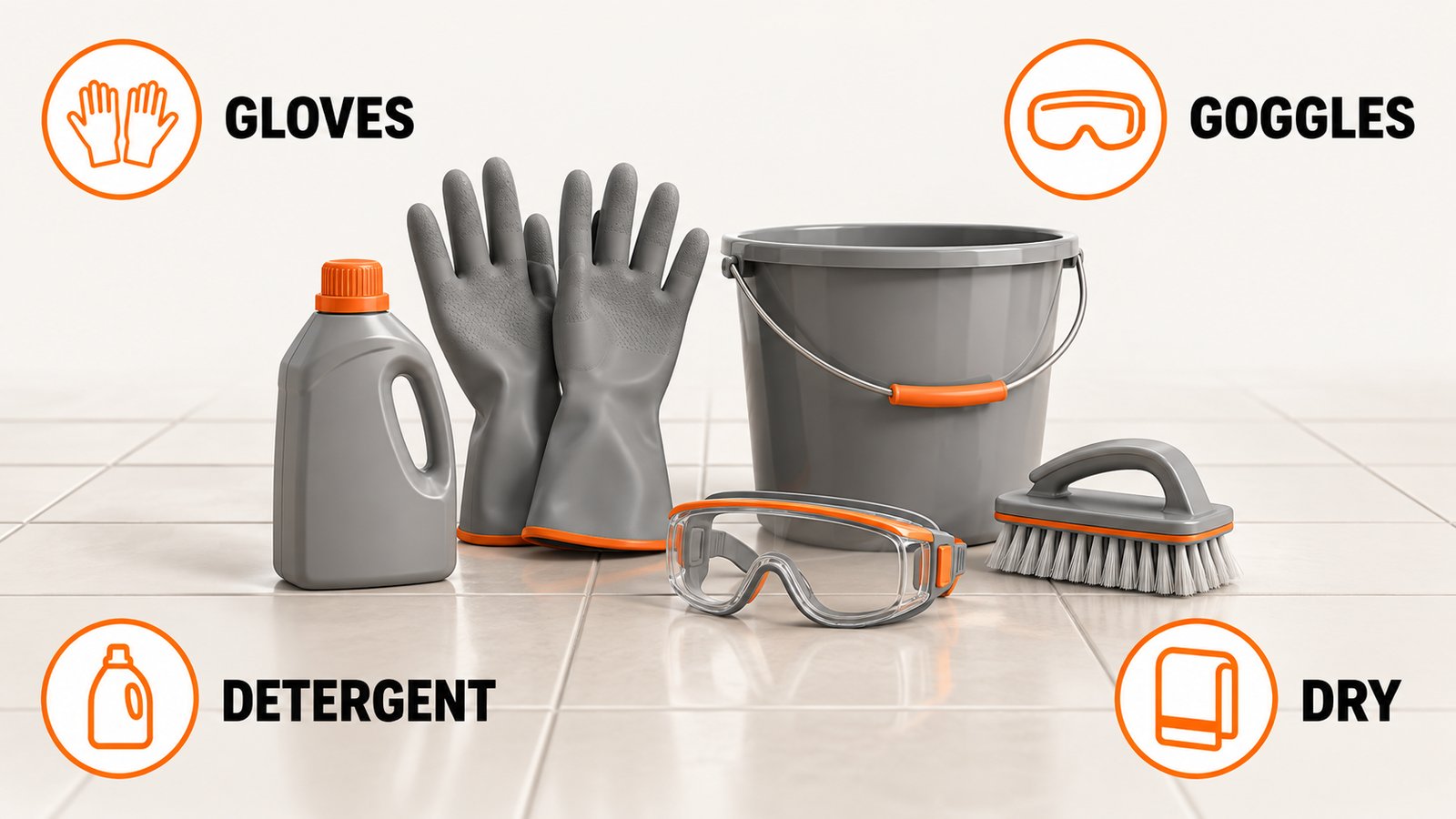
You do not have to identify the red growth to clean it. You have to protect yourself, remove it, and dry the surface. The steps below follow the EPA and CDC.
- Protect yourself. The CDC says "Wear rubber boots, rubber gloves, and goggles during cleanup." The EPA also suggests an N-95 respirator, and says to avoid touching mold with bare hands. Open a window or run a fan.
- Scrub hard surfaces. The EPA says "Scrub mold off hard surfaces with detergent and water, and dry completely." That covers tile, glass, sealed grout, and plastic liners.
- Know the bleach rules. The CDC allows "a bleach solution of no more than 1 cup of household laundry bleach in 1 gallon of water" on hard surfaces and warns: "Never mix bleach with ammonia or other cleaners. This will produce a poisonous gas." The EPA says a biocide like bleach "is not recommended as a routine practice during mold cleanup." Detergent and water is the safer first step. Always follow the product label.
- Throw out what you cannot clean. Porous items like carpet and ceiling tiles may have to go.
- Dry it and fix the cause. If the film or fuzz returns, the water is still there. For a bathroom, see mold in the bathroom and how to get rid of mold.
A note on stains: the EPA warns that "mold may cause staining and cosmetic damage," and that it may not be possible to restore the original look. A faint red mark after a good cleaning does not always mean the growth is back.
When to call a pro

A photo check makes sense when you cannot tell whether a patch is a surface film or growth. Mold Scanner AI offers an AI-assisted visual screening of what is visible in a photo, and it cannot name an organism, see inside a wall, or measure a health risk. Use it to decide where to look closer, and read how to tell if it is mold from a photo first if you want to know what it can and cannot settle.
Hire a professional when any of these are true:
- The area is bigger than about 10 square feet. The EPA's line is "less than about 10 square feet (less than roughly a 3 ft. by 3 ft. patch)" for doing it yourself.
- Sewage or contaminated water was involved. The EPA says to call a professional experienced with that kind of damage.
- The growth is in or near the HVAC system. The EPA says "Do not run the HVAC system if you know or suspect that it is contaminated with mold."
- The material is soft, rotting, or heavily stained, like framing, subfloor, or drywall.
- It keeps returning after you cleaned and dried it.
- You have health concerns. The EPA says "If you have health concerns, consult a health professional before starting cleanup."
If the red slime is in a toilet tank on well water, you may be dealing with a water issue, not a surface one. Penn State Extension notes that few labs test for iron or sulfur bacteria, so a well or plumbing professional is the right call. For mold jobs, read mold inspection and mold remediation, and see our home mold test guide before you spend money on a test.
Frequently asked questions
What is red mold?
"Red mold" is a nickname for red or reddish growth that people suspect is mold. It can be mold, but it is often a bacterial film, rust, algae, iron bacteria, or a stain. Color alone cannot identify what it is, so check the texture, the location, and whether the surface is wet.
Can mold be red?
Yes, some molds can look reddish, but red is more often something else. The CDC says mold can look like spots of many different colors. Fuzzy or speckled growth on a damp porous material points toward mold. A smooth slick film in a wet bathroom often points toward bacteria.
What is the red mold in my shower?
Most often it is a pink-to-red slick film on tile, grout, or the curtain liner. A journal article from the CDC describes a red-pigmented bacterium as abundant in damp environments, including shower corners. Our pink mold page explains why we cannot confirm an organism from color. Clean with detergent and water and dry the area.
Is red mold dangerous?
You cannot tell from the color. The EPA says mold can cause allergic reactions in sensitive people. Bacterial films, rust, and algae carry different concerns. Wear gloves and goggles when you clean, and ask a physician about any symptom. This page does not give medical advice.
What causes red mold?
Moisture. Leaks, condensation, weak ventilation, and damp materials let growth start, and soap residue feeds films in showers. Keep indoor humidity below 60 percent, ideally 30 to 50 percent according to the EPA, and fix leaks quickly.
Is red mold on wood the same as red mold in the shower?
No. Wood is porous, so growth can go below the surface, while a shower film usually sits on a hard surface. Check whether the wood is wet, fix the water, and call a pro if the wood is soft, crumbly, or the area covers more than about 10 square feet.
How do I get rid of red mold?
Wear rubber gloves and goggles, scrub hard surfaces with detergent and water, dry completely, and fix the moisture source. The CDC says you do not need to know the type of mold. Never mix bleach with ammonia or other cleaners.
Can I tell what it is from a photo?
A photo can help you decide whether to look closer, but it cannot confirm an organism. A photo cannot see inside walls, name a species, or measure a health risk. Mold Scanner AI offers AI-assisted visual screening of what is visible in the frame, and processing time varies.
Sources
Every claim on this page traces to one of these. Links open the primary document.