Why Curtains Go First
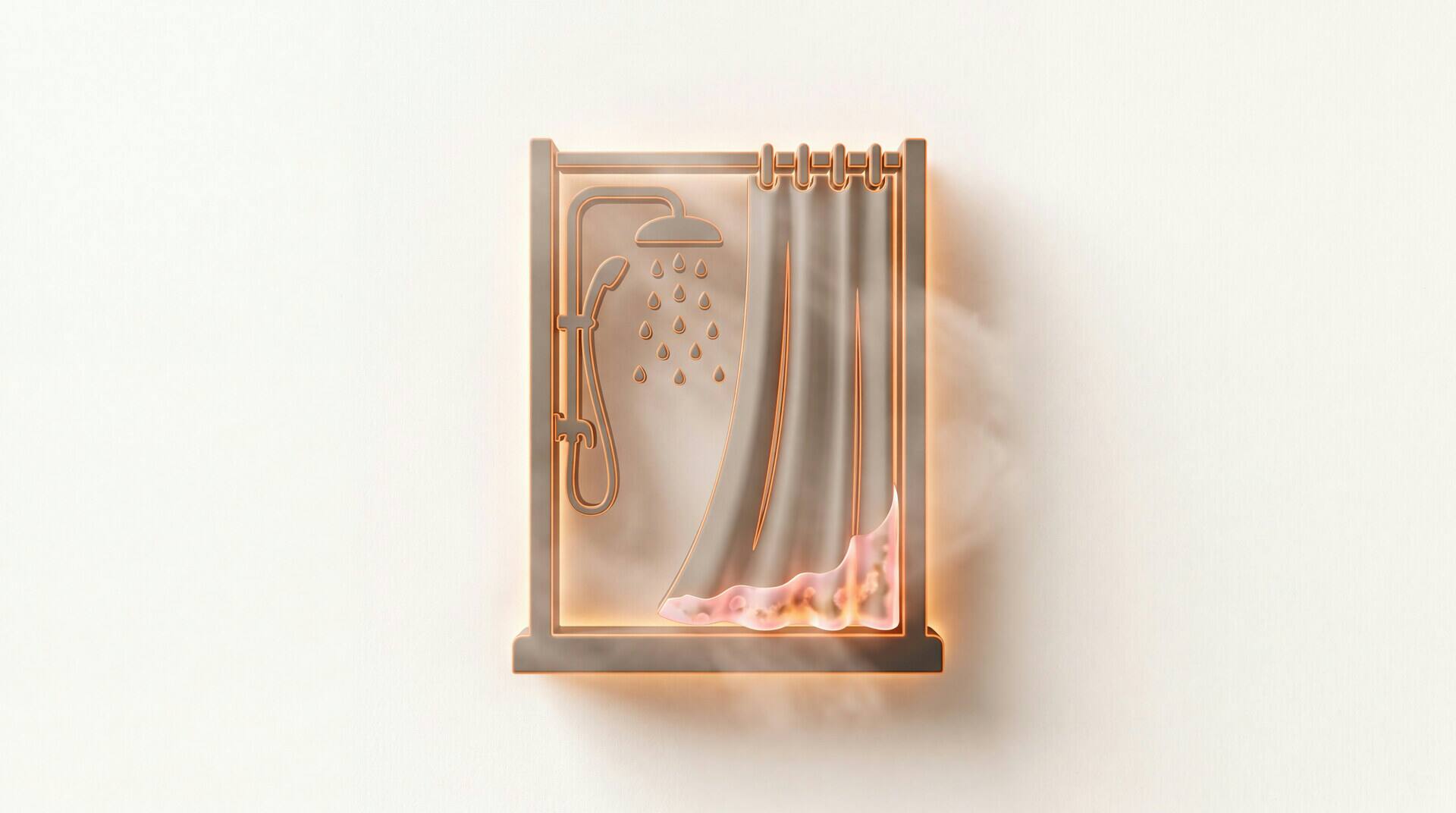
The shower curtain is usually the first thing in a house to grow visible mold, and it is not because the curtain is dirty. It is because a curtain assembles every condition mold needs and holds them together for hours.
New York State's health department puts it on a short list of surfaces that are always susceptible to mold growth and should be part of routine cleaning to control it: bathrooms, especially shower stalls, bathroom tiles, and shower curtains, along with window moldings, the seal on the refrigerator door, and surfaces on and around air conditioners. When a state health department names your shower curtain by name, that is a good sign the problem is structural rather than a housekeeping failure.
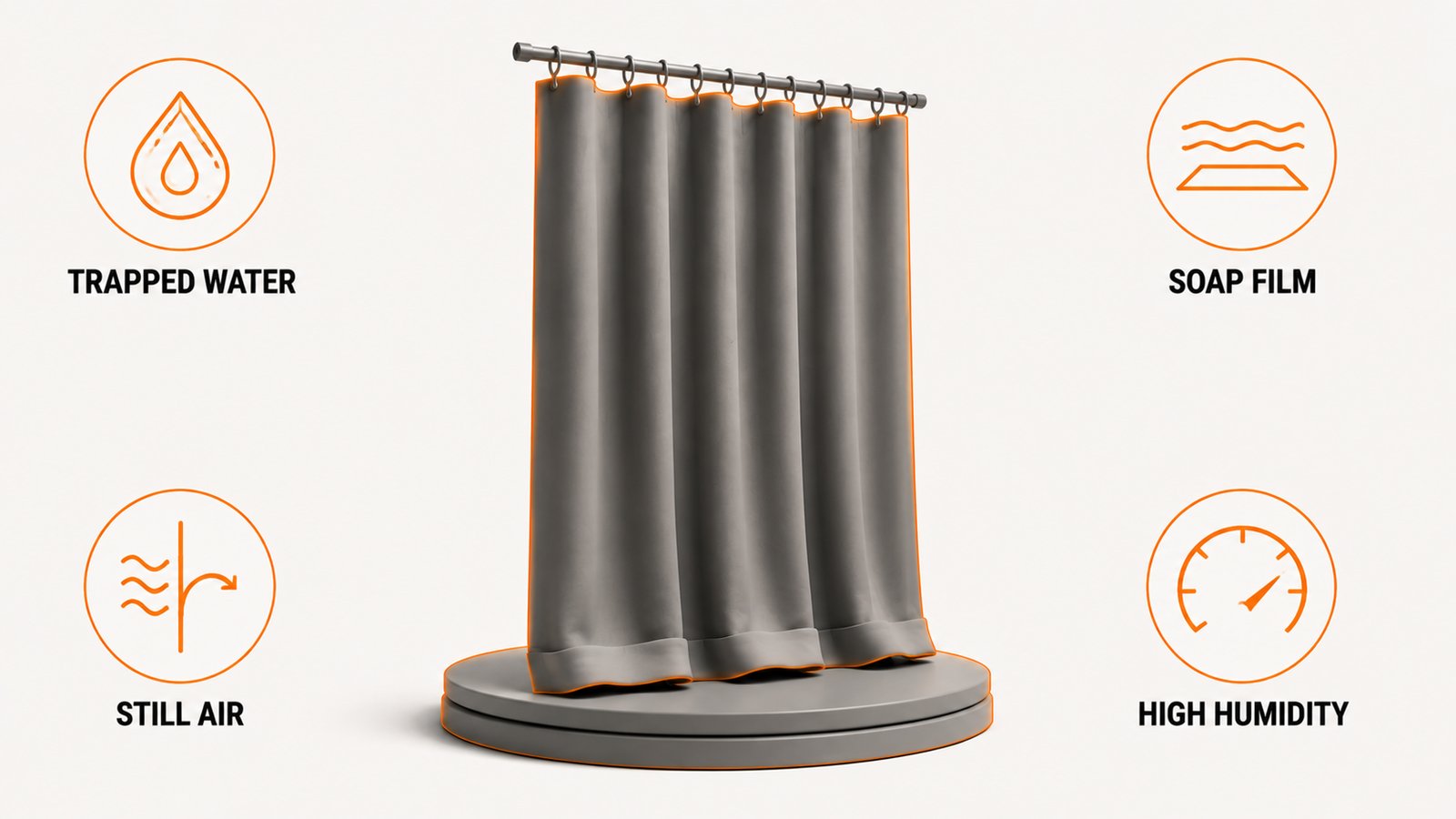
Four things line up:
- Water that never leaves. The bottom hem holds a bead of water after every shower, and the folds hold more. The EPA states that mold may begin growing indoors when mold spores land on surfaces that are wet, and that none of the many types of mold will grow without water or moisture.
- A food source you cannot see. Soap scum, body oils, shampoo residue and hard-water minerals coat the lower third of a curtain. Vinyl and polyester are not food, but the film on them is.
- Still air inside the folds. A bunched curtain has no airflow through it. The EPA's own bathroom guidance points at ventilation as the fix, which tells you what the problem is.
- Humidity that stays high. The EPA advises keeping indoor relative humidity below 60 percent and ideally between 30 and 50 percent, and a bathroom after a shower sits far above that for as long as the moisture has nowhere to go.
The EPA is refreshingly realistic about this room: places that are often or always damp can be hard to maintain completely free of mold, and if there is some mold in the shower or elsewhere in the bathroom that seems to reappear, increasing ventilation and cleaning more frequently will usually prevent it recurring, or at least keep it to a minimum. Aim for control, not sterility. Our bathroom guide covers the whole room in order of risk.
Washing the Curtain and the Liner
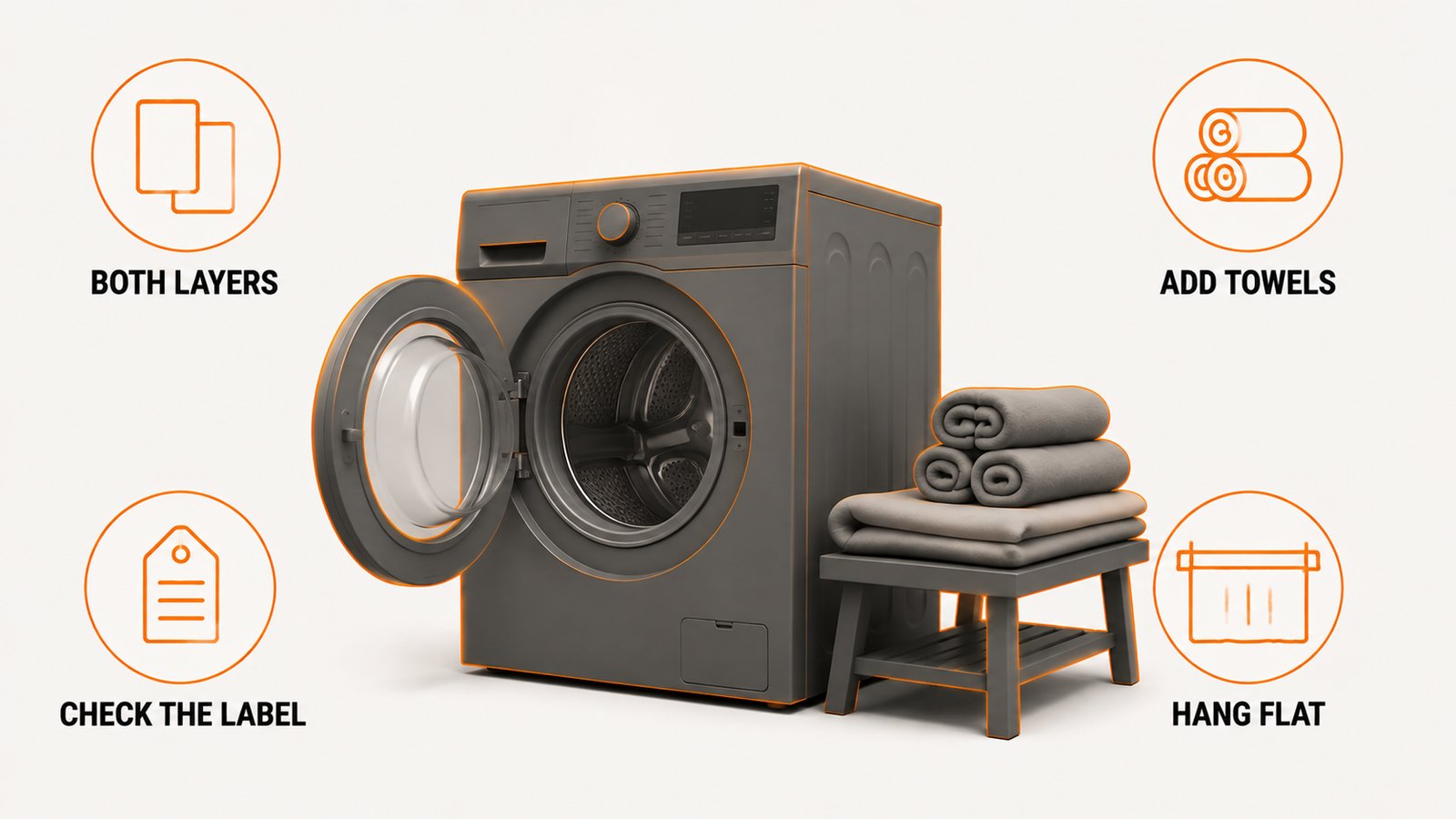
Most curtains and most plastic liners are machine washable, and washing is the method with the least chance of damaging the material. Check the care label first, because that label is the manufacturer's instruction and it beats any general advice on the internet, including this page.
1. Take both layers down. Fabric curtain and plastic liner. People wash the pretty one and leave the liner up, which is the layer actually growing the mold.
2. Wash with a few towels. Two or three old towels in the drum give the curtain something to rub against, which does the mechanical scrubbing a smooth plastic liner otherwise never gets. Use the temperature the care label specifies.
3. Detergent, and a booster if the label allows it. The CDC states that mold can be removed from hard surfaces with household products, soap and water, or a bleach solution of no more than 1 cup of household laundry bleach in 1 gallon of water. If the liner is white plastic and the label permits bleach, that is a reasonable option. On a colored fabric curtain, skip the bleach and use detergent with an oxygen-based laundry booster.
4. Never combine cleaners. The EPA is explicit: never mix chlorine bleach solution with other cleaning solutions or detergents that contain ammonia, because toxic fumes could be produced. That includes many glass and multi-surface sprays. One product at a time, always.
5. Rehang it damp and let it hang flat. Machine drying melts or warps most plastic liners, so hang the liner back up spread out to its full width rather than bunched. Air moves through a flat curtain. It does not move through a folded one. Run the bathroom fan while it dries.
If the smell survives the wash, the machine may be part of the problem rather than the curtain. Our page on mold in a washing machine covers the gasket and dispenser, and getting a mildew smell out of fabric deals with the odor itself.
The Hem, the Folds, and the Magnets
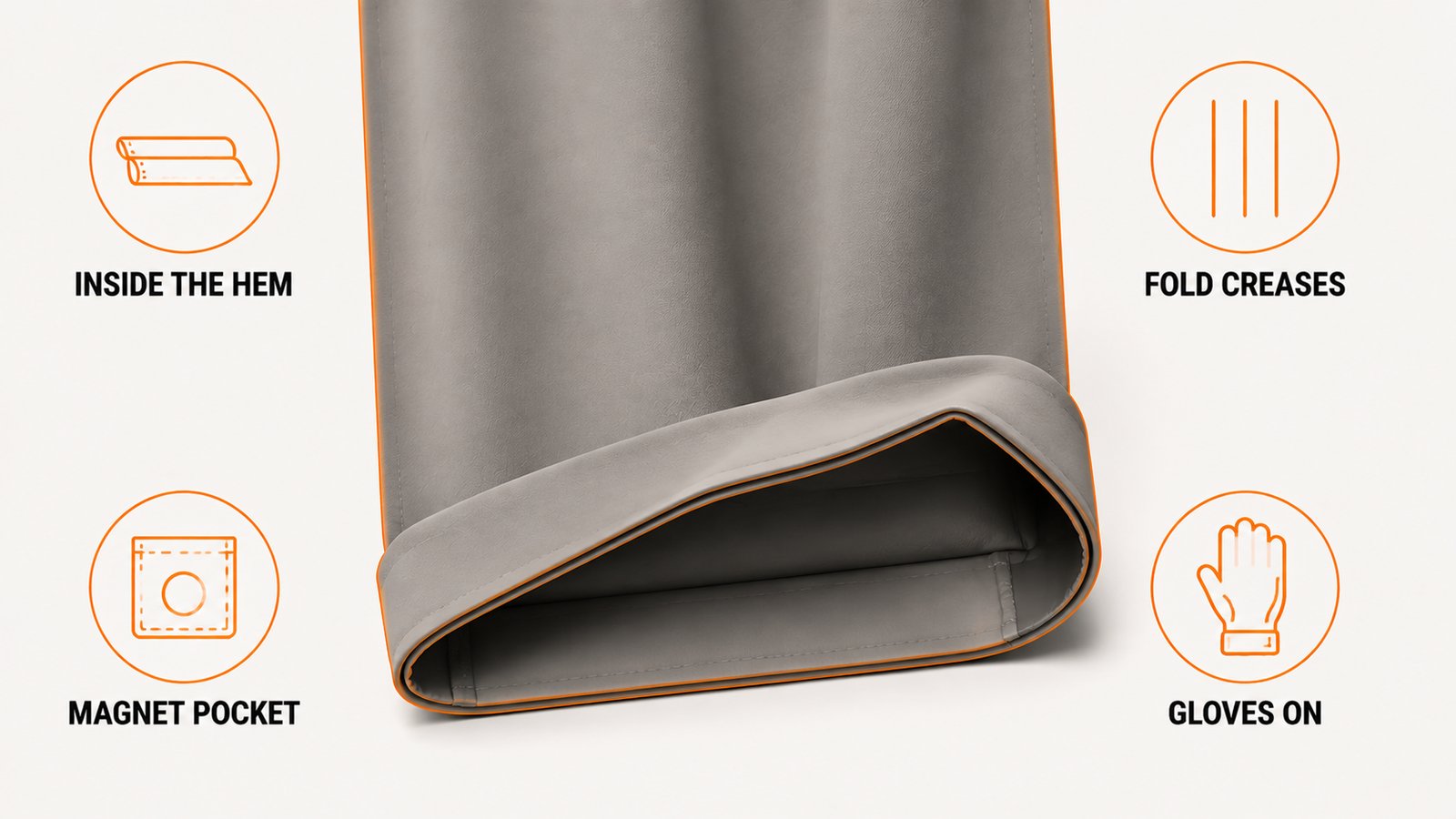
A wash cycle handles the open surface. It regularly misses three places, and those three places are where the growth always comes back first.
Inside the bottom hem. Most liners have a folded and welded hem at the bottom. Water wicks in and sits there in a sealed pocket. Turn the hem inside out where you can, or lay it flat on a hard surface and scrub both faces with a soft brush and detergent. If the hem is welded shut and black inside, that curtain is finished. See the next section.
The vertical fold creases. Every place the curtain habitually folds becomes a permanent water channel. Lay the curtain flat in the tub, scrub along each crease line specifically rather than in circles across the surface, and rinse.
The magnet or weight pockets. Small sewn pockets at the bottom hold magnets or weights so the curtain hangs against the tub. They are the wettest, darkest, least ventilated part of the whole assembly. Take the weights out if they come out, scrub the pocket, and dry it fully.
The ring holes at the top. Less common, but grommets trap water and the reinforced header stays damp in a humid room. Wipe them when you take the curtain down.
Two rules while you scrub. Wear gloves, and open a window or run the fan. New York State's health department recommends rubber gloves and an N95 mask for jobs other than routine cleaning, and cleaning a heavily grown liner is not routine cleaning. And remember the EPA's point that dead mold may still cause allergic reactions in some people, so it is not enough to simply kill the mold, it must also be removed. Killing without wiping leaves the residue in place.
When to Replace Instead of Clean
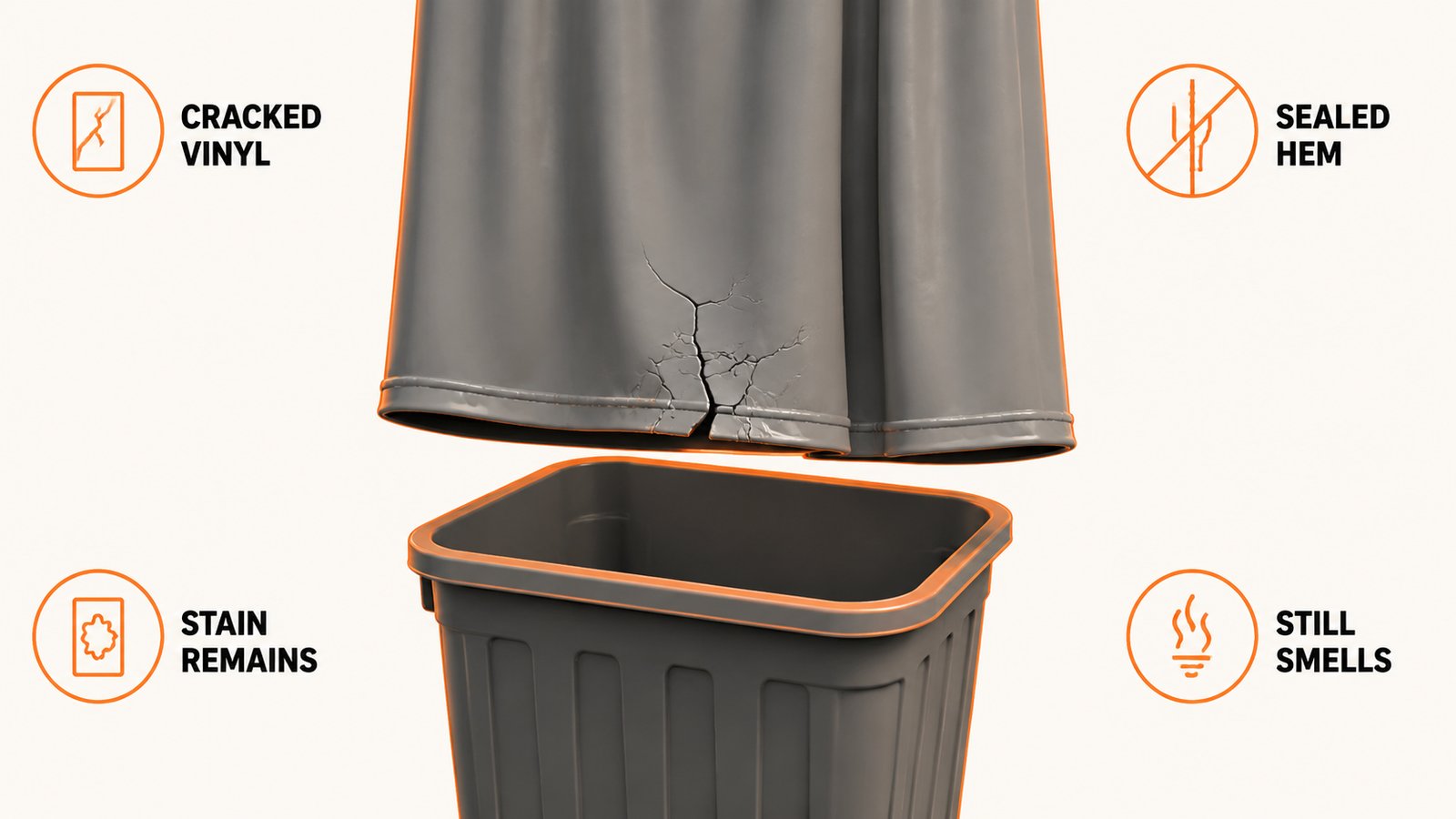
A liner costs less than an evening of scrubbing, so the threshold for replacing one is low. Bin it when any of these are true.
- The vinyl has cracked or crazed. Once the surface breaks, growth gets into the material rather than sitting on it. The EPA makes the general point about porous material: mold can grow on or fill in the empty spaces and crevices of porous materials, so it may be difficult or impossible to remove completely. A cracked liner behaves the same way.
- The sealed hem is discolored from the inside. If you cannot get a brush into it, you cannot clean it. That is a manufactured dead space, not a cleaning problem.
- Staining survived two proper washes. The EPA notes that mold may cause staining and cosmetic damage, and that it may not be possible to clean an item so that its original appearance is restored. At that point you are cleaning a stain, not a live problem, and a liner is not worth the effort.
- It smells after drying completely. A fully dry curtain that still smells is holding residue you have not reached.
- It is a fabric curtain with growth through the weave. Textiles are porous. The same EPA reasoning applies, and New York State advises that all wet materials that cannot be cleaned and dried thoroughly should be discarded.
Replacing the liner and keeping the decorative outer curtain is usually the right call, because the liner takes all the water and the outer curtain rarely does. Treat the liner as a consumable on a schedule rather than an item you fight to save.
Mold-Resistant Shower Curtains
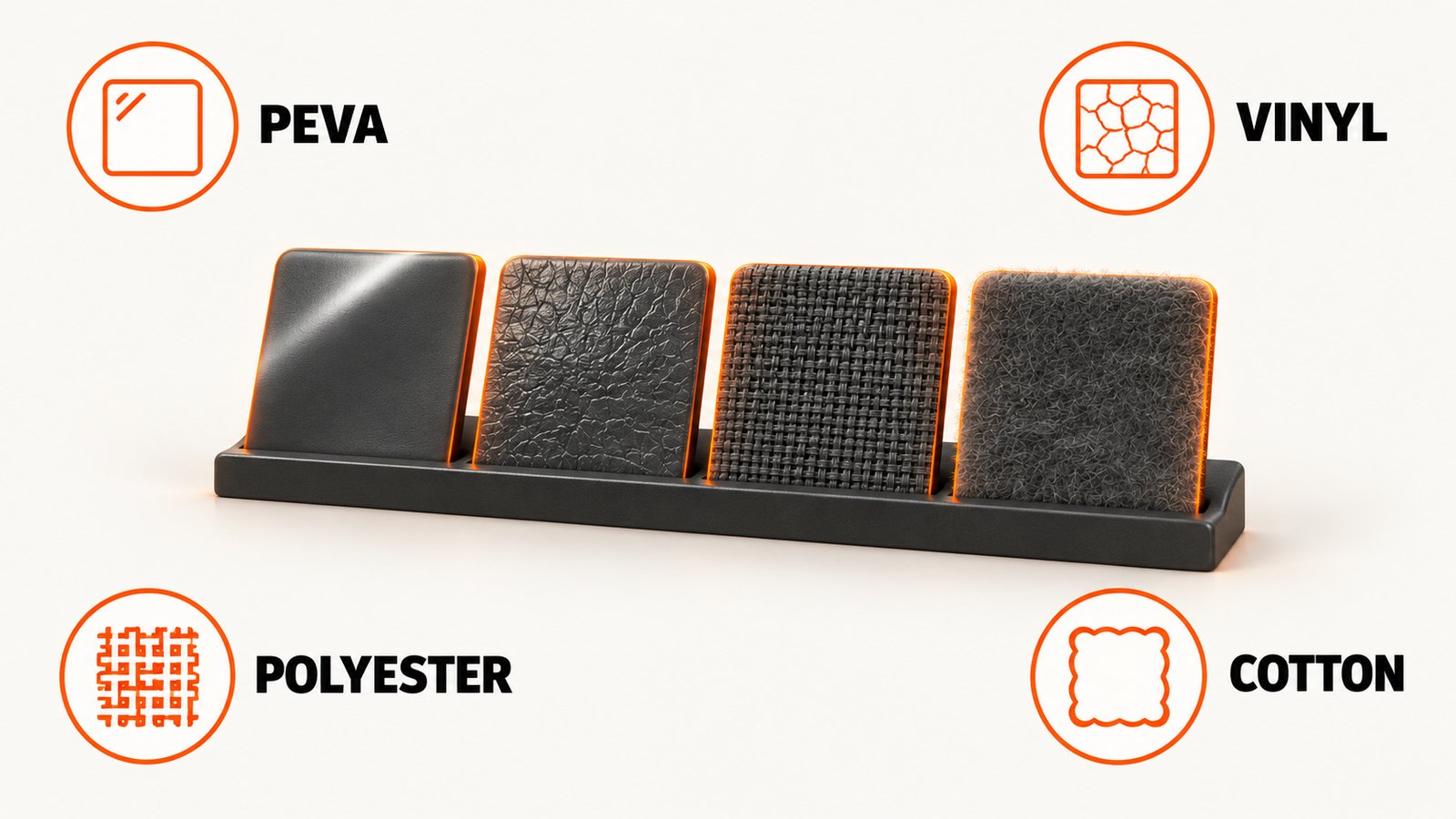
Mold-resistant is a marketing term with no federal definition behind it for this product category, so read it as a claim rather than a certification. Some materials do genuinely dry faster and hold less film, which is what actually helps.
| Material | How it behaves | Practical note |
|---|---|---|
| PEVA or EVA liner | Smooth, non-porous, sheds water quickly, holds less film than vinyl | Cheap enough to replace on a schedule. Usually machine washable on cold. |
| Vinyl (PVC) liner | Non-porous when new, but crazes and cracks with age and heat | Fine until it cracks. Once it does, growth gets into the fissures. |
| Polyester fabric | Woven, dries faster than cotton, machine washable repeatedly | The most cleanable option, because you can wash it hot and often. |
| Cotton or linen | Absorbent and slow to dry, which is the opposite of what you want | Only workable with a separate liner taking all the water. |
| Treated antimicrobial fabric | Carries a surface treatment intended to slow growth | Treatments wear off with washing. Judge it on drying speed, not the label. |
The variable that beats material every time is whether the curtain dries between showers. A cheap PEVA liner spread flat under a running fan outperforms an expensive treated curtain left bunched in a bathroom with no ventilation. That is the same conclusion the EPA's bathroom guidance reaches from the other direction: increase ventilation and clean more frequently.
If you also want the wall and tile to stop growing, our comparison of mold-resistant paints covers the coatings with actual product data behind them, and mold on grout handles the surface most people give up on.
The Shower Head and the Rest of the Bathroom
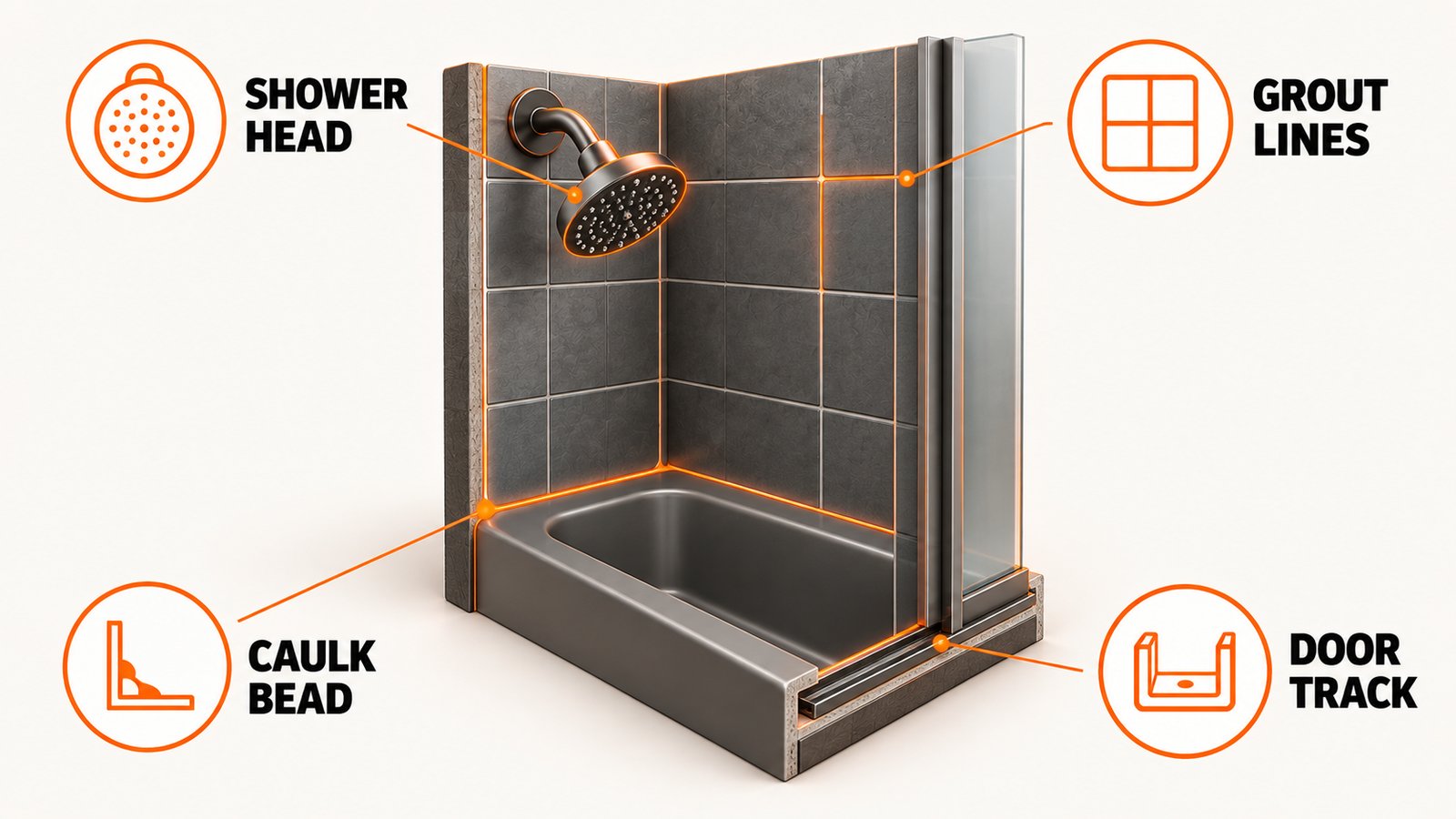
If the curtain is growing, check four other surfaces in the same room before you call it done.
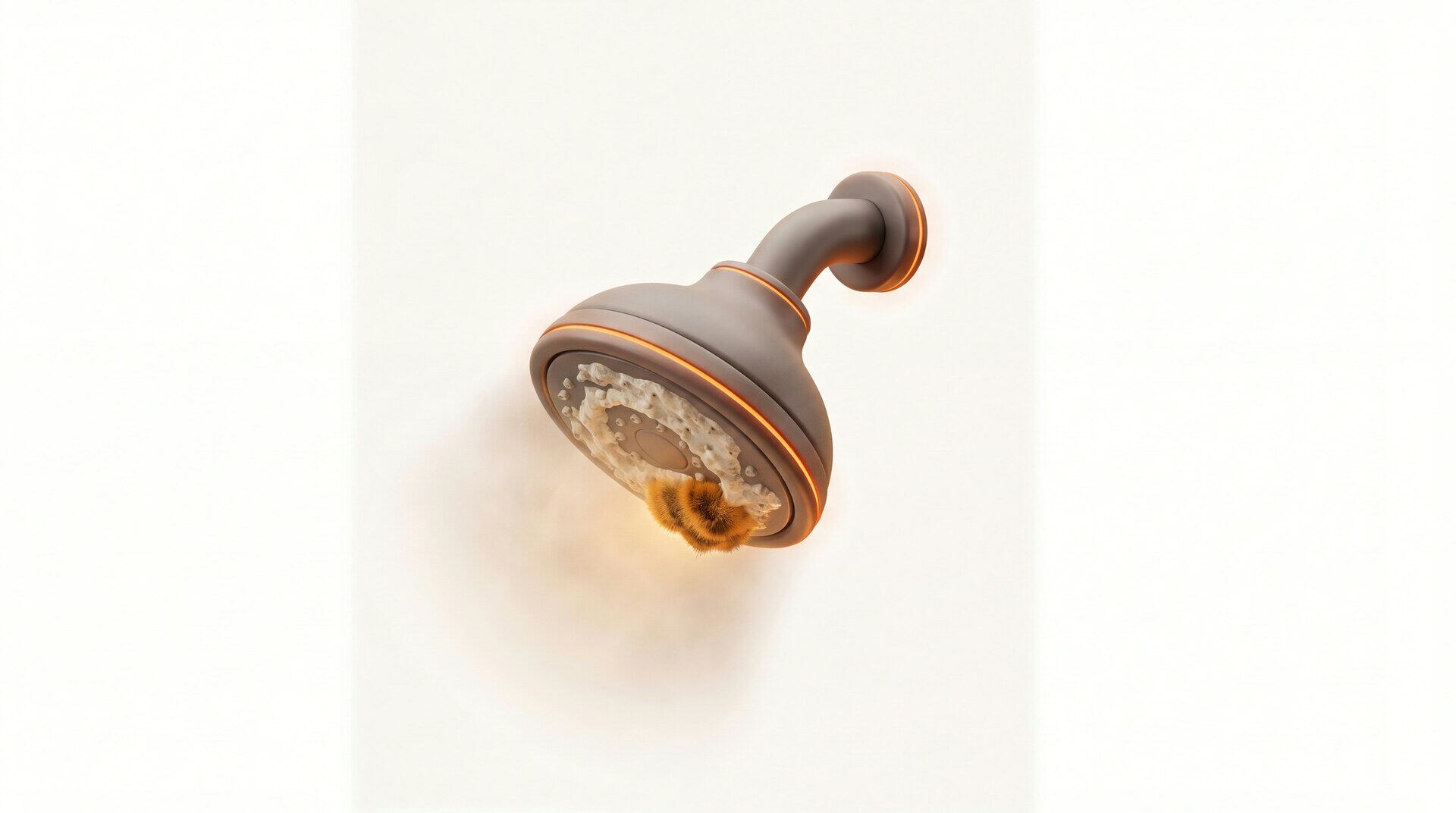
The shower head. Mineral scale builds inside the face plate and holds moisture between uses. Unscrew the head where possible and soak it, or bag it against the arm with descaler and leave it. Scrub the face with a brush afterward and run the water hot for a minute to flush loosened debris. Do not combine descaler with any bleach product, per the EPA's warning about mixing cleaners.
Pink slime is not mold. That pink or orange film on the head, the tub floor and the caulk line is generally attributed to bacteria rather than fungus, most often Serratia marcescens. It cleans off easily with detergent and a brush and comes back fast in a damp bathroom. We cover it on pink mold in the shower and pink mold.
Grout and caulk. Grout is porous and caulk is not, which is why the black line along the tub edge behaves differently from the gray haze in the joints. Our pages on mold on grout and mold on caulk cover both, including when recaulking is the only real fix. The EPA's rule applies to both: do not paint or caulk moldy surfaces, clean up the mold and dry the surfaces first, because paint applied over moldy surfaces is likely to peel.
The door track, if you have one. Sliding door tracks hold standing water permanently and are the most overlooked surface in a bathroom. Vacuum the debris out, scrub, and check that the weep holes are clear.
Whatever the surface, the CDC's cleaning guidance covers it: mold can be removed from hard surfaces with household products, soap and water, or a bleach solution of no more than 1 cup of household laundry bleach in 1 gallon of water. New York State's version for areas where moisture cannot be eliminated is a weaker mix, one cup of bleach in five gallons of water, used to keep growth under control. Note the EPA's position that using a biocide such as chlorine bleach is not recommended as a routine practice during mold cleanup, so detergent and scrubbing is the default and bleach is the exception.
Four Habits That Stop It Returning
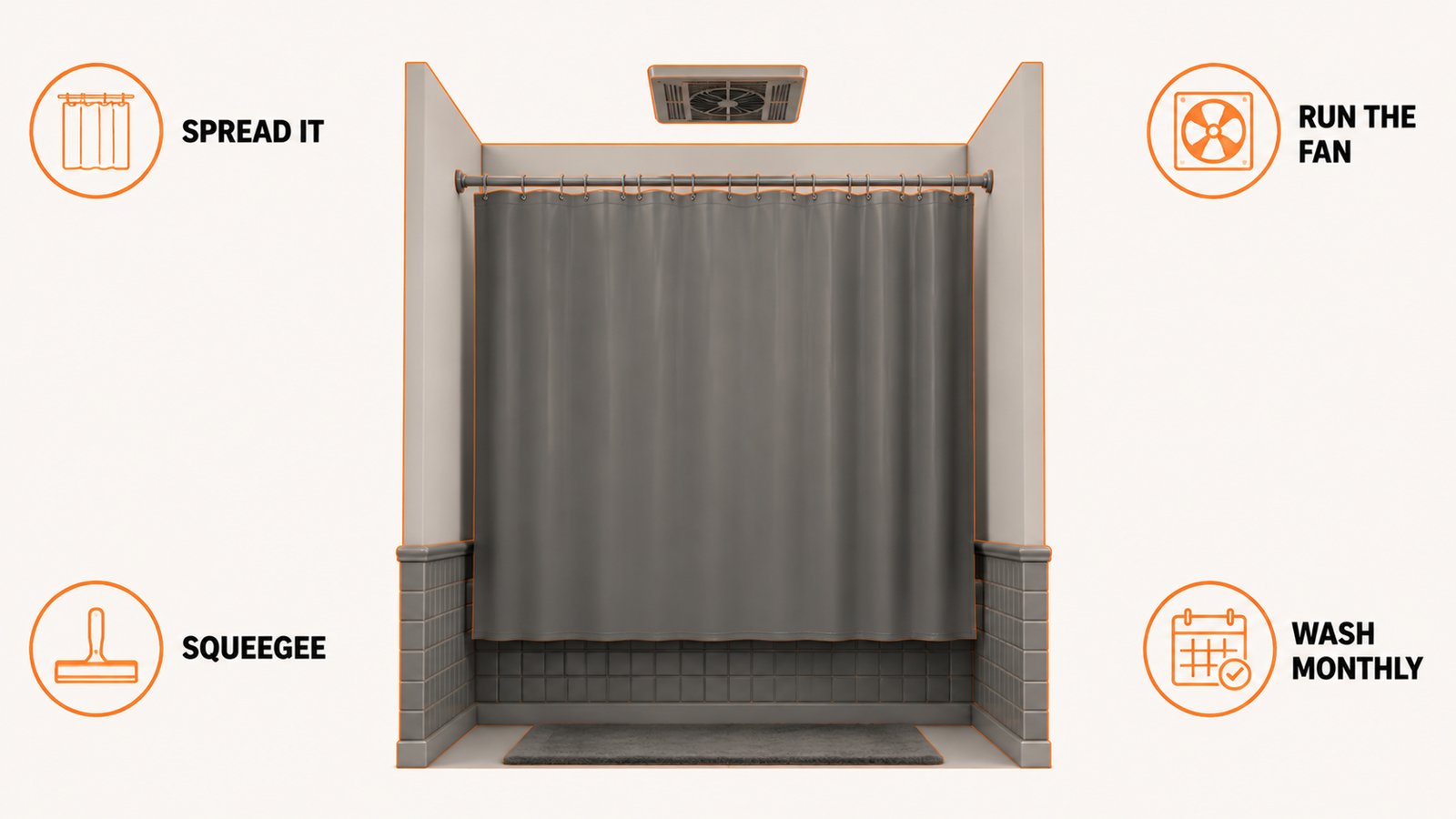
The EPA's bathroom guidance is two moves: increase ventilation, which means running a fan or opening a window, and clean more frequently. Everything below is a version of those two.
1. Spread the curtain full width after every shower. Ten seconds. A curtain pushed to one end keeps a wet fold for hours; a curtain spread flat dries in under an hour in a ventilated room. This single habit does more than any product.
2. Run the fan during the shower and for twenty minutes after. The moisture is still in the room after you get out, and that is when it condenses on cool surfaces. If the fan is loud or weak, a timer switch solves the compliance problem. Check that the fan actually terminates outside rather than in the attic, which is a very common defect and simply relocates the moisture.
3. Squeegee the walls and wipe the tub edge. Removing standing water removes the growth medium. The EPA's whole framework starts here: the key to mold control is moisture control.
4. Wash the liner on a schedule, not when it looks bad. New York State names shower curtains as a surface that should be part of routine cleaning. Monthly works for most households. Put it in with the towels and it costs you nothing extra.
Two supporting moves if the room stays humid. Keep relative humidity below 60 percent and ideally 30 to 50 percent per the EPA, or no higher than 50 percent per the CDC, which is worth measuring with a meter the EPA prices at $10 to $50. And if the bathroom has no window and a weak fan, a small dehumidifier in the room is a legitimate answer. Our humidity risk calculator and prevention guide cover the rest.
When to Call a Pro
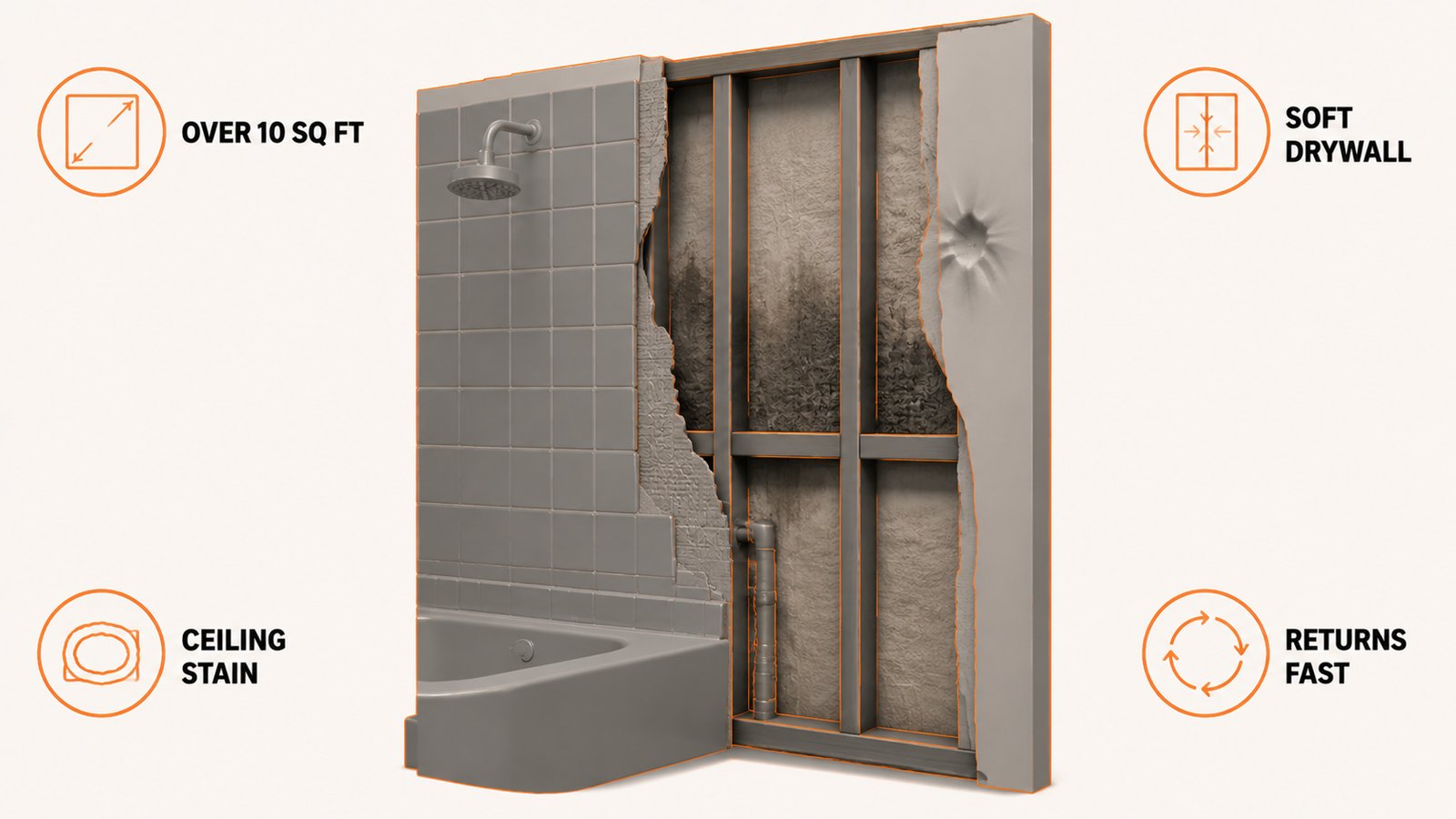
A curtain is a laundry problem. A wall is not. Escalate when you see any of these.
- Growth on the wall or ceiling covering more than about 10 square feet. That is the EPA's threshold for handing off a cleanup, roughly a 3-foot by 3-foot patch, and New York State uses the same 10-square-foot figure for calling in a licensed contractor.
- The drywall is soft, bubbling or stained. Paint that bubbles near the tub, or drywall that gives under thumb pressure, means water is in the material. Our page on mold behind walls covers the signs, and mold on the ceiling covers the surface above a shower.
- There is a stain on the ceiling of the room below. That is a leak, not a humidity problem, and it needs a plumber before anything else.
- It comes back within days of a proper clean. Fast regrowth points at a moisture source you have not found. The EPA's rule holds: clean up the mold but do not fix the water problem, and most likely the mold problem will come back.
- Anyone in the home is at higher risk. The CDC notes that people with asthma or who are allergic to mold may have severe reactions, and that immune-compromised people and people with chronic lung disease may get infections in their lungs from mold. The EPA advises consulting a health professional before starting cleanup if you have health concerns.
When you hire, look for a contractor working to the ANSI/IICRC S520 standard for professional mold remediation and check whether your state licenses this work. Our mold remediation certification page maps who is licensed where.
Frequently asked questions
Can you machine wash a moldy shower curtain?
Usually yes, and it is the method with the least chance of damaging the material. Check the care label first, wash the plastic liner as well as the fabric curtain, and add a few old towels to the drum so the curtain gets some mechanical scrubbing. Hang the liner back up spread flat to dry rather than machine drying it, because heat warps most plastic liners.
Should I use bleach on a shower curtain?
Only if the care label allows it and the material is white. The CDC states that mold can be removed from hard surfaces with household products, soap and water, or a bleach solution of no more than 1 cup of household laundry bleach in 1 gallon of water. The EPA adds that using a biocide such as chlorine bleach is not recommended as a routine practice during mold cleanup, so detergent and scrubbing should be your default.
Why does mold keep coming back on the same curtain?
Because the conditions have not changed. The EPA states that if there is some mold in the shower or elsewhere in the bathroom that seems to reappear, increasing ventilation by running a fan or opening a window and cleaning more frequently will usually prevent it recurring, or at least keep it to a minimum. Spreading the curtain flat after every shower is the single highest-value habit.
When should I throw a shower curtain liner away?
When the vinyl has cracked or crazed, when the sealed bottom hem is discolored from the inside where no brush reaches, when staining survives two proper washes, or when it still smells after drying completely. The EPA notes that mold may cause staining and cosmetic damage and that it may not be possible to restore an item's original appearance, which is the point where a liner stops being worth the effort.
Is a mold-resistant shower curtain worth buying?
Material helps less than drying does. There is no federal definition of mold-resistant for this product category, and antimicrobial surface treatments wear off with washing. A smooth PEVA liner spread flat under a working extractor fan will outperform an expensive treated curtain left bunched in an unventilated bathroom every time.
Is the pink film on my shower head mold?
It is generally attributed to bacteria rather than fungus, most often Serratia marcescens, which is why it looks slimy rather than fuzzy and wipes off easily. It returns quickly in a damp bathroom. Clean the head with detergent and a brush, descale it if there is mineral buildup, and never combine a descaler with a bleach product, because the EPA warns that mixing cleaners can produce toxic fumes.
What humidity should a bathroom be kept at?
The EPA advises keeping indoor relative humidity below 60 percent, ideally between 30 and 50 percent, and the CDC advises no higher than 50 percent all day long. A bathroom spikes well above that during a shower, which is why the fan matters more than the number: the goal is getting back under it quickly rather than never going above it.
When is bathroom mold more than a cleaning problem?
When growth covers more than about 10 square feet, roughly a 3-foot by 3-foot patch, which is the EPA's threshold for hiring a professional and the same figure New York State uses. Also when the drywall is soft or bubbling, when there is a stain on the ceiling of the room below, or when growth returns within days of a proper clean, all of which point at water in the structure.
Sources
Every claim on this page traces to one of these. Links open the primary document.