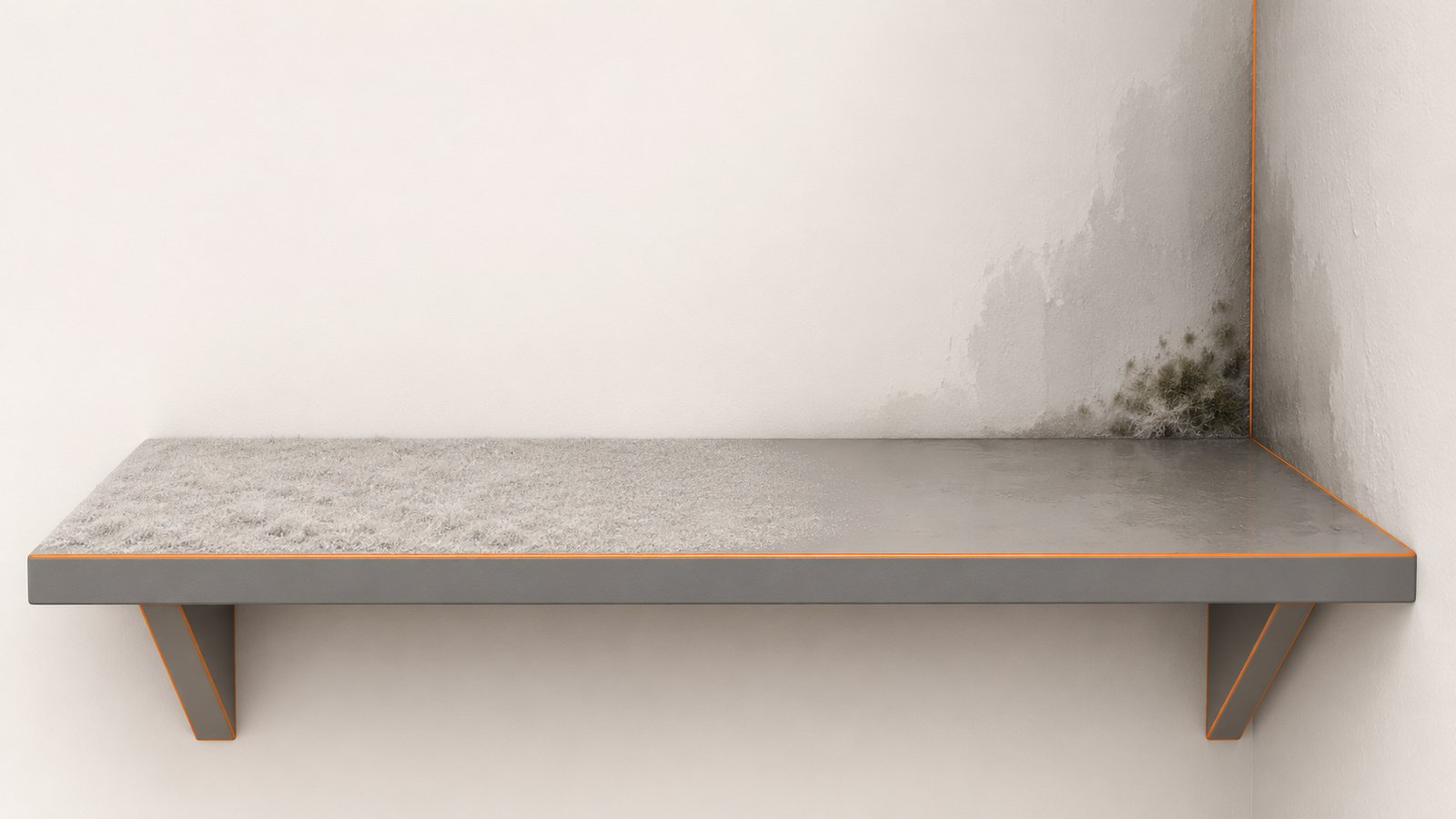
Is It Mold or Dust?
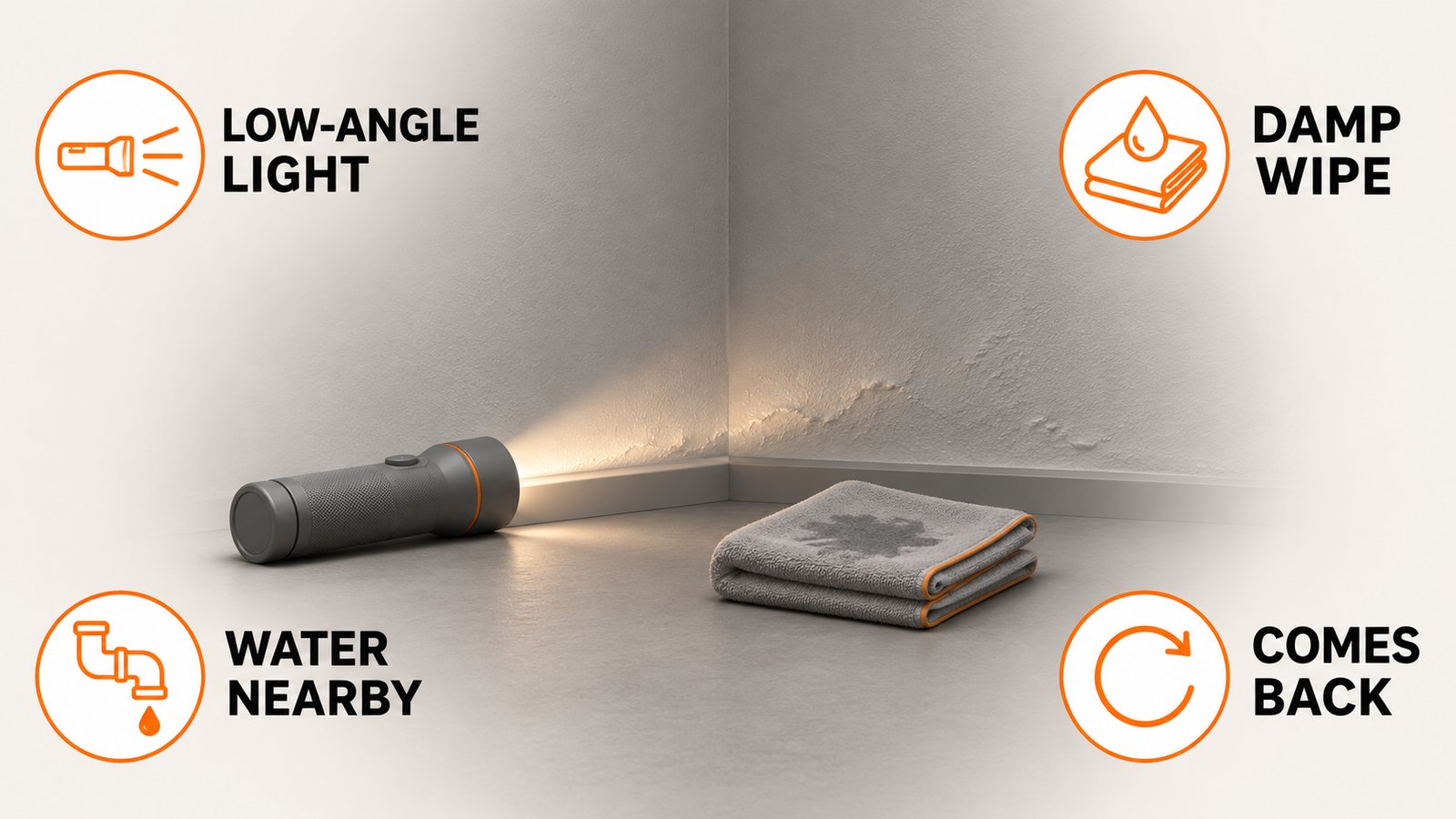
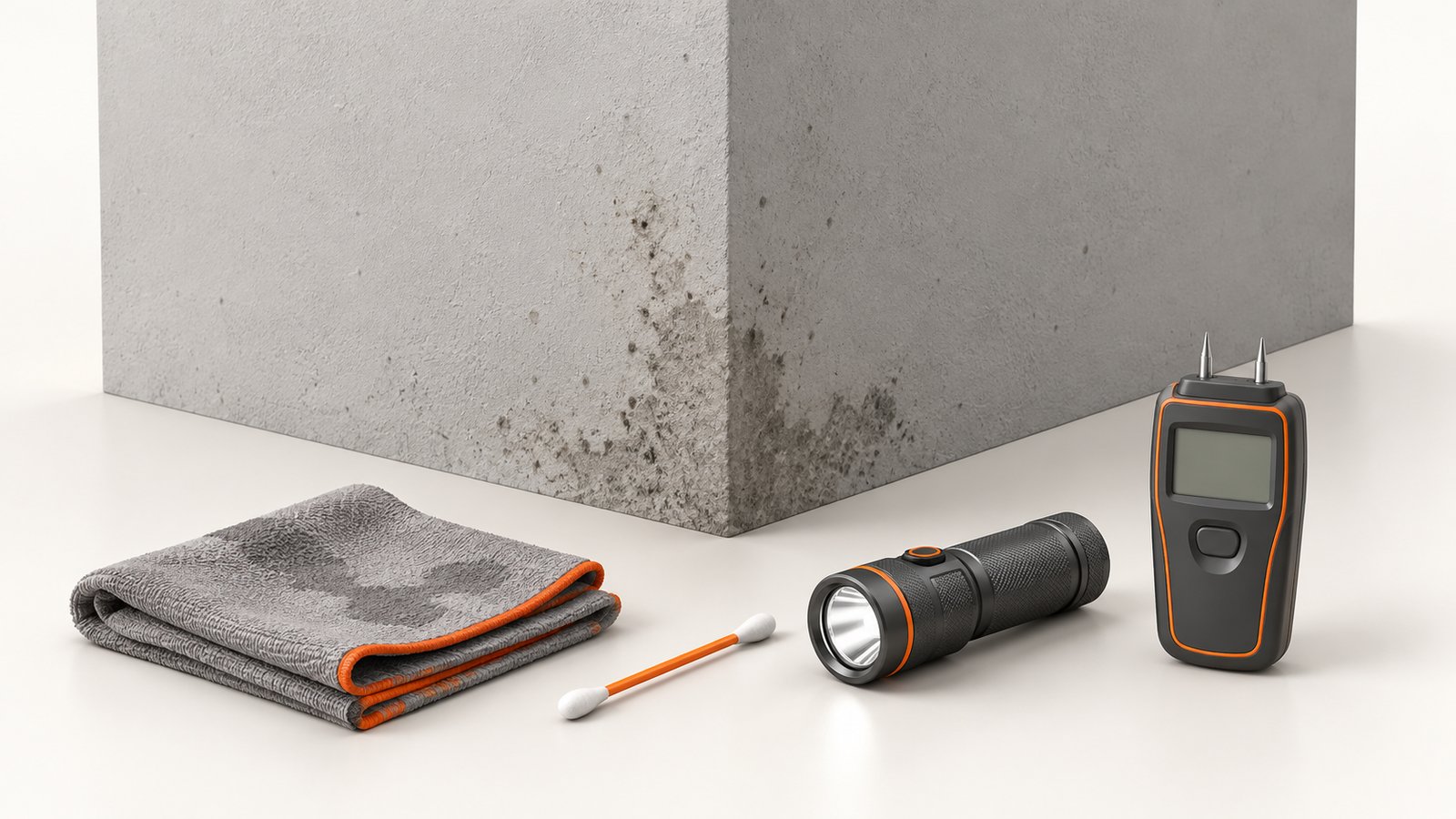
Start by looking, before you touch anything. Three questions sort most spots: where is it, what does it look like in low light, and is anything damp?
The question is harder than it sounds, because dust and mold overlap. The EPA says some mold spores will be found floating through the air and in house dust, and the EPA lists pollen, pet dander, dust mites, outdoor soil and human skin flakes among the other things dust may contain. A layer of dust can hold a few spores without anything growing. The EPA says those spores will not grow if moisture is not present.
Growth is different. The CDC says mold will grow where there is moisture, and that it can grow in dust, paper, wood and fabric. Dust is what settled. Mold is alive, feeding and spreading. Dust that stays damp can become a place where mold grows.
This table is our own rule-of-thumb guide, built on the checks in our mold or dirt page. They are household checks, not agency findings and not lab tests.
| Clue | Points to dust | Points to mold | What it cannot tell you |
|---|---|---|---|
| Light held low and flat to the surface | Flat film with no height | Raised, fuzzy, speckled or slimy | Thin, powdery mildew can lie flat too, so a flat film on a damp surface is not cleared. It also cannot show the type of mold or what is behind the wall |
| Damp-cloth wipe | Lifts in one pass and stays gone | Smears, leaves a ghost mark, or returns | Mold sitting on a surface can wipe off too |
| Water nearby | Dry spot on a dry wall | Leak, condensation, cold wall, bathroom or basement | Water you cannot see |
| After cleaning | Stays clean until new dust lands | Back in days or weeks, same spot | A leak stain can come back too |
| Smell | Little or none | Musty (the CDC says mold can smell musty) | Where the problem is |
No single row decides it. If most rows point to mold, or the spot is damp, treat it as possible mold. See is this mold for more checks, and soot vs mold covers the other dark film that gets mistaken for dust.
Dust vs Mold on a Vent
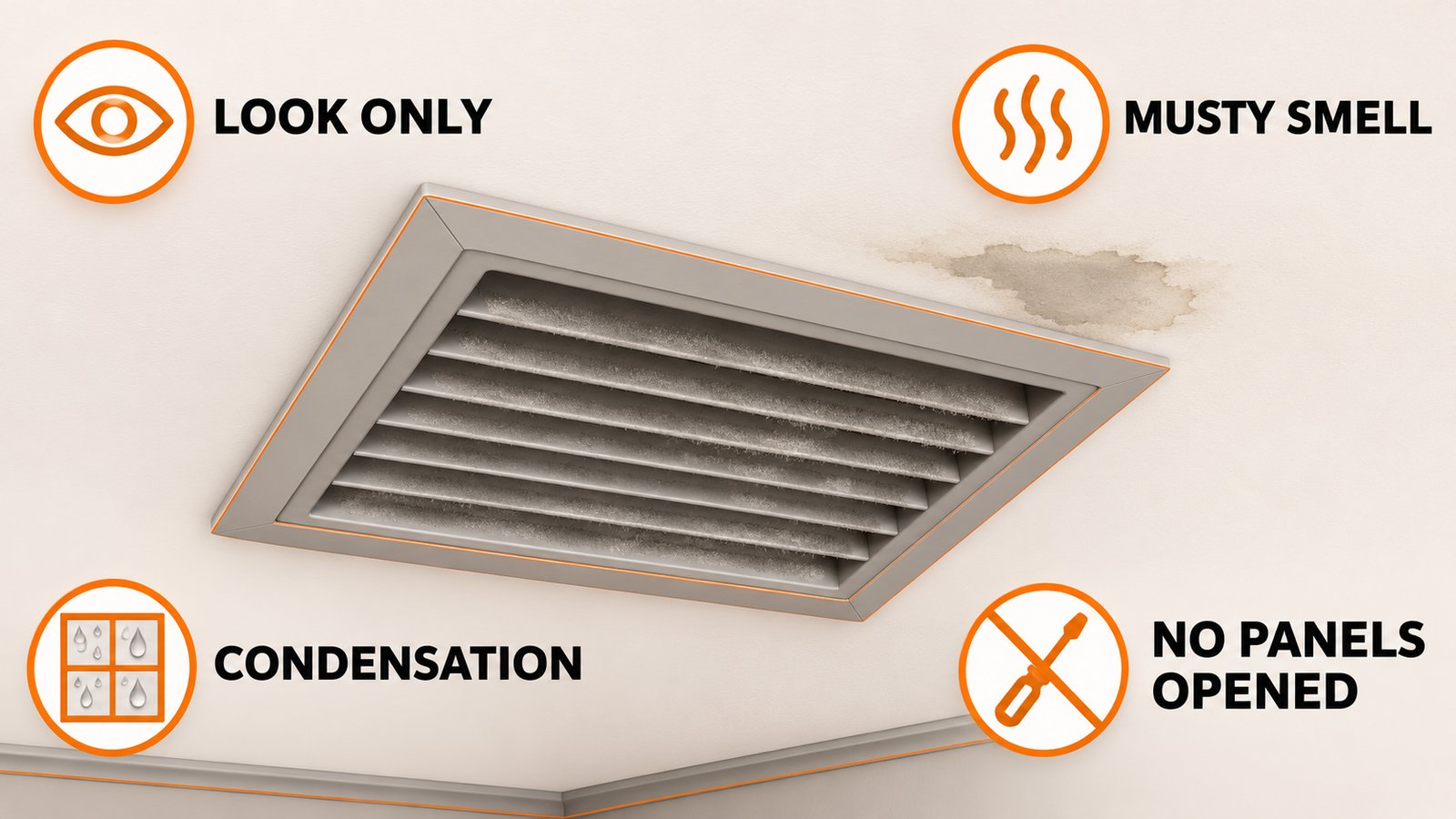
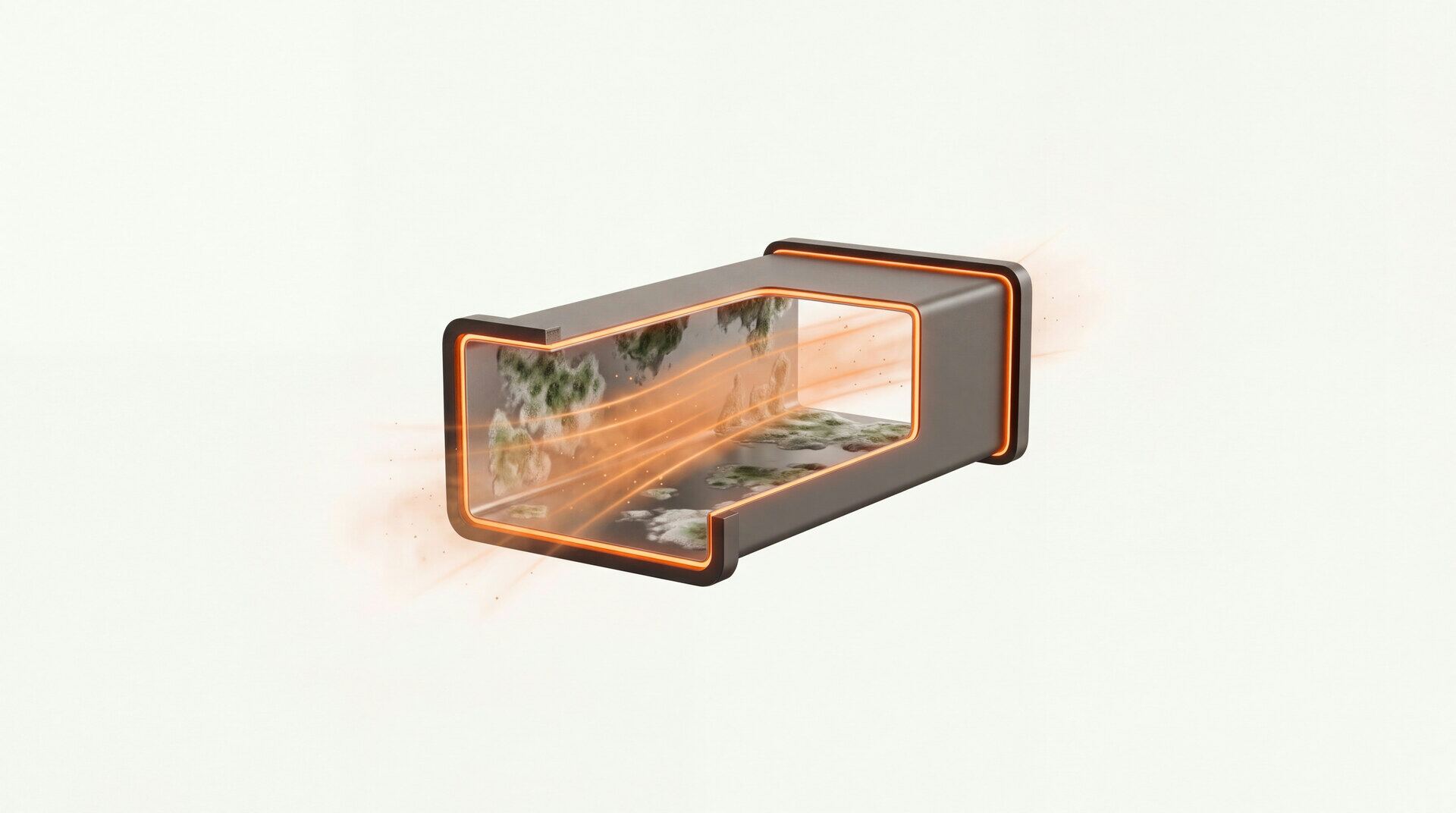
Vents collect dust because air moves through them. Gray fuzz on the slats of a grille is usually dust. That is a common rule of thumb, not an agency finding, and it matches our guide on mold or dirt.
A vent can grow mold, but it needs water. The EPA mold course lists condensation on an uninsulated air conditioning duct as a moisture problem. So look around the vent for water, not only at the film:
- Drips, damp patches or beads of water on or near the vent.
- A musty smell when the system runs. The CDC says mold can smell musty, and the EPA course says a moldy odor suggests mold is growing in the building and should be investigated.
- A fuzzy, slimy or wet-looking patch, instead of a dry gray film.
Dust alone does not confirm mold in a duct, and a spot on a vent does not prove anything is growing inside. Look at the visible surface only. Do not remove registers or open panels. If you know or suspect the system is contaminated with mold, the EPA says not to run it, because that could spread mold through the building, and it points to its guide on air duct cleaning. See mold in air ducts, mold in an air conditioner and the HVAC moisture maintenance checklist.
White Dusty Mold
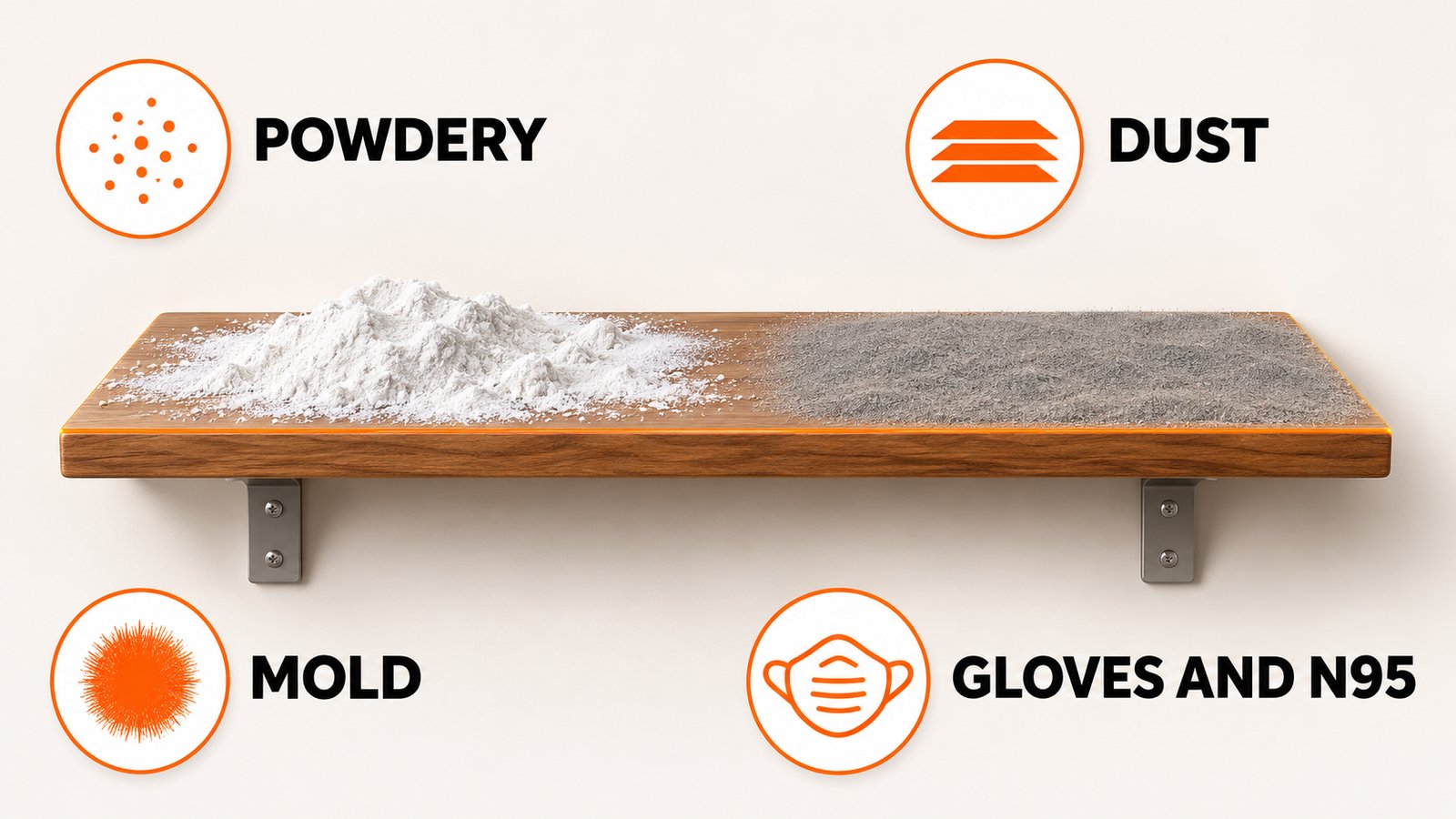
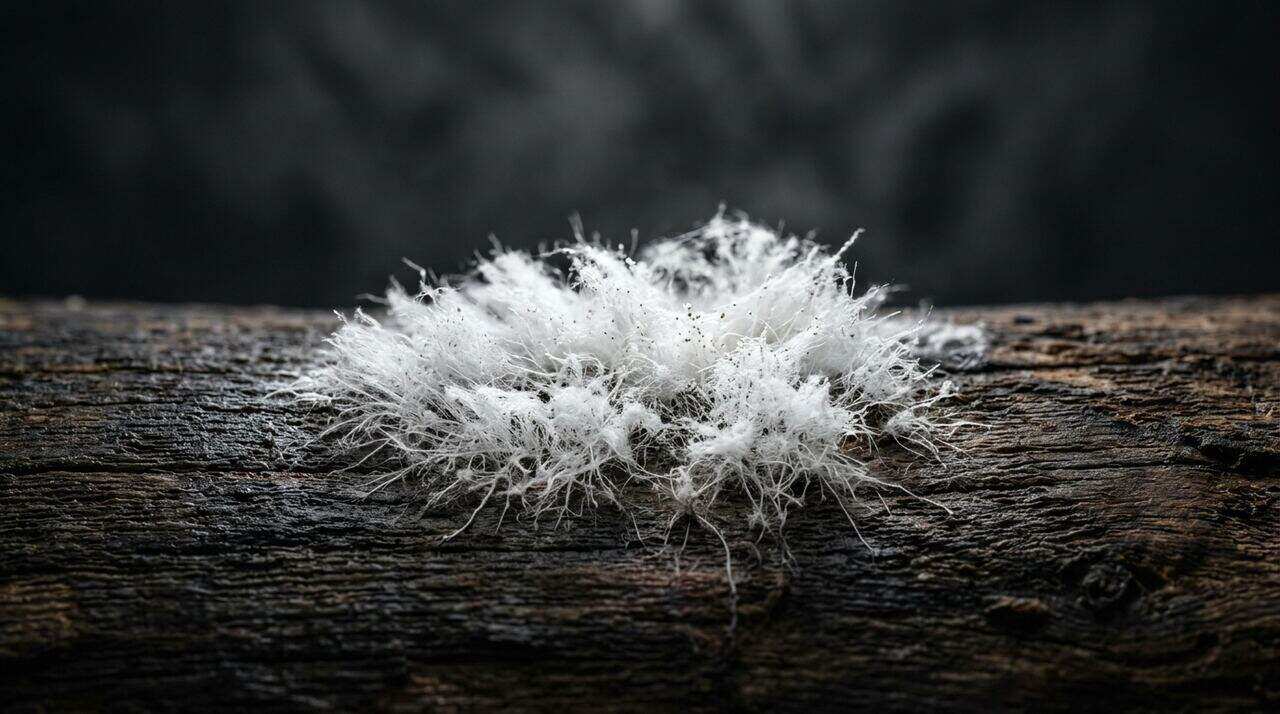
A white, powdery coating is one of the hardest to call. The EPA says molds come in many colors, including white. The USDA Forest Products Laboratory describes mold on wood as fuzzy or powdery surface growth, in colors from light shades to black. So powdery does not mean dust. It can be either one.
Mildew is a kind of mold, so a flat white or gray coating that is mildew still gets mold cleanup (see mold vs mildew). On concrete, brick or block, white chalky crystals are a separate question that efflorescence vs mold answers. Our white mold page covers white growth on walls, wood and stored items.
Use the clues from the first section. White powder on a dry shelf that wipes off once and stays off is behaving like dust. White powder on a damp basement wall, on wood near a leak, or on a spot that keeps returning is behaving like mold.
If you wipe it, put on gloves, goggles and an N-95 respirator first, and wipe one small spot only. The EPA says you may want to wear an N-95 respirator, and it recommends long gloves and goggles without vent holes.
Green Dusty Mold
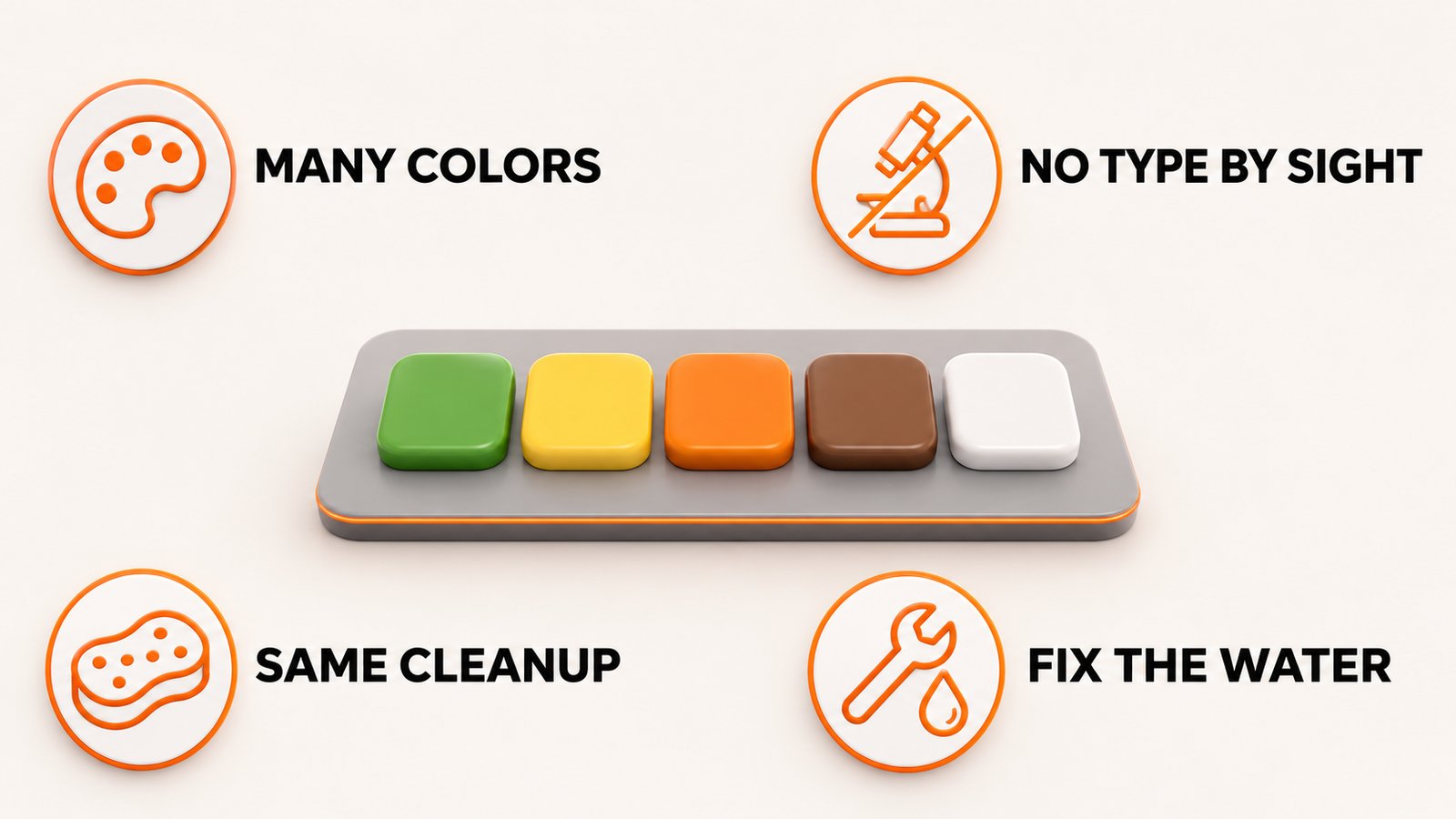
Green, yellow, orange and brown dusty patches all get searched for. The answer is the same for each: color does not tell you what you have. The CDC says mold can look like spots of many different colors, and the Forest Products Laboratory says green and yellowish hues are common on wood. A green dusty film on a damp shelf fits mold, but it is not proof.
Color does not tell you how risky a patch is either. The EPA says "black mold" is not a species, and neither is "toxic mold," and that no one can tell whether a mold is producing mycotoxins just by looking at it. The CDC says you do not need to know the type of mold: if it is growing in your home, clean it up and fix the moisture problem. Our pages on green mold, yellow mold, orange mold and brown mold describe how each color tends to show up. What does mold look like gives the wider picture, and black mold explains the label.
What stays the same for every color, per the EPA:
- Fix the water problem, or the mold will most likely come back.
- Scrub mold off hard surfaces with detergent and water, and dry them completely.
- Absorbent materials such as ceiling tiles and carpet may have to be thrown away.
- Do not paint or caulk over moldy surfaces.
Dust Test for Mold
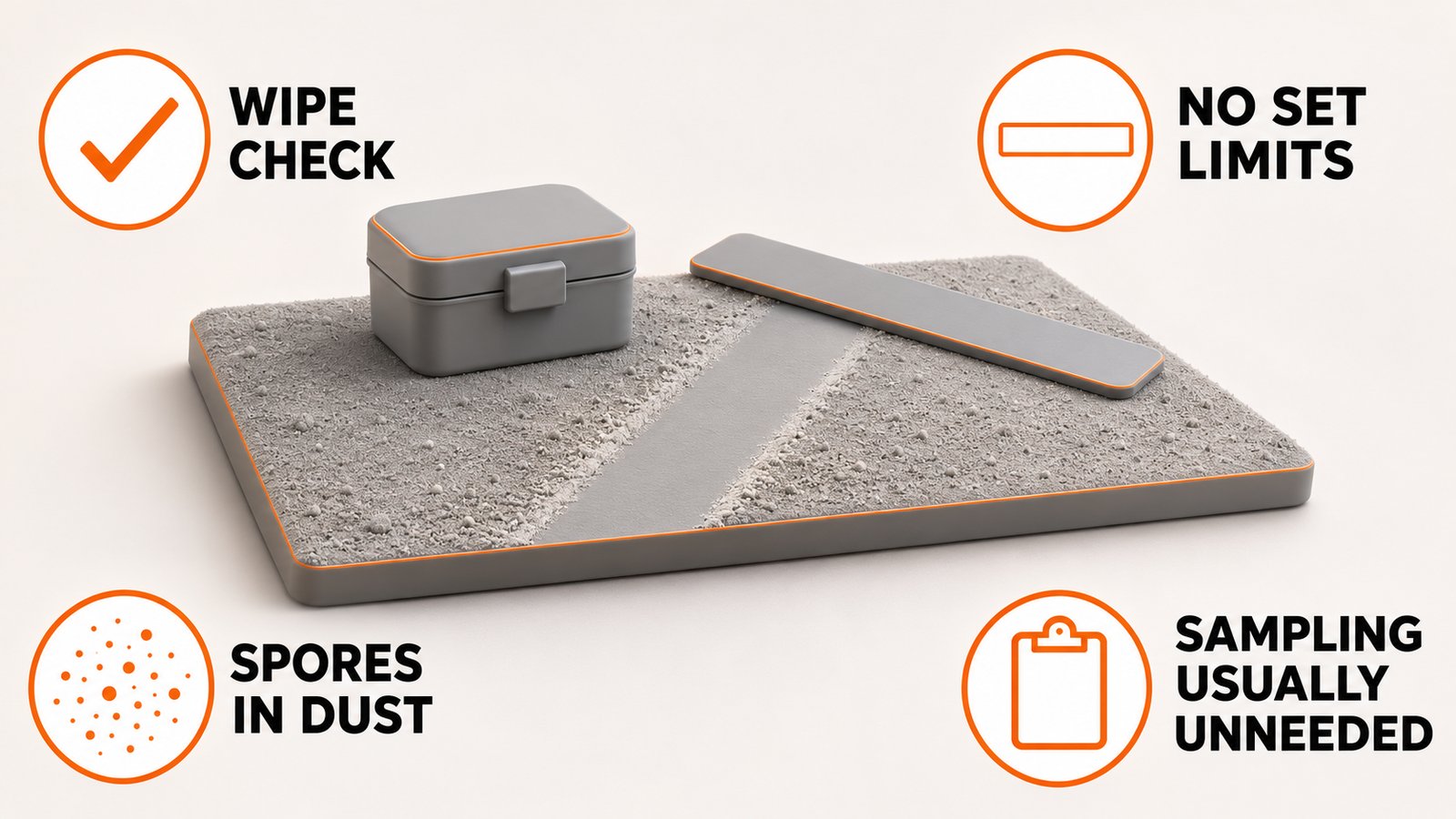
People who search for a "dust test for mold" or a "mold dust test kit" mean two different things. One is a quick check you do yourself. The other is a lab kit that analyzes a sample of dust.
The wipe check you can do at home
- Put on gloves, goggles and an N-95 respirator, and dampen a white paper towel with plain water.
- Wipe one spot about the size of a coin, once, in one direction. Do not scrub.
- Read the towel. Gray or brown on the towel and a clean wall beneath fits dust. A smear, a ghost mark that stays, or a mark that returns fits mold.
- Draw a light pencil line around the spot and check again in a week.
The EPA advises dusting with a damp cloth because it keeps settled dust from going back into the air. The wipe check is our rule of thumb, not an agency test. A clean wipe does not clear the spot, since mold sitting on a surface can wipe off, and it says nothing about what is behind the wall.
Lab kits that test dust
A dust sample kit counts or names what is in one sample. The EPA says spores are found in settled dust, and the CDC says there are no set standards for an acceptable amount of different kinds of mold in a home. The EPA says that in most cases, if visible mold growth is present, sampling is unnecessary. The CDC does not recommend mold testing. If you can see growth, the money is better spent finding the water. Our guides to how to test for mold, mold testing kits and professional mold testing compare the options.
When to Call a Pro
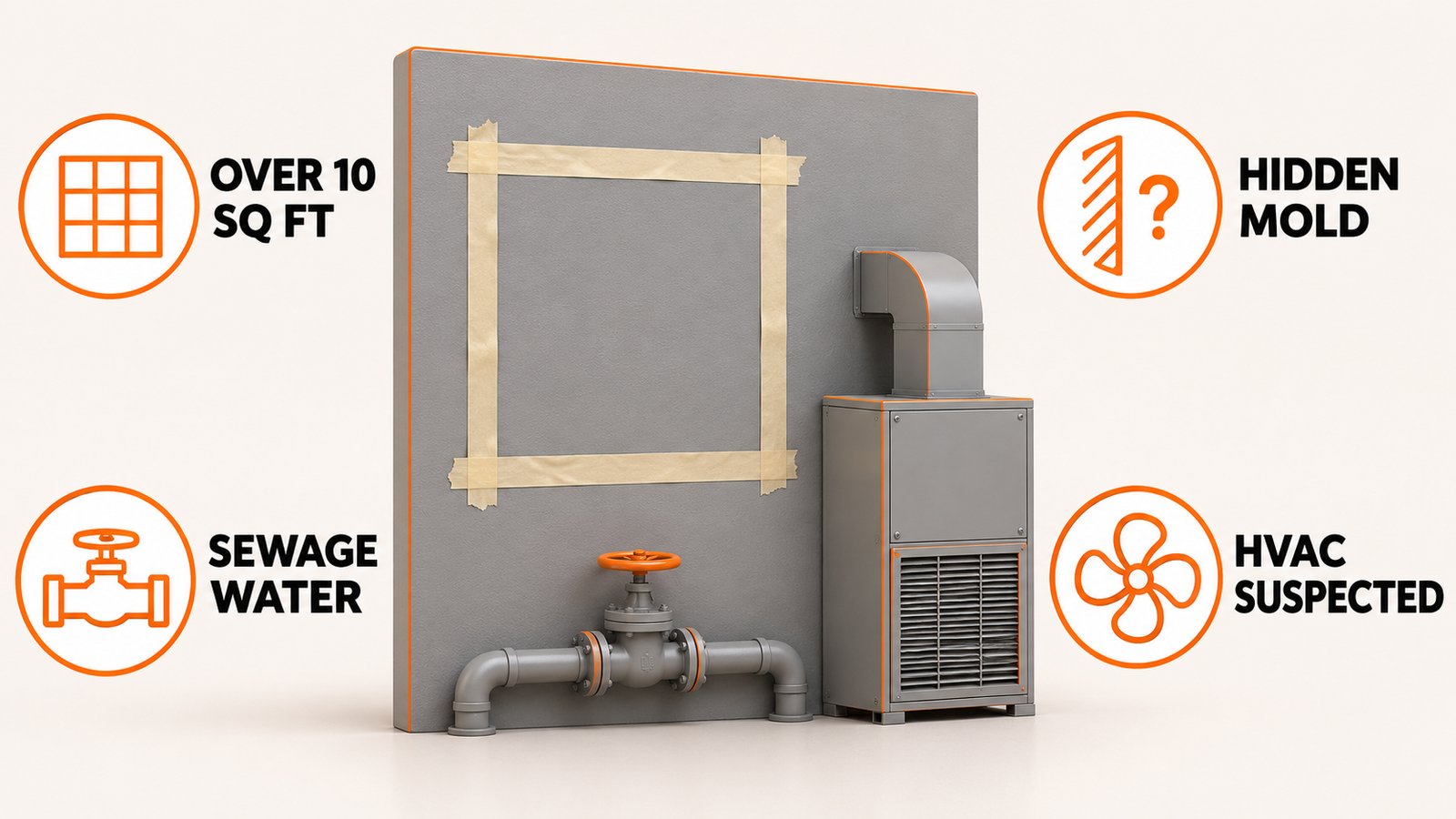
Dust is a damp-cloth job. Mold sometimes is not. The EPA's wording differs by case, and we suggest a professional in each of these:
- The area is more than about 10 square feet, roughly a 3-foot by 3-foot patch. The EPA says a patch under that size is in most cases a job you can handle yourself, and past it points to its guide for larger jobs. That is where we suggest a professional.
- Sewage or other contaminated water caused it. Call a professional who has experience cleaning buildings damaged by contaminated water.
- You suspect the HVAC system. Do not run it if you know or suspect it is contaminated.
- You smell mold but cannot find it, or you know there has been water damage and people in the home are reporting health problems. The EPA says investigating hidden mold needs caution when it means disturbing possible growth, so consider an experienced professional.
- You have health concerns. The EPA says to consult a health professional before starting cleanup.
If you hire someone, the EPA says to check references. See mold remediation, mold inspection and remediation certification .
If you are still unsure whether a spot looks like mold, Mold Scanner AI gives an AI-assisted visual screening of a photo. It helps tell whether a spot looks like mold and what to do next. It does not identify the type of mold or how toxic it is, and it cannot see behind a wall. How to tell if it is mold from a photo explains how to shoot a useful picture.
Frequently asked questions
Can dust turn into mold?
Dust itself does not turn into mold, but mold can grow in dust that stays damp. The CDC says mold can grow in dust, paper, wood and other materials where there is moisture. The EPA says mold spores in settled dust will not grow if moisture is not present.
Is gray fuzz on my vent mold or dust?
A dry gray film on the slats of a vent is usually dust. That is a rule of thumb, not an agency finding. Look for water near the vent and a musty smell when the system runs, look at the visible surface only, and do not open panels or remove the register.
Does the color tell me how dangerous it is?
No. The EPA says "black mold" is not a species, and that no one can tell whether a mold is producing mycotoxins just by looking at it. The CDC says mold comes in many colors and you do not need to know the type. If you have symptoms, see a licensed physician.
Do I need a mold dust test kit?
Usually not. The EPA says that in most cases, if visible mold growth is present, sampling is unnecessary. The CDC does not recommend mold testing. If you can see growth, find the water and clean it up.
Should I use bleach on it?
The EPA says a biocide such as chlorine bleach is not recommended as a routine practice during mold cleanup, and that dead mold can still cause allergic reactions, so it must also be removed. The CDC allows no more than 1 cup of household laundry bleach in 1 gallon of water on hard surfaces. Never mix bleach with ammonia or other cleaners.
How big can a patch be before I call someone?
The EPA says a patch under about 10 square feet, roughly 3 feet by 3 feet, is in most cases a job you can handle yourself. Past that, it points to its guide for larger jobs, and that is where we suggest a professional. Contaminated water, a suspected HVAC problem or hidden mold are reasons to call a professional at any size.
Sources
Every claim on this page traces to one of these. Links open the primary document.