Is It Mold or Dirt? Look First
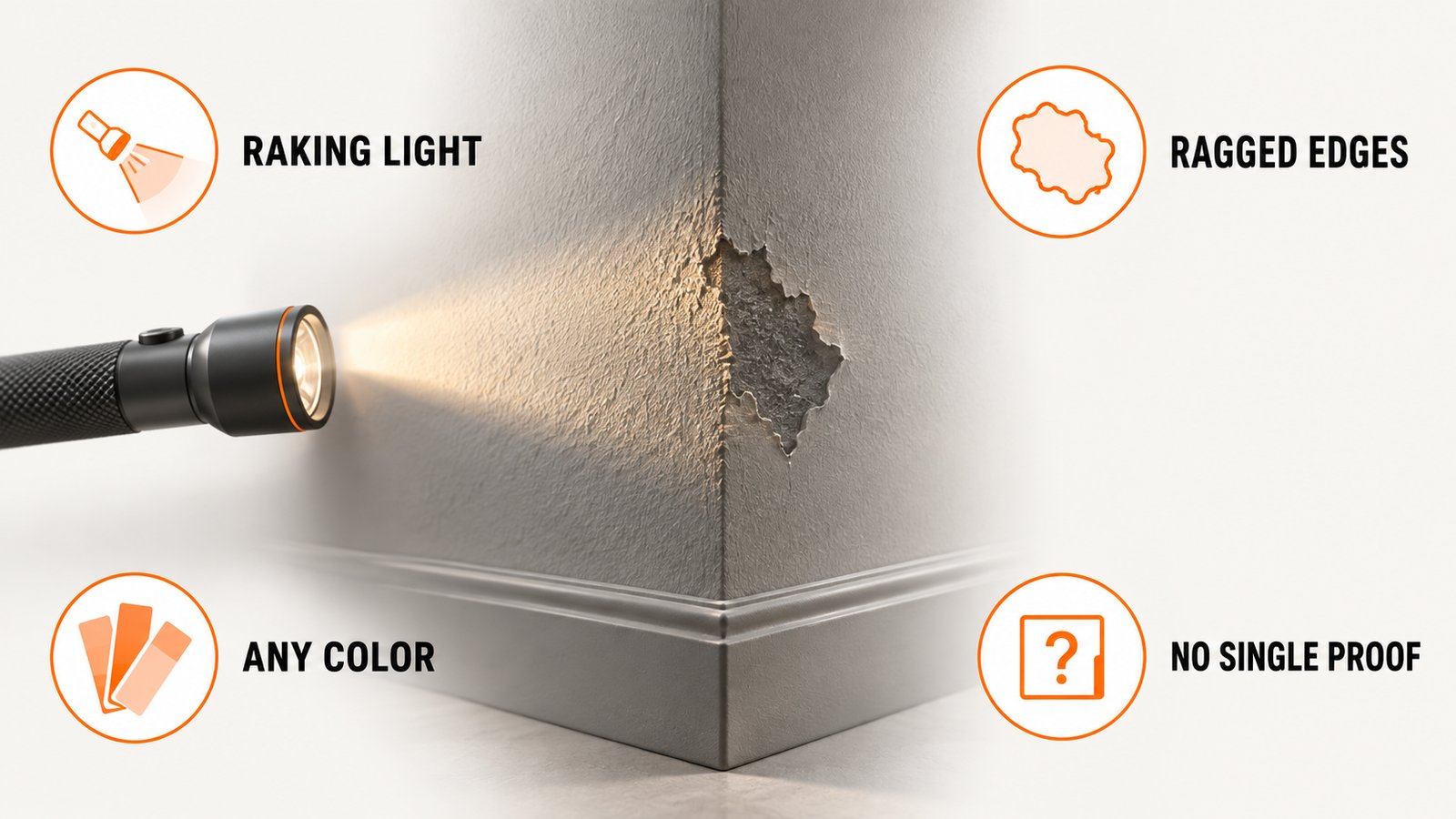
Do not touch the spot yet. Start by looking, because looking costs nothing and does not put anything in the air.
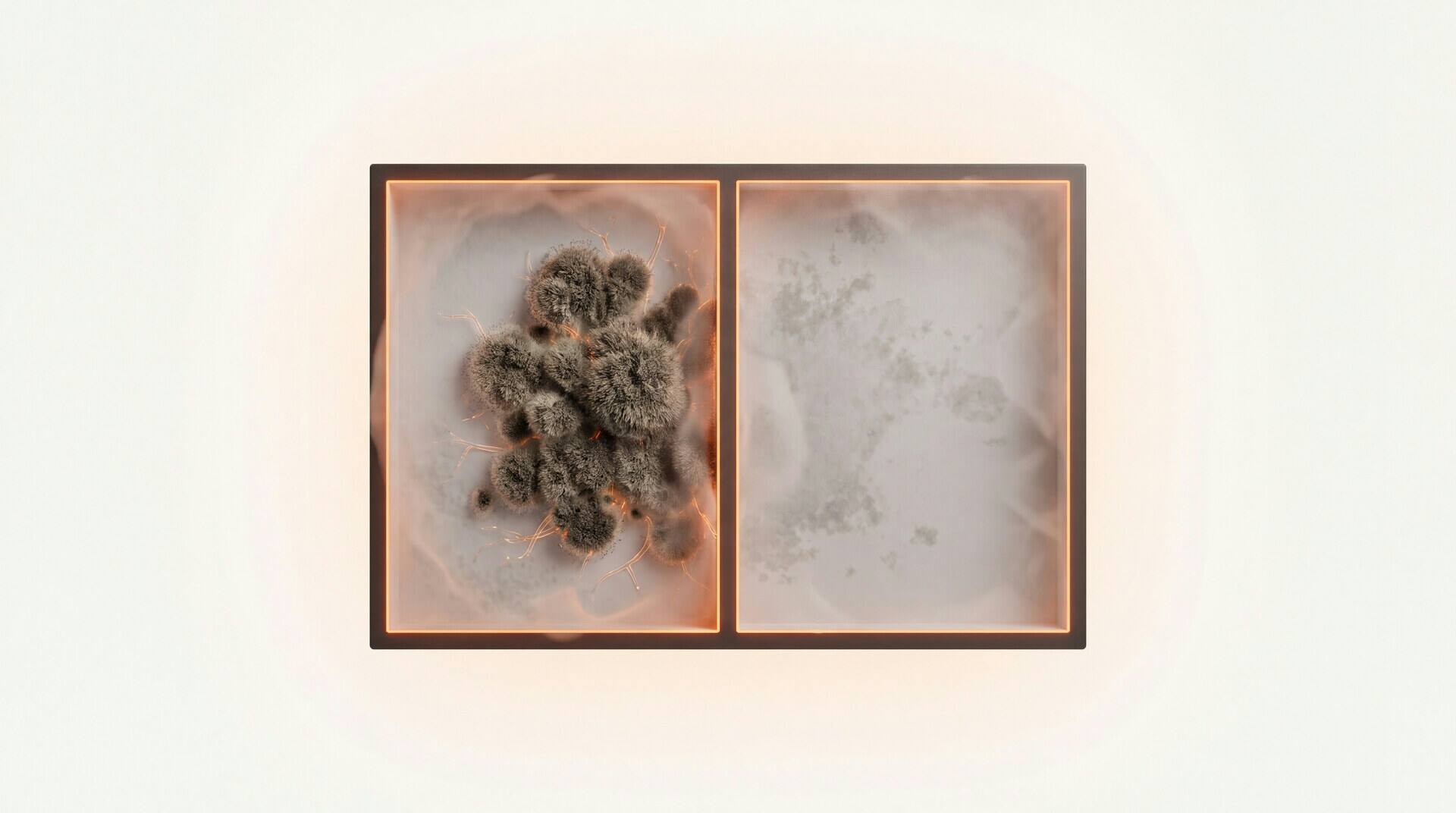
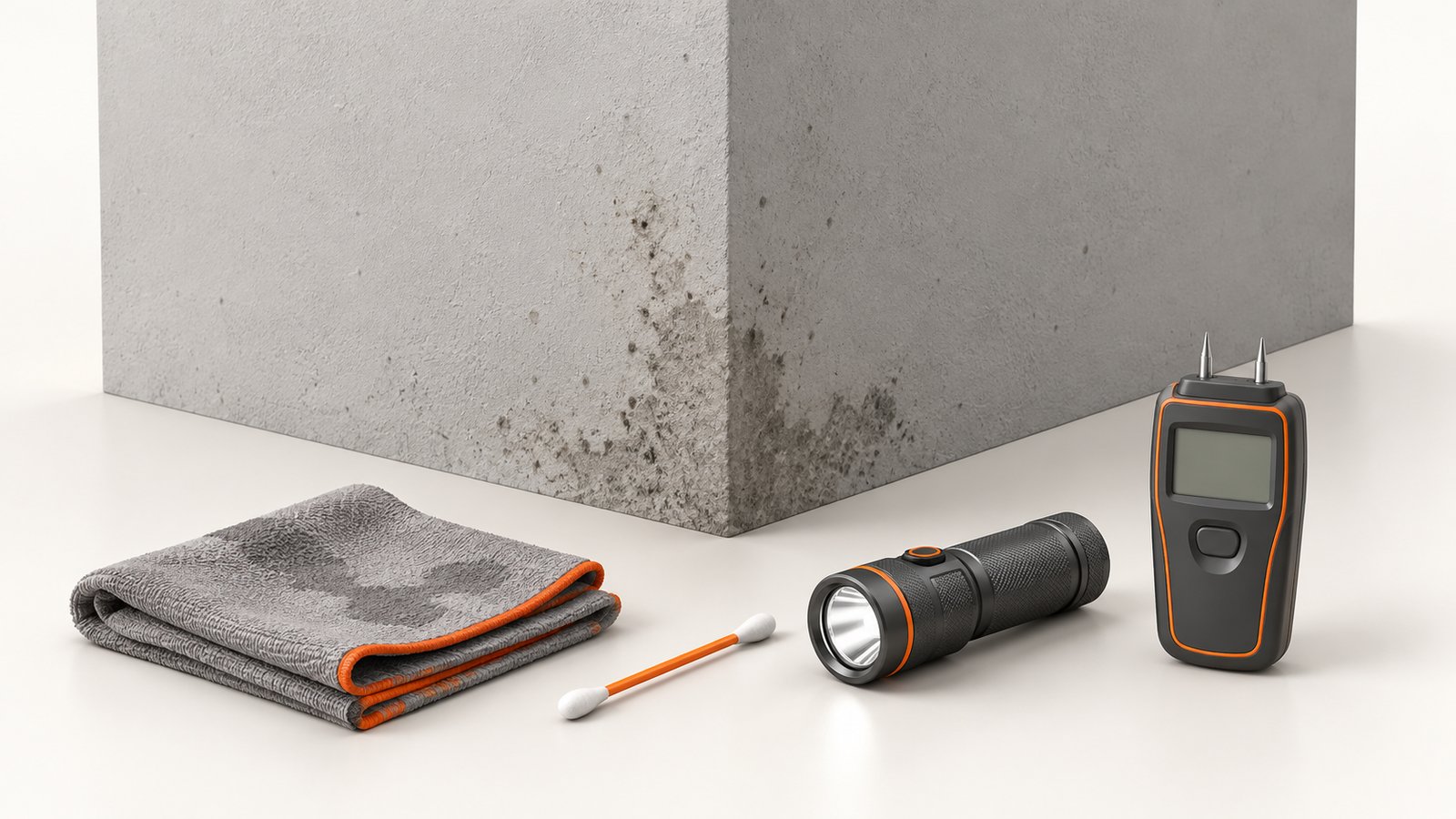
Hold your phone flashlight almost flat against the wall so the beam skims across the surface. A flat mark, like dust, soot or an old stain, practically disappears under that light. Anything with height throws a tiny shadow. Mold has body. It can look fuzzy, speckled, slimy or powdery. Dirt is usually a thin film that sits on top. Our full walk-through, with five checks in order, is on is this mold.
Then look at the edges. Dirt follows things: air from a vent, the line of a baseboard, the spot where hands touch a switch plate. Mold follows water, so it spreads in soft, uneven blotches, sometimes with small specks off to the side.
Do not lean on color. The EPA says molds come in many colors and shows white and black examples on the same page. The CDC says mold can look like spots of many different colors, and that it can smell musty. Dirt comes in dark gray and brown, but so does mold. Color helps you pick which test to run first. It does not settle the question.
Here is every test on this page in one table, with the thing each one cannot tell you. Read the last column before you trust any of them.
| Check | If it points to mold | If it points to dirt | What it cannot tell you |
|---|---|---|---|
| Flashlight at a low angle | Raised, fuzzy, speckled or slimy | Flat film, no height | Species, or what is behind the wall |
| Wipe test | Smears, stains the cloth, or leaves a ghost mark | Lifts off in one pass and stays gone | Mold on the surface can wipe off too |
| Bleach drop test | Lightens, which fits growth | Does not change, which fits dirt or soot | Plenty of stains bleach too, and growth can sit behind the mark |
| Does it come back | Returns in days or weeks in the same spot | Stays gone until new dust lands | A leak, not mold, can also bring a stain back |
| Location and moisture | Damp, cold, or near a water source | Corners, vents, switch plates, high traffic | Hidden water you cannot see |
| Smell | Musty or earthy | Little or no smell | Smell does not confirm a spot or locate it |
How to Tell Mold From Dirt With a Wipe Test
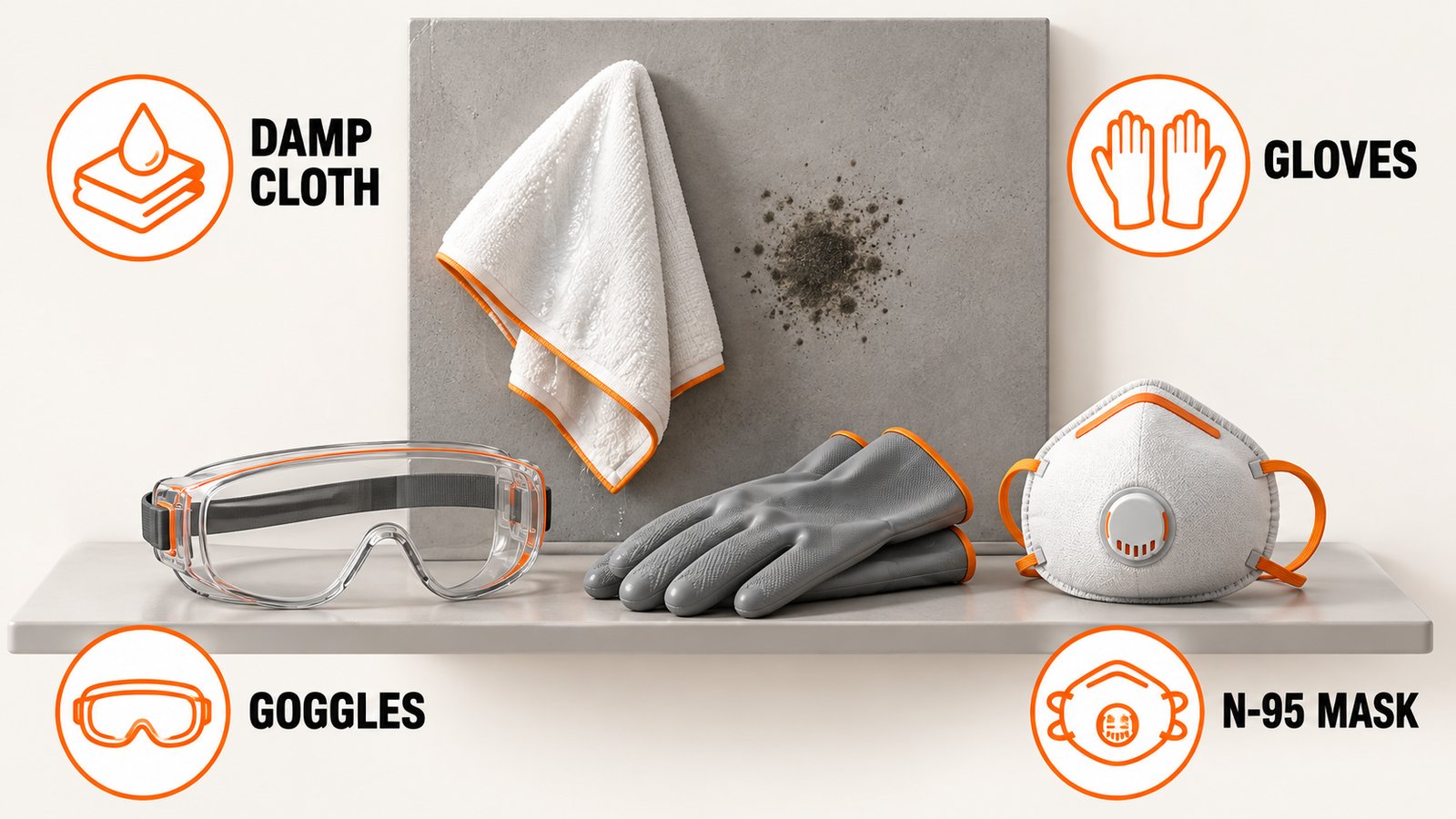
The wipe test is the oldest trick in the book. It is also the one people misread most.
How to run it. Put on gloves, goggles and an N-95 respirator first. The EPA lists gloves, goggles and an N-95 respirator for mold cleanup because disturbing growth puts spores in the air. Dampen a white paper towel or cloth with plain water. Wipe one spot about the size of a coin, one time, in one direction. Do not dry-brush it, do not scrub it, and do not wipe a big patch. If the area is bigger than about 10 square feet, stop here and read the last section.
How to read it. Dirt and dust usually lift in one pass. The cloth comes away gray or brown and the wall underneath looks clean. Soot leaves a gray smear on the cloth. Mold is more likely to smear, to leave a faint ghost of the mark behind, or to come off as a stain that does not fully lift. A mark that will not budge at all points toward a set stain, a mineral deposit or damaged paint.
What it does not prove. A clean wipe does not clear the spot. Mold growing on top of a surface can wipe off, and a mark that wipes away says nothing about what is under the paint or inside the drywall. Our page on mold vs mildew makes the same point: a wipe describes the surface only. It cannot confirm mold, and it cannot rule mold out.
The Bleach Drop Test for Mold or Dirt
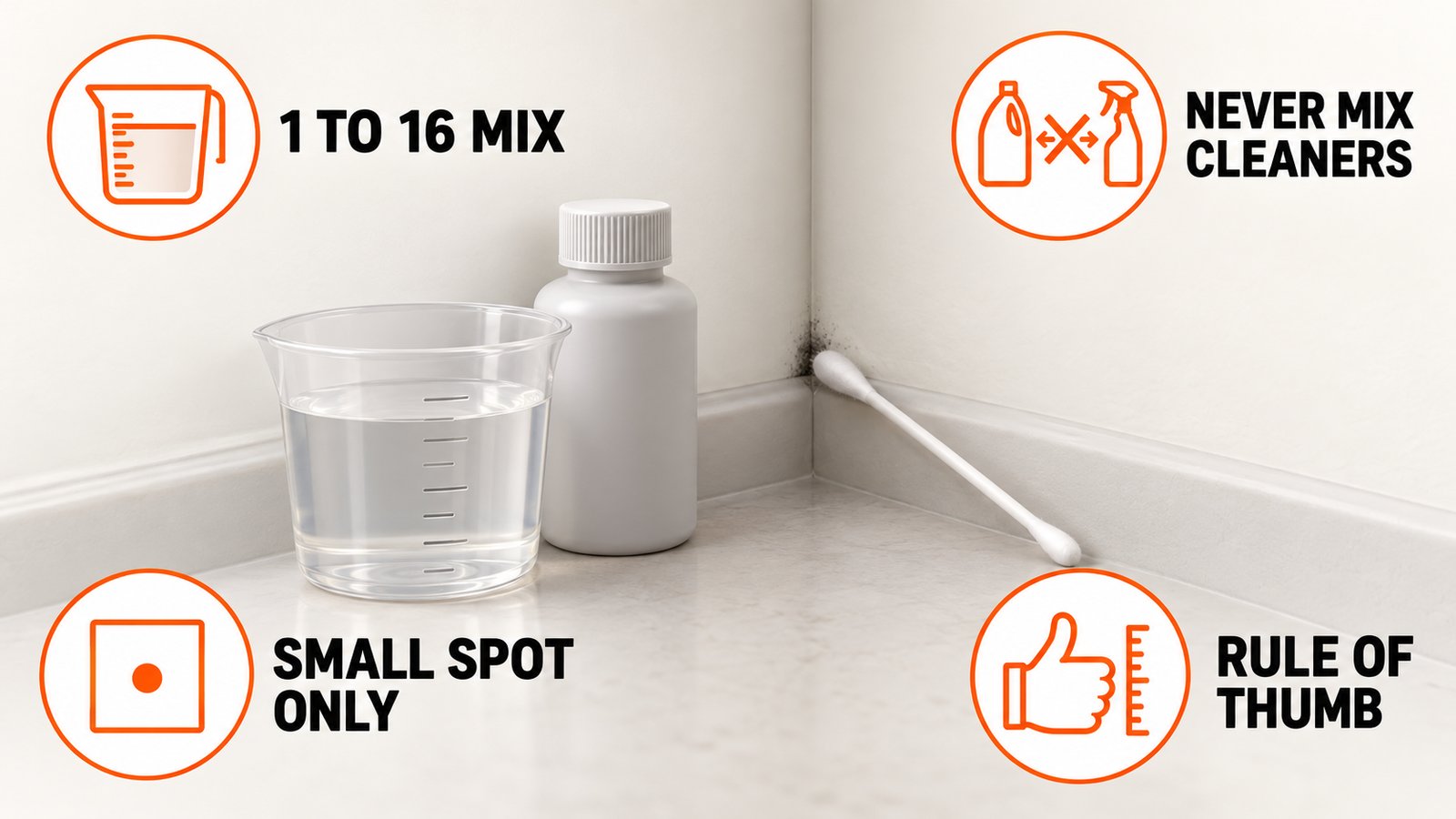
This is the test every other site mentions. It gets repeated without safety steps or limits, so here it is with both.
Where it comes from. No federal agency lists a bleach drop as a mold test. The closest authoritative source is a Purdue Extension paint bulletin. It says a drop or two of household bleach solution (5 percent sodium hypochlorite) on a stain is a simple test for mildew on house paint. Mildew will usually bleach out in one or two minutes. A stain that does not bleach is probably dirt. It also says to use fresh bleach, because bleach loses strength as it sits. So treat this as a common rule of thumb with real limits, not a lab result.
How to do it safely.
- Mix it weak. Use about 1 part household bleach to 16 parts water. That equals the CDC ceiling for cleaning hard surfaces, which is no more than 1 cup of household laundry bleach in 1 gallon of water. Mix only what you need, and use it fresh.
- Never mix it with anything else. The CDC warns that bleach mixed with ammonia or other cleaners makes a poisonous gas. No vinegar, no cleaner, no ammonia anywhere near it.
- Open a window and wear gloves and goggles. Follow the bleach label.
- Pick a small, hidden corner. Dab it with a cotton swab. Do not soak the spot, and do not scrub. Bleach lifts color from paint and fabric, so skip painted walls where the finish matters, and skip anything soft, crumbling or wet.
- Wait a couple of minutes and look.
What a result means. If the spot lightens, the mark holds a pigment that bleach acts on. That fits growth, but it does not prove it, because plenty of stains lighten too. If nothing changes, Purdue reads that as probably dirt, and we would say the same with one extra word: probably. Soot and set stains do not bleach, and neither do some molds growing in the material behind the mark.
What not to do next. Do not spray the whole patch with bleach to be safe. The EPA says using a biocide such as chlorine bleach is not recommended as a routine practice during mold cleanup. On hard surfaces, scrub with detergent and water and dry the area completely. Our guide on whether bleach kills mold explains why.
Does It Come Back After You Clean It?
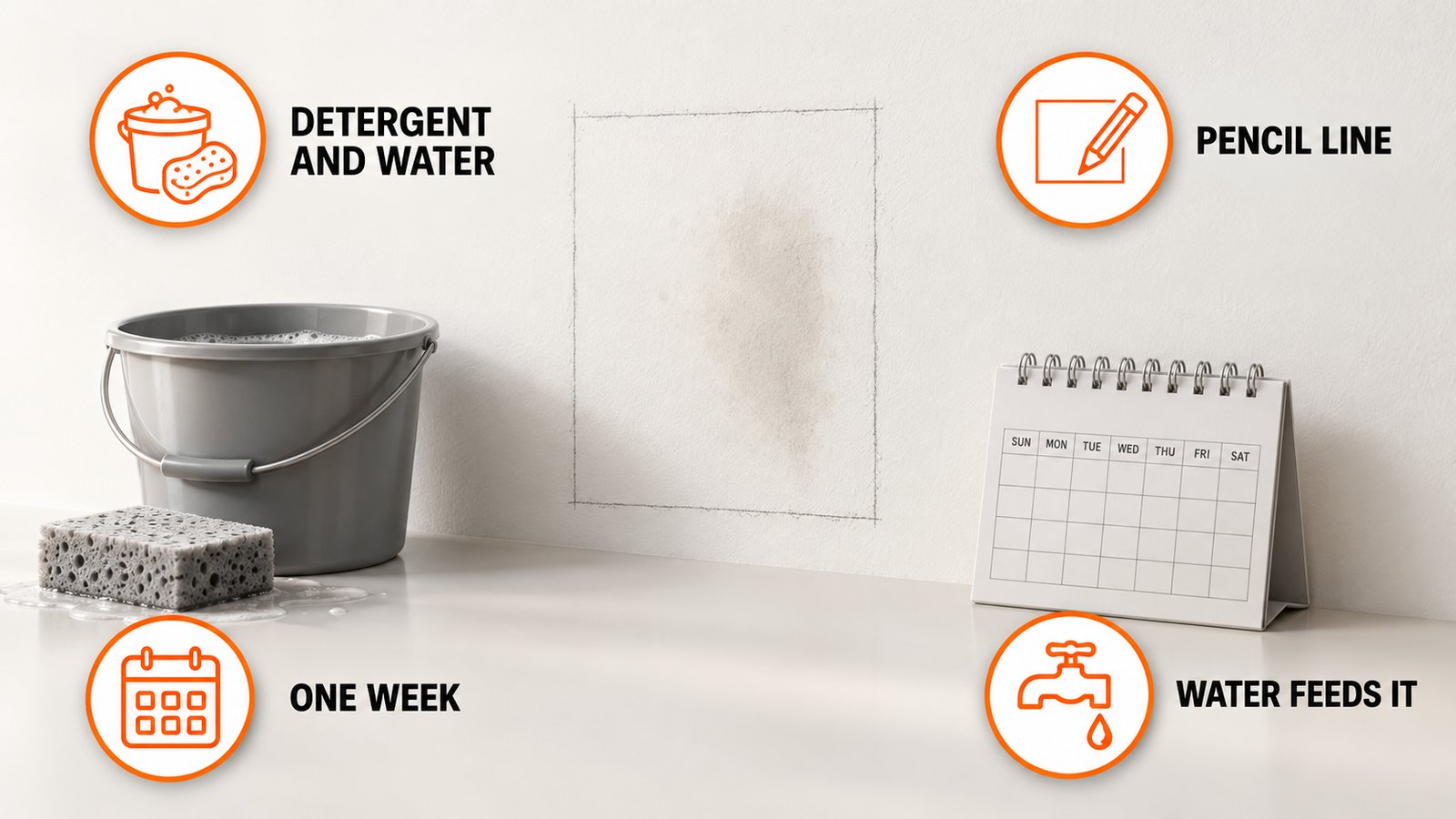
This is the strongest test on the page, and it costs nothing but a week.
Clean one spot. On a hard surface, the EPA says to scrub with detergent and water and dry completely. Before you start, draw a light pencil line around the spot so you can tell later if the mark returns. Then leave it alone and look again after a few days and after a week.
Dirt lifts and stays gone until new dust lands. A mark that shows up again inside the pencil line is behaving like something is feeding it. The EPA puts it plainly: if you clean up the mold but do not fix the water problem, most likely the mold problem will come back. When it returns, the surface is not the problem. Water is. Wiping it again gets you the same week.
Two cautions keep you honest. First, a mark that never lifts is not automatically mold. The EPA notes that mold can cause staining and cosmetic damage, and that it may not be possible to restore an item’s original look. A stain left behind after mold is gone is still just a stain. Second, a returning mark can also be a leaking pipe or a wet wall showing through. Either way, it is a moisture clue worth chasing.
Mold vs Dirt by Location and Moisture
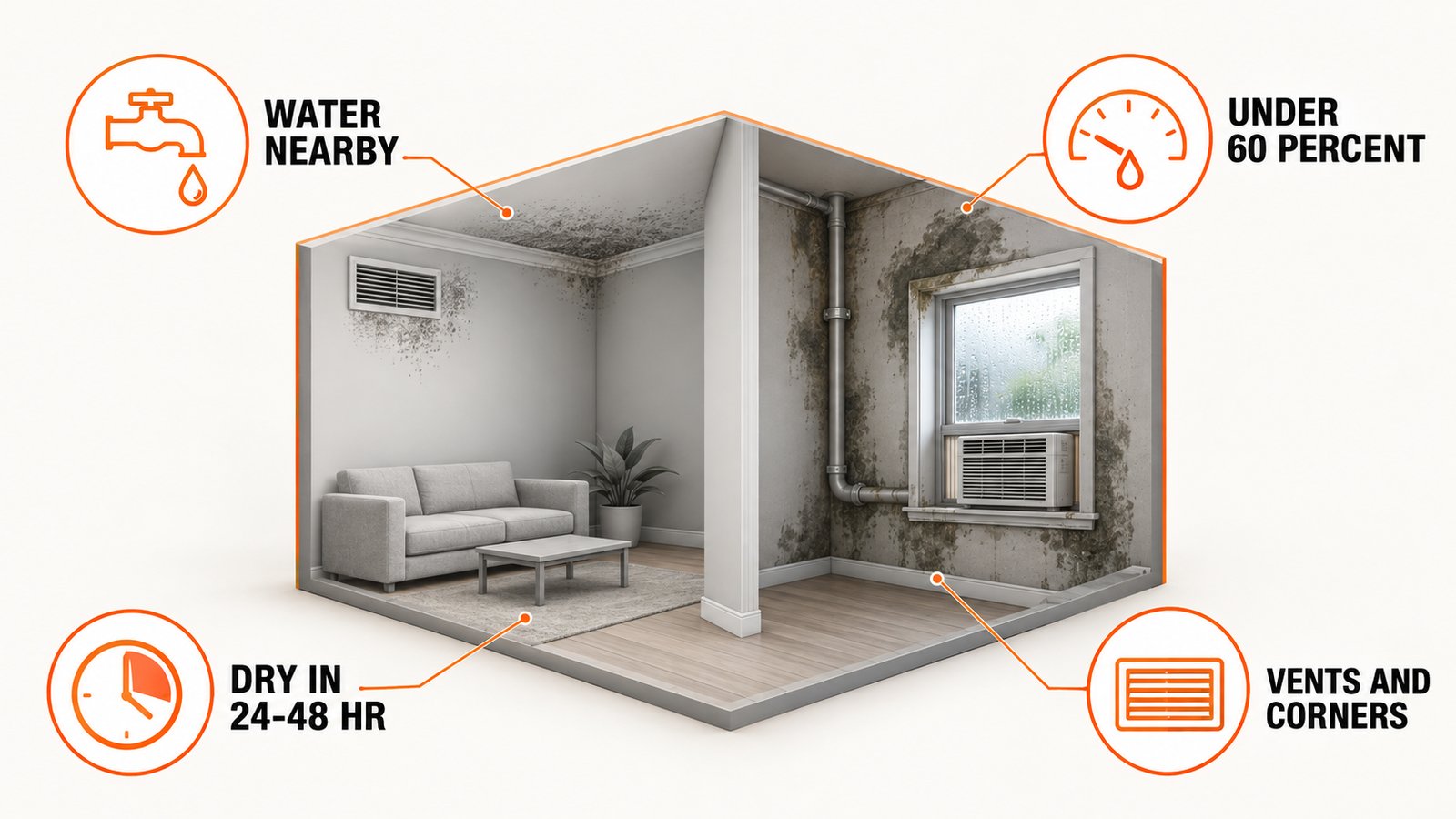
Where the spot sits tells you more than what color it is.
Dirt gathers where air and hands go. Think corners, the tops of baseboards, around switch plates, above radiators, and in a fan shape under a vent. Mold needs water. The EPA says none of the many types of mold will grow without water or moisture. So ask what water has touched that spot. A roof or pipe leak, a flood, a cold exterior wall where warm air condenses in winter, a window ledge, a bathroom, a basement or a closet against an outside wall all give mold what it needs.
Check the moisture, do not guess at it. The EPA advises keeping indoor humidity below 60 percent, ideally between 30 and 50 percent, and says a moisture or humidity meter costs $10 to $50 at many hardware stores. It also says wet areas dried within 24 to 48 hours usually will not grow mold, so a spot with a recent leak is a bigger flag than one on a dry wall that has never had an incident. Our humidity risk calculator turns a meter reading into a plain risk picture.
Dirt vs mold on insulation. Dark streaks on insulation near gaps and wiring are common, and they are often dust that air carried in. That is a common rule of thumb, not an agency finding. Insulation that is damp, matted, or smells musty is a different case, because wet insulation holds water against the wall. See mold on insulation for what to look for.
Mold vs dirt in an air conditioner. Gray fuzz on a grille or filter is usually dust. Dark growth on parts that stay wet, like the drain pan, the coil and the drain line, is a different story, especially if the unit smells musty when it runs. The EPA tells you to keep air conditioning drip pans clean and the drain lines flowing. Our pages on window air conditioners and air conditioners go through each part. If the EPA’s duct warning applies to you, do not run a system you suspect is contaminated.
Smell, Texture and Spread Pattern
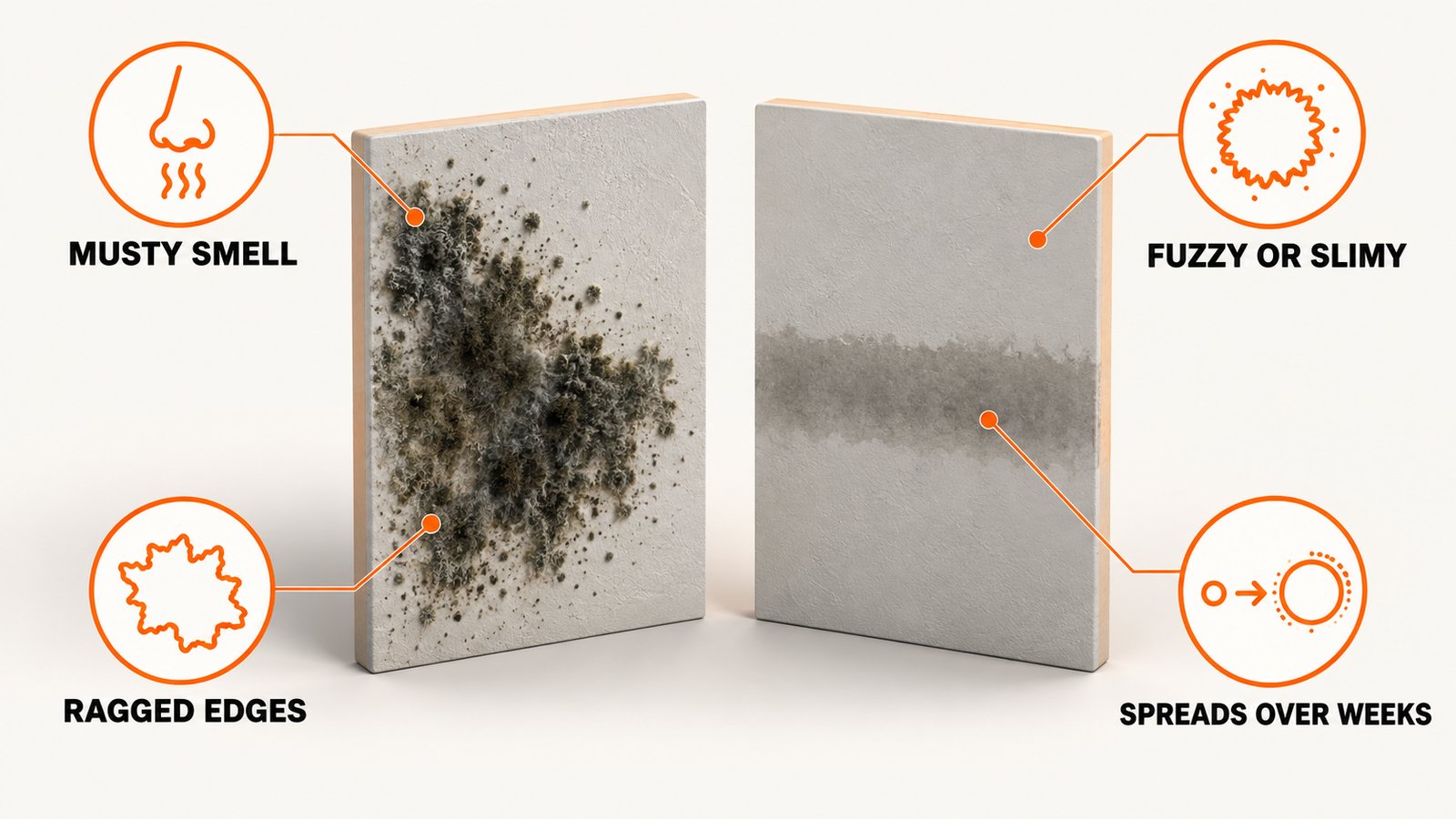
Once you have run the flashlight and wipe checks, three quick observations add weight.
Smell. The CDC says mold can smell musty. The EPA says you may suspect hidden mold if a building smells moldy but you cannot see the source. So a persistent musty or earthy smell is a moisture clue. Do not over-read it. A smell does not confirm that a particular spot is mold and it does not tell you where the problem is. Dirt and dust by themselves have little smell.
Texture. Oregon State’s environmental health center describes molds as fungi that tend to look fuzzy, and describes mildew as growing in a flat pattern that may look powdery. Slimy patches usually mean the area has been wet for a while. A flat film with no texture is more likely dirt, soot or a stain.
Pattern. Mold spreads in soft, uneven blotches. Over days or weeks the patch gets bigger, and tiny specks appear nearby. Dirt makes smudges that follow something: a handprint, a straight edge, the path of moving air. Neat lines and geometric shapes point away from growth.
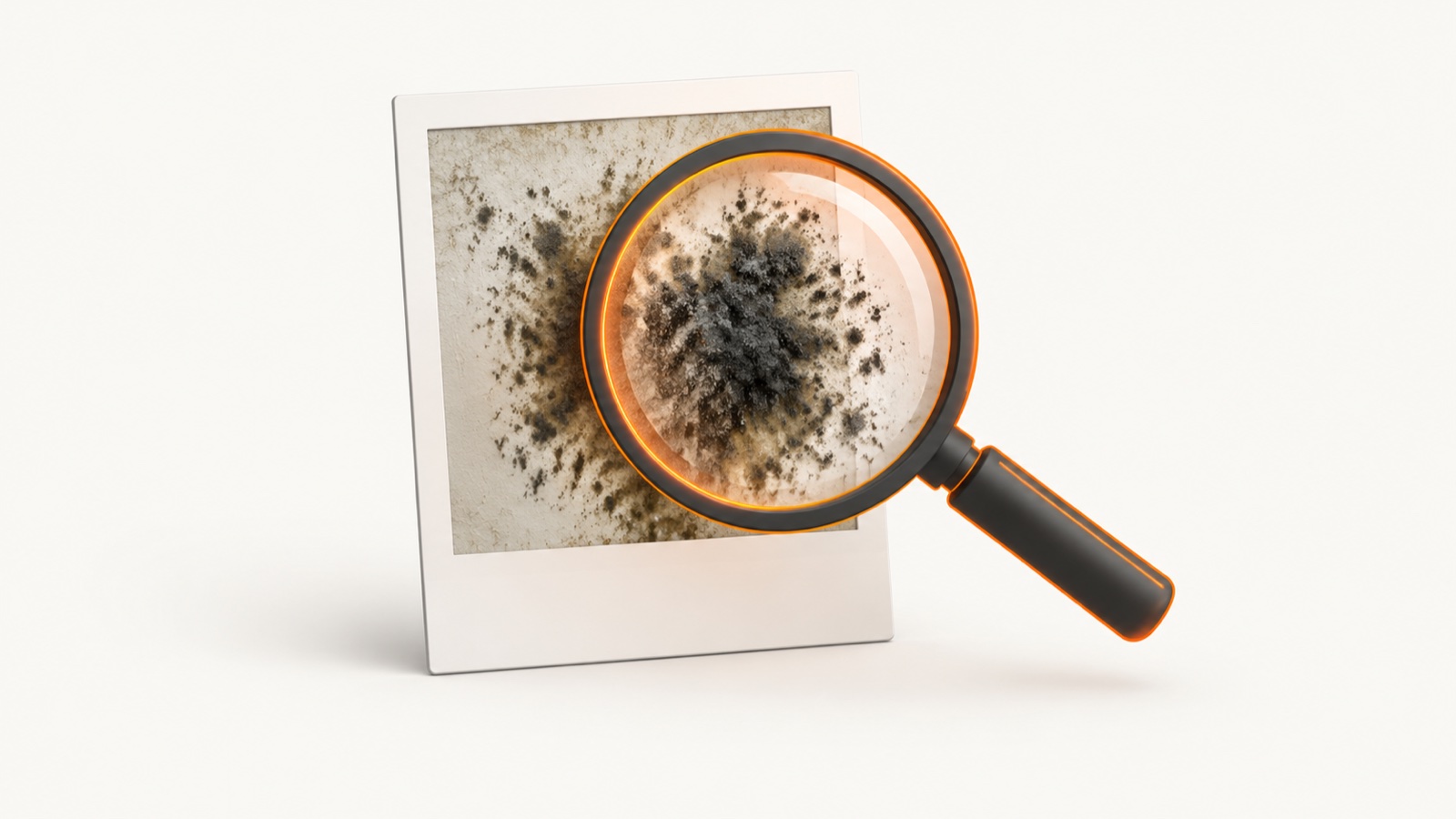
Take a photo of the spot today, from the same place, in the same light. Take another in a week. A patch that grew is telling you something, and a photo beats memory. Our tips on telling if it is mold from a photo cover how to shoot a useful one.
Soot, Dust and Other Look-Alikes
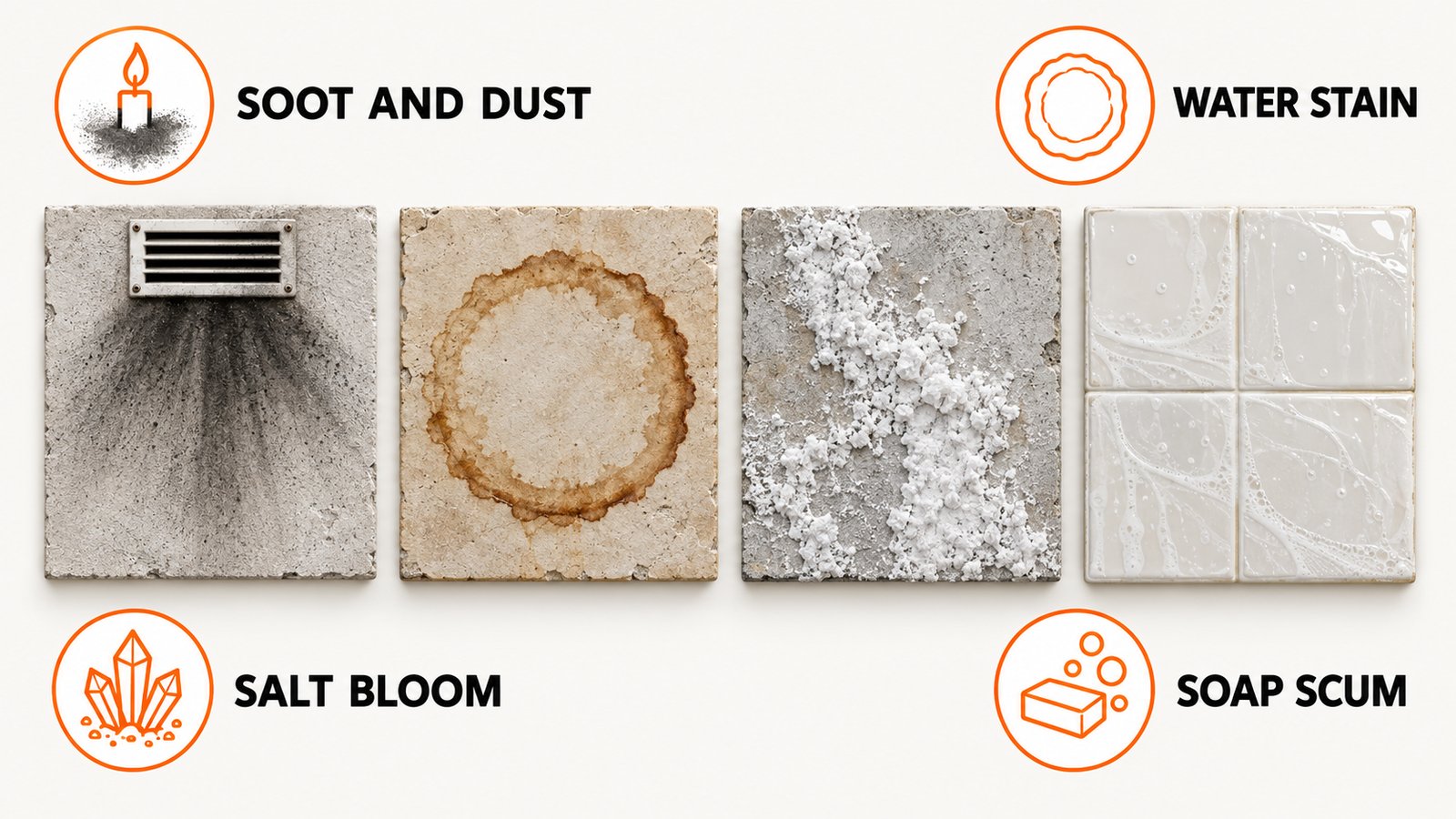
Before you decide it is mold, rule out the common imposters. These come from our is this mold and what does mold look like guides. They are rules of thumb, not lab findings.
| Look-alike | What it looks like | How to rule it out |
|---|---|---|
| Soot and dust | Fine, even gray to black film, no height. Fans out from vents, candles, fireplaces. | Wipes onto a white cloth in one pass and leaves a gray mark on the cloth. |
| Dried water stain | Yellow, tan or brown with a hard, crisp edge. Sometimes rings. | Growth does not draw a crisp line. But a stain marks where water went, so check behind it. |
| Efflorescence | White, chalky, gritty crystals on concrete, brick or block. | Rub it with a wet finger. Salt dissolves. Growth smears. |
| Soap scum | White, gray or slightly pink film in showers. Slippery wet, chalky dry. | It does not spread on its own and does not smell musty. |
One caution. A look-alike and mold are not mutually exclusive. A hard-edged ring on a ceiling tells you water arrived there, which is the exact condition mold needs. Ruling out the mark you can see does not rule out what is behind it.
Is This Mold or Mildew?
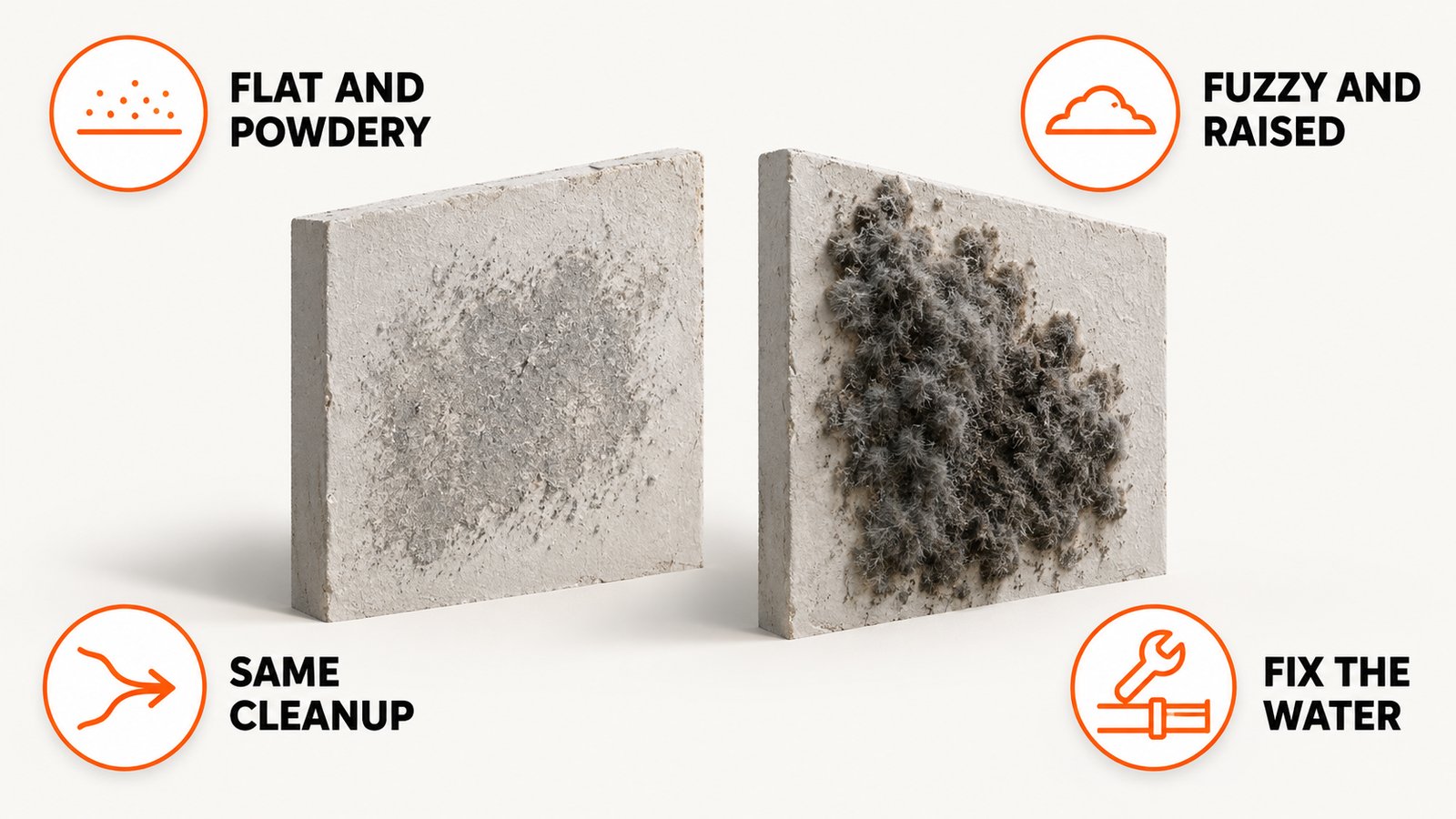
If your spot is flat, powdery and gray or white, you may be looking at what people call mildew. Oregon State describes mildew as a fungus that grows in a flat pattern and may look powdery. Mold tends to be fuzzy. The two overlap, and a wipe or a color check cannot separate them for certain.
The good news is that you do not need to. The CDC says you do not need to know the type of mold. If it is growing in your home, you clean it up and fix the moisture problem. Our full comparison is on mold vs mildew.
Black Mold vs Dirt
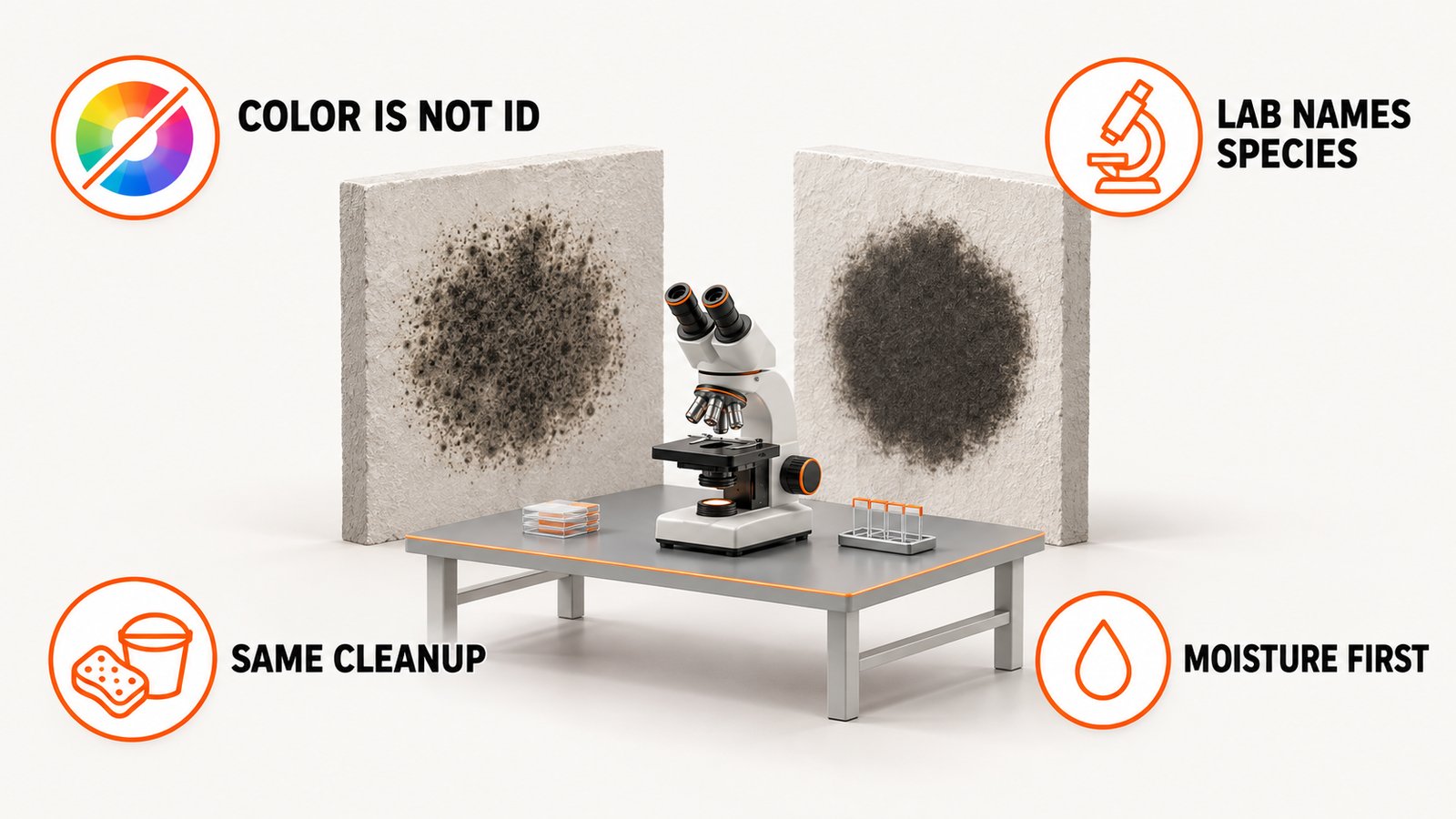
Black spots scare people, so here is the plain version. Dark does not mean toxic. Several kinds of mold are dark, and so are soot, dirt, old sealant and some stains. The CDC says mold can look like spots of many different colors, and that you do not need to know the type of mold. The EPA shows both white and black molds as ordinary examples.
Only a laboratory can name a species, and a lab report rarely changes what you do next: find the water, clean the hard surface, throw out soaked porous material, and dry everything. Our pages on black mold and black mold vs regular mold go deeper. This page covers cleaning and protective gear only, not health questions. If anyone in your home has health concerns, the EPA suggests talking to a health professional before you start cleanup.
When a Photo Check or a Pro Makes Sense
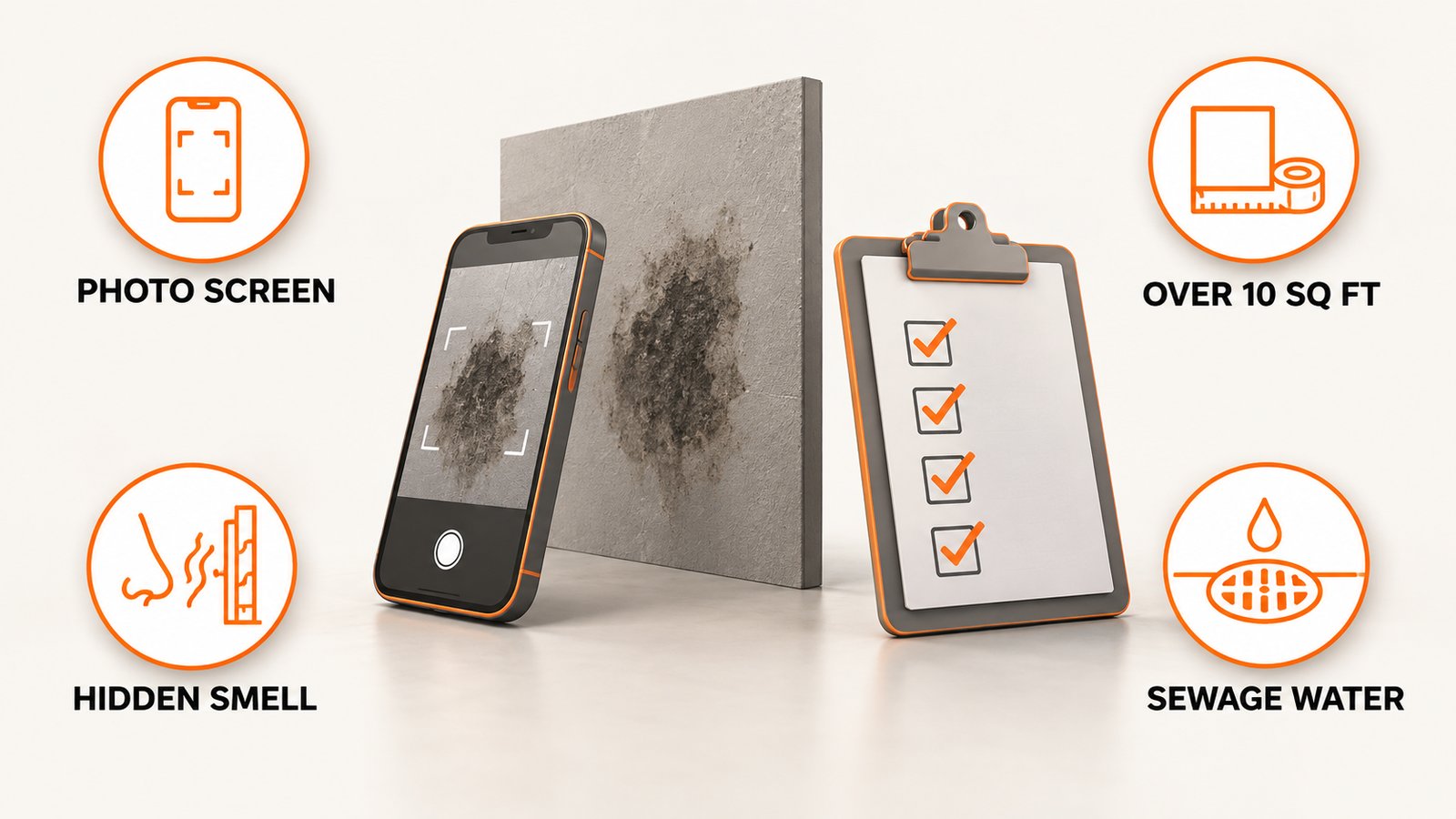
If you ran the checks and still cannot tell, a photo is the easy next step. Mold Scanner offers AI-assisted visual screening of what is visible in a photo, and processing time varies. It can flag a surface as worth a closer look. It cannot name a species, see behind a wall, or tell you whether anyone’s health is affected. Hold the camera steady, use good light, and add one wider shot so the room is in the frame.
Move on to a professional when any of these is true:
- The area is bigger than about 10 square feet. That is roughly a 3-foot by 3-foot patch, the EPA’s line for handing the job off.
- There was a lot of water damage, or the water was sewage or other contaminated water. The EPA says to call a professional with experience in that kind of damage.
- You smell mold and cannot find it. The EPA lists a moldy smell with no visible source as a reason to suspect hidden mold.
- You suspect the heating and cooling system. The EPA says not to run the system if you know or suspect it is contaminated, because that could spread mold through the building.
- The mark keeps coming back after you fixed the leak. Something is still feeding it.
On sampling, the CDC does not recommend routine mold testing, because you cannot use a result to predict who might get sick, and there are no set standards for an acceptable amount. A lab or a licensed inspector earns their fee when a real decision depends on it, such as a lease dispute or a home sale. Our mold inspection page covers what to expect.
Frequently asked questions
If a dark spot wipes off, does that mean it was dirt?
Probably, but not for sure. Dirt and soot usually lift in one pass. Mold on top of a surface can also wipe off, and a wipe says nothing about what sits under the paint or inside the drywall. Watch the spot for a week. If it returns in the same place, treat it as a moisture problem.
Does bleach prove a spot is mold?
No. A Purdue Extension bulletin describes a bleach drop as a simple check for mildew on house paint, where mildew usually bleaches out in one or two minutes and a stain that does not is probably dirt. It is a rule of thumb. Many stains lighten too, and mold behind the mark may not change. Never mix bleach with ammonia or other cleaners, and do not use it on a large patch.
How can I tell mold from dirt on a wall?
Use several checks together. Shine a light at a low angle to see whether the mark has height. Wipe one coin-sized spot with a damp cloth. Ask whether the spot is near water or a cold wall. Smell the room. Then clean it and see if it comes back. No single check settles it, and the return test carries the most weight.
Is the black stuff in my air conditioner mold or dirt?
It can be either. Gray fuzz on a grille or filter is usually dust. Dark growth on the drain pan, coil or drain line, especially with a musty smell when the unit runs, is more likely mold. The EPA advises keeping drip pans clean and drain lines flowing. If you suspect the system is contaminated, do not run it.
Do I need a lab test to know if it is mold or dirt?
Usually not. The CDC does not recommend routine mold testing and says you do not need to know the type of mold. If it is growing, you clean it up and fix the moisture. A lab makes sense when a decision depends on the answer, such as a dispute or a sale.
Is it mold or mildew?
Mildew is a common label for flat, powdery gray or white growth, and mold is the broader term for fuzzy, slimy or raised growth. The two overlap, and neither a wipe nor a color check can separate them. The cleanup and the moisture fix are the same.
Sources
Every claim on this page traces to one of these. Links open the primary document.