Soot vs Mold: Five Tells You Can Check Today
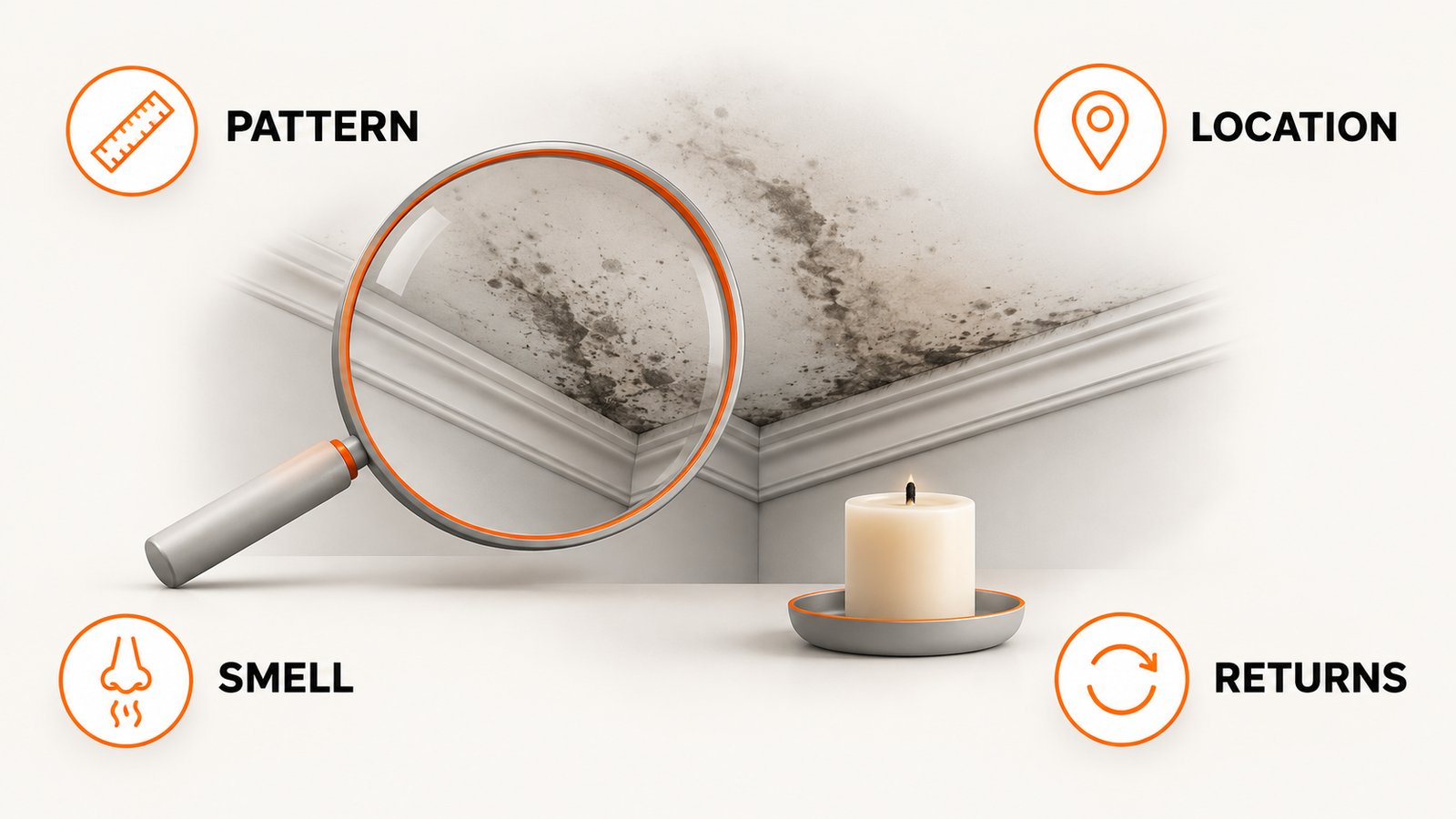
Soot and mold both leave dark marks, and people mix them up. A University of Florida home environment professor said it plainly: "Sometimes we confuse these dark areas for mildew or mold." The causes differ, and the cause decides your next step. Soot comes from burning something. Mold grows where something is wet.
These five checks are rules of thumb. None of them names a substance, and each has limits.
| Check | Leans soot | Leans mold |
|---|---|---|
| Pattern | Straight lines over studs or joists, neat outlines around outlets and vents | Irregular blotches with ragged edges that spread |
| Location | Cool surfaces and moving air, near a fireplace, candles or furnace | Places with a water history: leaks, condensation, bathrooms, basements |
| Smell | Faint smoke, or none | Musty or earthy |
| Smudge | A dry cloth picks up a gray or black smear | Loose growth may smear too, so a smear proves little |
| After cleaning | Returns while the burning continues | Returns while the moisture continues |
The last row can match both columns. A mark that returns means something is feeding it, not which thing. Our is this mold guide runs the same logic for dirt, mildew and water stains, and what mold looks like covers colors and textures.
Does Black Mold Look Like Soot?
It can. Both can be gray or black, and a photo often cannot separate them. The CDC says that "Mold can look like spots of many different colors, and it can smell musty." Color names nothing. Our black mold guide explains why, and black mold on wall covers walls.
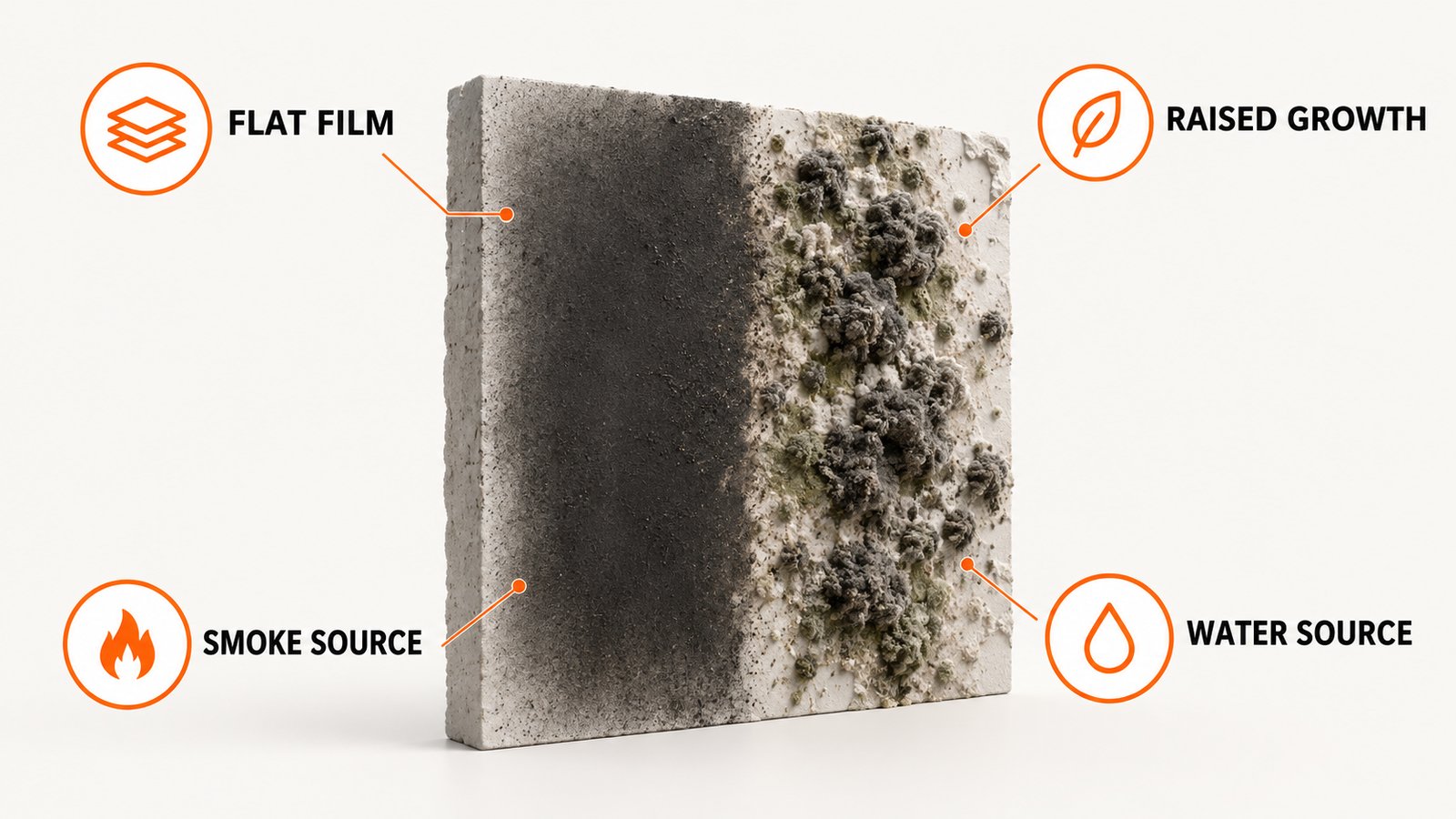
- Soot is a film. It is particles that settled on a surface. It usually lies flat, so a flashlight raked across the wall shows no texture. It follows air and cool spots, so it forms lines and fans.
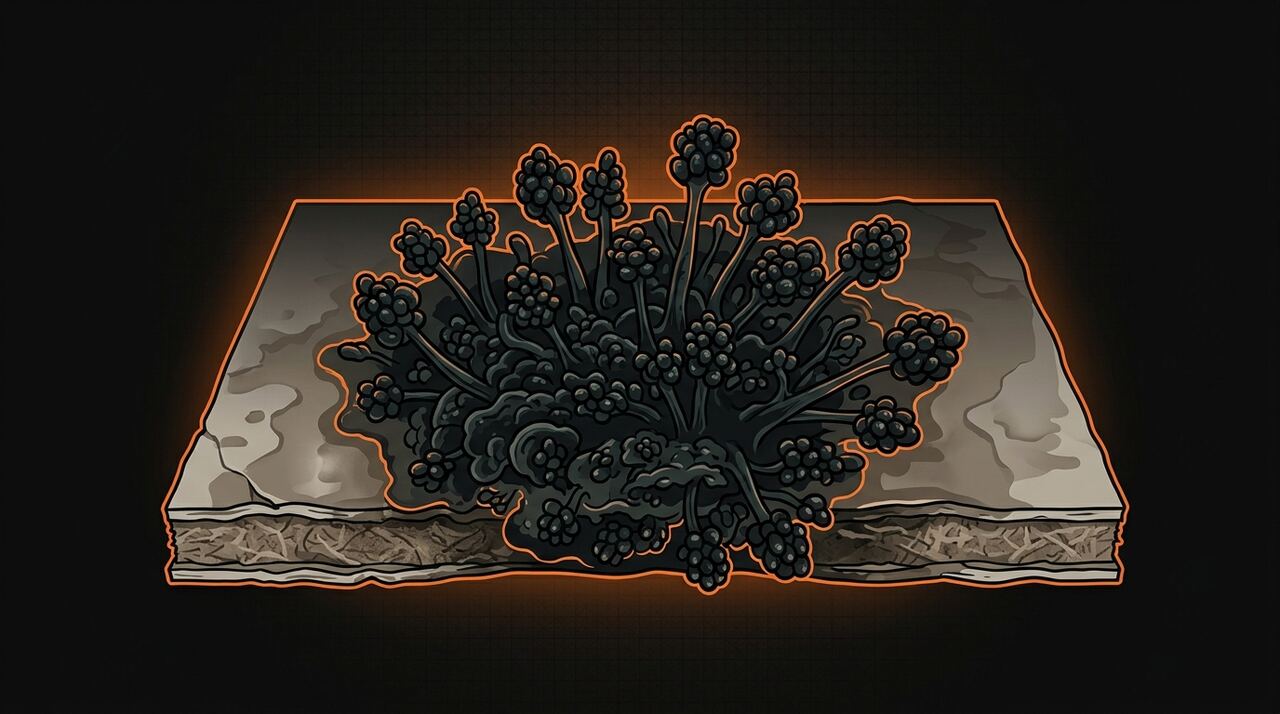
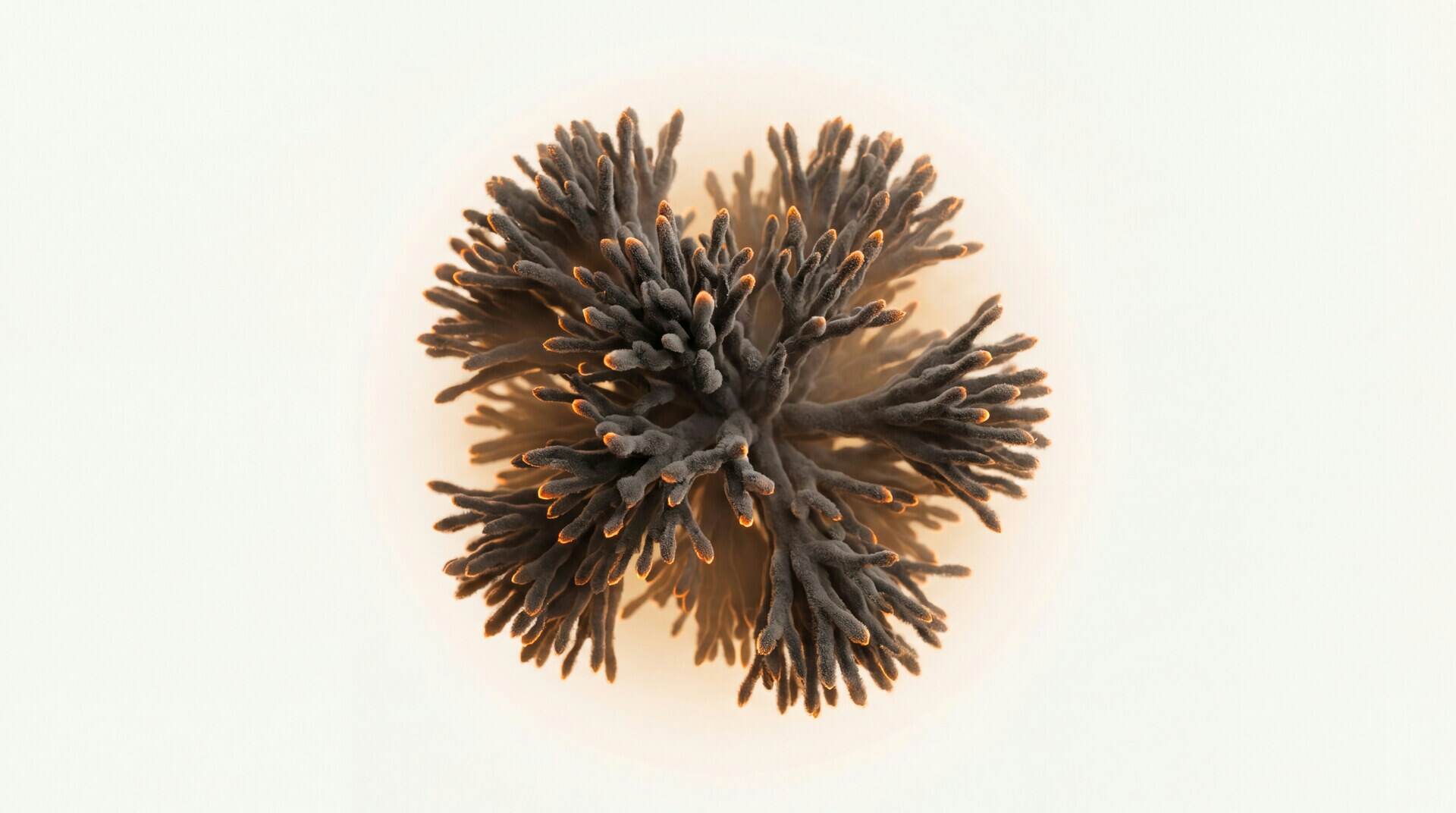
- Mold is a growth. It can look fuzzy, speckled or slimy and spreads in blotches. It also needs water. The EPA states that "There are many types of mold, and none of them will grow without water or moisture."
- Soot has a combustion story. A candle, fireplace, stove or furnace sits near the pattern. Mold has a moisture story.
Ask the cause question first. If nothing burns in the room and the wall has been wet, think mold. If you burn candles and the wall has never been wet, think soot. Both can be true at once, and soot can hold dust and damp, so a visual check cannot rule mold out.
Ceiling Ghosting vs Mold
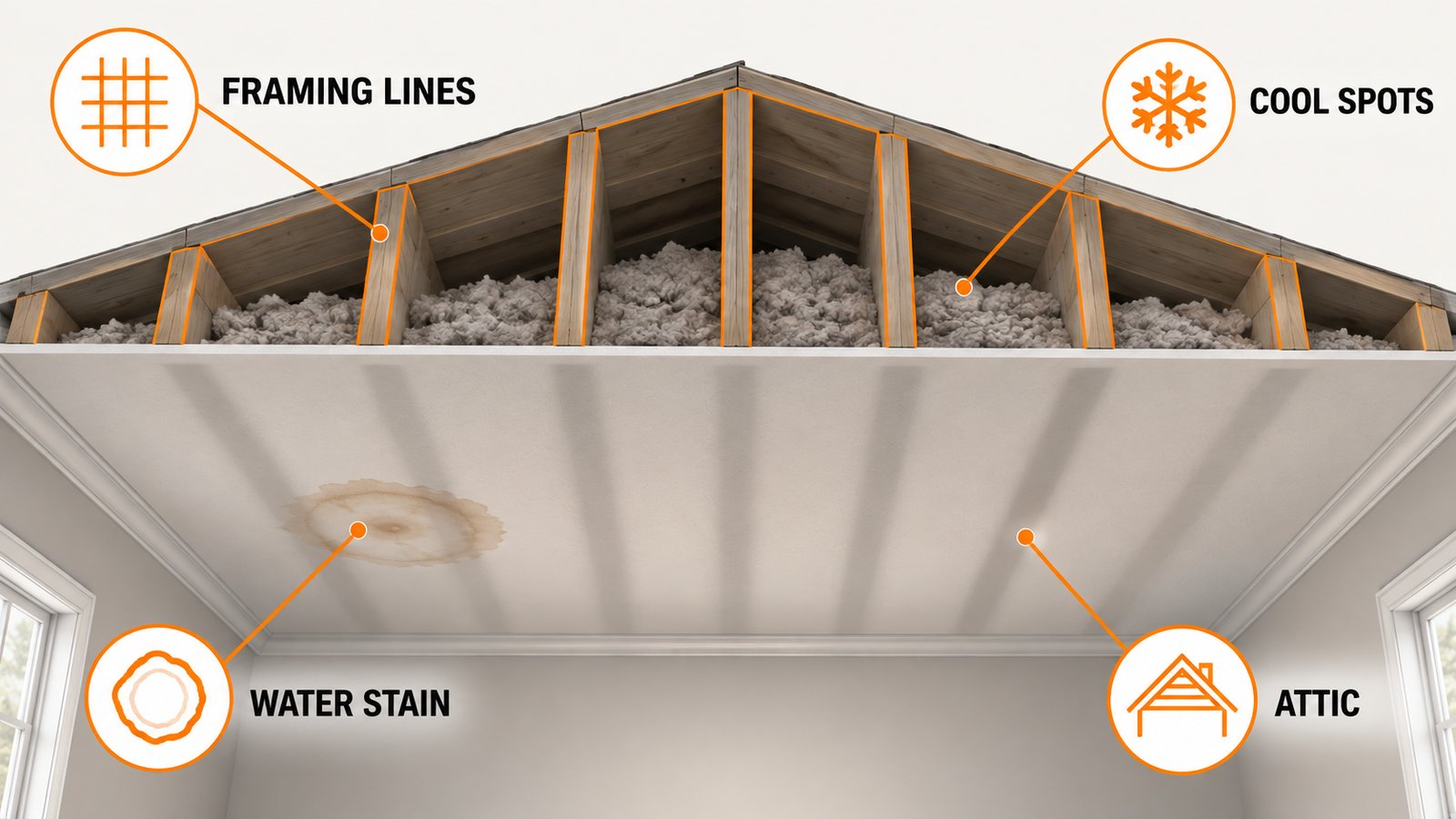
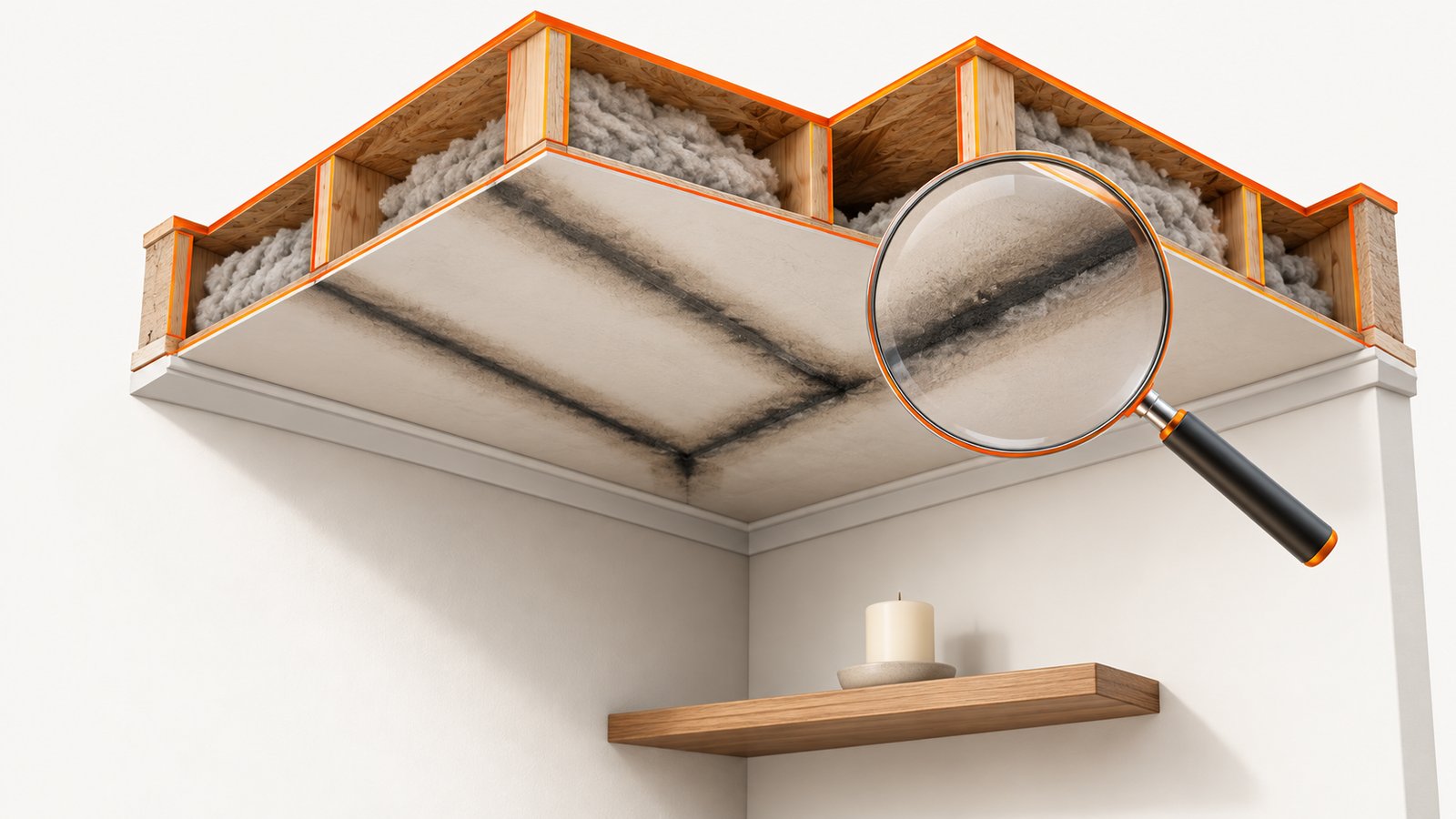
"Ghosting" is the name for dark lines on a ceiling or wall, often in a grid that matches the framing behind the drywall. The University of Florida article calls it "ghosting" or "carbon tracking" and says "Soot tends to accumulate in cool areas, often forming dark areas on baseboards, around air conditioning vents, in or near refrigerators and on wall surfaces over studs."
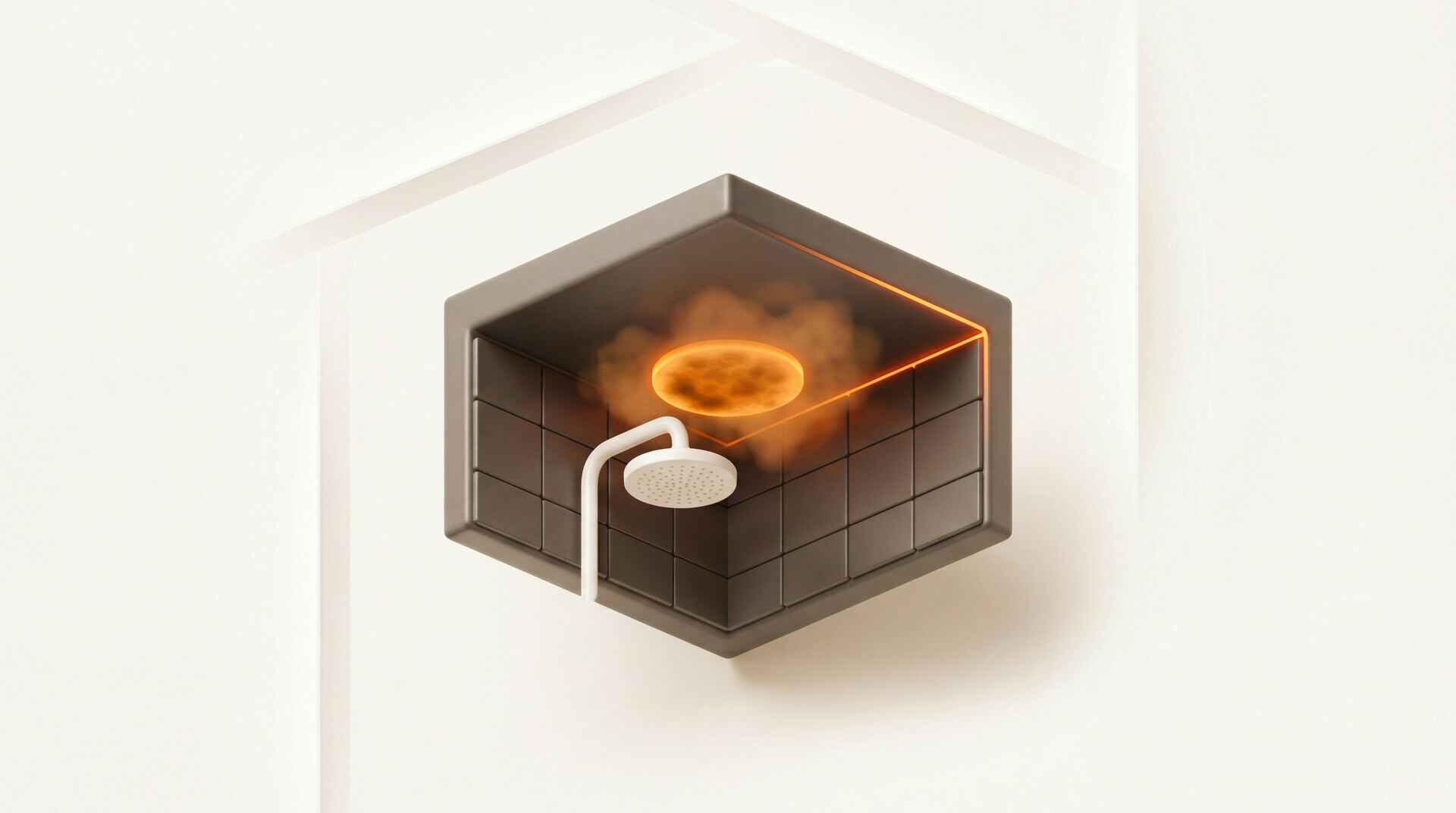
That is the useful clue. Rule of thumb: dark lines that run straight, evenly spaced and in step with studs or joists are more likely soot or dust than mold. The limit is that mold also likes cool surfaces. Where warm, humid air meets a cold spot, water can condense, and mold can grow on the same framing lines. Check these:
- Edges and density. Ghosting tends to be even along its length. Mold varies and has soft, ragged borders.
- Dampness. A brown stain, softness or a musty smell points to water. Our mold on ceiling page sorts roof leaks from condensation. Do not press on wet or sagging drywall.
- What is above. A poorly ventilated attic or a cold exterior wall can produce condensation and ghosting.
- What burns in the house. Heavy candle use, a fireplace, a gas log set or an older furnace are the usual suspects.
The EPA report on candle emissions says that "Sooting associated with burning candles can cause property damage by blackening walls, ceilings, and carpets." A gray ceiling after a winter of candles is not unusual. If the same ceiling smells musty, check for moisture before you blame the candles.
Black Mold vs Soot: The Smudge Test and Its Limits

The common home test: wear gloves, then wipe a small hidden patch with a dry cloth. Soot on a painted wall usually smears into a gray or black streak. We could not find an agency or university source that tests this method, so it is a rule of thumb with three limits.
- A smear is not proof of soot. Dirt and loose growth also come off. The University of Florida source warns that soot-type marks can be "very difficult to clean, almost impossible, because they are oily," so wiping can spread the mark.
- A mark that stays is not proof of mold. Oily soot and stains can stay put.
- Wiping disturbs mold. The EPA advises gloves, goggles and an N-95 respirator for cleanup. Keep the test small and do not brush dry.
We do not recommend a bleach swab. A color change does not establish what a mark is, and the EPA warns: "Never mix chlorine bleach solution with other cleaning solutions or detergents that contain ammonia because toxic fumes could be produced."
A better test is time. Outline the patch in pencil, clean one small area, and look again in a week. If it returns, ask what feeds it. Burning feeds soot. Water feeds mold. A humidity risk calculator and a cheap humidity meter answer the second question. For a photo check, Mold Scanner AI gives an AI-assisted visual screening of what is visible. It cannot identify a substance.
Where Indoor Soot Comes From
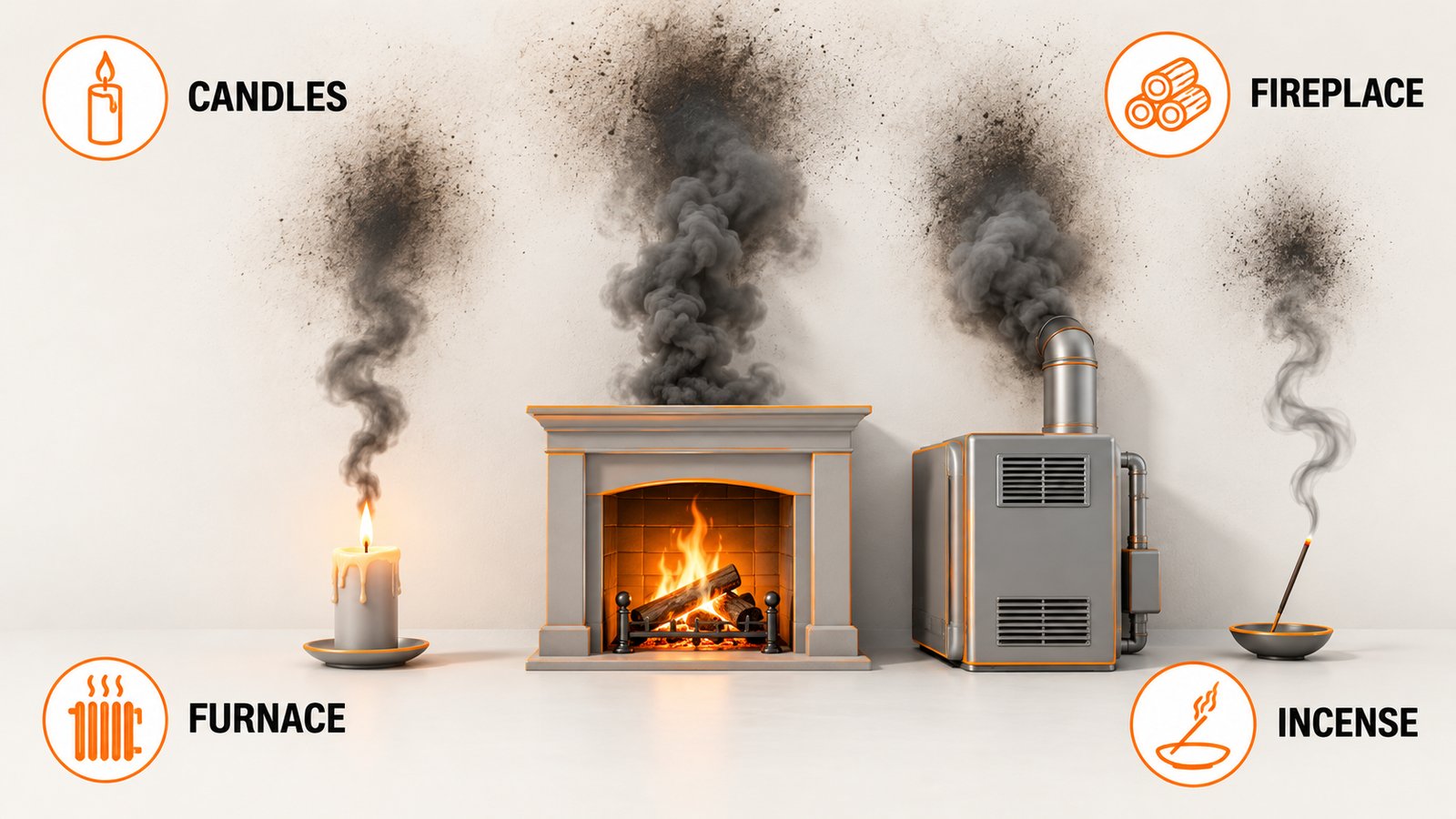
The University of Florida source defines it: "Soot is produced from the incomplete combustion of carbon-containing fuels." In homes, the usual sources are these.
Candles. The EPA candle report says "Scented candles are more likely to produce soot than unscented candles." It adds that candles in glass containers produce more soot, and so do candles blown out instead of snuffed by cutting the wick. The University of Florida source says candles in a draft from a window, fan or vent can produce more soot too. Marks on the wall above where you burn candles are a strong clue.
Fireplaces and wood stoves. The EPA explains that wood smoke rising into a cooler chimney "can condense and stick to the inside walls of the chimney" as creosote, a "highly combustible black or brown residue." A fireplace that draws poorly can push smoke into the room. Look for black stains on the firebox front, the mantel and the wall above.
Furnaces, boilers and water heaters. An appliance that burns or vents poorly can leave black deposits around itself, its vent pipe and nearby registers. The safety section below covers that case.
Other sources. The EPA report calls incense smoke a major source of particulates in indoor air.
Soot is thickest near its source and along moving air, such as around a vent. Heaviest marks beside a register, or a furnace filter that looks black, are worth noting.
Black Sooty Mold Is a Plant Problem
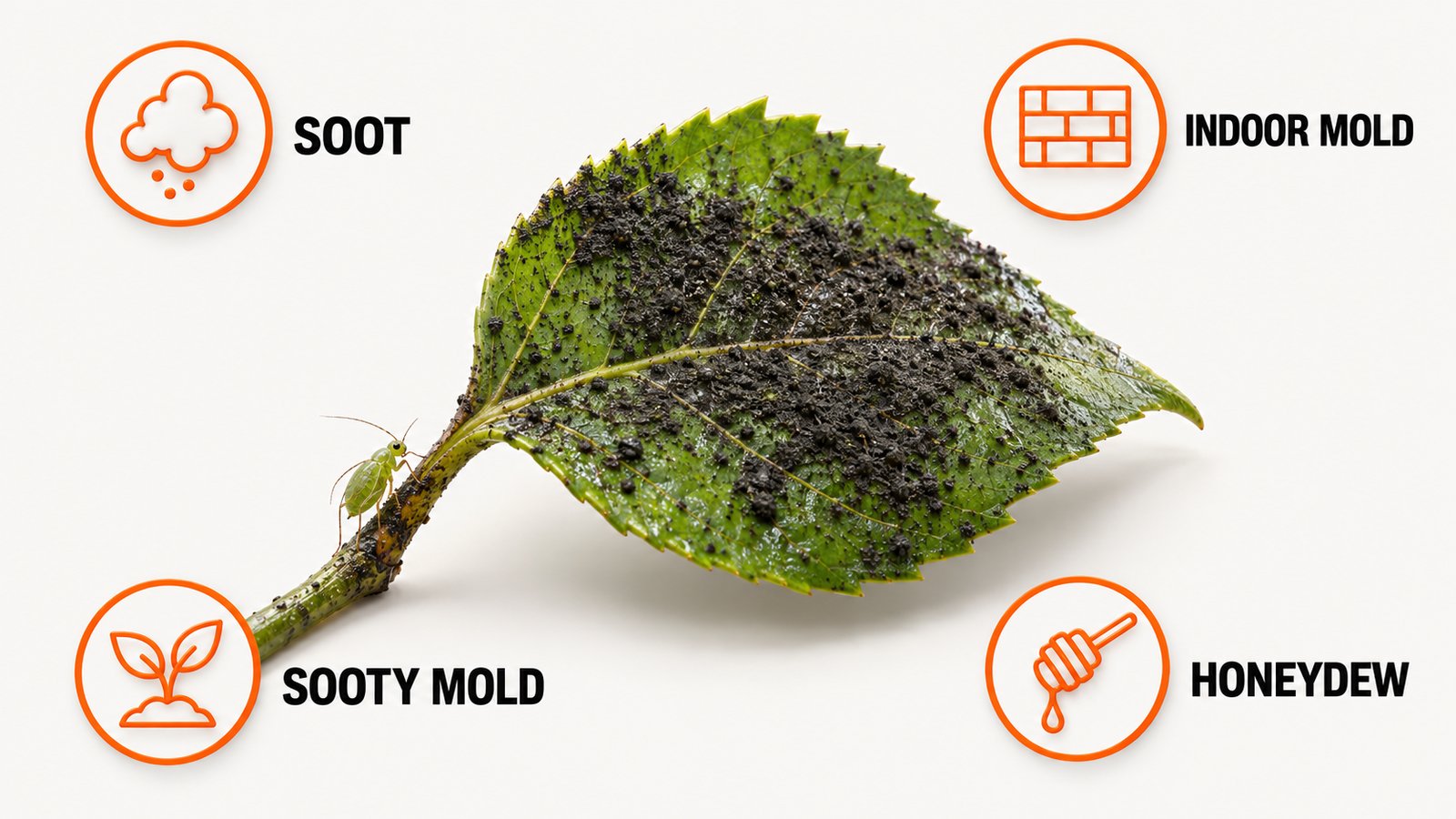
If you searched for black sooty mold, you may be after a different thing. Sooty mold is a fungus on plants. It is not soot, and it is not the mold on a damp wall.
University of Illinois Extension explains: "Sooty mold fungi have black mycelium and grow on insect honeydew. The honeydew is excreted by certain types of scales and aphids." The fix is at the source: "Control most sooty molds by controlling the insects which produce the honeydew."
| Term | What it is | Where you see it |
|---|---|---|
| Soot | Black particles from incomplete burning | Walls and ceilings near candles, fireplaces and furnaces |
| Indoor mold | A fungus on damp building materials | Walls, ceilings, grout and wood with a moisture problem |
| Sooty mold | A fungus on insect honeydew | Leaves and stems of infested plants |
Honeydew is sticky and drips, so a plant with insects can leave a tacky film on a nearby sill. If your marks sit under a plant, check the plant. That is a question for your local extension office. For the other houseplant case, see mold on houseplant soil.
When Soot Is a Safety Warning

Most soot is a candle problem. Some is not. Black deposits you cannot tie to a candle, a fireplace you used or a smoky pan may mean a fuel-burning appliance is not burning or venting well. The EPA lists these sources of carbon monoxide: "Leaking chimneys and furnaces" and "Back-drafting from furnaces, gas water heaters, wood stoves, and fireplaces."
Soot and carbon monoxide both come from incomplete burning. Soot is visible. The EPA describes carbon monoxide as "colorless, practically odorless, and tasteless," and the CPSC calls it the "Invisible Killer." Soot near an appliance does not prove carbon monoxide is present, and a clean wall does not prove it is absent. Only an alarm warns you.
- Install CO alarms. The CPSC says to "Install battery-operated CO alarms or CO alarms with battery backup on every level of the home and outside sleeping areas."
- Get appliances inspected. The EPA's carbon monoxide page says the CPSC urges an annual professional inspection of all fuel-burning appliances, including furnaces, stoves, fireplaces, clothes dryers, water heaters, and space heaters. For chimneys, the CPSC advises having "flues and chimneys inspected before each heating season for leakage and blockage by creosote or debris."
- Call a licensed heating or chimney professional about unexplained black marks around an appliance, a vent pipe or a fireplace.
- If an alarm sounds, follow the CPSC: "If you suspect CO poisoning, get outside to fresh air immediately, and then call 911." Health questions belong with a physician.
No mold test, photo or app can check a furnace.
How to Clean Soot Without Making It Worse

Soot cleaning advice comes mostly from restoration trades, not agencies, so treat these steps as common practice. The University of Florida source notes soot is hard to clean "because they are oily." Heavy wet scrubbing can turn a light film into a smear that soaks into paint.
- Fix the source first: stop the candle or have the appliance inspected. Otherwise the marks return.
- Wear gloves, goggles and a fitted N-95 respirator. The EPA recommends them for mold cleanup, and they make sense when you cannot tell which one you have.
- Dry-wipe or vacuum with a soft brush first. Do not rub.
- Test a hidden spot with mild detergent and water, and change cloths often.
- Stop if the area is large, textured or possibly damp.
If it turns out to be mold, the EPA says to "Scrub mold off hard surfaces with detergent and water, and dry completely," and that "The key to mold control is moisture control." It also notes "Absorbent or porous materials, such as ceiling tiles and carpet, may have to be thrown away if they become moldy." See how to get rid of mold, and mold smell in house if your nose raised the question.
When to Call a Pro

- A licensed heating, fireplace or chimney professional when dark deposits sit near an appliance, vent pipe or fireplace, or after a CO alarm sounds.
- A restoration or mold professional when the area is bigger than about 10 square feet. The EPA says "less than about 10 square feet (less than roughly a 3 ft. by 3 ft. patch), in most cases, you can handle the job yourself." Also call when the ceiling is wet or sagging, the source is hidden, or the mark keeps returning. See mold remediation and mold inspection.
- A roofer or plumber when stains change after rain or sit under a bathroom or pipe. Fix the leak before cleaning.
- A physician for any health concern. We do not give medical advice.
Not sure? Take a daylight photo and one with a flashlight raked across the surface, note recent leaks and candle use, and measure humidity. Signs of mold in the house and mold from a photo explain what to look for and what a photo cannot show.
Frequently asked questions
How can I tell soot from mold on my ceiling?
Look at pattern, location and smell. Soot tends to form straight lines over framing, fans above vents, or films near candles, a fireplace or a furnace, with a faint smoke smell or none. Mold tends to spread in irregular blotches where there is a water history, with a musty smell. These are rules of thumb. A lab sample or a licensed inspector settles it.
Does black mold look like soot?
It can. Both can be gray or black, and the CDC says mold can look like spots of many different colors. Soot is usually a flat film that follows air and cool surfaces. Mold can look fuzzy or speckled and needs moisture. A flashlight raked across the surface helps show whether the mark is flat or raised.
What is ceiling ghosting?
Ghosting, also called carbon tracking, is dark staining on walls and ceilings, often in lines that match the studs or joists. The University of Florida describes soot collecting in cool areas, including wall surfaces over studs. Mold can also grow on cool framing, so check for moisture before deciding.
Can candles really turn a ceiling black?
Yes. The EPA report on candle emissions says sooting can blacken walls, ceilings, and carpets, and that scented candles are more likely to produce soot than unscented ones.
Is soot on my walls a sign of carbon monoxide?
Not by itself. Candles are a common cause of soot. Black deposits near a furnace, vent pipe or fireplace that you cannot explain are a reason to call a heating professional. A CO alarm on every level and outside sleeping areas is what warns you, as the CPSC advises.
Is sooty mold the same as soot?
No. Sooty mold is a black fungus that grows on insect honeydew on plants, according to University of Illinois Extension. Soot is burned particles. Indoor mold grows on damp building materials.
Is it safe to wipe a dark mark to test it?
A small dry wipe with gloves on is a common rule of thumb, but soot can smear because it is oily, and disturbing mold can release spores. The EPA recommends gloves, goggles and an N-95 respirator for mold cleanup. Do not use bleach as a test, and never mix cleaners.
When should I hire a professional?
Hire a heating, fireplace or chimney professional for black deposits near an appliance or after a CO alarm sounds. Hire a mold or restoration professional if the area is over about 10 square feet, the material is wet or sagging, the source is hidden, or the mark keeps returning. See a physician for any health concern.
Sources
Every claim on this page traces to one of these. Links open the primary document.