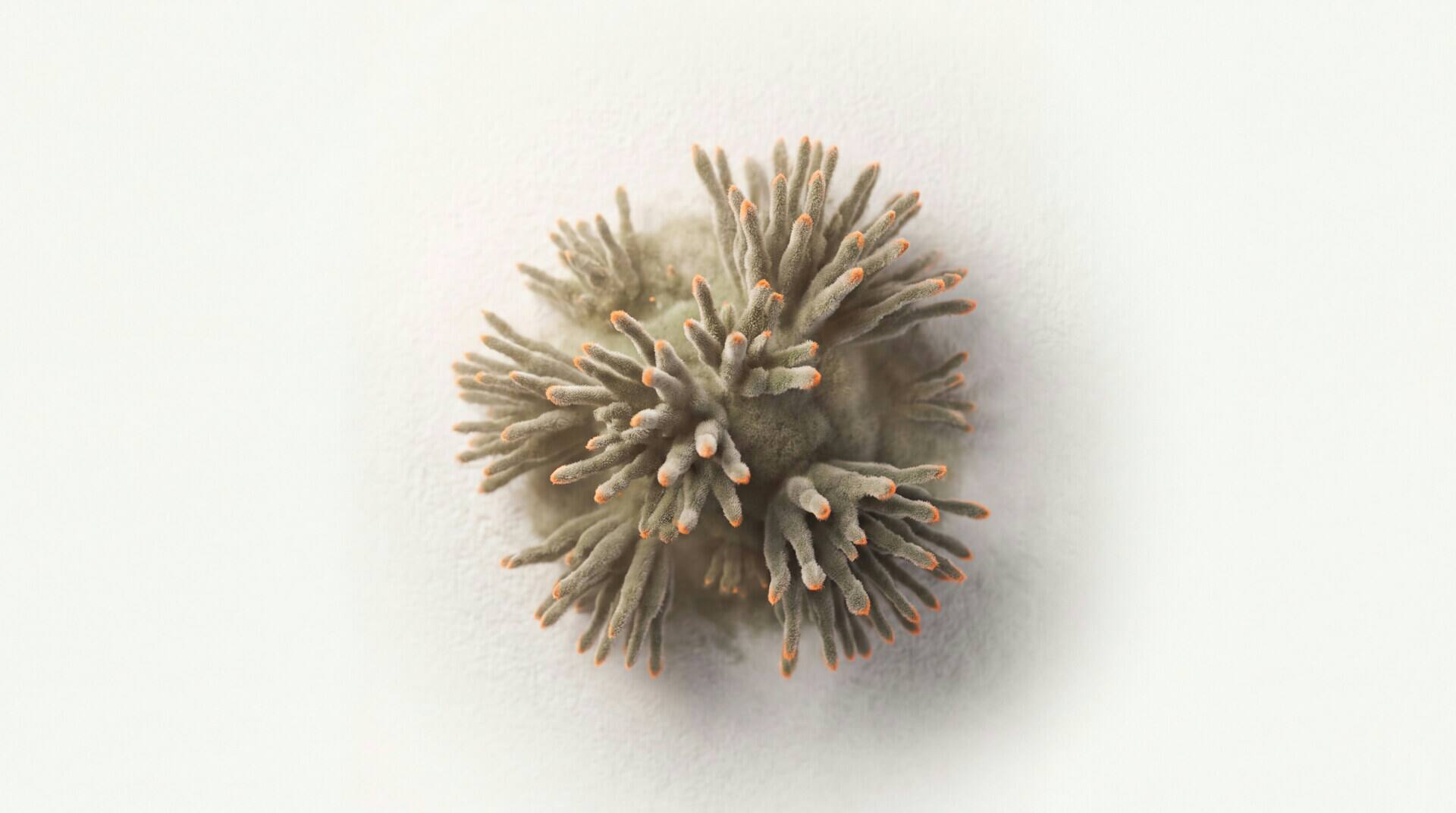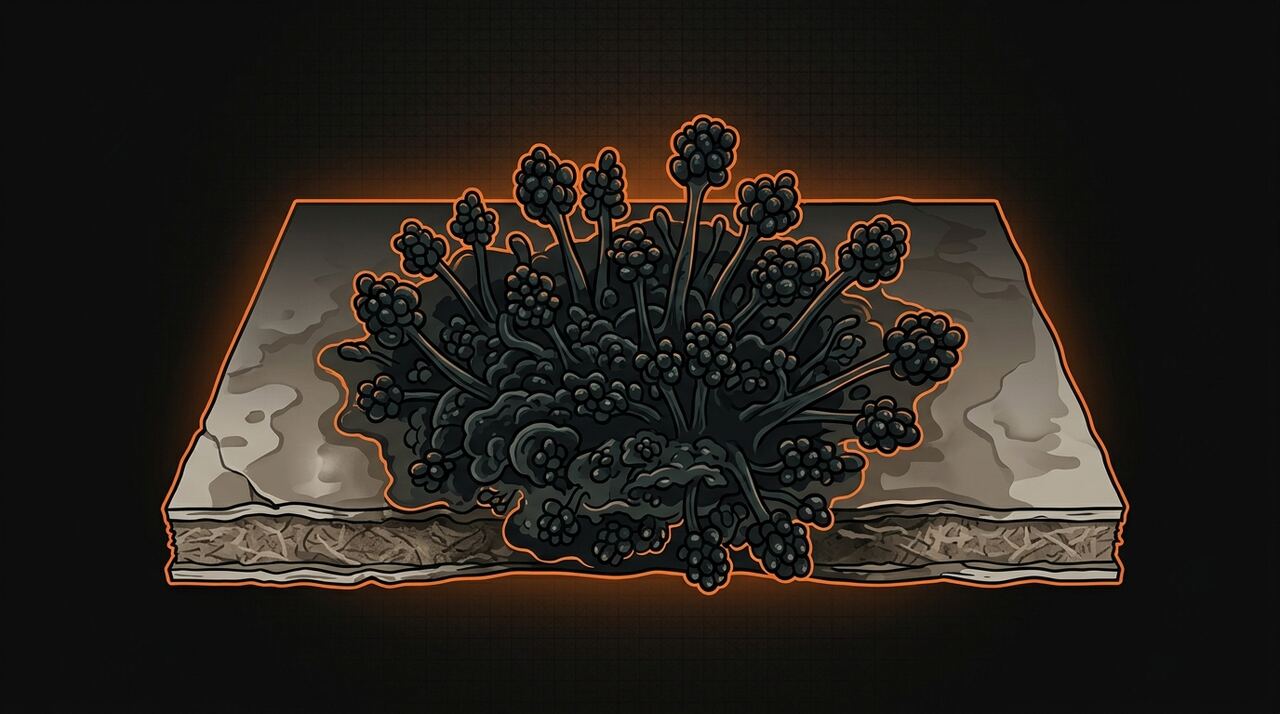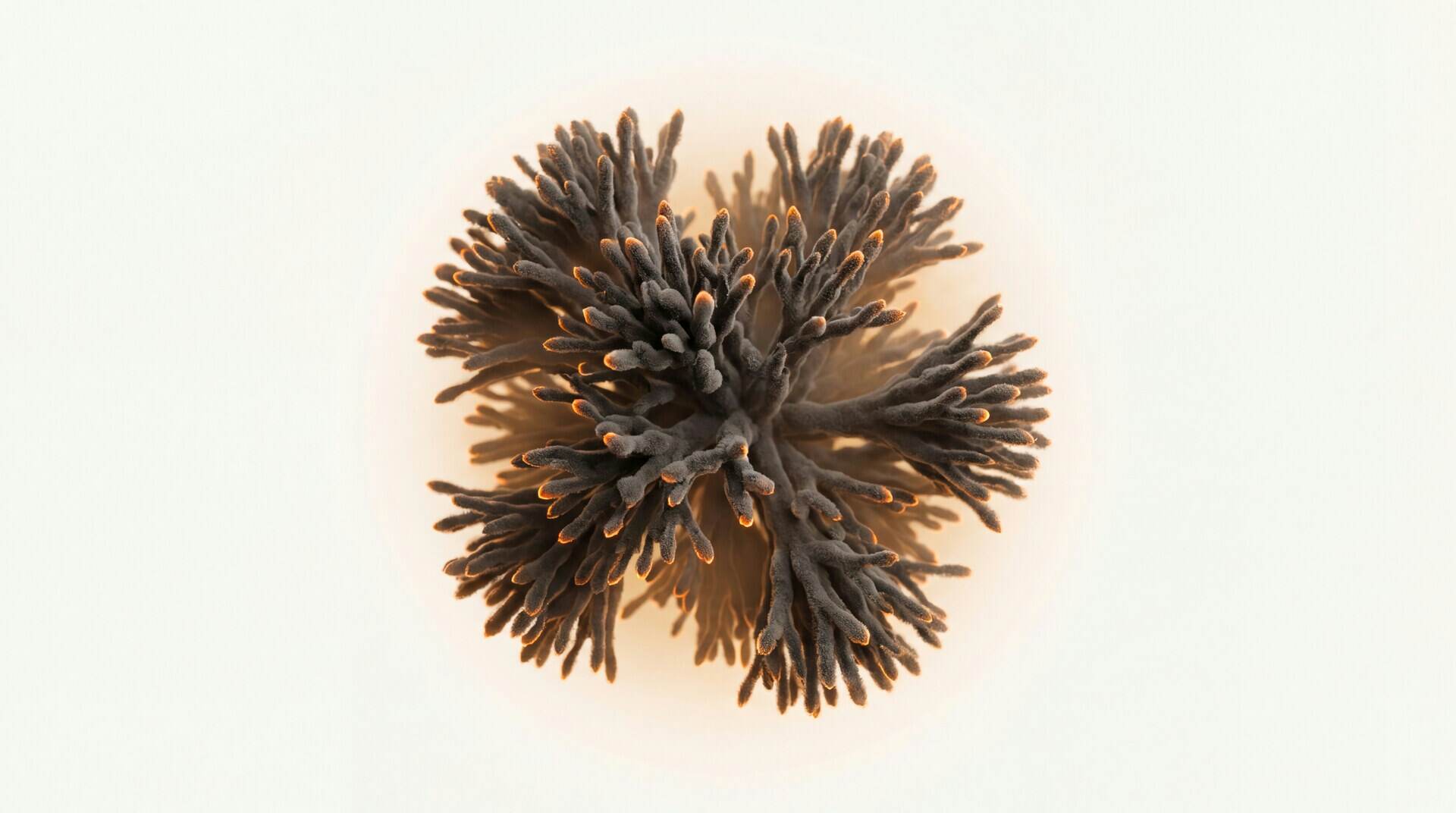
Different color on your wall? See green mold, orange mold, white mold, or all 12 types of mold.
What Is Yellow Mold?
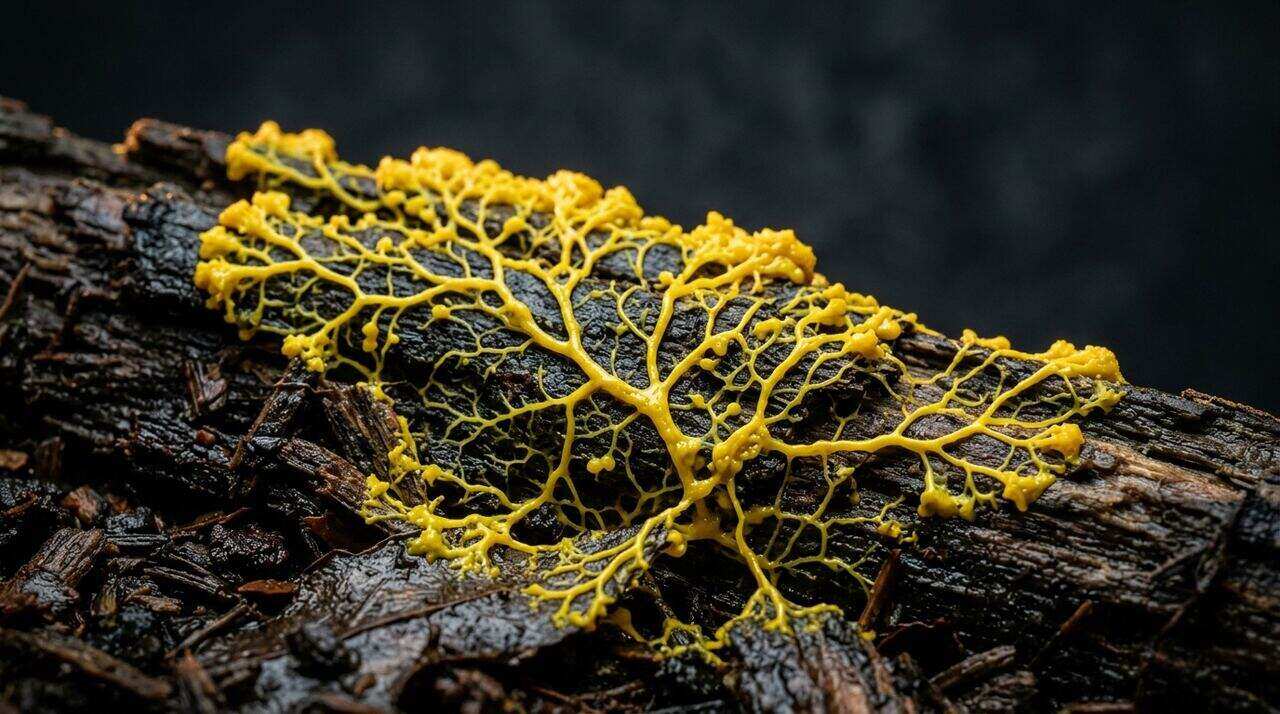
Yellow mold is a color, not a single organism. When people search "yellow mold," they're usually looking at one of three very different growths that happen to share a yellow tint. One is a true indoor mold, often Aspergillus. One is a wood-decay fungus that can damage the bones of a house. The third isn't a mold at all. It's a slime mold that turns up outdoors on mulch and bark.
That difference matters more than it sounds. The cleanup, the risk, and the urgency change with each one. A yellow spot on a bathroom wall is a routine cleaning job. Yellow strands creeping across a floor joist in a crawl space point to a structural problem. Bright yellow froth on garden mulch is harmless and dries up on its own within a few days.
Color alone can't tell you which one you have. Two molds that look identical under your bathroom light can be different species with different risks. The only way to confirm a species is a lab test. What you can read on your own is the location, the texture, and what the growth is feeding on. Those three clues narrow it down fast. For a wider primer first, see what mold looks like and our guide to the common types of mold.
Three Yellow Growths, Side by Side
Here are the three growths people most often call yellow mold, and the simple tells that separate them.
Aspergillus (indoor, on damp surfaces and food)
This is the true mold most yellow indoor spots turn out to be. Aspergillus can look yellow to yellow-green, with a powdery or velvety surface. It grows on damp drywall, wallpaper, leather, fabric, and stored foods like grains, nuts, and spices. The species A. flavus is the well-known yellow-green one. Aspergillus is the same genus that often shows up as green mold, which is part of why color is such a weak clue.
Serpula and other wood-decay fungi (on structural wood)
This is the serious one. Serpula lacrymans, often called dry rot, and related wood-rot fungi can start as pale yellow or off-white cottony strands before they form rusty, spore-covered surfaces. They feed on the wood itself, deep below the surface. You'll find them on joists, subfloor, framing, and other structural timber in crawl spaces, basements, and behind walls. This case needs the most caution, and the next section covers it in full.
Fuligo septica (outdoor, on mulch)
Bright yellow, frothy growth on outdoor mulch or bark is almost always Fuligo septica, nicknamed dog vomit slime mold. It looks like scrambled eggs or foam. It isn't a true mold and it isn't dangerous to healthy people, pets, or plants. It feeds on decaying wood chips and dries into a crusty tan blob on its own.
The quick read:
- Where it's growing: An indoor damp surface points to Aspergillus. Structural wood points to a wood-rot fungus. Outdoor mulch points to slime mold.
- Texture: Powdery or velvety means mold. Cottony strands next to cracked, crumbling wood mean rot. Frothy and bright yellow means slime mold.
- What it's feeding on: A surface like paint, paper, or fabric, versus the wood structure itself, versus dead mulch.
Other colors follow the same rule. The clue is location and texture, never the shade by itself, whether you're looking at white mold, orange mold, or brown mold.
Yellow Mold on Wood: The Serpula Warning
If the yellow growth is on structural wood, slow down. Wood-decay fungi like Serpula lacrymans don't just sit on the surface. They eat the cellulose that gives wood its strength. Early growth can look like pale yellow or off-white cotton, sometimes with thin strands spreading across the wood like roots. As it matures, it forms rusty, reddish-brown spore surfaces.
The damage is easy to spot once you know the sign. Affected wood cracks into dry, brittle cubes and crumbles when you poke it. It can sound hollow. A musty smell usually comes with it. This kind of rot spreads through framing and can reach wood several feet from the original wet spot, which is what makes it a building problem instead of a cleaning problem.
This is the one case on this page where you should stop and call for help rather than scrubbing. If wood feels soft, spongy, or crumbles, hire a qualified mold remediation professional. Look for firms that follow the IICRC S520 standard; ACAC or RIA credentials and state licenses count too. You'll likely also want a contractor or structural engineer to check whether any wood needs replacing. For the cleanup workflow on smaller, surface-only spots, see how to get rid of mold and our notes on mold on wood.
Is Yellow Mold Dangerous?
The honest answer: it depends on which organism it is and how sensitive you are, and you can't confirm any of that by color. Here's a realistic breakdown.
For most healthy adults: A small yellow spot on caulk, a wall, or under the sink isn't an emergency. The CDC links damp indoor mold to a stuffy nose, wheezing, and red or itchy eyes and skin. Reactions tend to be stronger in people with asthma or mold allergies. Clean small spots promptly, fix the moisture, and the everyday risk stays low.
For allergy and asthma sufferers: Aspergillus is a common indoor allergen. Even modest colonies can trigger sneezing, congestion, coughing, and wheezing in sensitive people. Removing the growth and running a HEPA air purifier lowers your exposure.
For immunocompromised people: Some Aspergillus species, especially A. fumigatus, can cause a serious lung infection called aspergillosis in people with weakened immune systems. If you're going through chemotherapy, had an organ transplant, or take high-dose steroids, treat any visible mold in your home as urgent.
On food: The yellow-green species A. flavus can produce aflatoxins, which are toxic compounds, on stored grains, nuts, and corn. Don't eat food with yellow mold on it. For soft foods, throw the whole item out. The risk profile differs from black mold, but the food rule is the same: don't try to rescue it.
If symptoms stick around, talk to a licensed physician. No color, yellow included, tells you the species or the exact risk. Lab testing does.
How to Remove Yellow Mold
For small indoor areas under 10 square feet that are surface growth (not wood rot), you can clean yellow mold yourself. Follow these steps in order.
Step 1: Fix the moisture source. There's no point cleaning mold while water keeps feeding it. Find and fix the leak, improve airflow, or lower the humidity. Mold can come back within 24 to 48 hours if the moisture stays.
Step 2: Protect yourself. Put on an N95 mask, rubber gloves, and goggles. Cleaning mold sends a burst of spores into the air. Open a window for airflow if you can.
Step 3: Pick the right cleaner for the surface.
- Non-porous surfaces (tile, glass, metal, sealed plastic): Spray with a no-bleach mold-control product like Concrobium Mold Control, 3% hydrogen peroxide, or undiluted white vinegar. Let it sit 10 to 15 minutes, scrub with a stiff brush, then wipe clean.
- Semi-porous surfaces (finished wood, concrete): Scrub the surface to lift visible growth, apply a mold-control product, and let it dry fully. On bare structural wood, read the wood-rot warning above first.
- Porous surfaces (drywall, carpet, insulation): If mold has soaked through the material, you can't clean it out. Cut out the affected section plus about 12 inches past the visible growth and replace it.
Step 4: HEPA vacuum the area. After cleaning, vacuum the surrounding surfaces with a HEPA vacuum to capture loose spores. A regular vacuum just blows them back into the room.
Step 5: Check it weekly. Watch the spot for four weeks. If it returns, the moisture source wasn't fully fixed.
Never reach for bleach. On porous surfaces like wood and drywall, the chlorine stays on top while the water soaks in and feeds the mold deeper. Bleach also adds moisture and creates harsh fumes in tight spaces. And never mix bleach with ammonia or with other cleaners, because that combination makes a toxic gas. Stick to one of the best mold removal products, hydrogen peroxide, vinegar, or physical removal. For the full method on every surface, our mold removal guide walks through it step by step.
Preventing Yellow Mold
Prevention costs far less than cleanup, and the rules are simple.
- Keep indoor humidity between 30 and 50 percent. A $10 to $20 hygrometer tells you where you stand. Run a dehumidifier in any room that reads above 50 percent, especially basements and crawl spaces.
- Ventilate wet rooms. Run the bathroom exhaust fan during every shower and for 30 minutes after. Vent the dryer and stove outside, never into the attic.
- Dry water fast. A wet surface can grow mold in 24 to 48 hours. The quicker you dry it, the less chance mold has to start.
- Protect structural wood. Wood-rot fungi love still, humid air against damp timber. Keep crawl spaces and basements dry and ventilated, fix roof and plumbing leaks quickly, and keep soil and mulch away from wood siding and framing.
- Don't stress about mulch slime. The yellow blobs on outdoor mulch are harmless. If you don't like the look, scoop them out or break them up with a rake and let the area dry.
Early stage yellow mold: what it looks like first
People search for early stage yellow mold expecting a checklist for what the first day looks like. The honest version: what makes it early is the size and the moisture history, not the color.
The first visible sign in a house is usually a small cluster of yellow specks or a faint yellow-tan film in a spot that stays damp longer than the rest of the room. On a ceiling that is normally the cold corner over a shower, the ring around a bath fan, or the ceiling under a slow roof leak, where the drywall paper stays wet after the surface looks dry. On wood it often shows first along the cut end of a board or in the gap where two pieces meet, because those hold water the longest.
Do not read anything into how small it is. A patch the size of a coin can sit on top of a much larger wet area inside the material, and the visible growth is only the part that reached air. What you can see is the prompt to look for the water, not the measure of the problem.
What early growth does not tell you is which organism it is. Aspergillus species are frequently yellow, and so are several other molds and some bacterial films, and none of them are told apart by eye. If the answer changes a high-stakes decision, that is what sampling is for.
The one exception worth knowing on this page is on structural wood, and it is covered above: the yellow-to-orange growth described in the Serpula warning section is a rot fungus, and it is the one case where finding it early genuinely changes what happens next.
Frequently asked questions
Is yellow mold dangerous?
It depends on which organism it is, and you can't tell by color. Indoor yellow mold is often Aspergillus, a known allergen. The CDC links damp indoor mold to a stuffy nose, wheezing, and irritated eyes or skin, with stronger reactions in people who have asthma or mold allergies. The yellow-green species A. flavus can make aflatoxins on stored food. Lab testing is the only way to confirm the species.
What is the yellow mold growing on my mulch?
Bright yellow, frothy growth on outdoor mulch or bark is almost always Fuligo septica, nicknamed dog vomit slime mold. It isn't a true mold and it isn't dangerous to healthy people, pets, or plants. It feeds on decaying wood chips, not living tissue, and dries to a crusty tan blob within days. If you want it gone sooner, scoop it into a bag or break it up with a rake and let the area dry.
Is yellow mold on wood always dry rot?
No, but yellow growth on structural wood deserves a close look. Wood-decay fungi like Serpula lacrymans can start as pale yellow or off-white strands before forming rusty spore surfaces. They eat the cellulose in beams and joists, leaving wood cracked into dry, crumbly cubes. If the wood feels soft, spongy, or crumbles when poked, stop cleaning and bring in a qualified remediation professional and a contractor.
How do I get rid of yellow mold?
For small indoor areas under 10 square feet, fix the moisture source first, then put on an N95 mask, gloves, and goggles. Spray the spot with a no-bleach mold-control product or 3% hydrogen peroxide, wait 10 minutes, scrub, and wipe clean. Never use bleach on porous surfaces like wood or drywall. For anything larger than 10 square feet, or any wood rot, hire a qualified professional.
Can you identify mold by its color?
No. Color is a clue, not an answer. Many different species can look yellow, and a single species can shift color as it ages or dries. Aspergillus alone comes in yellow, green, brown, and black. The only reliable way to confirm a species is a lab test of a sample. Treat any visible indoor mold as something to clean and fix, no matter the color.
Is yellow slime mold harmful?
Outdoor yellow slime mold, usually Fuligo septica on mulch or bark, is not a true mold and is not a plant disease. It feeds on bacteria in decaying material and is treated as harmless in the yard, where you can break it up with a rake or hose it off. Yellow found indoors is a different question: that is more likely Aspergillus on a damp wall or an early wood rot fungus.
Sources
Every claim on this page traces to one of these. Links open the primary document.