Why a sampling plan matters
A result is only meaningful in relation to a defined question and collection plan. Air, dust, and surface samples describe different material and time windows. Location, timing, ventilation, outdoor conditions, collection technique, laboratory methods, and comparison samples can all affect interpretation.
NIOSH notes that short-term air samples may not represent actual exposures and that there are no health-based indoor mold standards. EPA says ERMI is a research tool and does not recommend it for routine public use. A laboratory can identify or quantify material in a sample, but the report does not automatically locate a leak, measure a person's exposure, or prescribe remediation.
Common consumer kit formats
| Kit | Type | Time to results | Lab fee | Best for |
|---|---|---|---|---|
| GOT MOLD? | Air sampling (spore trap) | Check current listing | Check current listing | Defined air sample |
| Mold Armor FG500 | DIY settle plate | Check instructions | Optional lab terms vary | Culture-plate limitations |
| Healthful Home 5-Minute | Rapid surface screening | Manufacturer-marketed rapid read | Check current listing | One sampled spot |
| MyCoMetrics ERMI | Dust sample, DNA lab analysis | Check current listing | Check current listing | Research-index caveat |
| The DUST Test | Dust sample, lab analysis | Check current listing | Check current listing | Defined dust sample |
Prices and exact lab terms change, so check each listing. Whether lab analysis is bundled or charged separately is the detail that most affects the true cost.
What a mold test kit can and cannot tell you
Mold spores are common indoors and outdoors, so detecting some fungal material does not by itself establish an abnormal condition. A useful sampling plan starts with a precise question, identifies locations and controls, and defines how results will change a decision.
Settle plates favor organisms that grow under the kit's culture conditions. Air samples capture material during a limited sampling window. Dust samples integrate material that accumulated under an uncertain history. Surface samples describe the sampled spot. Laboratory methods can add identification or quantity, but no format automatically proves extent, hidden growth, health risk, or safe occupancy.
Every kit also depends on collection technique and interpretation. If the decision affects remediation, health, insurance, litigation, or a property transaction, use a qualified professional who can defend the scope and limits.
1. GOT MOLD? Test Kit: best overall air test
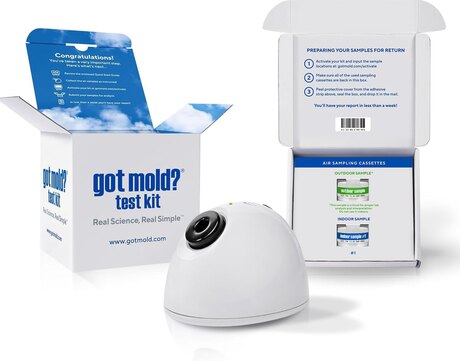
GOT MOLD? Test Kit
An air-sampling kit with a pump and spore-trap cassettes. You sample a room plus an outdoor control, mail the cassettes in, and a lab counts and identifies the spores against the outdoor baseline. Lab analysis is included in the kit price, so there is no surprise second fee.
Lab includedAir samplingOutdoor control
Accuracy: strong for a consumer kit, because it captures airborne spores and a lab compares your room to outside. Lab fee: included in the purchase. Time to results: a few days after the lab receives your samples. Who it is for: anyone who wants a real, lab-backed read on the air they breathe and is willing to pay more upfront for it. Follow the pump and timing steps exactly, since air sampling is only as good as the technique. Full breakdown of the pricing, the lab credentials, and the limits the company discloses: read our GOT MOLD? Test Kit review.
2. Mold Armor DIY Mold Test Kit: best budget DIY
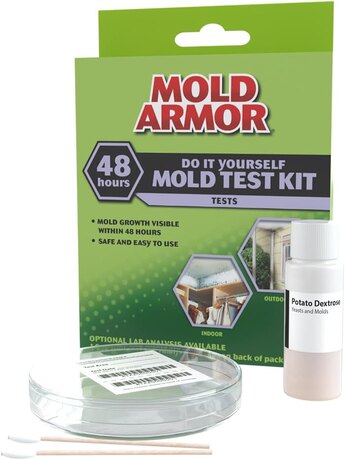
Mold Armor FG500 DIY Mold Test Kit
A low-cost settle-plate kit you can use for surface, air, or HVAC sampling. The plate shows growth in about two days, so you get a quick presence read at home. If you want the species identified, you mail the sample to the lab, which is a separate fee plus return shipping.
Low costResult in ~2 daysOptional lab ID
Accuracy: limited on its own, because a settle plate usually grows something whether or not you have a real problem. The number means more once you pay for lab species ID. Lab fee: separate, only if you want identification. Time to results: roughly two days for visible growth, longer if you mail it in. Who it is for: a cost-conscious first check, or confirming a specific suspected spot. Read the home result with caution and treat a bare positive as a prompt to look closer, not proof of a crisis. For the full breakdown, including the $40 lab fee and the three sampling methods, read our Mold Armor test kit review.
3. Healthful Home 5-Minute Mold Test: fastest result
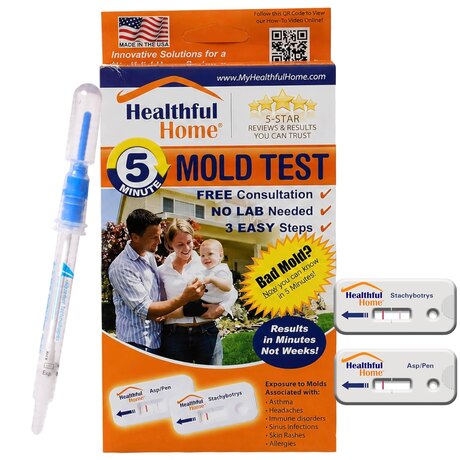
Healthful Home 5-Minute Mold Test
A rapid surface-swab screening test that reads in about five minutes, no lab and no waiting. You swab a suspect spot and the test indicates whether mold is elevated there. It is a quick screen for one location, not a species count for the whole house.
~5 minute readNo labSurface swab
Accuracy: good for what it claims, a fast surface screen, but it does not tell you species or air-spore levels. Lab fee: none. Time to results: about five minutes. Who it is for: a quick gut check on a single visible spot, like a stain on a windowsill or behind a toilet, before you decide whether to escalate to a lab kit or an inspection. For the full breakdown, including what the two cassettes actually screen for and why one kit only covers one sample, read our Healthful Home 5-Minute Mold Test review.
4. MyCoMetrics ERMI Mold Test Kit: DNA dust analysis with a research-index caveat
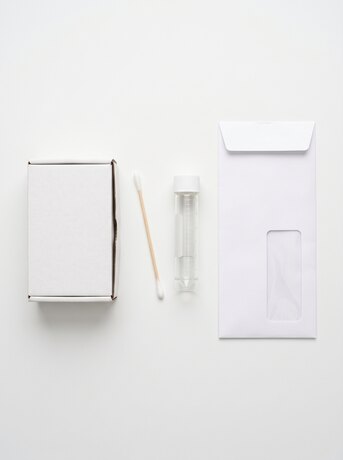
MyCoMetrics ERMI Mold Test Kit
An ERMI-style settled-dust test that uses DNA analysis for a defined group of molds. EPA describes ERMI as a research tool and does not recommend it for routine public use. A score does not prove health risk or safe occupancy.
DNA analysisDust sampleResearch-index limits
Limits: The method can report DNA measurements for targeted molds in the collected dust, but the composite index was developed for research and cannot determine medical causation, locate a moisture source, or clear a home for re-entry. Verify the current seller, laboratory, included analysis, price, and turnaround before purchase. For background, see our ERMI test guide.
5. The DUST Test Mold Kit: a defined settled-dust sample
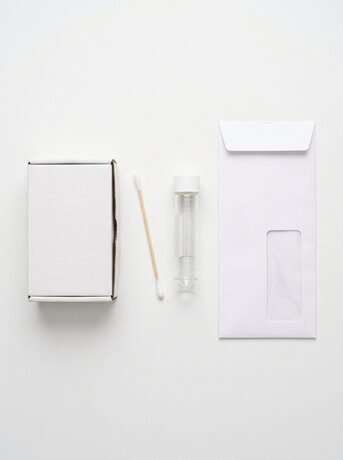
The DUST Test Mold Kit
A dust-based lab kit. The result describes the dust collected from the chosen locations under the kit's method. It does not automatically represent every room, hidden cavity, or exposure period.
Dust sampleLab analysisDefined locations
Limits: Settled dust can reflect accumulated material, but its age, sources, movement, and cleaning history may be uncertain. It is not a whole-home clearance or health test. We could not confirm a fixed Amazon listing, so the button runs an Amazon search; verify the seller, laboratory, contents, price, and current terms first.
How to interpret your mold test results
Start with the sampling question. Confirm what was collected, where, when, for how long, and under which conditions. Check whether controls and comparison samples were part of the plan.
Do not turn an index into a safety threshold. ERMI and HERTSMI-2 scores do not establish health-based occupancy limits. EPA says ERMI is a research tool and does not recommend it for routine public use.
Do not rank health risk by species name alone. A detected organism does not establish dose, exposure, source, or medical causation. Interpret results alongside direct moisture observations and the laboratory's stated limitations.
Keep health testing separate. A home sample cannot diagnose symptoms, and a consumer body test cannot prove that a particular building caused an illness. Discuss health concerns with a qualified clinician.
When to get qualified help
When visible growth and a moisture source are already clear, EPA notes that sampling is often unnecessary. The priority is correcting the water problem and addressing affected material safely.
Consider qualified help for concealed sources, extensive water damage, contaminated HVAC systems, sewage, structural concerns, post-remediation verification, real-estate or legal decisions, or any situation where sampling must answer a defensible question. Health symptoms require clinical evaluation rather than a home kit.
Ask who designed the sampling plan, which laboratory will analyze it, how results will change the decision, and what the method cannot conclude. Independence between assessment and paid remediation can reduce conflicts of interest, especially in high-stakes work.
Visual screening has different limits
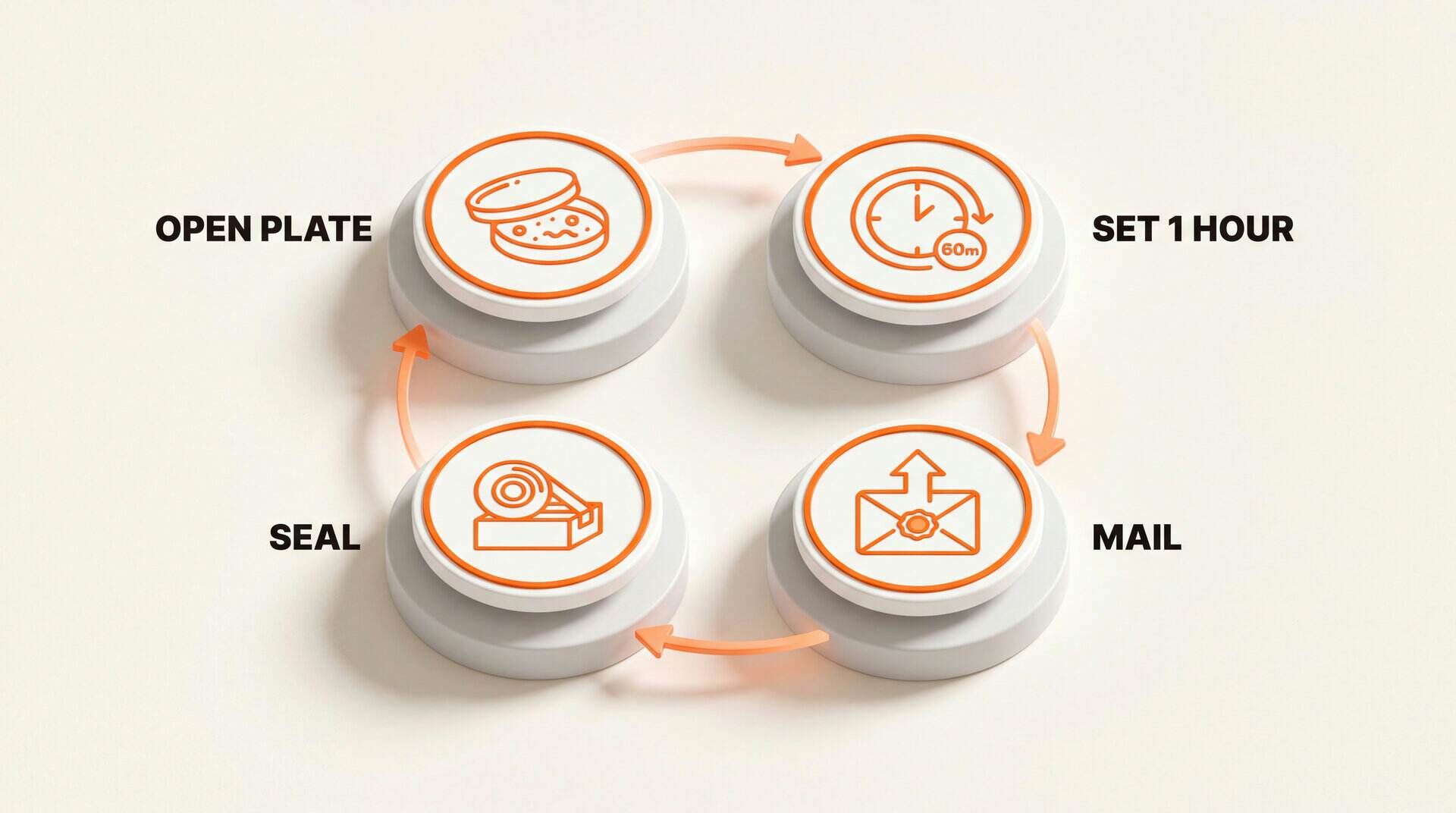
A visual screen and a laboratory test answer different questions. Mold Scanner AI offers 266 guided photo prompts across 19 rooms, with 38 in Quick and 129 in Standard. It provides AI-assisted visual screening of visible surfaces only, and processing time varies.
A screen cannot confirm active or hidden growth, identify species, select a sampling plan, or establish that testing is unnecessary. Use a qualified inspector or appropriate laboratory when the answer affects health, property, remediation, insurance, or another high-stakes decision.
What a mold dust test kit can tell you
A mold dust test kit collects settled dust from the spots you choose and sends it to a lab. The report describes that dust, not the air and not the whole home.
A mold dust test answers a different question than an air sample. Air sampling captures material during a limited window. Settled dust builds up over time, so its age, sources, movement, and cleaning history may be uncertain. A reading from dust does not tell you when the material arrived or where it came from.
Two kits on this page use dust. The DUST Test Mold Kit describes the dust collected from the chosen locations under the kit's method. The MyCoMetrics ERMI kit sends dust for DNA analysis and applies an index that EPA describes as a research tool. EPA does not recommend ERMI for routine public use.
What a dust result can and cannot do
- It can show what was in the dust you collected, under that kit's method.
- It cannot locate a leak, find hidden growth, or measure your exposure.
- It cannot clear a home for re-entry or say whether a space is safe to occupy.
- It cannot diagnose symptoms. Bring health concerns to a clinician.
Listings and lab terms change, so check the seller, the laboratory, what analysis is included, the price, and the turnaround before you buy.
Choosing a mold inspection kit for your home
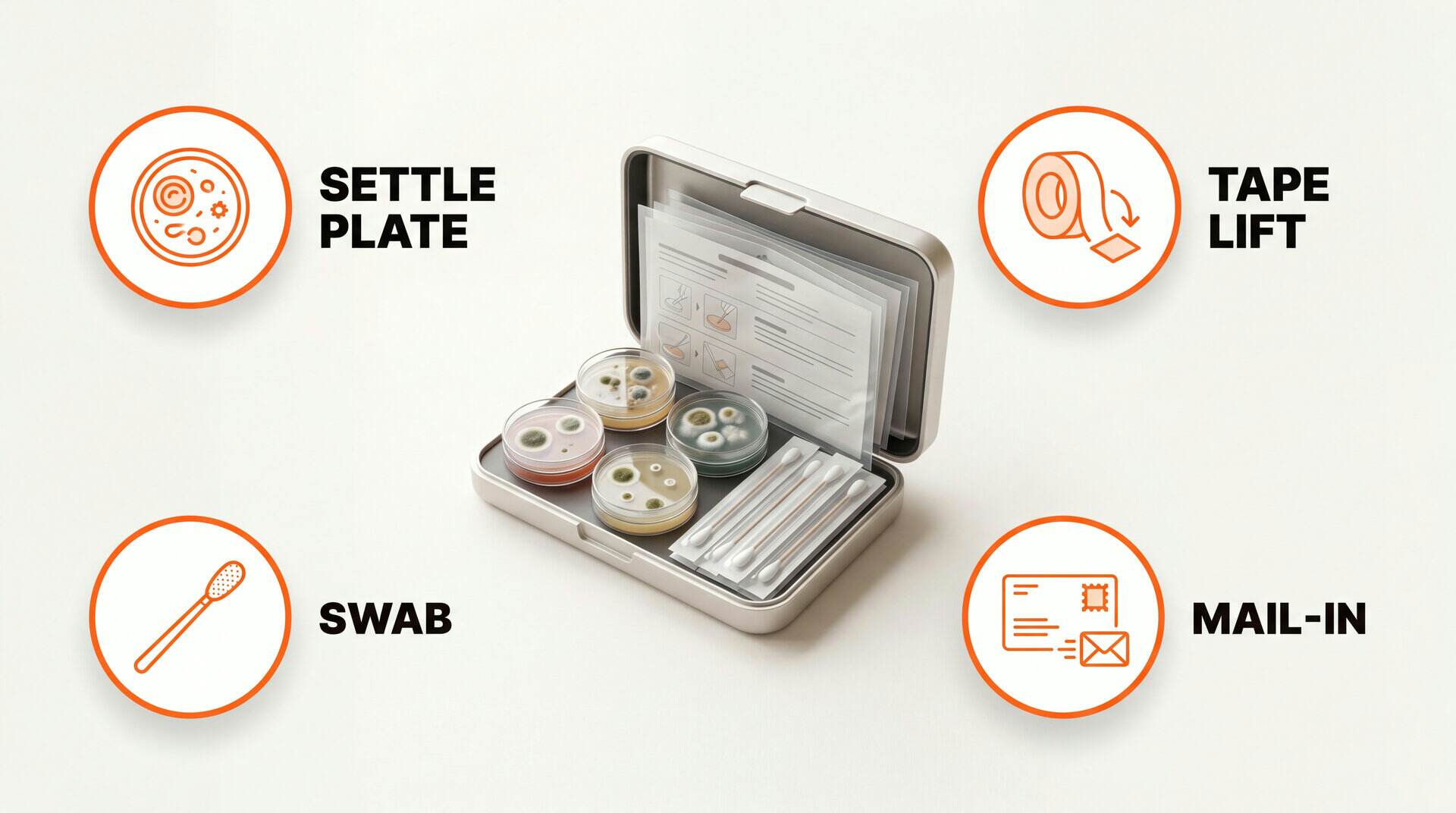
A mold inspection kit is usually one of four sampling formats: a culture plate, an air sample, a dust sample, or a surface swab. Each one checks a different thing, so pick the format that matches your question.
- Culture plate: the Mold Armor FG500 is a settle plate that shows growth in about two days. Species identification means mailing it to the lab, which is a separate fee.
- Air sample: the GOT MOLD? kit uses a pump and spore-trap cassettes, plus an outdoor control. Lab analysis is included in the price.
- Dust sample: the DUST Test and MyCoMetrics ERMI kits send settled dust to a lab.
- Surface swab: the Healthful Home 5-Minute Mold Test reads in about five minutes and covers one sampled spot.
Mold inspection tools go beyond kits. A visual screen is one of them. Mold Scanner AI offers 266 guided photo prompts across 19 rooms and gives an AI-assisted visual screen of visible surfaces only. It cannot confirm hidden growth or identify species.
When visible growth and a moisture source are already clear, EPA notes that sampling is often unnecessary. Fixing the water problem comes first. Mold inspection kits also do not replace a qualified professional for concealed sources, extensive water damage, contaminated HVAC systems, sewage, or post-remediation verification.
Frequently asked questions
What is a mold dust test kit?
A mold dust test kit collects settled dust from locations you choose and sends it to a lab for analysis. The result describes the dust that was collected under that kit's method. It does not automatically represent every room, hidden cavity, or exposure period, and it cannot diagnose symptoms or clear a home.
Is a mold dust test accurate?
A mold dust test can show what was in the dust that was sampled, and the lab's method sets the limits of that result. Settled dust can build up over time, so its age, sources, and cleaning history may be uncertain. It cannot locate a leak, prove hidden growth, or say a home is safe. EPA describes ERMI, one dust-based index, as a research tool and does not recommend it for routine public use.
What is a mold inspection kit?
A mold inspection kit is usually a culture plate, an air sample, a dust sample, or a surface swab. Each collects different material under different conditions, and none can prove a whole home is safe. If visible growth and a moisture source are already clear, EPA notes that sampling is often unnecessary.
Are home mold testing kits accurate?
Accuracy depends on the question, sampling plan, collection method, laboratory, and interpretation. A culture plate, air sample, dust sample, or surface sample describes only what was collected under specific conditions. No consumer kit proves a whole home is safe or unsafe.
What is the best mold test you can do at home?
There is no single best home test for every situation. EPA and CDC generally emphasize finding and correcting moisture rather than routine sampling. If sampling is needed for a defined decision, a qualified professional can design an appropriate plan and explain its limits.
What is the difference between ERMI and air sampling?
ERMI applies a research index to DNA measurements from settled dust, while air sampling measures material captured from air during a defined period. They answer different questions and are not interchangeable. EPA says ERMI is a research tool and does not recommend it for routine public use.
When should I hire a professional mold inspector instead of using a kit?
Consider qualified help for concealed sources, extensive water damage, contaminated HVAC systems, sewage, structural concerns, post-remediation verification, real-estate or legal decisions, or when sampling must answer a clearly defined question. Health symptoms require clinical evaluation, not a home kit.
What is the best mold test kit?
There is no single best mold test kit, because air, dust, surface, and settle-plate formats each answer a different question. For a lab-backed read on airborne spores, an air-sampling spore-trap kit that includes lab analysis and an outdoor control, such as GOT MOLD?, is stronger than a settle plate that only grows whatever lands on it. A DIY settle-plate kit screens for the presence of mold but does not confirm the species or any health risk unless you pay for lab identification. ERMI dust kits apply a research index to settled dust, and the EPA describes ERMI as a research tool and does not recommend it for routine public use. Match the format to the decision you need to make, and use a qualified professional when the result affects health, insurance, or a property sale.
Sources
Every claim on this page traces to one of these. Links open the primary document.