Efflorescence vs Mold in One Minute
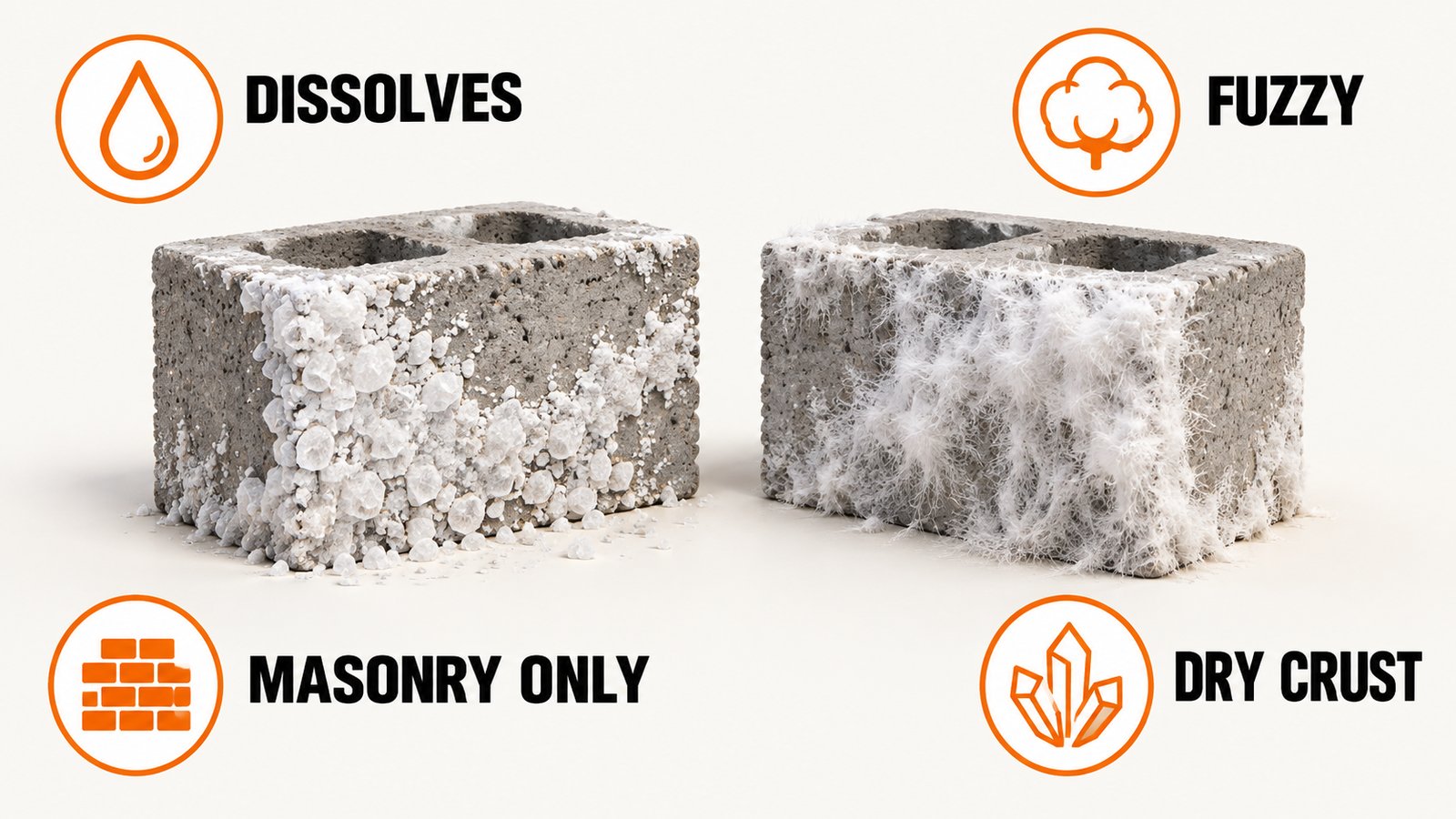
Most white patches on basement concrete are not mold. They're efflorescence, a mineral salt, and the fastest way to tell is to wet the spot. Salt dissolves. Mold doesn't. Here's the short version before we go deeper.
| Check | Efflorescence | White mold |
|---|---|---|
| What it is | Mineral salt left behind when water evaporates | A living growth |
| Look and feel | Chalky, crystalline, powdery, dry | Fuzzy, cottony or stringy, can feel soft or damp |
| Water drop | Dissolves or smears away | Beads up or stays put |
| Where it grows | Concrete, brick, block, mortar and stone only | Almost any damp surface, especially wood, paper, drywall and fabric |
| Smell | None | Often musty |
| What it means | Water is moving through the wall | Moisture plus something organic to feed on |
If you want the full mold side of this, our white mold guide covers what it is and how to remove it, and is this mold walks through the other common lookalikes.
What Is Efflorescence?
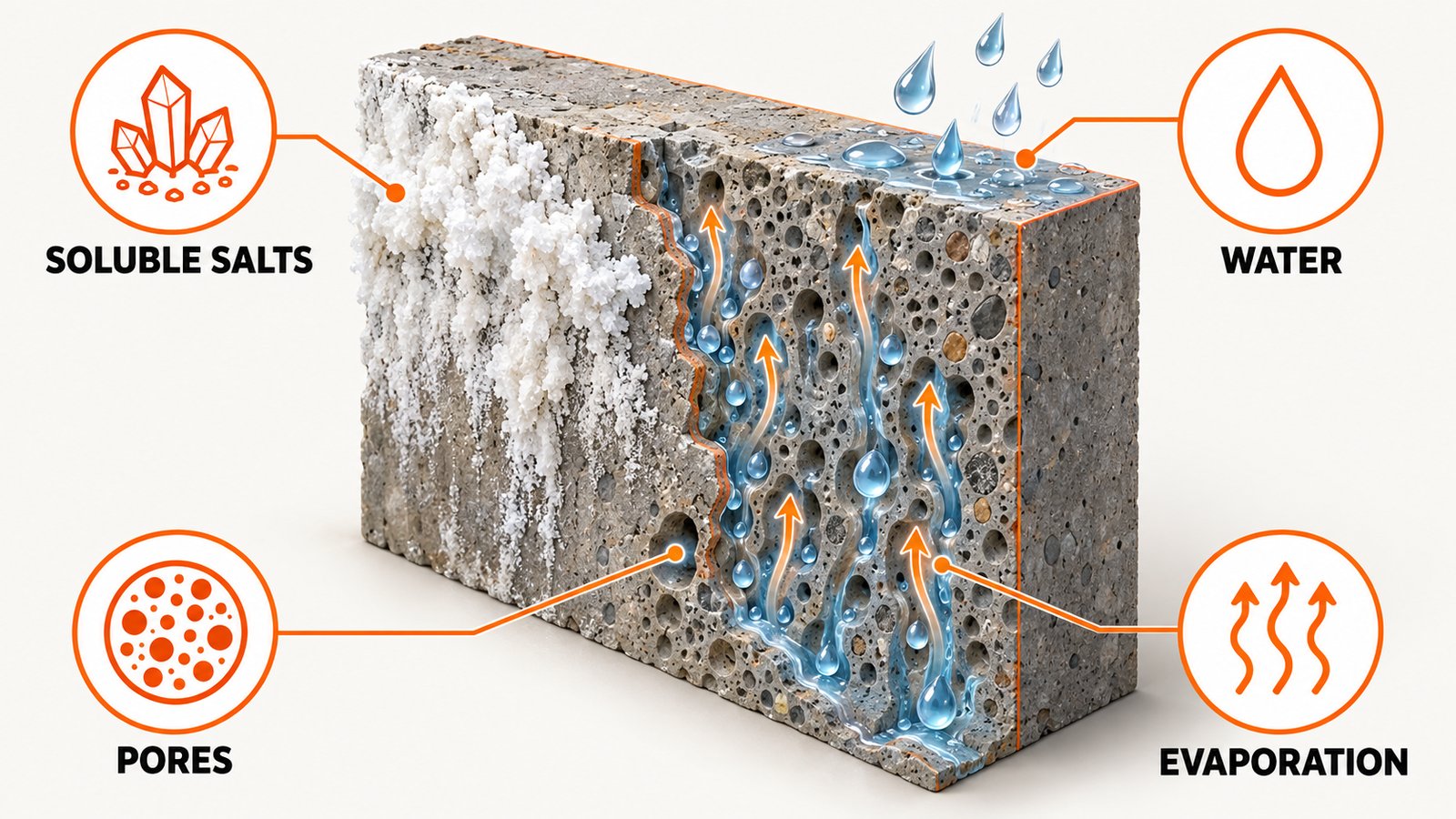
Efflorescence is salt that has come out of masonry. The Brick Industry Association (BIA) puts the mechanism in one sentence: it "occurs when water containing dissolved salts is brought to the surface of masonry, the water evaporates and the salts are left on the surface." The salts were already in the concrete, the mortar, the brick or the soil touching the wall. The water just moved them.
The BIA says three things have to happen together. Soluble salts must be present in or touching the masonry. Water has to touch those salts long enough to dissolve them. And the masonry needs pores that let the salty water travel to a surface where it can evaporate. Take away any one of the three and the crust stops forming.
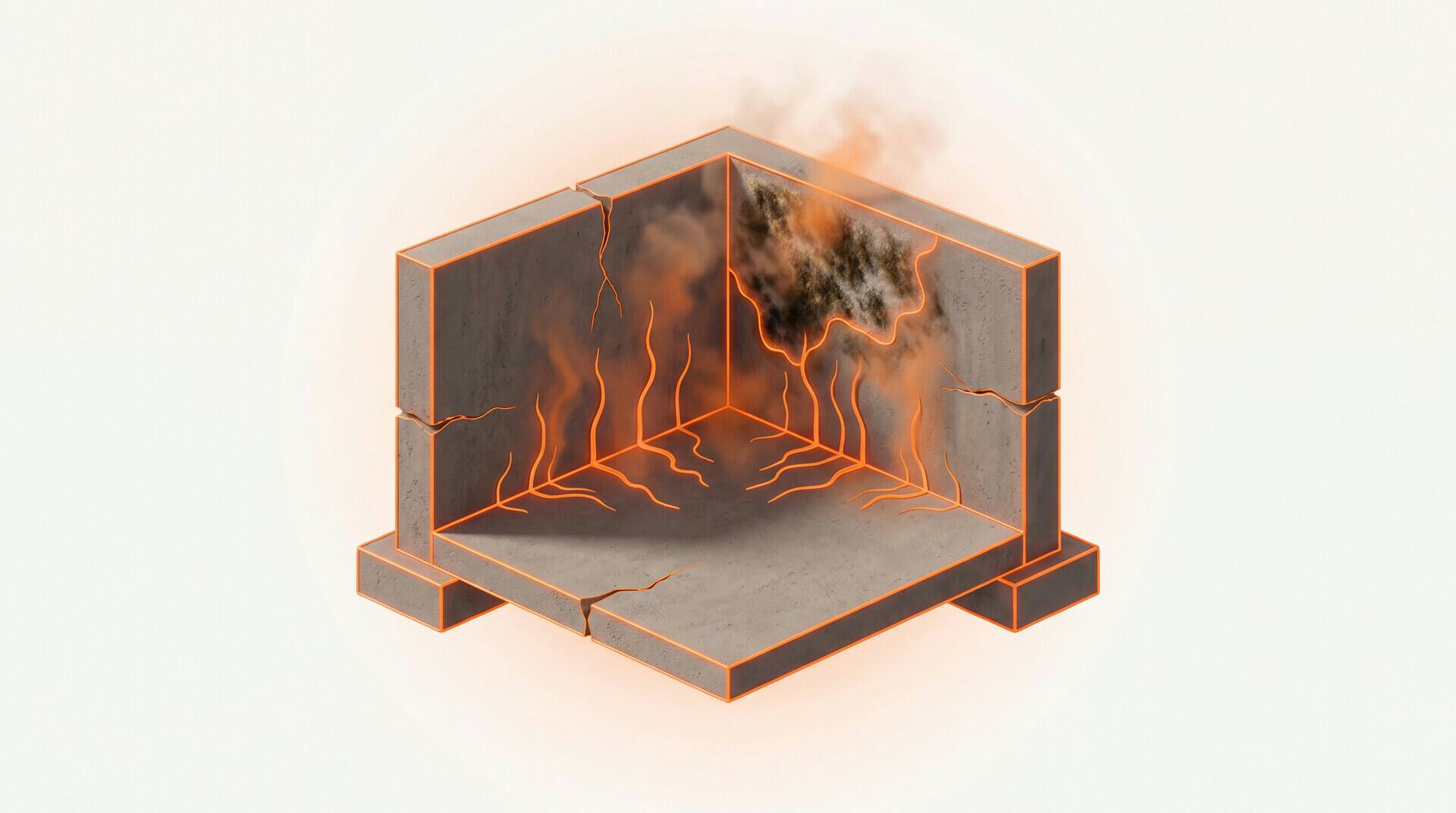
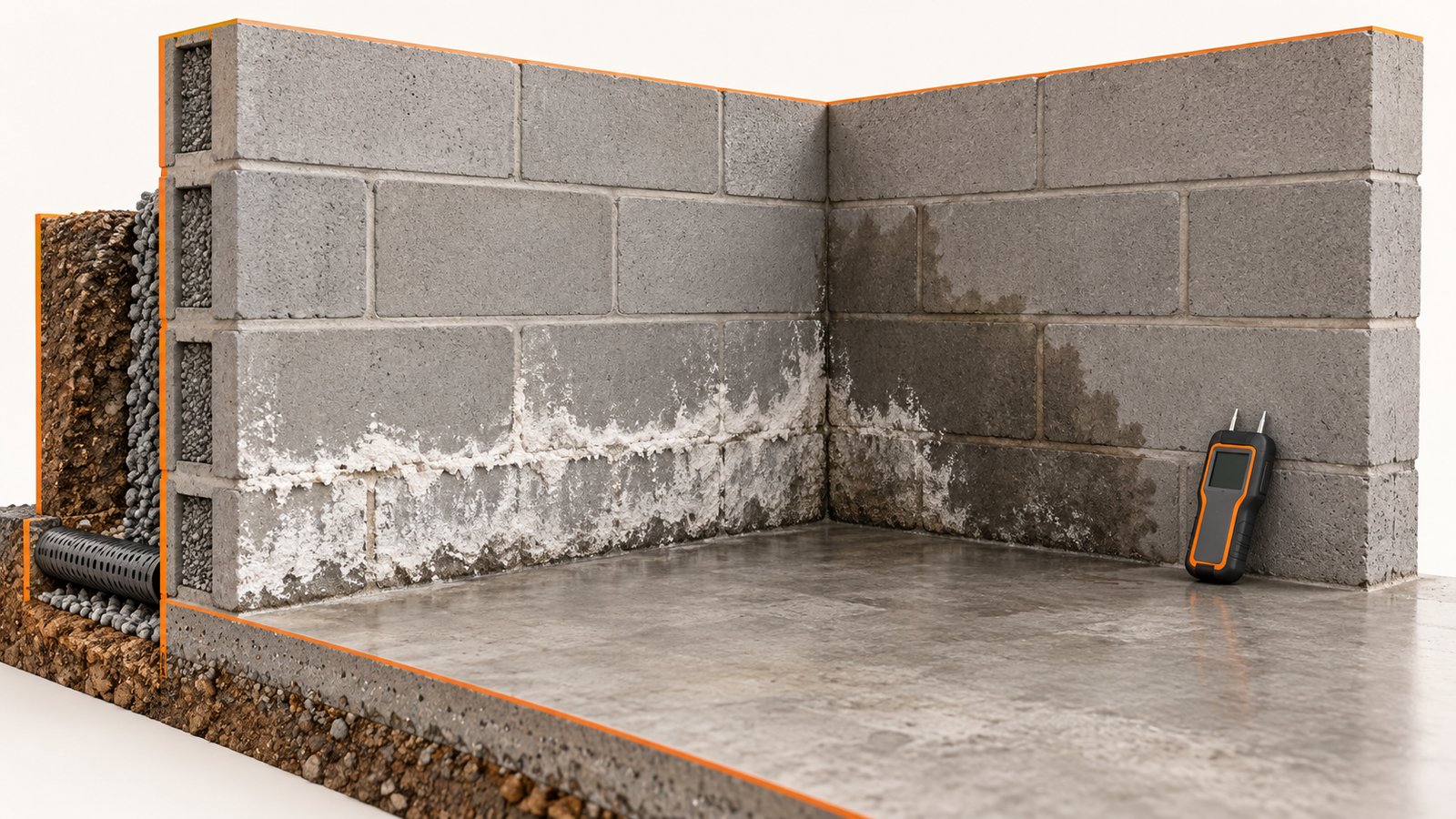
That's why efflorescence is so common in basements. Concrete block and poured walls hold plenty of salts, and soil outside pushes damp against them. The BIA notes that groundwater can rise "several feet above the ground" through masonry by capillary action, and that salts from soil can build up on the surface as a result.
New walls can show a one-time version. The BIA calls it "new building bloom" and says it usually fades if the wall is allowed to dry. When efflorescence shows up more than a year after construction, the BIA says it can generally be attributed to excessive water penetration or poor drainage. The NIH technical bulletin on masonry efflorescence adds that efflorescence crystals are soluble alkaline salt deposits, which fits what the water test shows in the next sections.
On its own, the BIA describes efflorescence as normally harmless to the masonry. It isn't a living thing, it doesn't spread by spores, and it isn't something you need to identify by species. The part that matters is what put it there. We'll get to that in why efflorescence still matters.
White Powder on Basement Walls
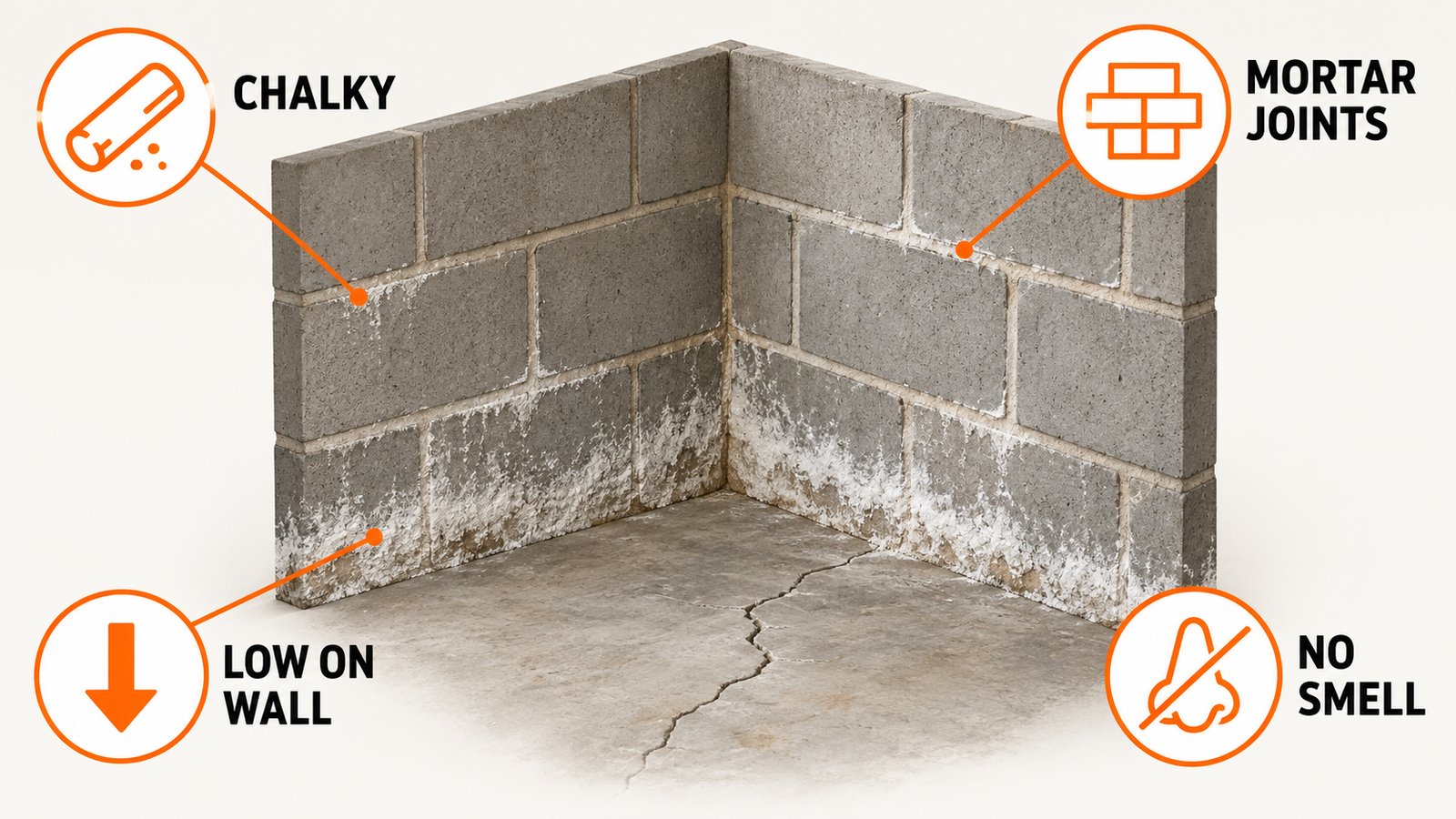
White powder on basement walls is the classic efflorescence picture, and here's what it usually looks like in a real house.
- Color and texture. Bright white to grayish, chalky, and crystalline. The BIA describes the result as "a powdery, white, crystalline deposit." Rub a gloved finger across it and it crumbles into dry powder.
- Location. Low on the wall, along mortar joints, around cracks, near floor cracks and where the wall meets the slab. Those are the spots where water gets through or where it evaporates.
- Pattern. Streaks, tide lines or a fairly even film. Heavy white trails below a crack or weep hole show where water is coming through.
- Surface. Concrete, block, brick, mortar or stone. If the white patch is on a wood joist, a cardboard box or painted drywall, it isn't efflorescence.
- Smell. Salt isn't a living thing, so it has no musty smell of its own. A musty odor near the patch points to mold nearby.
Our mold in basement page covers the five places mold hides down there, and the same white-powder lookalike comes up on it. If your wall matches the list above, run the tests in the next section before you buy any cleaner.
One caution from the BIA: not every white deposit on masonry is efflorescence. "Lime run" and "white scum" are two lookalikes, covered in the water test below.
Is It Mold or Efflorescence?
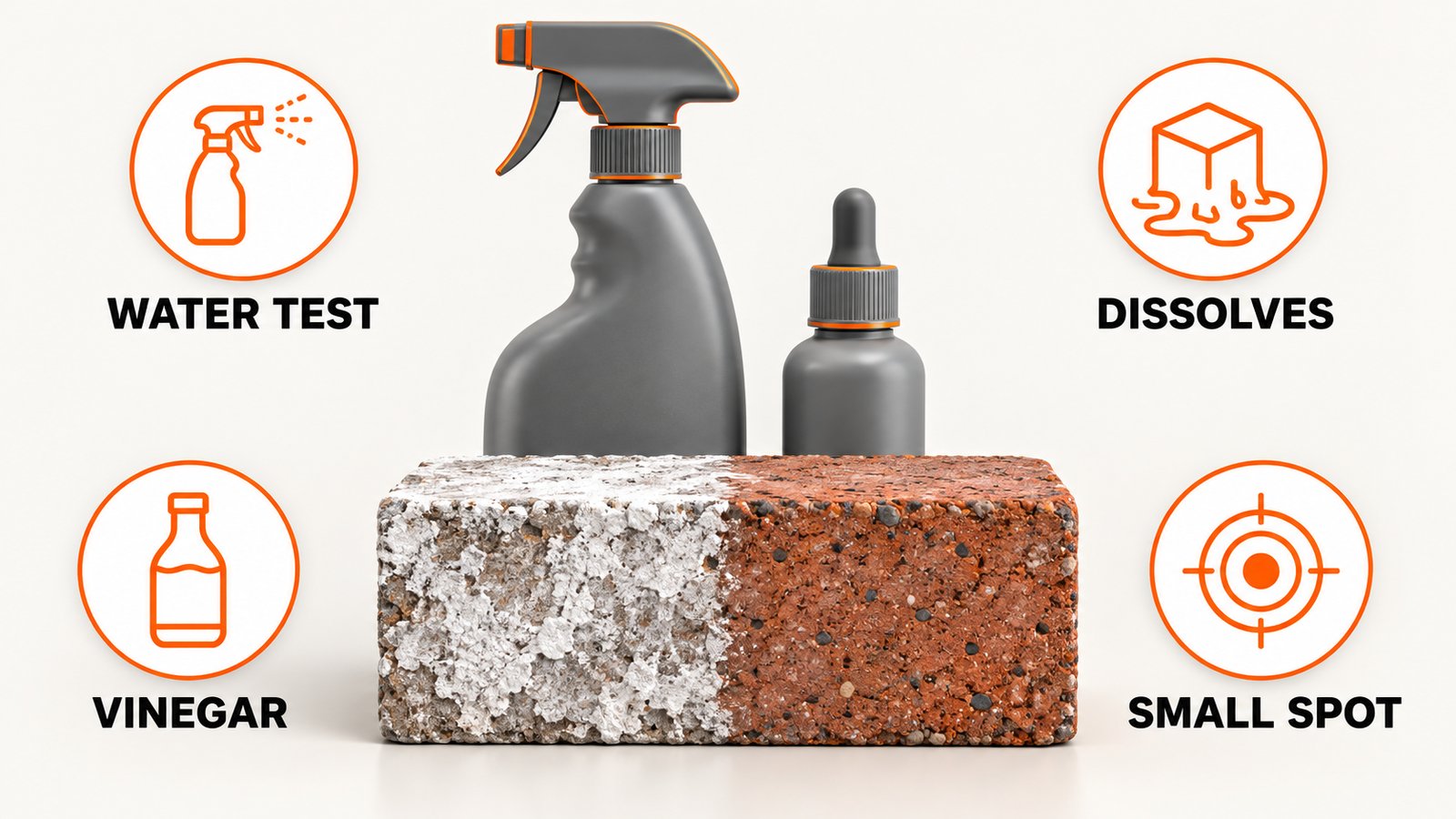
Two home checks can answer "is it mold or efflorescence" in about a minute. Do the water test first. Treat the vinegar test as backup.
The water drop test. Wear gloves. Put a few drops of plain water on the white patch, or mist it, and wait a minute or two. Then watch.
- It dissolves, thins out or smears away. That's what a water-soluble salt does. The BIA states that efflorescence is water soluble and that most efflorescing salts are water-soluble. This is efflorescence.
- The water beads up and the patch stays fuzzy. Salt shouldn't do that. Treat it as possible mold, especially if it's soft, stringy or smells musty.
- Nothing changes and the crust is hard. Stop and read the next paragraph.
A hard white crust that won't dissolve isn't automatically mold. The BIA explains that lime run, once fully carbonated, "is water insoluble, whereas efflorescence is water soluble," and that white scum is also not water soluble. Both are mineral deposits, not growth. A hard, crusty trail beneath a crack or weep hole fits lime run. It still tells you water is moving through the wall, and the BIA recommends a professional to identify stains when you're unsure.
The vinegar test. Dab a little white vinegar on a small, hidden spot of the patch. The NIH bulletin lists a "mild detergent or acidic solution that will dissolve the efflorescence salts" among the ways to remove them, so vinegar thinning a salt crust is expected. Some mineral deposits also fizz when acid touches them. Mold won't dissolve or fizz. It can smear, and it can look cleaner for a day and then return.
Read the vinegar result carefully. It supports a salt answer if the crust clears. It can't prove the patch is mold if the crust doesn't, and it doesn't prove mold is gone if the patch looks cleaner. Test a small area first, rinse it, and never mix vinegar with bleach. Our does vinegar kill mold page covers what vinegar can and can't do on the mold side.
Neither test is a lab test, and neither tells you how much moisture is behind the wall. If the water test is unclear, move to the photo step below.
White Fuzzy Stuff on Concrete
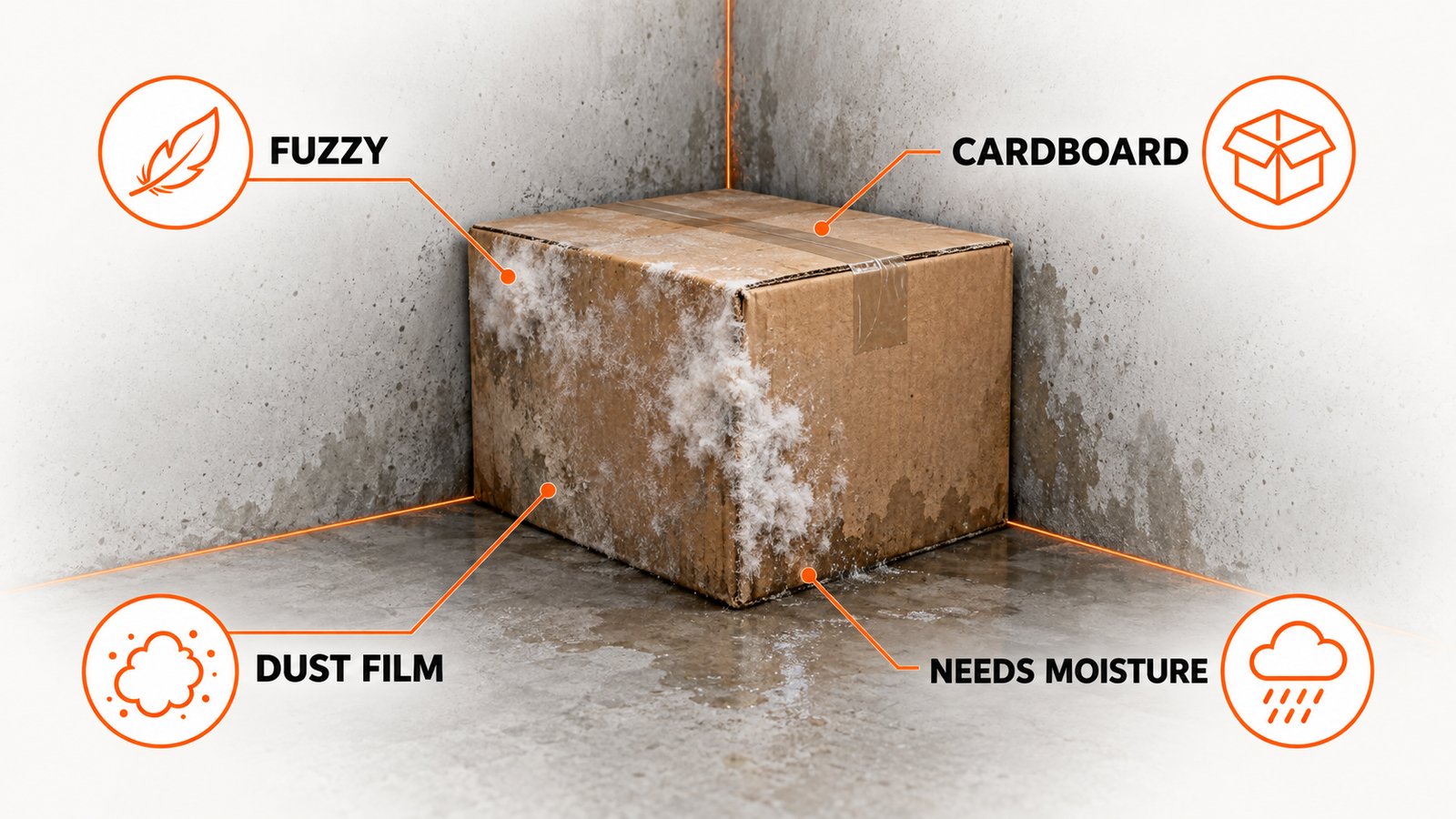
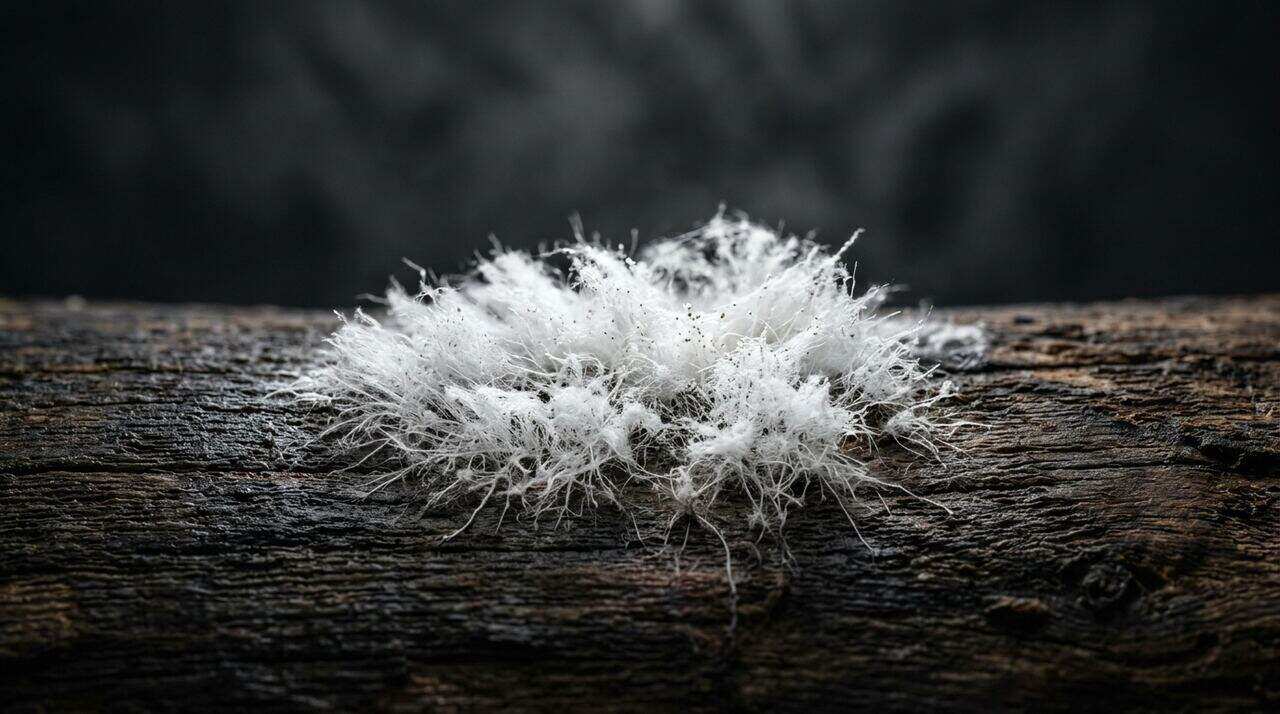
White fuzzy stuff on concrete is usually not efflorescence. Efflorescence is dry and crystalline. Fuzz, cotton-like tufts or fine threads point to mold.
Growth on concrete usually has something organic to live on. The EPA states that none of the many types of mold will grow without water or moisture, and that mold may begin growing indoors "when mold spores land on surfaces that are wet." Its guide shows mold growing on a plastic chair in a spot where rainwater "deposits organic material," which is the same idea: a hard surface becomes a growing surface once it's damp and carries a film of dust, dirt or debris.
So when you see fuzz on a basement floor or wall, look at what is sitting on or against the concrete:
- Cardboard boxes, paper, books, and wood pallets or lumber stored against the wall
- Wood sill plates, joists and framing that touch the masonry
- A layer of dust or dirt in a corner that stays damp
- Carpet, rugs, fabric and stored clothing
- Drywall, paneling or insulation fastened to the wall
Fuzz on any of those is mold, not salt, and the white mold guide explains the likely species and what changes over time as young colonies darken. Our what does mold look like page shows the range of colors and textures. Mold behind finished walls is its own problem, covered in mold behind walls.
You can have both at once. A damp wall can carry an efflorescence crust and a patch of mold on the baseboard beside it. Test each patch on its own.
Efflorescence vs White Mold Pictures
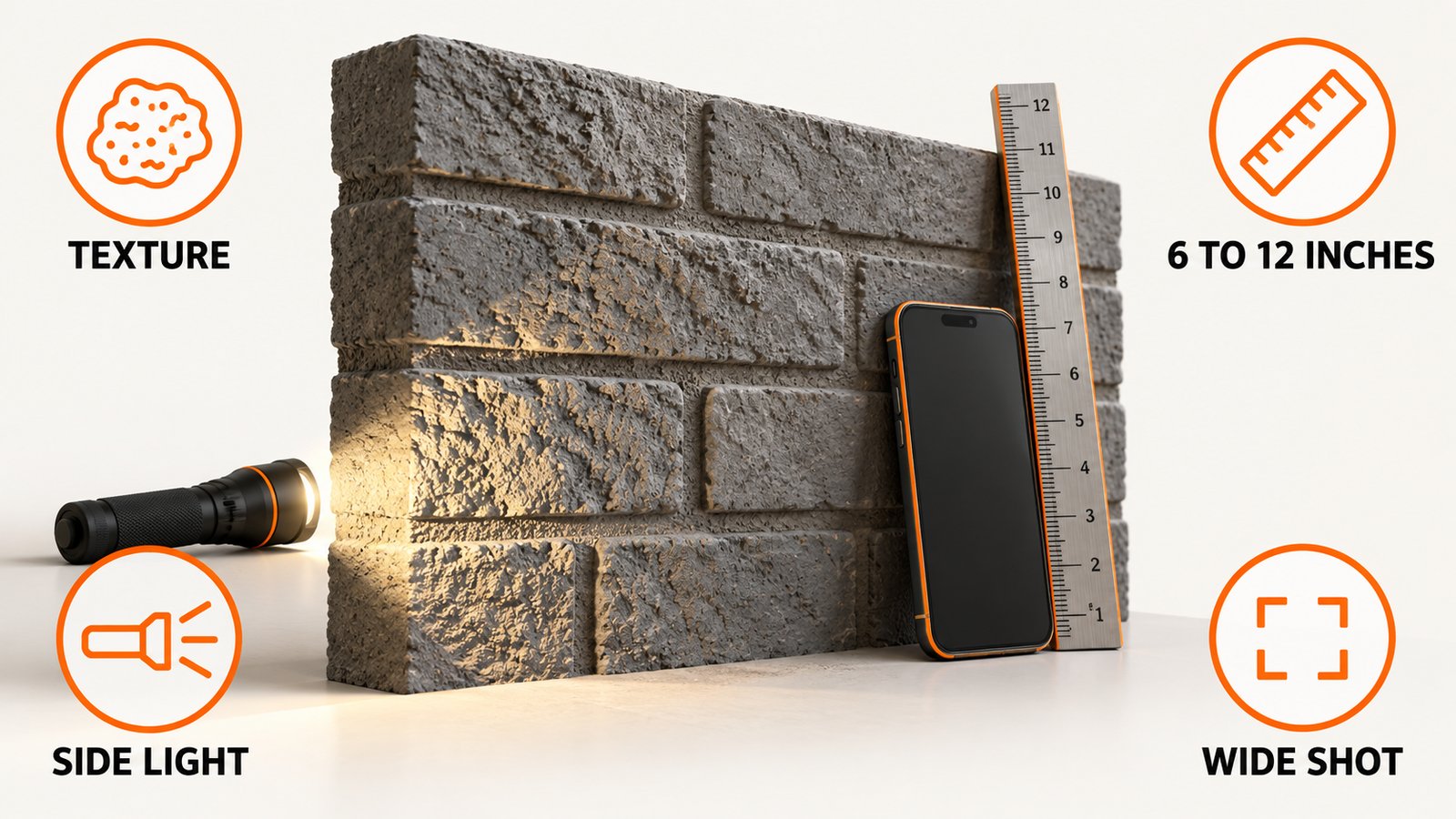
Searching for efflorescence vs white mold pictures helps, but a stranger's photo can mislead you, because light, paint and camera angle change how a patch looks. Compare texture, not color. Both can be white.
What to look for in a picture:
- Efflorescence: sharp, tiny crystals or a flat dry crust, often with a sparkle under light, forming streaks, tide lines or a haze across the masonry. Edges follow the path water took.
- White mold: soft, rounded patches, fine hairs or threads, sometimes with gray, green or tan spots as it matures. Edges are irregular and often spread outward from a damp or organic spot.
When you take your own photo, use these steps so the picture answers the question:
- Photograph from 6 to 12 inches away, in focus, with no flash glare.
- Hold a flashlight low and to the side so texture throws small shadows.
- Take a wider shot too, so the surface (concrete, wood, drywall) and the damp source are visible.
- Add a second photo right after the water drop test, so you can see what changed.
Our how to tell if it's mold from a photo page goes through what a photo can and can't show. The Mold Scanner AI app gives an AI-assisted visual screening of what's visible in your photo, and processing time varies. It's a screening of the surface in the frame. It doesn't see inside a wall and it doesn't replace testing or an inspection. For a wider tour of how mold is told apart from lookalikes, see mold identification.
Why Efflorescence Still Matters
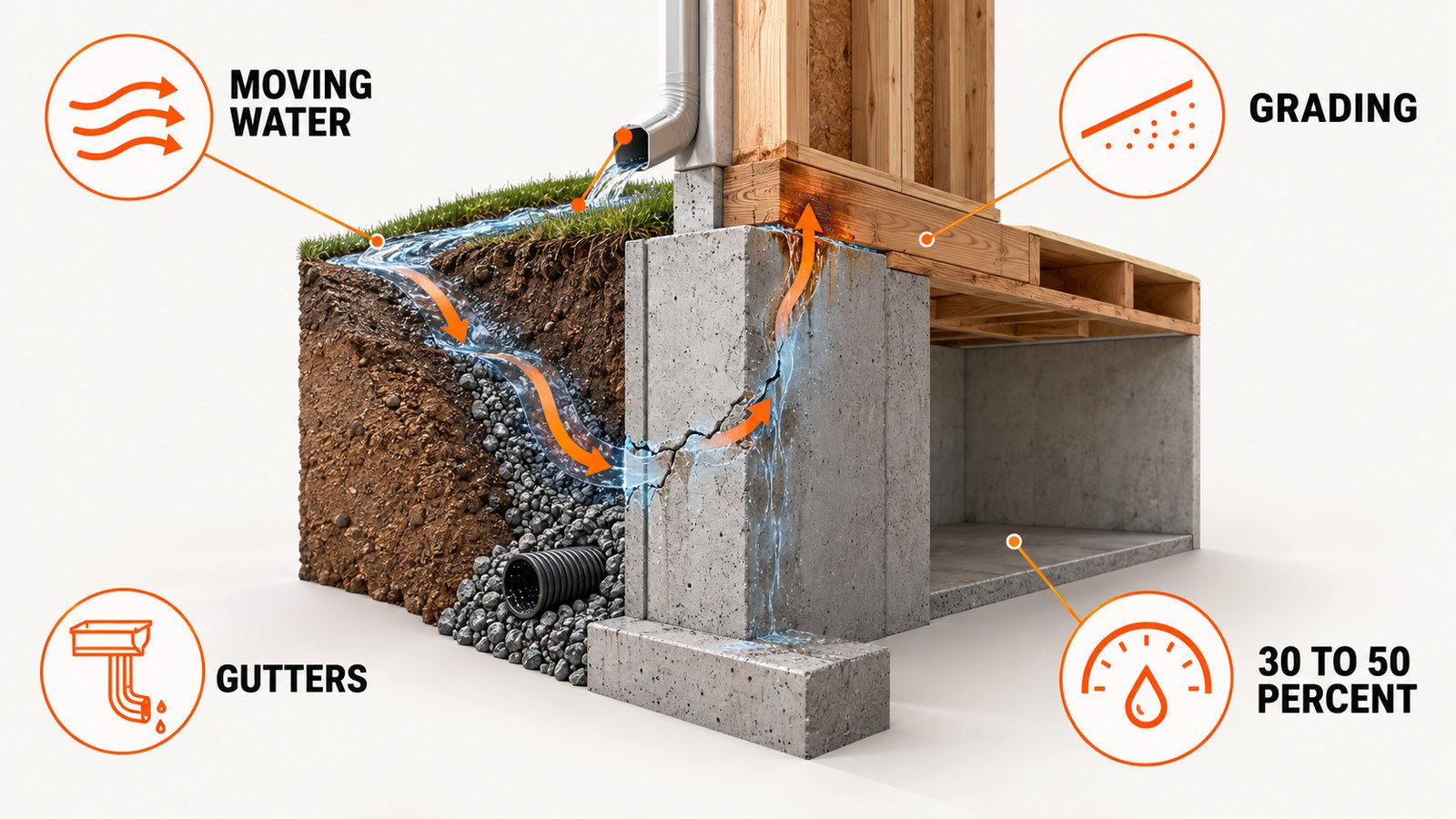
Efflorescence isn't mold, but it's a message about water. The NIH bulletin says persistent, repeated or excessive efflorescence "may indicate excessive internal moisture, rising damp or other problems which should be investigated and addressed to avoid more serious damage." The BIA adds that efflorescence that keeps coming back after the first drying period "is likely due to water entering and remaining in the wall."
That matters for mold because the EPA is clear about what mold needs: "The key to mold control is moisture control." Mold grows on wood, paper, drywall and dust once those get damp. A wall that is wet enough to carry salt to the surface is wet enough to dampen a wooden sill plate, a stored box, or a basement stud wall built against it.
Here's a practical way to read it:
| What you see | What it likely means | What to do |
|---|---|---|
| One light haze on a wall under a year old | New building bloom from normal drying | Dry brush it. Check again in a few months. |
| Crust that returns after cleaning | Water still entering the wall | Find the source: gutters, grading, cracks, plumbing |
| Heavy streaks below a crack or joint | Water is coming through that crack or joint | Seal or repair the entry point, then clean |
| Salt plus musty smell or fuzz nearby | Damp wall with mold on organic material | Treat both: dry the area, clean the mold |
The EPA's prevention list applies directly. Make sure the ground slopes away from the foundation so water doesn't collect there, clean and repair roof gutters, and keep indoor humidity low, below 60 percent and ideally between 30 and 50 percent. A moisture or humidity meter costs $10 to $50 according to the EPA. Our guides on the best moisture meter for mold, a dehumidifier for mold and how to prevent mold cover the tools. If the damp is coming up through a crawl space, see mold in a crawl space too.
How to Clean Efflorescence
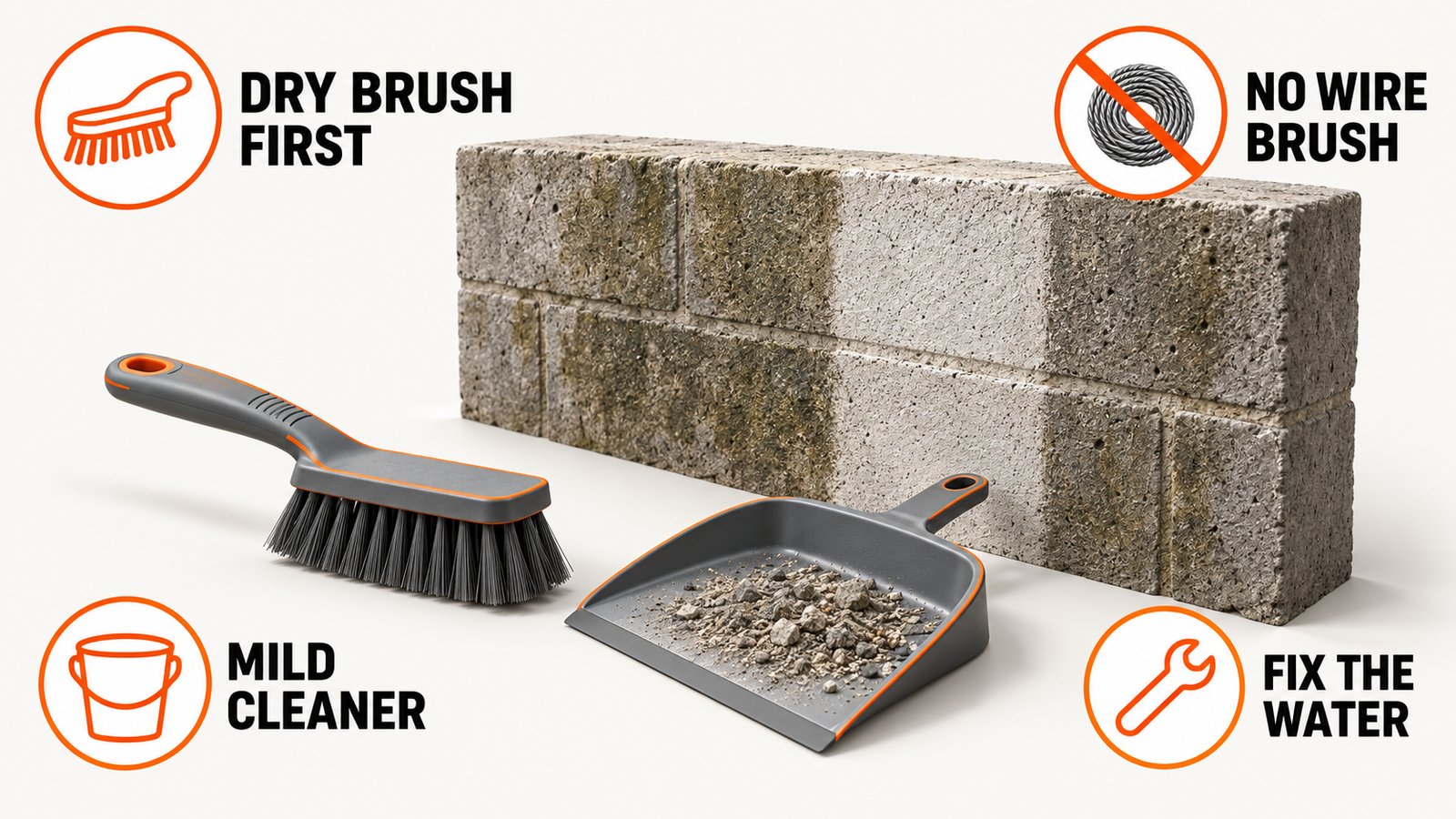
Cleaning efflorescence is simple, and it only lasts if the water is dealt with. The BIA says most efflorescing salts are water-soluble and many will disappear on their own with normal weathering, especially new building bloom. When they don't, "it usually can be removed by dry brushing."
- Dry brush first. Use a stiff nylon brush and sweep the powder into a dustpan. The NIH bulletin warns against abrasive methods such as sandblasting and wire brushes, especially on brick and soft stone.
- Wear basic protection. Goggles and a dust mask or respirator keep the dust out of your eyes and lungs, and gloves keep alkaline salt off your skin.
- Wash only if you need to. If dry brushing leaves a film, wipe with a damp cloth or use a mild detergent solution. The BIA says it is "usually not advisable to wash efflorescence off the brickwork except in warm, dry weather," because added water may bring more salts to the surface. The NIH bulletin notes washing can draw out additional salts, so repeat washing may be needed.
- Test any cleaner on a small spot. The BIA says to test all cleaning solutions on a small area first. Its notes warn against unbuffered hydrofluoric or hydrochloric (muriatic) acid on brick, and a poor choice can cause new stains. Stay with water, brushing and a mild cleaner, or ask a masonry pro.
- Let the wall dry, then fix the water. The BIA says solutions usually involve reducing water penetration into the masonry before removing the efflorescence.
Don't paint over efflorescence to hide it. The water that made it is still moving through the wall. If the crust keeps coming back, move to the pro section.
How to Clean White Mold
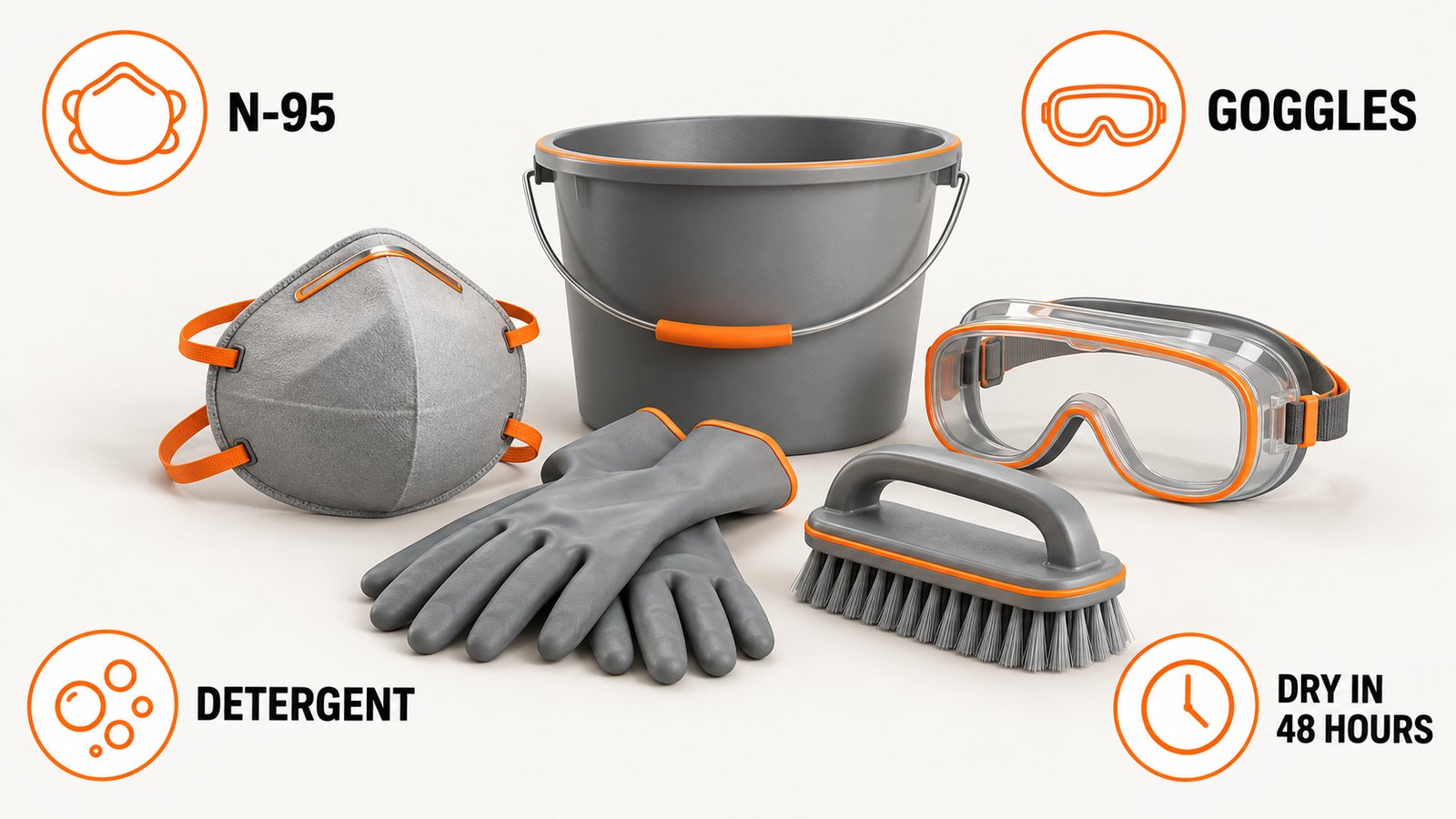
White mold gets a different job than efflorescence. You're removing a living growth, and that stirs up spores, so protect yourself first. This follows the EPA's home guidance, and our how to get rid of mold page has the longer version.
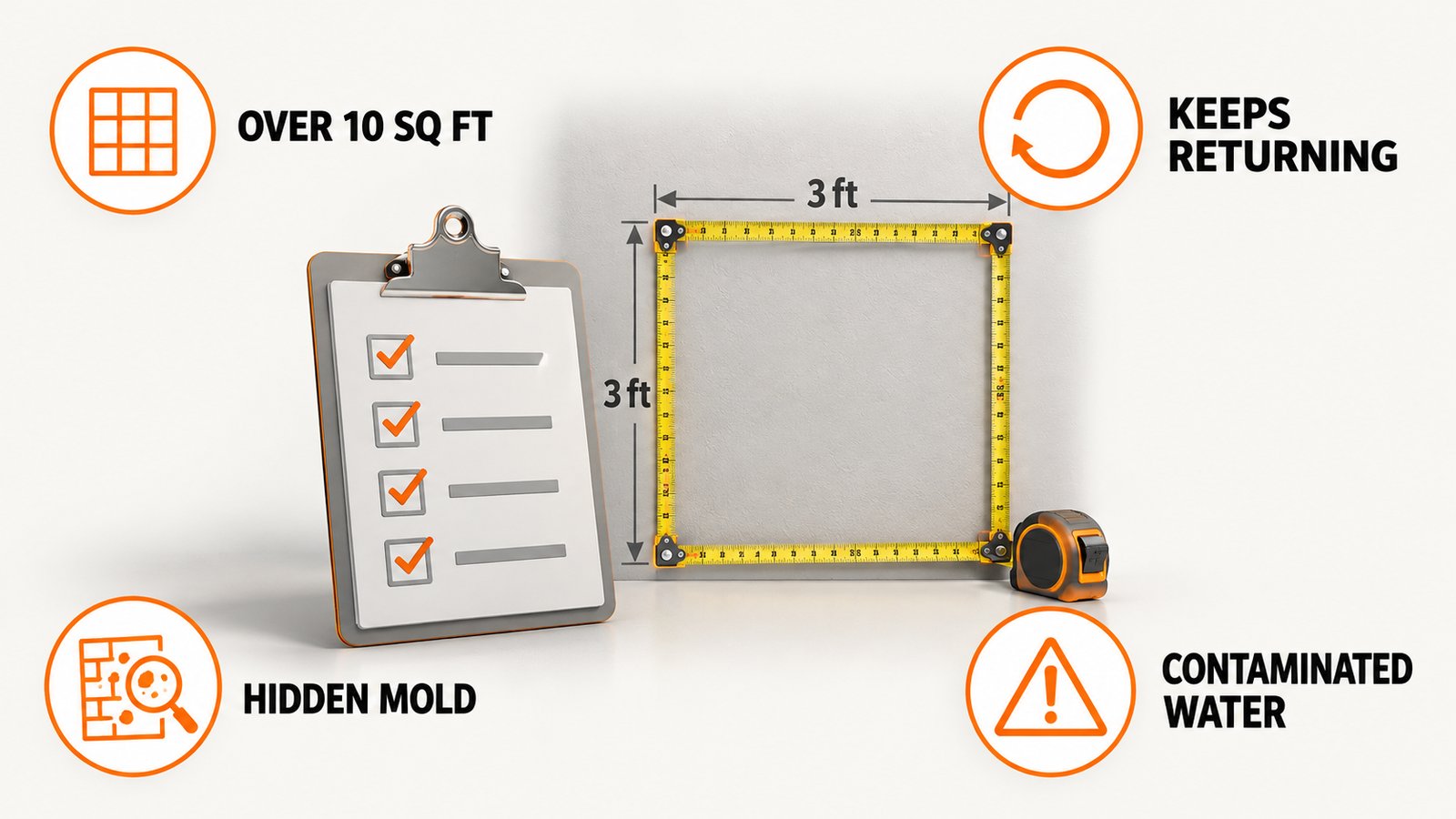
- Check the size. The EPA says that if the moldy area is less than about 10 square feet, roughly a 3 foot by 3 foot patch, you can handle it yourself in most cases. Larger areas, or a lot of water damage, call for a professional.
- Put on protection. The EPA suggests an N-95 respirator, long gloves that reach mid-forearm, and goggles without ventilation holes. Avoid touching mold with bare hands.
- Scrub hard surfaces. The EPA's instruction is to scrub mold off hard surfaces with detergent and water, and dry completely. It says routine biocide use, such as chlorine bleach, isn't recommended, and that dead mold may still cause allergic reactions in some people, so mold must be removed, not just killed.
- Remove porous items. Cardboard, carpet and ceiling tiles that grew mold may have to be thrown away. The EPA says mold can grow in the crevices of porous materials, so it may be difficult or impossible to remove completely.
- Dry it within 24 to 48 hours. The EPA says mold generally won't grow if wet or damp materials are dried within that window after a leak or spill.
- Don't paint over it. The EPA says not to paint or caulk moldy surfaces. Clean up the mold and dry the surface first.
Our white mold guide lists the no-bleach products people use on hard, non-porous surfaces. The EPA says cleanup isn't finished until the moisture problem is fixed, and that if you clean the mold but don't fix the water, the problem will most likely come back.
When to Call a Pro
Most efflorescence is a homeowner job, and most small mold patches on hard surfaces are too. These are the times to stop and get help.
- You can't tell what it is. The BIA recommends that experienced professionals verify the stain when you're uncertain, and that a lab can identify salts when needed. A photo check can narrow it down first.
- The growth covers more than about 10 square feet. That is the EPA's line for handing the job to a professional.
- The crust or the damp keeps returning. If gutters, grading and cracks are handled and salt still comes back, a basement waterproofing or masonry contractor can trace the entry point.
- Sewage or contaminated water was involved. The EPA says to call in a professional with experience cleaning buildings damaged by contaminated water.
- You suspect hidden mold behind finished walls. A musty smell with no visible source is the EPA's example of when you may suspect hidden mold, and it suggests an experienced professional.
- Health concerns. The EPA says to consult a health professional before starting cleanup if you have health concerns. Questions about symptoms belong with a physician, not with a website or an app.
If you hire for mold, check whether your state licenses the work and look for the ANSI/IICRC S520 standard. Our mold remediation certification page explains the credentials.
Frequently asked questions
What is the difference between efflorescence and white mold?
Efflorescence is a mineral salt. Water carries it to the surface of concrete, brick or block, then evaporates and leaves the salt behind as a dry, crystalline, powdery crust. White mold is a living growth, usually fuzzy, cottony or stringy, and it needs a damp surface with some organic material on it. The quickest check is plain water. Efflorescence dissolves when you spray or dab it. Mold doesn't.
Is it mold or efflorescence if the white powder is on wood?
It isn't efflorescence. Efflorescence forms on masonry such as concrete, brick, block and stone, because the salts come from inside the masonry. A white powdery patch on wood, drywall or fabric is a different question. Mold is one possible answer, and our white mold guide covers how to check it. The EPA notes that molds come in many colors, and both white and black molds are shown in its guide.
Does vinegar tell efflorescence from mold?
It's a weak second check, not a better one. The NIH technical bulletin on efflorescence says an acidic solution can dissolve efflorescence salts, so a small dab of white vinegar that thins or clears the crust fits a salt. It can't prove a patch is mold, and wiping mold with vinegar doesn't mean the mold is gone. Do the plain water test first, and never mix vinegar with bleach.
Can efflorescence turn into mold?
No. Salt can't change into a living organism. What can happen is that the same water that pushed the salt to the surface also dampens nearby wood, cardboard, drywall or dust, and mold can grow there. The EPA states that none of the many types of mold will grow without water or moisture, so a wall that keeps making efflorescence is a wall to keep an eye on.
Is efflorescence a sign of a water problem?
Often, yes. The Brick Industry Association explains that efflorescence needs soluble salts, water in contact with them, and a way for that water to reach the surface. New walls can show it for a few months as they dry out. The NIH bulletin says persistent, repeated or excessive efflorescence may indicate excessive internal moisture, rising damp or other problems that should be investigated.
How do I clean white mold off concrete?
For a patch under about 10 square feet, the EPA says to scrub mold off hard surfaces with detergent and water, and dry completely. Wear an N-95 respirator, gloves and goggles without vent holes. Then deal with the moisture, or the growth will come back. If the area is bigger than about 3 feet by 3 feet, or the wall stays wet, the EPA's guidance points to a professional.
Sources
Every claim on this page traces to one of these. Links open the primary document.