Can Mold Grow on Plastic?
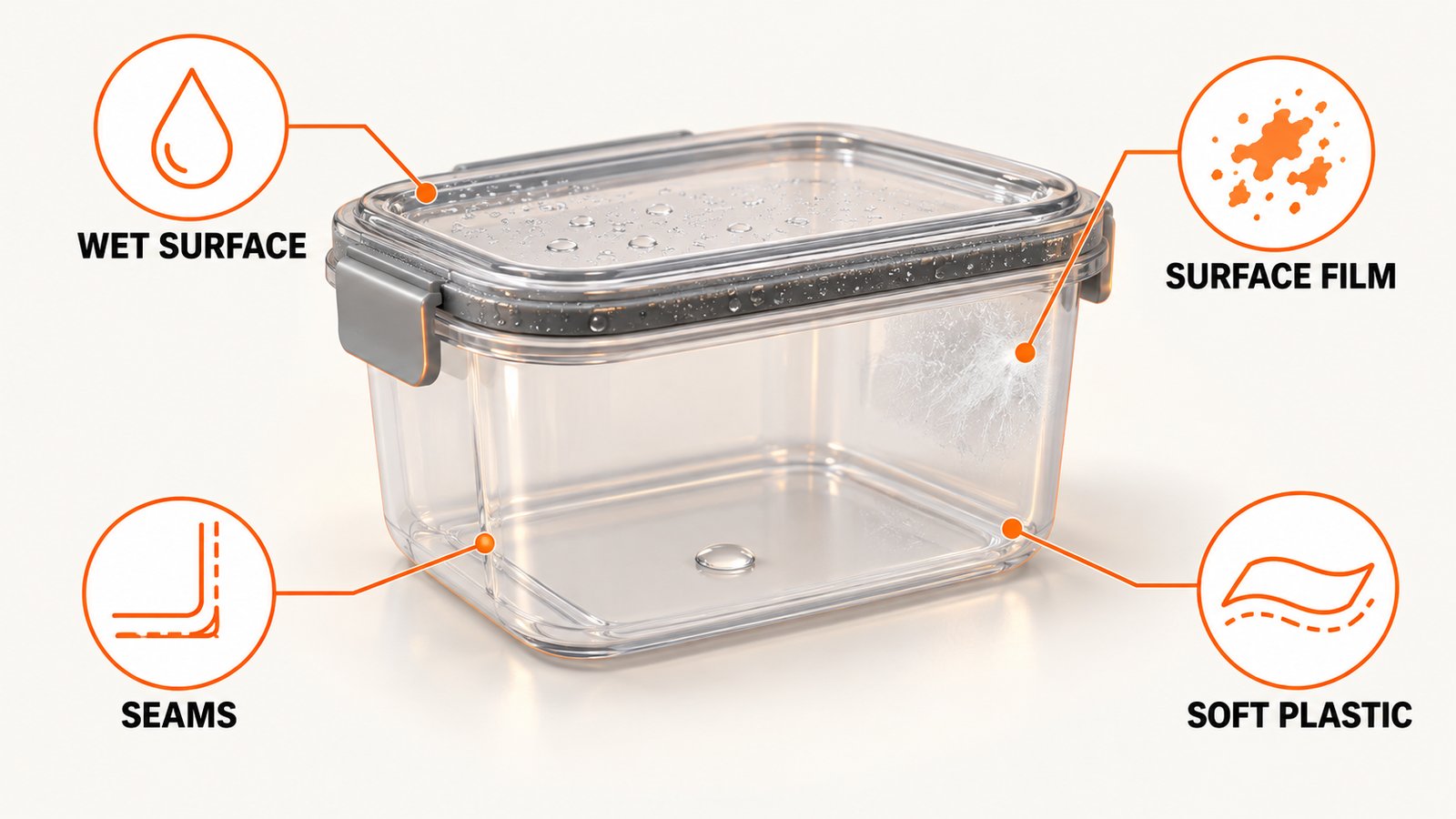
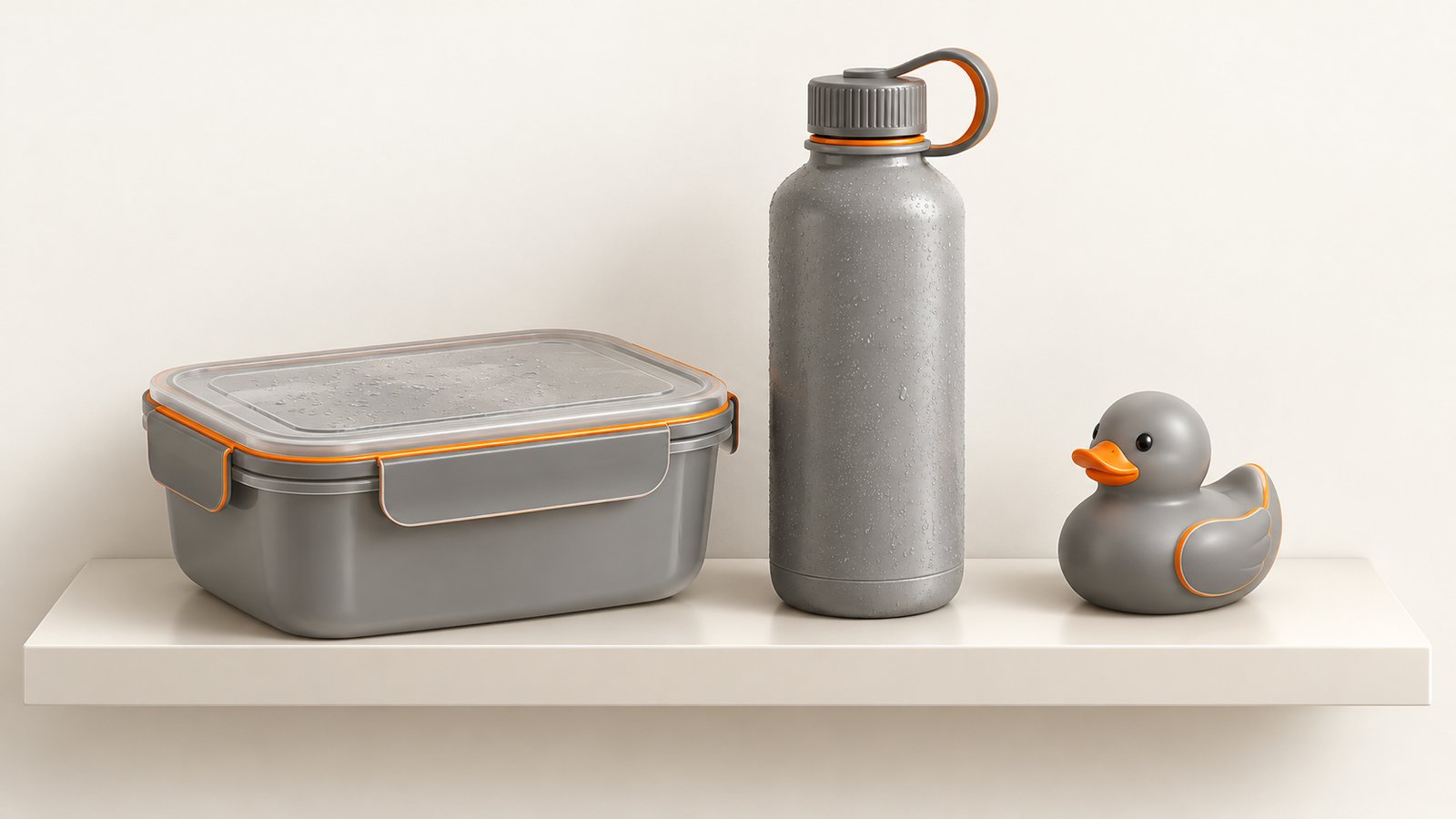
Yes, mold can grow on plastic, but the plastic is rarely what it eats. Mold lives on the film of dirt, soap, food, skin oil and moisture sitting on the surface, and in seams, gaskets, threads and scratches that stay wet.
The EPA gives a clear example. One photo in its mold guide shows mold growing on the underside of a plastic lawn chair, and the caption says rainwater drips through there and deposits organic material. The chair is hard plastic. The food was the grime the water left.
The same guide says mold may begin growing indoors when mold spores land on surfaces that are wet, and that none of the many types of mold will grow without water or moisture. So clean, dry plastic is a poor place for mold. Smudged, damp plastic is a fine one.
One exception is worth knowing. A 2018 study of squeezable bath toys, from the Swiss institute Eawag with ETH Zurich and the University of Illinois, found that the flexible plastic releases organic carbon compounds that microbes can use. Fungi turned up in almost 60% of the real toys tested. So "mold does not eat plastic" fits hard, sturdy plastic best, and fits soft toys, cheap liners and rubbery seals less well.
The plan is the same either way: remove the film, dry the surface, and take apart anything that traps water.
White Mold on Plastic or Just a Stain?
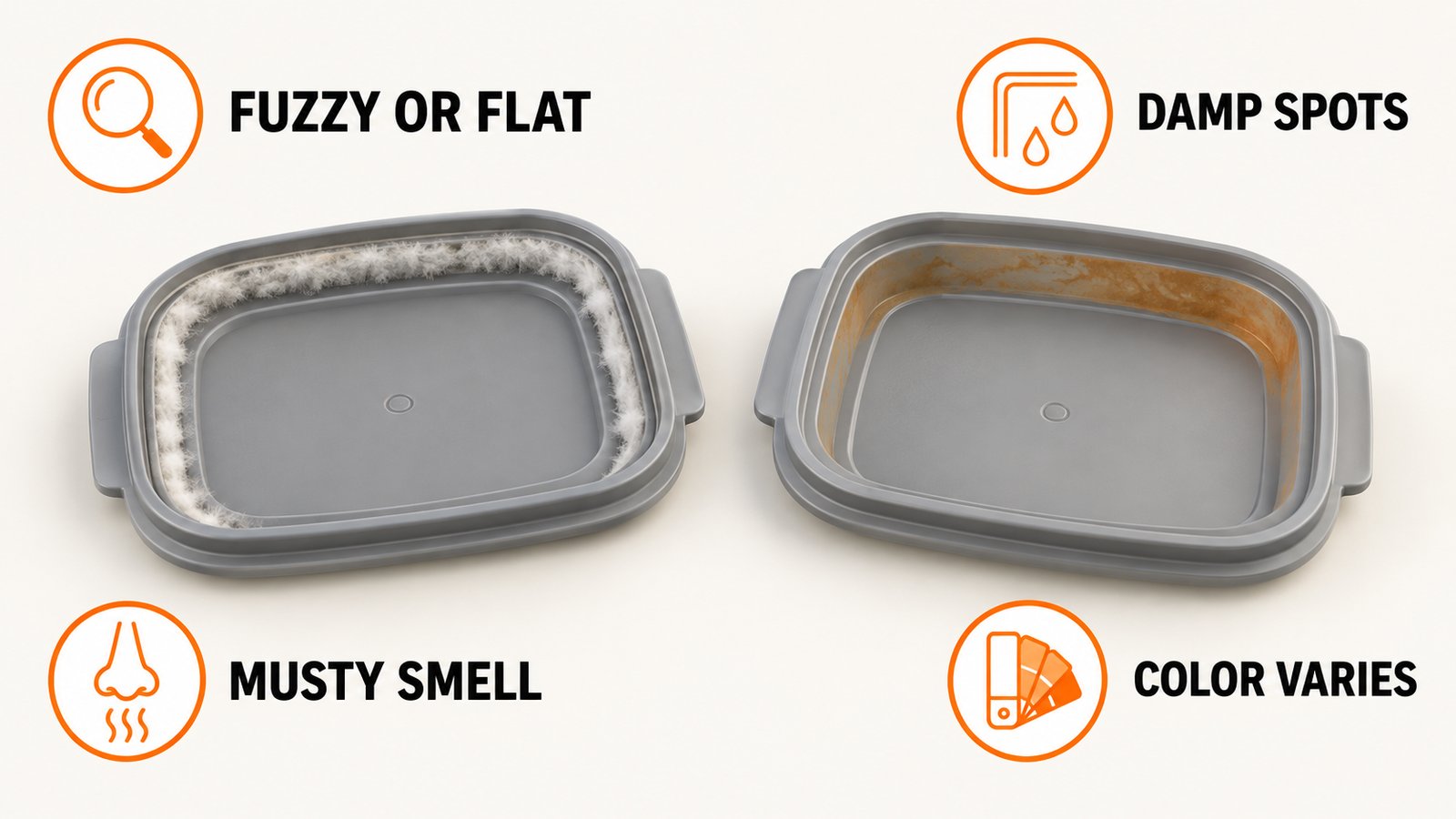
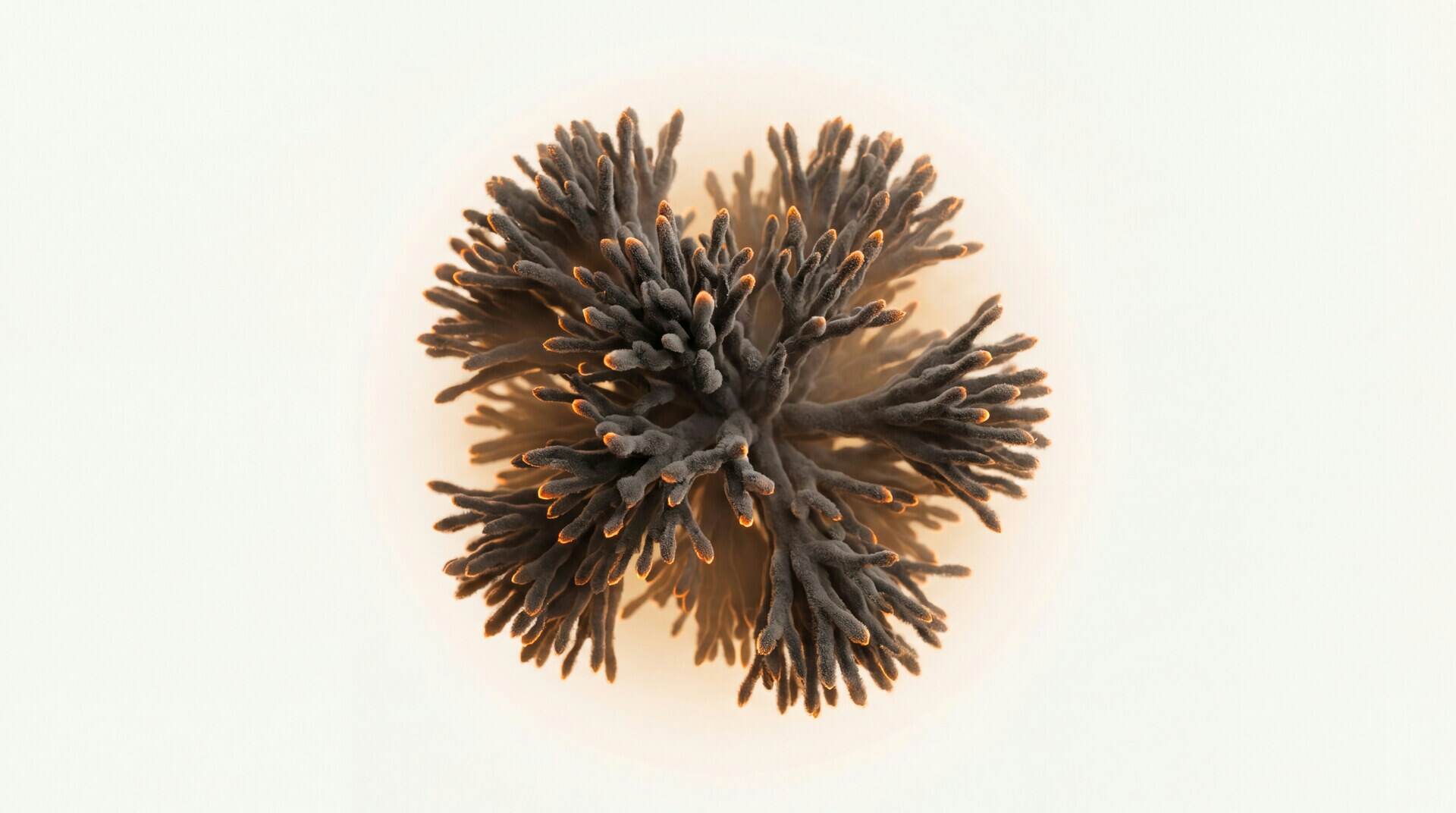
White mold on plastic looks like fuzz, powder or cotton, often in a seam or corner. A stain looks flat. These checks are rules of thumb, not a lab test.
- Texture. Mold is often raised, fuzzy, powdery or slimy. A stain is a flat patch of color you can run a finger across without feeling anything.
- Location. Mold shows up where water sits: under a rubber ring, in screw threads, in a bottom corner. A stain sits where food touched, such as the walls of a container that held tomato sauce or curry.
- Smell. The CDC says mold can smell musty. A stain has no smell. An odor that survives a wash means residue you have not reached.
- Return. Film or fuzz comes back in the same spot after a few damp days. A stain stays put and does not spread.
Color will not settle it. The CDC says mold can look like spots of many different colors, so white, brown, black and orange growth all exist. Orange or brown on plastic is as likely to be a food or mineral stain, and a pink or orange slimy film in a wet spot is often bacterial slime. Our visual guide to mold covers every color, and white mold and orange mold have their own pages.
You do not have to name the type. If it is fuzzy or slimy and in a damp seam, clean it as mold. The EPA notes that mold may cause staining and cosmetic damage, and that it may not be possible to clean an item so that its original appearance is restored. A faint tint left after a good clean can be a permanent stain, not live growth.
How to Clean Mold in Plastic Safely
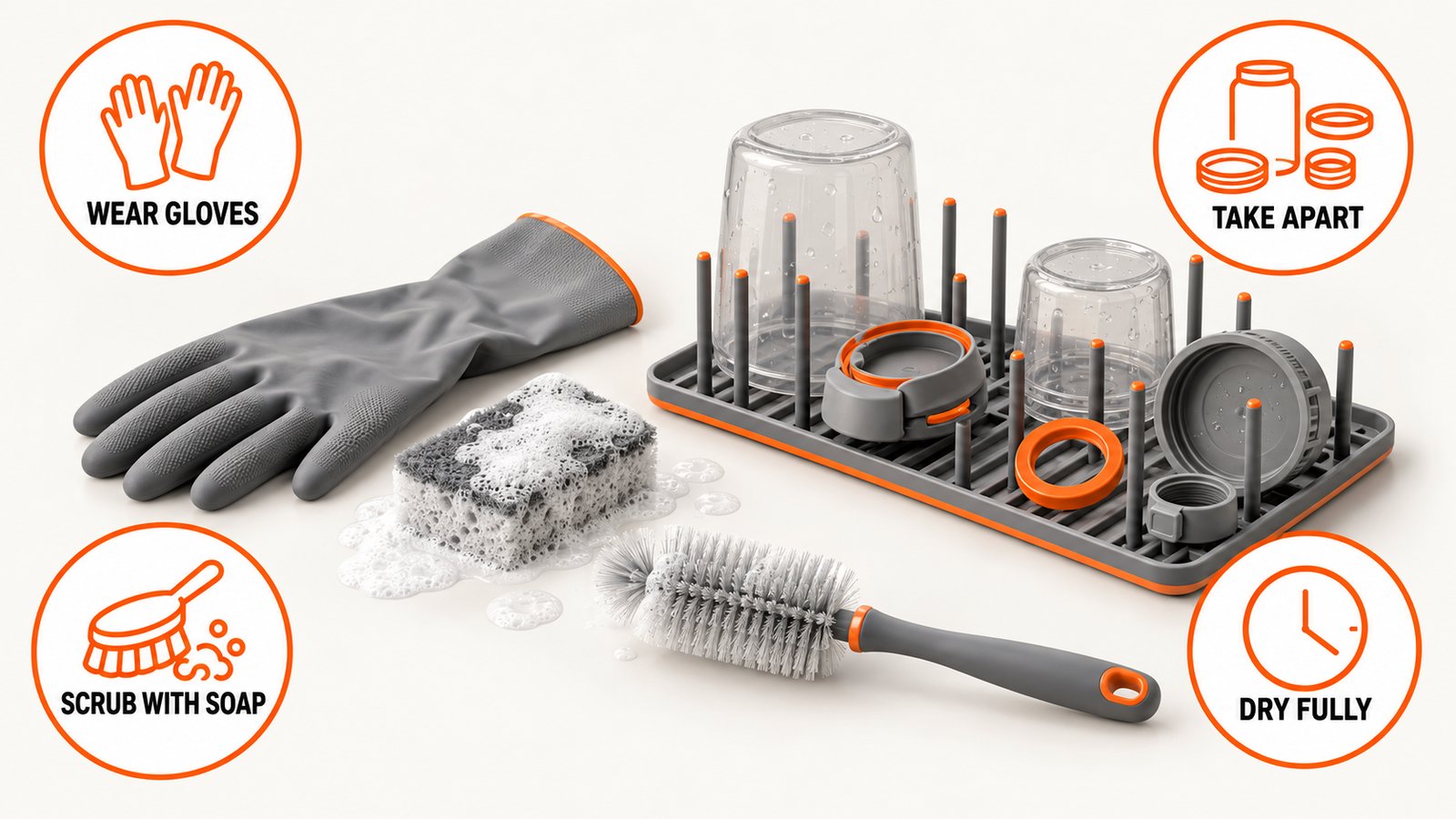
Clean mold in plastic with detergent and water, a brush that reaches the seams, and a full dry. The EPA says to scrub mold off hard surfaces with detergent and water, and dry completely. The CDC adds that mold can be removed from hard surfaces with household products, soap and water, or a bleach solution of no more than 1 cup of household laundry bleach in 1 gallon of water.
- Glove up. The EPA says ordinary household rubber gloves may be used with water and a mild detergent. With bleach or a strong cleaner, it says to choose natural rubber, neoprene, nitrile, polyurethane or PVC gloves and to ventilate.
- Take every part off. Pull out gaskets, straws, valves and trays. Mold sits behind them.
- Scrub in hot, soapy water with a bottle brush, straw brush or old soft toothbrush.
- Remove it, do not just kill it. The EPA says dead mold may still cause allergic reactions in some people, so it is not enough to simply kill the mold, it must also be removed.
- Rinse well, then dry fully with openings down. Never close a lid on a damp container.
Bleach is not required for a light film. The EPA says a biocide such as chlorine bleach is not recommended as a routine practice during mold cleanup. If you use it, never mix it with ammonia or other cleaners. The CDC says that produces a poisonous gas. See does bleach kill mold and does vinegar kill mold, and follow the maker's care label for anything that touches food or a mouth.
For bigger jobs, see how to get rid of mold.
Mold in Food Storage Containers
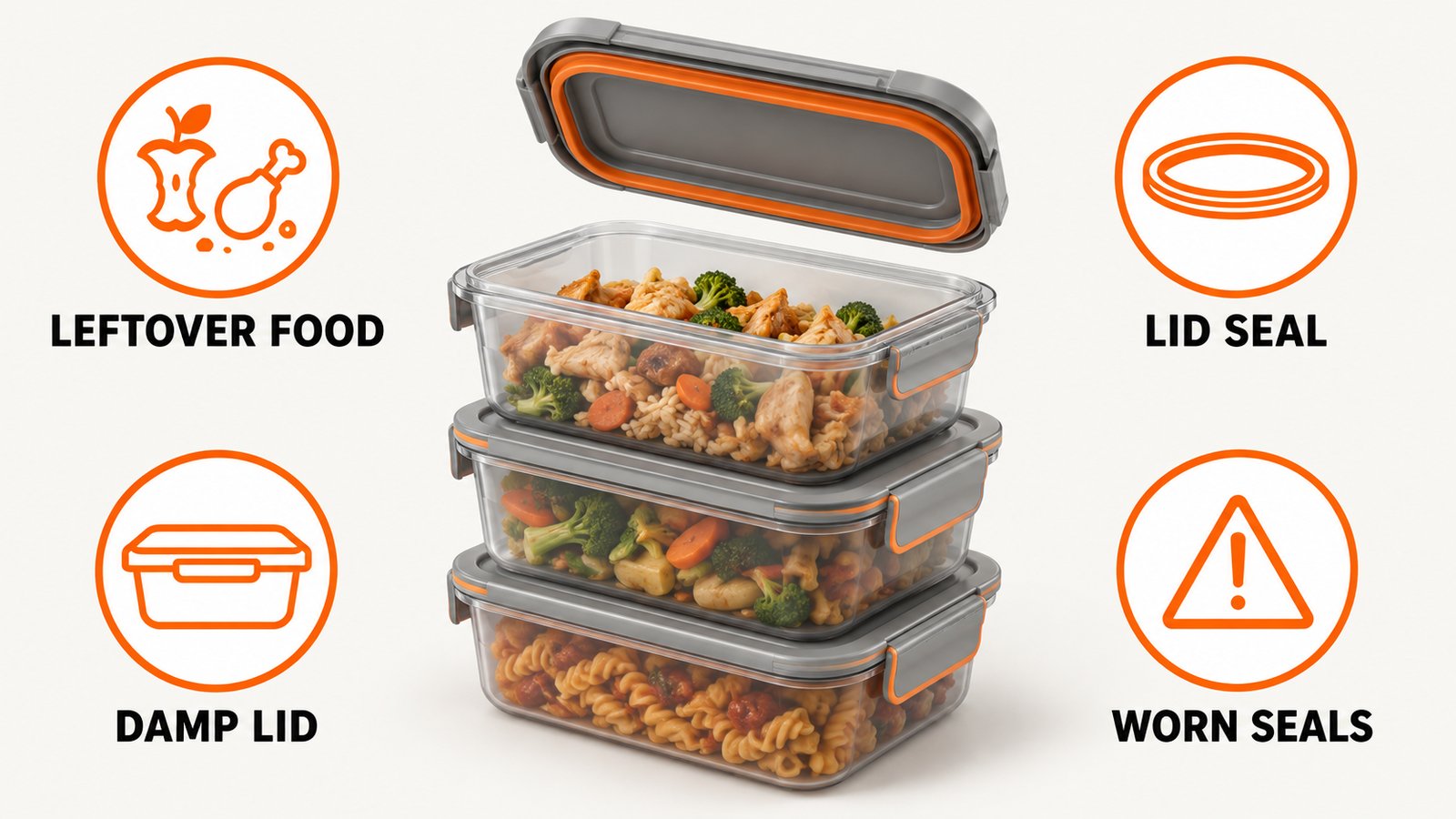
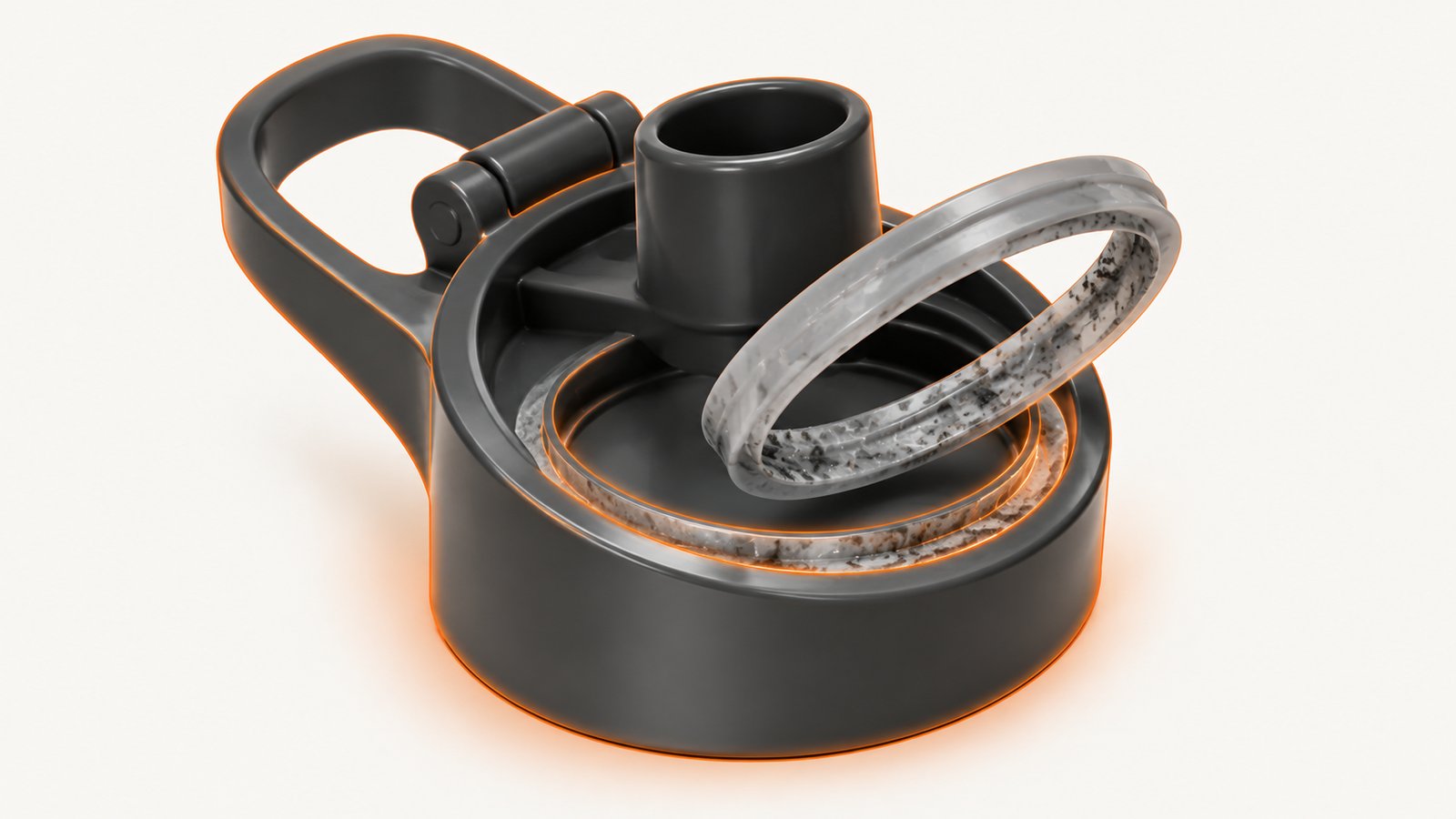
Mold in food storage containers starts in two places: leftover food and the rubber seal under the lid. A lid snapped onto a damp container makes a small sealed box with food residue in it.
If the food was moldy, throw the food out. See mold on bread, mold on strawberries and mold in the fridge for what the USDA says to keep and discard.
Then clean the container. Lift the rubber ring out of the lid and wash both sides and the groove. Scrub corners and scratched spots, where film hides. Wash in hot soapy water, rinse, and dry completely before the lid goes back on.
Keep or toss? Keep it if the growth wiped off a smooth surface and nothing is left. Toss it if the seal stays black or fuzzy, the plastic is cracked or heavily scratched, or a musty smell survives two washes. An orange tint from tomato sauce is a stain, not mold.
Mold in Water Bottles and Straws
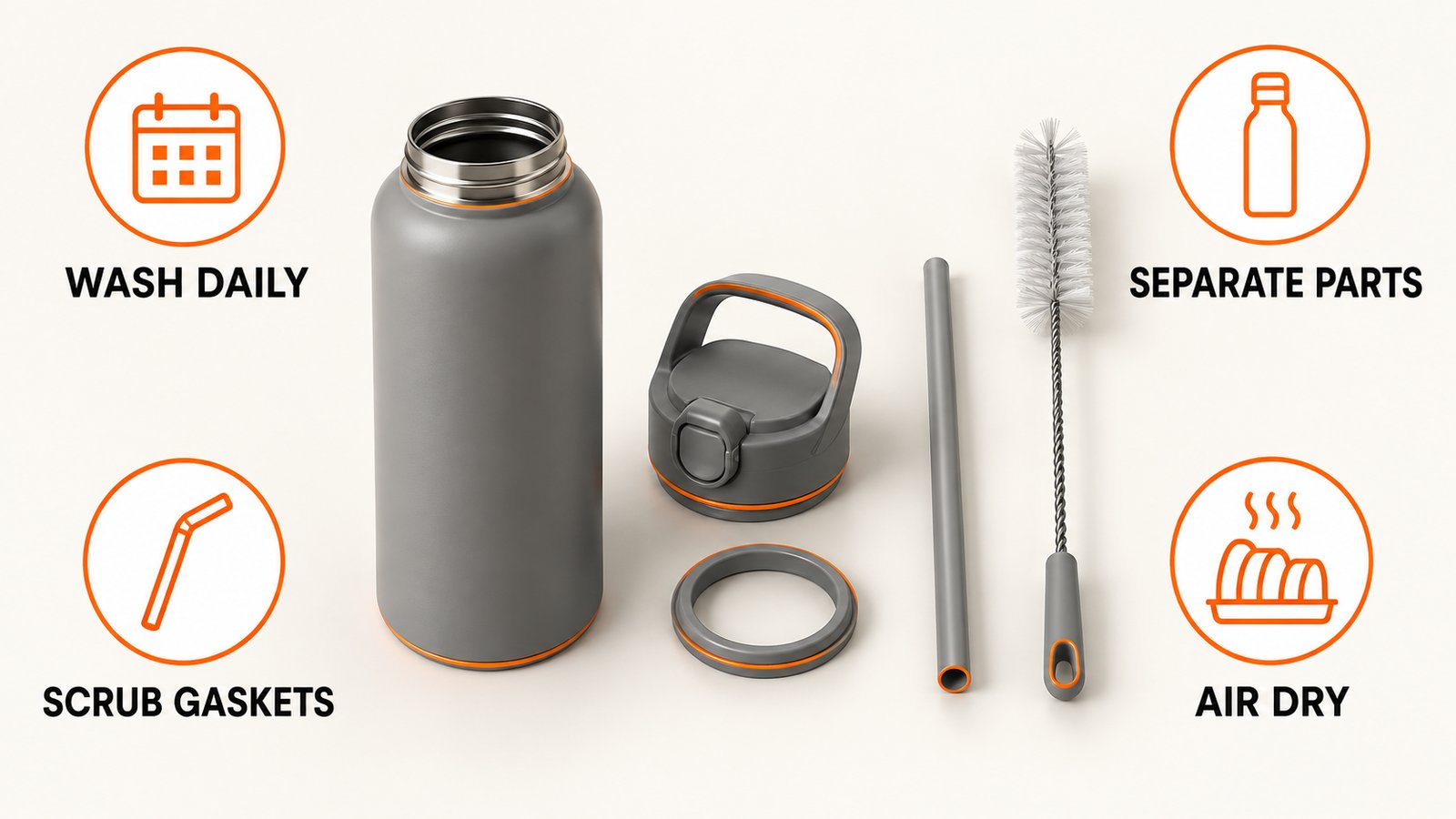
Mold in a water bottle usually starts at the lid, gasket and straw, not on the wall. A University of Alabama at Birmingham biologist explained that mold spores settle on damp surfaces, and that if the water is not replaced regularly, organic matter from saliva or other contaminants can provide nutrients for mold to thrive.
UAB's advice: use hot water and dish soap, scrub every surface including crevices, rinse off the soap, and let the cup air dry completely. It names rubber sealing parts, straws and lids as hot spots. Clemson Extension adds a daily wash, a bottle brush for the inside and bottom, and separating the parts so every surface gets cleaned. It also suggests sanitizing every two weeks or monthly with a teaspoon of bleach (or a quarter cup of vinegar) in a bottle of cool water overnight, then rinsing and air drying.
Our guide to mold in a water bottle goes step by step, and the same logic fits a coffee maker reservoir.
Throw out the piece if black or fuzzy growth stays in a gasket or straw after a careful scrub, if a straw is too narrow to brush and still smells, or if the bottle has a sealed part you cannot open and dry. Replacement lids and straws are often sold separately. Do not drink from a container with visible growth in it.
Mold on Bath Toys
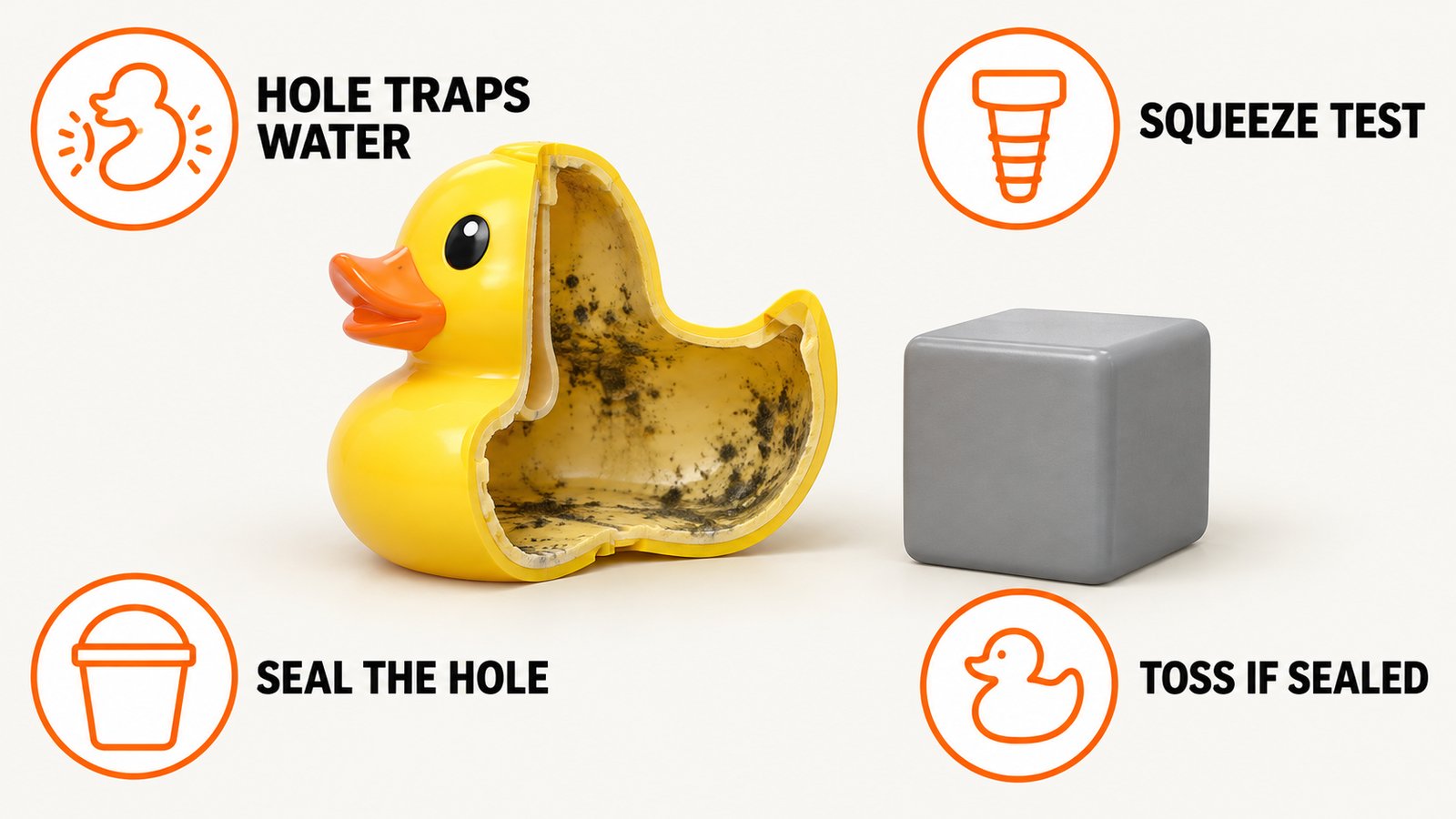
Mold on bath toys grows inside the toy, where you cannot see it. The Eawag team cut open used toys from real homes and found between 5 million and 75 million cells per square centimeter on the inner surfaces. Fungi were in almost 60% of the real toys.
The study points to a mix of causes: flexible plastic that releases carbon compounds, soap and body oils in the bath water, and squeezing, which pulls warm water and grime in through the hole. The authors write that the easiest way to prevent exposure is to simply close the hole.
- Check inside. Squeeze a toy over a white sink. Cloudy or dark water means growth inside.
- Throw out a toy you cannot open. If a brush cannot get in and the inside cannot dry, you cannot clean it. New York State's health department says wet materials that cannot be cleaned and dried thoroughly should be discarded.
- Seal the hole on new toys, or buy solid ones.
- Dry after every bath. Shake out the water and leave the toy open to air on a rack, not in a closed bucket.
The researchers called for more study of the risk, and this page gives no health advice. For worries about a child, ask a doctor. See also mold in the bathroom.
Mold on Shower Curtains and Liners
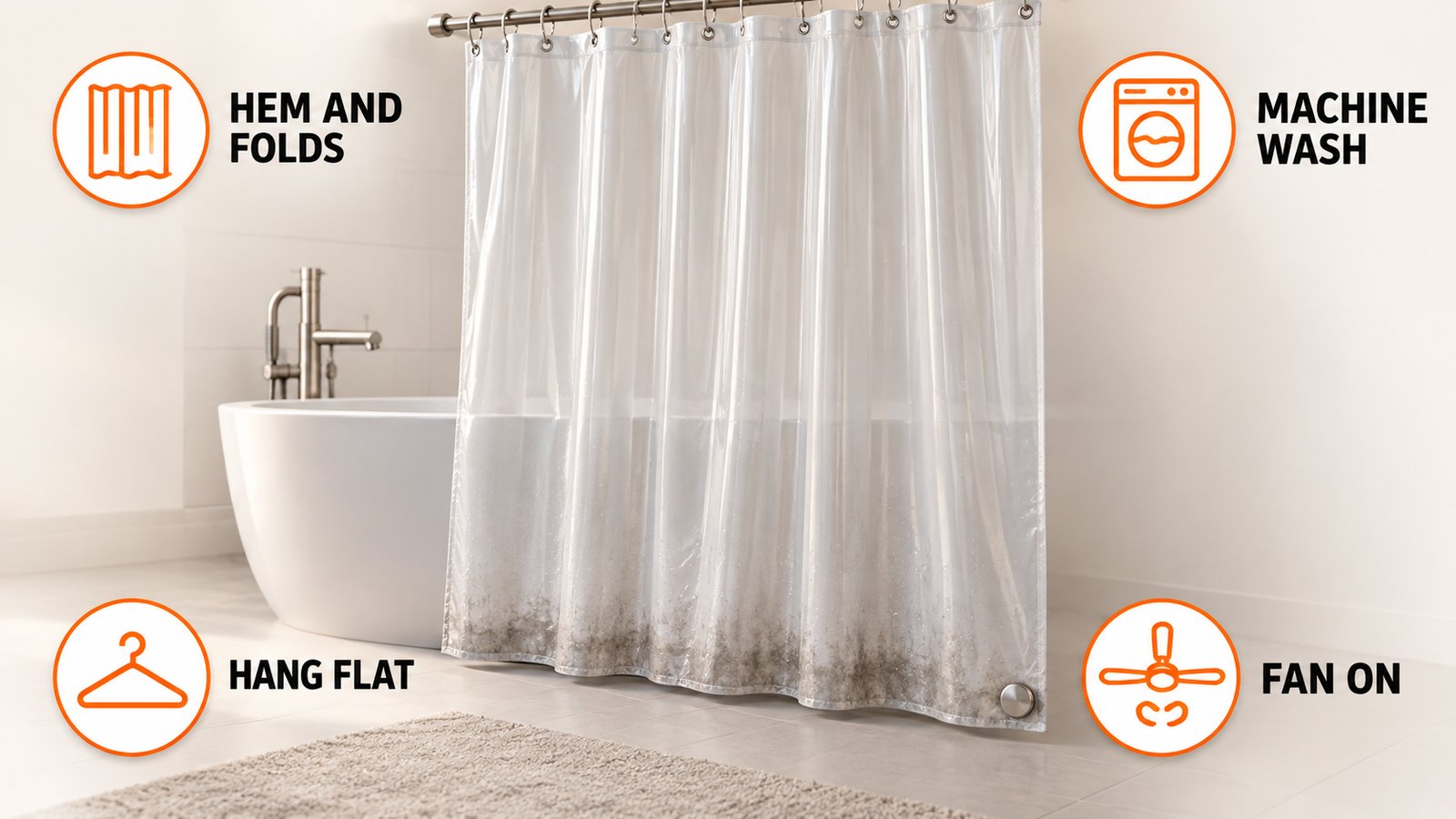
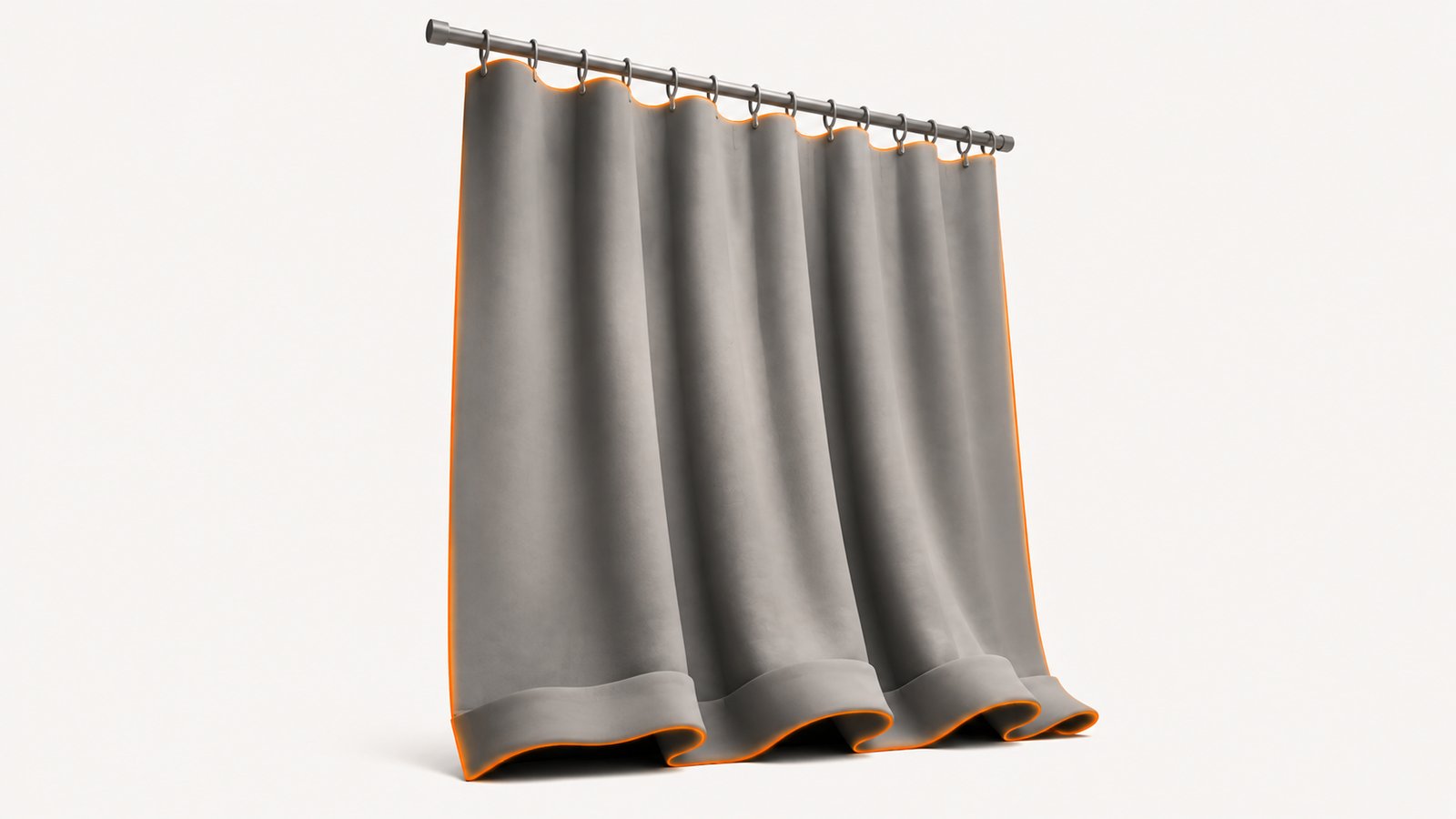
A plastic shower liner is a classic case of mold on plastic. New York State's health department lists bathrooms, "especially shower stalls, bathroom tiles, and shower curtains," among the areas that are always susceptible to mold growth and should be part of routine cleaning. The plastic is fine. The soap film and the water stuck in the folds are the problem.
Our guide to mold on shower curtains covers it fully. The short version:
- Check the care label. Most plastic liners can be machine washed with a few towels. Hang the liner flat to dry.
- Scrub the bottom hem, folds and magnet pockets by hand, since a wash cycle often misses them.
- Replace the liner when the vinyl is cracked, the hem is dark inside and a brush cannot reach it, or staining survives two proper washes.
The EPA is realistic here. It says that if mold in the shower seems to reappear, increasing ventilation (running a fan or opening a window) and cleaning more frequently will usually prevent it from recurring, or at least keep it to a minimum. See also mold in the shower.
Mold in Plastic Storage Bins and Coolers
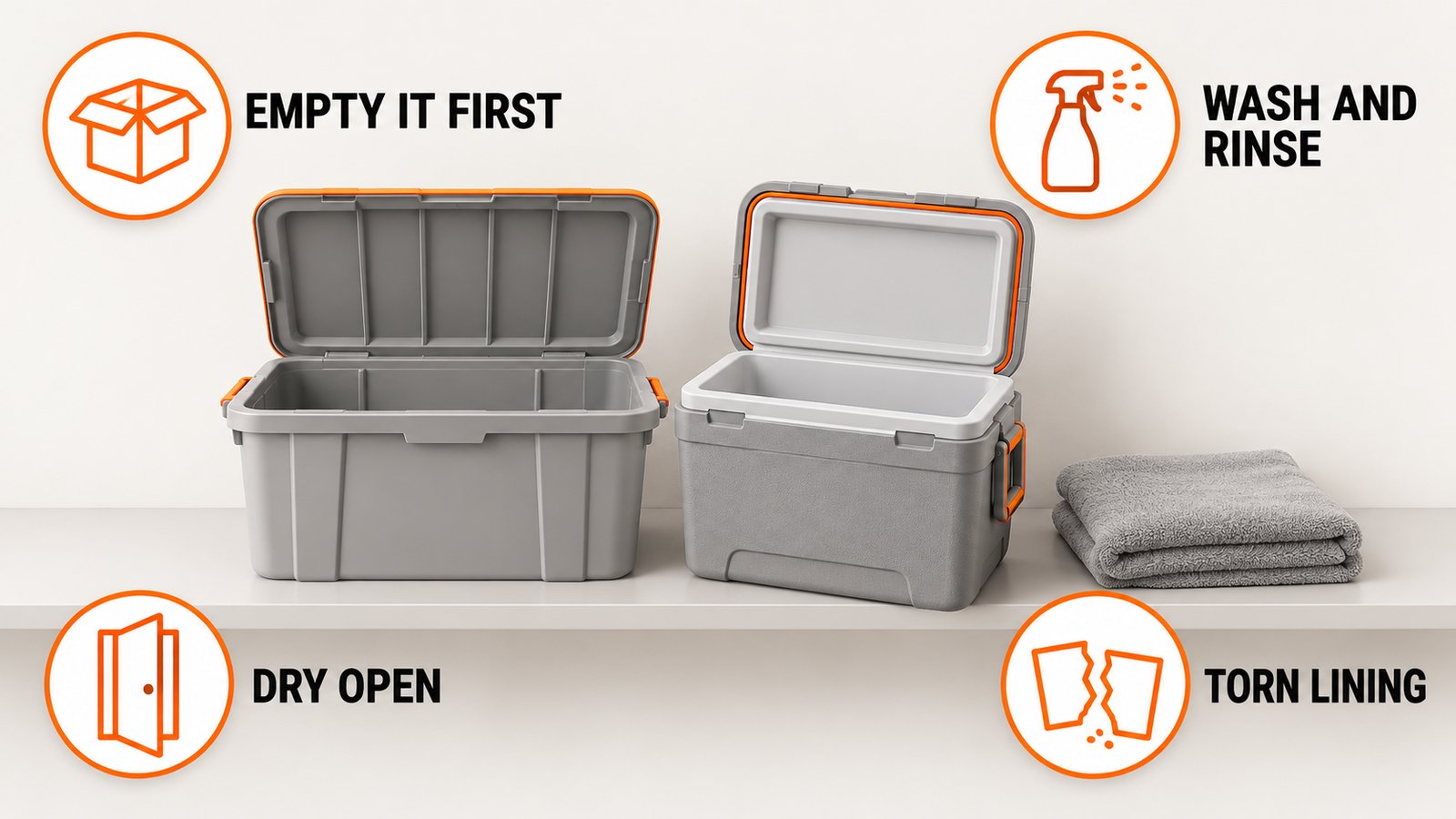
Plastic bins and coolers grow mold when they are closed while damp or hold something that grows it. The CDC says mold grows on paper, cardboard, ceiling tiles and wood, and can also grow in dust, paints, wallpaper, insulation, drywall, carpet, fabric and upholstery.
Storage bins. Empty it and check the contents first, since mold often starts on the cardboard or fabric inside. The EPA says to dry water-damaged areas and items within 24-48 hours to prevent mold growth. Wipe the bin with detergent and water, dry it, and repack only dry items. For damp rooms, see mold in a basement.
Coolers. Washington State University Extension says to clean and sanitize a cooler before and after using it: wash all surfaces with soap and warm water, rinse with clean water, then air dry or dry with a clean cloth. To sanitize, it suggests one scant teaspoon of unscented bleach in a quart of cool water. Store it with the lid open.
Throw it out when a cooler's foam lining or a bin's seal is torn and soaked through. The EPA says mold can grow on or fill in the empty spaces and crevices of porous materials, so it may be difficult or impossible to remove completely.
When to Throw Out Moldy Plastic
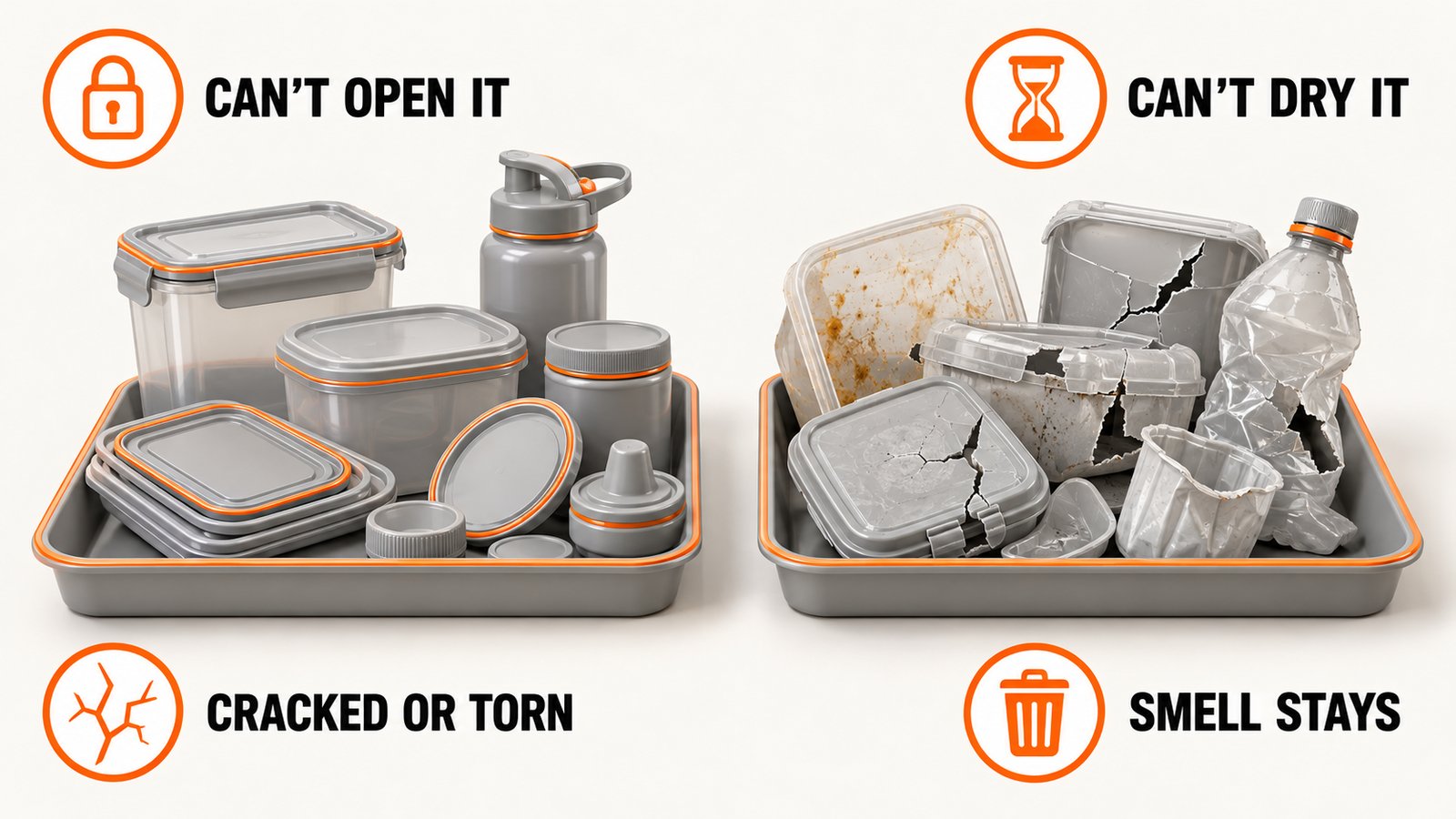
Throw out moldy plastic when you cannot open it up, reach the growth or get it dry. Clean plastic that is sturdy and comes apart.
| Item | Clean it if | Throw it out if |
|---|---|---|
| Food container | Growth wipes off and the seal cleans up | Seal stays black or fuzzy, or the smell stays after two washes |
| Bottle or straw | Every part comes apart and a brush reaches it | Growth stays in a gasket or straw |
| Bath toy | It is solid, or open and clean inside | Dark water comes out and you cannot open it |
| Shower liner | The surface is intact and a wash lifts the film | Vinyl is cracked or the hem is dark inside |
| Bin or cooler | Surfaces are intact and dry after washing | Lining is torn and wet |
The EPA says porous or absorbent materials may have to be thrown away if they become moldy, and New York State says all wet materials that cannot be cleaned and dried thoroughly should be discarded. Torn or foam-lined plastic can behave like those materials. Still unsure? Try is this mold.
How to Stop Mold in Plastic Coming Back
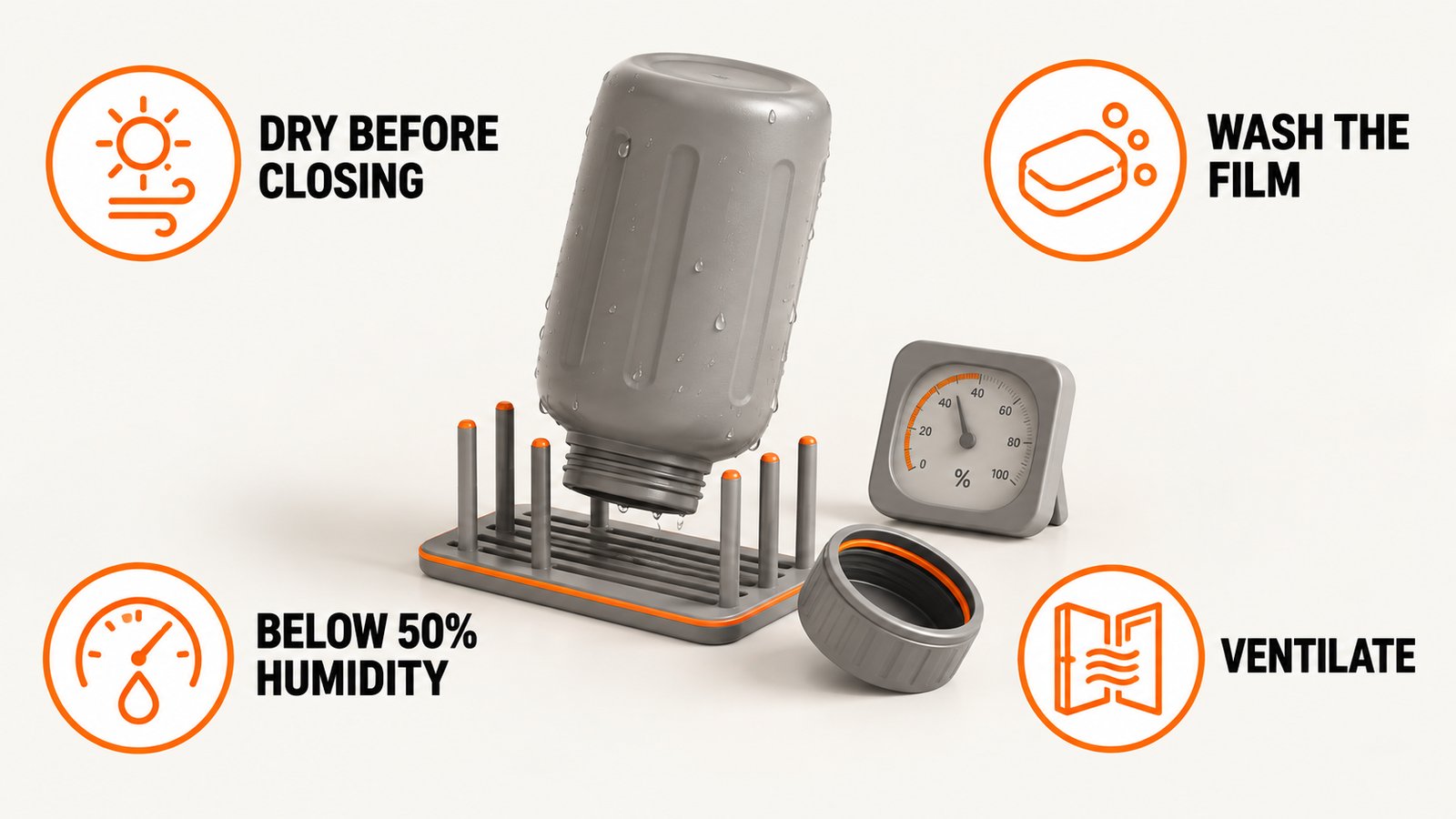
To stop mold in plastic coming back, keep it clean, keep it dry and keep the room from staying damp. The EPA states the rule: if you clean up the mold but do not fix the water problem, then most likely the mold problem will come back.
- Dry before you close. Never snap a lid on a damp container or cap a wet bottle.
- Wash off the film. Daily for bottles, after every bath for toys, after each trip for coolers.
- Watch humidity. The EPA says to keep indoor humidity below 60 percent, ideally between 30 and 50 percent, and that a humidity meter is a small, inexpensive ($10-$50) instrument. The CDC says no higher than 50% all day long. See our dehumidifier guide.
- Move air in the bathroom. Run the fan and spread the liner flat.
- Go easy on scrubbing. Use a soft brush so you do not leave scratches that hold film.
Not sure if it is mold or mildew? See mold vs mildew.
When to Call a Pro
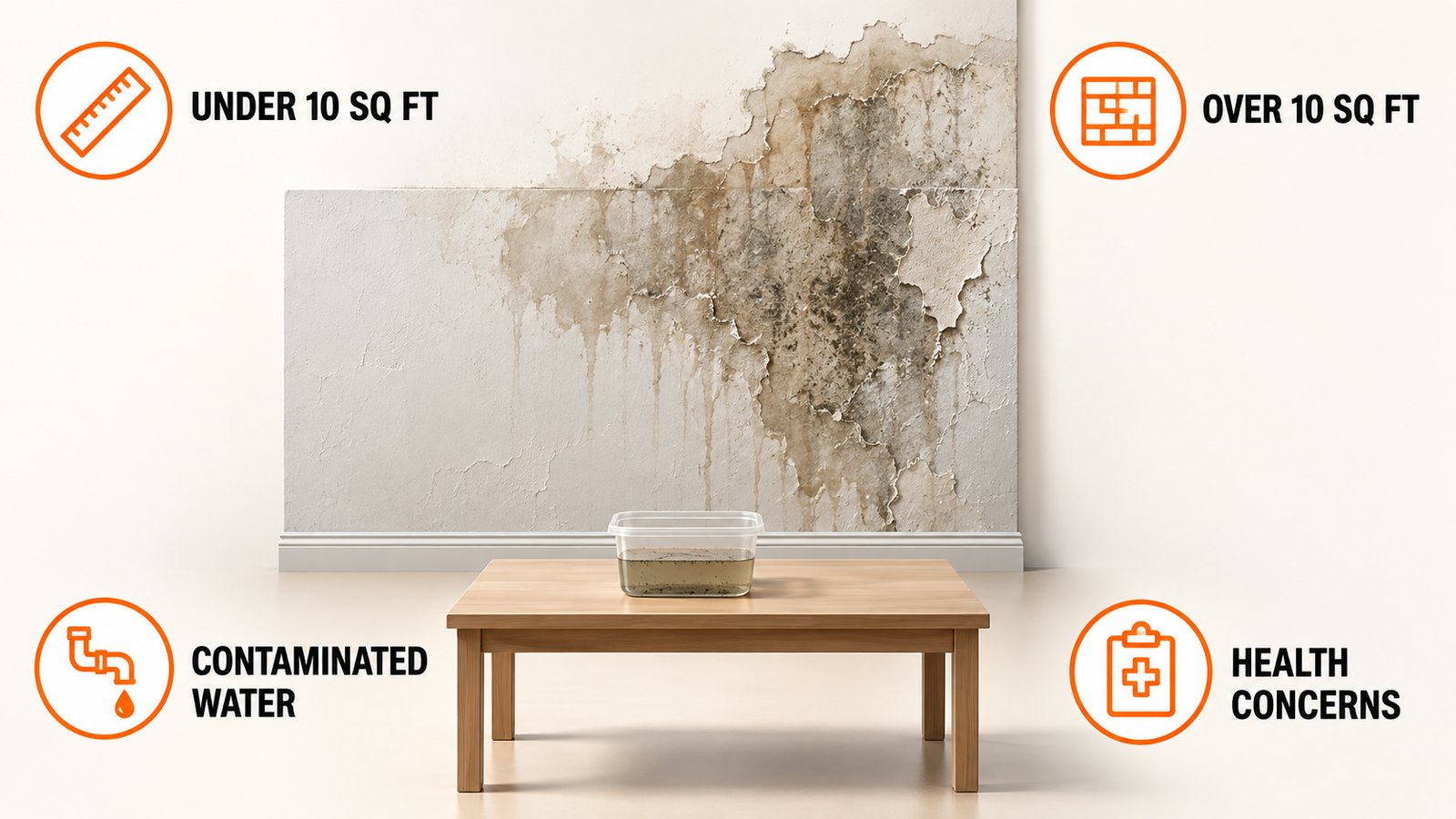
Plastic items are a do-it-yourself job. Call a professional when the mold is not really on the plastic. The EPA says that if the moldy area is less than about 10 square feet (less than roughly a 3 ft. by 3 ft. patch), in most cases you can handle the job yourself.
- Growth covers more than 10 square feet, or there has been a lot of water damage.
- Many items in one room keep molding. That points to damp air or a leak. Start with signs of mold in a house.
- Sewage or other contaminated water is involved. The EPA says to call a professional with experience in that.
- You have health concerns. The EPA says to consult a health professional before starting cleanup.
Our mold remediation page explains what a pro does.
Frequently asked questions
Can mold grow on plastic?
Yes. It grows on the film of dirt, soap, food and moisture on plastic, and in seams and gaskets that stay wet. The EPA's example is mold on a plastic lawn chair where rainwater deposits organic material.
Does mold grow on plastic that is clean and dry?
Very unlikely. The EPA says none of the many types of mold will grow without water or moisture, and a clean surface has little for it to eat.
What is the white fuzz on my plastic container?
Fuzzy, raised and musty in a damp seam points to mold. A flat, chalky crust near a waterline is more likely mineral scale from hard water. If unsure, wash it with soap and water and see if it comes back.
Is orange or brown on plastic mold?
It can be, but it is often a food stain or bacterial slime. The CDC says mold can look like spots of many different colors, so check texture, smell and location instead of color.
Can mold go through plastic?
The sources used here describe mold sitting on the surface and in gaps, seams and cracks, not growing through intact plastic. Torn or foam-lined plastic can hold moisture inside, which is when to replace the item.
Can I use bleach on moldy plastic?
The CDC says mold can be removed from hard surfaces with household products, soap and water, or a bleach solution of no more than 1 cup of household laundry bleach in 1 gallon of water. The EPA does not recommend bleach as routine. Check the care label and never mix bleach with ammonia.
Sources
Every claim on this page traces to one of these. Links open the primary document.