Why mold grows in a water bottle
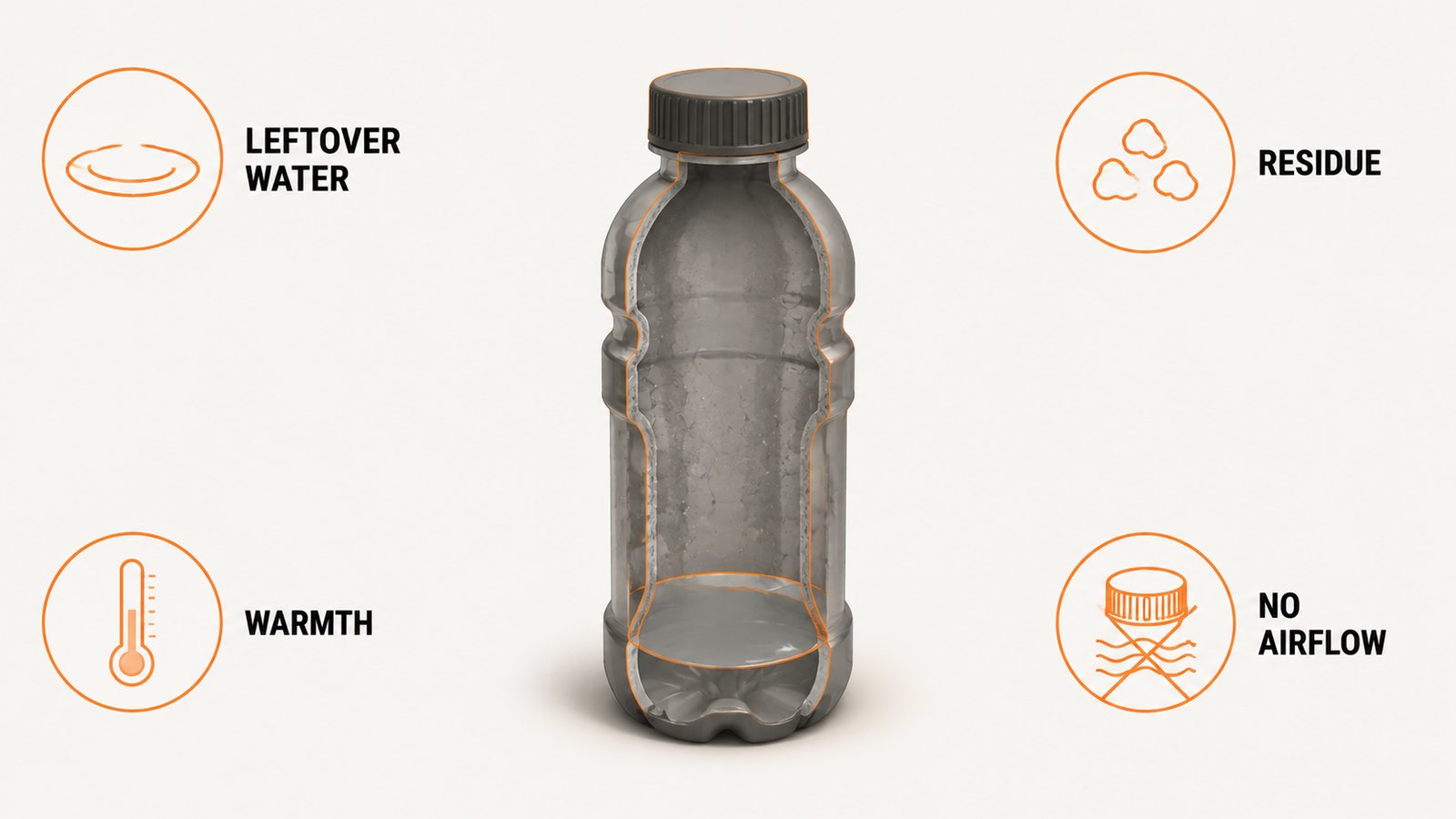
A capped water bottle is a small sealed chamber that stays damp for days. EPA's rule for indoor growth applies directly: molds will not grow without water or moisture, and the way to control indoor mold growth is to control moisture. A bottle that gets rinsed and capped is a bottle that never dries.
Four conditions stack inside it. Leftover moisture pools at the base and clings to the walls, and a closed cap keeps it there. Residue gives it something to eat: backwash carries saliva and traces of whatever you last ate, and if the bottle has ever held juice, sports drink, protein powder, coffee, or a flavor tablet, there is sugar and protein in the film. Warmth comes free, from a car, a gym bag, or a desk. And there is no airflow at all, because the cap is on.
Plain water in a rinsed, dried bottle is close to harmless. The bottle that goes bad got a quick rinse, went into a bag with the lid screwed down, and came out the following afternoon. Same physics as a humidifier tank, which is also a sealed reservoir of standing water.
Temperature does not save you either. USDA notes that while most molds prefer warmer temperatures, they can grow at refrigerator temperatures too, and that molds tolerate salt and sugar better than most other food invaders. A sweetened bottle left in the fridge is slowed down, not stopped.
Where mold hides in a water bottle
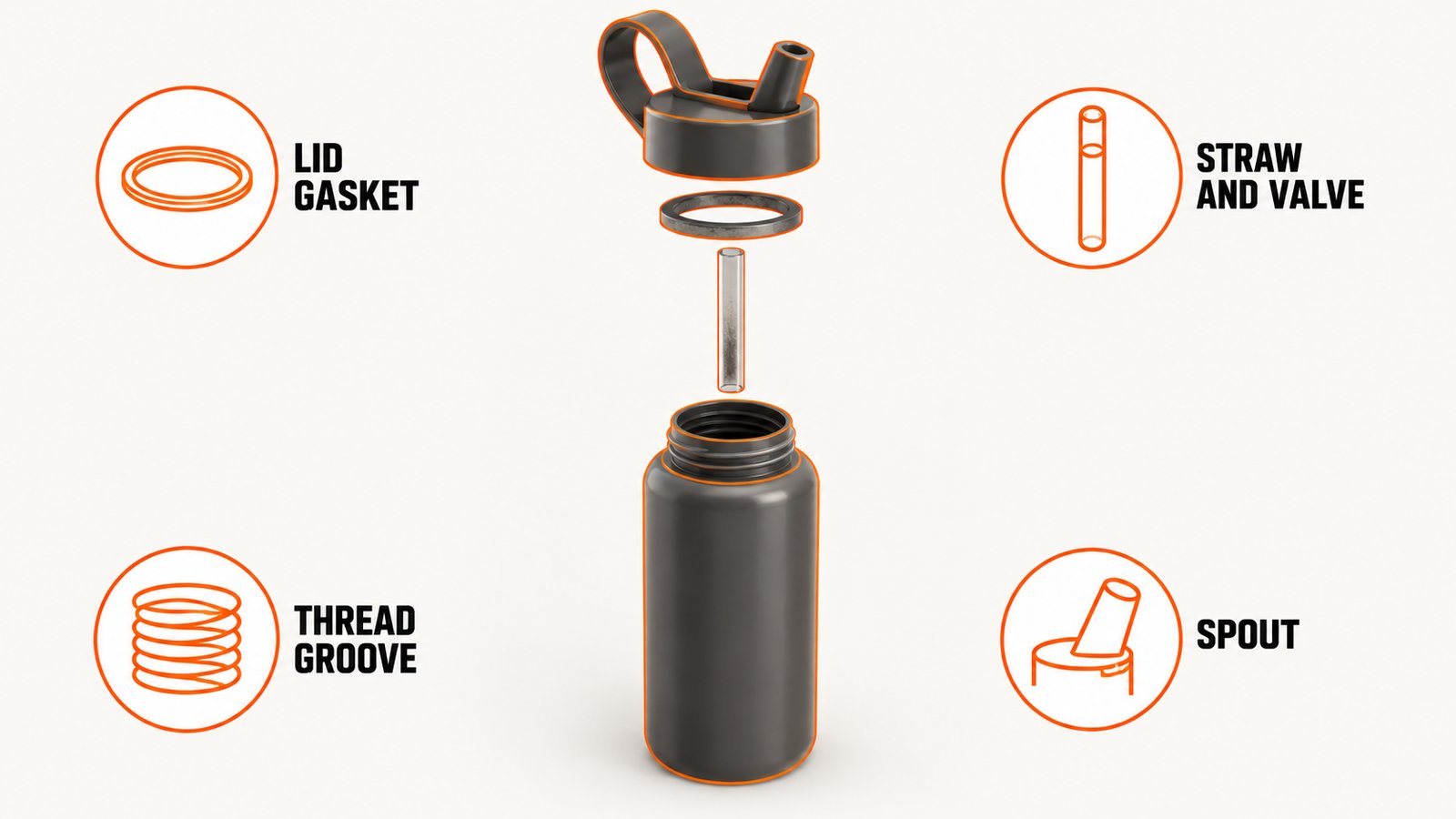
Almost nobody finds growth on the inside wall of the bottle first. They find it in a part they have never taken off.
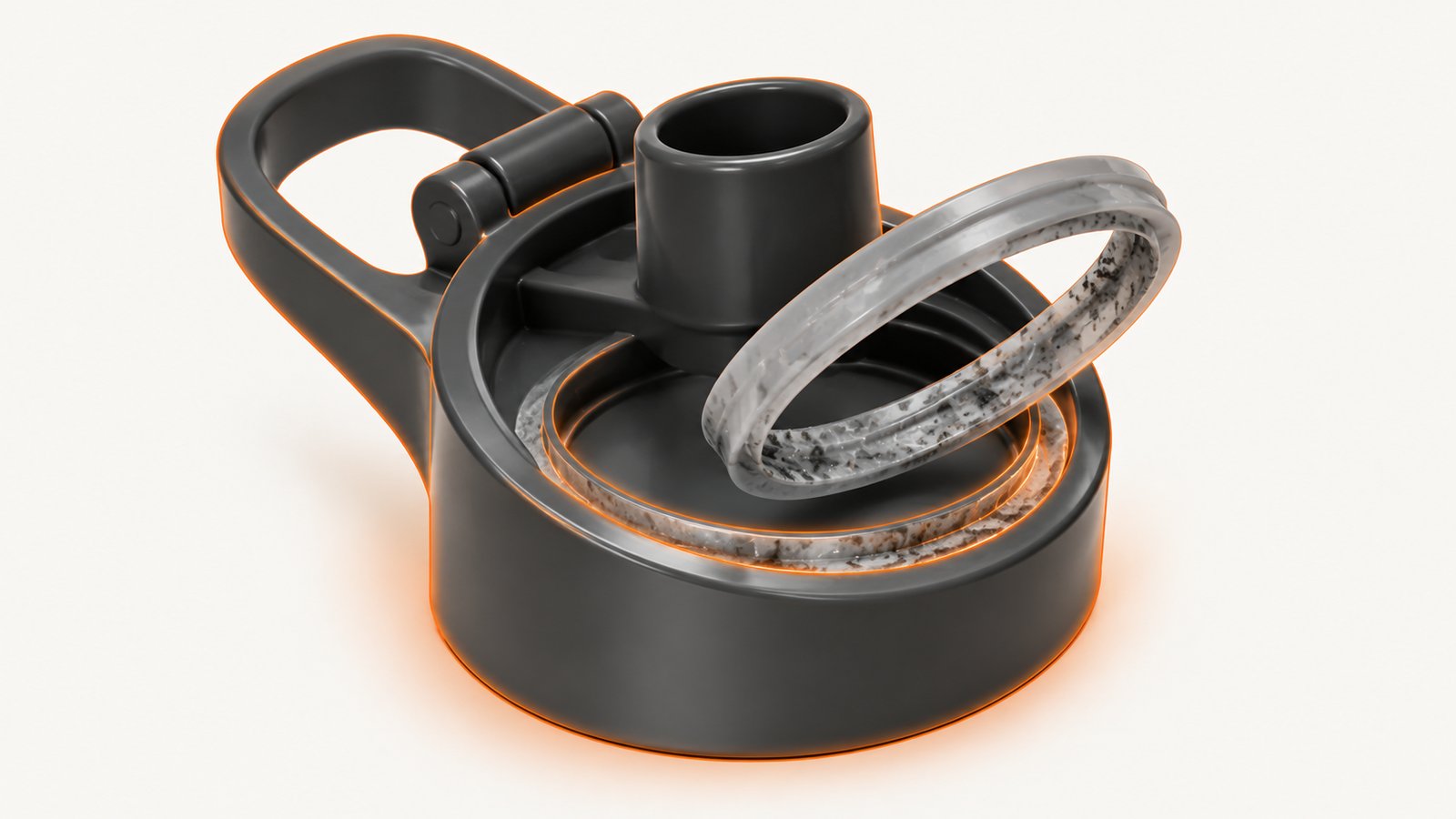
- The lid gasket. The soft ring that makes the cap watertight sits in a groove and traps a permanent bead of water. On most lids it lifts out with a fingernail, and most owners have never lifted it.
- The straw and bite valve. A narrow tube that never dries, with a silicone valve at the top that holds residue in its slit. A standard bottle brush does not fit and does not reach.
- The thread groove. The spiral where the cap screws down holds a ring of liquid every time you close it. Wiping the rim does nothing for the threads.
- The spout channel and flip cap. Any hinged or sliding drinking mechanism has a hidden internal path with corners a cloth cannot reach.
- The handle and carry loop. Hollow handles fill with water during washing and drain slowly or not at all.
- Scratches in the wall. On plastic scoured with a hard brush, fine scratches hold film a smooth surface would shed.
This is why a bottle that looks clean can smell. Take the lid apart over a sink, pull the gasket, and look at both sides of it before deciding the bottle is fine.
Black specks, pink film, or slime: what is what
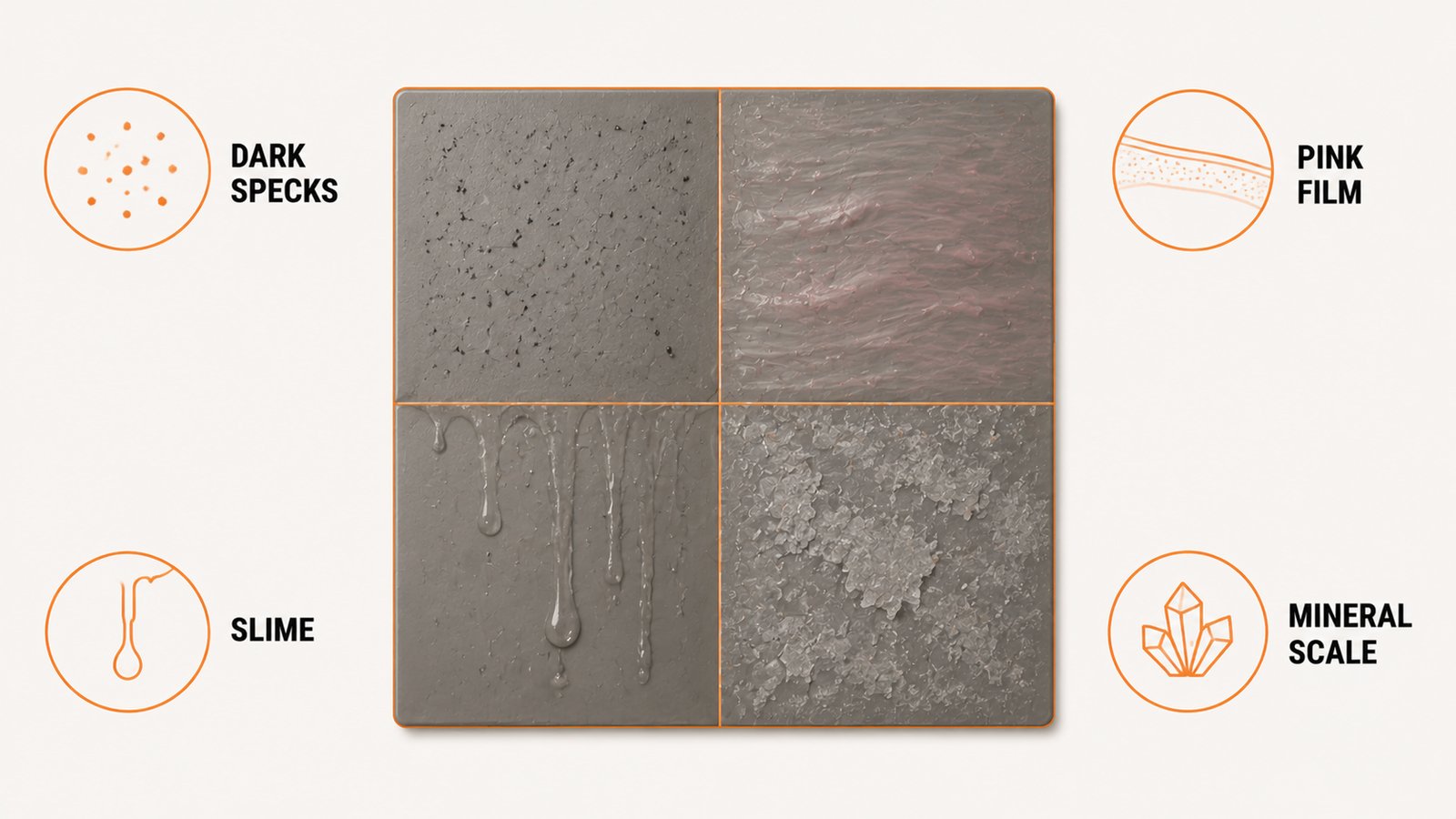
Four deposits turn up inside drink bottles and they are not all fungal.
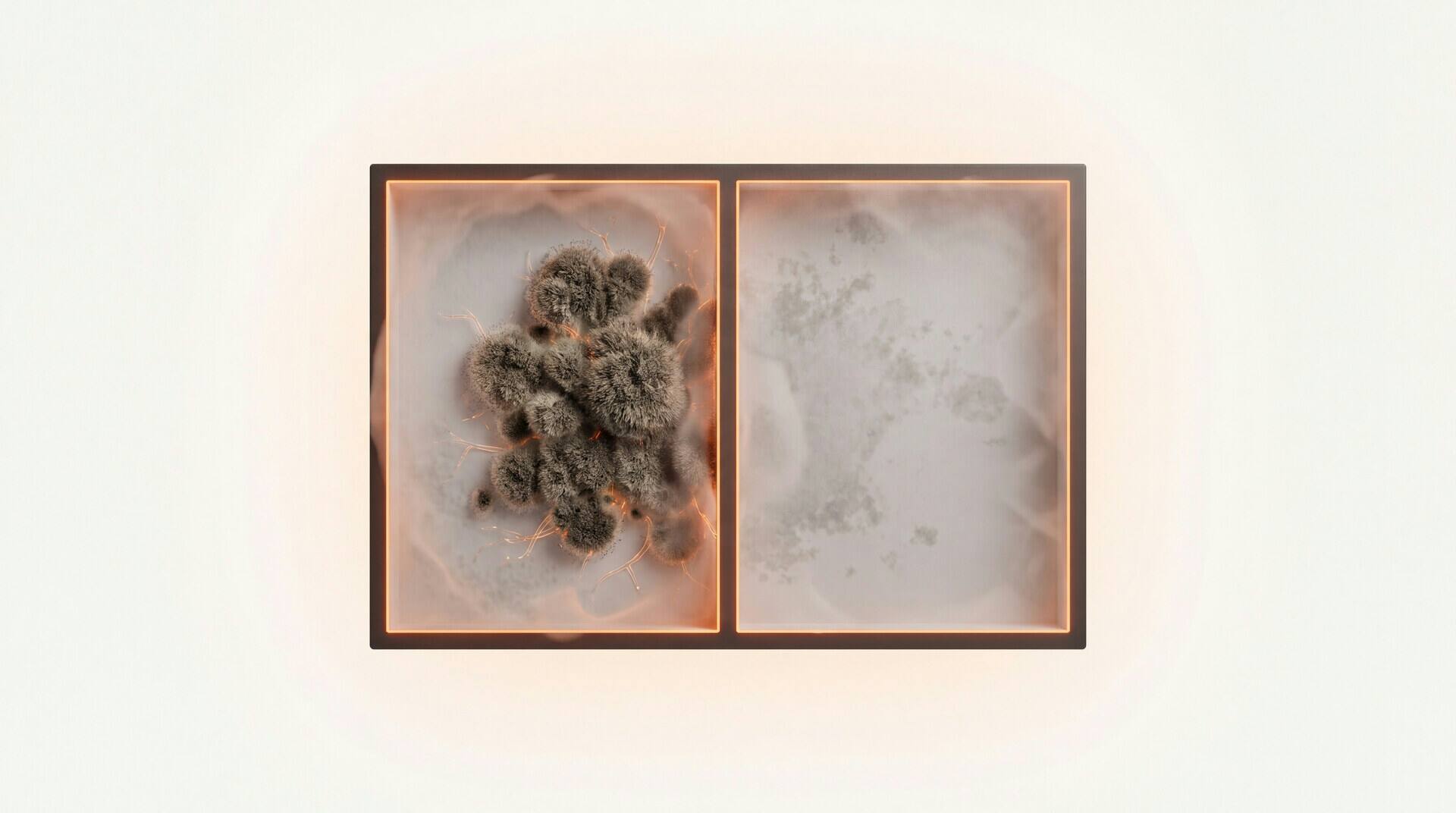
Dark specks or fuzzy patches in the gasket groove or on the straw are the ones most likely to be mold. On a black gasket they are almost invisible until you flex the ring and see the texture change.
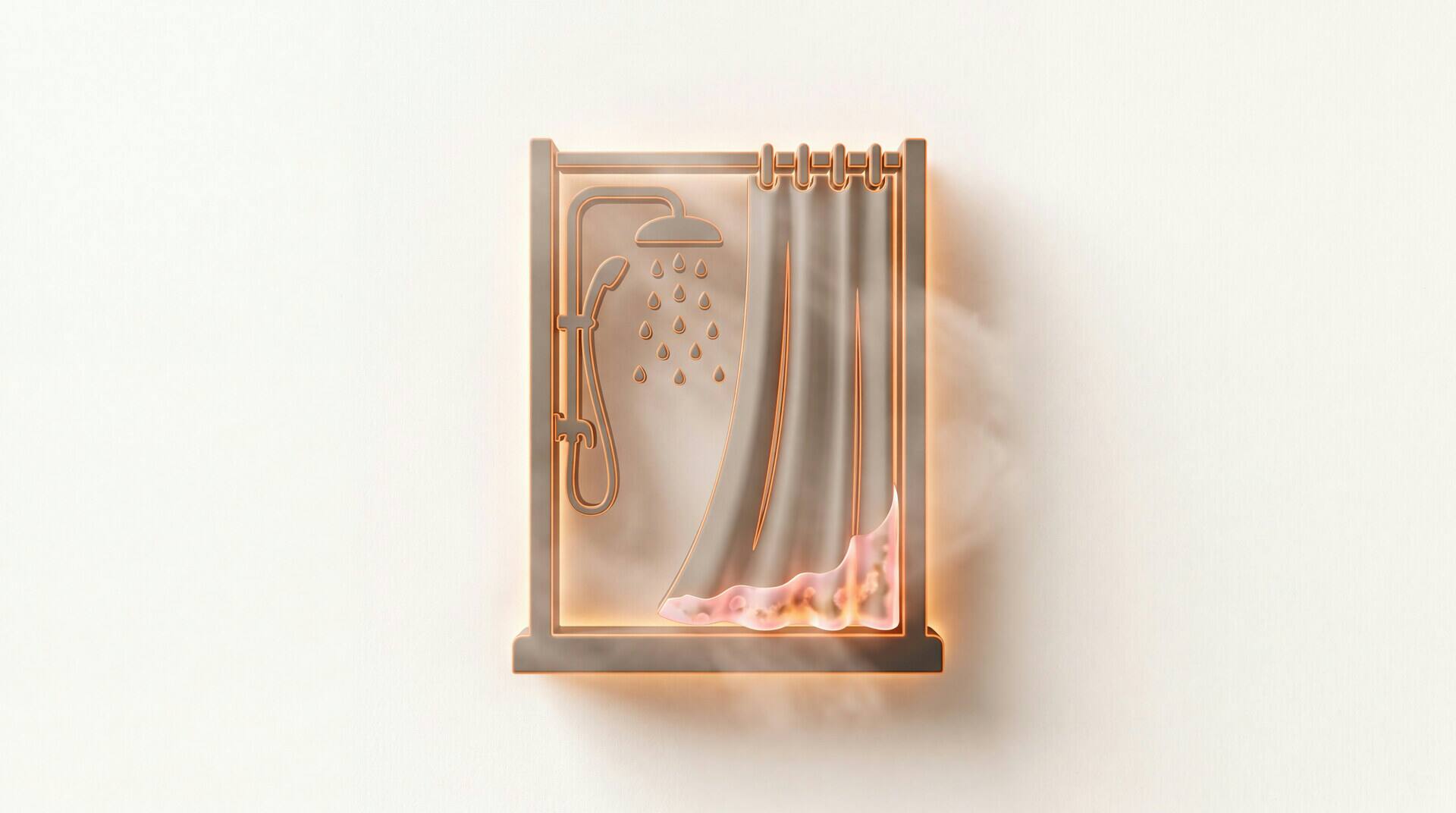
A pink or orange film on the spout, the rim, or the inside of the cap is almost always a bacterial slime rather than a fungus. It is the same deposit people find on shower grout and in a pet bowl, and it wipes off easily and returns fast. The same confusion is covered on pink mold in a shower.
A clear, slippery coating is early biofilm that has not picked up pigment yet. If the inside feels slick under a fingertip, it is not clean regardless of how it looks.
Chalky white or gray crust near the waterline is mineral scale from tap water. Not alive, and it comes off with an acid soak rather than a scrub.
You cannot identify a species by looking, and you do not need to. CDC's guidance is that you do not need to know the type of mold and that all molds should be treated the same with respect to potential health risks and removal. Color only tells you which tool to reach for: a brush for film, an acid soak for scale. Background is on types of mold and mold vs mildew.
On the health question, keep it simple and honest. Do not drink from a bottle with visible growth in it, clean it properly or replace it, and if anyone feels unwell, that is a conversation for a licensed clinician rather than a website. What agencies actually report is on mold exposure symptoms.
How to clean a moldy water bottle
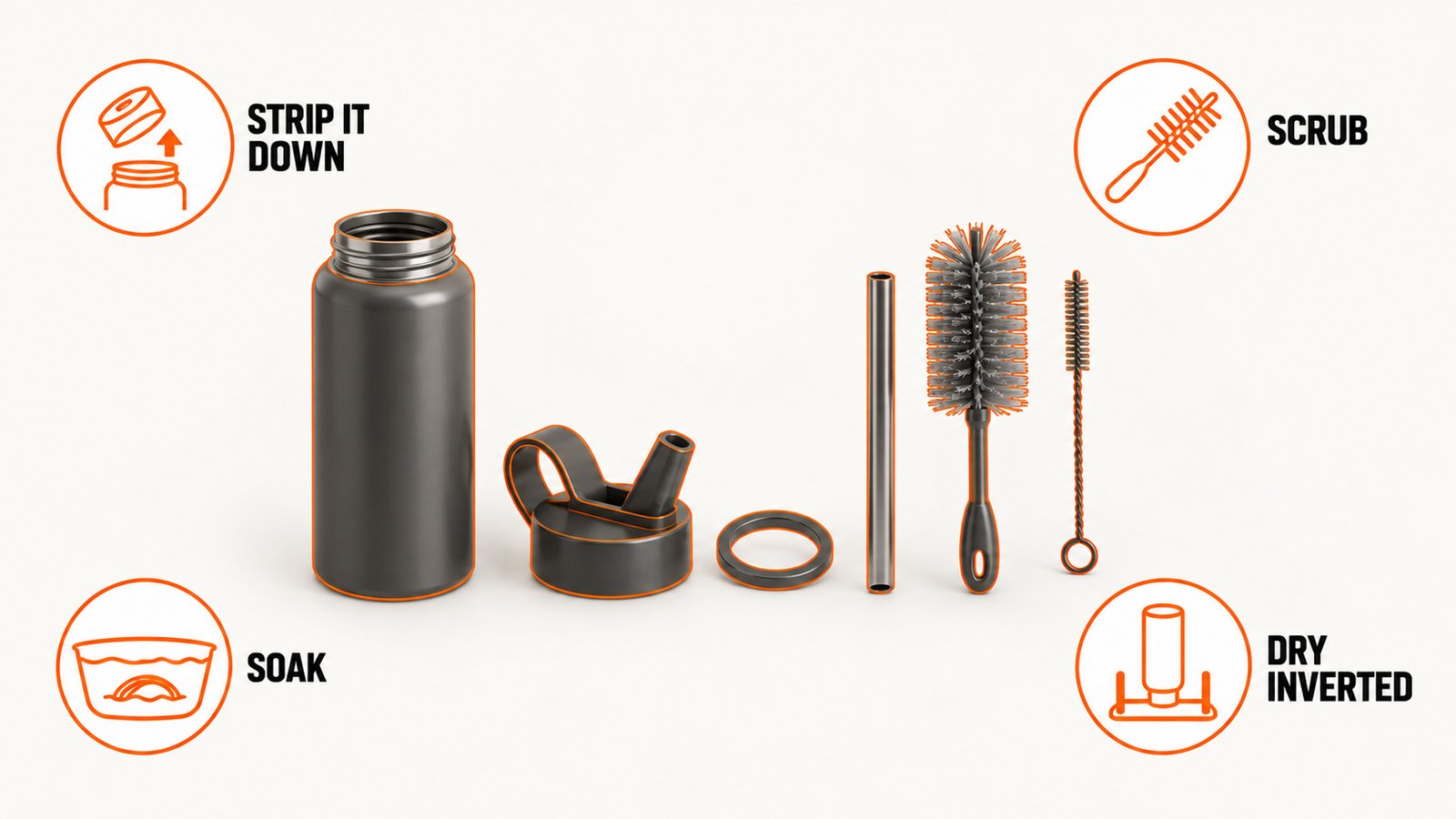
The whole job takes ten minutes and one of the six steps is the one people skip.
1. Strip it completely. Cap off, gasket out, straw out, valve off, any silicone sleeve off. Every separable part gets cleaned separately. A lid cleaned assembled is a lid that is still dirty inside.
2. Wash in hot soapy water. FDA's instruction for food-contact items is to wash cutting boards, dishes, utensils, and countertops with hot soapy water, and a drink bottle is in that category. EPA's parallel instruction for hard surfaces is to clean mold off with water and detergent and dry completely. Physical removal is the point: EPA notes that dead mold may still cause allergic reactions in some people, so it is not enough to simply kill the mold, it must also be removed.
3. Use brushes that fit. A bottle brush for the body, a narrow straw brush for the tube, a soft toothbrush for the thread groove, gasket channel, and spout. A cloth on a finger reaches almost none of the places that matter.
4. Soak what a brush cannot reach. Small parts go into a bowl of hot soapy water, a diluted white vinegar solution, or a baking soda solution for 20 to 30 minutes, then get scrubbed and rinsed. Vinegar also loosens mineral scale, which shields film from anything you scrub with.
5. Rinse until there is nothing left. Whatever you soaked in has to come out completely. Never mix two cleaners: EPA warns never to mix chlorine bleach with cleaning solutions or detergents that contain ammonia, because toxic fumes could be produced.
6. Dry it fully, inverted, with the lid off. This is the step that decides whether you do this again next month. Stand the body upside down on a rack, lay the lid parts out separately, and leave everything until dry to the touch. Storing a capped bottle wet restarts the whole cycle. The full cleanup order for other surfaces is on how to get rid of mold.
What to clean a water bottle with
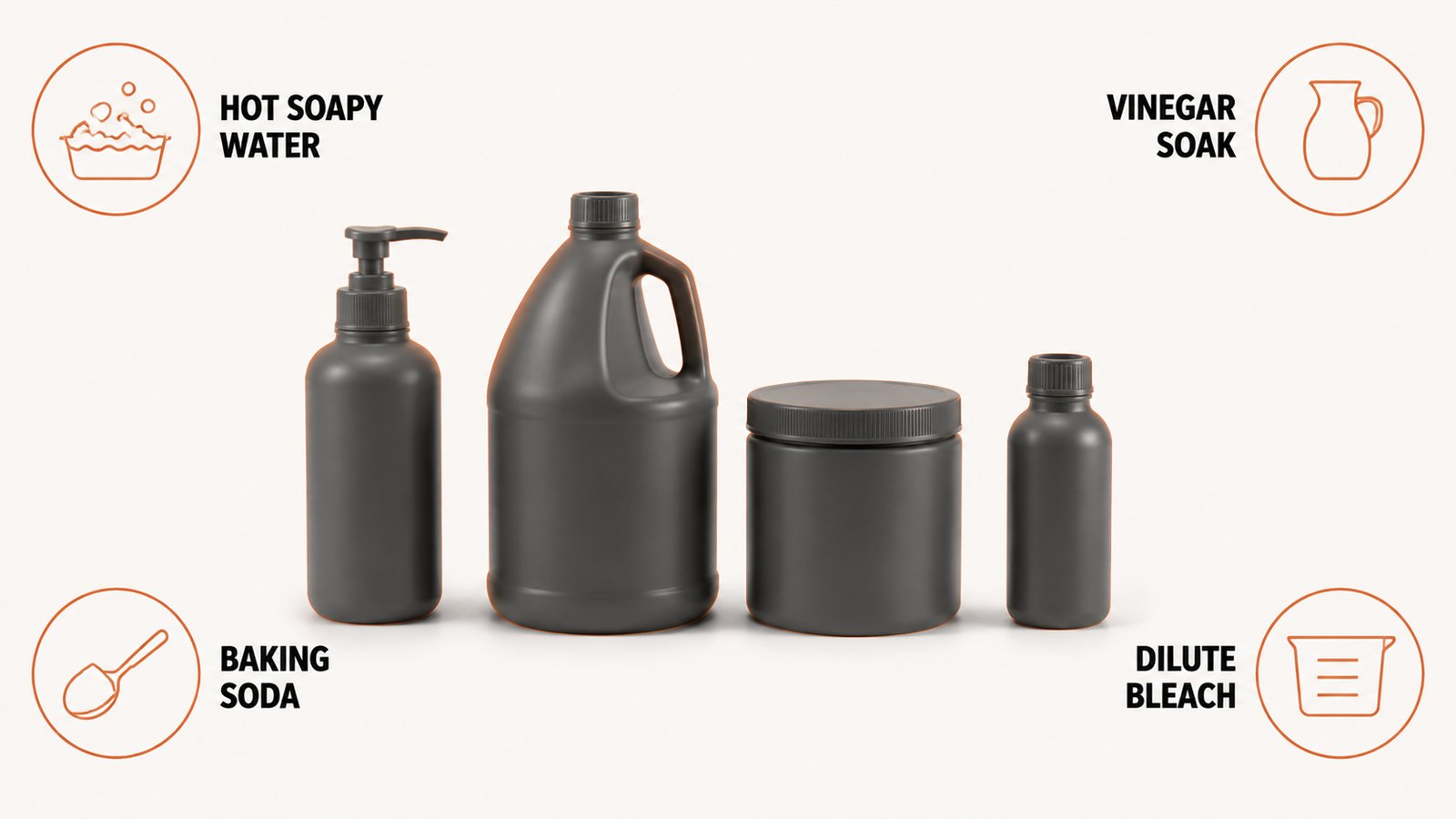
Four options, and the first one does most of the work.
| Option | Best for | Watch out for |
|---|---|---|
| Hot soapy water and a brush | Everyday cleaning and most visible growth. The method FDA names for food-contact items. | Only works on surfaces the brush physically reaches. |
| White vinegar soak | Loosening mineral scale and lifting odor from gaskets and straws. | Sour smell until fully rinsed. Not a registered disinfectant. |
| Baking soda paste or solution | Mild abrasion on a stained interior and odor in a stainless flask. | Gentle. It will not remove an established film by itself. |
| Dilute bleach rinse | A last resort after scrubbing, on hard non-porous parts only. | Rinse exhaustively. It bleaches colored silicone and it does not replace scrubbing. |
Bleach is not the shortcut it looks like: it strips the dark color so a gasket looks clean while the film is still there, the same failure covered on does bleach kill mold. And vinegar is genuinely useful here but is doing a different job than most people think, as explained on does vinegar kill mold.
The dishwasher is fine if and only if the manufacturer says the parts are dishwasher safe, the parts are separated rather than assembled, and they go on a rack where water actually reaches inside them. A capped bottle in a dishwasher gets washed on the outside and nowhere else. Check the lid separately, because plenty of bottles have a dishwasher-safe body and a hand-wash-only lid.
Bottle designs that resist mold
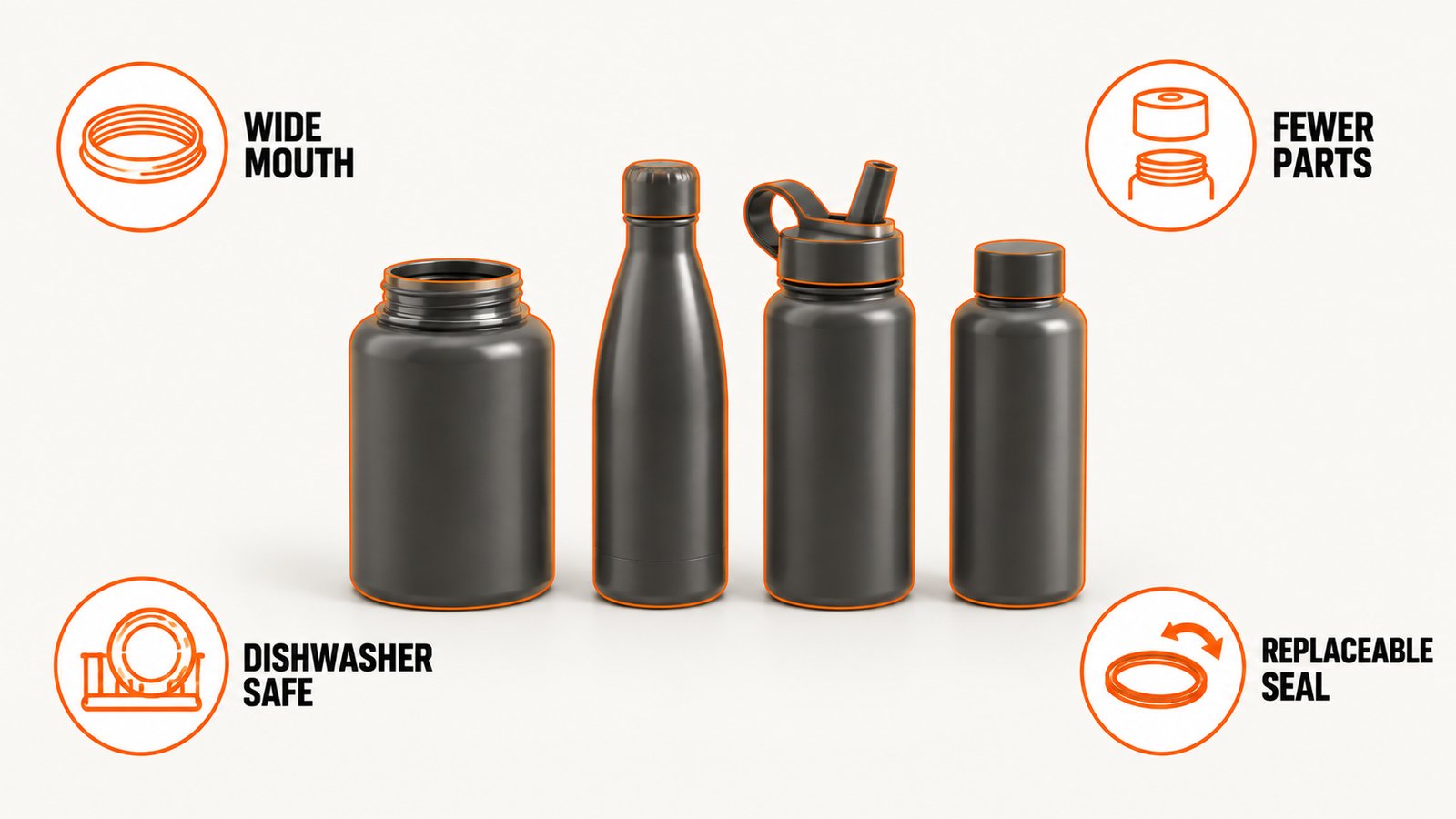
Design decides how often this happens to you. Four features matter more than material marketing.
A wide mouth. If your hand and a brush fit through the opening, every internal surface is reachable. Narrow-neck bottles are the hardest to keep clean and the most common source of a smell nobody can find.
Fewer separate parts. Every gasket, valve, hinge, and straw is a place that stays wet. A plain screw cap with one removable seal is easier to keep clean than a lid with a flip spout, a lock button, and a bite valve.
Materials that take heat. Stainless steel and dishwasher-safe polypropylene tolerate hot washing, and stainless resists the fine scratching that gives film a foothold on scoured plastic. One catch with insulated stainless: the vacuum wall holds cold, so the inside stays damp longer.
Replaceable seals. A bottle whose maker sells spare gaskets and straws can be renewed for a few dollars instead of thrown away.
Habits matter as much as hardware. Empty the bottle at the end of the day. Wash it daily if it ever holds anything but water, because sugar and protein change the problem. Store it dry with the lid off, and keep flavored drinks to one dedicated bottle so only that one carries sticky residue. If it lives in a gym bag or a car, add a weekly deep clean with the lid fully disassembled. General moisture habits are on how to prevent mold.
When to replace the bottle or look at the room
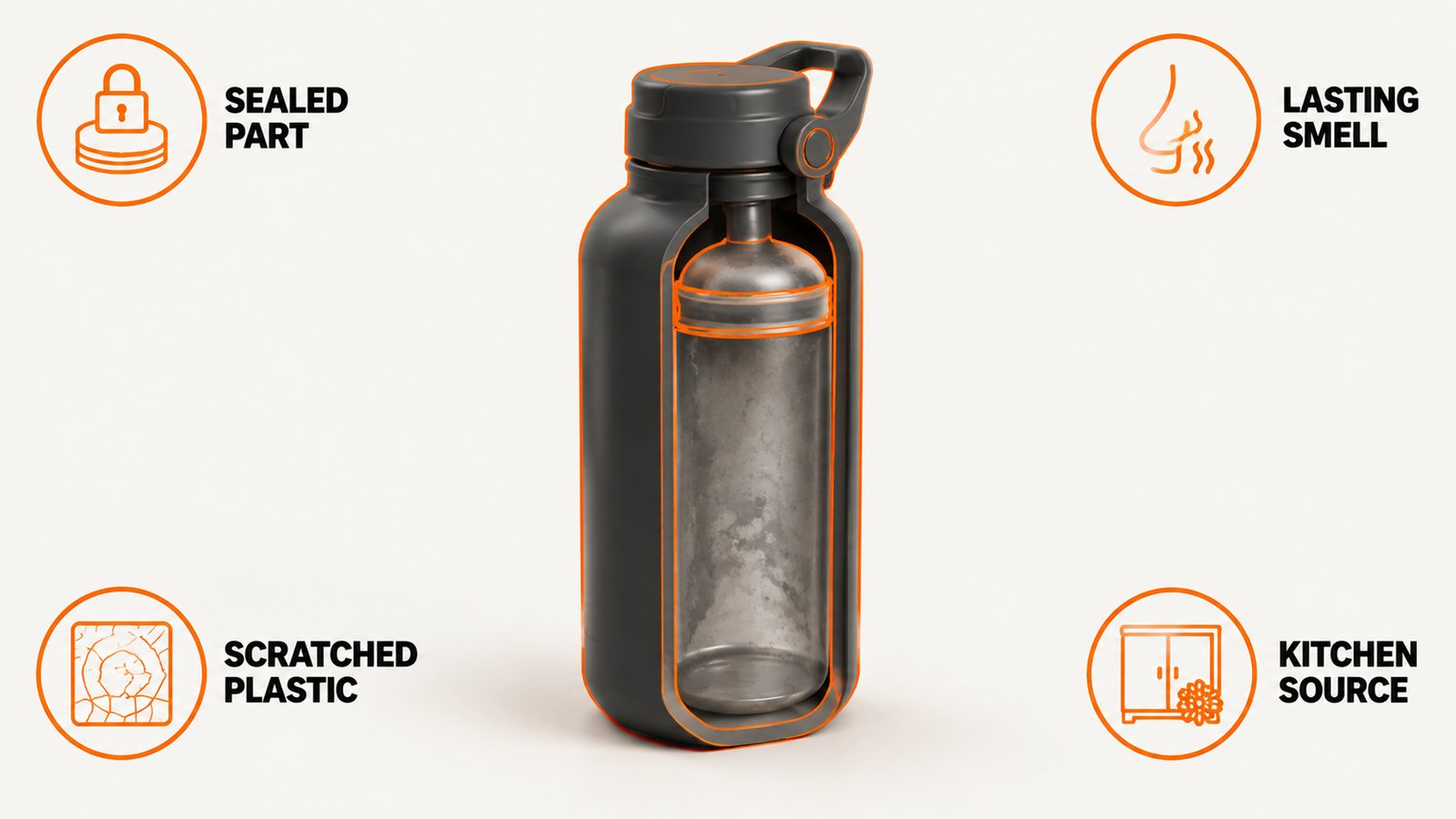
Some bottles are past cleaning. Replace rather than keep scrubbing when any of these is true:
- Growth is inside a sealed part. A molded lid with an internal channel you cannot open cannot be cleaned, because physical removal is the whole point.
- A smell survives a full disassembly, scrub, and dry. Something is still in there where you did not reach.
- The plastic is scratched, cloudy, or crazed. Fine damage holds film permanently, and a bottle scoured with an abrasive pad is usually finished.
- The gasket is cracked, swollen, or sticky and no replacement is sold for the model.
The bigger question is whether the bottle is the problem or the kitchen is. If bottles, food containers, and produce all go bad quickly, look at the room. USDA notes that mold spores from affected food can build up in your refrigerator, dishcloths, and other cleaning utensils, and that you should discard items you cannot clean or launder.
Call a qualified professional when the problem is the building rather than the bottle:
- Visible growth larger than about 10 square feet. That is EPA's size guide for when a job stops being a do-it-yourself one.
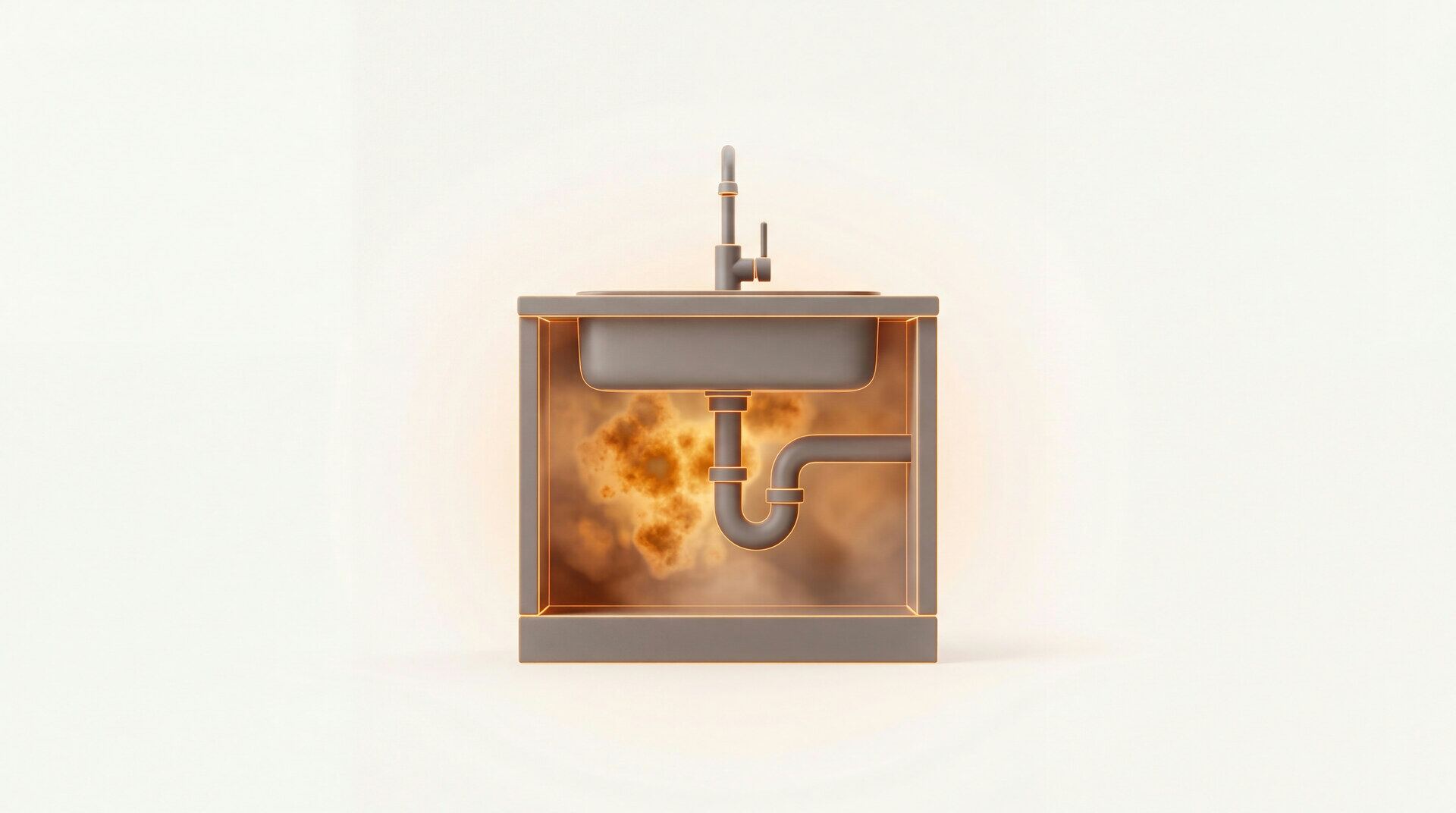
- A slow leak under the sink or behind an appliance. EPA advises drying water-damaged areas and items within 24 to 48 hours, and a cabinet base wet past that is a repair. See mold in the kitchen and mold in a dishwasher.
- A musty smell with no visible source after the obvious places are clean. See why a house smells musty.
For professional work, look for firms that follow the ANSI and IICRC S520 standard and get a written scope before anyone starts. Pricing is on mold remediation cost.
Frequently asked questions
How does mold get in a water bottle?
A capped bottle holds leftover moisture with no airflow, and backwash leaves traces of saliva and whatever you last ate. If the bottle has ever held juice, sports drink, protein powder, or coffee, there is sugar and protein in the film as well. EPA's rule is that molds will not grow without water or moisture, so the failure is almost always storing the bottle capped and damp rather than dry with the lid off.
Where does mold hide in a water bottle?
In the parts most people never remove. The lid gasket sits in a groove that traps a permanent bead of water, the straw and bite valve never dry, the thread groove holds a ring of liquid every time you close the cap, and any flip or slide spout has an internal channel a cloth cannot reach. Hollow handles fill during washing and drain slowly. That is why a bottle can look clean and still smell.
What is the pink stuff in my water bottle?
A pink or orange film on the spout, rim, or inside the cap is almost always a bacterial slime rather than a fungus. It is the same deposit that appears on shower grout and in pet bowls. It wipes away easily and comes straight back if the bottle is stored damp, so the fix is drying the bottle rather than buying a stronger cleaner.
What is the best way to clean a moldy water bottle?
Take it completely apart, including pulling the gasket out of the lid, then wash every piece in hot soapy water, which is what FDA names for food-contact items. Use a bottle brush for the body, a narrow straw brush for the tube, and a toothbrush for the threads and gasket channel. Soak small parts for 20 to 30 minutes if a brush cannot reach them, rinse until nothing is left, and dry everything inverted with the lid off.
Can you put a water bottle in the dishwasher to kill mold?
Only if the manufacturer says the parts are dishwasher safe, and only with the bottle fully disassembled and placed so water reaches every inside surface. A capped bottle in a dishwasher gets cleaned on the outside and nowhere else. Check the lid separately, because many bottles pair a dishwasher-safe body with a hand-wash-only lid.
Does bleach clean a moldy water bottle?
It is a last resort after scrubbing, not a replacement for it. Bleach strips the dark color so a gasket looks clean while the film is still present, and EPA notes that dead mold may still cause allergic reactions in some people, so killing it is not enough on its own. If you use a dilute solution, keep it to hard non-porous parts, rinse exhaustively, and never mix it with another cleaner.
When should you throw a water bottle away?
When growth is inside a sealed lid channel you cannot open, when a smell survives a full disassembly and dry, when the plastic is scratched, cloudy, or crazed so film has a permanent foothold, or when a cracked gasket has no replacement available for the model. Physical removal is the goal, and a surface you cannot reach cannot be cleaned.
Sources
Every claim on this page traces to one of these. Links open the primary document.